
Global Digital Security Controls Market Outlook to 2030
Region:Global
Author(s):Naman Rohilla
Product Code:KROD5612
December 2024
85
About the Report
Global Digital Security Controls Market Overview
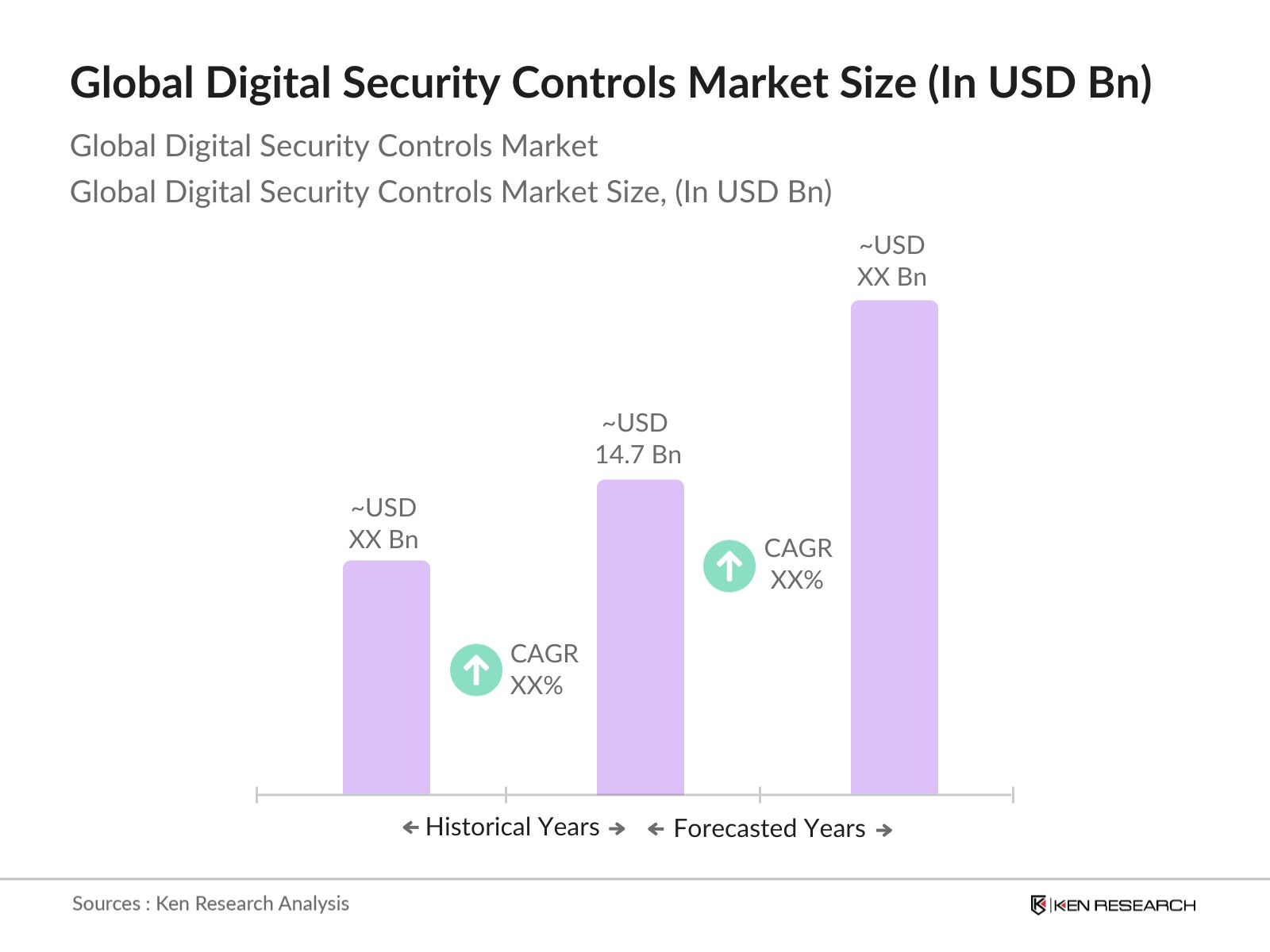
- The Global Digital Security Controls market is valued at USD 14.7 billion, driven by the surge in digital transformation across industries, an increasing number of cyber-attacks, and the rising adoption of advanced security solutions by businesses and governments. The demand for cybersecurity and physical security systems, such as biometric access and video surveillance, has boosted market growth. Additionally, the introduction of cloud-based security controls and the integration of AI and machine learning technologies have fueled the adoption of advanced digital security measures, solidifying the market's robust expansion.
- Countries such as the United States, China, and Germany are key players in the Global Digital Security Controls market. The United States leads due to its well-established IT infrastructure and strong regulatory framework for cybersecurity. China dominates with its rapid digital transformation and increasing investment in AI-driven security technologies. Germany's dominance can be attributed to its robust manufacturing sector and advanced technological adoption in industrial security. These regions are further supported by governmental initiatives and their large-scale deployment of digital security solutions.
- Biometric security systems, including facial recognition and fingerprint scanners, are gaining popularity as authentication methods. In 2023, over 70% of smartphones shipped worldwide included biometric authentication features. Similarly, governments and corporations are increasingly adopting biometric systems to enhance physical and digital security. Indias Aadhaar system, the largest biometric database globally, covers over 1.3 billion people and is being integrated into various financial and governmental services to enhance security and streamline access.
Global Digital Security Controls Market Segmentation
- By Component: The Global Digital Security Controls market is segmented by component into hardware, software, and services. Hardware dominates this segment, accounting for a substantial share of the market. This is largely due to the widespread adoption of advanced biometric systems, surveillance cameras, and physical security equipment. The increasing demand for endpoint security devices such as smart locks and alarms, driven by both residential and commercial sectors, further enhances hardwares position as the leading sub-segment.
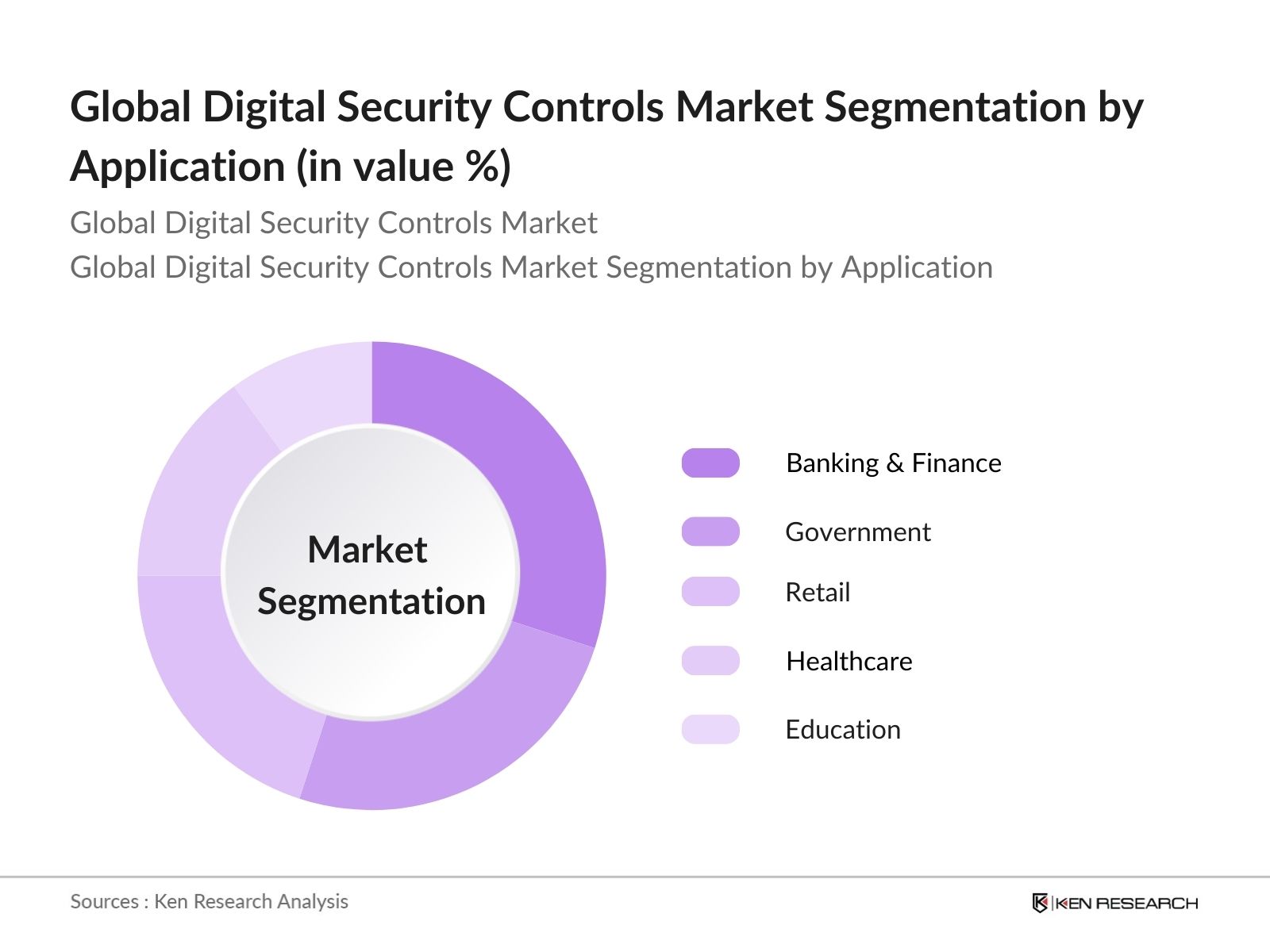
- By Application: The market is segmented by application into banking and finance, government, retail, healthcare, and education. Banking and Finance emerges as the dominant application in the market, owing to the critical need for enhanced data security, fraud prevention, and compliance with financial regulations. The rise in digital banking and online transactions has led financial institutions to invest heavily in cybersecurity solutions, such as encryption and fraud detection systems, solidifying this sectors leadership.
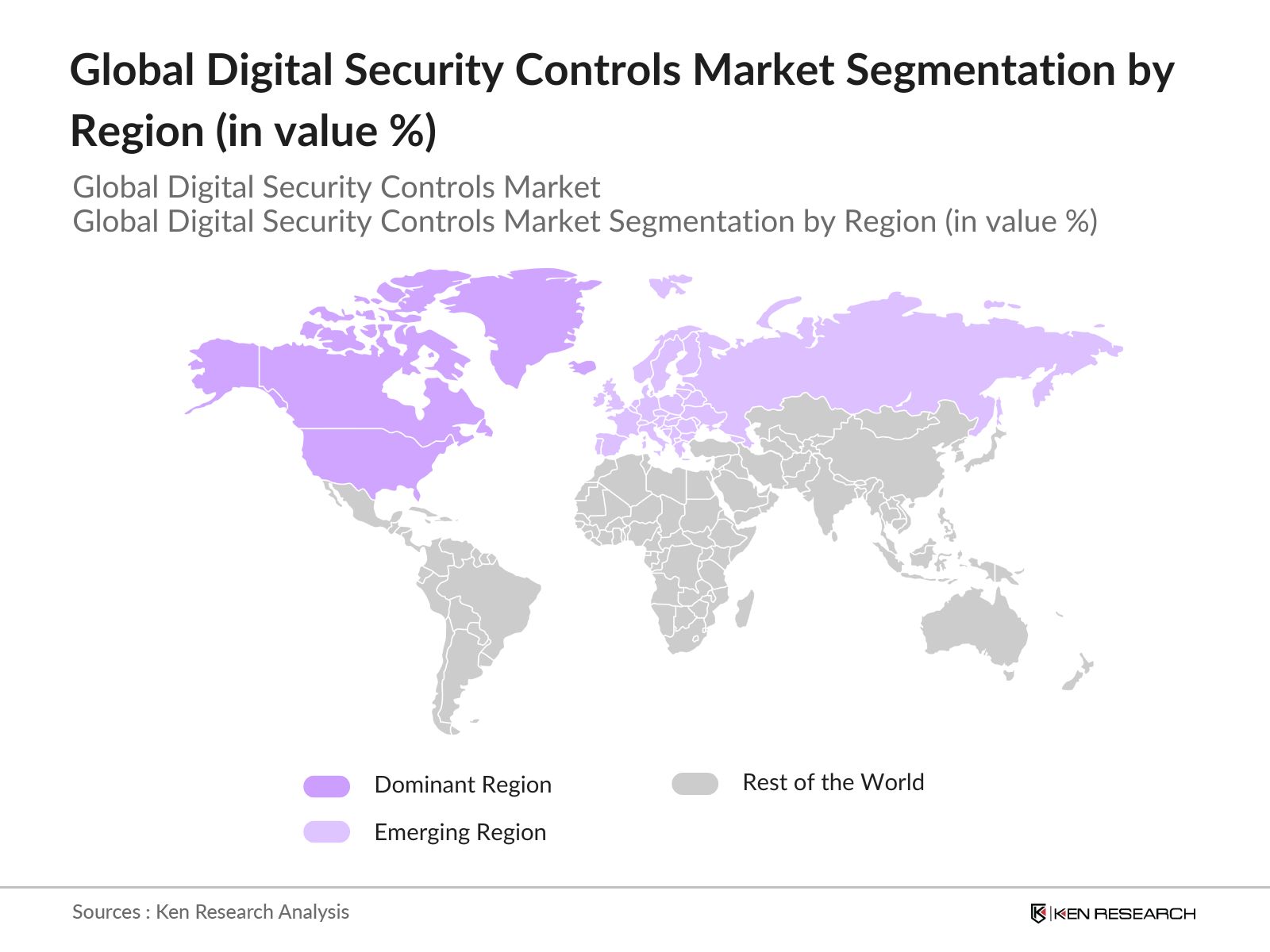
- By Region: The market is also segmented by region into North America, Europe, Asia-Pacific, Middle East & Africa, and Latin America. North America dominates the regional segment due to its early adoption of advanced security technologies and the presence of leading digital security companies. The regions strong regulatory environment and increased spending on cybersecurity by both public and private sectors continue to drive its dominance in the global market.
Global Digital Security Controls Market Competitive Landscape
The Global Digital Security Controls market is highly competitive and includes both global conglomerates and regional players. Key players in the market dominate with their extensive product portfolios, innovative technologies, and global presence. The market is also shaped by strategic mergers, acquisitions, and partnerships, particularly in areas like AI integration and cloud-based security solutions.
|
Company Name |
Establishment Year |
Headquarters |
Revenue (USD bn) |
Market Share (%) |
R&D Investment (USD bn) |
No. of Employees |
Global Presence |
Major Segments |
Innovation Strategy |
|
Cisco Systems Inc. |
1984 |
San Jose, USA |
- |
- |
- |
- |
- |
- |
- |
|
Honeywell International Inc. |
1906 |
Charlotte, USA |
- |
- |
- |
- |
- |
- |
- |
|
Johnson Controls International |
1885 |
Cork, Ireland |
- |
- |
- |
- |
- |
- |
- |
|
Siemens AG |
1847 |
Munich, Germany |
- |
- |
- |
- |
- |
- |
- |
|
Fortinet Inc. |
2000 |
Sunnyvale, USA |
- |
- |
- |
- |
- |
- |
- |
Global Digital Security Controls Market Analysis
Global Digital Security Controls Market Growth Drivers
- Rising Cybersecurity Threats: Cyberattacks have become a global concern, with the number of cyber incidents steadily increasing. In 2023, over 33 billion records were exposed through data breaches globally. Governments and businesses are intensifying efforts to safeguard sensitive data, driven by a rise in ransomware attacks. According to the FBI, ransomware-related financial losses were estimated at $1.4 billion in 2022. Additionally, cybercrime costs are projected to reach $10.5 trillion globally by 2025, further driving demand for robust digital security controls to mitigate these threats.
- Increased Adoption of Smart Homes and Buildings: Smart home systems continue to proliferate, with an estimated 360 million smart homes worldwide in 2023. This growth is closely tied to an increasing need for digital security solutions, especially as these homes rely on interconnected devices and networks. More than 40% of smart home owners in the U.S. have invested in digital security cameras or smart locks. As smart city projects gain traction across the globe, particularly in countries like the U.S., China, and India, investments in secure digital infrastructure are expected to increase.
- Technological Innovations in Security Solutions: Innovation in AI, machine learning, and IoT is propelling the digital security controls market. AI-powered security systems are enabling real-time monitoring and threat detection. In 2023, 56% of businesses globally adopted AI-driven security tools to enhance their cybersecurity frameworks. Meanwhile, the number of IoT-connected devices is expected to reach 50 billion by 2024, underscoring the need for scalable and secure IoT solutions. The adoption of AI has further reduced the response time to cyber threats from hours to mere seconds.
Global Digital Security Controls Market Challenges
- Complex Integration with Existing Systems: Integrating new digital security systems into existing IT infrastructure remains a challenge for many organizations. In a 2023 global survey, 45% of businesses reported difficulties integrating cybersecurity tools with legacy systems. The complexity is heightened in industries with older, fragmented IT systems, such as finance and manufacturing, where downtime or system failures can lead to financial losses. This challenge slows down the deployment of modern security solutions, even in sectors facing high cyber risks.
- Shortage of Skilled Cybersecurity Professionals: A shortage of skilled cybersecurity professionals continues to impact the market. In 2023, the global cybersecurity workforce gap stood at 3.4 million, according to ISC2. This shortage limits the ability of organizations to adequately protect their digital infrastructure. Governments in regions like North America and Europe are launching initiatives to bridge this gap, but the demand for cybersecurity expertise far exceeds the supply. This imbalance places additional pressure on businesses to outsource their digital security needs to third-party providers.
Global Digital Security Controls Market Future Outlook
Over the next five years, the Global Digital Security Controls market is expected to experience growth, driven by continuous innovations in cybersecurity, increasing digital transformation across industries, and the rising threat of cyber-attacks. The market will also benefit from the growing demand for cloud-based security solutions, AI-powered threat detection systems, and the adoption of biometric security measures.
Global Digital Security Controls Market Opportunities
- Increasing Demand for Cloud-Based Security Solutions: Cloud-based security solutions are gaining traction due to their scalability and cost-efficiency. In 2023, over 90% of enterprises globally were using cloud services, with a substantial portion opting for cloud-based security solutions. The increasing migration of business processes to the cloud, particularly in the financial and healthcare sectors, is creating opportunities for vendors offering cloud-native security solutions. The healthcare sector invested more than $15 billion in cloud security services in 2023.
- Growth in E-commerce and Online Banking: The rapid expansion of e-commerce and online banking is generating substantial demand for enhanced digital security measures. In 2023, global e-commerce sales exceeded $6.3 trillion, creating more points of vulnerability for cyberattacks. Similarly, the online banking sector, with more than 2.5 billion users worldwide, has become a key target for cybercriminals. As a result, financial institutions are increasing their investments in advanced fraud detection and digital security systems to safeguard customer data.
Scope of the Report
|
Component |
Hardware Software Services |
|
Application |
Banking and Finance Government Retail Healthcare Education |
|
Security Type |
Physical Security Cybersecurity Network Security Endpoint Security |
|
Deployment Model |
On-Premises Cloud-Based |
|
Region |
North America Europe Asia-Pacific Middle East & Africa Latin America |
Products
Key Target Audience
Government and Regulatory Bodies (e.g., National Cyber Security Centre, European Union Agency for Cybersecurity)
Digital Security Solution Providers
Banking and Financial Institutions
Large Enterprises in Retail, Healthcare, and Manufacturing
Venture Capital Firms and Private Equity Investors
Cloud Service Providers
Smart City and Infrastructure Development Companies
IT and Cybersecurity Consulting Firms
Companies
Players Mentioned in the Market
Cisco Systems Inc.
Honeywell International Inc.
Johnson Controls International
Siemens AG
Bosch Security Systems
Hikvision Digital Technology Co.
ADT Inc.
Axis Communications AB
Fortinet Inc.
Thales Group
Table of Contents
1. Global Digital Security Controls Market Overview
1.1. Definition and Scope
1.2. Market Taxonomy
1.3. Market Growth Rate
1.4. Market Segmentation Overview
2. Global Digital Security Controls Market Size (In USD Bn)
2.1. Historical Market Size
2.2. Year-On-Year Growth Analysis
2.3. Key Market Developments and Milestones
3. Global Digital Security Controls Market Analysis
3.1. Growth Drivers
3.1.1. Rising Cybersecurity Threats
3.1.2. Increased Adoption of Smart Homes and Buildings
3.1.3. Technological Innovations in Security Solutions
3.1.4. Government Regulations on Data Privacy and Security
3.2. Market Challenges
3.2.1. High Implementation Costs
3.2.2. Complex Integration with Existing Systems
3.2.3. Shortage of Skilled Cybersecurity Professionals
3.3. Opportunities
3.3.1. Increasing Demand for Cloud-Based Security Solutions
3.3.2. Growth in E-commerce and Online Banking
3.3.3. Expansion into Emerging Economies
3.4. Trends
3.4.1. AI-Driven Security Systems
3.4.2. Biometric Authentication Solutions
3.4.3. Blockchain Integration for Enhanced Security
3.4.4. Shift Toward Integrated Security Solutions
3.5. Government Regulations (Data Privacy & Cybersecurity Laws, Compliance)
3.5.1. GDPR Compliance
3.5.2. CCPA and Other Regional Regulations
3.5.3. Cybersecurity Standards in the IoT Ecosystem
3.6. SWOT Analysis
3.6.1. Strengths
3.6.2. Weaknesses
3.6.3. Opportunities
3.6.4. Threats
3.7. Stakeholder Ecosystem
3.7.1. Manufacturers
3.7.2. Distributors
3.7.3. Technology Providers
3.7.4. End-Users (Residential, Commercial, Industrial)
3.8. Porters Five Forces Analysis (Threat of New Entrants, Bargaining Power of Suppliers, etc.)
3.9. Competition Ecosystem
4. Global Digital Security Controls Market Segmentation
4.1. By Component (In Value %)
4.1.1. Hardware
4.1.2. Software
4.1.3. Services
4.2. By Application (In Value %)
4.2.1. Banking and Finance
4.2.2. Government
4.2.3. Retail
4.2.4. Healthcare
4.2.5. Education
4.3. By Security Type (In Value %)
4.3.1. Physical Security
4.3.2. Cybersecurity
4.3.3. Network Security
4.3.4. Endpoint Security
4.4. By Deployment Model (In Value %)
4.4.1. On-Premises
4.4.2. Cloud-Based
4.5. By Region (In Value %)
4.5.1. North America
4.5.2. Europe
4.5.3. Asia-Pacific
4.5.4. Middle East & Africa
4.5.5. Latin America
5. Global Digital Security Controls Market Competitive Analysis
5.1 Detailed Profiles of Major Companies
5.1.1. Cisco Systems Inc.
5.1.2. Honeywell International Inc.
5.1.3. Johnson Controls International
5.1.4. Siemens AG
5.1.5. Bosch Security Systems
5.1.6. Hikvision Digital Technology Co.
5.1.7. ADT Inc.
5.1.8. Axis Communications AB
5.1.9. Panasonic Corporation
5.1.10. Fortinet, Inc.
5.1.11. Thales Group
5.1.12. Check Point Software Technologies Ltd.
5.1.13. Symantec Corporation
5.1.14. Palo Alto Networks, Inc.
5.1.15. Avigilon Corporation
5.2 Cross Comparison Parameters (Revenue, Market Share, Product Portfolio, Regional Presence, R&D Investments, Employee Strength, Partnership Networks, Innovation Strategies)
5.3. Market Share Analysis
5.4. Strategic Initiatives
5.5. Mergers and Acquisitions
5.6. Investment Analysis
5.7 Venture Capital Funding
5.8. Government Grants
5.9. Private Equity Investments
6. Global Digital Security Controls Market Regulatory Framework
6.1. International Security Standards
6.2. Data Privacy and Protection Regulations
6.3. Certification Processes
6.4. Industry Compliance Requirements
7. Global Digital Security Controls Future Market Size (In USD Bn)
7.1. Future Market Size Projections
7.2. Key Factors Driving Future Market Growth
8. Global Digital Security Controls Future Market Segmentation
8.1. By Component (In Value %)
8.2. By Application (In Value %)
8.3. By Security Type (In Value %)
8.4. By Deployment Model (In Value %)
8.5. By Region (In Value %)
9. Global Digital Security Controls Market Analysts Recommendations
9.1. TAM/SAM/SOM Analysis
9.2. Customer Cohort Analysis
9.3. Marketing Initiatives
9.4. White Space Opportunity Analysis
Research Methodology
Step 1: Identification of Key Variables
We begin by identifying key variables that influence the Digital Security Controls market, including technology adoption rates, regulatory requirements, and emerging threats. This step involves gathering data from primary and secondary sources, including industry databases, government publications, and proprietary research platforms.
Step 2: Market Analysis and Construction
In this phase, we analyze historical data on the markets growth trajectory, focusing on penetration rates and revenue generation from key segments. This analysis includes market performance across regions and sub-segments, ensuring accuracy and comprehensiveness.
Step 3: Hypothesis Validation and Expert Consultation
Market hypotheses are validated through interviews with industry experts and stakeholders from leading security companies. These consultations offer critical insights into market dynamics, which help refine our forecasts and analysis.
Step 4: Research Synthesis and Final Output
The final stage synthesizes data from multiple sources, combining insights from manufacturers, service providers, and end-users. The final report is verified using both top-down and bottom-up approaches to ensure reliability and precision in the market analysis.
Frequently Asked Questions
01. How big is the Global Digital Security Controls Market?
The global digital security controls market is valued at USD 14.7 billion, driven by increased digital transformation and growing concerns about cyber-attacks.
02. What are the challenges in the Digital Security Controls Market?
Key challenges in the global digital security controls market include high implementation costs, complex system integration, and a shortage of skilled professionals to manage advanced security solutions.
03. Who are the major players in the Digital Security Controls Market?
Major players in the global digital security controls market include Cisco Systems, Honeywell, Johnson Controls, Siemens, and Fortinet. These companies dominate due to their innovative solutions and strong global presence.
04. What are the growth drivers of the Digital Security Controls Market?
Growth drivers of the global digital security controls market include the rising adoption of cloud-based security solutions, increased government regulations on data privacy, and advancements in AI-driven security technologies.
Why Buy From Us?

What makes us stand out is that our consultants follows Robust, Refine and Result (RRR) methodology. i.e. Robust for clear definitions, approaches and sanity checking, Refine for differentiating respondents facts and opinions and Result for presenting data with story

We have set a benchmark in the industry by offering our clients with syndicated and customized market research reports featuring coverage of entire market as well as meticulous research and analyst insights.

While we don't replace traditional research, we flip the method upside down. Our dual approach of Top Bottom & Bottom Top ensures quality deliverable by not just verifying company fundamentals but also looking at the sector and macroeconomic factors.

With one step in the future, our research team constantly tries to show you the bigger picture. We help with some of the tough questions you may encounter along the way: How is the industry positioned? Best marketing channel? KPI's of competitors? By aligning every element, we help maximize success.

Our report gives you instant access to the answers and sources that other companies might choose to hide. We elaborate each steps of research methodology we have used and showcase you the sample size to earn your trust.

If you need any support, we are here! We pride ourselves on universe strength, data quality, and quick, friendly, and professional service.