
Global Distributed Antenna System (DAS) Market Outlook to 2030
Region:Global
Author(s):Shivani Mehra
Product Code:KROD2123
November 2024
90
About the Report
Global Distributed Antenna System (DAS) Market Overview
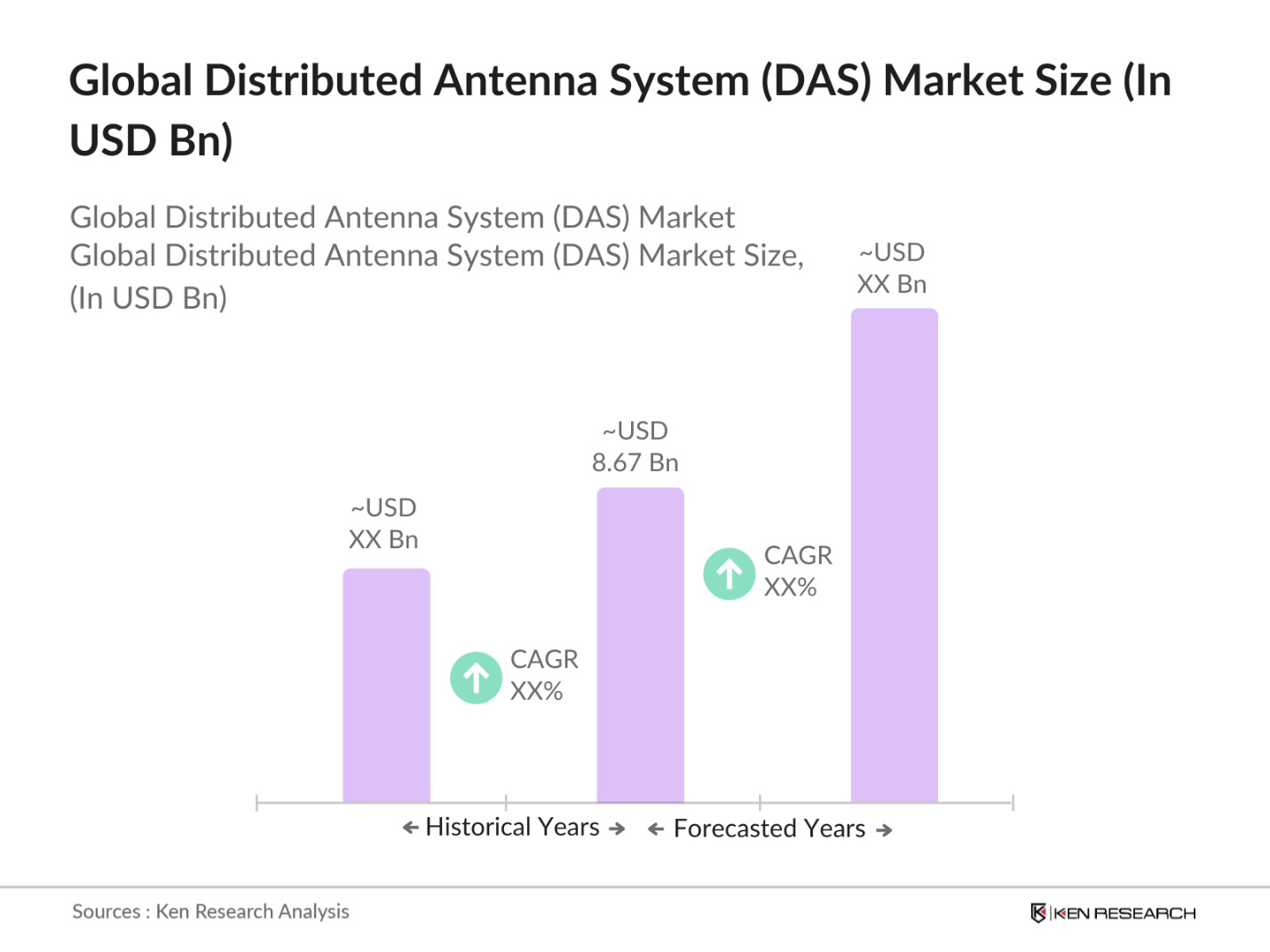
- The Global Distributed Antenna System (DAS) market is valued at USD 8.67 billion, based on a five-year historical analysis. The market growth is driven by the increasing demand for seamless wireless connectivity, especially in urban areas and large venues like stadiums, airports, and office complexes. This demand is fueled by the proliferation of smartphones and the exponential growth in mobile data usage, requiring improved network coverage and capacity.
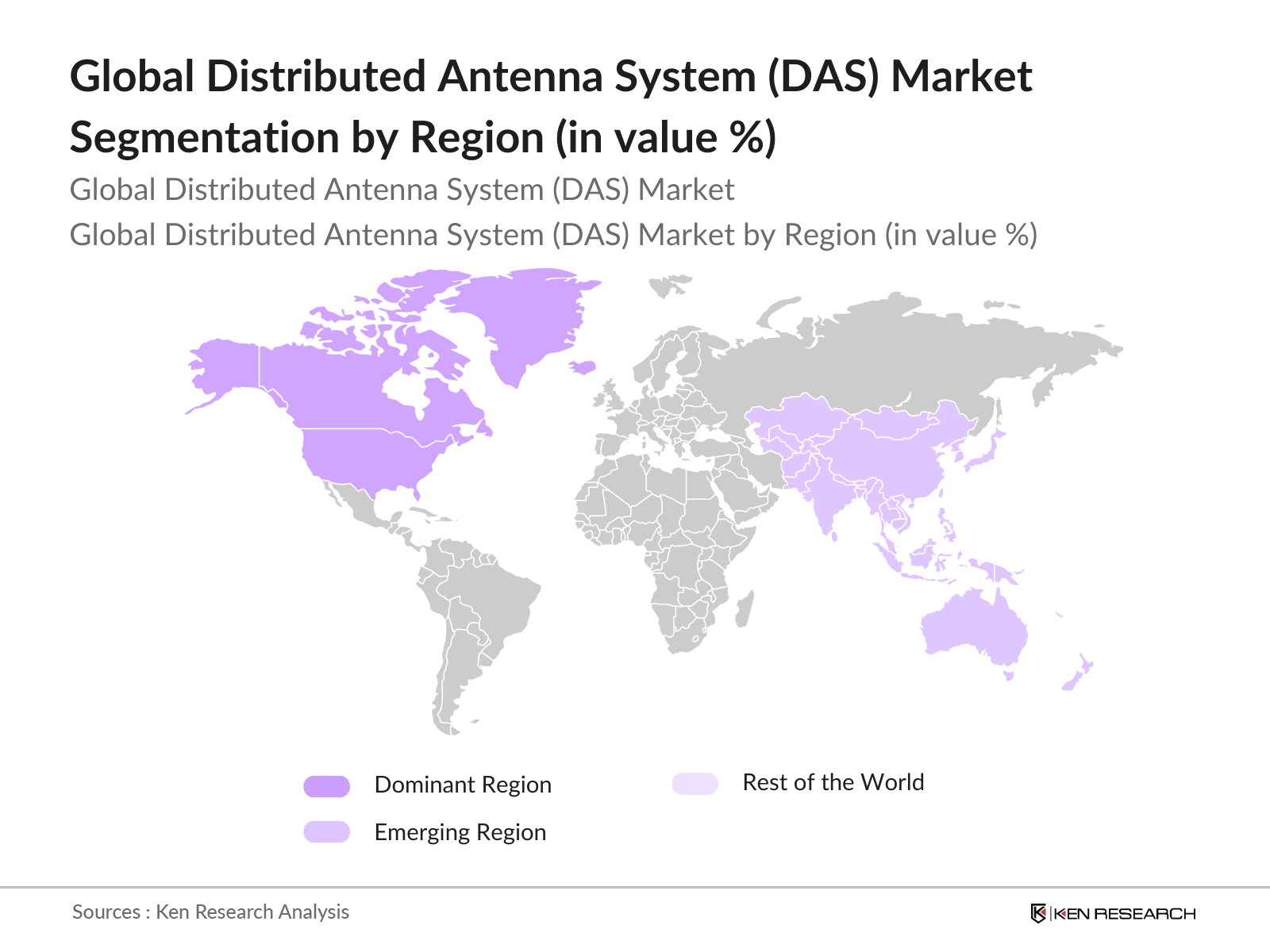
- The DAS market dominance is concentrated in major regions like Silicon Valley, California, and New York due to the presence of large telecom operators and cutting-edge technology infrastructure. These areas have high demand from sectors such as commercial real estate and healthcare, supported by significant investments in 5G networks. Additionally, Washington, D.C., plays a pivotal role, driven by public safety and government projects that rely on advanced communication technologies to ensure seamless connectivity across critical infrastructures.
- Governments worldwide, including the U.S., China, and Japan, have allocated substantial resources towards 5G deployment, with total global investments exceeding $200 billion in 2023. These initiatives often include public-private partnerships and regulatory reforms, making DAS essential in extending 5G coverage to high-density areas. For example, the Federal Communications Commission (FCC) in the U.S. is actively supporting the expansion of DAS systems as part of its national 5G rollout strategy, which focuses on enhancing network quality and access in urban areas.
Global Distributed Antenna System (DAS) Market Segmentation
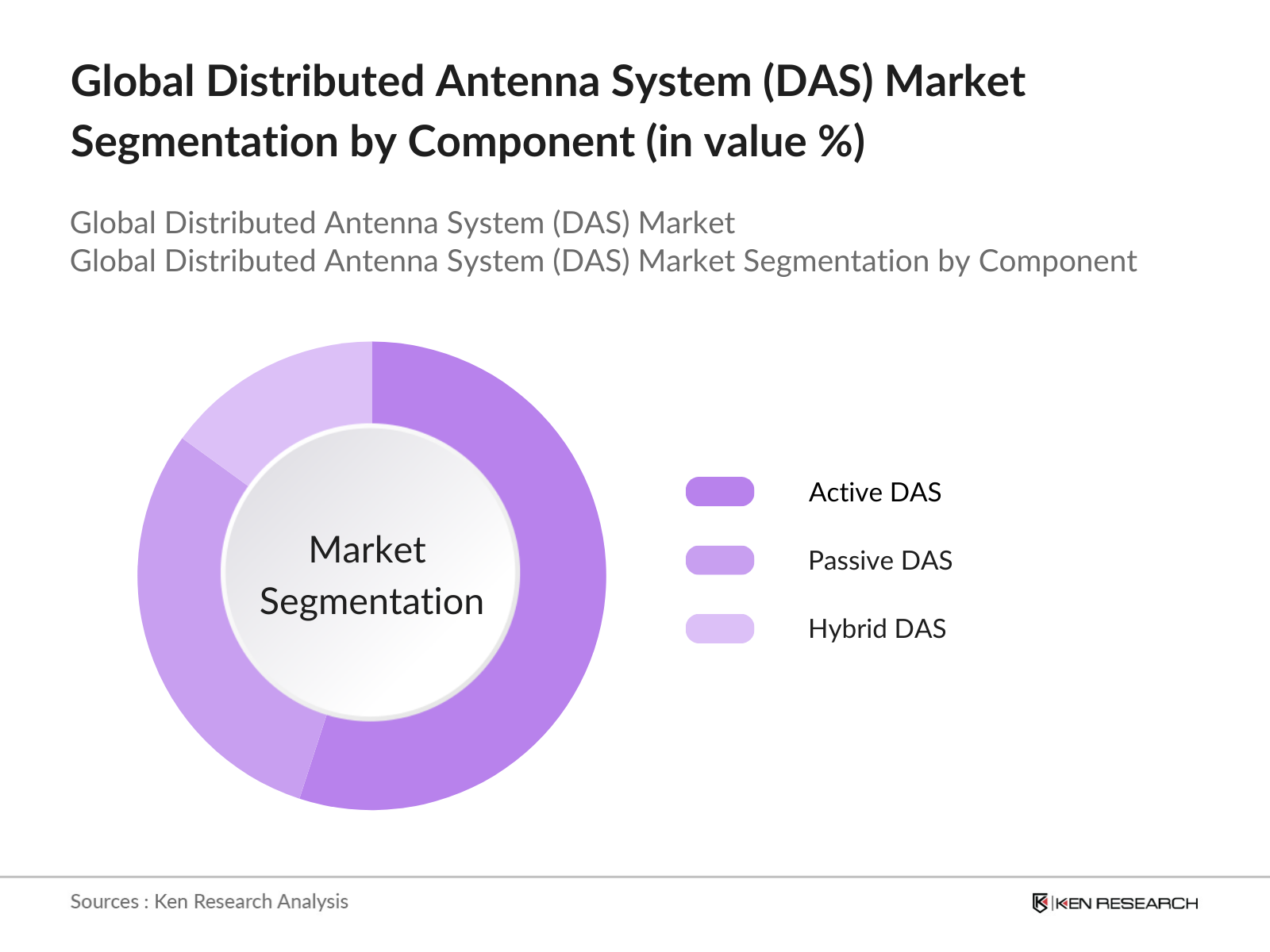
By System Type: The DAS market is segmented by system type into Active DAS, Passive DAS, and Hybrid DAS. Active DAS holds a dominant market share due to its superior capabilities in large venues requiring extensive coverage and high data transmission rates. Active systems are highly adaptable to 5G technology and provide advanced functionalities, such as real-time monitoring and control of signal strength. The scalability and reliability of Active DAS solutions make them the preferred choice for commercial buildings, hospitals, and large event spaces, especially where uninterrupted service is critical.
By Region: The DAS market is segmented regionally into North America, Europe, Asia-Pacific, Middle East & Africa, and Latin America. North America leads the market due to its well-established telecom infrastructure and aggressive 5G roll-out plans. The regions dominance is also attributed to regulatory support and significant investments in public safety communication systems, which utilize DAS solutions extensively. In contrast, Asia-Pacific, particularly China and Japan, is witnessing rapid growth due to urbanization and the need for improved connectivity in large metropolitan areas.
Global Distributed Antenna System (DAS) Market Competitive Landscape
The Global DAS market is dominated by a few key players, with a mix of global and regional companies. These companies are focusing on expanding their DAS portfolios to cater to the growing demand for high-capacity networks in public venues, government facilities, and healthcare institutions. Significant players are investing heavily in research and development to integrate DAS solutions with emerging technologies like 5G, cloud computing, and AI.
|
Company Name |
Establishment Year |
Headquarters |
Employees |
Revenue (2023) |
R&D Investments |
Global Reach |
Technology Focus |
|
CommScope |
1976 |
North Carolina, USA |
|||||
|
Corning Incorporated |
1851 |
New York, USA |
|||||
|
AT&T |
1877 |
Texas, USA |
|||||
|
Ericsson |
1876 |
Stockholm, Sweden |
|||||
|
Huawei Technologies |
1987 |
Shenzhen, China |
Global Distributed Antenna System (DAS) Market Analysis
Market Growth Drivers
- Increasing Demand for Seamless Connectivity: With over 7 billion mobile connections worldwide as of 2023, the demand for uninterrupted connectivity is at an all-time high, particularly in urban areas. Distributed Antenna Systems (DAS) play a critical role in ensuring reliable network coverage in congested environments, such as stadiums, airports, and large commercial buildings. The global increase in mobile usage is fueled by the growing number of devices, which are projected to reach 10 billion by 2025. This surge underscores the need for DAS to provide continuous coverage and quality service.
- Expansion of IoT and Smart Infrastructure: The proliferation of Internet of Things (IoT) devices, which reached over 14 billion in 2024, is driving the need for high-capacity networks like DAS to support seamless connectivity. Smart cities initiatives across countries like the U.S. and China are propelling this expansion, with infrastructure investments totaling more than $125 billion in 2024 alone. IoT applications such as traffic management, healthcare systems, and energy grids require DAS to ensure uninterrupted data transmission and robust network performance.
- Rising Mobile Data Traffic: Mobile data traffic surged to 100 exabytes per month in 2023, driven by video streaming, social media, and cloud computing. DAS is integral to meeting the network capacity demand in high-traffic areas like urban centers and shopping malls. For instance, in the U.S. alone, mobile data usage per capita has increased by 15% annually, putting pressure on telecom operators to expand infrastructure using solutions such as DAS to ensure better coverage and capacity in data-heavy areas.
Market Challenges
- High Deployment Costs: The deployment of DAS, especially in complex environments like airports or underground stations, can cost upwards of $1 million for a single location, creating significant financial barriers for small and mid-sized telecom operators. The high cost is mainly driven by equipment, labor, and maintenance requirements, limiting the widespread adoption of DAS solutions in emerging economies. In the U.S., telecom operators spent over $40 billion on network infrastructure upgrades in 2023, with DAS representing a sizable portion of these expenditures.
- Technical Complexities: Installing DAS in existing infrastructure requires extensive coordination with building owners, telecom operators, and local regulators. In highly congested urban areas, technical complexities arise due to building materials that block signals, requiring customized DAS installations. This has led to delays in deployments, with some projects in Europe experiencing up to 12 months in added lead time. Moreover, the integration of DAS with existing 4G networks is particularly challenging due to compatibility issues between different network generations.
Global Distributed Antenna System (DAS) Market Future Outlook
Over the next five years, the Global DAS market is expected to witness strong growth, driven by the roll-out of 5G technology, increasing consumer demand for reliable mobile connectivity, and the expansion of smart city projects across key regions. The market will also benefit from rising investments in public safety and emergency communication networks, which require highly reliable DAS solutions to ensure constant connectivity in critical environments.
Market Opportunities:
- Adoption of Fiber Optics in DAS: Fiber optics have become a crucial component of DAS, enabling faster and more reliable data transmission. The shift towards fiber optics is driven by the need for higher bandwidth to support 5G networks and increasing mobile data consumption. Telecom operators in developed markets like Japan and South Korea are heavily investing in fiber-based DAS to future-proof their infrastructure and ensure compatibility with upcoming network technologies.
- Integration of DAS with Cloud and AI: The integration of DAS with cloud platforms and AI is transforming how network performance is monitored and optimized. Cloud-managed DAS networks enable real-time diagnostics and predictive maintenance powered by AI, leading to a significant reduction in network downtime, especially in mission-critical environments like hospitals and airports. AI-powered DAS systems are expected to become the norm in the coming years, as telecom operators aim to enhance efficiency and reduce operational costs.
Scope of the Report
|
By System Type |
Active DAS Passive DAS Hybrid DAS |
|
By Ownership Model |
Carrier-owned DAS Enterprise-owned DAS Neutral-host DAS |
|
By Frequency Range |
VHF (Very High Frequency) UHF (Ultra High Frequency) SHF (Super High Frequency) |
|
By Application |
Commercial Buildings Public Venues Transportation Hubs Healthcare Facilities Government and Military Facilities |
|
By Region |
North America Europe Asia-Pacific Middle East and Africa Latin America |
Products
Key Target Audience
Telecom Operators
Public Safety Agencies (FCC, National Emergency Communications Plan)
Government and Regulatory Bodies (5G Infrastructure Development Programs)
Healthcare Institutions
Commercial Real Estate Developers
Venue Owners and Event Organizers
Technology Vendors and Solution Providers
Investments and Venture Capitalist Firms
Companies
Players Mention in the Report
CommScope
Corning Incorporated
AT&T
Verizon Communications
T-Mobile
Ericsson
Huawei Technologies
Axell Wireless
Advanced RF Technologies (ADRF)
Boingo Wireless
Solid Technologies
Zinwave
Westell Technologies
Bird Technologies
Dali Wireless
Table of Contents
1. Global DAS Market Overview
1.1. Definition and Scope
1.2. Market Taxonomy
1.3. Market Growth Rate
1.4. Market Segmentation Overview
2. Global DAS Market Size (In USD Bn)
2.1. Historical Market Size
2.2. Year-On-Year Growth Analysis
2.3. Key Market Developments and Milestones
3. Global DAS Market Analysis
3.1. Growth Drivers
3.1.1. Increasing Demand for Seamless Connectivity
3.1.2. Expansion of IoT and Smart Infrastructure
3.1.3. Rising Mobile Data Traffic
3.1.4. Government Initiatives for 5G Deployment
3.2. Market Challenges
3.2.1. High Deployment Costs
3.2.2. Technical Complexities
3.2.3. Integration with Existing Infrastructure
3.3. Opportunities
3.3.1. Growing Demand in Healthcare Facilities
3.3.2. Expansion in Commercial and Transportation Sectors
3.3.3. Adoption of Hybrid DAS Solutions
3.4. Trends
3.4.1. Adoption of Fiber Optics in DAS
3.4.2. Growing Popularity of Active DAS Systems
3.4.3. Integration of DAS with Cloud and AI
3.5. Government Regulations
3.5.1. Telecom Regulatory Standards
3.5.2. Safety Compliance for DAS Installations
3.5.3. 5G Frequency Spectrum Allocation
3.6. SWOT Analysis
3.7. Stakeholder Ecosystem
3.8. Porters Five Forces Analysis
3.9. Competitive Ecosystem
4. Global DAS Market Segmentation
4.1. By System Type (In Value %)
4.1.1. Active DAS
4.1.2. Passive DAS
4.1.3. Hybrid DAS
4.2. By Ownership Model (In Value %)
4.2.1. Carrier-owned DAS
4.2.2. Enterprise-owned DAS
4.2.3. Neutral-host DAS
4.3. By Frequency Range (In Value %)
4.3.1. VHF (Very High Frequency)
4.3.2. UHF (Ultra High Frequency)
4.3.3. SHF (Super High Frequency)
4.4. By Application (In Value %)
4.4.1. Commercial Buildings
4.4.2. Public Venues
4.4.3. Transportation Hubs
4.4.4. Healthcare Facilities
4.4.5. Government and Military Facilities
4.5. By Region (In Value %)
4.5.1. North America
4.5.2. Europe
4.5.3. Asia-Pacific
4.5.4. Middle East and Africa
4.5.5. Latin America
5. Global DAS Market Competitive Analysis
5.1. Detailed Profiles of Major Companies
5.1.1. CommScope
5.1.2. Corning Incorporated
5.1.3. AT&T
5.1.4. Verizon Communications
5.1.5. T-Mobile
5.1.6. Ericsson
5.1.7. Huawei Technologies
5.1.8. Axell Wireless
5.1.9. Advanced RF Technologies (ADRF)
5.1.10. Boingo Wireless
5.1.11. Solid Technologies
5.1.12. Zinwave
5.1.13. Westell Technologies
5.1.14. Bird Technologies
5.1.15. Dali Wireless
5.2. Cross Comparison Parameters (No. of Employees, Headquarters, Revenue, Global Reach, Technology Focus, R&D Investments, Partnership Network, Deployment Speed)
5.3. Market Share Analysis
5.4. Strategic Initiatives
5.5. Mergers & Acquisitions
5.6. Investment Analysis
5.7. Venture Capital and Private Equity Funding
5.8. Government Grants and Incentives
6. Global DAS Market Regulatory Framework
6.1. Telecommunications Standards
6.2. Building and Safety Codes
6.3. Licensing and Permits
6.4. Environmental Compliance
7. Global DAS Future Market Size (In USD Bn)
7.1. Future Market Size Projections
7.2. Key Factors Driving Future Growth
8. Global DAS Future Market Segmentation
8.1. By System Type (In Value %)
8.2. By Ownership Model (In Value %)
8.3. By Frequency Range (In Value %)
8.4. By Application (In Value %)
8.5. By Region (In Value %)
9. Global DAS Market Analysts Recommendations
9.1. TAM/SAM/SOM Analysis
9.2. Customer Cohort Analysis
9.3. White Space Opportunity Analysis
9.4. Marketing Initiatives
Disclaimer Contact UsResearch Methodology
Step 1: Identification of Key Variables
The research process begins by mapping the entire DAS ecosystem, identifying key players, market drivers, and challenges. Through secondary research, we collect data from industry reports, government databases, and proprietary market intelligence tools to define the scope and variables impacting the market.
Step 2: Market Analysis and Construction
Using historical data, we analyze DAS deployment rates, market penetration, and usage patterns. This data is used to construct market forecasts and assess the revenue potential of different DAS types and ownership models. Metrics such as data consumption rates and 5G readiness are also factored into the market assessment.
Step 3: Hypothesis Validation and Expert Consultation
Key market hypotheses are validated through in-depth interviews with DAS providers, telecom operators, and infrastructure specialists. These insights help refine the market data and validate assumptions regarding DAS adoption across regions and verticals.
Step 4: Research Synthesis and Final Output
The final research output is produced through the synthesis of primary and secondary data. In this step, findings are corroborated with market trends, expert opinions, and financial data to ensure a comprehensive analysis of the DAS market.
Frequently Asked Questions
01. How big is the Global DAS Market?
The Global DAS market is valued at USD 8.67 billion, driven by the rapid deployment of 5G networks and the increasing demand for enhanced mobile connectivity in urban and densely populated areas.
02. What are the challenges in the Global DAS Market?
Challenges include high installation costs, the technical complexity of integrating DAS with existing infrastructure, and the need for skilled labor to maintain and optimize the systems.
03. Who are the major players in the Global DAS Market?
Key players in the market include CommScope, Corning Incorporated, AT&T, Ericsson, and Huawei Technologies, dominating through their extensive product portfolios and global distribution networks.
04. What are the growth drivers of the Global DAS Market?
Growth drivers include the increasing demand for seamless wireless connectivity in commercial buildings, public spaces, and transportation hubs, coupled with the ongoing roll-out of 5G technology.
Why Buy From Us?

What makes us stand out is that our consultants follows Robust, Refine and Result (RRR) methodology. i.e. Robust for clear definitions, approaches and sanity checking, Refine for differentiating respondents facts and opinions and Result for presenting data with story

We have set a benchmark in the industry by offering our clients with syndicated and customized market research reports featuring coverage of entire market as well as meticulous research and analyst insights.

While we don't replace traditional research, we flip the method upside down. Our dual approach of Top Bottom & Bottom Top ensures quality deliverable by not just verifying company fundamentals but also looking at the sector and macroeconomic factors.

With one step in the future, our research team constantly tries to show you the bigger picture. We help with some of the tough questions you may encounter along the way: How is the industry positioned? Best marketing channel? KPI's of competitors? By aligning every element, we help maximize success.

Our report gives you instant access to the answers and sources that other companies might choose to hide. We elaborate each steps of research methodology we have used and showcase you the sample size to earn your trust.

If you need any support, we are here! We pride ourselves on universe strength, data quality, and quick, friendly, and professional service.