Global Electro Optical Systems Market Outlook to 2030

Region:Global

Author(s):Naman Rohilla

Product Code:KROD5626

Published On

December 2024

Total pages

83

About the Report

Global Electro-Optical Systems Market Overview

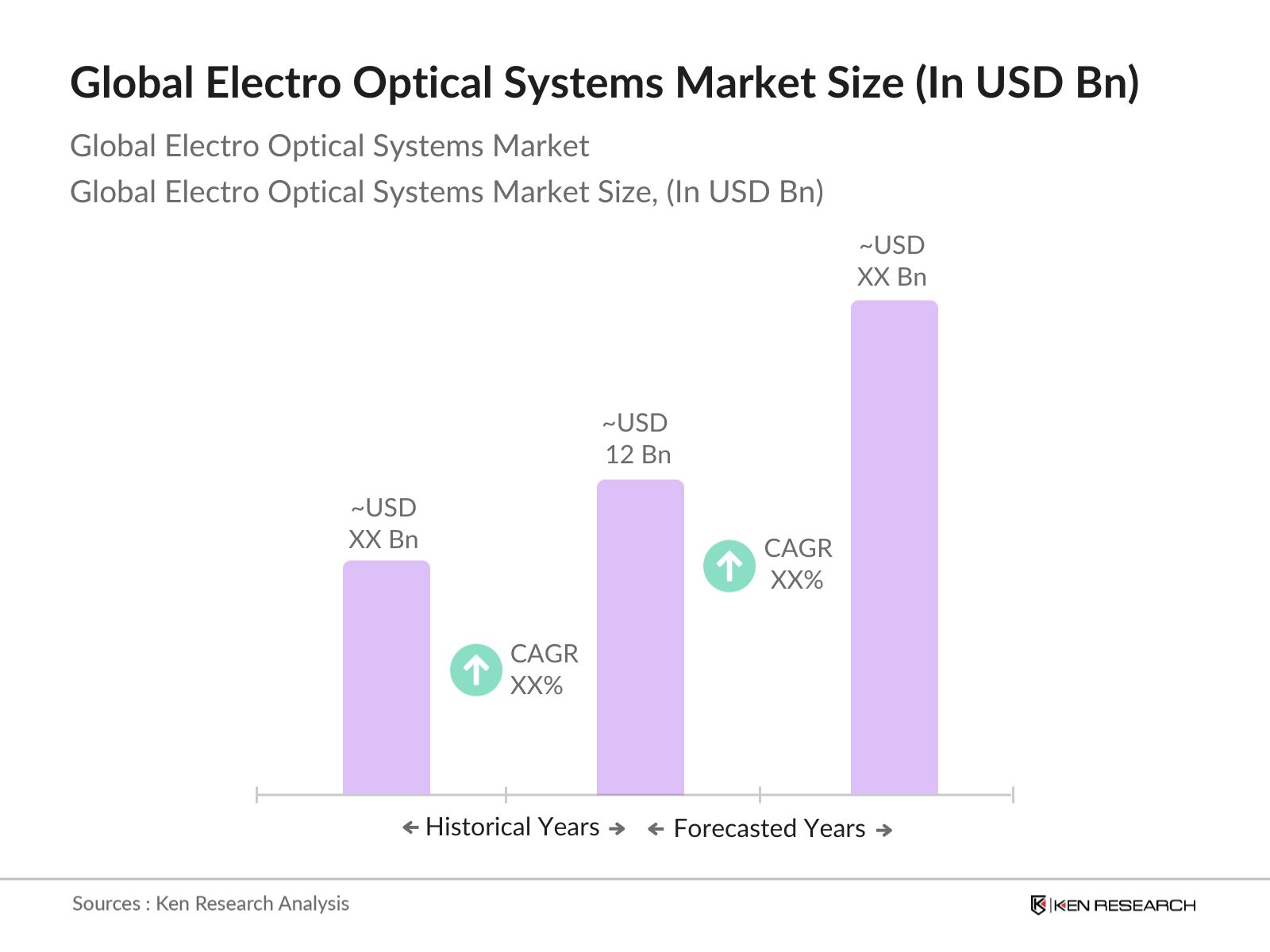
  • The Global Electro-Optical Systems Market is valued at USD 12 billion, based on a five-year historical analysis. This market is driven by advancements in defence and aerospace technologies, coupled with the increasing need for surveillance, targeting, and remote sensing systems. Electro-optical systems, such as imaging devices, infrared cameras, and laser range finders, are gaining prominence due to their ability to enhance precision and operational efficiency across sectors like military, healthcare, and industrial applications. The rising demand for such systems, especially in defence, is a major factor contributing to the market size.
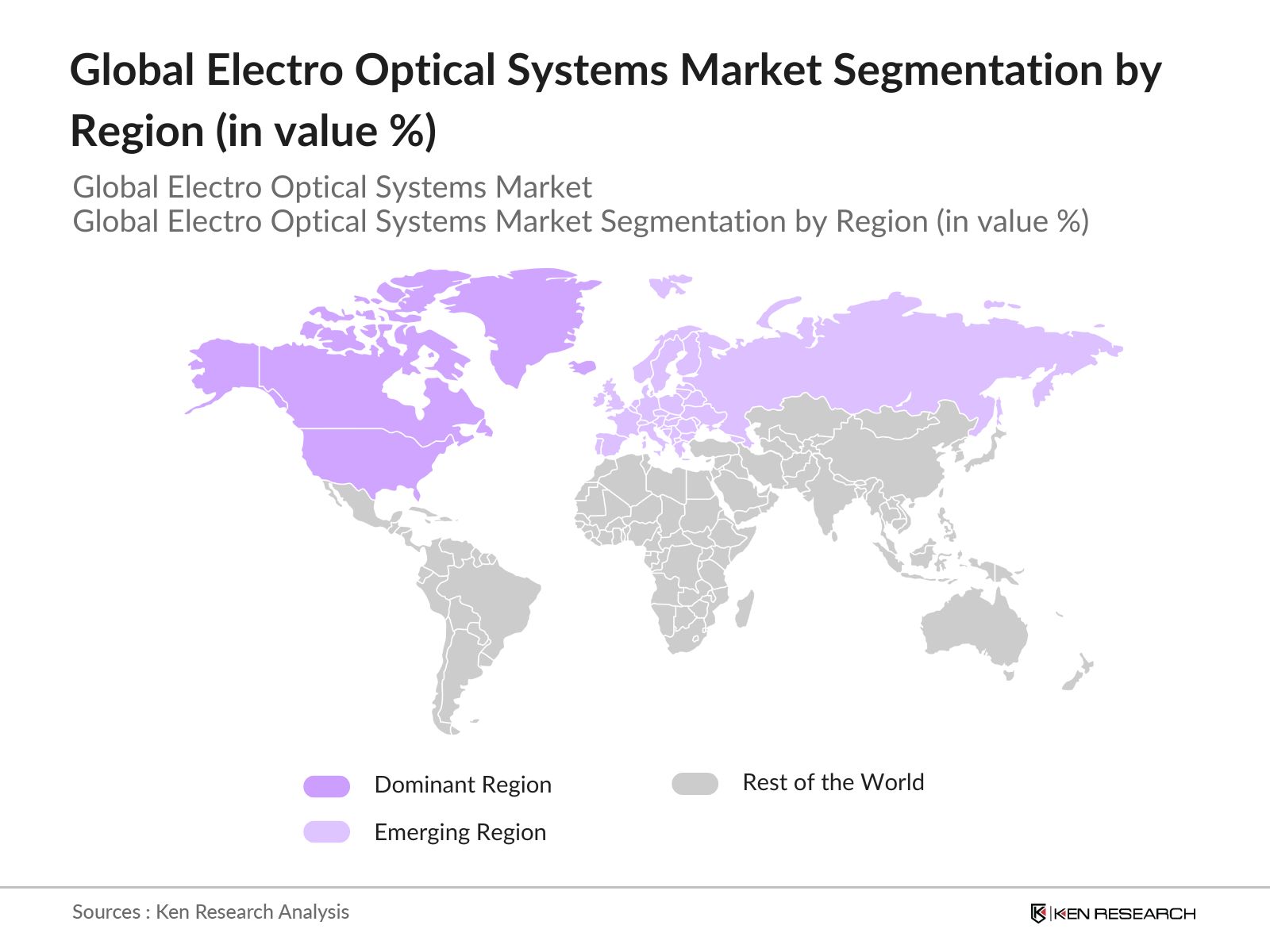
  • The market dominance is evident in countries such as the United States, Israel, and China. These regions lead due to their strong defence spending, technological innovations, and strategic investments in R&D. The U.S., with its extensive defence budget and adoption of high-tech military systems, maintains its leadership, while Israel is known for its focus on cutting-edge defence technologies and exporting these systems globally. China is gaining ground through investments in aerospace and military modernization programs, further fueling its dominance in the global market.
  • Export control laws, such as the U.S. International Traffic in Arms Regulations (ITAR) and Export Administration Regulations (EAR), impose strict regulations on the export of electro-optical systems, especially those with military applications. In 2023, the U.S. government denied export licenses for over 300 applications involving sensitive electro-optical technologies, reflecting the stringent restrictions in place. These laws aim to prevent the proliferation of advanced technologies to adversarial nations, thereby controlling the spread of sophisticated defence equipment globally, impacting the market growth.

Global Electro-Optical Systems Market Size

Global Electro-Optical Systems Market Segmentation

  • By System Type: The Global Electro-Optical Systems market is segmented by system type into Imaging Systems and Non-Imaging Systems. Imaging systems hold a dominant market share, primarily due to their widespread use in surveillance, military operations, and healthcare diagnostics. Infrared cameras and night vision equipment, essential for surveillance and combat operations, are key contributors to this segment's leadership. On the other hand, non-imaging systems, such as laser range finders and LIDAR, are also growing rapidly, driven by their applications in geospatial mapping and industrial automation.
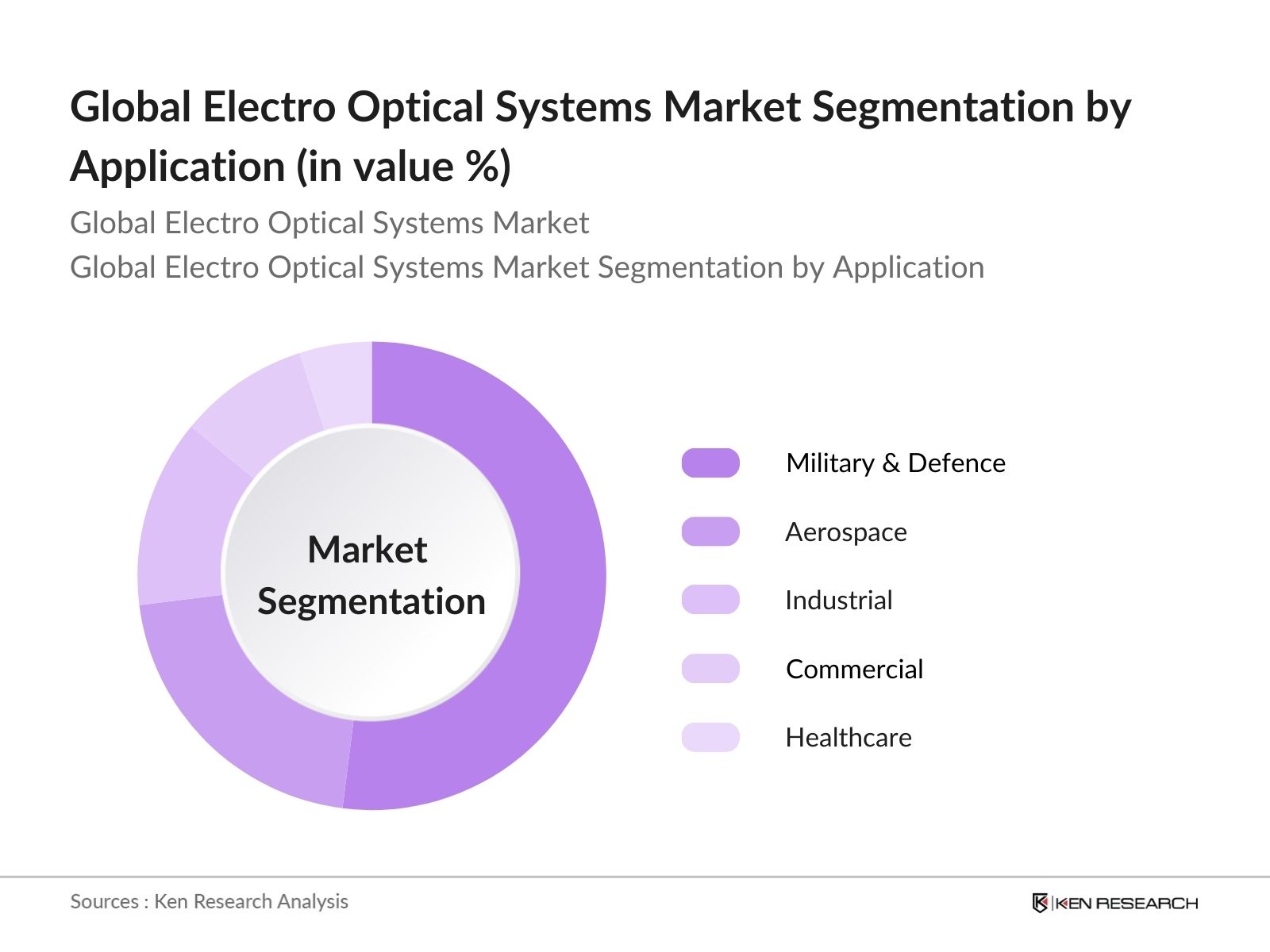
  • By Application: The market is further segmented by application into Military & Defence, Aerospace, Industrial, Commercial, and Healthcare. The Military & Defence segment dominates the market due to the ongoing modernization of military systems across the globe, particularly in the U.S., China, and Israel. Governments are investing heavily in electro-optical systems for precision targeting, surveillance, and threat detection, thus contributing to the segment's market share.

Global Electro-Optical Systems Market Segmentation by application

  • By Region: The Global Electro-Optical Systems Market is also segmented by region into North America, Europe, Asia Pacific, Latin America, and Middle East & Africa. North America leads the market due to its well-established defence infrastructure and R&D investments in military technologies. The regions dominance is supported by key manufacturers such as Lockheed Martin and Raytheon Technologies, contributing to a large share of the market. Asia Pacific is also seeing substantial growth, particularly due to Chinas rapid advancements in defence and aerospace.

Global Electro-Optical Systems Market Segmentation by region

Global Electro-Optical Systems Market Competitive Landscape

The Global Electro-Optical Systems Market is dominated by several key players who drive innovation and growth through their advanced products and strategic partnerships. The presence of these players has led to a consolidated market, with the top five companies accounting for a substantial portion of the overall market.

Company Name

Establishment Year

Headquarters

Product Range

R&D Expenditure

Patents Held

Market Presence

Defence Contracts

Strategic Alliances

Lockheed Martin Corporation

1995

Bethesda, MD, USA

-

-

-

-

-

-

Raytheon Technologies

2020

Waltham, MA, USA

-

-

-

-

-

-

L3Harris Technologies, Inc.

2019

Melbourne, FL, USA

-

-

-

-

-

-

FLIR Systems, Inc.

1978

Wilsonville, OR, USA

-

-

-

-

-

-

Northrop Grumman Corp.

1939

Falls Church, VA, USA

-

-

-

-

-

-

Global Electro-Optical Systems Market Analysis

Global Electro-Optical Systems Market Growth Drivers

  • Advances in Laser Technologies: Advancements in laser technologies, particularly in fiber optics and solid-state lasers, have led to enhanced capabilities in electro-optical systems. By 2024, laser systems are increasingly utilized in military applications for precision targeting and defence. According to the U.S. Department of Defence, over $13.6 billion has been allocated towards directed energy programs, with focus on laser systems for missile defence. Furthermore, the global fiber laser market has seen increased adoption in industrial sectors, where high-energy laser systems are essential for cutting-edge manufacturing processes, driving demand for more sophisticated electro-optical systems.
  • Increasing Demand for Precision Targeting Systems: Precision targeting systems play a vital role in military and defence sectors, and their demand is driven by the growing need for enhanced accuracy in warfare scenarios. According to SIPRI, global military spending exceeded $2.1 trillion in 2023, with the U.S. and China being the primary contributors. Electro-optical systems equipped with advanced targeting technologies, including laser-guided systems, are increasingly being deployed in combat scenarios to ensure more precise strikes. Additionally, the rise in geopolitical tensions has spurred the demand for precision electro-optical systems across several nations, driving growth.
  • Growth in Defence and Aerospace Sectors: The defence and aerospace sectors have witnessed steady growth, leading to increased demand for advanced electro-optical systems. The U.S. defence budget was $816 billion in 2023, with a substantial portion allocated to research and development of advanced systems, including electro-optical technologies for surveillance, reconnaissance, and targeting. Similarly, the aerospace sector, including commercial space exploration, has boosted the demand for sensors and optical systems for satellite imaging and remote sensing. Nations like India and China are also enhancing their space programs, contributing to market growth.

Global Electro-Optical Systems Market Challenges

  • High Costs of Development and Deployment: The development and deployment of electro-optical systems require capital investments. Advanced systems, such as those used in aerospace or military applications, involve high material and R&D costs. For instance, a single Lockheed Martin F-35 fighter jet, which incorporates state-of-the-art electro-optical systems, costs $79 million. This has deterred widespread adoption in less financially robust nations, limiting the overall market potential. Moreover, maintenance costs of such sophisticated systems add to the financial burden, especially for military forces operating in developing countries.
  • Stringent Government Regulations on Technology Exports: Stringent regulations, particularly those enforced by the International Traffic in Arms Regulations (ITAR) and Export Administration Regulations (EAR), severely limit the export of high-end electro-optical systems. These laws restrict the transfer of sensitive technologies, especially to countries under U.S. sanctions, thereby limiting market expansion. For example, according to the U.S. Bureau of Industry and Security, export licenses for sensitive defence technologies, including electro-optical systems, saw only a 9% approval rate for certain nations in 2023, highlighting the hurdles companies face in accessing broader markets.

Global Electro-Optical Systems Market Future Outlook

Over the next five years, the Global Electro-Optical Systems Market is expected to experience growth, driven by continuous advancements in sensor technology, increased military spending, and the rising need for real-time intelligence systems. The ongoing development of autonomous systems and artificial intelligence (AI)-enabled surveillance technologies is poised to boost the demand for electro-optical systems across various sectors. Moreover, increased investment in space exploration and geospatial monitoring is likely to contribute to further market expansion.

Global Electro-Optical Systems Market Opportunities

  • Emerging Demand in Autonomous Systems: Autonomous systems, including drones and unmanned ground vehicles (UGVs), are experiencing growing demand in military, industrial, and commercial sectors. In 2023, the global drone market reached over $18 billion in valuation, with electro-optical systems being integral for navigation, obstacle detection, and targeting. As militaries worldwide invest heavily in autonomous technologies, the role of electro-optical systems becomes crucial in enabling these systems to function effectively. Further integration of electro-optical systems into emerging autonomous systems offers a lucrative growth opportunity in the coming years.
  • Integration with AI and Machine Learning: Electro-optical systems are increasingly being integrated with AI and machine learning algorithms to improve data processing and decision-making capabilities. For instance, AI-enabled electro-optical sensors are widely used in surveillance systems, enhancing real-time threat detection. In 2023, AI in defence applications grew rapidly, with over $12 billion invested globally in AI-based defence projects. This fusion of AI with electro-optical systems is helping automate targeting, surveillance, and reconnaissance functions, providing ample opportunities for advancements in military and commercial applications, including smart cities and infrastructure monitoring.

Scope of the Report

System Type

Imaging Systems

Non-Imaging Systems

Application

Military & Defence

Aerospace

Industrial

Commercial

Healthcare

Technology

Infrared Systems

Laser Rangefinders

LIDAR

Thermal Imaging

Hyperspectral Imaging

Wavelength

Ultraviolet

Visible

Infrared

Region

North America

Europe

Asia Pacific

Latin America

Middle East & Africa

Products

Key Target Audience

  • Defence Ministries and Procurement Agencies (U.S. Department of Defence, European Defence Agency)

  • Aerospace Manufacturers and Suppliers

  • Autonomous Systems Developers

  • Sensor and Imaging Technology Companies

  • Investor and Venture Capitalist Firms

  • Banks and Financial Institutions

  • Government and Regulatory Bodies (U.S. ITAR, European EAR)

  • Remote Sensing and Geospatial Mapping Companies

  • Space Exploration Agencies

Companies

Players Mentioned in the Report

  • Lockheed Martin Corporation

  • Raytheon Technologies Corporation

  • L3Harris Technologies, Inc.

  • Northrop Grumman Corporation

  • FLIR Systems, Inc.

  • BAE Systems Plc

  • Leonardo S.p.A.

  • Thales Group

  • Elbit Systems Ltd.

  • Teledyne Technologies Incorporated

Table of Contents

1. Global Electro-Optical Systems Market Overview

1.1 Definition and Scope

1.2 Market Taxonomy

1.3 Market Growth Rate

1.4 Market Segmentation Overview

2. Global Electro-Optical Systems Market Size (In USD Bn)

2.1 Historical Market Size

2.2 Year-On-Year Growth Analysis

2.3 Key Market Developments and Milestones

3. Global Electro-Optical Systems Market Analysis

3.1 Growth Drivers

3.1.1 Advances in Laser Technologies

3.1.2 Increasing Demand for Precision Targeting Systems

3.1.3 Growth in Defence and Aerospace Sectors

3.1.4 Rising Adoption of Remote Sensing

3.2 Market Challenges

3.2.1 High Costs of Development and Deployment

3.2.2 Stringent Government Regulations on Technology Exports

3.2.3 Limited Adoption in Civilian Markets

3.3 Opportunities

3.3.1 Emerging Demand in Autonomous Systems

3.3.2 Integration with AI and Machine Learning

3.3.3 Expansion in Commercial Applications (e.g., Surveillance, Environmental Monitoring)

3.4 Trends

3.4.1 Miniaturization of Electro-Optical Systems

3.4.2 Increasing Focus on SWaP (Size, Weight, and Power) Optimization

3.4.3 Enhanced Infrared and Night Vision Capabilities

3.5 Government Regulation

3.5.1 Export Control Laws (ITAR, EAR)

3.5.2 Defence Spending Policies and Procurements

3.5.3 Technological Compliance Standards (NIST, MIL-SPEC)

3.6 SWOT Analysis

3.7 Stakeholder Ecosystem

3.8 Porters Five Forces

3.9 Competition Ecosystem

4. Global Electro-Optical Systems Market Segmentation

4.1 By System Type (In Value %)

4.1.1 Imaging Systems

4.1.2 Non-Imaging Systems

4.2 By Application (In Value %)

4.2.1 Military & Defence

4.2.2 Aerospace

4.2.3 Industrial

4.2.4 Commercial

4.2.5 Healthcare

4.3 By Technology (In Value %)

4.3.1 Infrared Systems

4.3.2 Laser Rangefinders

4.3.3 LIDAR (Light Detection and Ranging)

4.3.4 Thermal Imaging

4.3.5 Hyperspectral Imaging

4.4 By Wavelength (In Value %)

4.4.1 Ultraviolet

4.4.2 Visible

4.4.3 Infrared

4.5 By Region (In Value %)

4.5.1 North America

4.5.2 Europe

4.5.3 Asia Pacific

4.5.4 Latin America

4.5.5 Middle East & Africa

5. Global Electro-Optical Systems Market Competitive Analysis

5.1 Detailed Profiles of Major Companies

5.1.1 Lockheed Martin Corporation

5.1.2 Raytheon Technologies Corporation

5.1.3 L3Harris Technologies, Inc.

5.1.4 Northrop Grumman Corporation

5.1.5 FLIR Systems, Inc.

5.1.6 BAE Systems Plc

5.1.7 Thales Group

5.1.8 Elbit Systems Ltd.

5.1.9 Leonardo S.p.A.

5.1.10 Teledyne Technologies Incorporated

5.1.11 Excelitas Technologies Corp.

5.1.12 Safran Electronics & Defence

5.1.13 Rheinmetall AG

5.1.14 Collins Aerospace

5.1.15 HENSOLDT AG

5.2 Cross Comparison Parameters (Number of Employees, Headquarters, Inception Year, Annual Revenue, R&D Expenditure, Key Markets, Strategic Alliances, Patents Held)

5.3 Market Share Analysis

5.4 Strategic Initiatives

5.5 Mergers and Acquisitions

5.6 Investment Analysis

5.7 Venture Capital Funding

5.8 Government Contracts and Defence Procurements

5.9 Private Equity Investments

6. Global Electro-Optical Systems Market Regulatory Framework

6.1 ITAR and EAR Compliance

6.2 Cybersecurity and Data Protection Standards (CMMC, GDPR)

6.3 Certification Requirements for Military and Civilian Use

7. Global Electro-Optical Systems Future Market Size (In USD Bn)

7.1 Future Market Size Projections

7.2 Key Factors Driving Future Market Growth

8. Global Electro-Optical Systems Future Market Segmentation

8.1 By System Type (In Value %)

8.2 By Application (In Value %)

8.3 By Technology (In Value %)

8.4 By Wavelength (In Value %)

8.5 By Region (In Value %)

9. Global Electro-Optical Systems Market Analysts Recommendations

9.1 TAM/SAM/SOM Analysis

9.2 Market Penetration Strategies

9.3 Customer Segmentation and Targeting

9.4 White Space Opportunity Identification

Disclaimer Contact Us

Research Methodology

Step 1: Identification of Key Variables

The initial phase involves mapping the ecosystem of the Global Electro-Optical Systems Market, identifying all key stakeholders and their roles. Through desk research, we examine proprietary and public databases to define variables impacting market trends, including technological advancements, defence spending, and market penetration.

Step 2: Market Analysis and Construction

In this phase, historical data related to market size, application, and revenue generation are analyzed. Emphasis is placed on the correlation between defence budgets and technological advancements in military-grade electro-optical systems to construct accurate growth forecasts.

Step 3: Hypothesis Validation and Expert Consultation

Hypotheses about market growth and segmentation are validated via consultations with industry experts. Interviews with key personnel from leading manufacturers and defence agencies provide insights that support the data gathered, ensuring it aligns with on-the-ground industry trends.

Step 4: Research Synthesis and Final Output

Finally, the gathered data is synthesized into a comprehensive market report, with multiple verification checks with manufacturers and defence contractors. This ensures that the market projections are accurate and actionable, providing clear insights for stakeholders.

Frequently Asked Questions

01. How big is the Global Electro-Optical Systems Market?

The global electro-optical systems market is valued at USD 12 billion, driven by rising demand for precision targeting systems and real-time surveillance capabilities.

02. What are the challenges in the Global Electro-Optical Systems Market?

Challenges in the global electro-optical systems market include high development costs, export control regulations, and limited adoption in civilian markets, particularly due to stringent governmental restrictions.

03. Who are the major players in the Global Electro-Optical Systems Market?

Key players in the global electro-optical systems market include Lockheed Martin, Raytheon Technologies, L3Harris Technologies, Northrop Grumman, and FLIR Systems, all of which lead in R&D and technological innovations.

04. What are the growth drivers of the Global Electro-Optical Systems Market?

The global electro-optical systems market is driven by advancements in sensor technology, increasing military spending, and the growing need for surveillance and autonomous systems in defence and aerospace sectors.

Why Buy From Us?

RRR
Refine Robust Result (RRR) Framework

What makes us stand out is that our consultants follows Robust, Refine and Result (RRR) methodology. i.e. Robust for clear definitions, approaches and sanity checking, Refine for differentiating respondents facts and opinions and Result for presenting data with story

Our Reach Is Unmatched

We have set a benchmark in the industry by offering our clients with syndicated and customized market research reports featuring coverage of entire market as well as meticulous research and analyst insights.

Research
Shifting the Research Paradigm

While we don't replace traditional research, we flip the method upside down. Our dual approach of Top Bottom & Bottom Top ensures quality deliverable by not just verifying company fundamentals but also looking at the sector and macroeconomic factors.

Insite
More Insights-Better Decisions

With one step in the future, our research team constantly tries to show you the bigger picture. We help with some of the tough questions you may encounter along the way: How is the industry positioned? Best marketing channel? KPI's of competitors? By aligning every element, we help maximize success.

Trust
Transparency and Trust

Our report gives you instant access to the answers and sources that other companies might choose to hide. We elaborate each steps of research methodology we have used and showcase you the sample size to earn your trust.

support
Round the Clock Support

If you need any support, we are here! We pride ourselves on universe strength, data quality, and quick, friendly, and professional service.

Why Client Choose Us?

400000+ Reports in repository
150+ Consulting project a year
100+ Analysts
8000+ Client Queries in 2022