
Global EMS Market Outlook to 2030
Region:Global
Author(s):Shambhavi
Product Code:KROD2068
December 2024
95
About the Report
Global EMS Market Overview
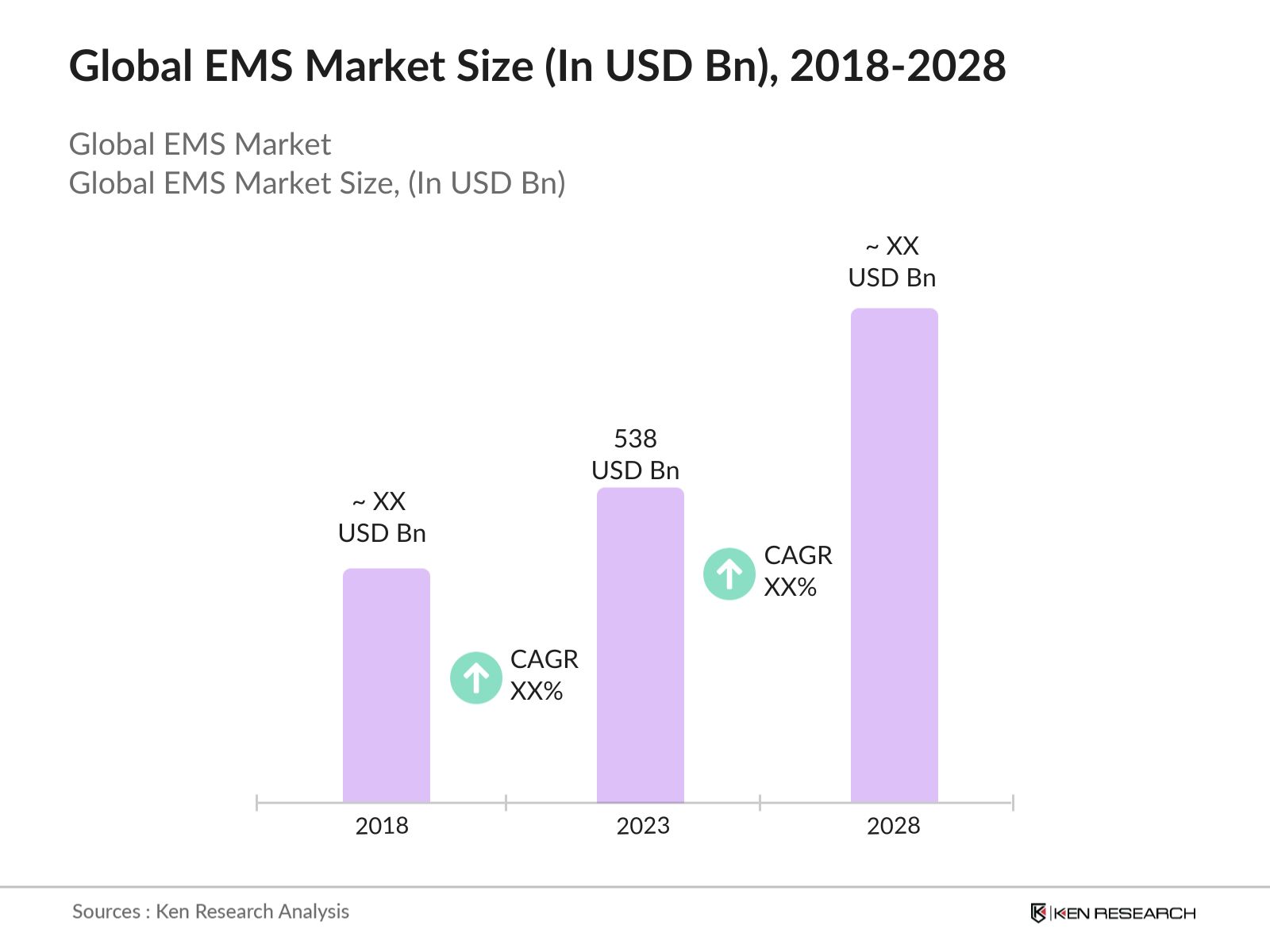
- The Global EMS market reached USD 538 billion in 2023, the market experienced significant growth due to an increased number of emergency cases, including road accidents and natural disasters. Additionally, adoption of advanced medical technologies, the expansion of healthcare infrastructure, growing geriatric population also contributes to the demand for EMS, as they are more prone to emergencies and chronic conditions.
- Major players in the Global EMS market include Philips Healthcare, Medtronic, GE Healthcare, Stryker Corporation, and Cardinal Health. These companies have established themselves by offering innovative products and solutions for emergency medical services. They focus on strategic partnerships, mergers, acquisitions, and continuous innovation to maintain a competitive edge in the market.
- In early 2024, Philips Healthcare introduced a new automated external defibrillator (AED), designed to improve emergency response. The upgraded device enhances both effectiveness and user-friendliness, making it easier for responders to deliver timely, life-saving interventions.
- Major cities like New York, London, Tokyo, and Paris dominate the EMS market due to their advanced healthcare infrastructure, high population density, and greater incidence of emergencies. These cities have well-established EMS networks and continuous government support to enhance emergency medical response, making them leaders in the global EMS market.
Global EMS Market Segmentation
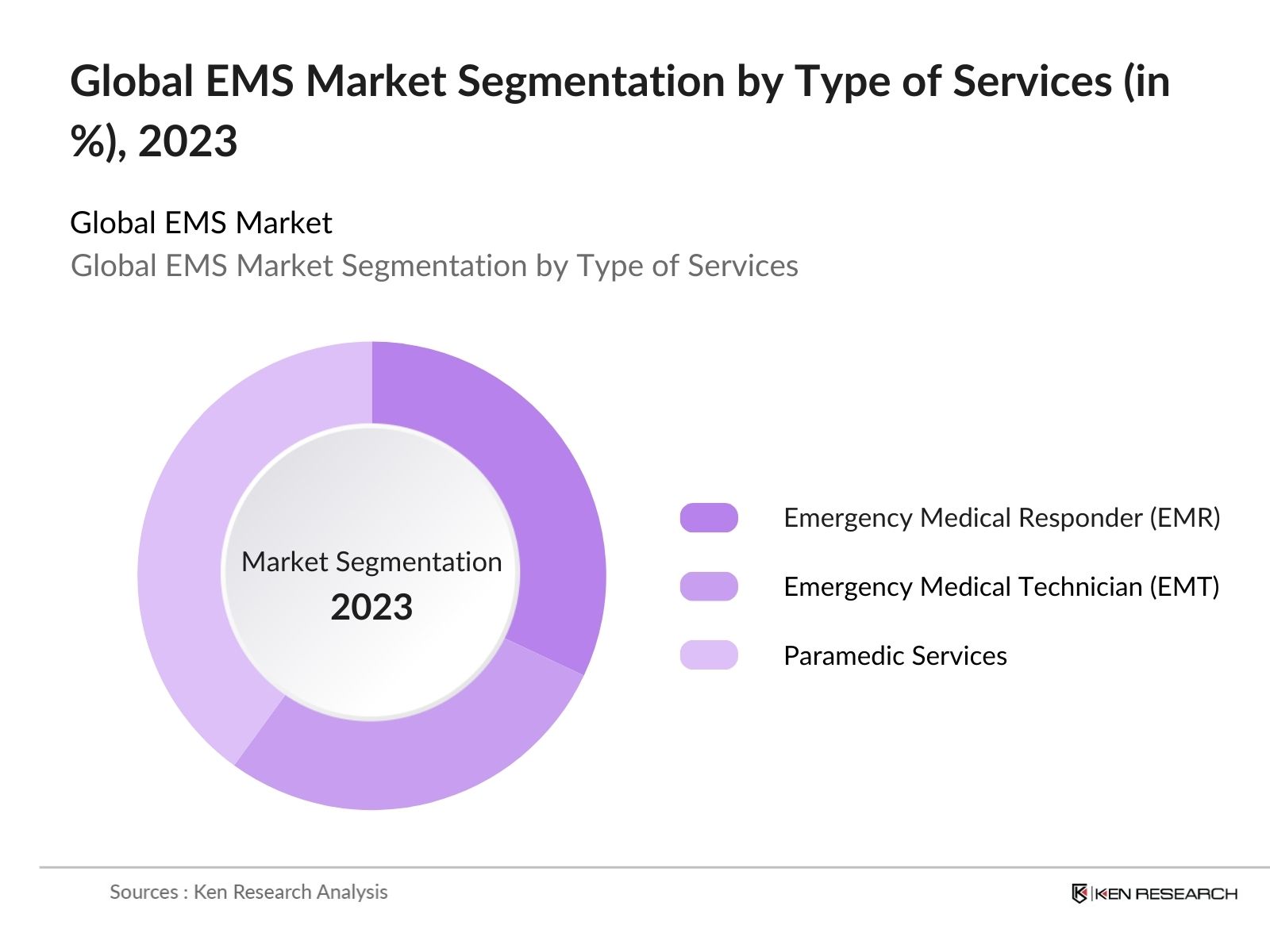
By Type of Service: The market is segmented by type of service into Emergency Medical Responder (EMR), Emergency Medical Technician (EMT), and Paramedic services. EMR services hold a significant market share in 2023 due to their role as the first point of contact in emergency situations. Their ability to provide immediate life-saving care and stabilization before more advanced care arrives is crucial.
|
Type of Service |
Market Share (2023) |
|
Emergency Medical Responder (EMR) |
32% |
|
Emergency Medical Technician (EMT) |
28% |
|
Paramedic Services |
40% |
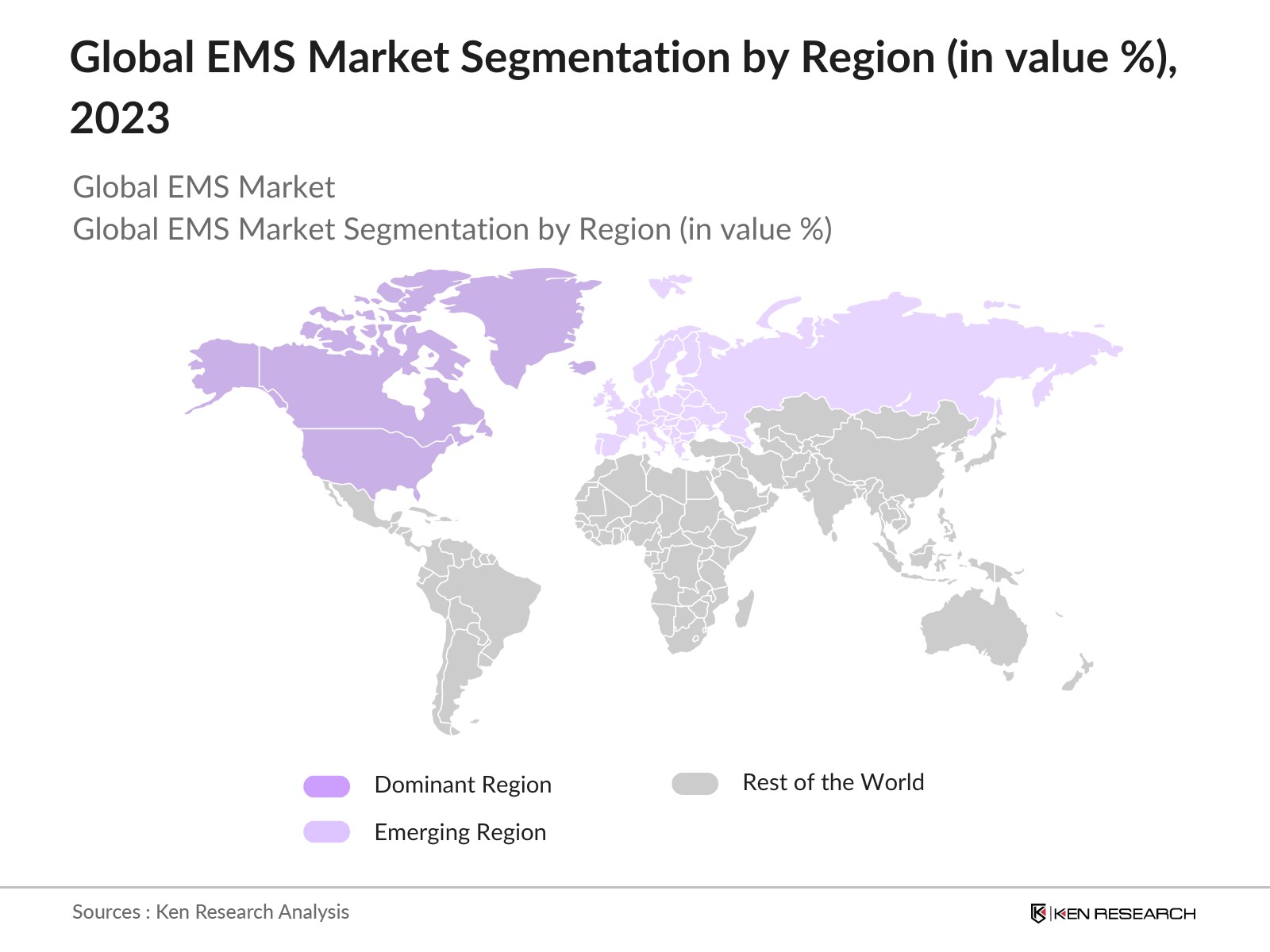
By Region: The EMS market is segmented by region into North America, Europe, APAC, Latin America, MEA. In 2023, North America led the EMS market, holding the largest share due to its well-established healthcare infrastructure, high healthcare spending, and numerous EMS providers. The region's advanced emergency medical services systems and widespread adoption of modern technologies contribute to its market dominance, making it a key player in the global EMS market.
|
Region |
Market Share (2023) |
|---|---|
|
North America |
38% |
|
Europe |
27% |
|
Asia Pacific |
25% |
|
Rest of the World |
10% |
By Equipment: The EMS market is segmented by equipment into Life Support and Emergency Resuscitation Equipment, Patient Monitoring Systems, and Other EMS Equipment. The Life Support and Emergency Resuscitation Equipment holds the largest market share in 2023 due to the critical nature of equipment such as defibrillators, ventilators, and resuscitators in saving lives during emergencies. The demand for advanced life support systems has been increasing due to their effectiveness in improving survival rates in critical conditions.
|
Equipment |
Market Share (2023) |
|
Life Support and Emergency Resuscitation Equipment |
45% |
|
Patient Monitoring Systems |
35% |
|
Other EMS Equipment |
20% |
Global EMS Market Competitive Landscape
|
Company |
Establishment Year |
Headquarters |
|---|---|---|
|
Philips Healthcare |
1891 |
Amsterdam, Netherlands |
|
Medtronic |
1949 |
Dublin, Ireland |
|
GE Healthcare |
1892 |
Chicago, USA |
|
Stryker Corporation |
1941 |
Kalamazoo, USA |
|
Cardinal Health |
1971 |
Dublin, USA |
- Stryker Corporation:
In 2023, Stryker Corporation announced a strategic partnership with the American Heart Association to develop and deploy advanced resuscitation technologies aimed at improving survival rates in cardiac arrest cases. The partnership focuses on enhancing the effectiveness of CPR and automated external defibrillators (AEDs) through innovative design and integrated data analytics. - Philips Healthcare:
In 2024, Philips Healthcare launched a new initiative to provide low-cost, high-quality EMS equipment to developing countries, focusing on improving emergency response capabilities in underserved regions. The initiative, known as the Global EMS Outreach Program, aims to distribute over 10,000 defibrillators and portable ventilators to EMS providers in Africa and Southeast Asia by 2025.
Growth Drivers
- Expansion of Healthcare Infrastructure and Emergency Medical Services:
The ongoing expansion of healthcare infrastructure worldwide is a significant growth driver for the EMS market. In 2024, several countries have substantially increased their healthcare budgets to improve emergency medical response capabilities. For example, the U.S. government allocated over USD 4 billion for upgrading EMS facilities, particularly in rural and underserved areas, to ensure faster response times and better patient outcomes. - Increased Incidence of Traffic Accidents and Natural Disasters:
The rising incidence of traffic accidents and natural disasters globally is another key driver of the EMS market. According to the World Health Organization, there were approximately 1.35 million road traffic fatalities worldwide in 2024, with millions more suffering serious injuries that require immediate medical attention. Additionally, natural disasters, such as hurricanes, floods, and earthquakes, have also increased in frequency, with over 100 major disasters reported globally in 2024 alone. - Rising Geriatric Population and Chronic Health Conditions: The aging global population and the increasing prevalence of chronic health conditions are significant factors driving the growth of the EMS market. According to the United Nations, the global population aged 65 and older reached approximately 750 million in 2024, with this demographic expected to grow further in the coming years. Older adults are more susceptible to emergencies such as cardiac arrests, strokes, and falls, which require immediate medical intervention.
Challenges
- Shortage of Skilled EMS Personnel: One of the significant challenges facing the EMS market is the shortage of skilled emergency medical personnel, including paramedics and EMTs. The shortage is more pronounced in rural areas and developing countries, where access to trained EMS providers is limited. Additionally, the high-stress nature of the job, low wages, and limited career advancement opportunities contribute to high turnover rates and difficulties in retaining skilled EMS workers.
- High Costs of EMS Equipment and Maintenance: The high costs associated with purchasing and maintaining advanced EMS equipment pose a significant challenge to market growth. These costs are prohibitive for many EMS providers, particularly in low- and middle-income countries where funding is limited. Additionally, the costs of training personnel to use new technologies and the expenses related to upgrading outdated equipment further strain the financial resources of EMS organizations, limiting their ability to expand and improve services.
Government Initiatives
- National Emergency Medical Services Education Standards (2024):
In 2024, the European Union introduced the National Emergency Medical Services Education Standards, a comprehensive framework designed to standardize EMS training and certification across member states. The initiative aims to ensure that all EMS personnel receive consistent, high-quality training and are equipped with the necessary skills to provide effective emergency care. - Public Health Emergency Preparedness Program (2022):
In 2022, the Indian government launched the Public Health Emergency Preparedness Program, which focused on strengthening the country's EMS capabilities in response to the increasing frequency of natural disasters and public health emergencies. The program allocated USD 670 million to upgrade EMS infrastructure.
Global EMS Market Future Outlook
The Global EMS market is poised for significant growth over the next five years, driven by several key factors. As the global population continues to age, the demand for emergency medical services is expected to increase, particularly in developed regions where advanced EMS systems are already in place. Additionally, the rising incidence of chronic diseases and the increasing frequency of natural disasters and road accidents are anticipated to further drive the need for efficient and responsive EMS systems.
Future Trends
- Integration of Artificial Intelligence in EMS Operations: Over the next five years, EMS providers are expected to increasingly integrate artificial intelligence (AI) into their operations to enhance decision-making and improve patient outcomes. AI-driven algorithms will likely be used to predict emergency incidents, optimize dispatch routes, and provide real-time diagnostic support to EMS personnel, enabling faster and more accurate response to emergencies.
- Expansion of Telemedicine in Emergency Care: The use of telemedicine in EMS is anticipated to expand significantly, allowing paramedics and EMTs to consult with specialists remotely and provide advanced care on-site. This trend is expected to improve patient outcomes by facilitating timely medical interventions and reducing the need for unnecessary hospital transports, especially in rural and remote areas.
Scope of the Report
|
By Equipment |
Life Support and Emergency Resuscitation Equipment Patient Monitoring Systems Other EMS Equipment |
|
By Type of Service |
Emergency Medical Responder (EMR) Emergency Medical Technician (EMT) Paramedic Services |
|
By Region |
North America Europe Asia-Pacific (APAC) Middle East & Africa (MEA) Latin America |
Products
Key Target Audience Organizations and Entities Who Can Benefit by Subscribing This Report:
Hospitals and Medical Institutions
Emergency Medical Service Organizations
Insurance Companies
Medical Equipment Manufacturers
Health IT Companies
Military and Defense Organizations
Training and Education Institutions for EMS Professionals
Investments and Venture Capitalist Firms
Government and Regulatory Bodies (e.g., FDA, NHS, WHO)
Time Period Captured in the Report:
Historical Period: 2018-2023
Base Year: 2023
Forecast Period: 2023-2028
Companies
Players Mentioned in the Report:
Philips Healthcare
Medtronic
GE Healthcare
Stryker Corporation
Cardinal Health
Smiths Medical
Asahi Kasei Corporation
Braun Melsungen AG
Honeywell Life Sciences
Zoll Medical Corporation 11
Table of Contents
1. Global EMS Market Overview
1.1. Definition and Scope
1.2. Market Taxonomy
1.3. Market Growth Rate
1.4. Market Segmentation Overview
2. Global EMS Market Size (in USD Bn), 2018-2023
2.1. Historical Market Size
2.2. Year-on-Year Growth Analysis
2.3. Key Market Developments and Milestones
3. Global EMS Market Analysis
3.1. Growth Drivers
3.1.1. Increasing Demand for Advanced EMS Systems
3.1.2. Government Funding and Support
3.1.3. Rising Incidence of Chronic Diseases and Aging Population
3.2. Challenges
3.2.1. High Costs of EMS Equipment and Services
3.2.2. Shortage of Trained EMS Professionals
3.2.3. Regulatory and Compliance Issues
3.3. Opportunities
3.3.1. Expansion of EMS in Developing Regions
3.3.2. Integration of Technology and Digital Health
3.3.3. Growth in Public-Private Partnerships
3.4. Trends
3.4.1. Adoption of Telemedicine in EMS
3.4.2. Integration with Smart City Initiatives
3.4.3. Use of AI and Machine Learning for Predictive Analytics
3.5. Government Regulation
3.5.1. Emergency Medical Services Modernization Act (2023)
3.5.2. National EMS Education Standards
3.5.3. Public Health Emergency Preparedness Program
3.6. SWOT Analysis
3.7. Stake Ecosystem
3.8. Competition Ecosystem
4. Global EMS Market Segmentation, 2023
4.1. By Type of Service (in Value %)
4.1.1. Emergency Medical Responder (EMR)
4.1.2. Emergency Medical Technician (EMT)
4.1.3. Paramedic Services
4.2. By Equipment (in Value %)
4.2.1. Life Support and Emergency Resuscitation Equipment
4.2.2. Patient Monitoring Systems
4.2.3. Other EMS Equipment
4.3. By Region (in Value %)
4.3.1. North America
4.3.2. Europe
4.3.3. Asia Pacific
4.3.4. Rest of the World
5. Global EMS Market Cross Comparison
5.1. Detailed Profiles of Major Companies
5.1.1. Philips Healthcare
5.1.2. Medtronic
5.1.3. GE Healthcare
5.1.4. Stryker Corporation
5.1.5. Cardinal Health
5.1.6. Smiths Medical
5.1.7. Braun Melsungen AG
5.1.8. Honeywell Life Sciences
5.1.9. Zoll Medical Corporation
5.1.10. Asahi Kasei Corporation
5.1.11. Honeywell International Inc.
5.1.12. Emerson Electric Co.
5.1.13. Becton, Dickinson and Company
5.1.14. Johnson & Johnson
5.1.15. 3M Company
5.2. Cross Comparison Parameters (No. of Employees, Headquarters, Inception Year, Revenue)
6. Global EMS Market Competitive Landscape
6.1. Market Share Analysis
6.2. Strategic Initiatives
6.3. Mergers and Acquisitions
6.4. Investment Analysis
6.4.1. Venture Capital Funding
6.4.2. Government Grants
6.4.3. Private Equity Investments
7. Global EMS Market Regulatory Framework
7.1. EMS Certification Standards
7.2. Compliance Requirements
7.3. EMS Accreditation Programs
8. Global EMS Future Market Size (in USD Bn), 2023-2028
8.1. Future Market Size Projections
8.2. Key Factors Driving Future Market Growth
9. Global EMS Future Market Segmentation, 2028
9.1. By Type of Service (in Value %)
9.2. By Equipment (in Value %)
9.3. By Region (in Value %)
10. Global EMS Market Analysts Recommendations
10.1. TAM/SAM/SOM Analysis
10.2. Customer Cohort Analysis
10.3. Marketing Initiatives
10.4. White Space Opportunity Analysis
Disclaimer Contact UsResearch Methodology
Step 1: Identifying Key Variables
Ecosystem creation for all major entities and referring to multiple secondary and proprietary databases to perform desk research around the market to collate market-level information.
Step 2: Market Building
Collating statistics on the Global EMS Market over the years, analyzing the penetration of EMS technologies, and computing the revenue generated for the market. This step also involves reviewing technology adoption rates and application effectiveness to ensure accuracy behind the data points shared.
Step 3: Validating and Finalizing
Building market hypotheses and conducting CATIs with market experts belonging to different companies to validate statistics and seek operational and financial information from company representatives.
Step 4: Research Output
Our team will approach multiple EMS companies to understand the nature of technology segments, consumer preferences, and other parameters. This supports validating statistics derived through a bottom-to-top approach from these EMS companies, ensuring accuracy and reliability in the report.
Frequently Asked Questions
How big is the Global EMS Market?
The Global EMS Market was valued of USD 538 billion, driven by the rising incidence of emergencies, increased government funding, and advancements in medical technology that improve the effectiveness and efficiency of emergency medical responses.
What are the challenges in the Global EMS Market?
Challenges in the Global EMS Market include a shortage of skilled EMS personnel, high costs of advanced equipment and maintenance, and regulatory and compliance barriers that vary across regions, complicating the standardization of services and integration of new technologies.
Who are the major players in the Global EMS Market?
Major players in the Global EMS Market include Philips Healthcare, Medtronic, GE Healthcare, Stryker Corporation, and Cardinal Health. These companies are leaders due to their innovative product offerings, extensive distribution networks, and strategic partnerships.
What are the growth drivers of the Global EMS Market?
The Global EMS Market is driven by factors such as the expansion of healthcare infrastructure, increased incidence of traffic accidents and natural disasters, and a rising geriatric population with higher medical needs. Government initiatives and investments in EMS systems also contribute to market growth.
Why Buy From Us?

What makes us stand out is that our consultants follows Robust, Refine and Result (RRR) methodology. i.e. Robust for clear definitions, approaches and sanity checking, Refine for differentiating respondents facts and opinions and Result for presenting data with story

We have set a benchmark in the industry by offering our clients with syndicated and customized market research reports featuring coverage of entire market as well as meticulous research and analyst insights.

While we don't replace traditional research, we flip the method upside down. Our dual approach of Top Bottom & Bottom Top ensures quality deliverable by not just verifying company fundamentals but also looking at the sector and macroeconomic factors.

With one step in the future, our research team constantly tries to show you the bigger picture. We help with some of the tough questions you may encounter along the way: How is the industry positioned? Best marketing channel? KPI's of competitors? By aligning every element, we help maximize success.

Our report gives you instant access to the answers and sources that other companies might choose to hide. We elaborate each steps of research methodology we have used and showcase you the sample size to earn your trust.

If you need any support, we are here! We pride ourselves on universe strength, data quality, and quick, friendly, and professional service.