Global Environmental Technology Market Outlook to 2030

Region:Global

Author(s):Shreya Garg

Product Code:KROD1102

Published On

November 2024

Total pages

95

About the Report

Global Environmental Technology Market Overview

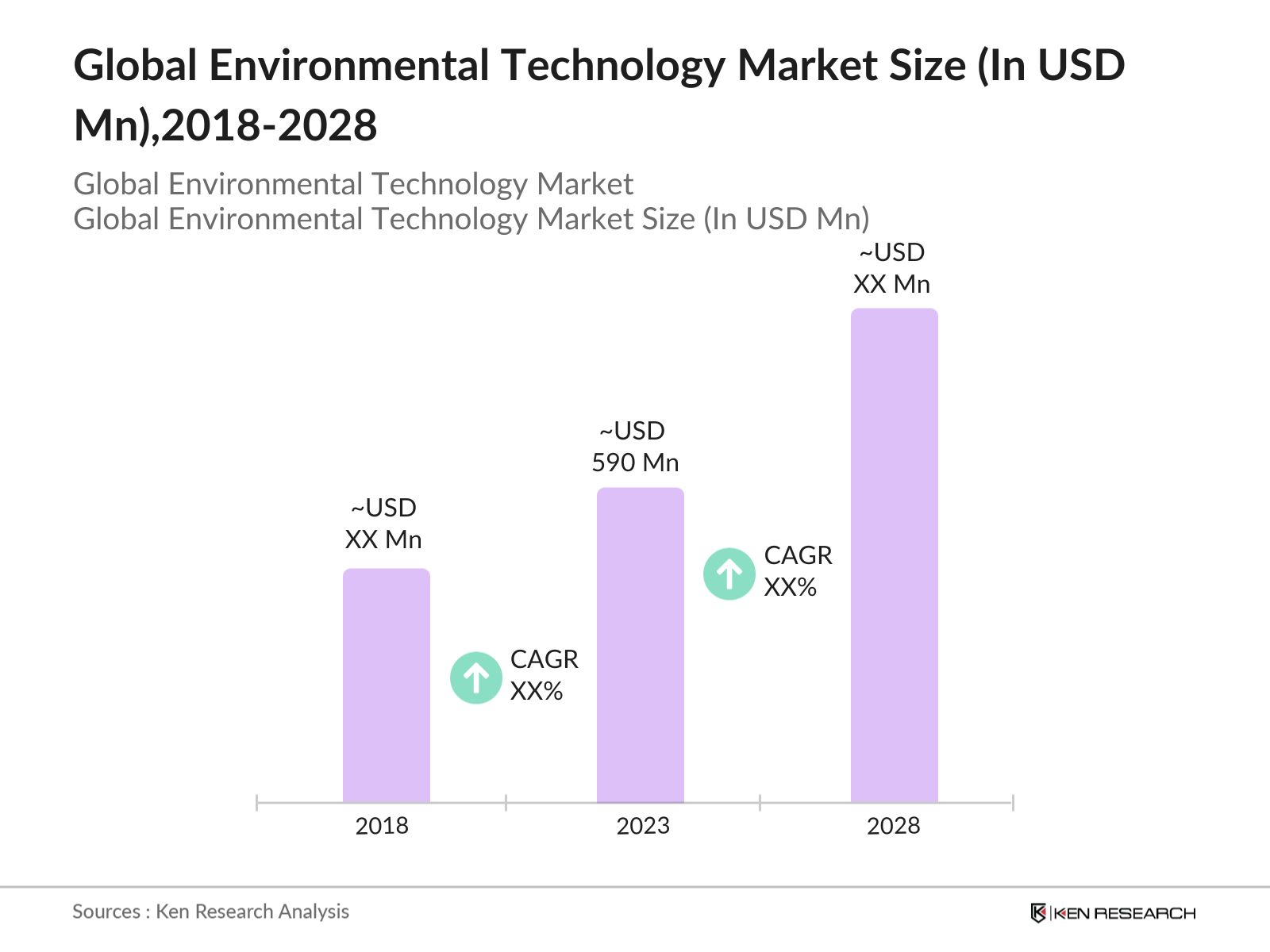
  • The global environmental technology market was valued at USD 590 million in 2023. The market is driven by the increasing need for pollution control and waste management solutions, the rising importance of sustainable development, and growing investments in renewable energy sources. Governments worldwide are emphasizing eco-friendly technologies due to stricter regulations and international environmental agreements.Global Environmental Technology Market Size
  • Major players in the global environmental technology market include Veolia Environment SA, SUEZ, AECOM, Siemens AG, and General Electric. These companies are at the forefront of developing technologies that address water purification, air pollution control, waste management, and renewable energy. Their strong research and development (R&D) capabilities and ability to provide comprehensive environmental solutions enable them to maintain significant market shares.
  • Veolia completed its acquisition of Suez in March 2022, which included various assets, with a focus on enhancing its waste management and water services capabilities. The deal was valued at EUR 13 billion. This deal aims to consolidate Veolias position in the global waste management market. The acquisition is part of Veolia's strategic plan to expand its footprint in sustainable waste processing solutions.
  • California, dominates the market in 2023. Californias strong environmental regulations, focus on reducing emissions, and investments in clean energy infrastructure make it a leader in this space. The state invested USD 5 billion in renewable energy projects and water recycling initiatives in 2023, solidifying its position as a frontrunner in the market.

Global Environmental Technology Market Segmentation

The global environmental technology market is segmented into various sectors such as Product Type, End User Industry, Region etc.

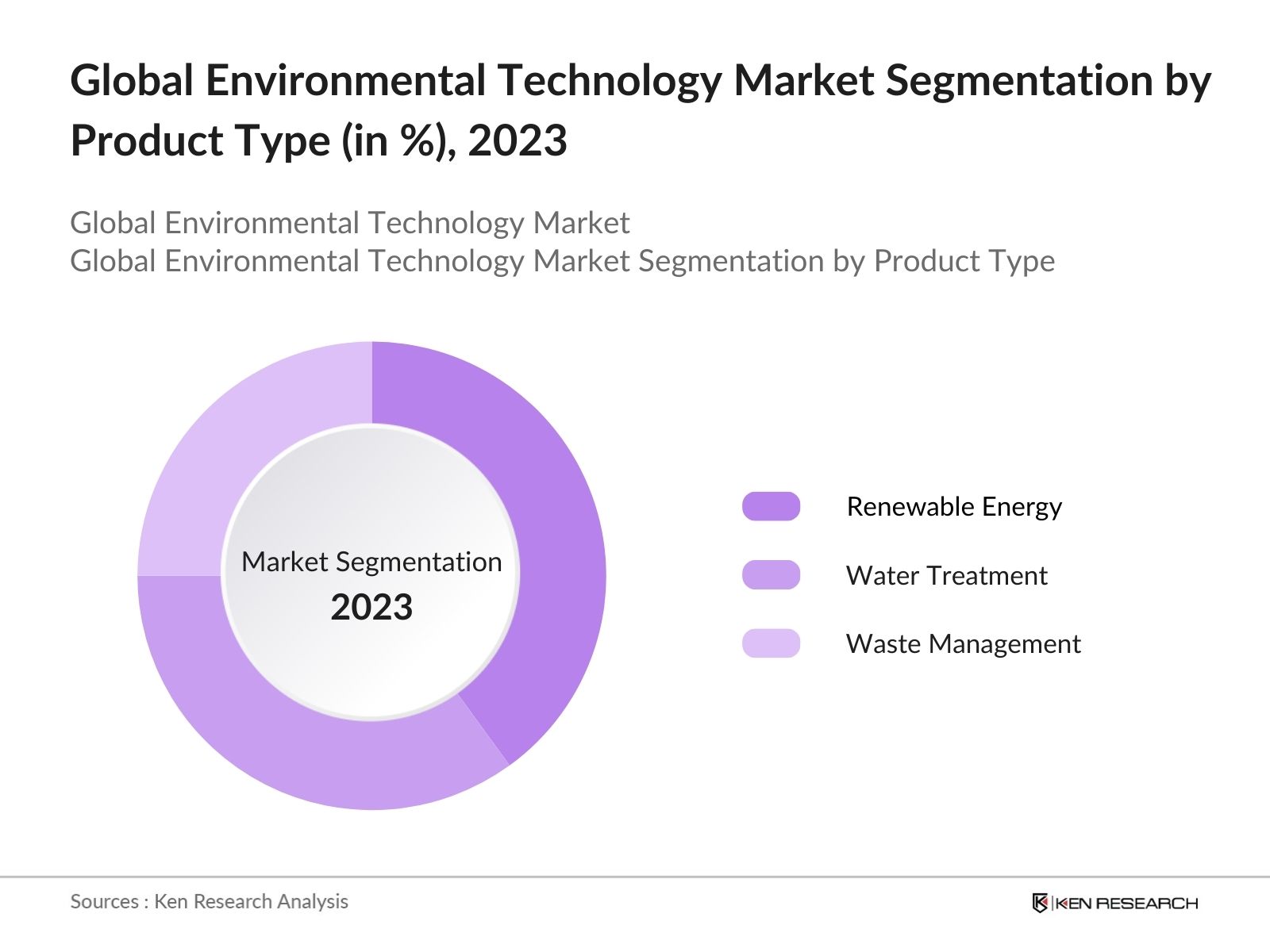
By Product Type: The market is segmented by product type into renewable energy technologies, water treatment technologies, and waste management technologies.
In 2023, renewable energy technologies held the dominant share. This is due to the widespread adoption of solar and wind energy solutions globally, driven by decreasing costs and government subsidies. Solar energy technologies are particularly prevalent within the renewable energy segment.Global Environmental Technology Market Segmentation by Product Type
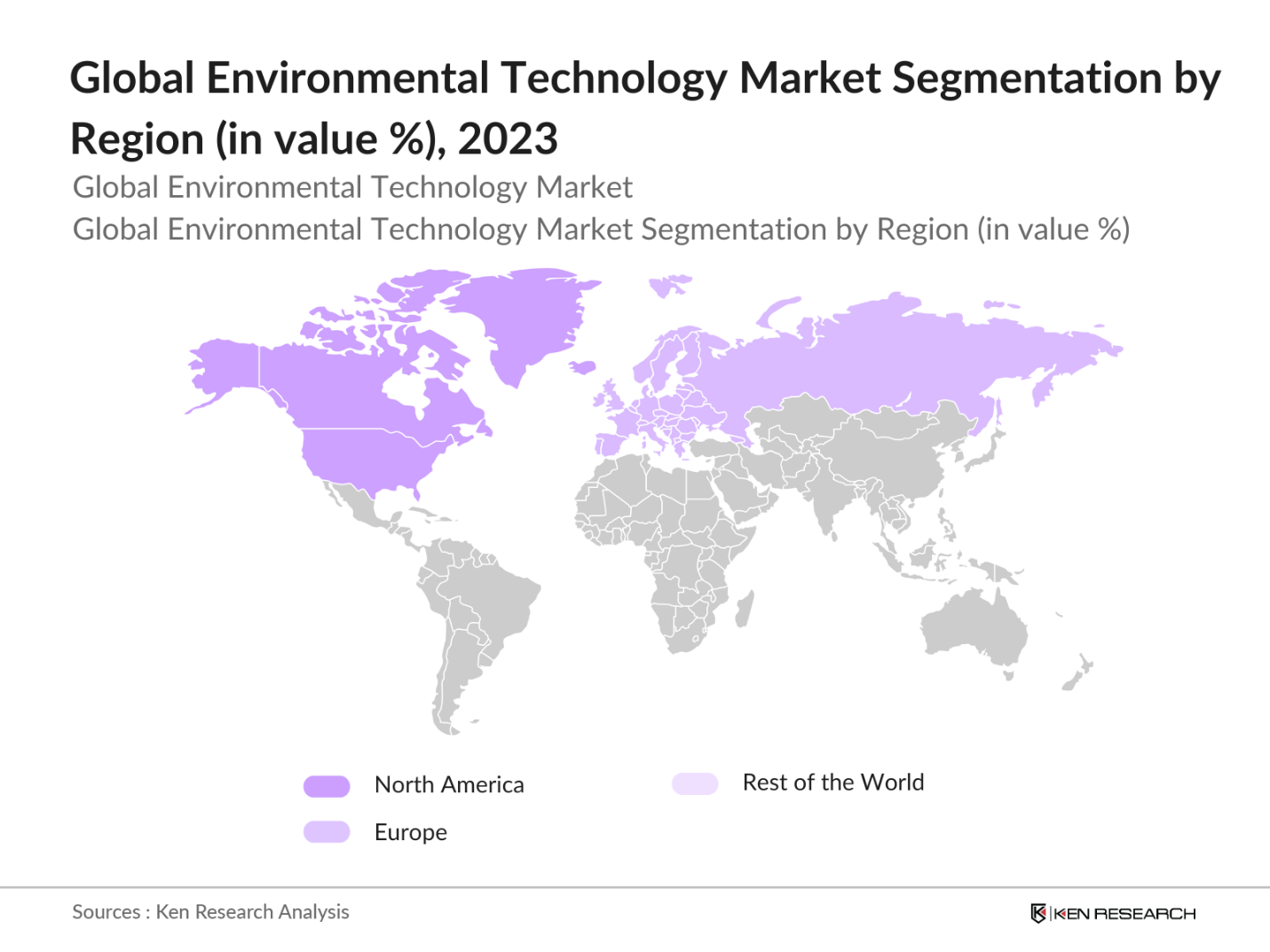
By Region: The market is segmented regionally into North America, Europe, Asia-Pacific, and Rest of the World. North America accounted for a major part of the total market share in 2023, driven by stringent environmental regulations and high investments in renewable energy. The U.S., in particular, leads the market due to its federal and state-level initiatives supporting clean technologies.Global Environmental Technology Market Segmentation by Region
By End-User Industry: The market is further segmented by end-use industries into energy & utilities, industrial, and commercial sectors. In 2023, energy & utilities held the largest market share, largely due to the widespread implementation of renewable energy technologies and smart grid solutions. The drive for decarbonization and energy efficiency is pushing this segment forward.

Global Environmental Technology Market Competitive Landscape

Company

Establishment Year

Headquarters

Veolia Environment

1853

Paris, France

SUEZ

1880

Paris, France

AECOM

1990

Dallas, Texas, USA

Siemens AG

1847

Munich, Germany

General Electric

1892

Boston, Massachusetts, USA

  • Siemens Smart Grid Expansion: In 2024, Siemens announced the expansion of its smart grid technology across Europe, with a contract worth USD 2 billion to modernize power grids in Germany and France. The companys technology allows for more efficient integration of renewable energy sources into the power grid, reducing energy loss and improving sustainability. This development highlights Siemens' role in driving innovation in environmental technologies related to energy distribution.
  • GEs Offshore Wind Turbine Launch: GE Renewable Energy (now GE Vernova) did unveil a new 18 MW offshore wind turbine The rotor diameter measures 220 meters to be installed in Japan in 2024, driving greater adoption of renewable energy solutions. This development strengthens GEs position in the environmental technology market and encourages further investments in offshore wind projects globally.

Global Environmental Technology Industry Analysis

Growth Drivers

  • Increased Global Investment in Renewable Energy: In 2024, global investment in renewable energy technologies, including wind and solar power, reached USD 500 billion, up from USD 450 billion in 2023. This rise in investment is driven by government initiatives promoting clean energy and the declining cost of renewable technologies. The growing energy demand across developing economies, particularly in Asia and Africa, is pushing governments and private sectors to adopt renewable solutions.
  • Rising Adoption of Electric Vehicles (EVs): The International Energy Agency (IEA) projects that global electric car sales could reach around17 million unitsby the end of 2024, fueled by increasing government subsidies and infrastructural improvements like charging stations. With countries like the U.S., China, and the European Union introducing tighter emissions regulations, automotive manufacturers are shifting toward producing EVs.
  • Waste Management Industry Growth: In 2024, the global waste management industry is flourishing driven by increasing waste production and stringent government regulations for waste disposal. Nations are adopting advanced waste management technologies such as waste-to-energy conversion and efficient recycling processes. These innovations are addressing landfill constraints and contributing to the growth of the environmental technology market by offering sustainable waste management solutions.

Challenges

  • Lack of Infrastructure for Waste Management: Despite global advancements in waste management, many developing countries face infrastructure limitations. In 2024, more than 2 billion tons of waste were generated globally, with large amount of waste improperly managed, particularly in Southeast Asia and Africa. The lack of modern waste processing infrastructure in these regions, combined with inadequate regulatory enforcement, remains a hurdle for environmental technology adoption.
  • Technological Barriers in Developing Economies: Developing countries often lack access to advanced environmental technologies due to limited technical expertise and resources. In 2024, less than 10% of wastewater in Sub-Saharan Africa was treated using modern technologies. This lack of technology transfer and skilled labor makes it difficult for these countries to implement and maintain advanced environmental systems, such as water treatment plants and waste management solutions, limiting market growth in those regions.

Government Initiatives

  • U.S. Clean Energy Investment: As part of the Inflation Reduction Act of 2022, the U.S. government committed USD 370 billion to boost clean energy development and decarbonization efforts. This investment supports the deployment of renewable energy technologies and aims to reduce industrial emissions. The act also promotes research and development in carbon capture and storage technologies, directly impacting the environmental technology market.
  • Indias Clean Ganga Initiative: As of mid-2023, the NMCG had commissioned sewage treatment plants with a total capacity of 2,665 MLD, with plans to further increase this capacity to meet the growing demands of pollution control. This initiative, aimed at reducing pollution in one of Indias most critical rivers, involves adopting advanced water treatment and pollution control technologies. The funds will be used to build modern sewage treatment plants along the Ganga River.

Global Environmental Technology Market Future Outlook

The global environmental technology market is expected to grow exponentially by 2028. The market will witness advancements in renewable energy technologies, particularly solar and wind power, with a growing focus on energy storage solutions. Moreover, the integration of digital technologies such as Artificial Intelligence (AI) and Internet of Things (IoT) in waste management, water treatment, and pollution control is likely to revolutionize the industry.

Future Trends

  • Growth in Carbon Capture Technologies: The carbon capture market is expected to grow significantly by 2028, with governments and companies worldwide are investing rigorously in carbon capture and storage technologies. These systems will reduce industrial carbon emissions. Carbon capture technologies will become an integral part of global environmental policies aimed at achieving carbon neutrality.
  • Rise of Renewable Hydrogen Energy: By 2028, the global investment in hydrogen-based renewable energy is expected to grow, driven by government incentives and advancements in hydrogen production technologies. This trend will lead to the production of immense amount of green hydrogen annually, providing a clean energy alternative to fossil fuels. Hydrogen is expected to play a key role in decarbonizing industrial sectors such as steel and cement production, further propelling the growth of the environmental technology market.

Scope of the Report

By Product Type

Renewable Energy Technologies

Water Treatment Technologies

Waste Management Technologies

By End User Industry

Energy & Utilities

Industrial

Commercial Sectors

By Region

North America

Europe

Asia-Pacific

MEA

Rest of the World

Products

Key Target Audience Organizations and Entities Who Can Benefit by Subscribing This Report:

  • Investors and VC Firms

  • Banks and Financial Institutions

  • Ministry of Environment and Natural Resources

  • National Waste Management Authorities Water treatment facilities

  • Renewable energy companies

  • Industrial waste processors

  • Smart grid technology developers

  • Public utilities and energy providers

  • Environmental engineering firms

  • Recycling technology providers

  • Desalination plant operators


Time Period Captured in the Report:

Historical Period: 2018-2023

Base Year: 2023

Forecast Period: 2023-2028

Companies

Players Mentioned in the Report:

  • Veolia Environment SA

  • SUEZ

  • AECOM

  • Siemens AG

  • General Electric

  • Schneider Electric

  • IBM Corporation

  • Honeywell International

  • Hitachi Zosen Corporation

  • Clean Harbors Inc.

  • Covanta Energy

  • Waste Management Inc.

  • Xylem Inc.

  • Fluence Corporation

  • Andritz AG

Table of Contents

1. Global Environmental Technology Market Overview

1.1. Definition and Scope
1.2. Market Taxonomy
1.3. Market Growth Rate
1.4. Market Segmentation Overview

2. Global Environmental Technology Market Size (in USD Million), 2018-2023

2.1. Historical Market Size
2.2. Year-on-Year Growth Analysis
2.3. Key Market Developments and Milestones

3. Global Environmental Technology Market Analysis

3.1. Growth Drivers
3.1.1. Increased Investment in Renewable Energy
3.1.2. Adoption of Electric Vehicles
3.1.3. Government Funding for Water Treatment Technologies
3.1.4. Growth in the Waste Management Industry
3.2. Restraints
3.2.1. High Implementation Costs
3.2.2. Lack of Infrastructure in Developing Regions
3.2.3. Uncertain Regulatory Frameworks
3.2.4. Technological Barriers in Developing Economies
3.3. Opportunities
3.3.1. Technological Advancements in Waste Management
3.3.2. Expansion in Renewable Hydrogen Energy
3.3.3. Growing Demand for Smart Water Management Systems
3.3.4. Opportunities in Circular Economy Projects
3.4. Trends
3.4.1. Integration of AI in Environmental Monitoring
3.4.2. Expansion of Smart Grids
3.4.3. Rise in Carbon Capture Technologies
3.4.4. Increased Adoption of Digital Environmental Solutions
3.5. Government Regulation
3.5.1. European Green Deal
3.5.2. U.S. Environmental Protection Act
3.5.3. Chinas National Carbon Neutrality Plan
3.5.4. Indias Clean Ganga Initiative
3.6. SWOT Analysis
3.7. Stakeholder Ecosystem
3.8. Competition Ecosystem

4. Global Environmental Technology Market Segmentation, 2023

4.1. By Product Type (in Value %)
4.1.1. Renewable Energy Technologies
4.1.2. Water Treatment Technologies
4.1.3. Waste Management Technologies
4.2. By End-Use Industry (in Value %)
4.2.1. Energy & Utilities
4.2.2. Industrial
4.2.3. Commercial
4.3. By Region (in Value %)
4.3.1. North America
4.3.2. Europe
4.3.3. Asia-Pacific
4.3.4. Rest of the World

4.3.5. Rest of the World

5. Global Environmental Technology Market Cross Comparison

5.1. Detailed Profiles of Major Companies
5.1.1. Veolia Environment SA
5.1.2. SUEZ
5.1.3. Siemens AG
5.1.4. General Electric
5.1.5. AECOM
5.2. Cross Comparison Parameters (No. of Employees, Headquarters, Inception Year, Revenue)

6. Global Environmental Technology Market Competitive Landscape

6.1. Market Share Analysis
6.2. Strategic Initiatives
6.3. Mergers and Acquisitions
6.4. Investment Analysis
6.4.1. Venture Capital Funding
6.4.2. Government Grants
6.4.3. Private Equity Investments

7. Global Environmental Technology Market Regulatory Framework

7.1. Environmental Standards
7.2. Compliance Requirements
7.3. Certification Processes

8. Global Environmental Technology Future Market Size (in USD Trillion), 2023-2028

8.1. Future Market Size Projections
8.2. Key Factors Driving Future Market Growth

9. Global Environmental Technology Future Market Segmentation, 2028

9.1. By Product Type (in Value %)
9.2. By End-Use Industry (in Value %)
9.3. By Region (in Value %)

10. Global Environmental Technology Market Analysts Recommendations

10.1. TAM/SAM/SOM Analysis
10.2. Customer Cohort Analysis
10.3. Marketing Initiatives
10.4. White Space Opportunity Analysis

Disclaimer

Contact Us

Research Methodology

Step:1 Identifying Key Variables:

Ecosystem creation for all the major entities and referring to multiple secondary and proprietary databases to perform desk research around market to collate industry level information.

Step:2 Market Building:

Collating statistics on this industry over the years, penetration of marketplaces and service providers ratio to compute revenue generated for Global environmental technology industry. We will also review service quality statistics to understand revenue generated which can ensure accuracy behind the data points shared.

Step:3 Validating and Finalizing:

Building market hypothesis and conducting CATIs with industry experts belonging to different environmental technology companies to validate statistics and seek operational and financial information from company representatives.

Step:4 Research output:

Our team will approach multiple environmental technology companies and understand nature of product segments and sales, consumer preference and other parameters, which will support us validate statistics derived through bottom to top approach from such environmental technology companies.

Frequently Asked Questions

01 How big is the Global Environmental Technology Market?

The global environmental technology market was valued at USD 590 million in 2023, driven by the increasing need for pollution control, waste management solutions, and the growing focus on renewable energy and sustainability.

02 What are the challenges in the Global Environmental Technology Market?

Challenges in the Global Environmental Technology market include high implementation costs for advanced technologies, lack of infrastructure for waste management in developing countries, inconsistent regulatory frameworks, and technological barriers in resource-constrained regions.

03 Who are the major players in the Global Environmental Technology Market?

Key players in the Global Environmental Technology market include Veolia Environment, SUEZ, Siemens AG, General Electric, and AECOM. These companies dominate through their strong R&D capabilities, large-scale projects, and innovative solutions in renewable energy, waste management, and water treatment.

04 What are the growth drivers of the Global Environmental Technology Market?

The Global Environmental Technology market is propelled by rising investments in renewable energy, the growing adoption of electric vehicles, government funding for water treatment technologies, and the increasing demand for sustainable waste management solutions.

Why Buy From Us?

RRR
Refine Robust Result (RRR) Framework

What makes us stand out is that our consultants follows Robust, Refine and Result (RRR) methodology. i.e. Robust for clear definitions, approaches and sanity checking, Refine for differentiating respondents facts and opinions and Result for presenting data with story

Our Reach Is Unmatched

We have set a benchmark in the industry by offering our clients with syndicated and customized market research reports featuring coverage of entire market as well as meticulous research and analyst insights.

Research
Shifting the Research Paradigm

While we don't replace traditional research, we flip the method upside down. Our dual approach of Top Bottom & Bottom Top ensures quality deliverable by not just verifying company fundamentals but also looking at the sector and macroeconomic factors.

Insite
More Insights-Better Decisions

With one step in the future, our research team constantly tries to show you the bigger picture. We help with some of the tough questions you may encounter along the way: How is the industry positioned? Best marketing channel? KPI's of competitors? By aligning every element, we help maximize success.

Trust
Transparency and Trust

Our report gives you instant access to the answers and sources that other companies might choose to hide. We elaborate each steps of research methodology we have used and showcase you the sample size to earn your trust.

support
Round the Clock Support

If you need any support, we are here! We pride ourselves on universe strength, data quality, and quick, friendly, and professional service.

Why Client Choose Us?

400000+ Reports in repository
150+ Consulting project a year
100+ Analysts
8000+ Client Queries in 2022