
Global Equestrian Apparel Market Outlook to 2030
Region:Global
Author(s):Abhinav kumar
Product Code:KROD10945
Region:Global
Author(s):Abhinav kumar
Product Code:KROD10945
November 2024
98
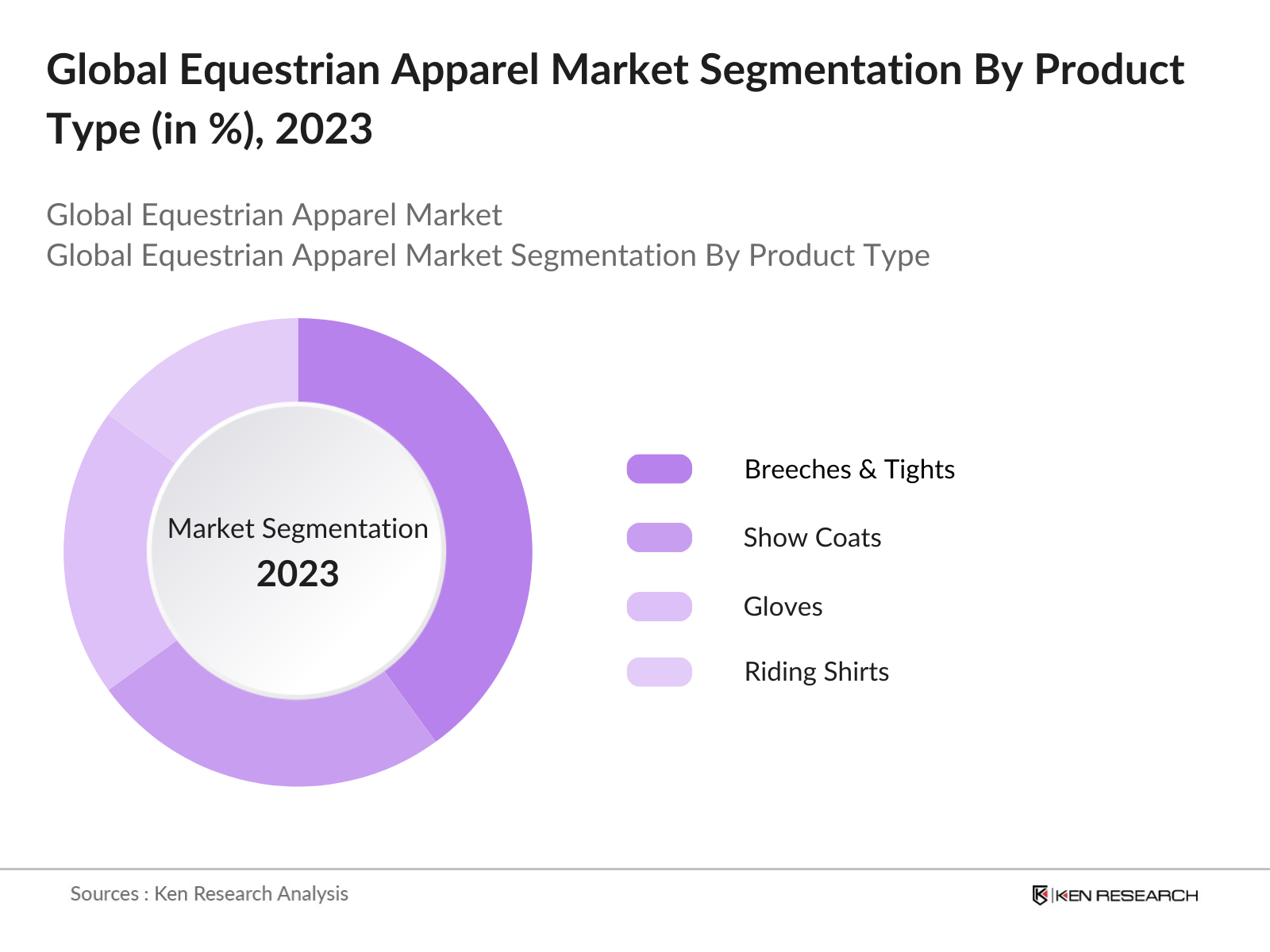
By Product Type: The Global Equestrian Apparel market is segmented by product type into Breeches & Tights, Show Coats, Gloves, Riding Shirts, and Boots. Recently, Breeches & Tights have held a dominant market share within the product type segment due to their essential role in providing comfort and grip for riders. Popular among professional and amateur riders alike, breeches come in various fabric options, offering flexibility and durability. Their prominent role in competitions and casual riding enhances their demand, making this sub-segment a leading contributor to the overall market.
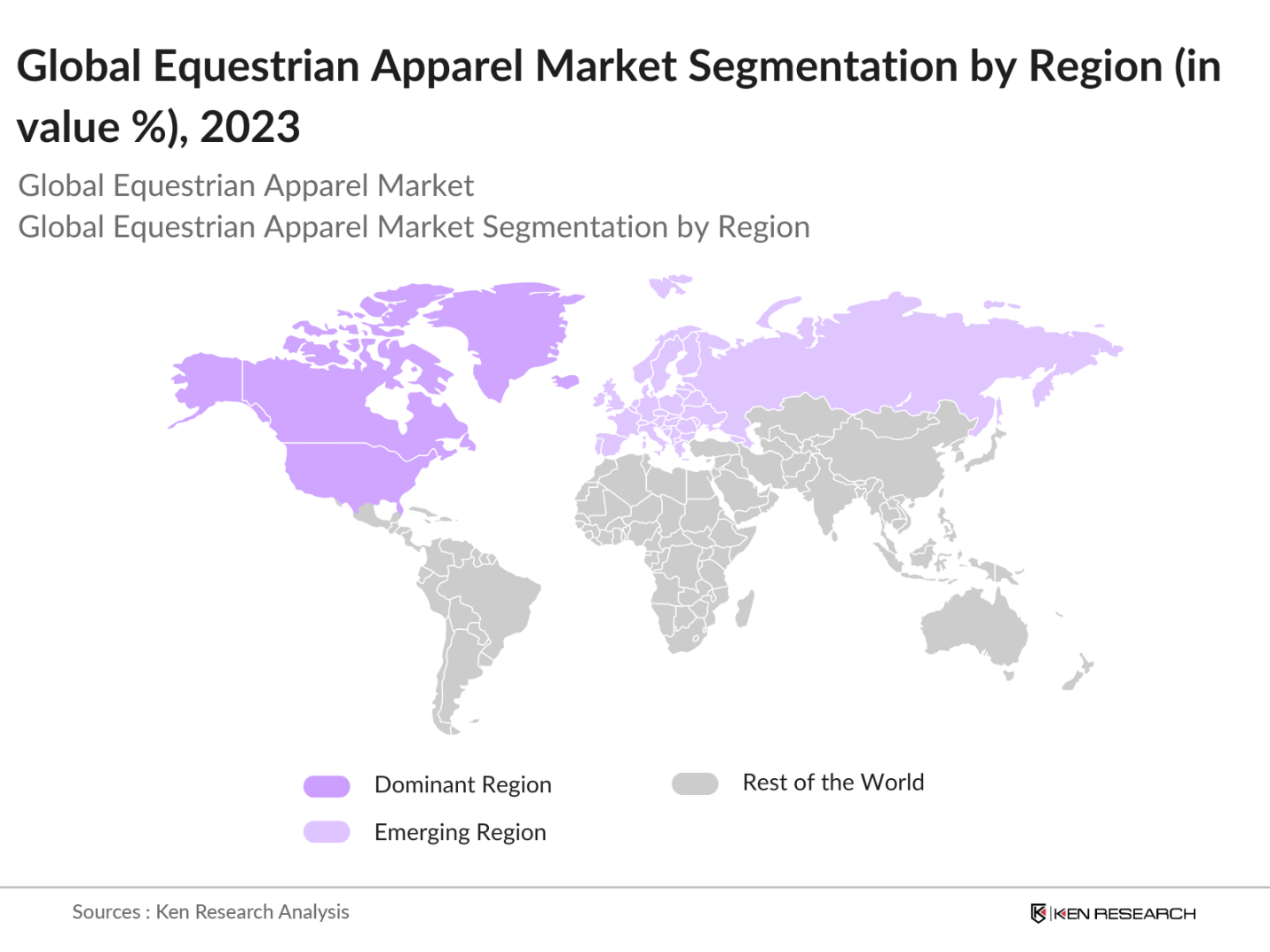
By Region: Regional segmentation includes North America, Europe, Asia Pacific, Latin America, and the Middle East & Africa. Europe holds the largest market share, with North America closely following, due to the established popularity of equestrian sports and the presence of renowned events like the Royal Ascot and Kentucky Derby. In these regions, equestrian apparel has a robust consumer base, as well as an extensive network of distributors and specialty retailers that cater to both recreational and competitive riders.
By Material Type: The market is further segmented by material type into Cotton, Synthetic Fabrics, and Leather. Synthetic Fabrics dominate this segment due to their functional properties, such as moisture-wicking, UV protection, and enhanced durability, which are particularly valuable in outdoor and performance contexts. These materials also provide riders with a comfortable fit, resilience, and ease of maintenance compared to natural fibers like cotton and leather.
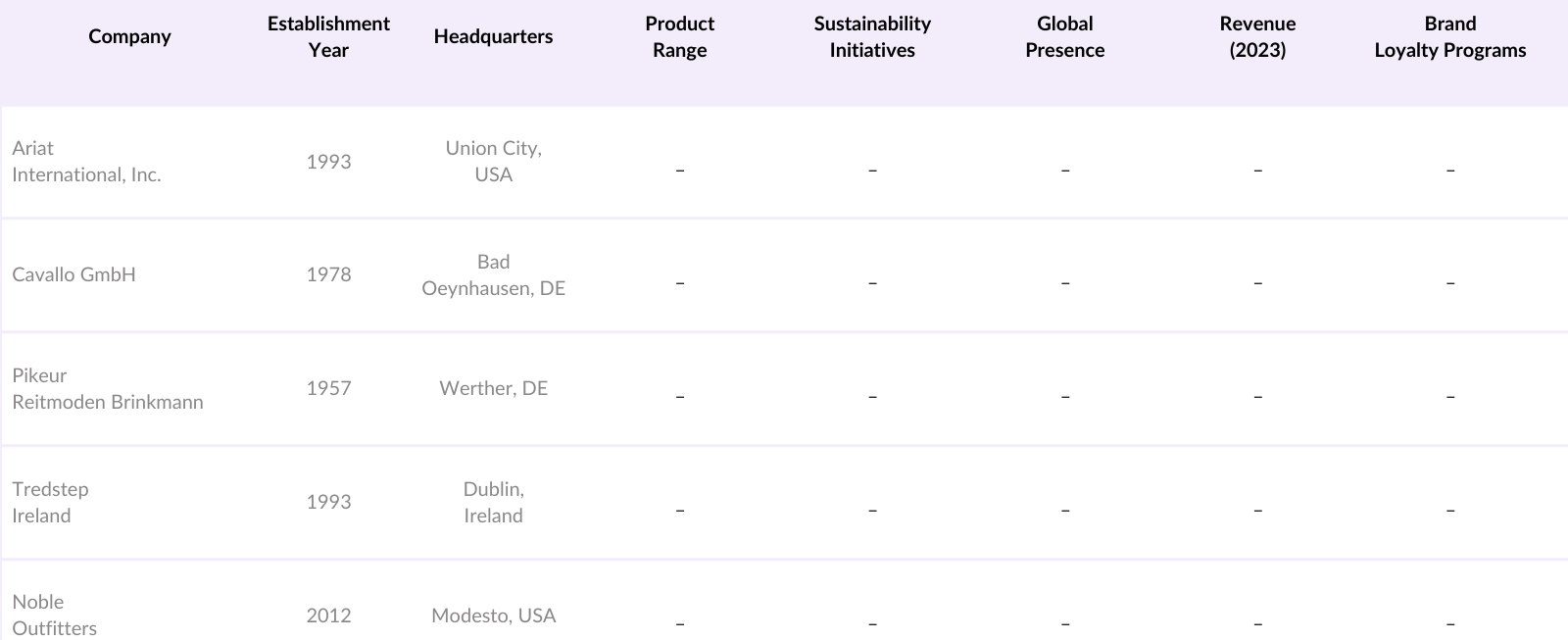
The Global Equestrian Apparel market is dominated by a mix of long-established companies and emerging brands that cater to both performance and style-oriented demands. Major players include Ariat International, Cavallo GmbH, Pikeur Reitmoden Brinkmann, and several others. Their influence in the market is supported by brand loyalty, a wide range of innovative products, and strong distribution channels.
Over the next five years, the Global Equestrian Apparel market is expected to experience steady growth, driven by increased participation in equestrian sports, growing demand for performance-oriented apparel, and rising awareness of sustainable practices within the industry. The adoption of innovative materials that offer superior comfort and protection, along with the expanding reach of online retail channels, will further support market expansion.
|
Product Type |
Breeches & Tights, Show Coats, Gloves, Riding Shirts, Boots |
|
Material Type |
Cotton, Synthetic Fabrics, Leather |
|
End User |
Men, Women, Children |
|
Distribution Channel |
Offline (Retail Stores, Specialty Stores), Online (eCommerce Platforms, Brand Websites) |
|
Region |
North America, Europe, Asia Pacific, Latin America, Middle East & Africa |
1.1. Definition and Scope
1.2. Market Taxonomy
1.3. Market Growth Rate
1.4. Market Segmentation Overview
2.1. Historical Market Size
2.2. Year-On-Year Growth Analysis
2.3. Key Market Developments and Milestones
3.1. Growth Drivers
3.1.1. Rising Popularity of Equestrian Sports
3.1.2. Increased Disposable Income in Emerging Markets
3.1.3. Shift Towards Athleisure and Functional Clothing
3.1.4. Growth of Online Retail and Customization Demand
3.2. Market Challenges
3.2.1. High Production Costs (Fabric, Quality Standards)
3.2.2. Limited Market Reach in Developing Economies
3.2.3. Seasonal Demand Variability
3.3. Opportunities
3.3.1. Innovations in Performance Fabrics
3.3.2. Growth in Sustainability Initiatives
3.3.3. Expansion in Non-Traditional Markets
3.4. Trends
3.4.1. Adoption of Smart Textiles (Moisture-Wicking, UV Protection)
3.4.2. Rise in Demand for Gender-Neutral Apparel
3.4.3. Integration of Fashion-Forward Designs
3.5. Regulatory Analysis
3.5.1. Fabric Safety Standards
3.5.2. Animal Welfare Compliance (Leather Sourcing)
3.5.3. Industry-Specific Certifications
3.6. SWOT Analysis
3.7. Supply Chain Ecosystem
3.8. Porters Five Forces Analysis
3.9. Competition Ecosystem
4.1. By Product Type (In Value %)
4.1.1. Breeches & Tights
4.1.2. Show Coats
4.1.3. Gloves
4.1.4. Riding Shirts
4.1.5. Boots
4.2. By Material Type (In Value %)
4.2.1. Cotton
4.2.2. Synthetic Fabrics
4.2.3. Leather
4.3. By End User (In Value %)
4.3.1. Men
4.3.2. Women
4.3.3. Children
4.4. By Distribution Channel (In Value %)
4.4.1. Offline (Retail Stores, Specialty Stores)
4.4.2. Online (eCommerce Platforms, Brand Websites)
4.5. By Region (In Value %)
4.5.1. North America
4.5.2. Europe
4.5.3. Asia Pacific
4.5.4. Latin America
4.5.5. Middle East & Africa
5.1. Detailed Profiles of Major Companies
5.1.1. Ariat International, Inc.
5.1.2. Cavallo GmbH
5.1.3. Pikeur Reitmoden Brinkmann GmbH
5.1.4. Kerrits Equestrian Apparel
5.1.5. Tredstep Ireland
5.1.6. Equine Couture
5.1.7. Noble Outfitters
5.1.8. Horze International
5.1.9. Decathlon S.A.
5.1.10. Horseware Ireland
5.1.11. Mountain Horse
5.1.12. GPA France
5.1.13. Kingsland Equestrian
5.1.14. Schockemhle Sports GmbH
5.1.15. Charles Owen & Company
5.2. Cross Comparison Parameters (Revenue, Brand Presence, Sustainability Initiatives, Quality Standards, Material Sourcing, Customer Reviews, Online Engagement, Market Coverage)
5.3. Market Share Analysis
5.4. Strategic Initiatives
5.5. Mergers and Acquisitions
5.6. Investment Analysis
5.7. New Product Launches
5.8. Marketing Campaigns
5.9. Private Equity Investments
6.1. Industry Standards and Certifications
6.2. Environmental Compliance (Sustainable Sourcing)
6.3. Quality Control Regulations
6.4. Trade Regulations and Import Tariffs
7.1. Future Market Size Projections
7.2. Key Factors Driving Future Market Growth
8.1. By Product Type (In Value %)
8.2. By Material Type (In Value %)
8.3. By End User (In Value %)
8.4. By Distribution Channel (In Value %)
8.5. By Region (In Value %)
9.1. TAM/SAM/SOM Analysis
9.2. Customer Cohort Analysis
9.3. Product Innovation and Differentiation Strategy
9.4. Untapped Market Opportunities Analysis
Disclaimer Contact UsThis step involves mapping out all key stakeholders in the Global Equestrian Apparel Market. Extensive desk research, using industry publications, government databases, and proprietary sources, is conducted to pinpoint critical market variables, such as consumer preferences, price sensitivity, and product quality standards.
Historical data is gathered and analyzed, focusing on market penetration levels, competitive structure, and revenue generation. This stage also includes an in-depth analysis of product attributes that are most valued by consumers, to help create a robust market model.
Market assumptions are validated through consultations with industry experts and surveys involving representatives from various regions. The insights gained here aid in the calibration of revenue projections and refinement of growth drivers.
The final phase involves synthesizing data from all primary and secondary sources to ensure a comprehensive, reliable market outlook. The data is further corroborated through consultations with key market players, ensuring an accurate, detailed analysis of the Global Equestrian Apparel Market.
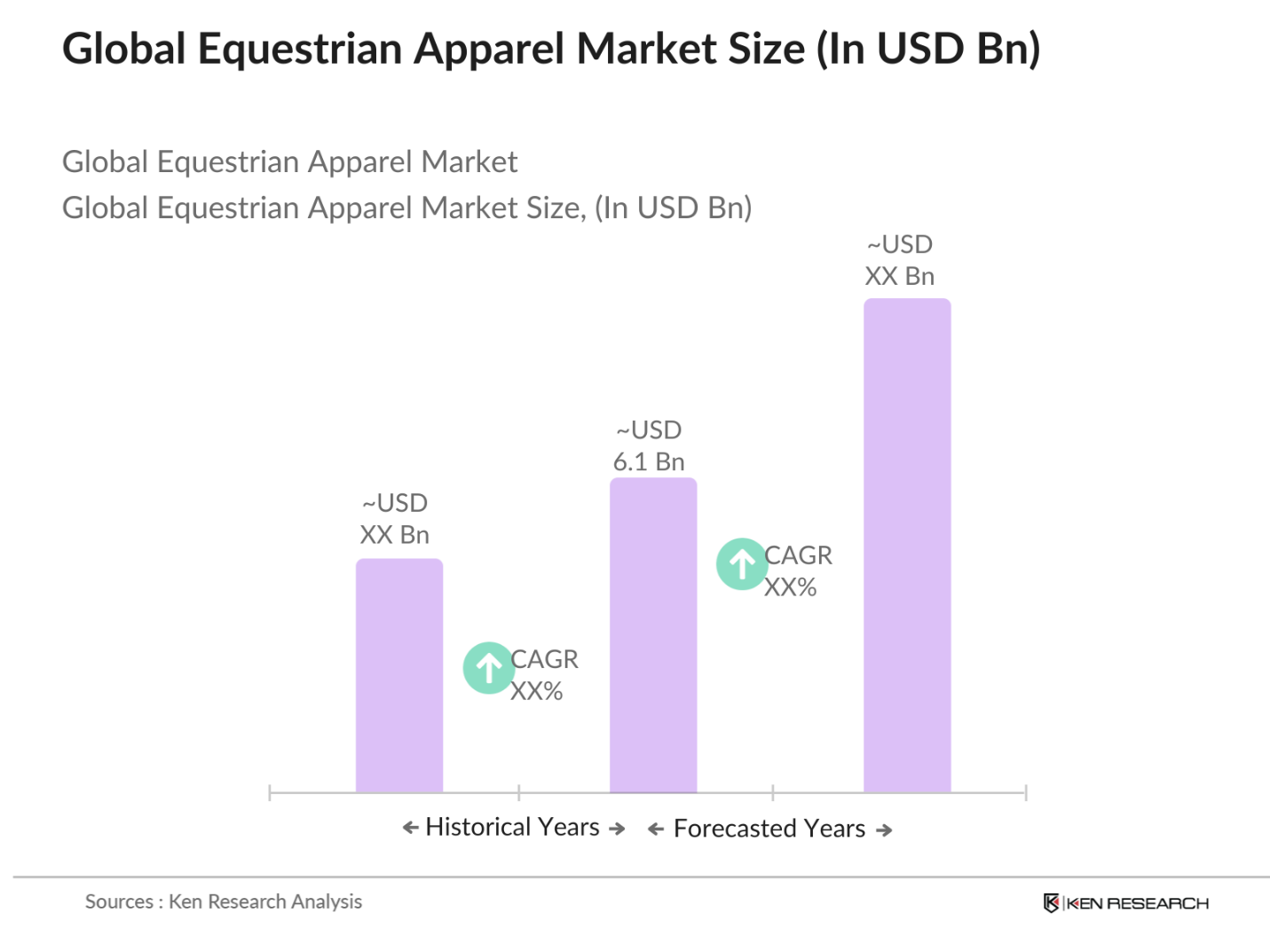
The Global Equestrian Apparel Market was valued at USD 6.1 billion, driven by strong demand for high-performance, stylish riding gear in regions with established equestrian traditions.
Challenges include high production costs associated with premium materials and fluctuating demand due to the seasonal nature of equestrian sports, impacting profitability for manufacturers.
Leading companies include Ariat International, Pikeur Reitmoden Brinkmann, and Horseware Ireland. These brands have a significant market presence due to their reputation for quality and durable products.
The market is driven by the popularity of equestrian sports, rising disposable incomes, and consumer demand for both comfort and style in performance clothing.

What makes us stand out is that our consultants follows Robust, Refine and Result (RRR) methodology. i.e. Robust for clear definitions, approaches and sanity checking, Refine for differentiating respondents facts and opinions and Result for presenting data with story

We have set a benchmark in the industry by offering our clients with syndicated and customized market research reports featuring coverage of entire market as well as meticulous research and analyst insights.

While we don't replace traditional research, we flip the method upside down. Our dual approach of Top Bottom & Bottom Top ensures quality deliverable by not just verifying company fundamentals but also looking at the sector and macroeconomic factors.

With one step in the future, our research team constantly tries to show you the bigger picture. We help with some of the tough questions you may encounter along the way: How is the industry positioned? Best marketing channel? KPI's of competitors? By aligning every element, we help maximize success.

Our report gives you instant access to the answers and sources that other companies might choose to hide. We elaborate each steps of research methodology we have used and showcase you the sample size to earn your trust.

If you need any support, we are here! We pride ourselves on universe strength, data quality, and quick, friendly, and professional service.