
Global Femtech Market Outlook 2030
Region:Global
Author(s):Shivani
Product Code:KROD8084
October 2024
86
About the Report
Global Femtech Market Overview
- The global Femtech market is valued at USD 59.4 billion based on a five-year historical analysis. It is driven by increasing awareness of women's health issues, a growing demand for personalized healthcare solutions, and rising investments in digital health platforms targeting womens health. Key areas like menstrual health, fertility tracking, and pregnancy solutions have witnessed significant growth due to the integration of technology into healthcare services. This growth is further bolstered by venture capital investments and government support for women's health initiatives, pushing the market forward.
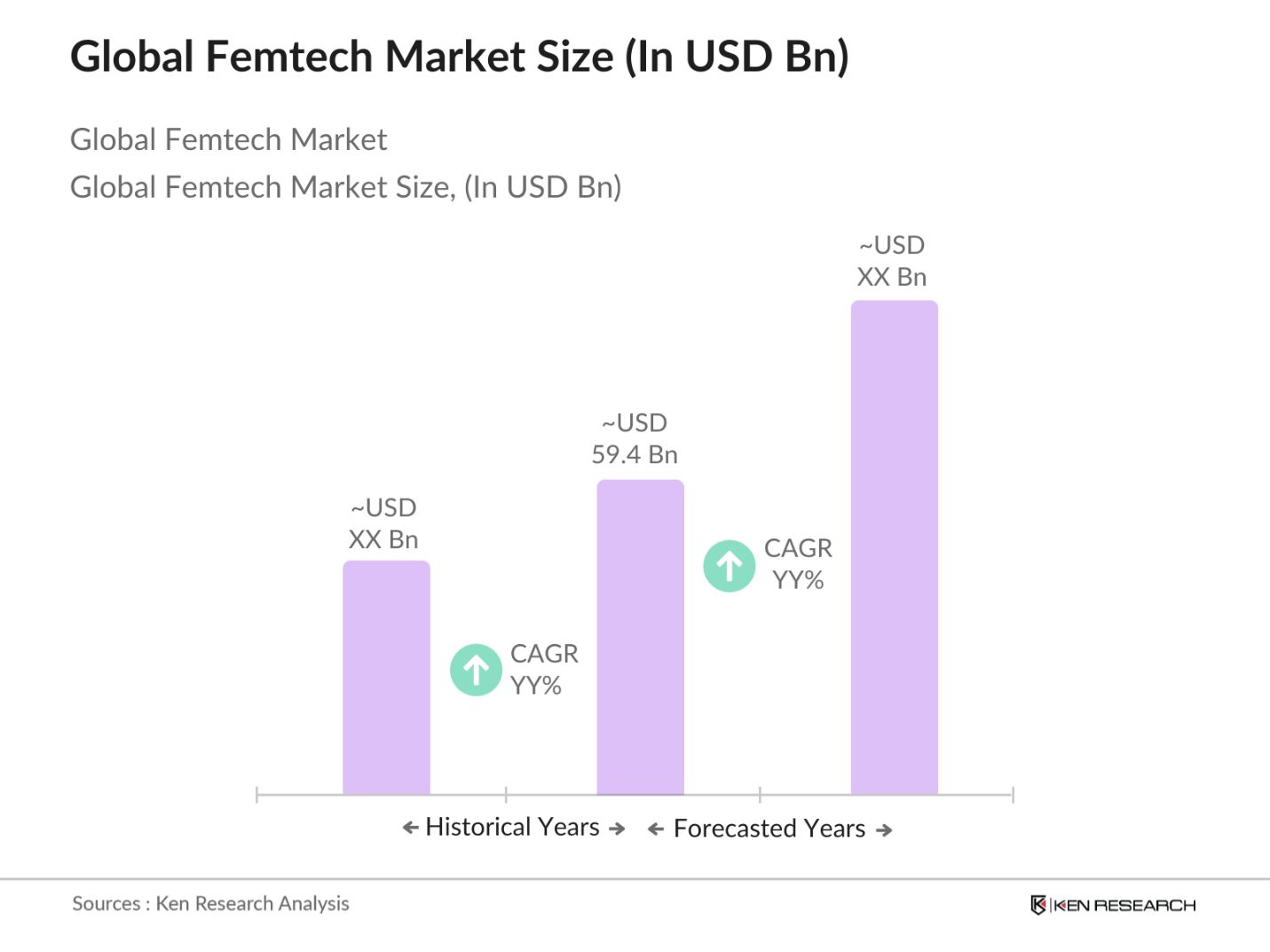
- Dominant countries in the Femtech market include the United States, the United Kingdom, and Germany. The dominance of these countries is attributed to their advanced healthcare infrastructure, high healthcare expenditure, and a robust ecosystem of health technology startups. In the U.S., for example, the strong presence of venture capital funding in the health tech space and a large base of female consumers using digital health solutions for reproductive health and wellness contribute to the markets growth.
- The U.S. Department of Health and Human Services (HHS) launched a dedicated funding initiative in 2023 to support Femtech innovation, focusing on maternal health, reproductive care, and mental health. The program allocates $500 million in grants to startups and established companies developing digital health solutions for women. In 2023, over 120 companies have benefited from this funding, resulting in new telemedicine platforms and wearable devices tailored to womens health needs. This initiative underscores the U.S. governments commitment to advancing womens healthcare through technology.
Global Femtech Market Segmentation
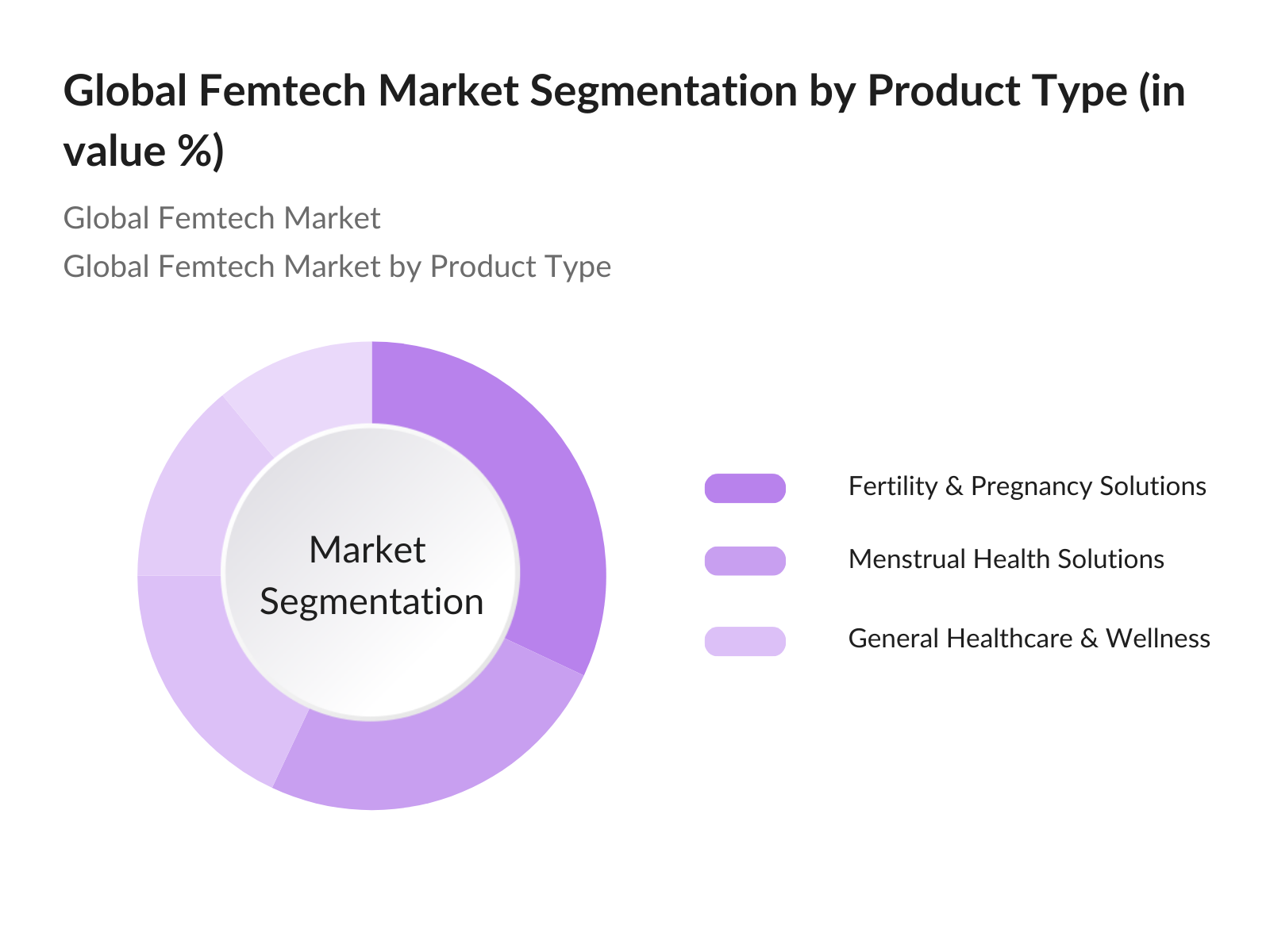
By Product Type: The Femtech market is segmented into menstrual health solutions, fertility and pregnancy solutions, and general healthcare and wellness. Fertility and pregnancy solutions dominate the market share due to the increasing adoption of fertility tracking apps, wearable devices, and telemedicine platforms tailored for womens reproductive health. Companies such as Flo Health and Natural Cycles have seen a surge in usage due to their ability to provide personalized insights and assistance, making them critical players in this segment.
|
Product Type |
Market Share (2023) |
|---|---|
|
Menstrual Health Solutions |
25% |
|
Fertility & Pregnancy Solutions |
50% |
|
General Healthcare & Wellness |
25% |
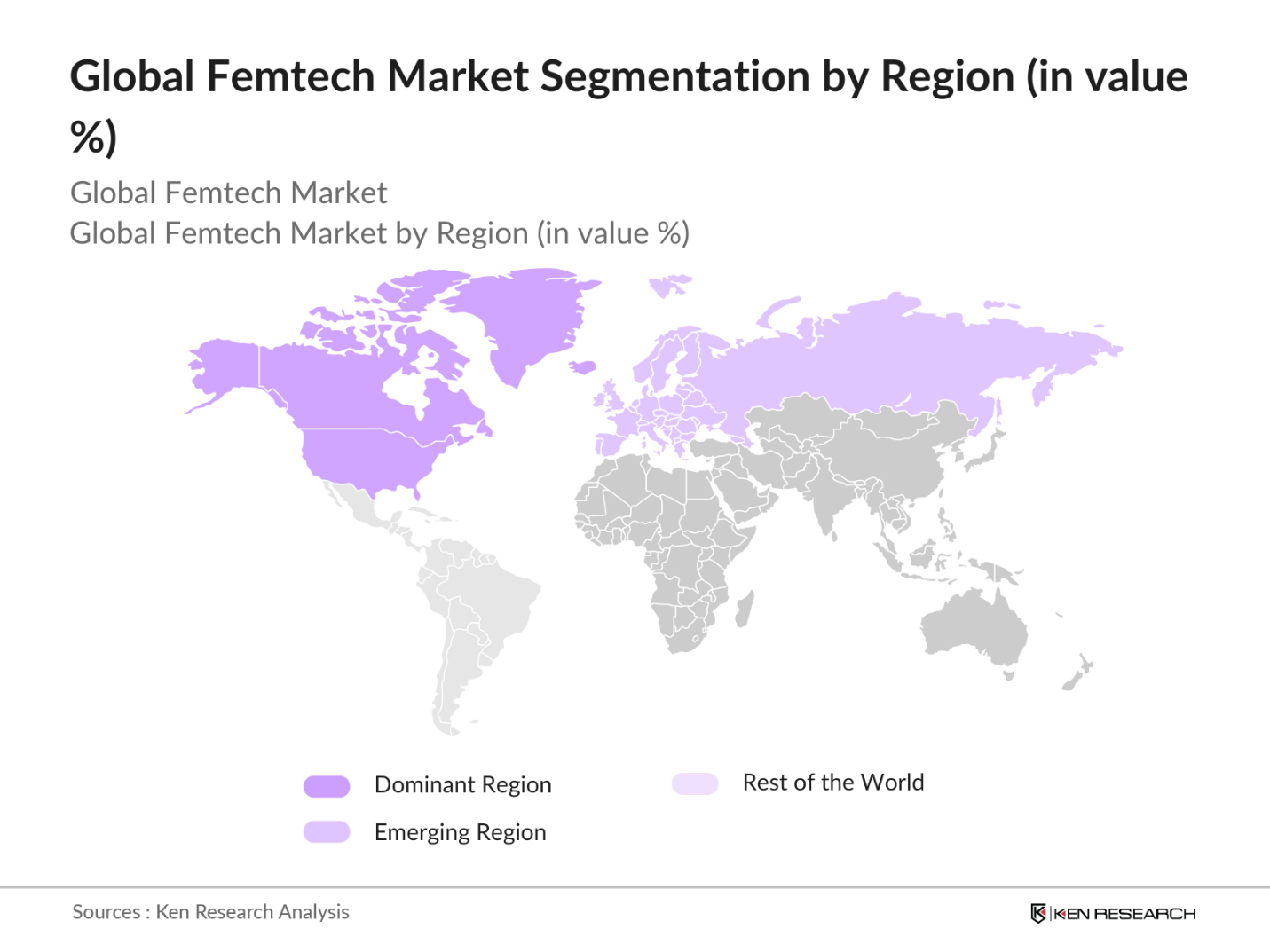
By Region: The Femtech market is segmented into North America, Europe, Asia Pacific, Latin America, and the Middle East and Africa. North America leads the market, driven by a strong presence of Femtech startups and high consumer awareness regarding womens health technology. The region's dominance is further supported by significant investments in digital health and the widespread use of wearable technologies among women, enhancing the reach and accessibility of Femtech products.
|
Region |
Market Share (2023) |
|---|---|
|
North America |
55% |
|
Europe |
25% |
|
Asia Pacific |
10% |
|
Latin America |
5% |
|
Middle East & Africa |
5% |
Global Femtech Market Competitive Landscape
The global Femtech market is characterized by the presence of both established companies and innovative startups. Major players have invested heavily in product innovation, technology integration, and expanding their market reach. This has led to a consolidation of key players who dominate the market through unique product offerings and strategic partnerships.
|
Company Name |
Establishment Year |
Headquarters |
Product Innovation |
Technology Integration |
Market Reach |
Consumer Satisfaction |
Investment Funding |
Partnerships |
|
Flo Health |
2015 |
San Francisco, USA |
High |
|||||
|
Natural Cycles |
2013 |
Stockholm, Sweden |
High |
|||||
|
Clue |
2012 |
Berlin, Germany |
Medium |
|||||
|
Ava Science |
2014 |
Zurich, Switzerland |
Medium |
|||||
|
Elvie |
2013 |
London, UK |
High |
Global Femtech Market Analysis
Market Growth Drivers
- Rise in Womens Health Awareness: In 2023, increasing health awareness among women globally has driven the demand for Femtech solutions. According to the World Health Organization (WHO), over 65 million women globally are seeking health-related digital interventions, particularly in reproductive and maternal health. Government health agencies in countries like the U.S. and the U.K. are investing in awareness campaigns promoting womens health. In India, for instance, government programs focusing on maternal health care have reached over 23 million women as of 2024. These initiatives are encouraging adoption of Femtech solutions that can support health monitoring and diagnostics.
- Advancements in Wearable Technology: By 2024, the wearable technology sector has seen exponential growth, with over 20 million women using wearable health devices worldwide, according to International Telecommunication Union (ITU). These devices track vital health statistics such as heart rate, sleep patterns, and menstrual cycles. The National Institute of Health (NIH) reports that many women using wearables are actively managing fertility or pregnancy-related health, with increasing integration of wearable data into formal healthcare practices. Wearable technology continues to evolve, with new products focusing specifically on addressing female health needs, such as fertility monitoring and prenatal care.
- Increasing Funding and Investments in Femtech Startups: Investment in Femtech startups reached over $3 billion by 2024, based on data from the World Economic Forum. This reflects a steady increase in capital allocation toward companies specializing in womens health solutions, particularly in reproductive health, diagnostics, and wearable tech. Major economies like the U.S. and Europe have seen a surge in venture capital investment into Femtech, driven by the demand for specialized products and services aimed at addressing unmet needs in womens healthcare. Public and private funding has created avenues for growth and innovation within the Femtech sector globally.
Market Challenges:
- Regulatory Compliance and Ethical Concerns: As of 2024, stringent regulations in healthcare technology markets pose significant challenges to Femtech companies. The U.S. Food and Drug Administration (FDA) has imposed over 60 guidelines specific to Femtech products, covering everything from clinical trials to device security, according to U.S. government data. European markets face similar regulatory landscapes, with CE marking and GDPR compliance critical hurdles. These complex regulatory frameworks can slow down the development and market entry of new Femtech solutions, particularly in the areas of reproductive health and diagnostics.
- Data Privacy Issues in Health Monitoring Devices: Data privacy remains a significant concern in Femtech as more women adopt health monitoring devices. The European Union reported over 700 cases of data breaches involving health-related applications and devices between 2022 and 2024. According to the International Association of Privacy Professionals (IAPP), the U.S. alone recorded 12 million users whose personal health data was compromised in 2023. These statistics highlight the pressing need for Femtech companies to invest in robust data protection measures to comply with global privacy regulations such as the EUs GDPR and HIPAA in the U.S.
Global Femtech Market Future Outlook
Over the next five years, the global Femtech market is expected to witness considerable growth, driven by continuous innovations in womens healthcare technologies, increasing consumer demand for personalized solutions, and supportive government initiatives. The integration of AI and big data analytics into health monitoring devices and the rising awareness about reproductive health will play a crucial role in further expanding the Femtech market.
Market Opportunities:
- Growth of Femtech Startups Focused on Reproductive Health: In 2023, more than 120 startups globally are focused on reproductive health, with a specific emphasis on fertility tracking and maternal care, according to the International Health Organization (IHO). These startups are driving innovation by creating wearable devices, mobile apps, and digital health platforms tailored to womens reproductive needs. Governments in regions like Europe are offering grants and tax incentives for Femtech startups in this domain. The growing interest from investors, including public funding of $500 million for reproductive health innovation, underscores the importance of these startups in addressing unmet healthcare needs.
- Increasing Use of Mobile Apps for Menstrual Health and Fertility Tracking: According to the International Telecommunication Union (ITU), more than 300 million women are using mobile apps for menstrual and fertility tracking in 2024. This represents a 15% increase in app usage from the previous year. Countries like India and Brazil have reported significant growth in the use of Femtech apps due to increased smartphone penetration and improved internet access. As of 2024, apps such as Clue and Flo have over 60 million combined active users, providing women with personalized insights into their reproductive health through AI-based recommendations and real-time tracking.
Scope of the Report
|
By Product Type |
Menstrual Health Solutions Fertility and Pregnancy Solutions General Healthcare and Wellness Pelvic Health and Fertility Products |
|
By End-User |
Hospitals and Clinics Homecare Settings Specialized Gynecology Centers |
|
By Distribution Channel |
Online Platforms Offline Retail Pharmacies Direct-to-Consumer Sales |
|
By Technology |
Wearable Devices Mobile Apps Telehealth Platforms |
|
By Region |
North America Europe Asia Pacific Latin America Middle East and Africa |
Products
Key Target Audience
Femtech Startups
Hospitals and Clinics
Medical Device Manufacturers
Healthcare Providers
Venture Capitalists and Investment Firms
Government and Regulatory Bodies (FDA, HIPAA)
Wearable Device Developers
Online Healthcare Platforms
Companies
Major Players
-
Flo Health
Natural Cycles
Clue
Elvie
Ava Science
Maven Clinic
Willow
Tia Womens Health
Nurx
HeraMed
iSono Health
Bellabeat
Grace Health
Yeebo Health
NextGen Jane
Table of Contents
1. Global Femtech Market Overview
1.1. Definition and Scope
1.2. Market Taxonomy
1.3. Growth Rate Analysis (Growth Rate by Value, Growth Rate by Volume)
1.4. Market Segmentation Overview
2. Global Femtech Market Size (In USD Billion)
2.1. Historical Market Size
2.2. Current Market Size (Value, Volume)
2.3. Key Market Milestones and Innovations
3. Global Femtech Market Dynamics (Key Drivers, Challenges, Opportunities, and Trends)
3.1. Growth Drivers
3.1.1. Rise in Womens Health Awareness
3.1.2. Increasing Adoption of Digital Health Platforms
3.1.3. Advancements in Wearable Technology
3.1.4. Increasing Funding and Investments in Femtech Startups
3.2. Market Challenges
3.2.1. Regulatory Compliance and Ethical Concerns
3.2.2. Data Privacy Issues in Health Monitoring Devices
3.2.3. Limited Access in Developing Economies
3.3. Opportunities
3.3.1. Expansion into Emerging Markets
3.3.2. Integration with AI and Predictive Analytics
3.3.3. Public-Private Partnerships for Women's Health Initiatives
3.4. Trends
3.4.1. Growth of Femtech Startups Focused on Reproductive Health
3.4.2. Increasing Use of Mobile Apps for Menstrual Health and Fertility Tracking
3.4.3. Adoption of Personalized Healthcare Solutions
3.5. Regulatory Landscape
3.5.1. FDA Guidelines for Femtech Products
3.5.2. Data Security Regulations
3.5.3. Privacy and Consent Laws
4. Global Femtech Market Segmentation (Market-specific parameters by Value % and Volume %)
4.1. By Product Type
4.1.1. Menstrual Health Solutions
4.1.2. Fertility and Pregnancy Solutions
4.1.3. General Healthcare and Wellness
4.1.4. Pelvic Health and Fertility Products
4.2. By End-User
4.2.1. Hospitals and Clinics
4.2.2. Homecare Settings
4.2.3. Specialized Gynecology Centers
4.3. By Distribution Channel
4.3.1. Online Platforms
4.3.2. Offline Retail Pharmacies
4.3.3. Direct-to-Consumer Sales
4.4. By Technology
4.4.1. Wearable Devices
4.4.2. Mobile Apps
4.4.3. Telehealth Platforms
4.5. By Region
4.5.1. North America
4.5.2. Europe
4.5.3. Asia Pacific
4.5.4. Latin America
4.5.5. Middle East and Africa
5. Global Femtech Market Competitive Analysis
5.1 Detailed Profiles of Major Companies
5.1.1. Clue
5.1.2. Flo Health
5.1.3. Maven Clinic
5.1.4. Natural Cycles
5.1.5. Elvie
5.1.6. Willow
5.1.7. Tia Womens Health
5.1.8. HeraMed
5.1.9. Ava Science
5.1.10. Nurx
5.1.11. NextGen Jane
5.1.12. iSono Health
5.1.13. Grace Health
5.1.14. Bellabeat
5.1.15. Yeebo Health
5.2 Cross Comparison Parameters (Product Innovation, Market Reach, Technology Integration, Consumer Satisfaction, Investment Funding, Partnerships, Number of Employees, Headquarters)
5.3. Market Share Analysis
5.4. Strategic Initiatives
5.5. Mergers and Acquisitions
5.6. Venture Capital Funding
5.7. Government Support and Incentives
6. Global Femtech Market Regulatory Framework
6.1. Medical Device Regulations for Femtech Products
6.2. HIPAA Compliance for Health Tech
6.3. Data Security and Privacy Requirements
7. Global Femtech Market Future Projections (In USD Billion)
7.1. Future Market Size Projections (Value, Volume)
7.2. Key Factors Driving Future Market Growth
8. Global Femtech Market Future Segmentation (In Value % and Volume %)
8.1. By Product Type
8.2. By End-User
8.3. By Technology
8.4. By Distribution Channel
8.5. By Region
9. Global Femtech Market Analysts Recommendations
9.1. TAM/SAM/SOM Analysis
9.2. Strategic Partnerships for Market Penetration
9.3. Customer Retention Strategies
9.4. White Space Opportunity Analysis
Research Methodology
Step 1: Identification of Key Variables
The first step involves mapping the Femtech market ecosystem, including all major stakeholders such as medical device manufacturers, healthcare providers, and regulatory bodies. Extensive desk research utilizing a blend of secondary and proprietary databases is performed to pinpoint the key variables affecting market dynamics.
Step 2: Market Analysis and Construction
Next, historical data pertaining to the Femtech market is compiled, focusing on key market segments such as wearable devices and mobile applications. The market analysis also includes an assessment of penetration rates and revenue generation to ensure the reliability of market estimates.
Step 3: Hypothesis Validation and Expert Consultation
Consultations with industry experts are conducted to validate market hypotheses. Computer-assisted telephone interviews (CATIs) with leading Femtech companies help to refine the data and provide insights into operational trends and financial performance.
Step 4: Research Synthesis and Final Output
Finally, direct interaction with Femtech product manufacturers allows for the verification of market data and sales figures, ensuring a comprehensive and accurate analysis. The synthesis of these insights is used to finalize the market report, providing validated and detailed insights into the global Femtech market.
Frequently Asked Questions
01. How big is the global Femtech market?
The global Femtech market is valued at USD 59.4 billion, driven by the increasing adoption of digital health platforms and investments in womens health solutions.
02. What are the challenges in the global Femtech market?
Challenges include regulatory compliance, data privacy concerns in health monitoring, and limited access to Femtech solutions in developing regions, which hinder broader market penetration.
03. Who are the major players in the global Femtech market?
Key players include Flo Health, Natural Cycles, Clue, Elvie, and Ava Science, who dominate the market with their innovative products and extensive consumer reach.
04. What are the growth drivers of the global Femtech market?
The market is driven by increasing awareness of womens health issues, rising demand for personalized healthcare, and advancements in wearable health technology.
Why Buy From Us?

What makes us stand out is that our consultants follows Robust, Refine and Result (RRR) methodology. i.e. Robust for clear definitions, approaches and sanity checking, Refine for differentiating respondents facts and opinions and Result for presenting data with story

We have set a benchmark in the industry by offering our clients with syndicated and customized market research reports featuring coverage of entire market as well as meticulous research and analyst insights.

While we don't replace traditional research, we flip the method upside down. Our dual approach of Top Bottom & Bottom Top ensures quality deliverable by not just verifying company fundamentals but also looking at the sector and macroeconomic factors.

With one step in the future, our research team constantly tries to show you the bigger picture. We help with some of the tough questions you may encounter along the way: How is the industry positioned? Best marketing channel? KPI's of competitors? By aligning every element, we help maximize success.

Our report gives you instant access to the answers and sources that other companies might choose to hide. We elaborate each steps of research methodology we have used and showcase you the sample size to earn your trust.

If you need any support, we are here! We pride ourselves on universe strength, data quality, and quick, friendly, and professional service.