CHAPTER 1 - MARKET SUMMARY
Market Overview
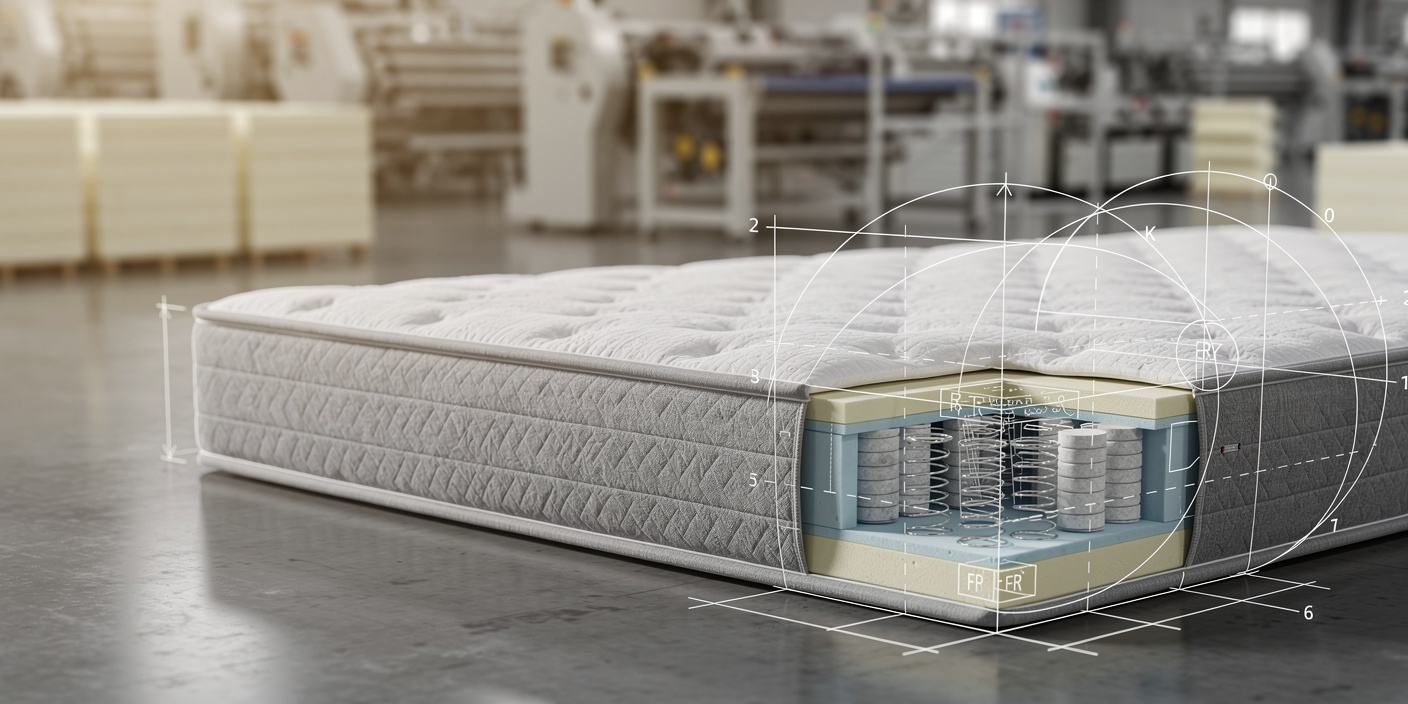
The Global FR Mattress Market operates through manufacturers integrating fire-resistant barriers, treated fabrics, inherently resistant fibers, or mineral-based layers into finished mattresses. Demand is tied to residential replacement cycles and regulated commercial procurement. An estimated 23.6 million FR-compliant units were sold in 2025, with residential buyers accounting for 54% of market value and institutional applications supporting higher compliance intensity.
North America was the largest revenue hub in 2025, representing an estimated 43.0% of global FR mattress value. The region benefits from universal federal flammability requirements for mattress sets sold in the United States, extensive testing infrastructure, and premium average selling prices. Europe represented 27.0%, supported by hospitality, healthcare, university accommodation, and country-specific ignition-resistance requirements.
Market Value
USD 4,120.0 million
2025
Dominant Region
North America
2025
Dominant Segment
Residential Consumer Mattresses
2025, largest revenue segment
Total Number of Players
430
Future Outlook
The Global FR Mattress Market is projected to increase from USD 4,120.0 million in 2025 to USD 5,750.0 million by 2031. The market expanded at a historical CAGR of 4.7% during 2020-2025 as regulated replacement demand, hospitality recovery, e-commerce distribution, and upgraded fire-safety specifications offset pandemic-related disruption. The forecast CAGR is expected to strengthen to 5.8% during 2026-2031. Growth will be supported by broader enforcement of flammability standards, increasing procurement transparency, and higher-value barrier systems designed to satisfy both fire performance and chemical-restriction requirements.
Market volume is forecast to reach 29.4 million units in 2031, compared with 23.6 million units in 2025, while the modeled average selling price rises from USD 174.6 to USD 195.6 per unit. Value growth will therefore exceed volume growth as natural wool, silica-based fabrics, advanced rayon barriers, removable-cover engineering, and multi-standard certification increase product cost and differentiation. Asia Pacific is expected to record the fastest regional expansion, while North America remains the largest profit pool because of universal compliance coverage, premium product mix, replacement frequency, and concentrated branded distribution.
5.8%
Forecast CAGR
$5,750.0 Mn
2030 Projection
Base Year
2025
Historical Period
2020-2025
Forecast Period
2026-2031
Historical CAGR
4.7%
CHAPTER 2 - SCOPE OF REPORT
Scope of the Market
CHAPTER 3 - Key Stakeholders
Key Target Audience
Key stakeholders who can leverage from this market analysis for investment, strategy, and operational planning.
Investors
CAGR, margin expansion, compliance moat, consolidation, exit potential
Corporates
barrier sourcing, certification cost, pricing, portfolio, channel strategy
Government
fire safety, chemical restrictions, enforcement, labeling, injury prevention
Operators
testing yield, material traceability, throughput, recalls, warranty exposure
Financial institutions
working capital, demand stability, covenant risk, capex returns
CHAPTER 4 - Market Size & Growth
Market Size, Growth Forecast and Trends
This section evaluates the historical market size, analyzes year-over-year growth dynamics, and presents forecast projections supported by market performance indicators and demand-side drivers.
Historical & Projected Market Size ($ Million)
Year-over-Year Growth Rate (%)
Market Value vs Volume Growth (%)
Historical Market Performance (2020-2025)
The market added USD 840.0 million between 2020 and 2025. Growth reached its historical trough at 3.4% in 2021 as hospitality replacement programs and institutional budgets remained constrained. The strongest expansion occurred in 2023 at 5.7%, supported by hotel refurbishment, reopened procurement pipelines, and normalization of component supply. FR-compliant volume increased from 20.1 million to 23.6 million units, while average selling prices rose by USD 11.4 per unit as manufacturers passed through material, certification, freight, and labor costs.
Forecast Market Outlook (2026-2031)
Forecast growth accelerates from 5.3% in 2026 to 6.1% in 2031, taking market value to USD 5,750.0 million. Natural and non-halogen barriers are projected to represent 61% of revenue by 2031, creating a higher-value mix despite moderate unit growth. Volume is forecast to reach 29.4 million mattresses, while average selling price increases to USD 195.6 per unit. Asia Pacific adoption, hospitality capacity expansion, healthcare replacement cycles, chemical restrictions, and multi-standard export certification are expected to provide the strongest incremental revenue contribution.
CHAPTER 5 - Market Data
Market Breakdown
The Global FR Mattress Market is progressing from minimum regulatory compliance toward differentiated fire-barrier engineering, chemical transparency, and multi-market certification. For CEOs and investors, the central value drivers are certified unit volumes, average selling price expansion, and the transition toward natural or non-halogen barrier technologies.
Year | Market Size (USD Mn) | YoY Growth (%) | FR-Compliant Mattress Volume (Mn Units) | Average Selling Price (USD/Unit) | Natural or Non-Halogen Barrier Mix (%) | Period |
|---|---|---|---|---|---|---|
| 2020 | $3,280.0 Mn | +- | 20.1 | 163.2 | Forecast | |
| 2021 | $3,390.0 Mn | +3.4 | 20.5 | 165.4 | Forecast | |
| 2022 | $3,525.0 Mn | +4.0 | 21.1 | 167.1 | Forecast | |
| 2023 | $3,725.0 Mn | +5.7 | 21.9 | 170.1 | Forecast | |
| 2024 | $3,925.0 Mn | +5.4 | 22.8 | 172.1 | Forecast | |
| 2025 | $4,120.0 Mn | +5.0 | 23.6 | 174.6 | Forecast | |
| 2026F | $4,338.4 Mn | +5.3 | 24.4 | 177.8 | Forecast | |
| 2027F | $4,577.0 Mn | +5.5 | 25.3 | 180.9 | Forecast | |
| 2028F | $4,838.0 Mn | +5.7 | 26.3 | 184.0 | Forecast | |
| 2029F | $5,118.4 Mn | +5.8 | 27.3 | 187.5 | Forecast | |
| 2030F | $5,420.4 Mn | +5.9 | 28.3 | 191.5 | Forecast | |
| 2031F | $5,750.0 Mn | +6.1 | 29.4 | 195.6 | Forecast |
FR-Compliant Mattress Volume
23.6 million units, 2025, global. Scale improves barrier-material purchasing leverage and laboratory utilization. United States federal requirements apply to all mattress sets manufactured, imported, or renovated for commerce under Part 1633.
Average Selling Price
USD 174.6 per unit, 2025, global. Pricing reflects wholesale product value rather than retail transaction value. The United States regulatory assessment estimated lifetime net benefits of USD 23-50 per compliant mattress, indicating material consumer-safety value.
Natural or Non-Halogen Barrier Mix
37%, 2025, global. Higher adoption supports premium positioning and reduces exposure to chemical restrictions. New York prohibited new mattresses containing intentionally added covered flame-retardant chemicals from December 1, 2024.
CHAPTER 6 - Segmentation
Market Segmentation Framework
Comprehensive analysis across key dimensions providing insights into market structure, consumer preferences, and distribution patterns.
No of Segments
7
Dominant Segment
Application
Fastest Growing Segment
Fire Barrier Technology
Product Type
Application
Fire Barrier Technology
Compliance Standard
Price Tier
Distribution Channel
Geography
Key Segmentation Takeaways
Comprehensive analysis across all extracted segmentation dimensions providing insights into market structure, consumer preferences, and distribution patterns.
Application
Application is the dominant segmentation dimension because fire-performance specifications, replacement frequency, contract requirements, and buyer willingness to pay vary materially between residential, hospitality, healthcare, and public-sector settings. Residential mattresses generate the largest revenue pool, while healthcare and institutional buyers impose more demanding documentation, cleanability, durability, and procurement qualification requirements.
Fire Barrier Technology
Fire Barrier Technology is the fastest-growing dimension as manufacturers replace commodity chemical treatments with engineered barrier fabrics and inherently resistant materials. Natural mineral and wool barriers are gaining momentum in premium and sustainability-focused products, while silica-infused rayon and modacrylic systems provide scalable alternatives for brands balancing fire performance, cost, comfort, chemical restrictions, and removable-cover design.
CHAPTER 7 - Regional Analysis
Regional Analysis
North America remained the largest regional FR mattress market in 2025 because United States rules apply to mattress sets before sale or introduction into commerce. Europe was the second-largest market, while Asia Pacific offered the strongest forecast growth through expanding hospitality, healthcare, branded retail, and export manufacturing capacity.
Largest Region Ranking
1st, North America
Largest Region Market Size
USD 1,771.6 Mn (2025)
North America CAGR (2026-2031)
5.0%
Largest Region Ranking
1st, North America
Largest Region Market Size
USD 1,771.6 Mn (2025)
North America CAGR (2026-2031)
5.0%
Regional Analysis (Current Year)
Regional Analysis Comparison
Market Position
North America ranked first with an estimated USD 1,771.6 million market, supported by federal coverage of all in-scope mattress sets and mature replacement channels.
Growth Advantage
Asia Pacific is projected to grow at 7.3%, exceeding North America's 5.0% and Europe's 5.1%, as branded mattress penetration and regulated institutional demand expand.
Competitive Strengths
North America combines universal United States compliance, advanced test laboratories, and an estimated 8.9 million compliant units, supporting product scale and premium barrier innovation.
CHAPTER 8 - INDUSTRY ANALYSIS
Growth Drivers, Market Challenges & Market Opportunities
Comprehensive analysis of key factors shaping the Global FR Mattress Market, including growth catalysts, operational challenges, and emerging opportunities across production, distribution, and consumer segments.
Growth Drivers
Mandatory Fire-Safety Performance Standards
- The federal rule applies to mattress sets manufactured, imported, or renovated after its effective date, requiring overseas suppliers to validate compliance before entering the largest FR market.
- CPSC estimated that full implementation could prevent up to 270 deaths and 1,330 injuries annually, supporting continued enforcement and institutional acceptance.
- European EN 597 testing evaluates cigarette and match-flame ignition, enabling laboratories and barrier suppliers to monetize multi-standard testing, documentation, and product redesign services.
Hospitality and Institutional Replacement Demand
- Hospitality buyers replace mattresses through scheduled property-improvement plans, allowing qualified manufacturers to capture repeat orders with standardized specifications and lower customer-acquisition costs.
- Europe recorded 747 million international arrivals in 2024, supporting FR mattress demand across hotels, hostels, serviced accommodation, and university-linked lodging.
- UK medium-hazard applications include hotels, hospitals, hostels, university halls, and elderly-care facilities, creating higher-specification contract opportunities beyond residential minimum standards.
Premiumization and Sleep-Health Spending
- Foam mattresses represented 45.9% of broader mattress revenue in 2025, increasing demand for engineered barrier socks that isolate combustible foam cores.
- Online mattress sales are forecast to grow at 8.5% during 2026-2033, widening distribution for certified FR products and transparent material claims.
- Premium natural mattresses can command prices above USD 8,499 in 2025, demonstrating monetizable demand for wool-based fire resistance and traceable organic materials.
Market Challenges
Conflict Between Fire Performance and Chemical Restrictions
- The restriction covers halogenated, organophosphorus, organonitrogen, and nanoscale flame-retardant chemicals, requiring suppliers to disclose formulations and validate component-level compliance.
- Manufacturers must preserve fire performance while eliminating restricted substances, increasing testing cycles, barrier-development expenditure, and risk of delayed product launches.
- Natural and inherently resistant substitutes generally carry higher material costs, creating margin pressure for economy products unless manufacturers standardize constructions across multiple brands and sizes.
Testing Complexity and Multi-Market Certification
- Differences in ignition sources, prototype grouping, labeling, record retention, and institutional specifications limit the ability to sell one unchanged construction worldwide.
- Small manufacturers face disproportionately high laboratory and engineering costs because each material substitution can affect heat-release behavior and require renewed validation.
- Health Canada inspected and tested compressed bed-in-a-box mattresses during its 2023-2024 compliance project, demonstrating enforcement exposure across digital channels.
Commodity Input and Retail Margin Pressure
- Purple Innovation reported USD 468.7 million in 2025 revenue, down 3.9%, highlighting demand softness and promotional pressure despite differentiated mattress technology.
- Foam, fabric, wool, glass fiber, rayon, adhesive, and freight costs affect unit economics, while rapid promotional cycles constrain immediate cost pass-through to retailers.
- Retail consolidation increases buyer bargaining power and creates listing risk for smaller brands, making direct-to-consumer capability and institutional contracts strategically important margin hedges.
Market Opportunities
Natural and Non-Halogen Fire Barriers
- Barrier suppliers can monetize proprietary wool, silica-rayon, mineral, and inherently resistant fiber systems through long-term qualification agreements and per-unit material sales.
- Premium brands benefit from combining chemical transparency, natural-material claims, organic certification, and fire compliance in a single differentiated product proposition.
- Scaled adoption requires standardized supplier declarations, component traceability, barrier durability testing, and validated performance after cover or foam substitutions.
Contract Manufacturing for Multi-Standard Products
- Contract manufacturers can earn design, prototyping, assembly, testing-management, and fulfillment revenue while spreading compliance expenditure across multiple brand customers.
- Digital mattress brands benefit from asset-light access to approved constructions, shorter launch cycles, and regional production close to customers and retail partners.
- Value capture depends on secure intellectual-property controls, approved-material substitution protocols, reliable demand forecasting, and laboratory capacity for regional product variants.
Healthcare, Hospitality, and Public Procurement
- Manufacturers can bundle fire performance with pressure management, infection-control covers, fluid resistance, durability warranties, and lifecycle replacement services to expand contract value.
- Hotels, hospitals, universities, prisons, military facilities, and emergency shelters benefit from standardized specifications that reduce liability and procurement variability.
- Opportunity realization requires tender registration, audited production controls, product traceability, regional fire-test evidence, and reliable replacement inventory across multiple mattress sizes.
CHAPTER 9 - Competitive Landscape
Competitive Landscape Overview
The Global FR Mattress Market is moderately fragmented, although large mattress groups benefit from brand portfolios, proprietary materials, testing infrastructure, retailer access, and multi-country manufacturing. Entry barriers arise from certification costs, prototype controls, chemical disclosure, scale purchasing, and institutional qualification.
Market Share Distribution
Top 5 Players
Market Dynamics
8 new entrants in the past 5 years, indicating strong market attractiveness and growth potential.
Company Name | Market Share | Headquarters | Founding Year | Core Market Focus |
|---|---|---|---|---|
Somnigroup International Inc. | 13.0% | Lexington, Kentucky, United States | 1991 | Premium foam, hybrid, innerspring, retail, and contract bedding |
Serta Simmons Bedding, LLC | 9.5% | Atlanta, Georgia, United States | 2012 | Residential, hospitality, innerspring, foam, and hybrid mattresses |
Sleep Number Corporation | 3.2% | Minneapolis, Minnesota, United States | 1987 | Adjustable smart beds and direct retail distribution |
Sheela Foam Limited | 2.8% | Noida, India | 1971 | Foam mattresses, branded bedding, and regional manufacturing |
Emma Sleep GmbH | 2.5% | Frankfurt, Germany | 2013 | Direct-to-consumer foam and hybrid sleep products |
Paramount Bed Holdings Co., Ltd. | 2.2% | Tokyo, Japan | 1947 | Healthcare beds, institutional mattresses, and medical support surfaces |
Grupo Pikolin | 2.0% | Zaragoza, Spain | 1948 | Residential and hospitality mattresses across European markets |
Silentnight Group Limited | 1.8% | Barnoldswick, United Kingdom | 1946 | UK residential, contract, hospitality, and fire-compliant mattresses |
Purple Innovation, Inc. | 1.6% | Lehi, Utah, United States | 2015 | Gel-grid mattresses, direct sales, showrooms, and wholesale distribution |
Kingsdown, Inc. | 1.4% | Mebane, North Carolina, United States | 1904 | Premium innerspring, hybrid, hospitality, and licensed bedding |
Cross Comparison Parameters
The report provides detailed cross-comparison of key players across 10 performance parameters to identify competitive strengths and weaknesses.
Certified FR Product Portfolio Breadth
Multi-Standard Testing Coverage
Mattress Revenue Growth
Gross Margin
Analysis Covered
Market Share Analysis:
Compares estimated FR mattress revenue concentration across leading global manufacturers
Cross Comparison Matrix:
Benchmarks certification reach, portfolio breadth, growth, and margin performance
SWOT Analysis:
Evaluates scale advantages, compliance gaps, risks, and expansion opportunities
Pricing Strategy Analysis:
Assesses product tiers, material premiums, promotions, and contract pricing
Company Profiles:
Reviews operating footprint, market focus, capabilities, and strategic positioning
CHAPTER 10 - REPORT TOC
Market Report Structure
Comprehensive coverage across three strategic phases — Market Assessment, Go-To-Market Strategy, and Survey — delivering end-to-end insights from market analysis and execution roadmap to customer demand validation.
Market Assessment Phase
Supply-side and competitive intelligence covering market sizing, segmentation, competitive dynamics, regulatory landscape, and future forecasts.
Go-To-Market Strategy Phase
15 chapters
Entry strategy evaluation, execution roadmap, partner recommendations, and profitability outlook.
Survey Phase
8 chapters
Demand-side primary research conducted through structured interviews and online surveys with end users across priority metros and Tier 2/3 cities to capture consumption behavior, unmet needs, and purchase drivers.
Complete Report Coverage
201+ detailed sections covering every aspect of the market
143
Assessment Sections
58
Strategy Sections
CHAPTER 11 - Our Approach
Research Methodology
Desk Research
- Reviewed global mattress flammability regulations
- Mapped certified fire-barrier technologies
- Analyzed mattress company financial filings
- Benchmarked hospitality procurement specifications
Primary Research
- Mattress manufacturing directors interviewed
- Fire-testing laboratory managers consulted
- Hospitality procurement heads interviewed
- Barrier textile specialists consulted
Validation and Triangulation
- Validated through 356 respondents
- Reconciled manufacturer revenue estimates
- Cross-checked unit and price models
- Tested regional compliance assumptions
CHAPTER 12 - FAQ
FAQs
Still have questions?
Our research team is here to help you find the right solution
CHAPTER 13 - Related Research
Explore Related Reports
Expand your market intelligence with complementary research across regions and adjacent markets.
Regional/Country ReportsRelated market analysis across key regions
Related market analysis across key regions
- Indonesia FR Mattress Market
- Vietnam FR Mattress Market
- Thailand FR Mattress Market
- Malaysia FR Mattress Market
- Philippines FR Mattress Market
Adjacent ReportsRelated markets and complementary research
Related markets and complementary research
- Belgium Flame-Resistant Fabric Market
- Oman Fire Safety Certification Services Market
- Thailand Hospitality Bedding Supply Market
- Thailand Healthcare Bedding Equipment Market
- Germany Marine Fire Safety Equipment Market
500+
Market Research Reports
50+
Countries Covered
15+
Industry Verticals