
Global Heart-Lung Machine Market Outlook 2030
Region:Global
Author(s):Shivani Mehra
Product Code:KROD3708
Region:Global
Author(s):Shivani Mehra
Product Code:KROD3708
November 2024
99
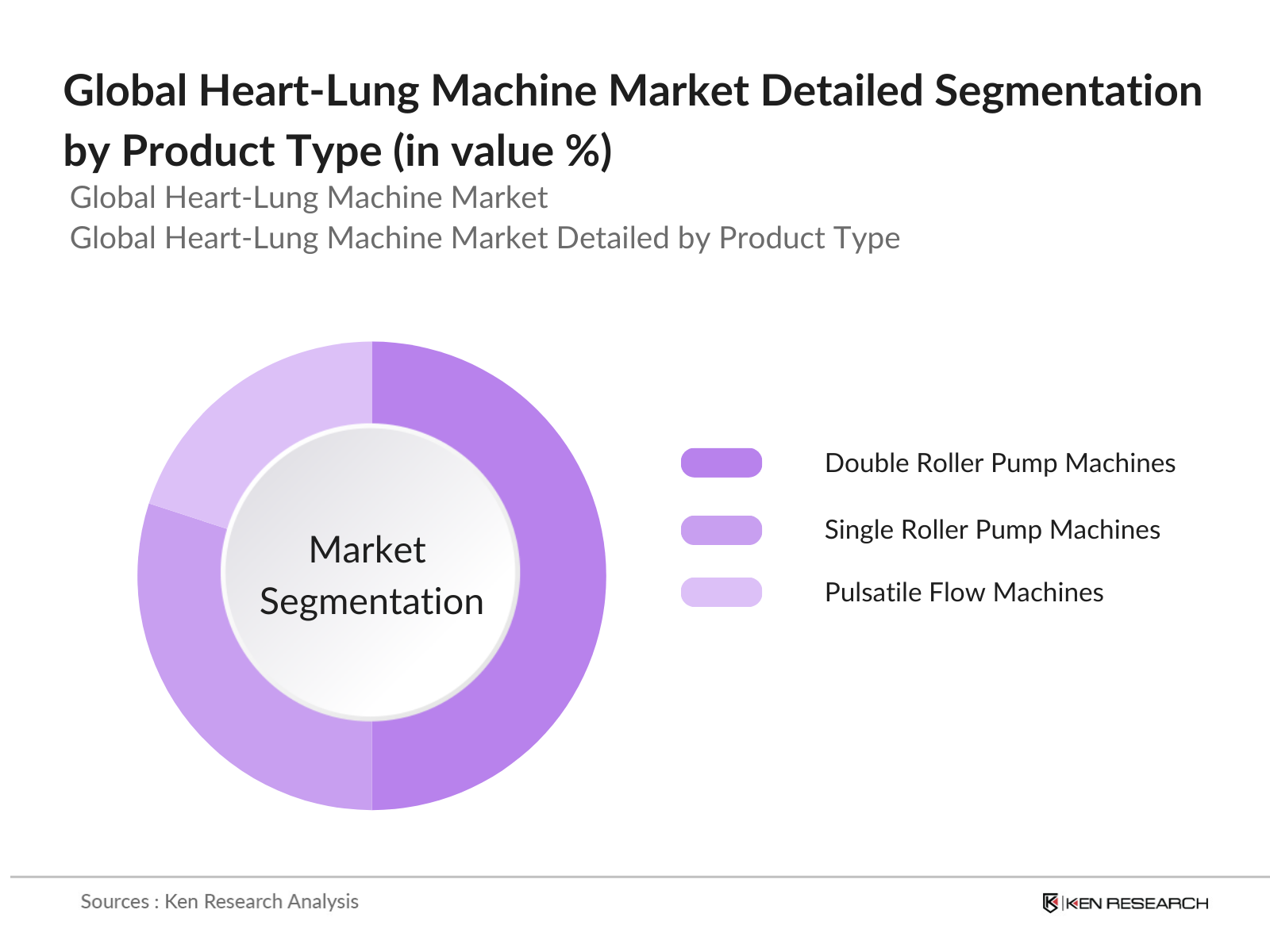
By Product Type: The global heart-lung machine market is segmented by product type into single roller pump machines, double roller pump machines, and pulsatile flow machines. In 2023, double roller pump machines held a dominant market share due to their widespread use in cardiac surgeries. Their efficiency and ability to maintain consistent blood flow during operations make them highly preferred by surgeons. Additionally, advancements in roller pump technology have further strengthened the position of this segment.
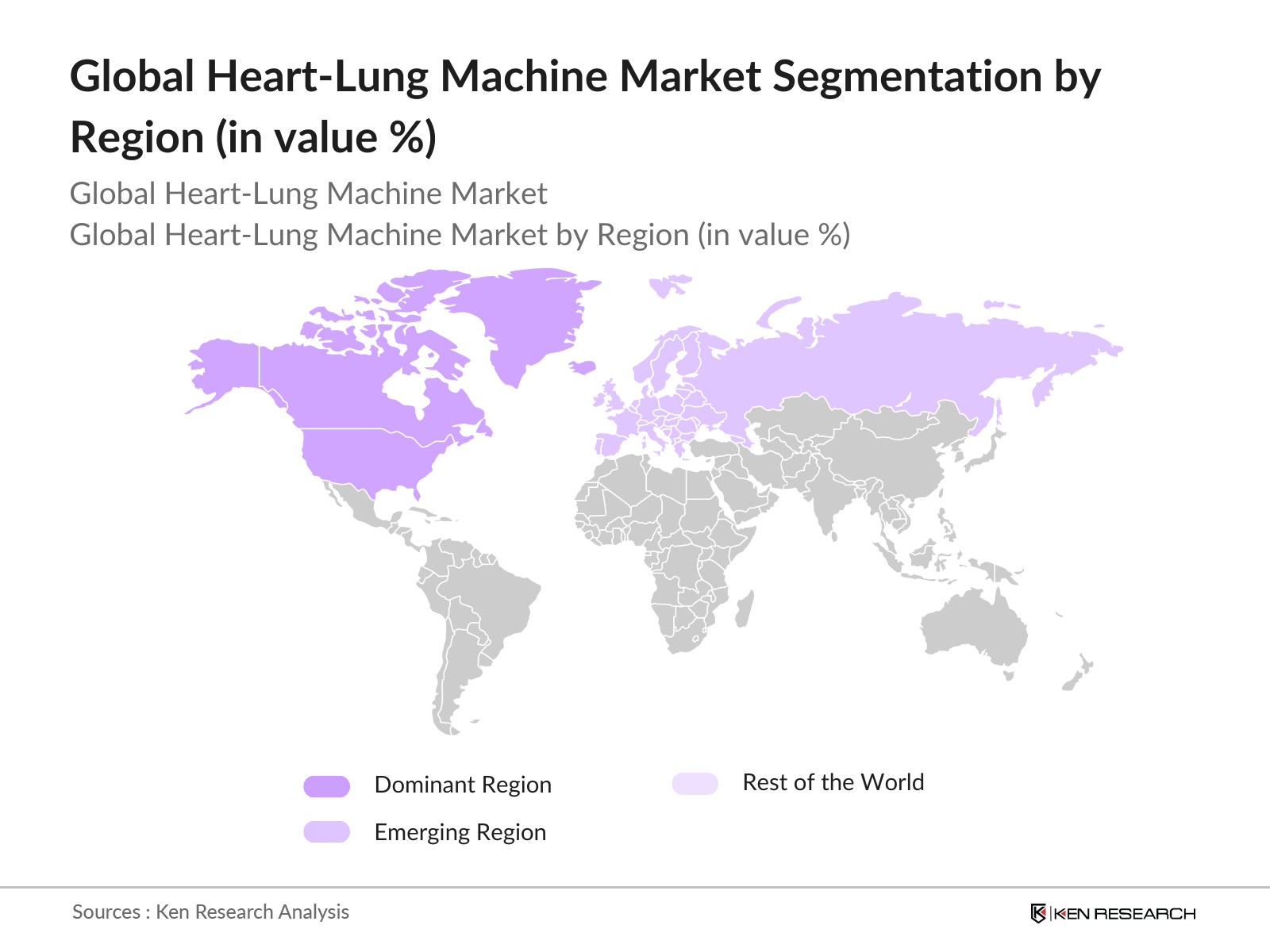
By Region: The global heart-lung machine market is segmented into North America, Europe, Asia-Pacific, Latin America, and the Middle East & Africa. North America dominates the market in 2023, primarily due to the high prevalence of cardiovascular diseases, strong healthcare infrastructure, and increasing government spending on healthcare technologies. The region's well-established healthcare system and focus on innovation in medical devices have further strengthened its position in the heart-lung machine market.
The global heart-lung machine market is highly consolidated, with a few major players dominating the industry. These companies focus on continuous innovation, strategic collaborations, and geographic expansions to maintain their market positions. The market features strong competition, with established brands leveraging their technological advancements and global presence to secure contracts with hospitals and cardiac centers.
|
Company |
Establishment Year |
Headquarters |
Revenue |
No. of Employees |
R&D Investments |
Market Presence |
Key Product Offerings |
|
Medtronic |
1949 |
Dublin, Ireland |
- |
- |
- |
- |
- |
|
Getinge AB |
1904 |
Gothenburg, Sweden |
- |
- |
- |
- |
- |
|
LivaNova PLC |
2015 |
London, UK |
- |
- |
- |
- |
- |
|
Terumo Corporation |
1921 |
Tokyo, Japan |
- |
- |
- |
- |
- |
|
MAQUET Holding B.V. |
1838 |
Rastatt, Germany |
- |
- |
- |
- |
- |
Market Growth Drivers
Market Challenges:
Over the next five years, the global heart-lung machine market is expected to witness substantial growth driven by continued advancements in cardiac surgery technologies, rising healthcare spending, and increasing demand for minimally invasive surgical procedures. The growing number of cardiovascular disease cases worldwide, especially in developing countries, will further propel market growth. Additionally, innovations such as portable heart-lung machines and the development of more efficient oxygenators are anticipated to fuel the market expansion.
Market Opportunities:
|
By Product Type |
Single Roller Pump Machines Double Roller Pump Machines Pulsatile Flow Machines |
|
By Application |
Hospitals Ambulatory Surgical Centers Cardiac Research Institutes |
|
By Technology |
Automated Heart-Lung Machines Semi-Automated Systems Manual Heart-Lung Machines |
|
By Component |
Oxygenators Pumps Tubing Sets |
|
By Region |
North America Europe Asia-Pacific Latin America Middle East & Africa |
1.1 Definition and Scope
1.2 Market Taxonomy
1.3 Market Growth Rate
1.4 Market Segmentation Overview
2.1 Historical Market Size
2.2 Year-On-Year Growth Analysis
2.3 Key Market Developments and Milestones
3.1 Growth Drivers
3.1.1 Increasing Prevalence of Cardiopulmonary Diseases
3.1.2 Rising Number of Open-Heart Surgeries
3.1.3 Technological Advancements in Heart-Lung Machines
3.1.4 Growing Demand for Minimally Invasive Surgeries
3.2 Market Challenges
3.2.1 High Cost of Equipment
3.2.2 Regulatory Compliance and Certification Barriers
3.2.3 Risk of Complications During Usage
3.3 Opportunities
3.3.1 Expansion into Emerging Markets
3.3.2 Collaboration with Hospitals and Surgical Centers
3.3.3 Introduction of Portable Heart-Lung Machines
3.4 Trends
3.4.1 Adoption of Integrated Cardiopulmonary Bypass Systems
3.4.2 Development of Artificial Heart and Lung Devices
3.4.3 Shift Towards Automated Heart-Lung Systems
3.5 Government Regulations
3.5.1 Medical Device Approvals (FDA, CE Marking, etc.)
3.5.2 Healthcare Reimbursement Policies
3.5.3 Environmental and Disposal Regulations for Medical Devices
3.6 SWOT Analysis
3.7 Stakeholder Ecosystem
3.8 Porters Five Forces Analysis
3.9 Competitive Ecosystem
4.1 By Product Type (In Value %)
4.1.1 Single Roller Pump Machines
4.1.2 Double Roller Pump Machines
4.1.3 Pulsatile Flow Machines
4.2 By Application (In Value %)
4.2.1 Hospitals
4.2.2 Ambulatory Surgical Centers
4.2.3 Cardiac Research Institutes
4.3 By Technology (In Value %)
4.3.1 Automated Heart-Lung Machines
4.3.2 Semi-Automated Systems
4.3.3 Manual Heart-Lung Machines
4.4 By Component (In Value %)
4.4.1 Oxygenators
4.4.2 Pumps
4.4.3 Tubing Sets
4.5 By Region (In Value %)
4.5.1 North America
4.5.2 Europe
4.5.3 Asia-Pacific
4.5.4 Latin America
4.5.5 Middle East & Africa
5.1 Detailed Profiles of Major Competitors
5.1.1 Medtronic
5.1.2 Getinge AB
5.1.3 LivaNova PLC
5.1.4 Terumo Corporation
5.1.5 Braile Biomedica
5.1.6 MAQUET Holding B.V. & Co. KG
5.1.7 Sorin Group
5.1.8 Elite LifeCare Systems
5.1.9 Tianjin Medical
5.1.10 Fresenius Medical Care
5.1.11 Eurosets S.r.l
5.1.12 Bioreactor Corp
5.1.13 Spectrum Medical
5.1.14 Edwards Lifesciences Corporation
5.1.15 Nipro Corporation
5.2 Cross Comparison Parameters (No. of Employees, Headquarters, Revenue, Global Market Share, Strategic Initiatives, Certifications)
5.3 Market Share Analysis
5.4 Strategic Initiatives (R&D Investments, Product Launches, Mergers & Acquisitions)
5.5 Mergers and Acquisitions
5.6 Investment Analysis
5.7 Venture Capital and Private Equity Funding
5.8 Government Grants
6.1 Medical Device Standards
6.2 Compliance Requirements
6.3 Certification Processes (FDA, CE, ISO)
7.1 Future Market Size Projections
7.2 Key Factors Driving Future Market Growth
8.1 By Product Type (In Value %)
8.2 By Application (In Value %)
8.3 By Technology (In Value %)
8.4 By Component (In Value %)
8.5 By Region (In Value %)
9.1 TAM/SAM/SOM Analysis
9.2 Marketing Initiatives
9.3 Customer Cohort Analysis
9.4 White Space Opportunity Analysis
This step involves the mapping of key stakeholders in the global heart-lung machine market, including hospitals, regulatory bodies, and manufacturers. Secondary research from industry reports and proprietary databases forms the basis for identifying the variables affecting market dynamics, such as technological advancements and healthcare spending.
Historical data on heart-lung machine usage and its correlation with cardiac surgeries is collected and analyzed. Additionally, service quality statistics and patient outcomes are assessed to validate revenue estimations. This stage ensures a thorough understanding of market penetration and service provider-marketplace ratios.
Market hypotheses are validated through consultations with cardiac surgeons and medical device experts via phone interviews and surveys. This helps in confirming the reliability of the market trends and providing real-world insights on technological preferences and regional market variations.
In the final phase, insights from device manufacturers and healthcare institutions are integrated into the data. This step ensures the final market analysis is comprehensive, accurate, and aligned with the practical developments in the heart-lung machine market.
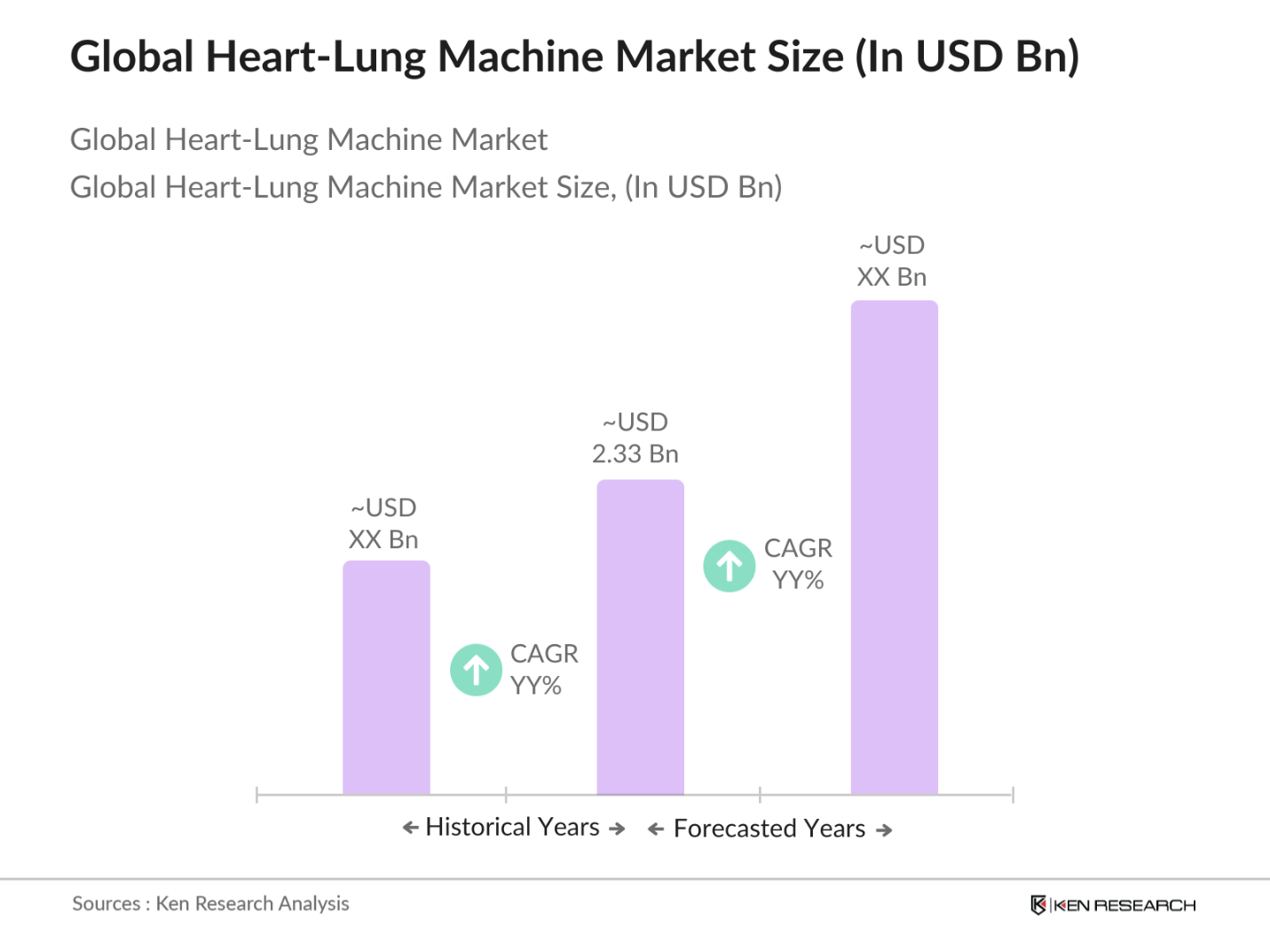
The global heart-lung machine market is valued at USD 2.33 billion, driven by the increasing prevalence of cardiovascular diseases and the growing demand for cardiac surgeries worldwide.
Challenges include the high cost of machines, regulatory compliance issues, and the risks associated with their usage during surgeries. Additionally, emerging economies face financial barriers in acquiring these advanced medical devices.
Major players in the market include Medtronic, Getinge AB, LivaNova PLC, Terumo Corporation, and MAQUET Holding B.V., dominating due to their extensive product offerings and global presence.
Key drivers include technological advancements in cardiac surgery equipment, rising healthcare expenditures, and the increasing number of open-heart surgeries globally.

What makes us stand out is that our consultants follows Robust, Refine and Result (RRR) methodology. i.e. Robust for clear definitions, approaches and sanity checking, Refine for differentiating respondents facts and opinions and Result for presenting data with story

We have set a benchmark in the industry by offering our clients with syndicated and customized market research reports featuring coverage of entire market as well as meticulous research and analyst insights.

While we don't replace traditional research, we flip the method upside down. Our dual approach of Top Bottom & Bottom Top ensures quality deliverable by not just verifying company fundamentals but also looking at the sector and macroeconomic factors.

With one step in the future, our research team constantly tries to show you the bigger picture. We help with some of the tough questions you may encounter along the way: How is the industry positioned? Best marketing channel? KPI's of competitors? By aligning every element, we help maximize success.

Our report gives you instant access to the answers and sources that other companies might choose to hide. We elaborate each steps of research methodology we have used and showcase you the sample size to earn your trust.

If you need any support, we are here! We pride ourselves on universe strength, data quality, and quick, friendly, and professional service.