
Global Herpangina Treatment Market Outlook to 2030
Region:Global
Author(s):Meenakshi Bisht
Product Code:KROD8155
Region:Global
Author(s):Meenakshi Bisht
Product Code:KROD8155
December 2024
86
Listen to the audio summary
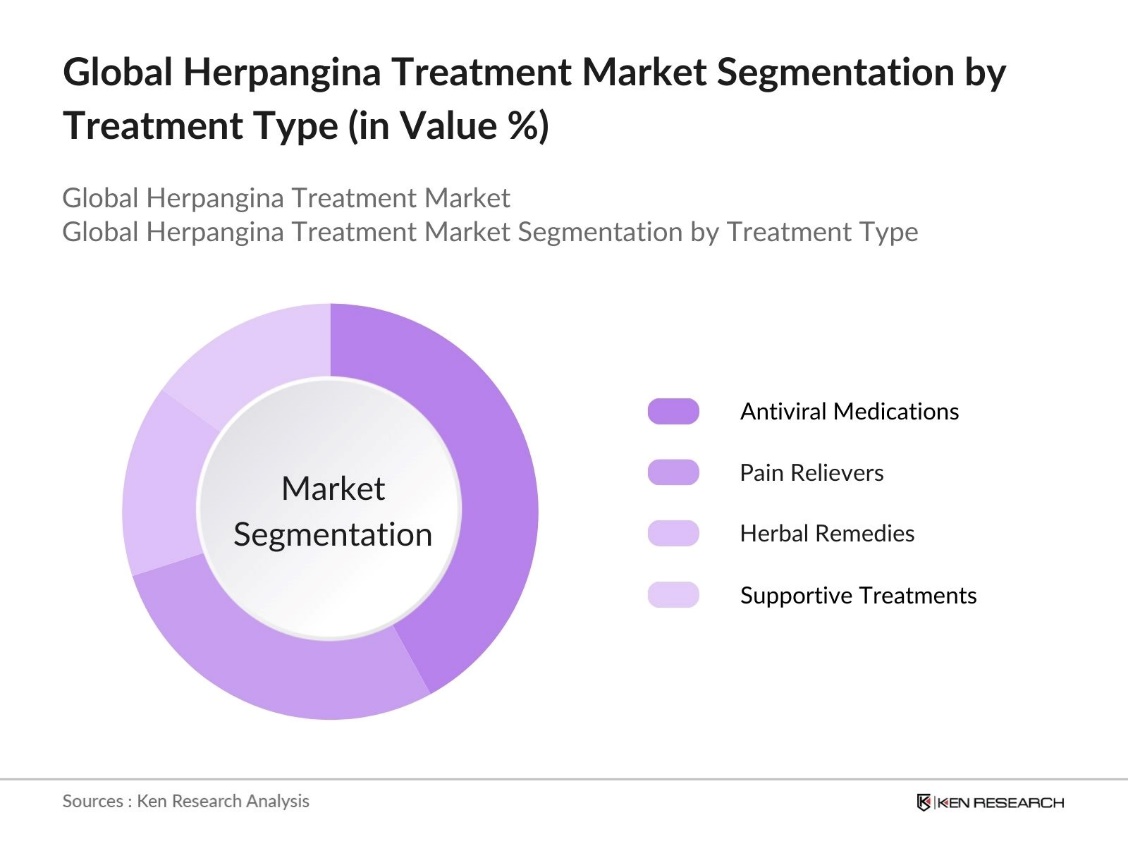
By Treatment Type: The herpangina treatment market is segmented into antiviral medications, pain relievers, herbal remedies, and other supportive treatments. Among these, antiviral medications hold the largest market share. This dominance can be attributed to the efficacy of antiviral drugs in managing symptoms and reducing recovery time in patients. These medications are commonly prescribed by pediatricians worldwide, leading to consistent demand in both developed and developing regions.
By Patient Age Group: The market is segmented by patient age into pediatric (0-5 years), pediatric (6-12 years), and pediatric (13-18 years). The pediatric (0-5 years) group dominates this segment, accounting for the largest market share. This is because younger children are more susceptible to viral infections like herpangina due to their developing immune systems. Pediatric healthcare providers prioritize early detection and treatment in this age group, which drives demand for herpangina treatments.
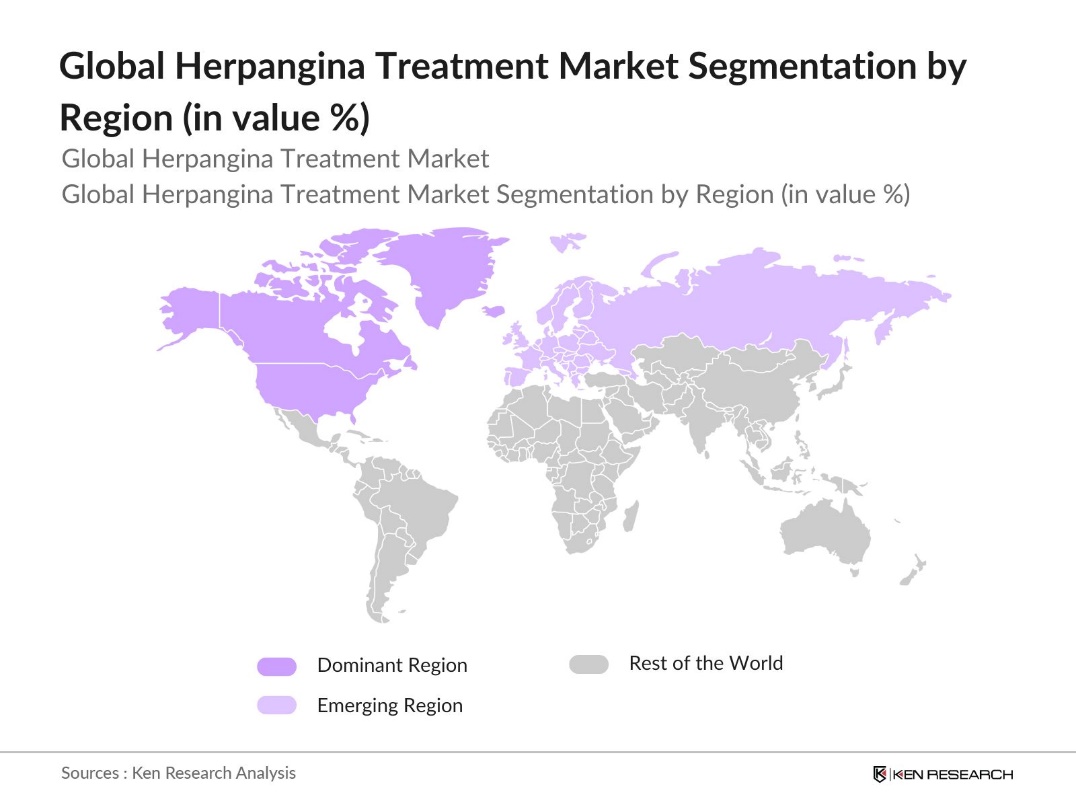
By Region: Geographically, the market is segmented into North America, Europe, Asia Pacific, Latin America, and the Middle East & Africa. North America is currently the leading region in terms of market share, primarily due to its advanced healthcare infrastructure, high healthcare spending, and widespread adoption of antiviral medications. The region benefits from strong pharmaceutical research and development efforts and high awareness among healthcare professionals regarding the treatment of viral infections in children.
The global herpangina treatment market is characterized by the presence of several key players who hold significant market share due to their extensive research and development capabilities, strong distribution networks, and global reach. The competitive landscape is influenced by factors such as mergers and acquisitions, product innovations, and strategic collaborations.

The global herpangina treatment market is expected to witness considerable growth in the coming years, driven by the increasing prevalence of viral infections, advancements in treatment options, and enhanced healthcare infrastructure in emerging economies. As pediatric populations continue to grow, particularly in developing countries, demand for effective herpangina treatments is likely to rise. Additionally, ongoing research into antiviral medications and the potential development of vaccines could further bolster the market's growth trajectory.
|
Treatment Type |
Antiviral Medications Pain Relievers Herbal Remedies Other Supportive Treatments |
|
Patient Age Group |
Pediatric (0-5 years) Pediatric (6-12 years) Pediatric (13-18 years) |
|
Distribution Channel |
Hospitals Retail Pharmacies Online Pharmacies Drug Stores |
|
Diagnosis Method |
Clinical Examination Lab Testing (PCR, Viral Cultures) |
|
Region |
North America Europe Asia Pacific Latin America Middle East & Africa |
1.1. Definition and Scope
1.2. Market Taxonomy
1.3. Market Growth Rate (Incidence Rate of Herpangina, Mortality Rate, Treatment Adoption Rate)
1.4. Market Segmentation Overview
2.1. Historical Market Size
2.2. Year-On-Year Growth Analysis (Based on Cases Treated, Drug Sales)
2.3. Key Market Developments and Milestones (Drug Approvals, Medical Guidelines Updates)
3.1. Growth Drivers
3.1.1. Rising Pediatric Population
3.1.2. Increasing Awareness of Viral Infections
3.1.3. Improvements in Diagnostic Technologies
3.1.4. Government and NGO Initiatives for Pediatric Health
3.2. Market Challenges
3.2.1. Limited Diagnostic Facilities in Rural Areas
3.2.2. Lack of Effective Antiviral Treatments
3.2.3. Resistance to Antiviral Medications
3.3. Opportunities
3.3.1. Development of Novel Antiviral Therapies
3.3.2. Rising Telemedicine Adoption in Developing Markets
3.3.3. Increasing Healthcare Investments in Low- and Middle-Income Countries (LMICs)
3.4. Trends
3.4.1. Increasing Use of Herbal Remedies and Natural Treatments
3.4.2. Emergence of Pediatric-focused Viral Treatment Centers
3.4.3. Increasing Research on Vaccine Development
3.5. Government Regulations
3.5.1. WHO Guidelines on Pediatric Viral Infections
3.5.2. National Health Program Interventions for Child Health
3.5.3. Mandatory Reporting of Viral Infections in Various Countries
3.6. SWOT Analysis
3.7. Stake Ecosystem (Hospitals, Pediatricians, Pharmacists, Drug Manufacturers, NGOs)
3.8. Porters Five Forces
3.9. Competition Ecosystem
4.1. By Treatment Type (In Value %)
4.1.1. Antiviral Medications
4.1.2. Pain Relievers
4.1.3. Herbal Remedies
4.1.4. Other Supportive Treatments
4.2. By Patient Age Group (In Value %)
4.2.1. Pediatric (0-5 years)
4.2.2. Pediatric (6-12 years)
4.2.3. Pediatric (13-18 years)
4.3. By Distribution Channel (In Value %)
4.3.1. Hospitals
4.3.2. Retail Pharmacies
4.3.3. Online Pharmacies
4.3.4. Drug Stores
4.4. By Diagnosis Method (In Value %)
4.4.1. Clinical Examination
4.4.2. Lab Testing (PCR, Viral Cultures)
4.5. By Region (In Value %)
4.5.1. North America
4.5.2. Europe
4.5.3. Asia Pacific
4.5.4. Latin America
4.5.5. Middle East & Africa
5.1. Detailed Profiles of Major Companies
5.1.1. Pfizer Inc.
5.1.2. GlaxoSmithKline plc
5.1.3. Johnson & Johnson
5.1.4. Merck & Co.
5.1.5. Roche Holding AG
5.1.6. Sanofi S.A.
5.1.7. Novartis International AG
5.1.8. AbbVie Inc.
5.1.9. AstraZeneca plc
5.1.10. Bayer AG
5.1.11. Gilead Sciences Inc.
5.1.12. Takeda Pharmaceutical Company Limited
5.1.13. Cipla Ltd.
5.1.14. Dr. Reddys Laboratories
5.1.15. Teva Pharmaceutical Industries Ltd.
5.2. Cross Comparison Parameters (Revenue from Pediatric Drugs, Antiviral Research Investment, Pediatric Drug Pipelines, R&D Spending, Patent Portfolio, Global Reach, Market Share in Antiviral Medications, Number of Clinical Trials)
5.3. Market Share Analysis
5.4. Strategic Initiatives (R&D, Product Launches, Clinical Trials)
5.5. Mergers and Acquisitions
5.6. Investment Analysis
5.7. Venture Capital Funding
5.8. Government Grants
5.9. Private Equity Investments
6.1. Health and Safety Standards for Pediatric Medications
6.2. FDA and EMA Approvals for Herpangina Treatments
6.3. Compliance with WHO Guidelines
7.1. Future Market Size Projections
7.2. Key Factors Driving Future Market Growth
8.1. By Treatment Type (In Value %)
8.2. By Patient Age Group (In Value %)
8.3. By Distribution Channel (In Value %)
8.4. By Diagnosis Method (In Value %)
8.5. By Region (In Value %)
9.1. TAM/SAM/SOM Analysis
9.2. Customer Cohort Analysis (Pediatric Hospitals, Pharmacies, NGOs, Pediatric Clinics)
9.3. Marketing Initiatives
9.4. White Space Opportunity Analysis (Emerging Markets, Telemedicine, Pediatric Clinical Care)
Disclaimer Contact UsThe initial phase involves constructing a comprehensive market map encompassing all key stakeholders in the global herpangina treatment market. Extensive secondary research was conducted using proprietary databases and government health statistics to identify critical variables such as patient demographics, incidence rates, and treatment options.
The second phase includes gathering historical data related to herpangina treatment sales, incidence rates, and healthcare provider data. This step involved analyzing global market penetration rates, revenue generated from pharmaceutical sales, and clinical trial data to form a detailed view of market trends and opportunities.
In this phase, market hypotheses were validated through in-depth consultations with key opinion leaders, including pediatricians, healthcare administrators, and pharmaceutical industry experts. Their insights helped to refine market projections and verify data accuracy.
The final phase involved synthesizing the data into a comprehensive market report. Direct feedback from healthcare providers and pharmaceutical companies was incorporated to provide a validated, thorough analysis of the global herpangina treatment market.
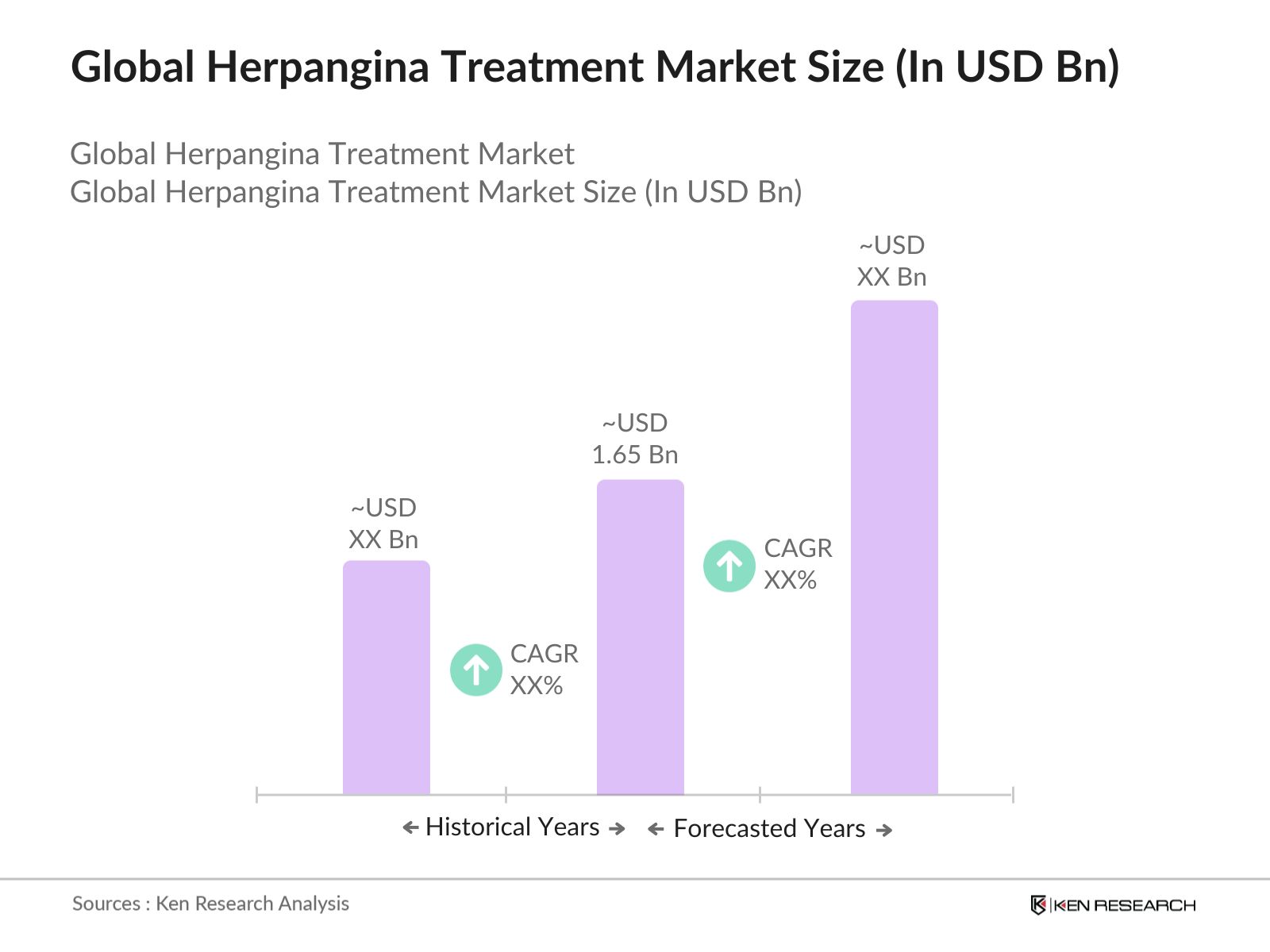
The global herpangina treatment market is valued at USD 1.65 billion, driven by rising incidences of viral infections among pediatric populations and increasing demand for effective antiviral treatments.
Challenges include limited availability of diagnostic facilities in rural areas, lack of effective antiviral medications, and increasing resistance to existing antiviral treatments, which hinder market growth.
Major players in the market include Pfizer Inc., GlaxoSmithKline plc, Johnson & Johnson, Merck & Co., and Roche Holding AG. These companies dominate due to their extensive research and development efforts and established distribution networks.
Key drivers include increasing incidences of viral infections, growing awareness of pediatric healthcare, and advancements in diagnostic technologies, particularly in developed regions with strong healthcare infrastructures.

What makes us stand out is that our consultants follows Robust, Refine and Result (RRR) methodology. i.e. Robust for clear definitions, approaches and sanity checking, Refine for differentiating respondents facts and opinions and Result for presenting data with story

We have set a benchmark in the industry by offering our clients with syndicated and customized market research reports featuring coverage of entire market as well as meticulous research and analyst insights.

While we don't replace traditional research, we flip the method upside down. Our dual approach of Top Bottom & Bottom Top ensures quality deliverable by not just verifying company fundamentals but also looking at the sector and macroeconomic factors.

With one step in the future, our research team constantly tries to show you the bigger picture. We help with some of the tough questions you may encounter along the way: How is the industry positioned? Best marketing channel? KPI's of competitors? By aligning every element, we help maximize success.

Our report gives you instant access to the answers and sources that other companies might choose to hide. We elaborate each steps of research methodology we have used and showcase you the sample size to earn your trust.

If you need any support, we are here! We pride ourselves on universe strength, data quality, and quick, friendly, and professional service.