
Global Hormone Replacement Therapy Market Outlook-to-2028
Region:Global
Author(s):Shivani Mehra
Product Code:KROD5049
Region:Global
Author(s):Shivani Mehra
Product Code:KROD5049
December 2024
86
Listen to the audio summary
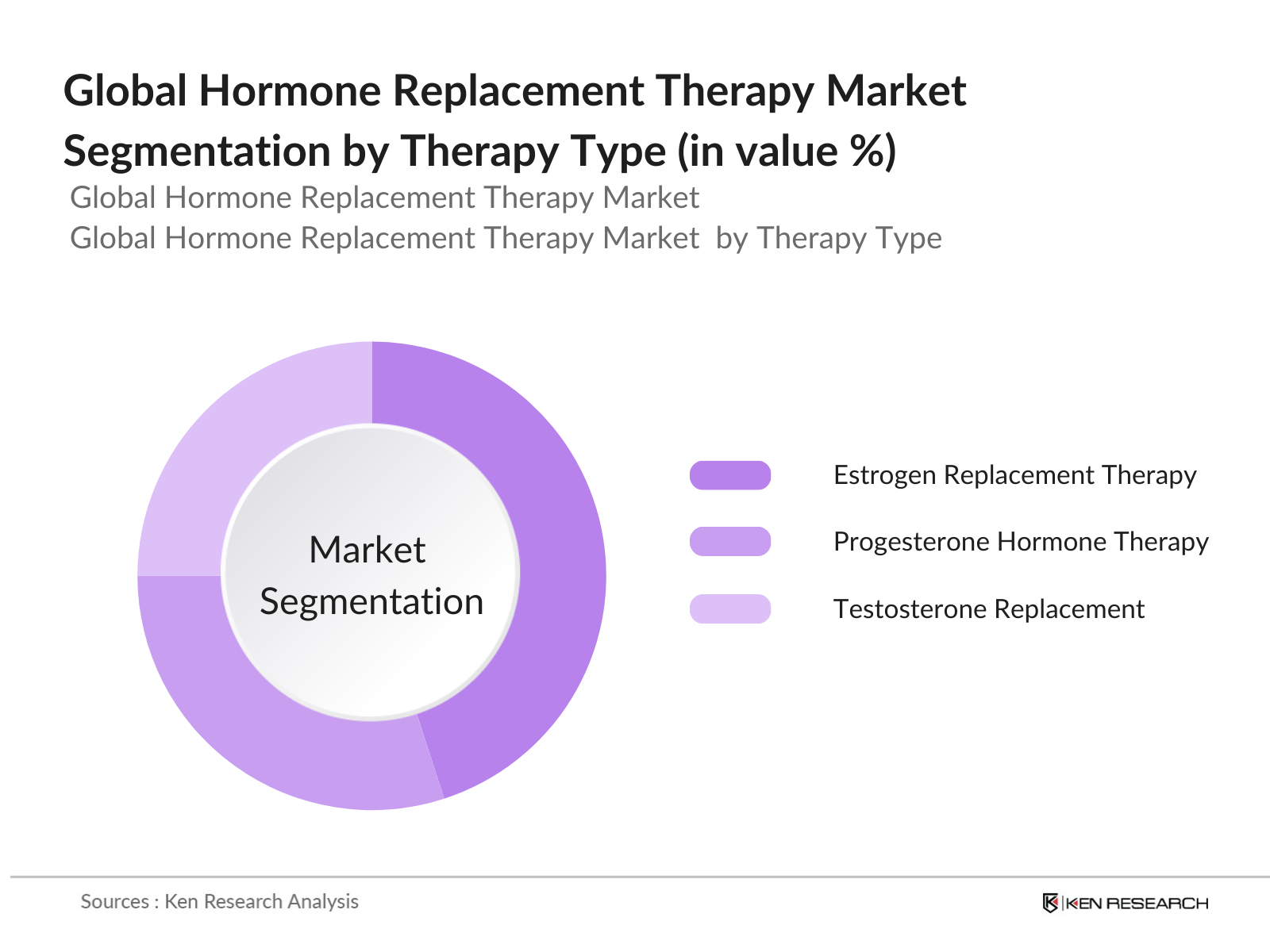
By Therapy Type: The global hormone replacement therapy market is segmented by therapy type into estrogen replacement therapy, progesterone hormone replacement, and testosterone replacement therapy. Estrogen replacement therapy holds a dominant share in this segment due to its widespread use in treating menopause-related symptoms. Women, especially in developed countries, have access to advanced healthcare facilities and are more likely to seek treatment for menopausal symptoms, thus contributing to the dominance of this segment. The high efficacy of estrogen therapies in treating osteoporosis and reducing the risk of cardiovascular diseases further strengthens its market position.
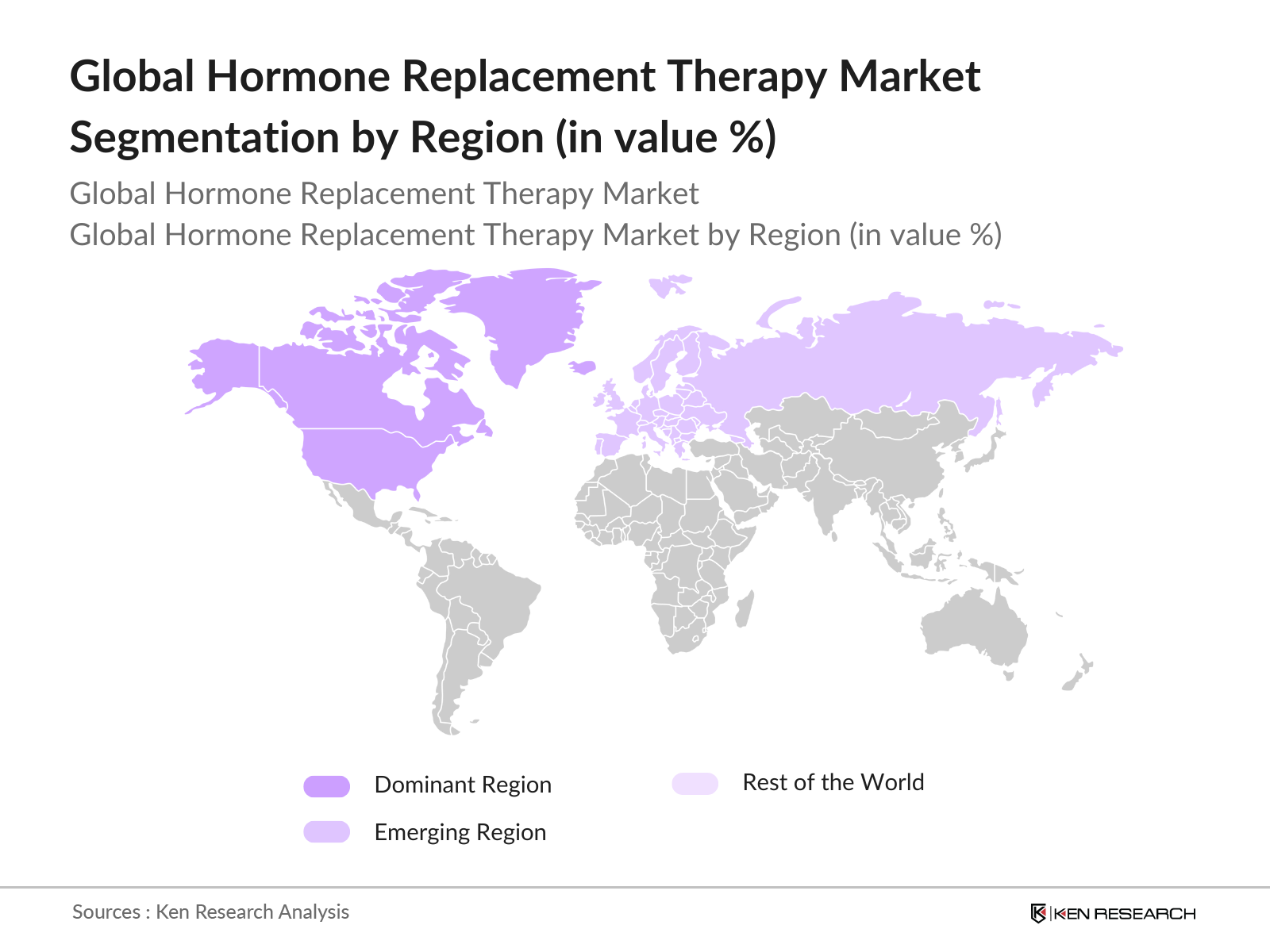
By Region: The hormone replacement therapy market is segmented into North America, Europe, Asia-Pacific, Latin America, and the Middle East & Africa. North America holds the dominant share in this market due to the high prevalence of menopausal women, rising cases of hormonal imbalances, and a well-established healthcare system that supports hormone therapy treatments. Furthermore, the U.S. and Canada benefit from high R&D expenditure and numerous clinical trials, which drive innovation in this sector. The strong presence of pharmaceutical companies offering hormone replacement therapies also contributes to the region's market leadership.
The global hormone replacement therapy market is dominated by a few key players with a significant presence across regions. These companies invest heavily in research and development, enabling them to introduce innovative products and maintain a competitive edge. Market competition is primarily driven by advancements in hormone delivery systems, expanding applications for hormone therapies, and strategic mergers and acquisitions.
|
Company |
Establishment Year |
Headquarters |
Revenue |
Number of Employees |
Product Portfolio |
Regional Presence |
R&D Expenditure |
Strategic Partnerships |
Mergers & Acquisitions |
|
Pfizer Inc. |
1849 |
New York, USA |
|||||||
|
Novartis AG |
1996 |
Basel, Switzerland |
|||||||
|
Merck KGaA |
1668 |
Darmstadt, Germany |
|||||||
|
Abbott Laboratories |
1888 |
Illinois, USA |
|||||||
|
Novo Nordisk A/S |
1923 |
Bagsvaerd, Denmark |
Market Challenges:
Over the next five years, the hormone replacement therapy market is expected to experience significant growth. This expansion will be fueled by the increasing awareness of the benefits of hormone therapies, the aging global population, and the rising prevalence of hormone-related conditions such as menopause, hypogonadism, and growth hormone deficiencies. Furthermore, advancements in drug delivery systems, particularly non-invasive methods like transdermal patches and topical gels, are anticipated to drive market growth and patient acceptance.
Market Opportunities:
|
By Therapy Type |
Estrogen Replacement Therapy Progesterone Hormone Replacement Testosterone Replacement Therapy |
|
By Route of Administration |
Oral Transdermal Injectable Topical |
|
By Application |
Menopause Hypogonadism Growth Hormone Deficiency Others |
|
By Distribution Channel |
Hospital Pharmacies Retail Pharmacies Online Pharmacies |
|
By Region |
North America Europe Asia Pacific Latin America Middle East & Africa |
1.1. Definition and Scope
1.2. Market Taxonomy
1.3. Market Growth Rate
1.4. Market Segmentation Overview
2.1. Historical Market Size
2.2. Year-On-Year Growth Analysis
2.3. Key Market Developments and Milestones
3.1. Growth Drivers
3.1.1. Aging Population (Population Demographics)
3.1.2. Rising Prevalence of Hormonal Disorders (Prevalence Rates)
3.1.3. Increasing Awareness About HRT (Patient Education and Advocacy)
3.1.4. Technological Advancements in Drug Delivery (Technological Innovation)
3.2. Market Challenges
3.2.1. Side Effects Associated with HRT (Safety and Efficacy Concerns)
3.2.2. High Cost of Hormone Therapies (Cost Analysis)
3.2.3. Stringent Regulatory Approval Processes (Regulatory Challenges)
3.3. Opportunities
3.3.1. Growth in Personalized Medicine (Personalized Treatment)
3.3.2. Increasing R&D Investments in HRT (Research and Development Trends)
3.3.3. Expanding Health Insurance Coverage (Insurance Market Impact)
3.4. Trends
3.4.1. Adoption of Bio-Identical Hormones (Innovative Therapies)
3.4.2. Growth in Non-Oral Delivery Methods (Drug Delivery Mechanisms)
3.4.3. Increasing Use of Hormones for Preventive Care (Preventive Medicine)
3.5. Government Regulations
3.5.1. FDA and EMA Guidelines (Regulatory Standards)
3.5.2. National and Regional HRT Policies (Healthcare Policies)
3.5.3. Reimbursement Policies (Health Insurance Policies)
3.6. SWOT Analysis
3.7. Stake Ecosystem
3.8. Porters Five Forces Analysis
3.9. Competition Ecosystem
4.1. By Therapy Type (In Value %)
4.1.1. Estrogen Replacement Therapy
4.1.2. Progesterone Hormone Replacement
4.1.3. Testosterone Replacement Therapy
4.2. By Route of Administration (In Value %)
4.2.1. Oral
4.2.2. Transdermal
4.2.3. Injectable
4.2.4. Topical
4.3. By Application (In Value %)
4.3.1. Menopause
4.3.2. Hypogonadism
4.3.3. Growth Hormone Deficiency
4.3.4. Others
4.4. By Distribution Channel (In Value %)
4.4.1. Hospital Pharmacies
4.4.2. Retail Pharmacies
4.4.3. Online Pharmacies
4.5. By Region (In Value %)
4.5.1. North America
4.5.2. Europe
4.5.3. Asia Pacific
4.5.4. Latin America
4.5.5. Middle East & Africa
5.1. Detailed Profiles of Major Companies
5.1.1. Pfizer Inc.
5.1.2. Novartis AG
5.1.3. Merck KGaA
5.1.4. Mylan N.V.
5.1.5. Abbott Laboratories
5.1.6. Novo Nordisk A/S
5.1.7. Teva Pharmaceutical Industries Ltd.
5.1.8. Eli Lilly and Company
5.1.9. Bayer AG
5.1.10. Amgen Inc.
5.1.11. F. Hoffmann-La Roche Ltd.
5.1.12. GlaxoSmithKline Plc
5.1.13. Sanofi S.A.
5.1.14. Endo Pharmaceuticals Inc.
5.1.15. TherapeuticsMD Inc.
5.2. Cross Comparison Parameters (Revenue, Employee Count, Regional Presence, Product Portfolio, Market Share, Research and Development Expenditure, Mergers & Acquisitions, Strategic Partnerships)
5.3. Market Share Analysis
5.4. Strategic Initiatives
5.5. Mergers and Acquisitions
5.6. Investment Analysis
5.7. Venture Capital Funding
5.8. Government Grants
5.9. Private Equity Investments
6.1. Approval Processes
6.2. Compliance and Monitoring Requirements
6.3. Market Authorization Procedures
7.1. Future Market Size Projections
7.2. Key Factors Driving Future Market Growth
8.1. By Therapy Type (In Value %)
8.2. By Route of Administration (In Value %)
8.3. By Application (In Value %)
8.4. By Distribution Channel (In Value %)
8.5. By Region (In Value %)
9.1. TAM/SAM/SOM Analysis
9.2. Customer Cohort Analysis
9.3. Marketing Initiatives
9.4. White Space Opportunity Analysis
The first step involved creating a comprehensive ecosystem map of the hormone replacement therapy market. This process included detailed desk research using secondary and proprietary databases to gather industry-specific data and define critical variables that shape market trends.
In this phase, historical data pertaining to hormone replacement therapy was compiled and analyzed. Key indicators such as market penetration rates, treatment adoption, and revenue generation were evaluated to ensure the accuracy of market forecasts.
Market hypotheses were tested and validated through telephonic interviews and consultations with industry experts. These interactions provided crucial insights into market dynamics and refined the initial research findings, ensuring that the data was both accurate and representative.
The final phase involved synthesizing the research findings and engaging directly with key stakeholders in the industry to verify product segments, market drivers, and consumer behavior patterns. This helped to refine the data and ensure a thorough analysis of the market.
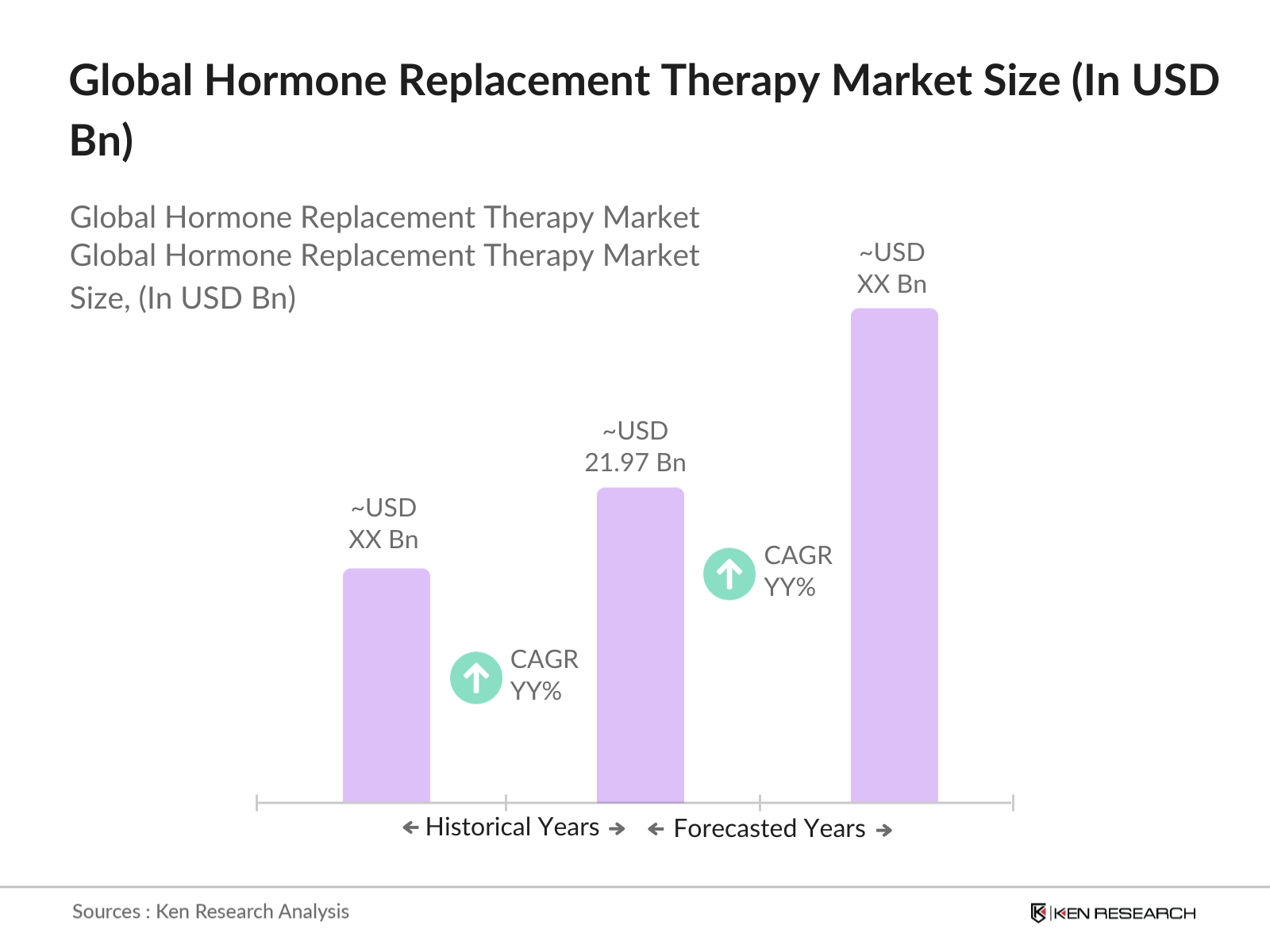
The global hormone replacement therapy market is valued at USD 21.97 billion, driven by increasing demand for treatments addressing hormonal imbalances in menopausal women and individuals with growth hormone deficiencies.
The major challenges in this market include the high cost of treatment, potential side effects, and stringent regulatory approval processes for new therapies.
Key players in the market include Pfizer, Novartis, Merck KGaA, Mylan, and Abbott Laboratories. These companies maintain their market dominance through extensive R&D, innovative drug delivery systems, and strategic acquisitions.
The market is primarily driven by the rising aging population, the increasing prevalence of menopause-related conditions, and advancements in drug delivery technologies such as transdermal patches and topical applications.

What makes us stand out is that our consultants follows Robust, Refine and Result (RRR) methodology. i.e. Robust for clear definitions, approaches and sanity checking, Refine for differentiating respondents facts and opinions and Result for presenting data with story

We have set a benchmark in the industry by offering our clients with syndicated and customized market research reports featuring coverage of entire market as well as meticulous research and analyst insights.

While we don't replace traditional research, we flip the method upside down. Our dual approach of Top Bottom & Bottom Top ensures quality deliverable by not just verifying company fundamentals but also looking at the sector and macroeconomic factors.

With one step in the future, our research team constantly tries to show you the bigger picture. We help with some of the tough questions you may encounter along the way: How is the industry positioned? Best marketing channel? KPI's of competitors? By aligning every element, we help maximize success.

Our report gives you instant access to the answers and sources that other companies might choose to hide. We elaborate each steps of research methodology we have used and showcase you the sample size to earn your trust.

If you need any support, we are here! We pride ourselves on universe strength, data quality, and quick, friendly, and professional service.