
Global Hydrogen Fueling Station Market Outlook to 2030
Region:Global
Author(s):Yogita Sahu
Product Code:KROD4678
October 2024
84
About the Report
Global Hydrogen Fueling Station Market Overview
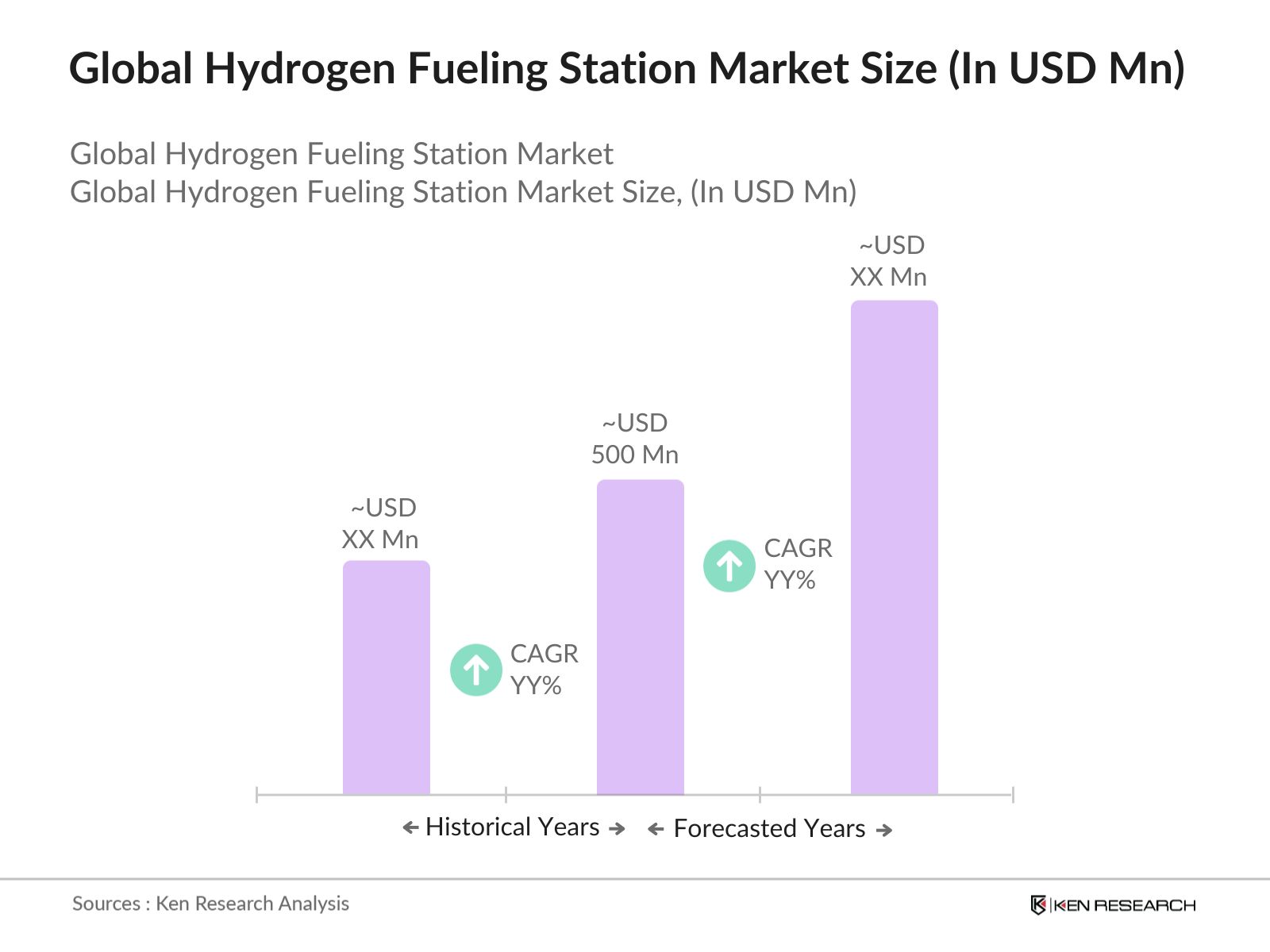
- The global hydrogen fueling station market was valued at USD 500 million, based on a detailed five-year historical analysis. This growth is primarily driven by the increasing global demand for cleaner energy alternatives and the push toward decarbonizing the transportation sector. The expansion of hydrogen-powered vehicles, particularly heavy-duty vehicles and buses, is also a major factor contributing to the growth of hydrogen fueling infrastructure.
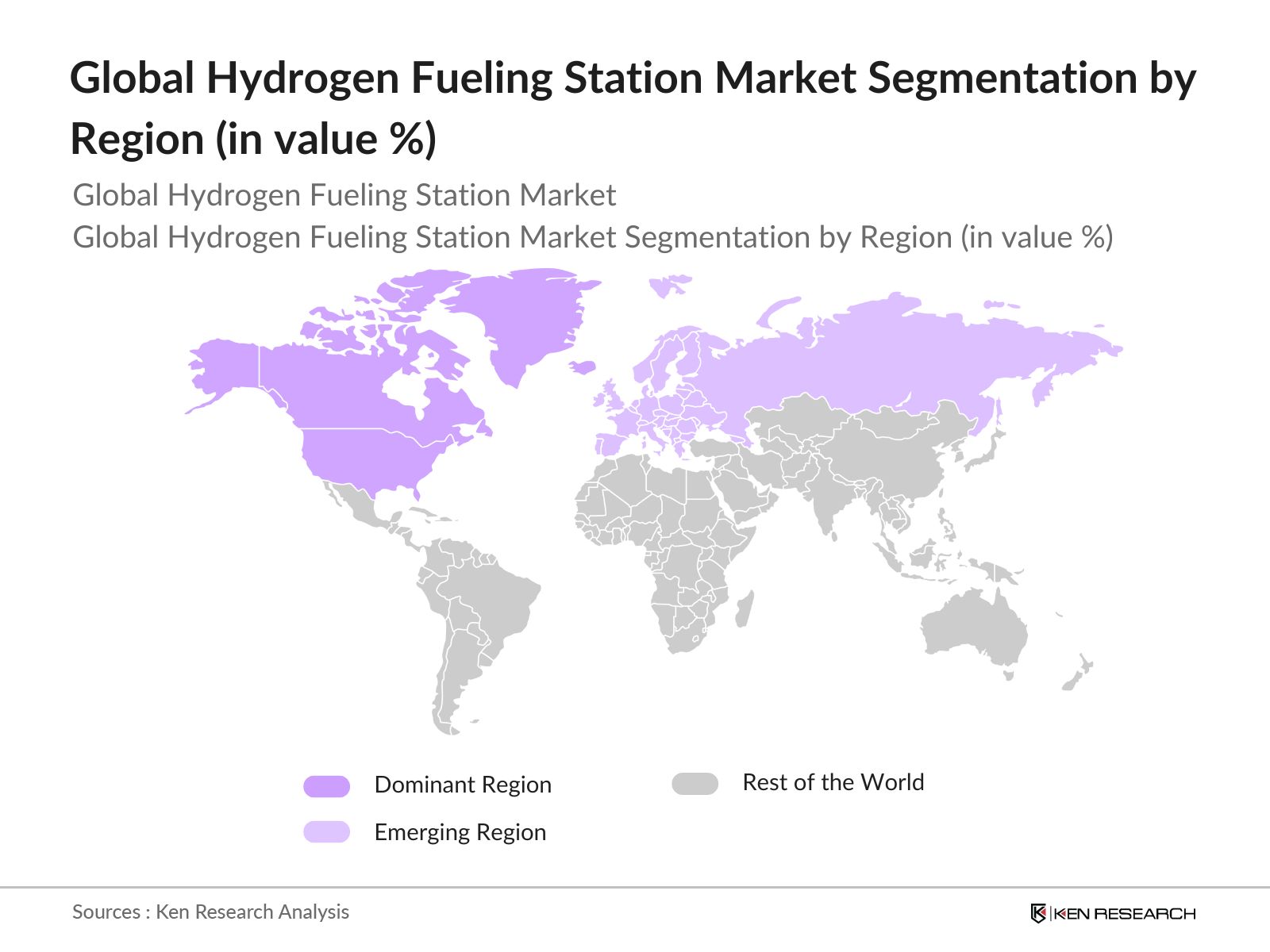
- Several countries and regions dominate the market, Japan, South Korea, Germany, and California in the U.S. lead the market due to their early adoption of hydrogen as an energy source, well-established infrastructure, and strong government support. In these regions, governments have invested in hydrogen technology as part of their strategies to reduce greenhouse gas emissions.
- The U.S. Department of Energy (DOE) has allocated $7 billion for the establishment of clean hydrogen hubs across the country, part of the Infrastructure Investment and Jobs Act. In 2023 alone, $87.5 million was disbursed to support new hydrogen stations in key states like California and Texas. The U.S. governments focus on hydrogen is aimed at reducing emissions and promoting clean energy solutions for heavy transport and commercial vehicles.
Global Hydrogen Fueling Station Market Segmentation
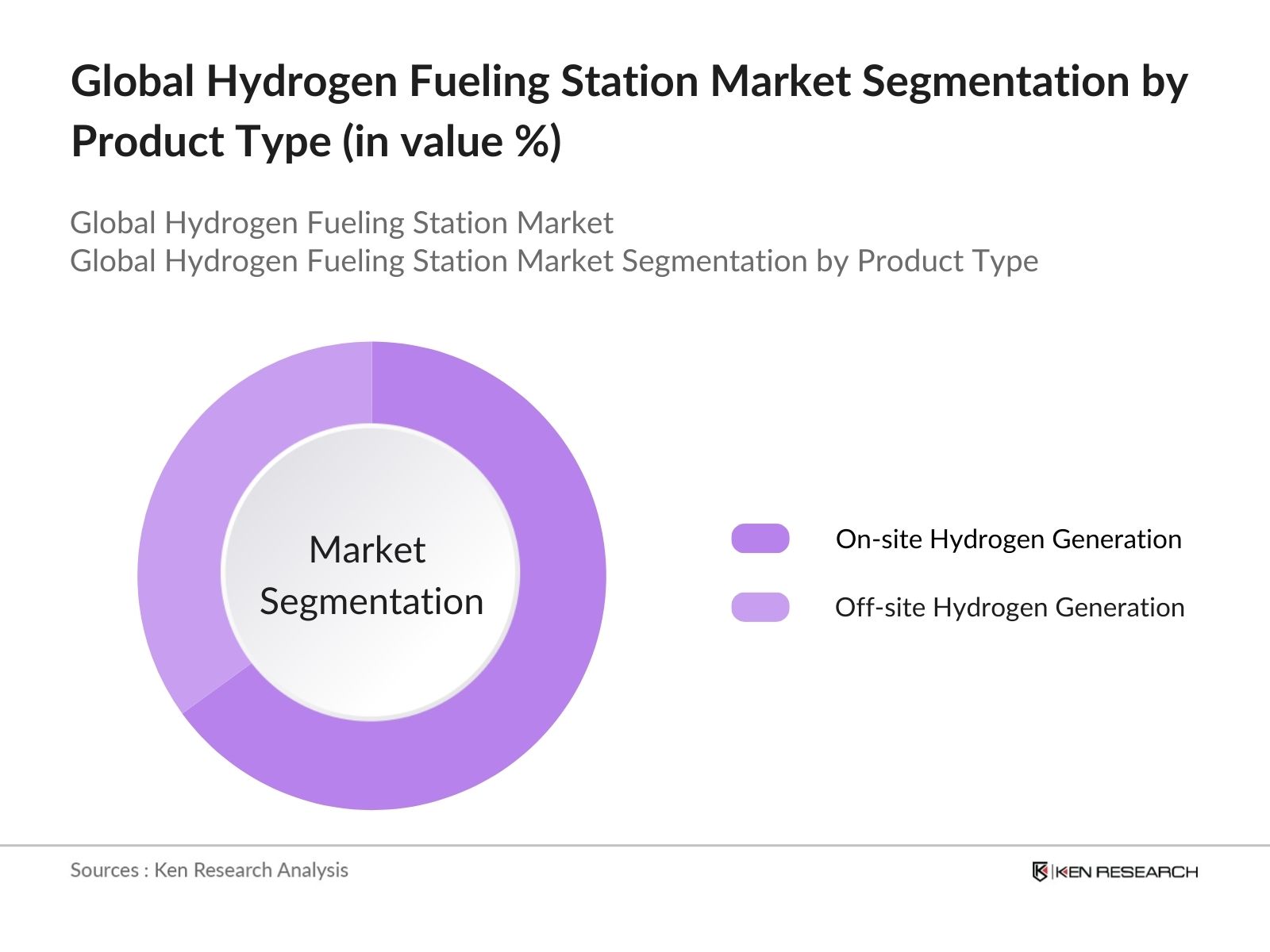
By Product Type: The market is segmented by product type into on-site hydrogen generation stations and off-site hydrogen generation stations. On-site hydrogen generation stations currently hold a dominant market share due to their ability to produce hydrogen directly at the fueling station, reducing transportation and storage costs. This makes on-site stations more efficient and environmentally friendly, as they can utilize renewable energy sources such as solar and wind power to produce green hydrogen.
By Vehicle Type: The market is segmented by vehicle type into passenger vehicles, commercial vehicles, heavy-duty vehicles, and public transport. Heavy-duty vehicles dominate the market share in this segment due to the growing demand for hydrogen in long-haul transportation, where battery electric vehicles (BEVs) are less efficient. Hydrogens high energy density and faster refueling times make it an ideal solution for trucks, buses, and trains. In markets like North America and Europe, hydrogen fueling stations are being developed with a focus on servicing fleets of heavy-duty vehicles and public transportation systems.
By Region: The market is segmented into North America, Europe, Asia-Pacific, Latin America, and Middle East & Africa. Asia-Pacific is the dominant region, driven by investments in hydrogen infrastructure by Japan, South Korea, and China. Japan and South Korea have made hydrogen a cornerstone of their energy policies, setting ambitious targets for the construction of hydrogen stations and the adoption of hydrogen-powered vehicles. Europe follows closely, with countries like Germany and France leading the push for a hydrogen economy through initiatives such as the European Green Deal.
Global Hydrogen Fueling Station Market Competitive Landscape
The market is dominated by several key players who are involved in the production, distribution, and operation of hydrogen infrastructure. These companies play a critical role in advancing hydrogen technologies and expanding the global network of fueling stations. The market is competitive, with both established energy giants and newer technology-focused companies driving innovation in hydrogen fueling solutions.
|
Company |
Establishment Year |
Headquarters |
Revenue (USD Bn) |
R&D Investment |
No. of Stations |
Region Presence |
Green Hydrogen Focus |
Partnerships |
|
Air Liquide |
1902 |
Paris, France |
||||||
|
Linde AG |
1879 |
Dublin, Ireland |
||||||
|
Nel Hydrogen |
1927 |
Oslo, Norway |
||||||
|
Shell Hydrogen |
1907 |
The Hague, Netherlands |
||||||
|
Toyota Tsusho Corporation |
1948 |
Nagoya, Japan |
Global Hydrogen Fueling Station Market
Market Growth Drivers
- Rising Vehicle Fleet Expansion with Hydrogen Fueling Infrastructure: By 2024, several countries are investing in hydrogen fueling infrastructure to support the increasing number of hydrogen fuel cell vehicles (FCVs). For instance, Japans government had set a goal to increase hydrogen-powered vehicles to 200,000 units by 2025, and they are allocating $600 million to hydrogen infrastructure.
- Public-Private Partnerships in Hydrogen Station Development: Global efforts are being driven by strategic alliances between governments and private companies. The European Union announced over 1.5 billion investment in green hydrogen projects, with Germany alone planning to open more than 400 hydrogen fueling stations by 2025. In California, public-private partnerships have resulted in over 60 operational hydrogen stations, with the state allocating $100 million annually for hydrogen infrastructure development through the Clean Transportation Program.
- Supportive National Policies for Decarbonization: Hydrogen fueling stations are receiving support from government policies aimed at decarbonization. The U.S. government, through the Infrastructure Investment and Jobs Act, has committed $9.5 billion towards hydrogen research and development, which includes setting up hydrogen fueling infrastructure.
Market Challenges
- Hydrogen Storage and Transportation Issues: The transportation of hydrogen requires specialized equipment and high-pressure systems, which complicates infrastructure development. Transporting liquid hydrogen can cost up to $13 per kilogram, making hydrogen less competitive with other energy sources like electric charging stations. This challenge has been noted by the European Commission, which estimates that the cost of transporting hydrogen could increase station costs by an additional 30%.
- Lack of Standardization Across Markets: Different countries and regions have different regulatory standards for hydrogen fueling infrastructure, which complicates the development of a global market. For instance, Japan, South Korea, and the EU have adopted varied pressure standards for hydrogen refueling, ranging from 35 MPa to 70 MPa, resulting in operational challenges for manufacturers and operators looking to expand across regions.
Global Hydrogen Fueling Station Market Future Outlook
Over the next five years, the global hydrogen fueling station industry is expected to witness substantial growth, driven by the increasing adoption of hydrogen as a clean energy source and the rapid expansion of hydrogen-powered vehicle fleets. Governments around the world continue to support hydrogen infrastructure development through subsidies, policy frameworks, and decarbonization goals, which will contribute to the market's growth.
Future Market Opportunities
- Increased Focus on Green Hydrogen Production: Over the next five years, there will be an increase in hydrogen fueling stations powered by green hydrogen, as governments focus on reducing emissions across sectors. By 2029, at least 1,500 new hydrogen stations will be operational worldwide, fueled exclusively by green hydrogen derived from renewable sources like solar and wind.
- Shift Towards Hydrogen for Heavy-Duty Vehicles: Hydrogen fueling stations will increasingly cater to heavy-duty trucks and buses as the global focus shifts towards decarbonizing the commercial transportation sector. By 2029, the number of hydrogen-powered trucks on the roads is expected to surpass 200,000 units globally, necessitating a robust network of large-capacity hydrogen fueling stations.
Products
Key Target Audience Organizations and Entities Who Can Benefit by Subscribing This Report:
Automotive Manufacturers
Banks and Financial Institution
Government and Regulatory Bodies (e.g., U.S. Department of Energy, European Commission)
Investments and Venture Capitalist Firms
Hydrogen Production Companies
Fuel Cell Technology Providers
Renewable Energy Companies
Companies
Players Mentioned in the Report:
Air Liquide
Linde AG
Nel Hydrogen
Shell Hydrogen
Toyota Tsusho Corporation
Hyundai Motor Company
Honda Motor Co., Ltd.
Plug Power Inc.
Ballard Power Systems
Hydrogenics Corporation
FirstElement Fuel Inc.
TrueZero
Nikola Corporation
Air Products and Chemicals, Inc.
ITM Power
Table of Contents
1. Global Hydrogen Fueling Station Market Overview
1.1. Definition and Scope
1.2. Market Taxonomy
1.3. Market Growth Rate
1.4. Market Segmentation Overview
2. Global Hydrogen Fueling Station Market Size (In USD Mn)
2.1. Historical Market Size
2.2. Year-On-Year Growth Analysis
2.3. Key Market Developments and Milestones
3. Global Hydrogen Fueling Station Market Analysis
3.1. Growth Drivers (Adoption of hydrogen-powered vehicles, government policies, environmental regulations)
3.1.1. Transition to Green Energy
3.1.2. Incentives for Zero-Emission Vehicles
3.1.3. Advancements in Hydrogen Production Technologies
3.1.4. Government Subsidies for Fueling Infrastructure
3.2. Market Challenges (Infrastructure costs, hydrogen storage challenges, limited consumer adoption)
3.2.1. High Capital Investment for Station Development
3.2.2. Hydrogen Storage and Distribution Issues
3.2.3. Limited Availability of Hydrogen Vehicles
3.2.4. Safety Concerns Related to Hydrogen Fueling
3.3. Opportunities (Expansion in emerging markets, increasing collaboration between industries)
3.3.1. Technological Advancements in Fueling Infrastructure
3.3.2. Growing Demand for Clean Energy
3.3.3. Strategic Partnerships for Network Expansion
3.3.4. Scaling Hydrogen for Industrial and Mobility Applications
3.4. Trends (Shift towards renewable hydrogen, integration of smart technology)
3.4.1. Renewable Hydrogen Production (Electrolysis, Green Hydrogen)
3.4.2. Integration with Digital Management and Analytics Systems
3.4.3. Hydrogen Fueling for Heavy-duty Vehicles and Public Transport
3.4.4. Cross-sector Collaboration for Hydrogen Ecosystems
3.5. Government Regulations (Subsidies, emissions standards, safety standards)
3.5.1. Zero-Emission Vehicle (ZEV) Mandates
3.5.2. Clean Hydrogen Production Standards
3.5.3. Safety Regulations for Hydrogen Stations
3.5.4. Hydrogen Fueling Incentives and Funding Programs
3.6. SWOT Analysis
3.7. Stakeholder Ecosystem (Hydrogen producers, technology providers, fuel distributors, government bodies)
3.8. Porters Five Forces (Bargaining power of suppliers, buyers, threat of new entrants, etc.)
3.9. Competitive Ecosystem
4. Global Hydrogen Fueling Station Market Segmentation
4.1. By Product Type (In Value %)
4.1.1. On-site Hydrogen Generation Stations
4.1.2. Off-site Hydrogen Generation Stations
4.2. By Vehicle Type (In Value %)
4.2.1. Passenger Vehicles
4.2.2. Commercial Vehicles
4.2.3. Heavy-duty Vehicles
4.2.4. Public Transport
4.3. By Pressure Rating (In Value %)
4.3.1. 350 Bar
4.3.2. 700 Bar
4.4. By Supply Mode (In Value %)
4.4.1. Pipeline
4.4.2. Tanker Truck
4.4.3. Cylinder
4.5. By Region (In Value %)
4.5.1. North America
4.5.2. Europe
4.5.3. Asia-Pacific
4.5.4. Latin America
4.5.5. Middle East & Africa
5. Global Hydrogen Fueling Station Market Competitive Analysis
5.1. Detailed Profiles of Major Companies
5.1.1. Air Liquide
5.1.2. Linde AG
5.1.3. Nel Hydrogen
5.1.4. Shell Hydrogen
5.1.5. Toyota Tsusho Corporation
5.1.6. ITM Power
5.1.7. Plug Power Inc.
5.1.8. Hydrogenics Corporation
5.1.9. Ballard Power Systems
5.1.10. Hyundai Motor Company
5.1.11. Honda Motor Co., Ltd.
5.1.12. Air Products and Chemicals, Inc.
5.1.13. FirstElement Fuel Inc.
5.1.14. TrueZero
5.1.15. Nikola Corporation
5.2. Cross Comparison Parameters (Revenue, Market Share, Technology Portfolio, No. of Stations, Regions Covered, Investment in R&D, Partnerships, Sustainability Initiatives)
5.3. Market Share Analysis
5.4. Strategic Initiatives (Expansion plans, partnerships, product development)
5.5. Mergers and Acquisitions
5.6. Investment Analysis (Investment trends, venture capital funding)
5.7. Venture Capital Funding
5.8. Government Grants
5.9. Private Equity Investments
6. Global Hydrogen Fueling Station Market Regulatory Framework
6.1. Environmental Standards
6.2. Compliance Requirements
6.3. Certification Processes (ISO Standards, Hydrogen Station Safety Standards)
7. Global Hydrogen Fueling Station Future Market Size (In USD Mn)
7.1. Future Market Size Projections
7.2. Key Factors Driving Future Market Growth (Technology advancements, government policies)
8. Global Hydrogen Fueling Station Future Market Segmentation
8.1. By Product Type (In Value %)
8.2. By Vehicle Type (In Value %)
8.3. By Pressure Rating (In Value %)
8.4. By Supply Mode (In Value %)
8.5. By Region (In Value %)
9. Global Hydrogen Fueling Station Market Analysts Recommendations
9.1. TAM/SAM/SOM Analysis
9.2. Customer Cohort Analysis
9.3. Marketing Initiatives
9.4. White Space Opportunity Analysis
Research Methodology
Step 1: Identification of Key Variables
In the initial stage, we constructed a comprehensive ecosystem map that included major stakeholders in the hydrogen fueling station market. This was done using extensive desk research, employing both secondary and proprietary databases to gather data on market dynamics, infrastructure, and vehicle adoption rates.
Step 2: Market Analysis and Construction
Next, we compiled and analyzed historical data from key regions to assess market penetration rates and hydrogen station infrastructure. This phase included reviewing government policies, technological advancements, and industry reports to ensure the accuracy of our market projections.
Step 3: Hypothesis Validation and Expert Consultation
Our research hypotheses were validated through consultations with industry experts, including hydrogen producers and automotive manufacturers. These interviews provided insights into market challenges, opportunities, and future growth trends, helping to refine our forecasts.
Step 4: Research Synthesis and Final Output
In the final stage, data from multiple sources, including industry reports and direct company interactions, were synthesized to produce a comprehensive and validated market analysis. This ensured a complete and accurate representation of the hydrogen fueling station market.
Frequently Asked Questions
1. How big is the Global Hydrogen Fueling Station Market?
The global hydrogen fueling station market is valued at USD 500 million, driven by increasing demand for clean energy alternatives and the expansion of hydrogen-powered vehicles.
2. What are the challenges in the Global Hydrogen Fueling Station Market?
Key challenges in the global hydrogen fueling station market include high infrastructure costs, hydrogen storage and transportation issues, and limited adoption of hydrogen vehicles by consumers.
3. Who are the major players in the Global Hydrogen Fueling Station Market?
Key players in the global hydrogen fueling station market include Air Liquide, Linde AG, Nel Hydrogen, Shell Hydrogen, and Toyota Tsusho Corporation. These companies are driving innovation in hydrogen fueling infrastructure.
4. What are the growth drivers of the Global Hydrogen Fueling Station Market?
The global hydrogen fueling station market is propelled by government support for zero-emission vehicles, advancements in hydrogen production technologies, and the need to decarbonize the transportation sector.
5. What are the dominant regions in the Global Hydrogen Fueling Station Market?
Asia-Pacific, led by Japan and South Korea, dominates the global hydrogen fueling station market due to government investment in hydrogen infrastructure and early adoption of hydrogen as a clean energy source.
Why Buy From Us?

What makes us stand out is that our consultants follows Robust, Refine and Result (RRR) methodology. i.e. Robust for clear definitions, approaches and sanity checking, Refine for differentiating respondents facts and opinions and Result for presenting data with story

We have set a benchmark in the industry by offering our clients with syndicated and customized market research reports featuring coverage of entire market as well as meticulous research and analyst insights.

While we don't replace traditional research, we flip the method upside down. Our dual approach of Top Bottom & Bottom Top ensures quality deliverable by not just verifying company fundamentals but also looking at the sector and macroeconomic factors.

With one step in the future, our research team constantly tries to show you the bigger picture. We help with some of the tough questions you may encounter along the way: How is the industry positioned? Best marketing channel? KPI's of competitors? By aligning every element, we help maximize success.

Our report gives you instant access to the answers and sources that other companies might choose to hide. We elaborate each steps of research methodology we have used and showcase you the sample size to earn your trust.

If you need any support, we are here! We pride ourselves on universe strength, data quality, and quick, friendly, and professional service.