Ken Research Logo

Global Kosher Food Market Outlook to 2030

Region:Global

Author(s):Mukul

Product Code:KROD11070

Published On

December 2024

Total pages

119

About the Report

Global Kosher Food Market Overview

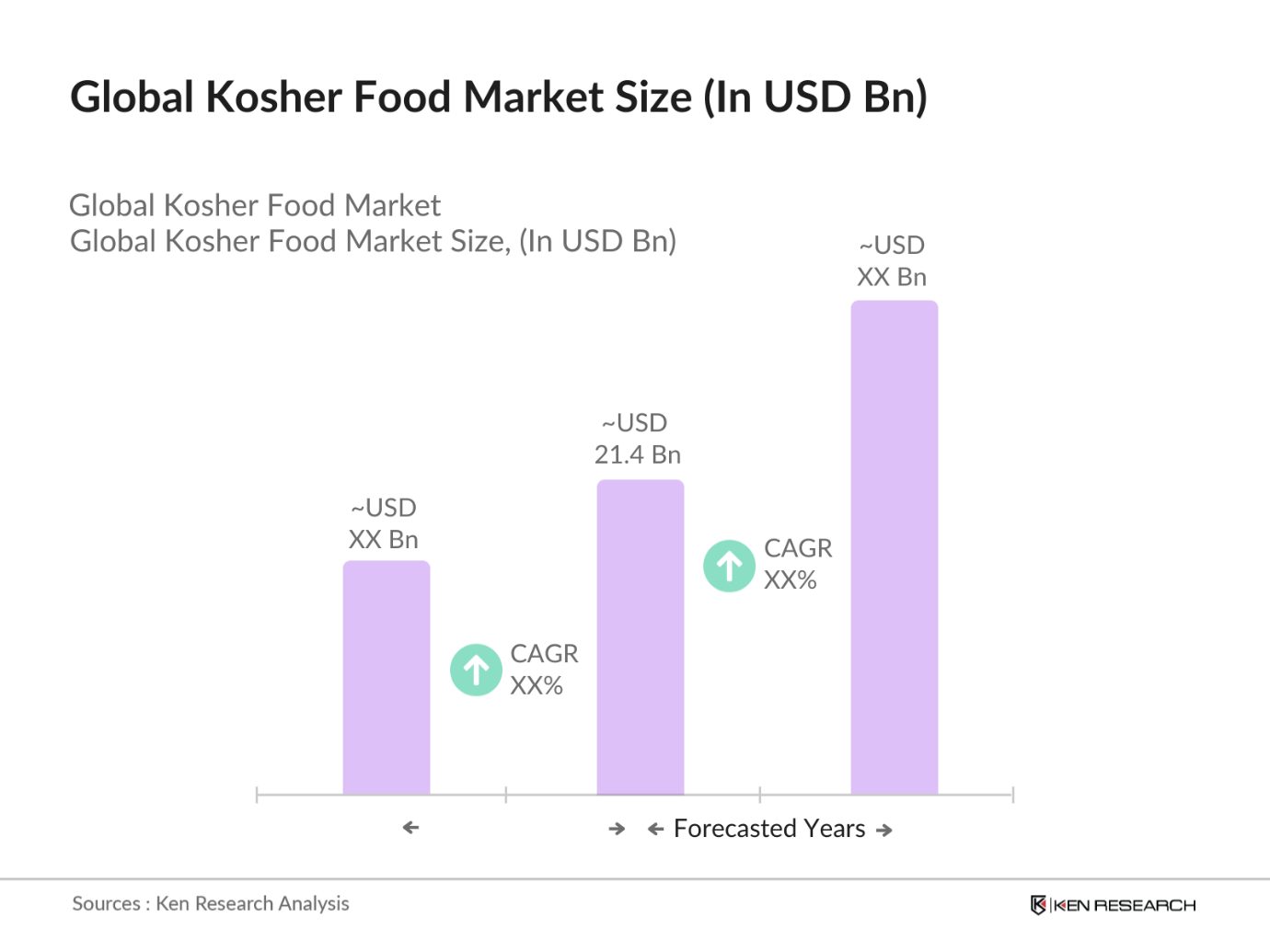
  • The global kosher food market is valued at USD 21.4 billion, driven by an increasing demand for certified kosher products across a wide range of consumers. This demand has expanded beyond Jewish consumers to include health-conscious and non-Jewish communities seeking products that align with higher standards of quality and safety. Additionally, the globalization of kosher certification and its perception as a mark of purity have fueled its adoption, particularly in processed food, beverages, and meat sectors, where concerns over ingredients are prevalent.

Global Kosher Food Market Size

  • The United States and Israel dominate the global kosher food market due to a significant population of kosher-observing consumers and well-established kosher certification systems. In the United States, large Jewish communities, alongside non-Jewish health-conscious consumers, drive demand. In Israel, the kosher market is a national standard, driven by religious laws and the widespread observance of kosher dietary laws. Other countries like Canada, the UK, and certain parts of Europe are witnessing growth due to an increase in kosher-certified product offerings and consumer demand for high-quality, certified foods.
  • Kosher-certified products are being increasingly adopted by vegan and organic consumers due to the overlap in ethical production methods and dietary restrictions. In 2024, approximately 25% of consumers purchasing kosher foods identified as vegan or vegetarian, according to the USDA. Kosher certification guarantees that products meet strict ingredient sourcing and processing standards, aligning with the values of these consumer groups. This trend is helping expand the kosher market into new demographic segments.

Global Kosher Food Market Segmentation

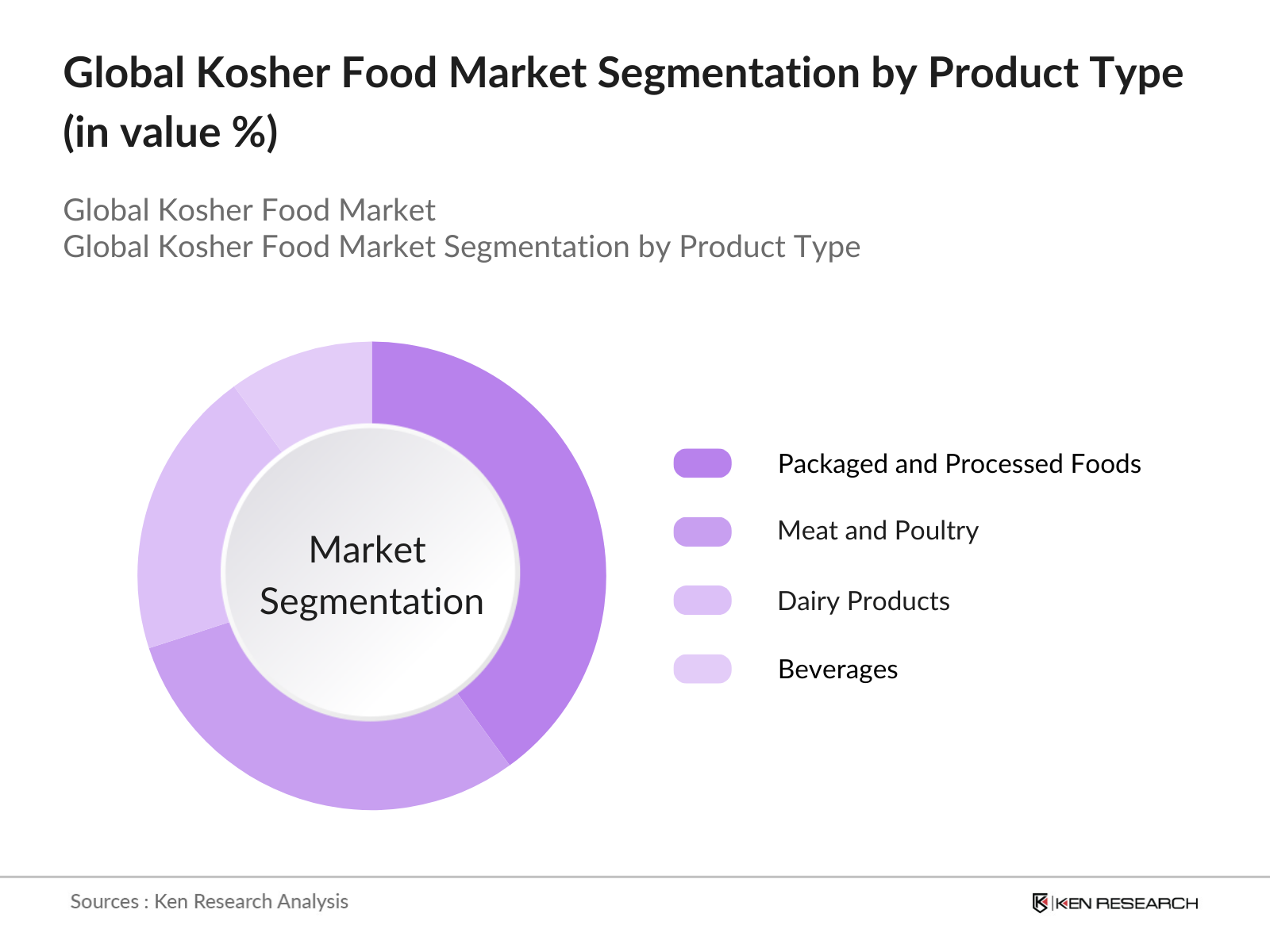
  • By Product Type: The global kosher food market is segmented by product type into meat and poultry, dairy products, packaged and processed foods, beverages, and bakery and confectionery. Recently, packaged and processed foods have seen a dominant market share within the kosher food market, owing to their convenience and rising consumer demand for ready-to-eat meals that adhere to kosher certification standards. Increasing urbanization and the need for quick meal solutions have contributed to this segments growth, as consumers seek high-quality, trustworthy certified products.

Global Kosher Food Market Segmentation By Product Type

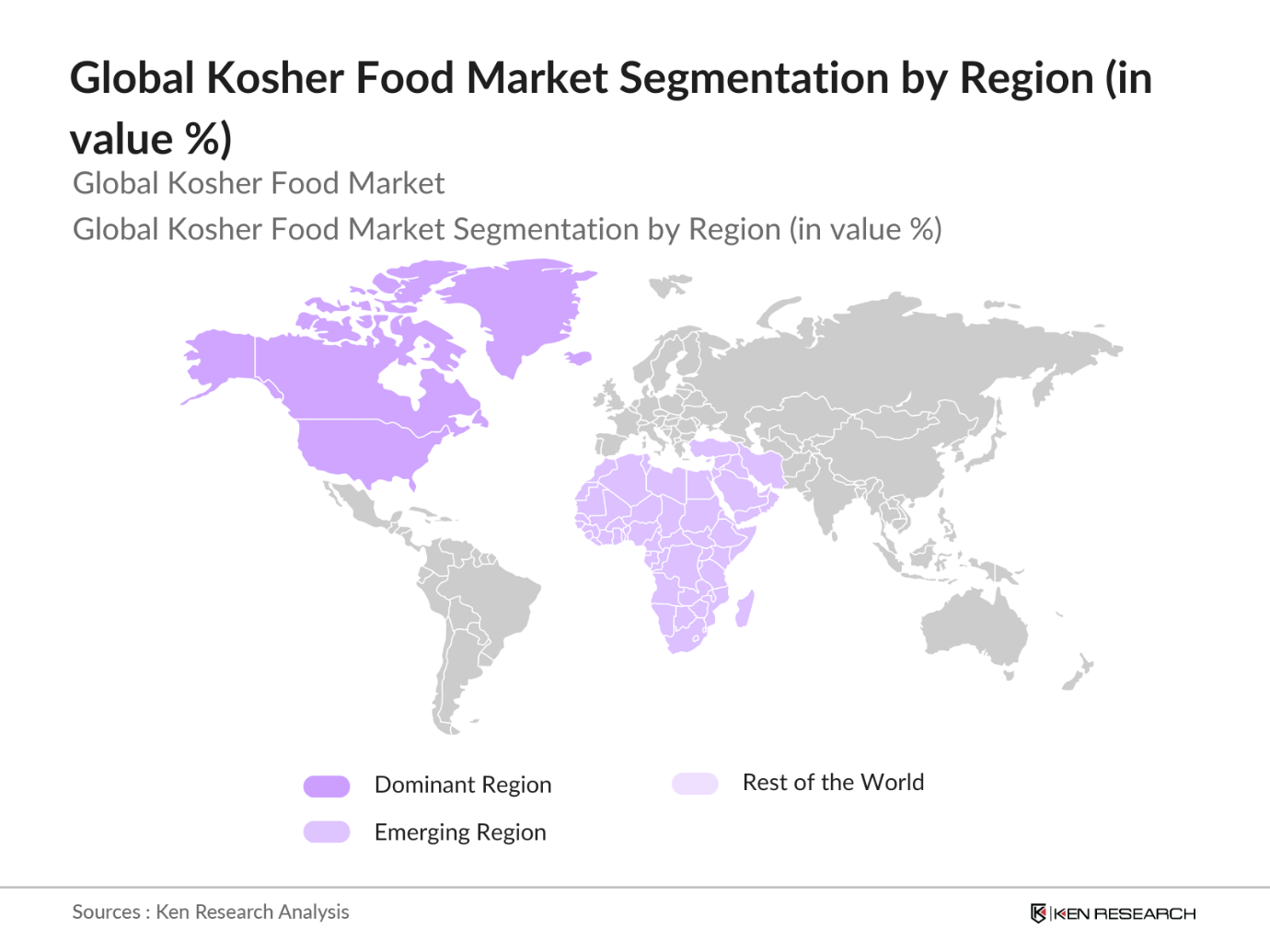
  • By Region: The global kosher food market is regionally segmented into North America, Europe, Middle East & Africa, Asia-Pacific, and Latin America. North America dominates the market, driven by a large Jewish population and increasing demand for kosher-certified products by non-Jewish consumers who associate kosher certification with higher standards of quality and purity. This region has also seen the proliferation of kosher certification agencies and a wider range of kosher products in supermarkets and online stores.

Global Kosher Food Market Segmentation By Region Type

  • By Distribution Channel: The kosher food market is segmented by distribution channel into supermarkets and hypermarkets, specialty stores, online retail, and convenience stores. Supermarkets and hypermarkets have captured the largest share of the kosher food market, due to their vast reach and ability to offer a diverse range of products under one roof. These retail giants, such as Walmart and Costco, have invested heavily in expanding their kosher product lines, making kosher foods more accessible to mainstream consumers.

Global Kosher Food Market Competitive Landscape

The global kosher food market is dominated by a mix of established global food manufacturers and specialized kosher food producers. These companies have invested significantly in kosher certification and product development to cater to both Jewish and non-Jewish consumers who prefer kosher-certified products. The competitive landscape is further shaped by companies strategies around certification, distribution, and product innovation.
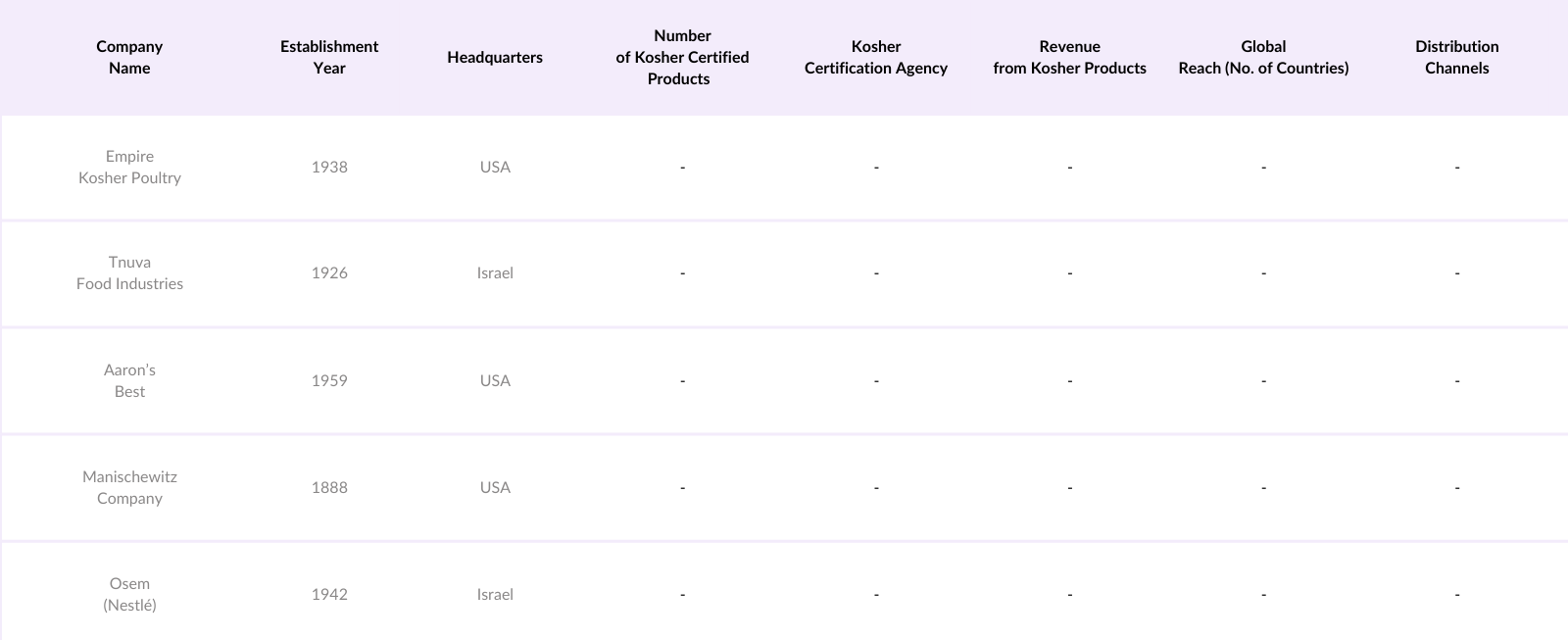
Global Kosher Food Market Competitive Landscape

Global Kosher Food Industry Analysis

Growth Drivers

  • Increasing Demand from Non-Jewish Consumers: The kosher food market has seen rising demand from non-Jewish consumers, especially those seeking food products that adhere to stricter safety and quality standards. In 2024, the global kosher food market is seeing heightened interest due to the growing perception of kosher certification as an indicator of purity and safety. This trend is reinforced by increasing urbanization and the demand for cleaner and more ethically produced food products. According to the World Bank, global urbanization reached 57% in 2023, contributing to shifts in consumer preferences toward healthier, regulated food options.
  • Rising Awareness of Food Safety and Quality Standards: With food safety scandals and growing consumer scrutiny of food processing, kosher certification has become synonymous with high food safety and quality standards. Data from 2023 reveals that over 60% of foodborne illness outbreaks are linked to poor food handling standards, leading consumers to demand more transparent certification like kosher. Furthermore, as health-related food expenditures are growing globally, with per capita healthcare spending increasing by 3.4% in real terms according to the World Bank, kosher food is seen as a safe alternative.
  • Globalization of Kosher Certification: Kosher certification has expanded beyond its traditional Jewish roots, with an increasing number of certified products being distributed worldwide. Global trade statistics show that kosher-certified products are exported to over 100 countries, with North America and Europe being the largest importers. The growing international demand for kosher foods highlights the market's globalization, facilitated by more accessible certification processes and growing cross-border e-commerce. Data from the WTO showed that global e-commerce grew by 12% in 2023, driving further expansion in kosher-certified goods distribution.

Market Restraints

  • High Costs of Kosher Certification: One of the major challenges in the kosher food market is the high cost associated with obtaining kosher certification. Certifying authorities such as OU and Star-K charge significant fees, which can be burdensome for smaller food producers. In 2023, an average kosher certification for a medium-sized food facility ranged between $5,000 and $15,000 annually, depending on the product line. These costs are compounded by the need for regular inspections, separate production lines, and specialized equipment, as documented by government trade bodies.
  • Limited Certified Facilities: Kosher-certified facilities remain limited, especially in emerging markets. This lack of infrastructure creates bottlenecks in meeting the growing global demand for kosher products. In 2022, only 10% of global food manufacturing facilities held kosher certification, as recorded by national regulatory agencies. This shortage restricts the ability of producers to scale up production and meet increasing consumer demand. Expansion into regions like Latin America and Asia remains slow due to these limitations.

Global Kosher Food Market Future Outlook

The global kosher food market is expected to experience steady growth in the coming years, driven by increasing consumer awareness about food safety, quality, and ethical sourcing. Growing demand for kosher-certified products from non-Jewish consumers, particularly in the vegan, organic, and health-conscious segments, will continue to expand the market. The rise of e-commerce and online retail channels will also boost accessibility to kosher products, particularly in regions with limited physical retail options. Technological advancements, such as blockchain for transparency in kosher supply chains, are also expected to enhance consumer trust and accelerate market growth.

Market Opportunities

  • Expansion in Emerging Markets: Emerging markets such as Asia-Pacific and Latin America offer significant growth potential for the kosher food industry. Trade data from 2023 shows that kosher food exports to these regions have grown by 8%, driven by increasing awareness of food safety and international quality standards. These markets are also benefiting from improved infrastructure and regulatory reforms aimed at attracting certified food products. The World Bank's 2024 report highlights infrastructure investments in Southeast Asia, which grew by $30 billion, facilitating easier distribution of specialty food products like kosher items.
  • Innovation in Kosher Processed Foods and Beverages: The kosher market is diversifying with innovative processed food and beverage products, meeting the demands of modern consumers who prioritize convenience. Kosher-certified plant-based meat alternatives, snacks, and ready-to-drink beverages are seeing significant market entry in 2024. A USDA report on food innovation highlights that processed kosher foods now make up 15% of total kosher food sales globally, as manufacturers focus on new product development to appeal to broader consumer bases, including vegans and those with dietary restrictions.

Scope of the Report

By Product Type

Meat and Poultry

Dairy Products

Packaged and Processed Foods

Beverages, Bakery and Confectionery

By Distribution Channel

Supermarkets and Hypermarkets

Specialty Stores

Online Retail

Convenience Stores

By Consumer Type

Jewish Consumers

Non-Jewish Consumers (Vegan, Muslim, Health-Conscious)

Institutional Buyers

By Region

North America

Europe

Middle East & Africa

Asia-Pacific

Latin America

By Certification Type

Orthodox Union (OU)

Star-K, KOF-K

OK Kosher

Other Local Certifications

Products

Key Target Audience

  • Food and Beverage Manufacturers

  • Kosher Certification Bodies

  • Retail Chains and Supermarkets

  • Specialty Kosher Stores

  • Institutional Buyers (Hotels, Airlines)

  • Online Retailers

  • Investors and Venture Capitalist Firms

  • Government and Regulatory Bodies (FDA, Rabbinical Councils)

Companies

Players Mentioned in the Report:

  • Empire Kosher Poultry

  • Tnuva Food Industries

  • Aarons Best

  • Manischewitz Company

  • Osem (Nestl)

  • Glicks Kosher Products

  • Hain Celestial Group

  • Agri Star Meat & Poultry

  • Streit's Matzos

  • Kedem Foods International

  • Fabbri 1905

  • Mehadrin Dairy

  • Golan Heights Winery

  • Kosher Valley

  • Levitts Foods

Table of Contents

1. Global Kosher Food Market Overview

1.1. Definition and Scope
1.2. Market Taxonomy (Certified Kosher Categories, Kosher Supervision Authorities, Certification Levels)
1.3. Market Growth Rate
1.4. Market Segmentation Overview

2. Global Kosher Food Market Size (In USD Mn)

2.1. Historical Market Size
2.2. Year-On-Year Growth Analysis (Product Demand, Retail Channels)
2.3. Key Market Developments and Milestones (Adoption by Mainstream Retailers, E-Commerce Influence)

3. Global Kosher Food Market Analysis

3.1. Growth Drivers
3.1.1. Increasing Demand from Non-Jewish Consumers
3.1.2. Rising Awareness of Food Safety and Quality Standards
3.1.3. Globalization of Kosher Certification
3.1.4. Health and Dietary Benefits
3.2. Market Challenges
3.2.1. High Costs of Kosher Certification
3.2.2. Limited Certified Facilities
3.2.3. Complex Regulatory Requirements
3.3. Opportunities
3.3.1. Expansion in Emerging Markets (Asia-Pacific, Latin America)
3.3.2. Innovation in Kosher Processed Foods and Beverages
3.3.3. Growth in Online Kosher Retail Channels
3.4. Trends
3.4.1. Increasing Adoption of Kosher Products by Vegan and Organic Consumers
3.4.2. Integration of Blockchain for Kosher Supply Chain Transparency
3.4.3. Collaboration with Retail Giants for Kosher Private Labels
3.5. Regulatory Framework
3.5.1. Certification Agencies (OU, Star-K, KOF-K, OK Kosher)
3.5.2. Kosher Labeling Requirements
3.5.3. International Kosher Standards Compliance
3.6. SWOT Analysis
3.7. Stakeholder Ecosystem (Certifying Bodies, Producers, Retailers)
3.8. Porters Five Forces Analysis (Supply Chain Complexities, Retail Power, Certification Competition)
3.9. Competition Ecosystem

4. Global Kosher Food Market Segmentation

4.1. By Product Type (In Value %)
4.1.1. Meat and Poultry
4.1.2. Dairy Products
4.1.3. Packaged and Processed Foods
4.1.4. Beverages
4.1.5. Bakery and Confectionery
4.2. By Distribution Channel (In Value %)
4.2.1. Supermarkets and Hypermarkets
4.2.2. Specialty Stores
4.2.3. Online Retail
4.2.4. Convenience Stores
4.3. By Consumer Type (In Value %)
4.3.1. Jewish Consumers
4.3.2. Non-Jewish Consumers (Vegan, Muslim, Health-Conscious)
4.3.3. Institutional Buyers (Hotels, Airlines)
4.4. By Region (In Value %)
4.4.1. North America
4.4.2. Europe
4.4.3. Middle East & Africa
4.4.4. Asia-Pacific
4.4.5. Latin America
4.5. By Certification Type (In Value %)
4.5.1. Orthodox Union (OU)
4.5.2. Star-K
4.5.3. KOF-K
4.5.4. OK Kosher
4.5.5. Other Local Certifications

5. Global Kosher Food Market Competitive Analysis

5.1. Detailed Profiles of Major Companies
5.1.1. Empire Kosher Poultry
5.1.2. Aarons Best
5.1.3. Manischewitz Company
5.1.4. Osem (Nestl)
5.1.5. Tnuva Food Industries
5.1.6. Glicks Kosher Products
5.1.7. Hain Celestial Group
5.1.8. Agri Star Meat & Poultry
5.1.9. Streit's Matzos
5.1.10. Kedem Foods International
5.1.11. Fabbri 1905
5.1.12. Mehadrin Dairy
5.1.13. Golan Heights Winery
5.1.14. Kosher Valley
5.1.15. Levitts Foods
5.2. Cross Comparison Parameters (No. of Kosher Certified Products, International Presence, Certification Body, Kosher Segment Penetration, Revenue from Kosher Products, Production Capacity, Distribution Network, Retail Partnerships)
5.3. Market Share Analysis
5.4. Strategic Initiatives
5.5. Mergers and Acquisitions
5.6. Investment Analysis
5.7. Private Equity and Venture Capital Funding
5.8. Government Grants and Support

6. Global Kosher Food Market Regulatory Framework

6.1. Kosher Certification Requirements (Global Kosher Standards, Process Guidelines)
6.2. Compliance and Enforcement (Local and International Standards)
6.3. Certification Process (Steps for Certification, Audit Requirements)

7. Global Kosher Food Market Future Size (In USD Mn)

7.1. Future Market Size Projections
7.2. Key Factors Driving Future Market Growth (Sustainability, New Product Launches, Expanding Distribution)

8. Global Kosher Food Market Future Segmentation

8.1. By Product Type (In Value %)
8.2. By Distribution Channel (In Value %)
8.3. By Consumer Type (In Value %)
8.4. By Region (In Value %)
8.5. By Certification Type (In Value %)

9. Global Kosher Food Market Analysts Recommendations

9.1. TAM/SAM/SOM Analysis
9.2. Consumer Insights
9.3. Market Entry Strategies for New Entrants
9.4. White Space Opportunity Analysis

Disclaimer Contact Us

Research Methodology

Step 1: Identification of Key Variables


The first step in this research involves mapping out the key players and stakeholders in the kosher food market, including manufacturers, certification bodies, and distribution networks. This step relies on both secondary sources and proprietary databases to compile essential industry-level data and understand the market dynamics that affect product certification, distribution, and sales.

Step 2: Market Analysis and Construction


The second step focuses on analyzing historical data on the global kosher food market. This includes evaluating product segments such as meat and poultry, dairy products, and processed foods. Key indicators such as market penetration rates, consumer demographics, and sales revenue from various distribution channels are also assessed to create a comprehensive market model.

Step 3: Hypothesis Validation and Expert Consultation


Hypotheses developed from secondary research are validated through consultations with industry experts and key stakeholders. Telephone interviews with executives from leading kosher food companies help provide real-time insights and further refine the market model, ensuring accurate and reliable data for the report.

Step 4: Research Synthesis and Final Output


In the final phase, the insights gathered from expert consultations are synthesized with the data collected during earlier phases. This step ensures a cohesive and detailed view of the global kosher food market, allowing for the presentation of validated market sizes, growth rates, and projections in the final report.

Frequently Asked Questions

01. How big is the Global Kosher Food Market?

The global kosher food market is valued at USD 21.4 billion, driven by a growing demand for certified kosher products among both Jewish and non-Jewish consumers who view kosher certification as a mark of high-quality and safety.

02. What are the challenges in the Global Kosher Food Market?

Challenges in the kosher food market include high certification costs, complex regulatory frameworks across different countries, and the need for maintaining strict standards throughout the supply chain, which can deter smaller players.

03. Who are the major players in the Global Kosher Food Market?

Key players in the market include Empire Kosher Poultry, Tnuva Food Industries, Aarons Best, Manischewitz Company, and Osem (Nestl). These companies have significant influence due to their extensive product lines, certification, and distribution channels.

04. What are the growth drivers of the Global Kosher Food Market?

Growth in the market is driven by increased demand from non-Jewish consumers, particularly in the vegan and health-conscious segments. Additionally, the rise in online retail platforms is making kosher products more accessible globally.

Why Buy From Us?

RRR
Refine Robust Result (RRR) Framework

What makes us stand out is that our consultants follows Robust, Refine and Result (RRR) methodology. i.e. Robust for clear definitions, approaches and sanity checking, Refine for differentiating respondents facts and opinions and Result for presenting data with story

Our Reach Is Unmatched

We have set a benchmark in the industry by offering our clients with syndicated and customized market research reports featuring coverage of entire market as well as meticulous research and analyst insights.

Research
Shifting the Research Paradigm

While we don't replace traditional research, we flip the method upside down. Our dual approach of Top Bottom & Bottom Top ensures quality deliverable by not just verifying company fundamentals but also looking at the sector and macroeconomic factors.

Insite
More Insights-Better Decisions

With one step in the future, our research team constantly tries to show you the bigger picture. We help with some of the tough questions you may encounter along the way: How is the industry positioned? Best marketing channel? KPI's of competitors? By aligning every element, we help maximize success.

Trust
Transparency and Trust

Our report gives you instant access to the answers and sources that other companies might choose to hide. We elaborate each steps of research methodology we have used and showcase you the sample size to earn your trust.

support
Round the Clock Support

If you need any support, we are here! We pride ourselves on universe strength, data quality, and quick, friendly, and professional service.

Why Client Choose Us?

400000+ Reports in repository
150+ Consulting project a year
100+ Analysts
8000+ Client Queries in 2022