
Global Lactose-Free Products Market Outlook to 2030
Region:Global
Author(s):Shubham Kashyap
Product Code:KROD1602
October 2024
86
About the Report
Global Lactose-Free Products Market Overview
-
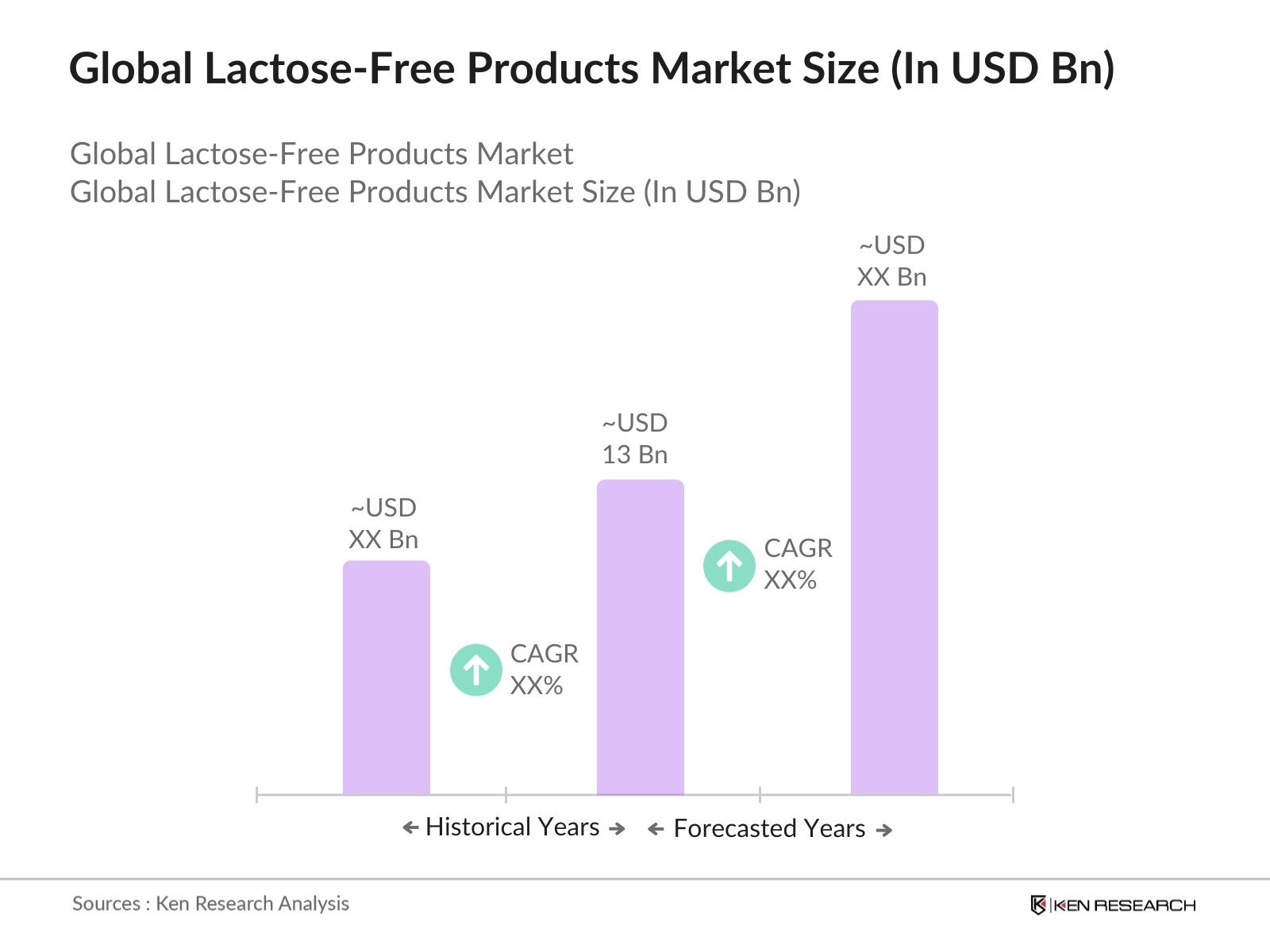
The global lactose-free products market is witnessing substantial growth, valued at USD 13 billion, following a five-year historical analysis. The increasing consumer demand for lactose-free alternatives, driven by the rising prevalence of lactose intolerance, is one of the primary factors fueling the market's expansion. Lactose intolerance affects a large portion of the global population, particularly in regions like Asia-Pacific, Latin America, and Africa, where a significant percentage of individuals have difficulty digesting lactose.
-
Additionally, growing health awareness, coupled with the increasing availability of dairy alternatives in mainstream retail outlets, has contributed to the rising demand for lactose-free products. The market includes a wide array of products, such as lactose-free milk, yogurt, cheese, and ice cream, which cater to both lactose-intolerant individuals and health-conscious consumers seeking easier-to-digest dairy options.
-
E-commerce platforms have played a pivotal role in expanding access to lactose-free products. Consumers can now explore a variety of lactose-free dairy and plant-based alternatives online, boosting the market's growth. Moreover, innovations in product formulations, such as lactose-free organic and fortified products, have widened the market's appeal among health enthusiasts and niche segments.
Global Lactose-Free Products Market Segmentation
-
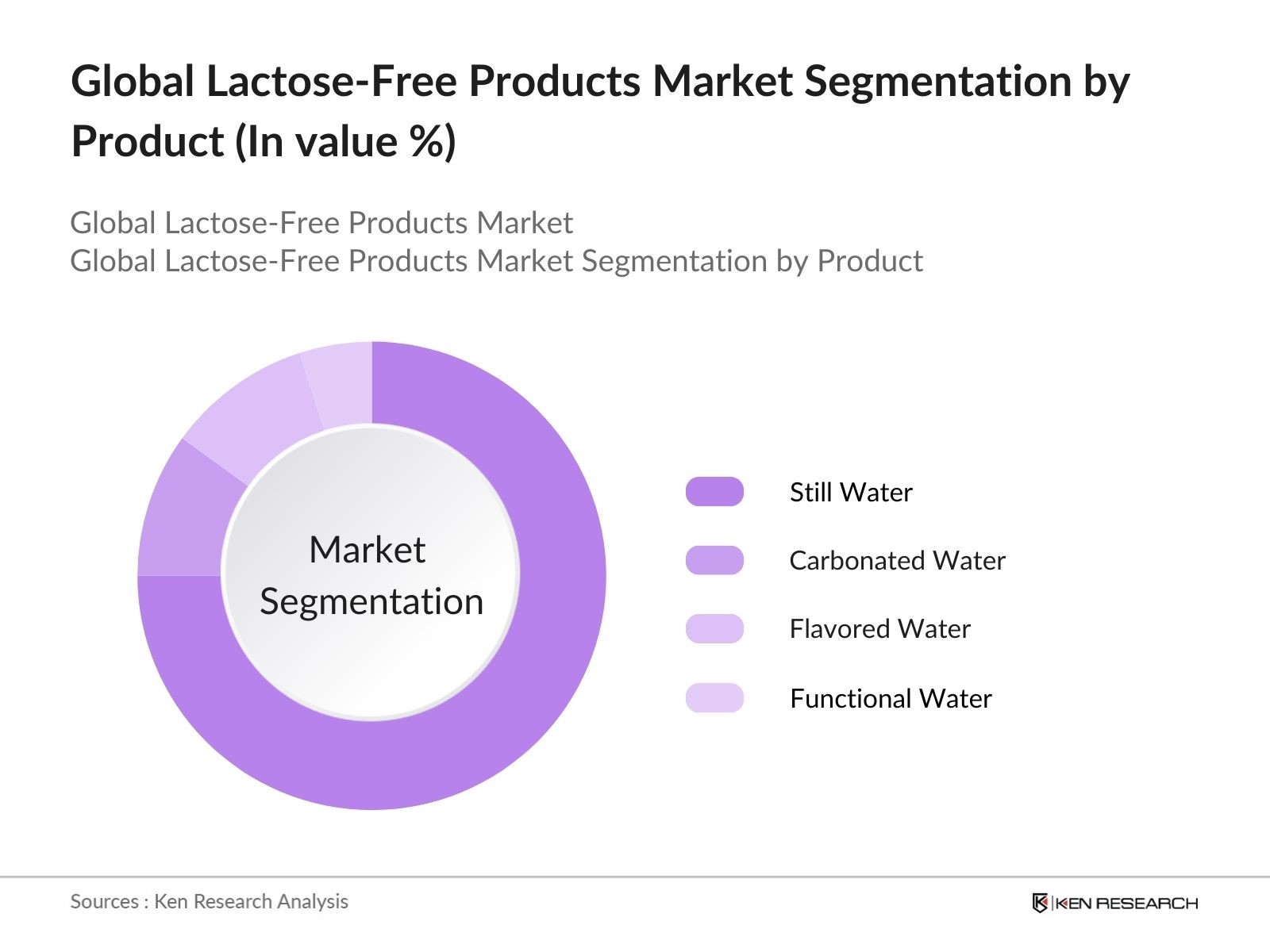
By Product Type: The market is segmented by product type into lactose-free milk, lactose-free yogurt, lactose-free cheese, lactose-free ice cream, and others. Lactose-free milk dominates the segment due to its wide consumer base and frequent daily use. However, lactose-free yogurt and cheese are rapidly gaining popularity, especially in North America and Europe, as companies introduce new flavors and healthier formulations. Lactose-free ice cream is emerging as a favored alternative for consumers with lactose intolerance, contributing to the market's steady growth.
-
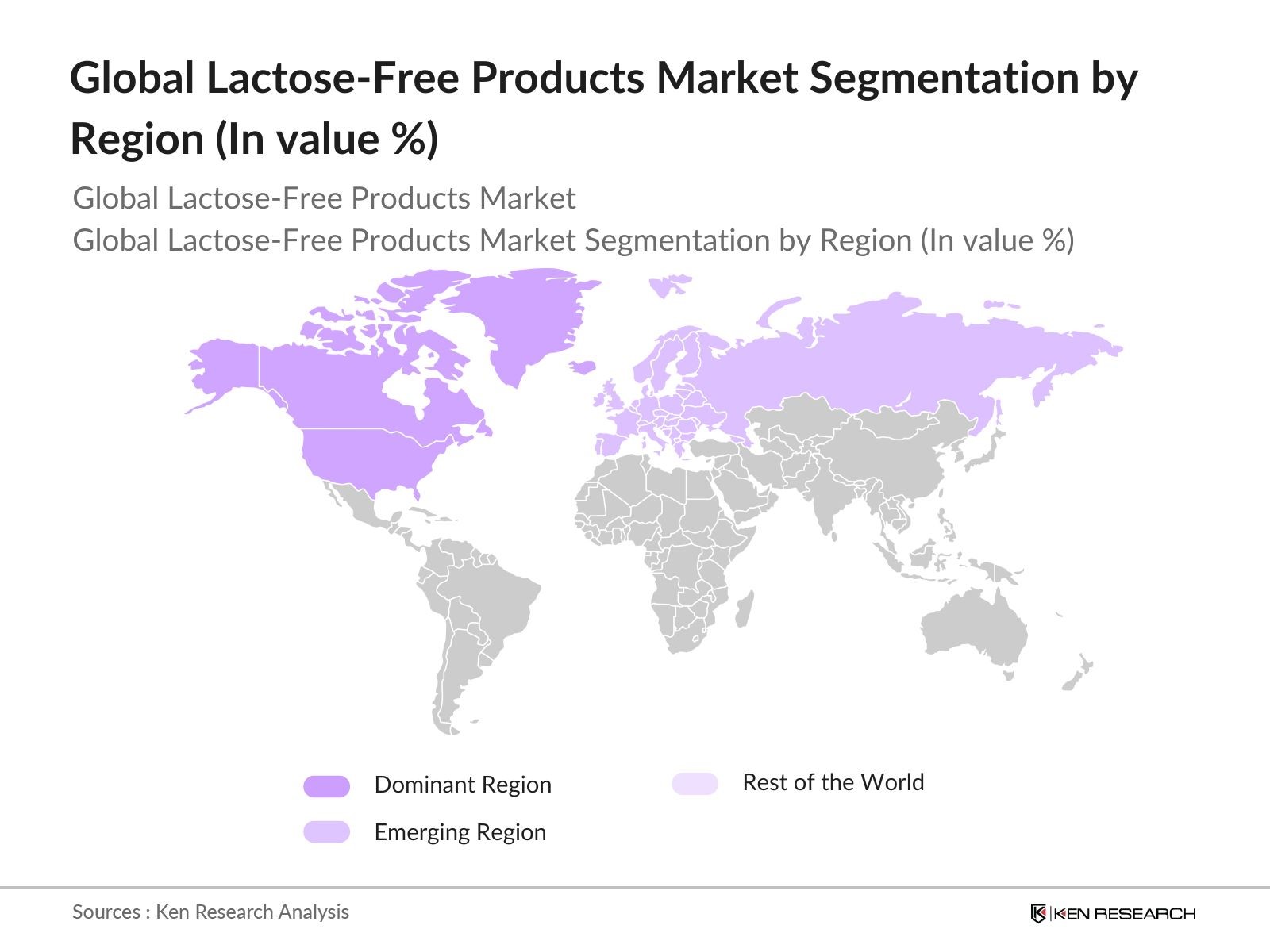
By Region: Regionally, the market is segmented into North America, Europe, Asia-Pacific, Latin America, and the Middle East & Africa. North America continues to hold the largest share, driven by high levels of awareness about lactose intolerance and a well-established retail network for lactose-free products. Europe is following closely, with countries like Germany, France, and the UK showing strong demand due to their health-conscious populations. Asia-Pacific is emerging as a growing market with increasing lactose intolerance cases and rising disposable income.
Global Lactose-Free Products Market Competitive Landscape
The global lactose-free products market is highly competitive, with major players focusing on expanding their product portfolios and enhancing distribution networks. Companies are also investing in research and development to introduce innovative lactose-free formulations that cater to both taste preferences and dietary needs.
|
Company Name |
Establishment Year |
Headquarters |
Revenue (2023) |
Market Presence |
R&D Investment |
Global Reach |
Product Portfolio |
Certifications |
|
Arla Foods |
1881 |
Viby, Denmark |
|
|
|
|
|
|
|
Danone S.A. |
1919 |
Paris, France |
|
|
|
|
|
|
|
Nestlé S.A. |
1867 |
Vevey, Switzerland |
|
|
|
|
|
|
|
Valio Ltd. |
1905 |
Helsinki, Finland |
|
|
|
|
|
|
|
Dean Foods |
1925 |
Dallas, USA |
|
|
|
|
|
|
Global Lactose-Free Products Market Analysis
Growth Drivers:
-
Rising Prevalence of Lactose Intolerance: The prevalence of lactose intolerance has been increasing globally, with an estimated 68% of the global population having some degree of lactose malabsorption, according to the World Health Organization. In regions like East Asia, lactose intolerance affects nearly the majority of the adult population, while Europe sees lower levels, ranging between 5-17%. In North America, lactose intolerance affects 36% of the population, as reported by the National Institutes of Health. These statistics are driving the demand for lactose-free products as consumers increasingly seek alternatives to traditional dairy products.
-
Increasing Consumer Shift Towards Health and Wellness Products: Consumer preferences are shifting toward health-conscious products, with lactose-free products gaining popularity among those pursuing wellness-driven lifestyles. According to data from the World Bank, the global middle-class population is expected to rise by 1.5 billion in the next decade, primarily in developing countries. This upward trend is pushing demand for health-centric food products, including lactose-free alternatives. Additionally, lactose-free dairy products align with global trends toward digestive health and overall wellness, particularly in regions with high incidences of lactose intolerance like Latin America and parts of Africa.
-
Expanding Product Availability Through E-commerce: E-commerce has revolutionized the retail sector, providing consumers with unprecedented access to lactose-free products. The International Telecommunication Union (ITU) reported that 66% of the global population had internet access as of 2023, with many consumers leveraging online platforms for purchasing niche products, including lactose-free dairy alternatives. This accessibility has driven the growth of lactose-free product consumption, particularly in North America and Europe, where the penetration of online retail is higher. Global e-commerce sales amounted to USD 5.7 trillion in 2023, further boosting the distribution of specialty food products.
Market Challenges:
-
Premium Pricing of Lactose-Free Products: Lactose-free products often come with a higher price tag due to the more complex production processes, such as enzyme treatment used to break down lactose. This price sensitivity can be a significant challenge, particularly in regions where consumers are highly cost-conscious. In developed markets, the premium pricing of lactose-free products is less of a barrier for high-income consumers. However, in emerging economies, the affordability of these products is a limiting factor, creating a gap between consumer demand and actual purchasing power.
-
Intense Competition from Plant-Based Alternatives: The growing popularity of plant-based dairy alternatives, such as almond, soy, and oat milk, presents significant competition for lactose-free products. These alternatives are often perceived as healthier and more sustainable options, attracting consumers who are looking to avoid dairy entirely. The increasing consumer preference for plant-based diets has led to greater adoption of these alternatives, particularly in regions where health trends and environmental concerns drive purchasing decisions. As a result, lactose-free products face stiff competition, especially in markets where plant-based options are widely available.
Global Lactose-Free Products Market Future Outlook
The global lactose-free products market is expected to continue growing through 2028, driven by increasing consumer awareness of lactose intolerance and the rising demand for health-focused dairy alternatives. Technological advancements, such as the use of enzymes and improved processing techniques, are expected to enhance the quality and variety of lactose-free products.
Future Market Opportunities:
- Expanding Lactose-Free Dairy Product Range: The global lactose-free market is witnessing innovation in product offerings, expanding beyond basic milk alternatives to include specialty products like yogurt, cheese, and ice cream. In the European Union, where lactose intolerance affects 5-17of the population, demand for such products has surged, driven by consumer preferences for diverse dairy alternatives. According to the European Food Safety Authority (EFSA), lactose-free product registrations increased substantially in 2022, reflecting the broader consumer interest in dairy innovations. This growth presents significant opportunities for manufacturers to capitalize on evolving consumer preferences.
- Growth in Emerging Markets: Emerging markets in Asia and Latin America represent substantial growth opportunities for lactose-free products. According to the International Monetary Fund (IMF), these regions are expected to contribute over 60% of global economic growth by 2025, driving the expansion of middle-class populations with increasing disposable incomes. In India, the lactose-intolerant population constitutes over 70%, creating a high demand for lactose-free alternatives. As multinational companies expand into these regions, tapping into local production and distribution networks will be key strategies to capture the growing demand for lactose-free dairy products.
Scope of the Report
|
By Product Type |
Lactose-Free Milk Lactose-Free Yogurt Lactose-Free Cheese Lactose-Free Ice Cream Others (Butter, Cream) |
|
By Source |
Dairy-Based Lactose-Free Products Plant-Based Lactose-Free Products |
|
By Distribution Channel |
Supermarkets/Hypermarkets Online Retail Convenience Stores Specialty Stores |
|
By Consumer Demographics |
Children Adults Elderly |
|
By Region |
North America Europe Asia-Pacific Latin America Middle East & Africa |
Products
Key Target Audience
- Lactose-Free Product Manufacturers
- Dairy Processing Companies
- Plant-Based Dairy Alternative Producers
- E-Commerce Platforms
- Supermarkets and Hypermarkets
- Banks and Financial Institutes
- Government and Regulatory Bodies (FDA, EFSA)
- Investment and Venture Capitalist Firms
- Private Label Brands
Companies
Major Players in the Global Lactose-Free Products Market
- Arla Foods
- Danone S.A.
- Nestlé S.A.
- Green Valley Creamery
- Valio Ltd.
- Dean Foods
- Lactalis Group
- Organic Valley
- Saputo Inc.
- The Icelandic Milk and Skyr Corporation
- Amul
- Land O'Lakes
- Yoplait
- Galaxy Nutritional Foods
- Prairie Farms Dairy
Table of Contents
1. Global Lactose-Free Products Market Overview
1.1. Definition and Scope
1.2. Market Taxonomy
1.3. Market Growth Rate (CAGR, Y-o-Y Growth)
1.4. Market Segmentation Overview
2. Global Lactose-Free Products Market Size (In USD Bn)
2.1. Historical Market Size (In USD Bn)
2.2. Year-On-Year Growth Analysis
2.3. Key Market Developments and Milestones (Product Launches, Mergers & Acquisitions, Expansion)
3. Global Lactose-Free Products Market Analysis
3.1 Growth Drivers
3.1.1 Rising Prevalence of Lactose Intolerance (Global Statistics, Regional Insights)
3.1.2 Increasing Consumer Shift Towards Health and Wellness Products (Consumer Preferences, Health Trends)
3.1.3 Expanding Product Availability Through E-commerce (Online Retail Statistics, Consumer Penetration)
3.2 Market Challenges
3.2.1 Premium Pricing of Lactose-Free Products (Price Sensitivity, Affordability)
3.2.2 Intense Competition from Plant-Based Alternatives (Plant-Based Market Share, Consumer Adoption)
3.3 Opportunities
3.3.1 Expanding Lactose-Free Dairy Product Range (Product Innovation, Specialty Products)
3.3.2 Growth in Emerging Markets (Market Entry Strategies, Regional Growth Forecasts)
3.4 Trends
3.4.1 Technological Advancements in Dairy Processing (Enzyme Technology, Clean Label Products)
3.4.2 Rising Popularity of Organic and Clean Label Lactose-Free Products (Consumer Preferences, Retail Insights)
3.5 Government Regulation
3.5.1 Health and Safety Standards (FDA, EFSA)
3.5.2 Labeling and Nutritional Claims (Regulatory Compliance, Labeling Standards)
3.6. SWOT Analysis
3.7. Stakeholder Ecosystem
3.8. Porter’s Five Forces Analysis (Supplier Power, Buyer Power, Industry Rivalry, Threat of Substitutes, Entry Barriers)
3.9. Competition Ecosystem (Global and Regional Players)
4. Global Lactose-Free Products Market Segmentation
4.1 By Product Type (In Value %)
4.1.1 Lactose-Free Milk
4.1.2 Lactose-Free Yogurt
4.1.3 Lactose-Free Cheese
4.1.4 Lactose-Free Ice Cream
4.1.5 Others (Butter, Cream)
4.2 By Source (In Value %)
4.2.1 Dairy-Based Lactose-Free Products
4.2.2 Plant-Based Lactose-Free Products
4.3 By Distribution Channel (In Value %)
4.3.1 Supermarkets/Hypermarkets
4.3.2 Online Retail
4.3.3 Convenience Stores
4.3.4 Specialty Stores
4.4 By Region (In Value %)
4.4.1 North America
4.4.2 Europe
4.4.3 Asia-Pacific
4.4.4 Latin America
4.4.5 Middle East & Africa
4.5 By Consumer Demographics (In Value %)
4.5.1 Children
4.5.2 Adults
4.5.3 Elderly
5. Global Lactose-Free Products Market Competitive Analysis
5.1 Detailed Profiles of Major Companies
5.1.1 Arla Foods
5.1.2 Danone S.A.
5.1.3 Nestlé S.A.
5.1.4 Valio Ltd.
5.1.5 Dean Foods
5.1.6 Lactalis Group
5.1.7 Green Valley Creamery
5.1.8 Organic Valley
5.1.9 Saputo Inc.
5.1.10 The Icelandic Milk and Skyr Corporation
5.1.11 Amul
5.1.12 Land O'Lakes
5.1.13 Yoplait
5.1.14 Galaxy Nutritional Foods
5.1.15 Prairie Farms Dairy
5.2 Cross Comparison Parameters (Inception Year, Headquarters, Revenue, Product Portfolio, Market Share, Product Innovation, Sustainability Initiatives, Global Reach)
5.3 Market Share Analysis (Top Players, Market Concentration)
5.4 Strategic Initiatives (Mergers & Acquisitions, Partnerships, New Product Launches)
5.5 Investment Analysis
5.6 Private Equity and Venture Capital Investments
5.7 Strategic Collaborations and Alliances
6. Global Lactose-Free Products Market Regulatory Framework
6.1 Dairy Industry Regulations (Food Safety Standards, Labeling)
6.2 Compliance Requirements (Global Regulatory Bodies, Regional Standards)
6.3 Certification Processes (Organic Certifications, Halal, Kosher, Clean Label)
7. Global Lactose-Free Products Future Market Size (In USD Bn)
7.1 Future Market Size Projections (Forecasted Growth, CAGR)
7.2 Key Factors Driving Future Market Growth (Health Trends, Product Development)
8. Global Lactose-Free Products Future Market Segmentation
8.1 By Product Type (In Value %)
8.2 By Source (In Value %)
8.3 By Distribution Channel (In Value %)
8.4 By Region (In Value %)
8.5 By Consumer Demographics (In Value %)
9. Global Lactose-Free Products Market Analysts’ Recommendations
9.1 TAM/SAM/SOM Analysis (Total Addressable Market, Serviceable Market)
9.2 Customer Cohort Analysis (Demographic Trends, Buying Behavior)
9.3 Marketing Initiatives (Customer Engagement, Brand Positioning)
9.4 White Space Opportunity Analysis (New Markets, Untapped Segments)
Research Methodology
Step 1: Identification of Key Variables
The first step in this research involved identifying key variables influencing the global lactose-free products market. Comprehensive desk research was conducted to map the ecosystem, focusing on key stakeholders, including manufacturers, distributors, and regulatory bodies.
Step 2: Market Analysis and Construction
Historical market data was compiled and analyzed to assess market penetration, consumer demand, and revenue generation. Data collection focused on market performance across different regions and product segments, ensuring an accurate representation of market dynamics.
Step 3: Hypothesis Validation and Expert Consultation
Hypotheses regarding market drivers, trends, and challenges were developed and validated through interviews with industry experts, including dairy producers and plant-based product innovators. Insights gathered during these consultations helped refine market estimates and growth projections.
Step 4: Research Synthesis and Final Output
In the final phase, data from multiple sources, including primary interviews and secondary research, were synthesized. This phase involved verifying product-specific sales figures, consumer behavior, and market trends, ensuring a well-rounded and accurate report for business professionals.
Frequently Asked Questions
1. How big is the global lactose-free products market?
The global lactose-free products market is valued at USD 13 billion, driven by rising demand for healthier alternatives to traditional dairy products.
2. What are the challenges in the global lactose-free products market?
Challenges in the global lactose-free products market include the premium pricing of lactose-free products, competition from plant-based dairy alternatives, and consumer perception of lactose-free options as niche products.
3. Who are the major players in the global lactose-free products market?
Key players in the global lactose-free products market include Arla Foods, Danone S.A., Nestlé S.A., Green Valley Creamery, and Valio Ltd., among others.
4. What are the growth drivers of the global lactose-free products market?
The global lactose-free products market is driven by increasing awareness of lactose intolerance, rising health consciousness, and technological advancements in lactose removal processes in dairy products.
Why Buy From Us?

What makes us stand out is that our consultants follows Robust, Refine and Result (RRR) methodology. i.e. Robust for clear definitions, approaches and sanity checking, Refine for differentiating respondents facts and opinions and Result for presenting data with story

We have set a benchmark in the industry by offering our clients with syndicated and customized market research reports featuring coverage of entire market as well as meticulous research and analyst insights.

While we don't replace traditional research, we flip the method upside down. Our dual approach of Top Bottom & Bottom Top ensures quality deliverable by not just verifying company fundamentals but also looking at the sector and macroeconomic factors.

With one step in the future, our research team constantly tries to show you the bigger picture. We help with some of the tough questions you may encounter along the way: How is the industry positioned? Best marketing channel? KPI's of competitors? By aligning every element, we help maximize success.

Our report gives you instant access to the answers and sources that other companies might choose to hide. We elaborate each steps of research methodology we have used and showcase you the sample size to earn your trust.

If you need any support, we are here! We pride ourselves on universe strength, data quality, and quick, friendly, and professional service.