
Global Lipid Nanoparticles (LNP) Market Outlook 2030
Region:Global
Author(s):Shivani Mehra
Product Code:KROD11383
Region:Global
Author(s):Shivani Mehra
Product Code:KROD11383
December 2024
87
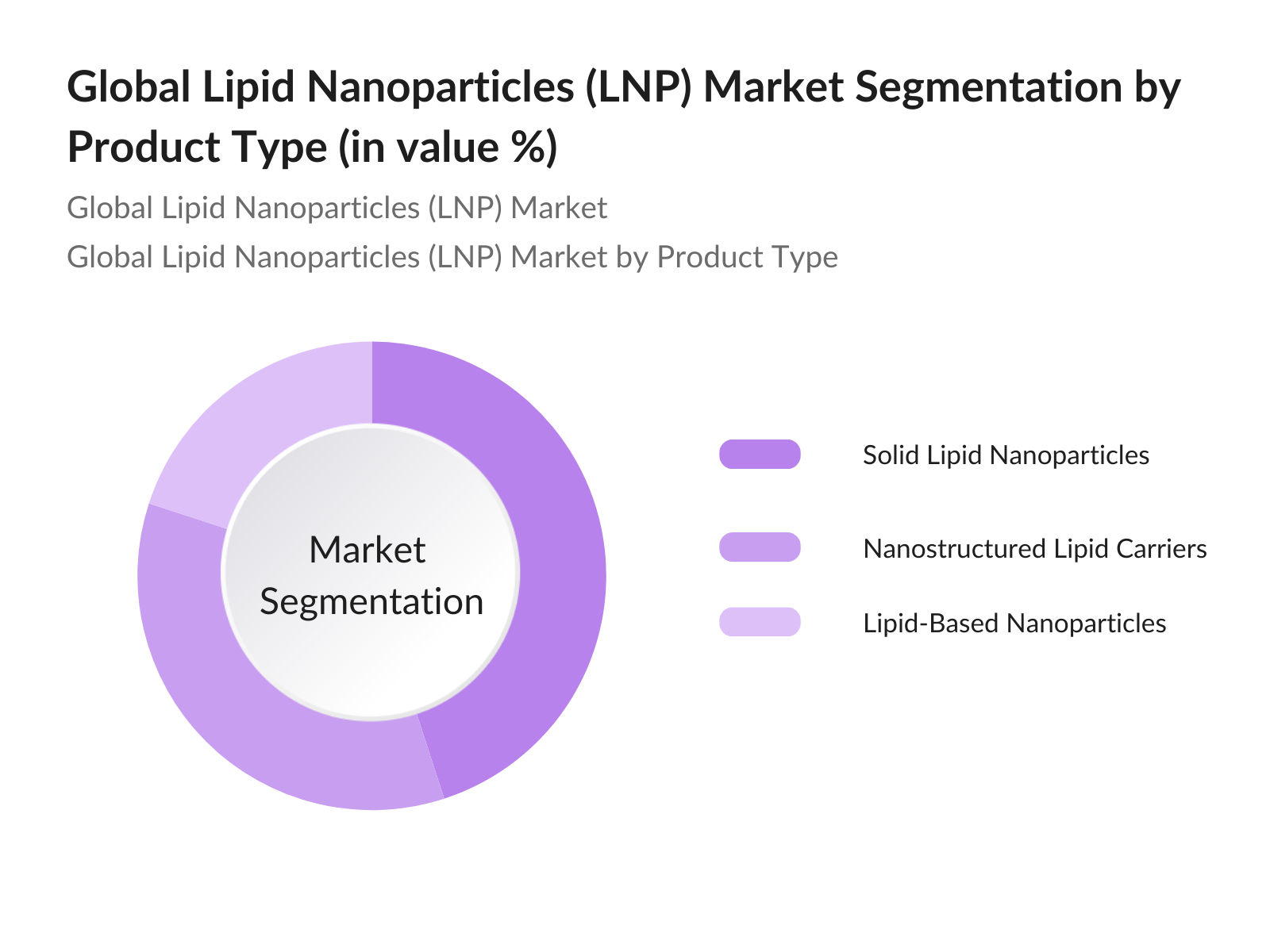
By Product Type: The lipid nanoparticles market is segmented by product type into Solid Lipid Nanoparticles (SLNs), Nanostructured Lipid Carriers (NLCs), and Lipid-Based Nanoparticles (LBNPs). SLNs are currently the dominant sub-segment, largely due to their use in drug delivery systems aimed at chronic disease management, including cancer and diabetes. The ability of SLNs to enhance the stability of active pharmaceutical ingredients (APIs) is a significant factor driving their prevalence.
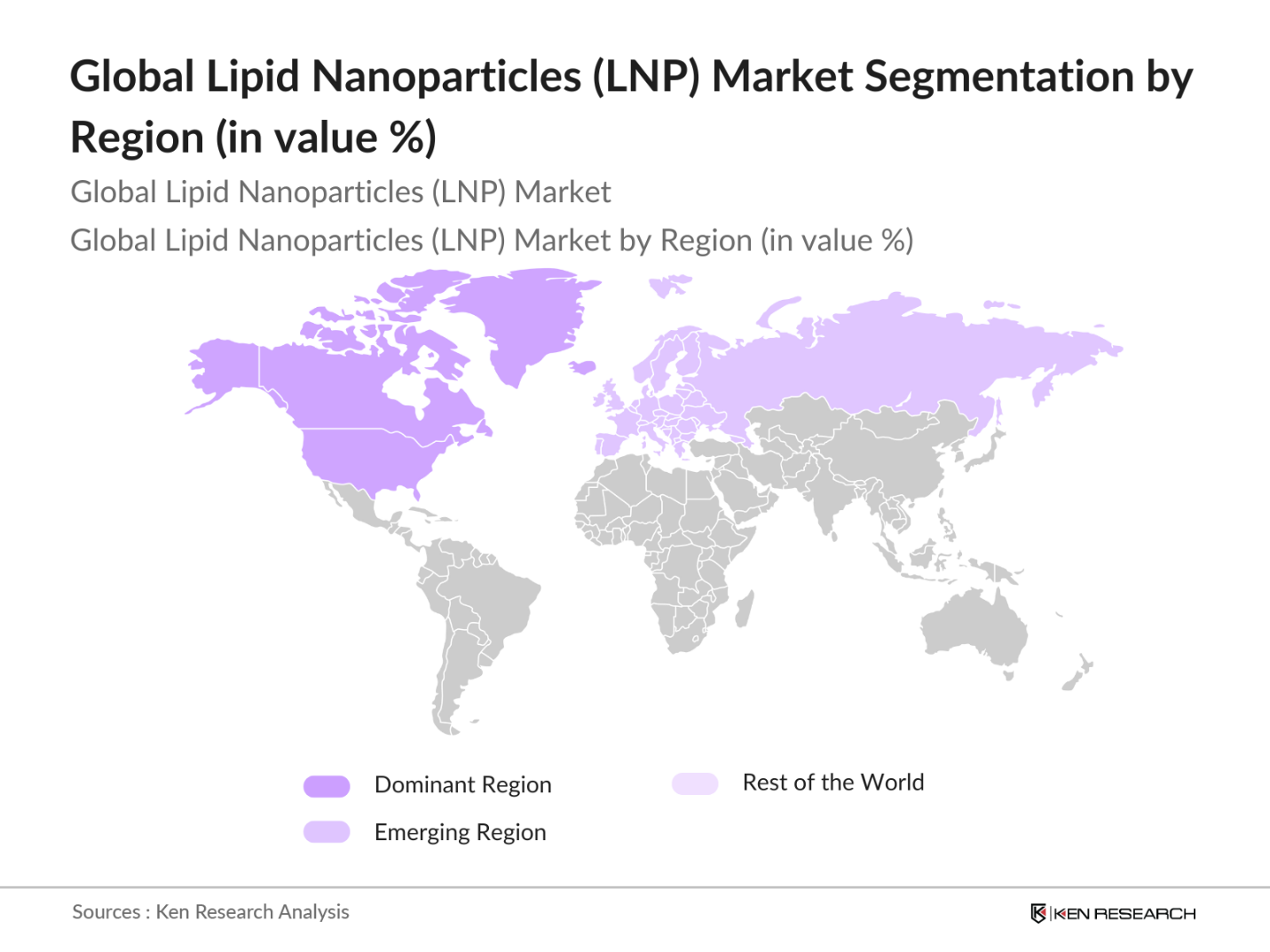
By Region: The LNP market is segmented geographically into North America, Europe, Asia-Pacific, Latin America, and the Middle East & Africa. North America remains the largest regional segment due to robust research and development activities, significant investments in biotechnology, and the early adoption of LNP technology by major pharmaceutical companies. Europe follows closely, benefitting from strong regulatory support for mRNA therapies and advancements in drug delivery technologies.
The global lipid nanoparticles market is dominated by major pharmaceutical and biotechnology companies that invest in LNP-based therapeutics and mRNA vaccine development. Key companies include Pfizer, Merck KGaA, and Evonik Industries, which have been at the forefront of LNP innovation. These players are actively involved in expanding their capabilities through strategic partnerships, acquisitions, and development of new LNP formulations for various applications.
|
Company Name |
Established Year |
Headquarters |
Patent Portfolio |
mRNA Capacity |
Collaborations |
Research Investment |
Product Pipeline |
Market Share |
|
Pfizer Inc. |
1849 |
New York, USA |
Strong |
- |
- |
- |
- |
- |
|
Merck KGaA |
1668 |
Darmstadt, GER |
Strong |
- |
- |
- |
- |
- |
|
Evonik Industries |
2007 |
Essen, GER |
Moderate |
- |
- |
- |
- |
- |
|
Moderna Inc. |
2010 |
Cambridge, USA |
Strong |
- |
- |
- |
- |
- |
|
BioNTech SE |
2008 |
Mainz, GER |
Strong |
- |
- |
- |
- |
- |
Over the next five years, the lipid nanoparticles market is projected to exhibit strong growth due to continued advancements in mRNA-based therapeutics, gene therapies, and the expansion of LNP applications in vaccines. Companies will focus on enhancing drug delivery mechanisms using LNPs, particularly in chronic disease treatments like cancer and diabetes. Additionally, increasing government support for biotechnology and growing investments in drug delivery systems will continue to bolster market expansion.
|
By Type |
Solid Lipid Nanoparticles (SLNs) Nanostructured Lipid Carriers (NLCs) Lipid-Based Nanoparticles (LBNPs) |
|
By Application |
Vaccines Therapeutics Scientific Research |
|
By End-User |
Pharmaceutical Companies Biotechnology Companies Research Institutes |
|
By Delivery Mechanism |
mRNA-Lipid Nanoparticles siRNA-Lipid Nanoparticles |
|
By Region |
North America Europe Asia-Pacific Latin America Middle East & Africa |
1.1 Definition and Scope
1.2 Market Taxonomy
1.3 Market Growth Rate
1.4 Market Segmentation Overview
2.1 Historical Market Size
2.2 Year-On-Year Growth Analysis
2.3 Key Market Developments and Milestones
3.1 Growth Drivers
3.1.1 Increasing Use in mRNA Therapeutics
3.1.2 Chronic Disease Management (Cancer, Diabetes, Hypertension)
3.1.3 Expansion in Drug Delivery Systems (AI-driven Optimization)
3.2 Market Challenges
3.2.1 Patent Disputes and Intellectual Property Issues
3.2.2 High Manufacturing Costs and Scalability
3.2.3 Regulatory Hurdles in Emerging Markets
3.3 Opportunities
3.3.1 Integration with Gene and Cell Therapies
3.3.2 Expansion in Personalized Medicine
3.3.3 Collaborations and Strategic Partnerships (e.g., CDMO Services)
3.4 Trends
3.4.1 Circular RNA and Lipid Nanoparticle Formulations
3.4.2 Increasing Use in Vaccines (COVID-19, Other Emerging Diseases)
3.4.3 Advancements in Nanostructured Lipid Carriers (NLCs)
3.5 Regulatory Environment
3.5.1 FDA and EMA Guidelines for LNP Applications
3.5.2 Compliance with Good Manufacturing Practices (GMP)
3.5.3 Key Regulatory Approvals for mRNA-based Drugs
4.1 By Type (In Value %) 4.1.1 Solid Lipid Nanoparticles (SLNs)
4.1.2 Nanostructured Lipid Carriers (NLCs)
4.1.3 Lipid-Based Nanoparticles (LBNPs)
4.2 By Application (In Value %)
4.2.1 Therapeutics (Chronic Diseases)
4.2.2 Vaccines (COVID-19, Influenza, and Others)
4.2.3 Scientific Research
4.3 By End-User (In Value %)
4.3.1 Pharmaceutical and Biotechnology Companies
4.3.2 Academic and Research Institutes
4.4 By Delivery Mechanism (In Value %)
4.4.1 mRNA-Lipid Nanoparticles
4.4.2 siRNA-Lipid Nanoparticles
4.5 By Region (In Value %)
4.5.1 North America
4.5.2 Europe
4.5.3 Asia-Pacific
4.5.4 Latin America
4.5.5 Middle East & Africa
5.1 Detailed Profiles of Major Companies
5.1.1 Pfizer Inc.
5.1.2 Merck KGaA
5.1.3 Evonik Industries AG
5.1.4 Moderna Inc.
5.1.5 BioNTech SE
5.1.6 Alnylam Pharmaceuticals Inc.
5.1.7 Exelead
5.1.8 Gattefoss SAS
5.1.9 Avanti Polar Lipids
5.1.10 IOI Oleo GmbH
5.1.11 Genevant Sciences
5.1.12 AstraZeneca PLC
5.1.13 Sanofi SA
5.1.14 Nippon Fine Chemical
5.1.15 Arbutus Biopharma
5.2 Cross Comparison Parameters
(Company Revenue, Patent Portfolio, mRNA Capacity, Strategic Collaborations, Research Investment, Product Pipeline, Geographical Reach, Market Share)
5.3 Market Share Analysis
5.4 Strategic Initiatives (Mergers & Acquisitions, Collaborations)
5.5 Investment and Funding Analysis
5.6 Government Grants and Support
6.1 Global Standards for LNP Manufacturing
6.2 Compliance Requirements for LNP-based Drug Development
6.3 Key Regulatory Approvals and Certification Process
7. Future Market Size Projections (In USD Mn)
7.1 Future Market Size
7.2 Key Factors Driving Future Growth
8.1 By Product Type (SLNs, NLCs, LBNPs)
8.2 By Application (Vaccines, Therapeutics)
8.3 By Region (North America, Europe, Asia-Pacific)
9.1 TAM/SAM/SOM Analysis
9.2 White Space Analysis for New Product Launches
9.3 Target Market Strategies
The initial phase involves mapping the lipid nanoparticles market by identifying key stakeholders, including manufacturers, pharmaceutical companies, and regulatory bodies. Desk research is conducted using secondary sources to gather industry data, which helps define the critical variables affecting market dynamics.
This phase involves compiling historical data to analyze the penetration of lipid nanoparticles in drug delivery systems. Data is sourced from industry reports, ensuring accuracy in revenue estimates and insights into the global LNP landscape.
Consultations with industry experts are conducted to validate hypotheses developed during the analysis phase. These experts provide direct insights into operational and financial aspects of the LNP market.
In the final phase, data from primary and secondary sources are synthesized to form a complete market analysis. This includes feedback from LNP manufacturers and healthcare providers to validate statistics and ensure the reliability of market forecasts.
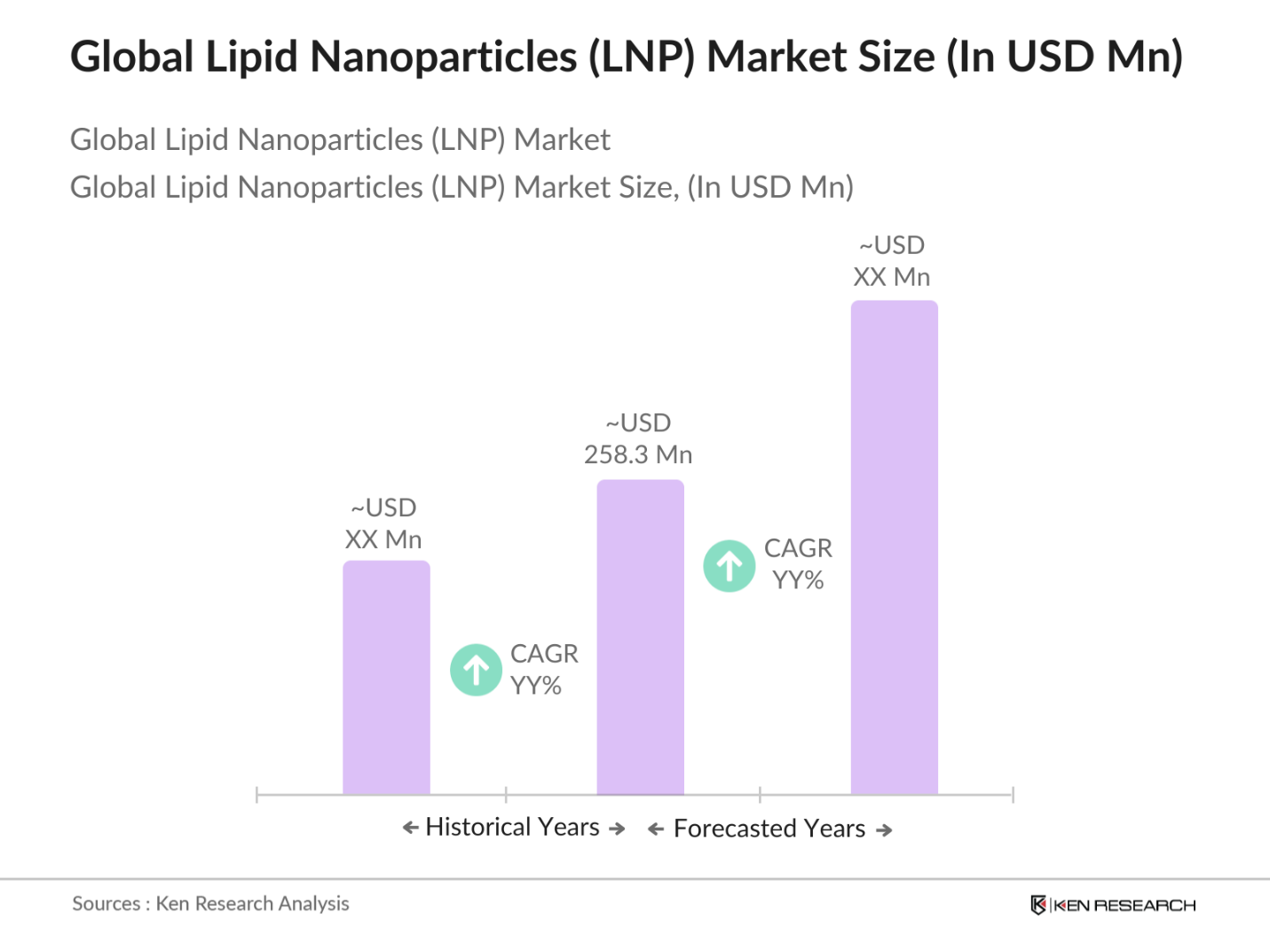
The global lipid nanoparticles market is valued at USD 258.3 million, driven by increasing demand for mRNA-based therapeutics and vaccines.
Key challenges include high production costs, patent disputes, and regulatory hurdles in emerging markets, which affect the scalability of lipid nanoparticle production.
Major players include Pfizer Inc., Merck KGaA, Evonik Industries AG, Moderna Inc., and BioNTech SE. These companies lead in innovation and product development.
Growth is propelled by the rise of mRNA-based vaccines, the increasing prevalence of chronic diseases, and advancements in drug delivery systems utilizing lipid nanoparticles.

What makes us stand out is that our consultants follows Robust, Refine and Result (RRR) methodology. i.e. Robust for clear definitions, approaches and sanity checking, Refine for differentiating respondents facts and opinions and Result for presenting data with story

We have set a benchmark in the industry by offering our clients with syndicated and customized market research reports featuring coverage of entire market as well as meticulous research and analyst insights.

While we don't replace traditional research, we flip the method upside down. Our dual approach of Top Bottom & Bottom Top ensures quality deliverable by not just verifying company fundamentals but also looking at the sector and macroeconomic factors.

With one step in the future, our research team constantly tries to show you the bigger picture. We help with some of the tough questions you may encounter along the way: How is the industry positioned? Best marketing channel? KPI's of competitors? By aligning every element, we help maximize success.

Our report gives you instant access to the answers and sources that other companies might choose to hide. We elaborate each steps of research methodology we have used and showcase you the sample size to earn your trust.

If you need any support, we are here! We pride ourselves on universe strength, data quality, and quick, friendly, and professional service.