
Global Low-Code Development Platform Market Outlook to 2030
Region:Global
Author(s):Shambhavi
Product Code:KROD9006
Region:Global
Author(s):Shambhavi
Product Code:KROD9006
December 2024
88
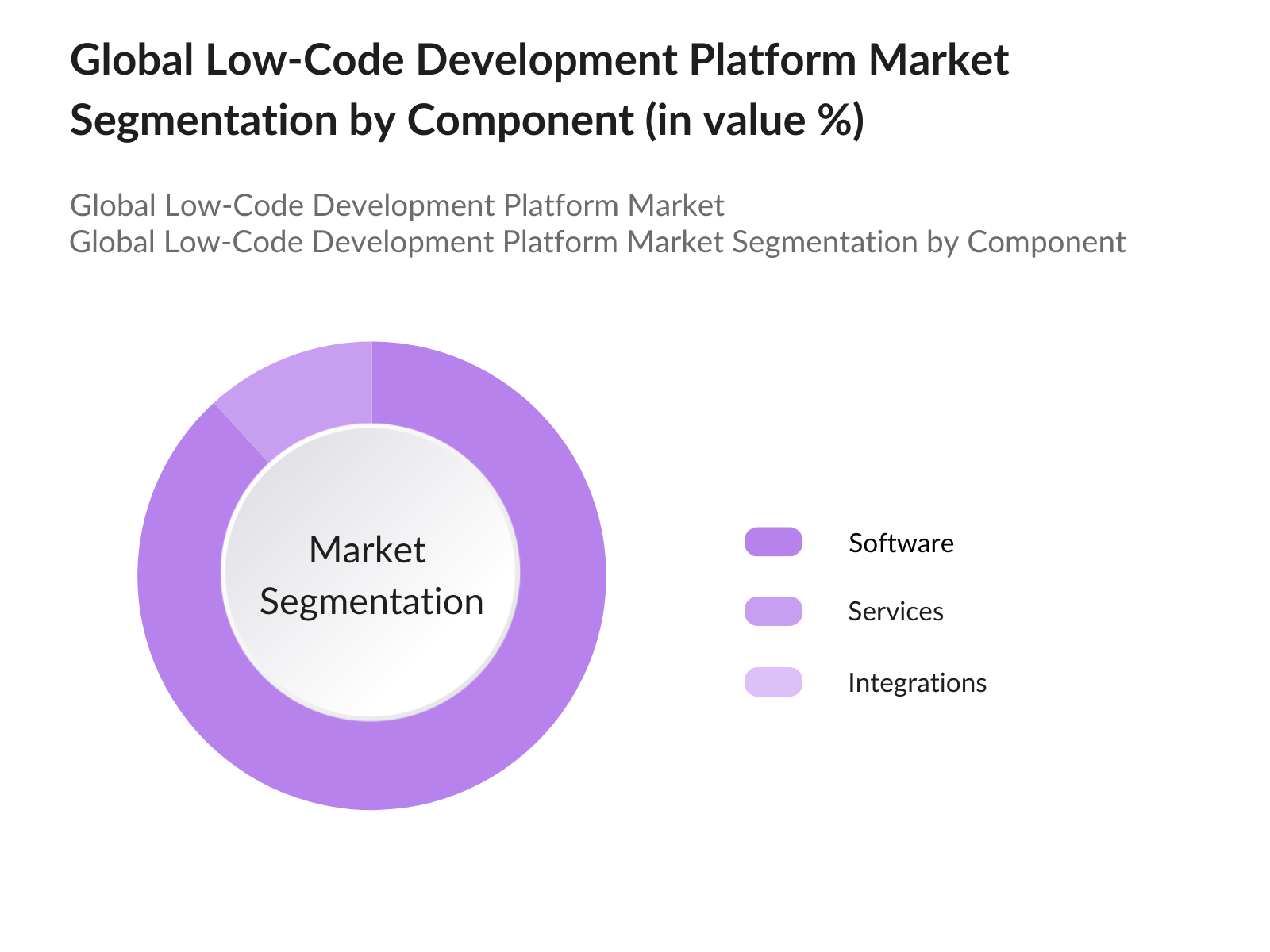
By Component: The low-code development platform market is segmented by component into software, services, and integrations. Software holds a dominant share, attributed to the growing adoption of development tools designed to ease the application creation process for non-technical users. Low-code software solutions are being favored for their intuitive interfaces, which allow organizations to rapidly develop, test, and deploy applications without the need for extensive coding expertise.
By Application Type: This market is divided into web-based, mobile, and desktop applications. Web-based applications command the highest market share due to the growing preference for cloud-based solutions and easy access across platforms. These applications are widely adopted for enterprise functions like CRM, ERP, and customer service portals, offering flexible and scalable deployment options that can be accessed on any device, which is essential for remote work setups.
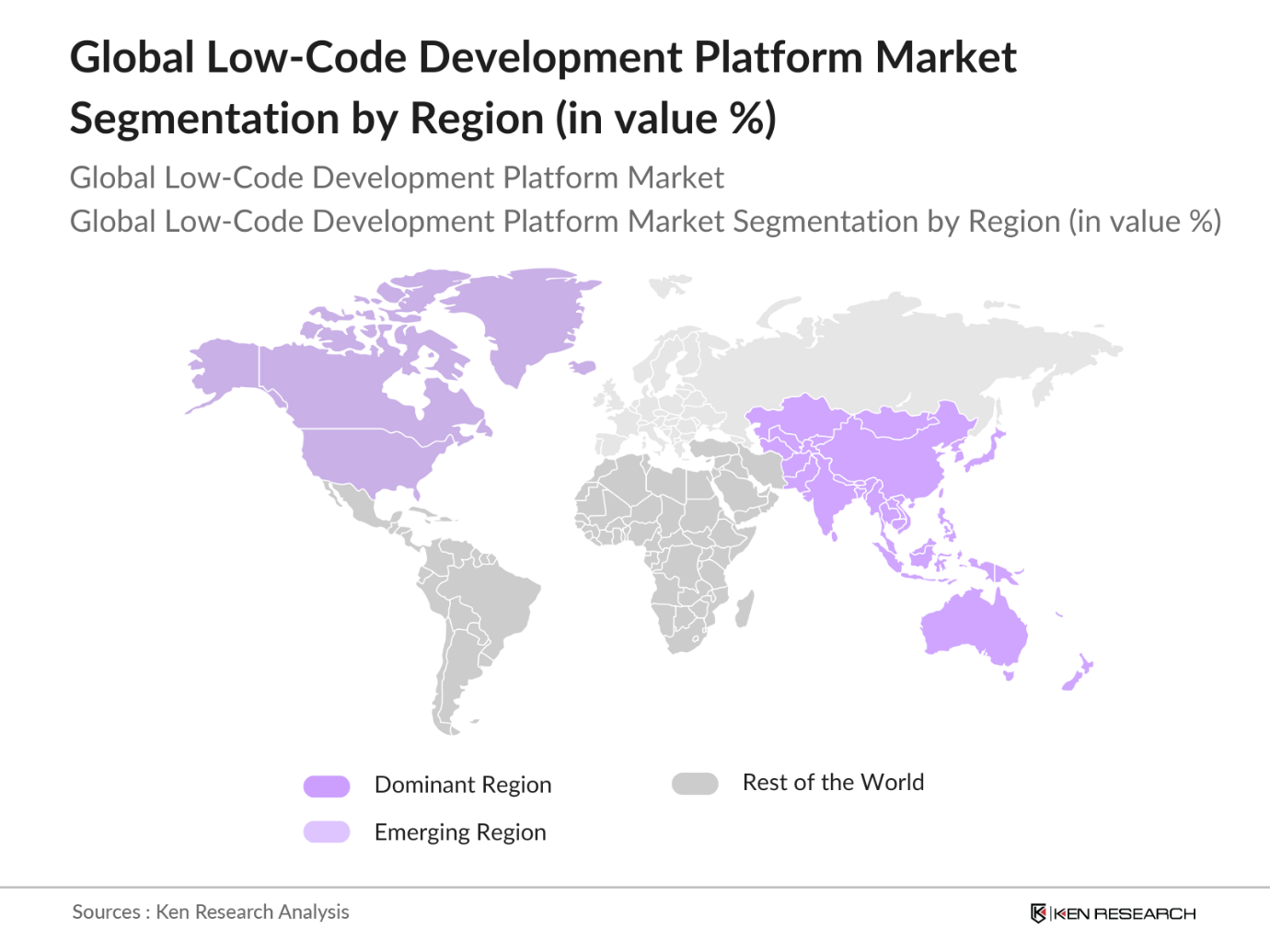
By Region: The low-code development platform market is segmented geographically into North America, Europe, Asia-Pacific (APAC), and Rest of the World (RoW). North America leads in market share, driven by the presence of established tech companies, extensive digital infrastructure, and strong demand for enterprise-grade applications. The maturity of IT spending in this region, along with early adoption of cloud and mobile solutions, has solidified North America's leading position in this market.
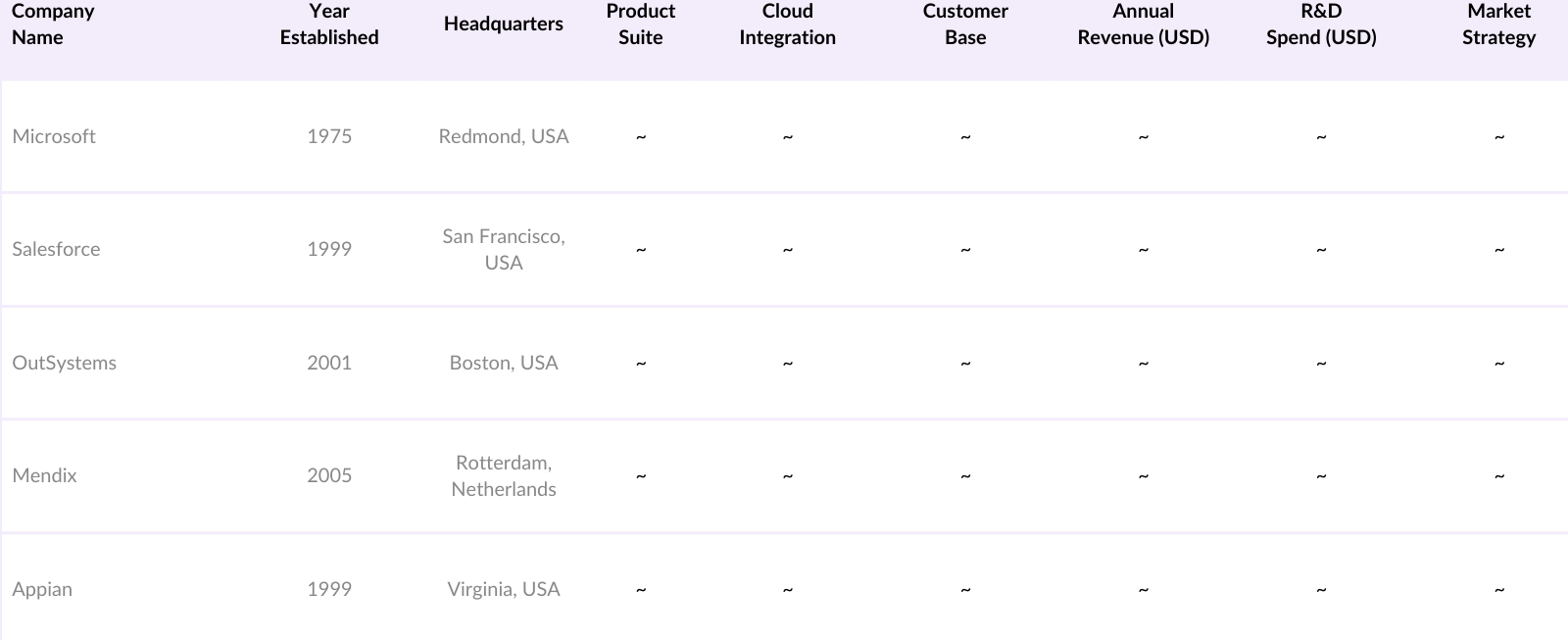
The global low-code development platform market is dominated by a few major players, including prominent software companies with established reputations in application development solutions. This consolidation illustrates the competitive advantage these companies hold due to their extensive R&D investments, robust cloud infrastructure, and customer-oriented service offerings.
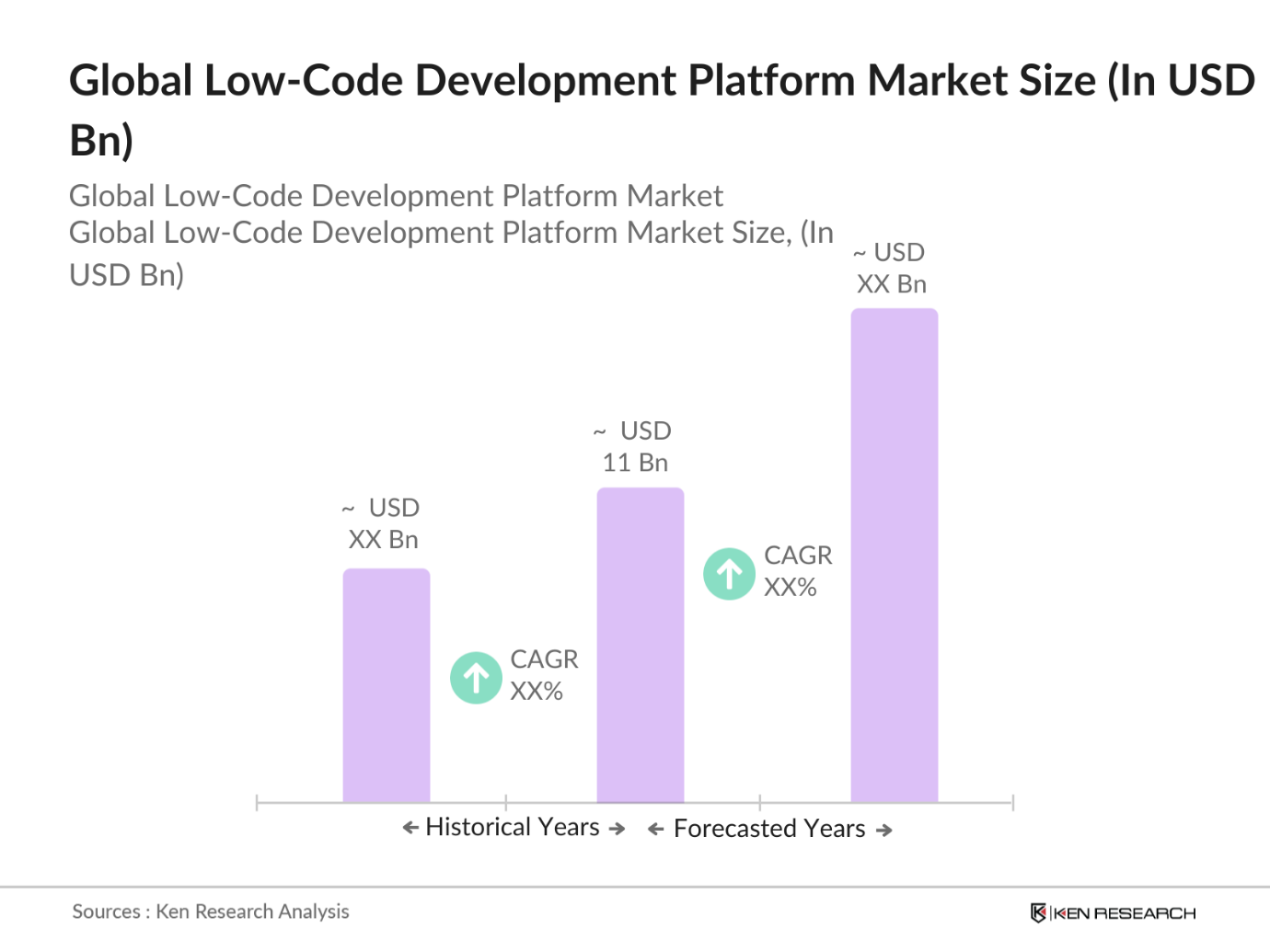
Over the next five years, the low-code development platform market is expected to show substantial growth, propelled by the ongoing digital transformation efforts, increasing need for quick and adaptable software solutions, and the demand for simplified development processes that empower non-developers. Organizations are projected to enhance their reliance on low-code platforms, particularly for mobile applications and automated workflow solutions.
|
Segment |
Sub-Segments |
|
By Component |
Software |
|
By Deployment Model |
Cloud |
|
By Organization Size |
Small and Medium Enterprises (SMEs) |
|
By Industry Vertical |
BFSI |
|
By Region |
North America |
1.1. Definition and Scope
1.2. Market Taxonomy
1.3. Market Growth Rate
1.4. Market Segmentation Overview
2.1. Historical Market Size
2.2. Year-On-Year Growth Analysis
2.3. Key Market Developments and Milestones
3.1. Growth Drivers
3.1.1. Increasing Demand for Agile Development
3.1.2. Shortage of Skilled Developers
3.1.3. Rising Digital Transformation Initiatives
3.1.4. Cost-Effectiveness and Efficiency Improvements
3.2. Market Challenges
3.2.1. Security Concerns
3.2.2. Integration Complexity
3.2.3. Limited Customization
3.3. Opportunities
3.3.1. Expansion of Artificial Intelligence Integration
3.3.2. Growth in SMEs Adopting Low-Code Solutions
3.3.3. Increasing Focus on Citizen Development
3.4. Trends
3.4.1. Adoption of No-Code Platforms
3.4.2. Collaboration and Remote Development Tools
3.4.3. Industry-Specific Solutions
3.5. Government Regulation
3.5.1. Data Protection Regulations
3.5.2. Compliance Standards
3.5.3. IT Governance Policies
3.6. SWOT Analysis
3.7. Stakeholder Ecosystem
3.8. Porters Five Forces
3.9. Competition Ecosystem
4.1. By Component (In Value %)
4.1.1. Software
4.1.2. Services
4.2. By Deployment Model (In Value %)
4.2.1. Cloud
4.2.2. On-Premises
4.3. By Organization Size (In Value %)
4.3.1. Small and Medium Enterprises (SMEs)
4.3.2. Large Enterprises
4.4. By Industry Vertical (In Value %)
4.4.1. BFSI
4.4.2. Healthcare
4.4.3. Retail
4.4.4. IT & Telecom
4.5. By Region (In Value %)
4.5.1. North America
4.5.2. Europe
4.5.3. Asia Pacific
4.5.4. Latin America
4.5.5. Middle East & Africa
5.1. Detailed Profiles of Major Companies
5.1.1. Salesforce
5.1.2. Microsoft Corporation
5.1.3. OutSystems
5.1.4. Appian
5.1.5. Mendix
5.1.6. Pega Systems
5.1.7. Betty Blocks
5.1.8. Kissflow
5.1.9. Zoho Creator
5.1.10. Quick Base
5.1.11. ServiceNow
5.1.12. Oracle Corporation
5.1.13. IBM Corporation
5.1.14. Google Cloud Platform
5.1.15. Wavemaker
5.2. Cross Comparison Parameters (Market Share, Growth Rate, Key Offerings, Geographic Presence, Customer Base, Technology Stack, Partnerships, and Collaborations)
5.3. Market Share Analysis
5.4. Strategic Initiatives
5.5. Mergers and Acquisitions
5.6. Investment Analysis
5.7. Venture Capital Funding
5.8. Government Grants
5.9. Private Equity Investments
6.1. Data Protection Regulations
6.2. Compliance Requirements
6.3. Certification Processes
7.1. Future Market Size Projections
7.2. Key Factors Driving Future Market Growth
8.1. By Component (In Value %)
8.2. By Deployment Model (In Value %)
8.3. By Organization Size (In Value %)
8.4. By Industry Vertical (In Value %)
8.5. By Region (In Value %)
9.1. TAM/SAM/SOM Analysis
9.2. Customer Cohort Analysis
9.3. Marketing Initiatives
9.4. White Space Opportunity Analysis
The research initiates by identifying significant stakeholders within the low-code development platform market. Comprehensive desk research, including analysis from proprietary databases, aids in outlining the core variables influencing the market.
Historical data for the low-code development platform market is aggregated and evaluated to determine key growth factors. Parameters such as platform adoption rates and service quality are assessed to derive reliable market estimates.
Hypotheses are constructed based on initial findings and validated through direct consultations with industry experts. Insights obtained from these discussions are used to refine and validate the market data.
In the final step, direct engagements with low-code platform providers enable a comprehensive review of product segments and user preferences, ensuring the accuracy of our final market projections.
The global low-code development platform market is valued at USD 11 billion, driven by demand for quick software deployment and reduced coding requirements, which appeal to enterprises seeking to optimize their digital solutions.
Key drivers include the rising demand for application development agility, increased need for digitized operations, and the focus on empowering non-technical users in software development.
Prominent players include Microsoft, Salesforce, OutSystems, Mendix, and Appian, all of whom maintain a significant influence due to their extensive product suites and established customer bases.
Challenges include data privacy concerns, integration with legacy systems, and the need for platform standardization across industries.

What makes us stand out is that our consultants follows Robust, Refine and Result (RRR) methodology. i.e. Robust for clear definitions, approaches and sanity checking, Refine for differentiating respondents facts and opinions and Result for presenting data with story

We have set a benchmark in the industry by offering our clients with syndicated and customized market research reports featuring coverage of entire market as well as meticulous research and analyst insights.

While we don't replace traditional research, we flip the method upside down. Our dual approach of Top Bottom & Bottom Top ensures quality deliverable by not just verifying company fundamentals but also looking at the sector and macroeconomic factors.

With one step in the future, our research team constantly tries to show you the bigger picture. We help with some of the tough questions you may encounter along the way: How is the industry positioned? Best marketing channel? KPI's of competitors? By aligning every element, we help maximize success.

Our report gives you instant access to the answers and sources that other companies might choose to hide. We elaborate each steps of research methodology we have used and showcase you the sample size to earn your trust.

If you need any support, we are here! We pride ourselves on universe strength, data quality, and quick, friendly, and professional service.