
Global Mechanical Energy Storage Market Outlook to 2030
Region:Global
Author(s):Paribhasha Tiwari
Product Code:KROD10155
November 2024
81
About the Report
Global Mechanical Energy Storage Market Overview
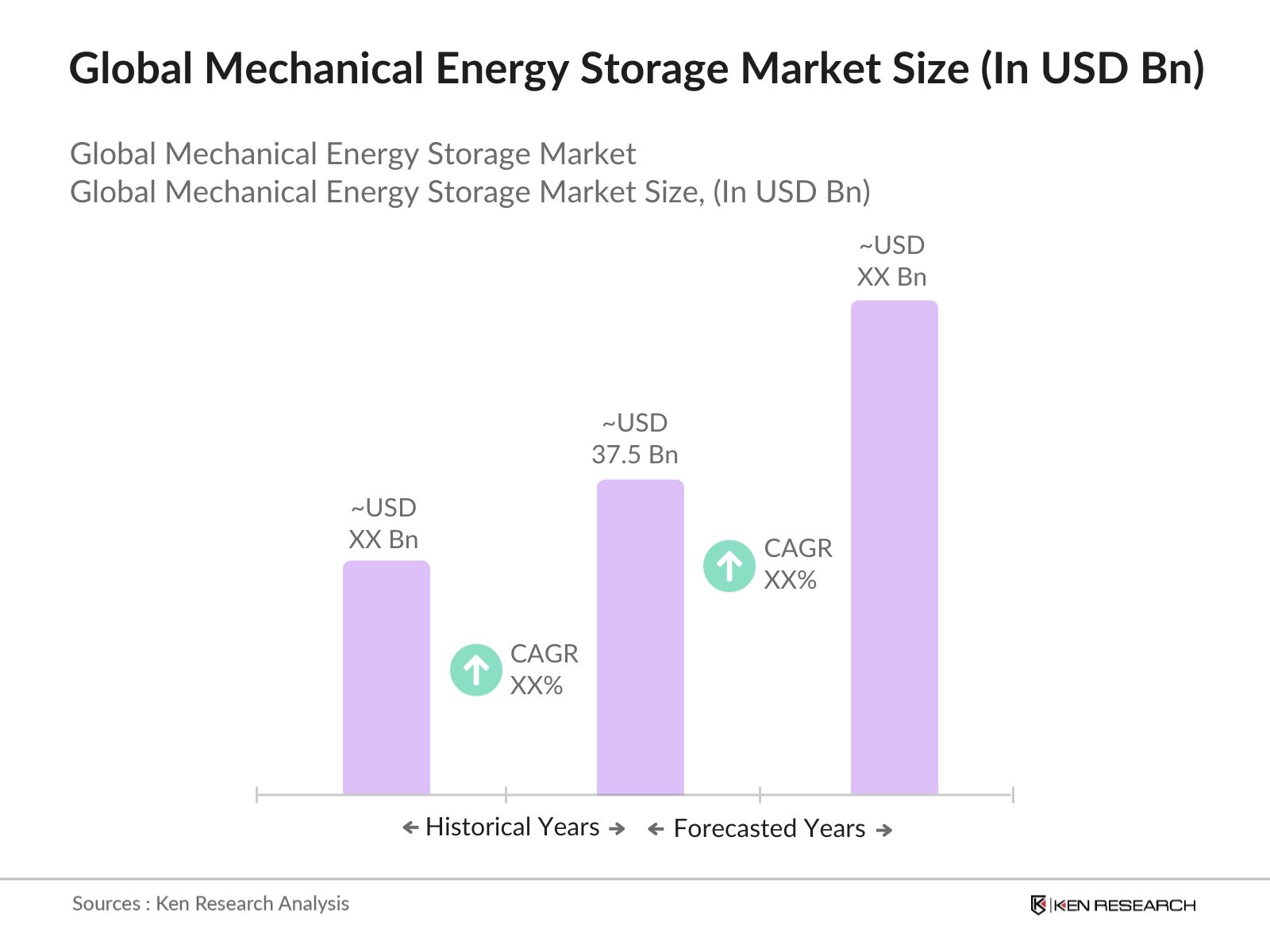
- The Global Mechanical Energy Storage market is valued at USD 37.5 billion, based on a five-year historical analysis. This market is driven by the rising global demand for sustainable energy solutions and increasing investments in renewable energy integration. As renewable energy sources like solar and wind continue to face intermittency challenges, mechanical energy storage systems, particularly pumped hydro and flywheel systems, are playing a crucial role in grid stability. Increased demand from industrial and utility sectors to reduce energy costs and store excess energy generated from renewable sources is further fueling the growth of the market.
- Countries such as China, the United States, and Germany dominate the mechanical energy storage market due to their strong focus on renewable energy deployment and supportive regulatory frameworks. China has invested heavily in pumped hydro storage systems to stabilize its energy grid, while the U.S. and Germany have integrated mechanical storage solutions to mitigate fluctuations in renewable energy generation. These nations also have favorable government policies, technological advancements, and a focus on decarbonization, making them key players in the global market.
- Chinas National Energy Administration has mandated that by 2024, all new renewable energy projects must include energy storage solutions. This policy is expected to drive the adoption of mechanical energy storage systems, such as pumped hydro, to store surplus renewable energy generated from the countrys growing wind and solar capacity, which currently exceeds 500 GW.
Global Mechanical Energy Storage Market Segmentation
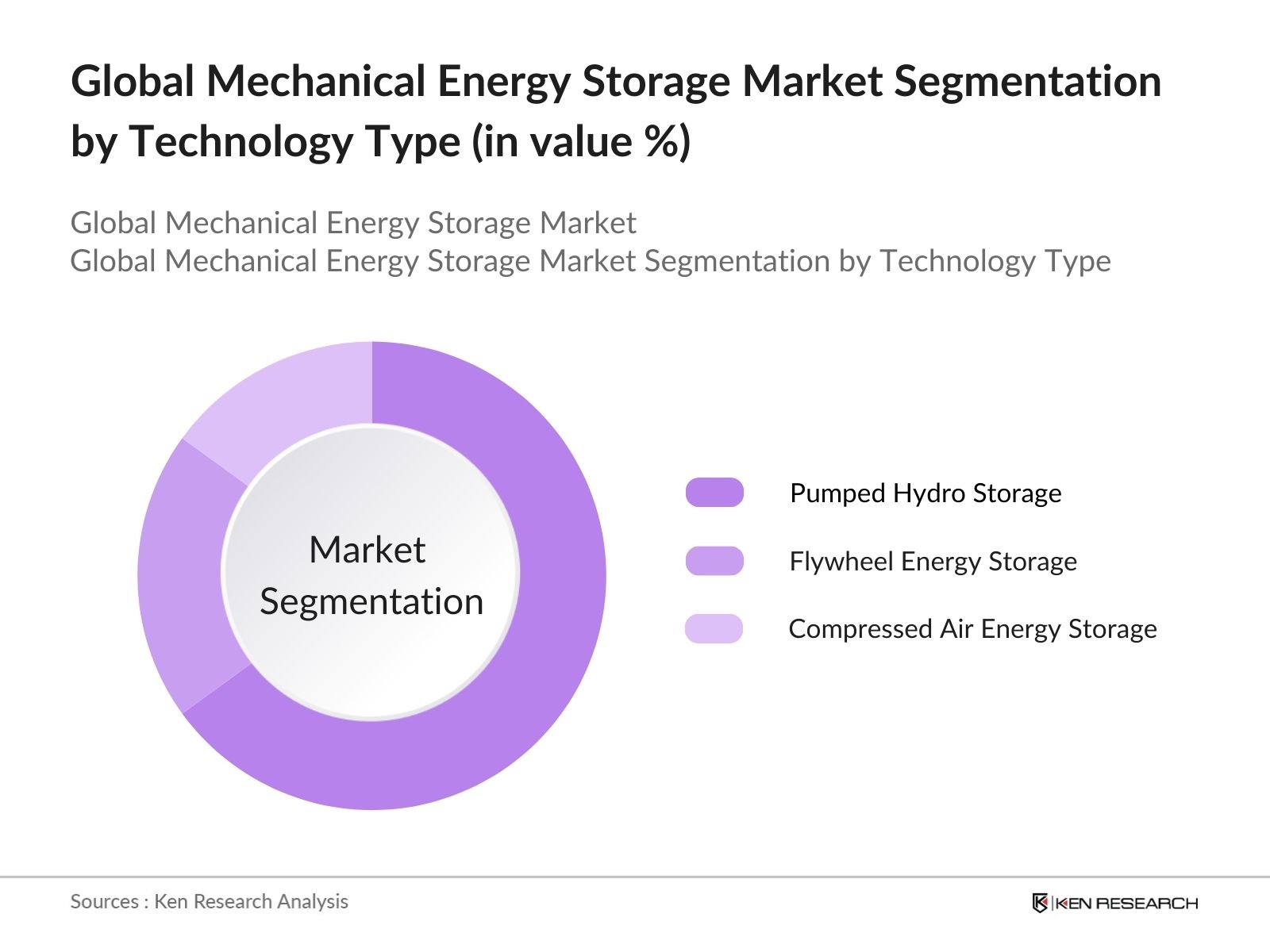
By Technology Type: The Global Mechanical Energy Storage market is segmented by technology into pumped hydro storage, flywheel energy storage, and compressed air energy storage (CAES). Among these, pumped hydro storage holds the dominant market share due to its high energy capacity and widespread application in stabilizing energy grids. It is the most mature technology, with extensive installations across North America, Europe, and Asia Pacific. The ability to store large amounts of energy for extended periods has made this segment critical in supporting renewable energy integration.
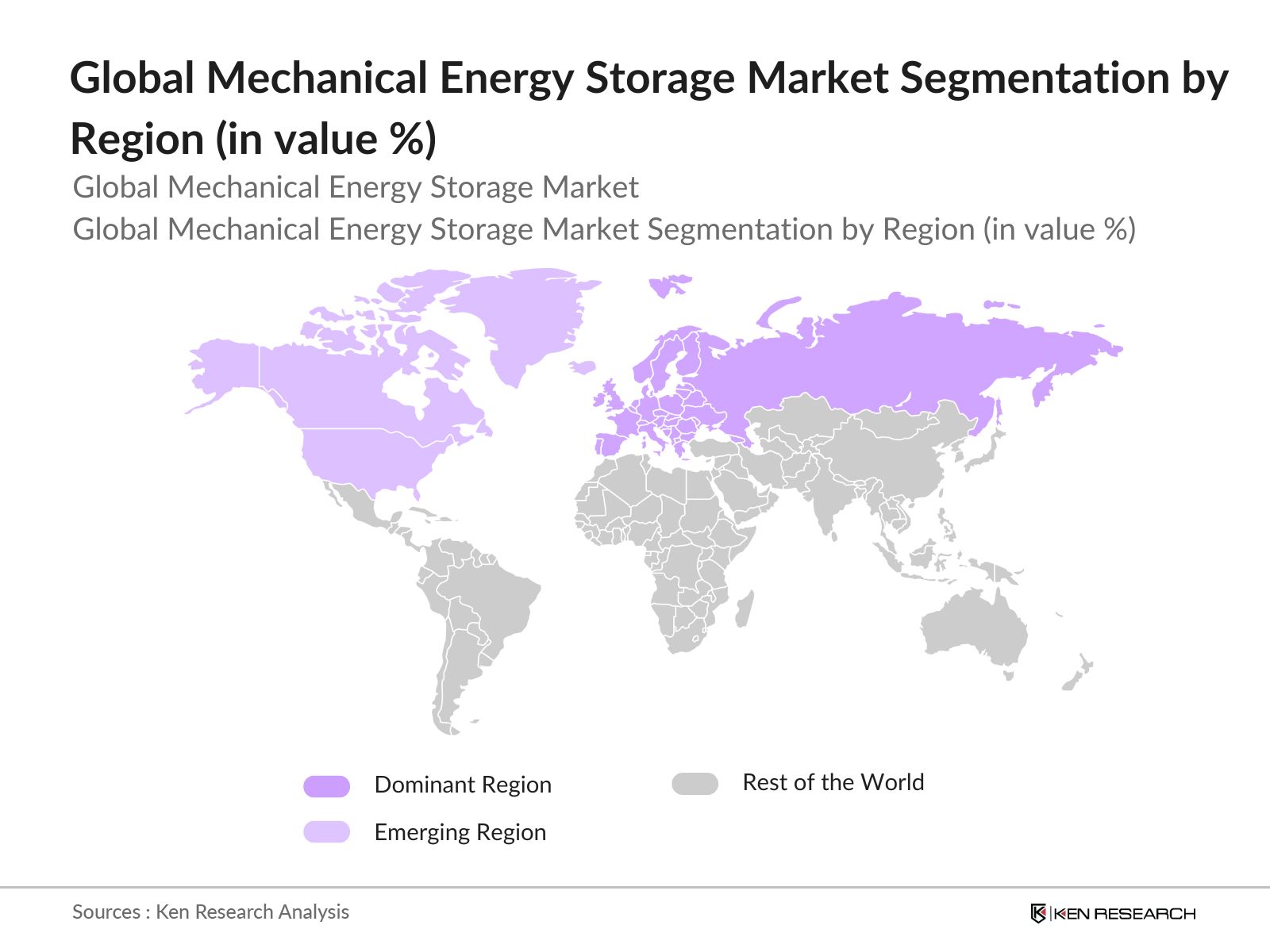
- By Region: The market is segmented by region into North America, Europe, Asia Pacific, Middle East & Africa, and Latin America. Asia Pacific holds the largest market share, led by China, due to massive investments in renewable energy and energy storage projects. The region's growing energy demands and government-driven initiatives for grid modernization have positioned it as a leader in mechanical energy storage adoption.
- By Application: The Global Mechanical Energy Storage market is segmented by application into grid energy storage, industrial energy backup, and off-grid solutions. Grid energy storage is the dominant sub-segment due to its essential role in balancing supply and demand in power systems, especially in regions with a high penetration of renewable energy. Mechanical energy storage systems help in mitigating energy fluctuations, improving grid stability, and reducing dependency on fossil fuel-powered peaking plants.
Global Mechanical Energy Storage Market Competitive Landscape
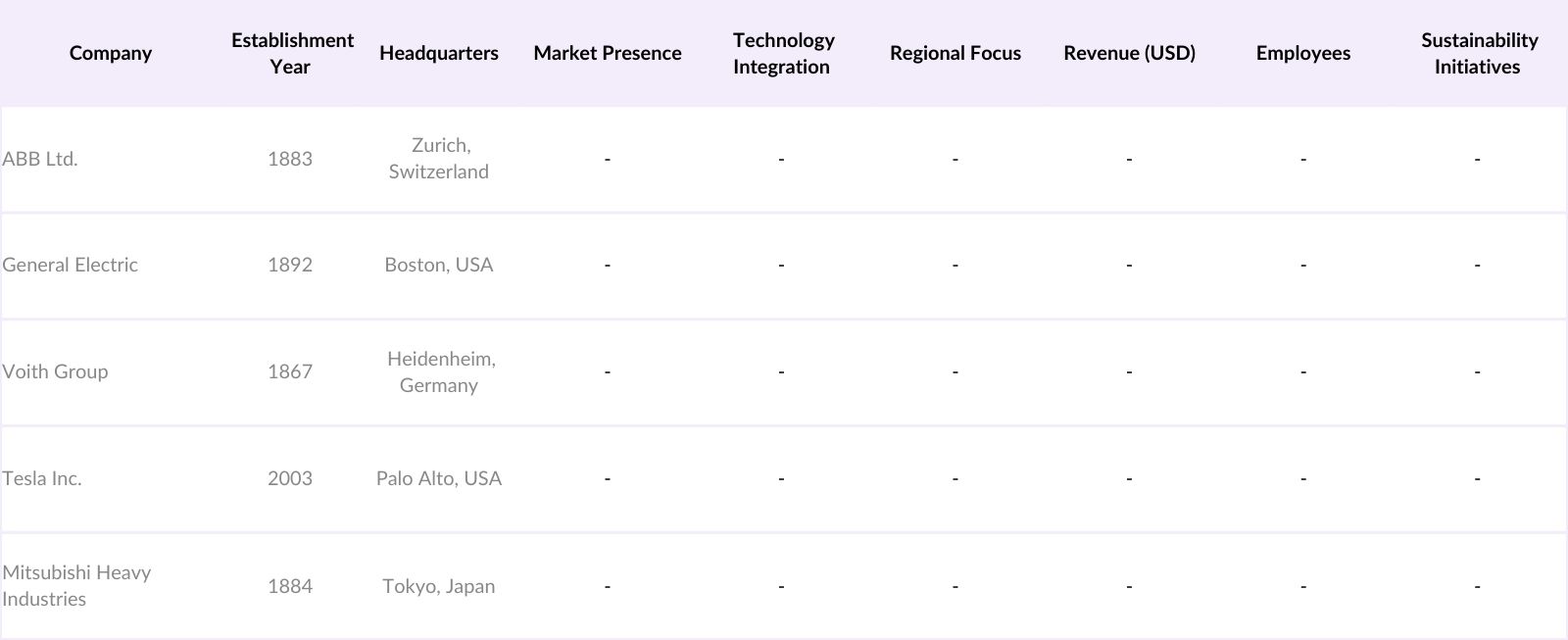
The Global Mechanical Energy Storage market is dominated by several key players that specialize in energy storage solutions across various regions. The consolidation of this market highlights the influence of companies like ABB and General Electric that have pioneered innovative storage technologies. Additionally, the presence of companies such as Tesla and Mitsubishi Heavy Industries showcases the increasing competition in mechanical energy storage, particularly in flywheels and compressed air energy systems.
Global Mechanical Energy Storage Market Analysis
Growth Drivers
- Increasing Energy Demand (Linked to Global Electricity Demand): Global electricity demand continues to rise, driven by urbanization, industrial growth, and the electrification of transportation systems. According to the International Energy Agency (IEA), global electricity demand is expected to grow by over 2,500 TWh in 2024. Mechanical energy storage technologies, such as pumped hydro storage and flywheels, are critical for balancing electricity supply with fluctuating demand, especially in regions with high renewable energy penetration. The demand for reliable storage solutions will further accelerate as the global shift towards sustainable energy continues.
- Integration with Renewable Energy Sources (Specific Focus on Wind and Solar): The global renewable energy market is expanding, with significant investments in wind and solar power. As renewable energy sources are intermittent, energy storage solutions like mechanical systems play a vital role in ensuring grid stability. According to the International Renewable Energy Agency (IRENA), the total installed renewable energy capacity is projected to surpass 3,800 GW globally by 2024. Mechanical energy storage systems are increasingly being integrated with wind and solar power installations to store surplus energy and dispatch it during peak demand.
- Technological Advancements in Storage Systems (Flywheels, Pumped Hydro Storage, etc.): Innovations in mechanical energy storage technologies, particularly in flywheels and pumped hydro storage, are enhancing energy efficiency and reducing costs. For example, flywheel energy storage systems have seen significant improvements in their energy retention capacity, with advanced systems now capable of storing up to 25 MW of energy. Pumped hydro storage, the most widely used form of mechanical storage, accounts for over 94% of the world's energy storage capacity, providing large-scale, long-duration storage solutions.
Market Challenges
- High Initial Setup Costs (Cost per MWh for Various Technologies): The high capital expenditure required for mechanical energy storage systems remains a significant barrier to widespread adoption. Pumped hydro storage, for example, typically requires over $1 million per MW of installed capacity, while advanced flywheel systems cost upwards of $500,000 per MW. These costs are prohibitive for many smaller utility companies and developing regions, limiting the scalability of mechanical storage solutions.
- Environmental Impact of Large-Scale Storage Installations: Large-scale mechanical energy storage installations, particularly pumped hydro storage, can have significant environmental impacts, including habitat disruption and water usage. The construction of a typical pumped hydro facility can require millions of cubic meters of water and large amounts of land, leading to concerns over environmental sustainability. These challenges are prompting stricter regulations and raising concerns about the ecological viability of certain storage technologies.
Global Mechanical Energy Storage Market Future Outlook
Over the next five years, the Global Mechanical Energy Storage market is expected to grow significantly, driven by the increasing need for grid stability, the rise in renewable energy adoption, and advancements in energy storage technologies. Mechanical energy storage, particularly through pumped hydro and flywheel systems, is expected to remain a key solution for managing energy demand and supply imbalances. Governments across key regions, including North America, Europe, and Asia Pacific, are expected to introduce more favorable policies to encourage investments in large-scale energy storage projects.
Market Opportunities
- Expansion in Developing Economies (Focus on Off-Grid Solutions): Developing economies, particularly in Africa and Southeast Asia, are facing growing energy demand and grid instability. Off-grid mechanical energy storage solutions, such as flywheel systems and small-scale pumped hydro storage, are increasingly being deployed to provide reliable electricity in remote areas. In Africa, where over 580 million people still lack access to electricity, mechanical storage solutions can help bridge the energy access gap, especially in off-grid solar power projects.
- Grid Modernization Initiatives (Specific to Microgrids and Smart Grids): The modernization of electrical grids, particularly in developed markets like the U.S. and Europe, presents significant opportunities for mechanical energy storage systems. Microgrids and smart grids require reliable energy storage to manage fluctuating loads and ensure continuous power supply. According to the U.S. Department of Energy, more than $25 billion has been allocated for grid modernization efforts through 2024, providing opportunities for mechanical storage technologies to integrate seamlessly with renewable energy systems.
Scope of the Report
|
By Technology Type |
Pumped Hydro Storage Flywheel Energy Storage Compressed Air Energy Storage |
|
By Application |
Grid Energy Storage Off-Grid Solutions Industrial Energy Backup |
|
By End-User |
Utilities Commercial & Industrial Residential |
|
By Capacity |
Small Scale (< 10 MW) Medium Scale (10-100 MW) Large Scale (> 100 MW) |
|
By Region |
North America Europe Asia Pacific Middle East & Africa Latin America |
Products
Key Target Audience
Investors and Venture Capitalist Firms
Utility Companies
Industrial Energy Consumers
Government and Regulatory Bodies (e.g., U.S. Department of Energy, European Commission)
Renewable Energy Companies
Energy Storage Integrators
Equipment Manufacturers
Research and Development Institutions
Companies
Players Mentioned in the Report:
ABB Ltd.
General Electric
Voith Group
Tesla Inc.
Mitsubishi Heavy Industries
Siemens AG
Hydrostor
Enel Green Power
Energy Vault
Fluence Energy
Table of Contents
1. Global Mechanical Energy Storage Market Overview
1.1. Definition and Scope
1.2. Market Taxonomy
1.3. Market Growth Rate (In % based on storage capacity)
1.4. Market Segmentation Overview
2. Global Mechanical Energy Storage Market Size (In USD Billion)
2.1. Historical Market Size (In USD Billion)
2.2. Year-On-Year Growth Analysis (Based on Storage Technology Types)
2.3. Key Market Developments and Milestones
3. Global Mechanical Energy Storage Market Analysis
3.1. Growth Drivers
3.1.1. Increasing Energy Demand (Linked to Global Electricity Demand)
3.1.2. Integration with Renewable Energy Sources (Specific focus on Wind and Solar)
3.1.3. Technological Advancements in Storage Systems (Flywheels, Pumped Hydro Storage, etc.)
3.1.4. Government Policies Promoting Sustainable Energy
3.2. Market Challenges
3.2.1. High Initial Setup Costs (Cost per MWh for various technologies)
3.2.2. Environmental Impact of Large-Scale Storage Installations
3.2.3. Limited Awareness of Mechanical Storage Benefits
3.3. Opportunities
3.3.1. Expansion in Developing Economies (Focus on Off-Grid Solutions)
3.3.2. Grid Modernization Initiatives (Specific to Microgrids and Smart Grids)
3.3.3. Adoption in Energy-Intensive Industries (Cement, Steel, etc.)
3.4. Trends
3.4.1. Integration with Hybrid Storage Systems (Combination of Mechanical and Electrochemical Systems)
3.4.2. Increasing Investments in R&D (Focus on Flywheels and Compressed Air Energy Storage)
3.4.3. Growing Adoption of Energy Storage as a Service (ESaaS)
3.5. Government Regulations (Energy Policy and Mandates)
3.5.1. National Energy Storage Policies
3.5.2. Tax Incentives for Renewable Energy Integration
3.5.3. Emission Reduction Initiatives (Specific to Power Plants and Industries)
3.5.4. Subsidy Programs for Grid-Level Energy Storage
3.6. SWOT Analysis
3.7. Stakeholder Ecosystem (Component Suppliers, Storage Integrators, and Utility Companies)
3.8. Porters Five Forces
3.9. Competition Ecosystem
4. Global Mechanical Energy Storage Market Segmentation
4.1. By Technology Type (In Value %)
4.1.1. Pumped Hydro Storage
4.1.2. Flywheel Energy Storage
4.1.3. Compressed Air Energy Storage (CAES)
4.1.4. Gravitational Energy Storage Systems
4.2. By Application (In Value %)
4.2.1. Grid Energy Storage
4.2.2. Off-Grid Solutions
4.2.3. Industrial Energy Backup
4.2.4. Renewable Integration
4.3. By End-User (In Value %)
4.3.1. Utilities
4.3.2. Commercial & Industrial Sector
4.3.3. Residential Sector
4.4. By Capacity (In Value %)
4.4.1. Small Scale (< 10 MW)
4.4.2. Medium Scale (10 MW 100 MW)
4.4.3. Large Scale (> 100 MW)
4.5. By Region (In Value %)
4.5.1. North America
4.5.2. Europe
4.5.3. Asia Pacific
4.5.4. Middle East & Africa
4.5.5. Latin America
5. Global Mechanical Energy Storage Market Competitive Analysis
5.1. Detailed Profiles of Major Companies
5.1.1. ABB Ltd.
5.1.2. General Electric
5.1.3. Voith Group
5.1.4. Mitsubishi Heavy Industries
5.1.5. Siemens AG
5.1.6. Hydrostor
5.1.7. Tesla Inc.
5.1.8. Enel Green Power
5.1.9. Energy Vault
5.1.10. Fluence Energy
5.1.11. EDF Renewables
5.1.12. Voith Hydro
5.1.13. Beacon Power
5.1.14. AES Corporation
5.1.15. NextEra Energy
5.2. Cross Comparison Parameters (Headquarters, Installed Capacity, No. of Projects, Revenue, Market Share, Energy Output Efficiency, R&D Investments, Partnerships)
5.3. Market Share Analysis
5.4. Strategic Initiatives
5.5. Mergers and Acquisitions
5.6. Investment Analysis
5.7. Venture Capital Funding
5.8. Government Grants
5.9. Private Equity Investments
6. Global Mechanical Energy Storage Market Regulatory Framework
6.1. National Energy Storage Standards
6.2. Compliance Requirements for Large-Scale Storage Systems
6.3. Certification Processes
7. Global Mechanical Energy Storage Future Market Size (In USD Billion)
7.1. Future Market Size Projections (In USD Billion)
7.2. Key Factors Driving Future Market Growth (Demand for Renewable Energy Integration, Increased Electricity Consumption)
8. Global Mechanical Energy Storage Future Market Segmentation
8.1. By Technology Type (In Value %)
8.2. By Application (In Value %)
8.3. By End-User (In Value %)
8.4. By Capacity (In Value %)
8.5. By Region (In Value %)
9. Global Mechanical Energy Storage Market Analysts Recommendations
9.1. TAM/SAM/SOM Analysis
9.2. Customer Cohort Analysis
9.3. Marketing Initiatives
9.4. White Space Opportunity Analysis
Research Methodology
Step 1: Identification of Key Variables
The initial step involves mapping the entire ecosystem of the Global Mechanical Energy Storage Market, identifying critical stakeholders, including technology providers, utility companies, and government bodies. This phase includes comprehensive desk research and the gathering of data from proprietary and secondary sources.
Step 2: Market Analysis and Construction
This phase focuses on analyzing historical market data, including the total installed mechanical energy storage capacity and its distribution across various regions. The analysis also covers the penetration of key technologies, revenue models, and market consolidation levels.
Step 3: Hypothesis Validation and Expert Consultation
Key market hypotheses are developed and validated through expert consultations with industry leaders from major mechanical energy storage companies. These consultations provide deep insights into operational challenges, future technology developments, and revenue opportunities.
Step 4: Research Synthesis and Final Output
In this phase, qualitative and quantitative data are synthesized to provide a complete market analysis. The final report presents insights into market dynamics, competitive positioning, and strategic recommendations for stakeholders.
Frequently Asked Questions
1. How big is the Global Mechanical Energy Storage Market?
The Global Mechanical Energy Storage Market is valued at USD 37.5 billion, driven by the integration of renewable energy and the need for grid stabilization solutions.
2. What are the challenges in the Global Mechanical Energy Storage Market?
Key challenges in the Global Mechanical Energy Storage Market include high initial capital costs, the environmental impact of large installations, and technical limitations in scaling up storage capacity.
3. Who are the major players in the Global Mechanical Energy Storage Market?
The major players in the Global Mechanical Energy Storage Market include ABB Ltd., General Electric, Voith Group, Tesla Inc., and Mitsubishi Heavy Industries, known for their innovations in energy storage technologies.
4. What are the growth drivers of the Global Mechanical Energy Storage Market?
Growth of Global Mechanical Energy Storage Market is driven by the increasing adoption of renewable energy, rising demand for grid stability, and government policies promoting sustainable energy storage solutions.
Why Buy From Us?

What makes us stand out is that our consultants follows Robust, Refine and Result (RRR) methodology. i.e. Robust for clear definitions, approaches and sanity checking, Refine for differentiating respondents facts and opinions and Result for presenting data with story

We have set a benchmark in the industry by offering our clients with syndicated and customized market research reports featuring coverage of entire market as well as meticulous research and analyst insights.

While we don't replace traditional research, we flip the method upside down. Our dual approach of Top Bottom & Bottom Top ensures quality deliverable by not just verifying company fundamentals but also looking at the sector and macroeconomic factors.

With one step in the future, our research team constantly tries to show you the bigger picture. We help with some of the tough questions you may encounter along the way: How is the industry positioned? Best marketing channel? KPI's of competitors? By aligning every element, we help maximize success.

Our report gives you instant access to the answers and sources that other companies might choose to hide. We elaborate each steps of research methodology we have used and showcase you the sample size to earn your trust.

If you need any support, we are here! We pride ourselves on universe strength, data quality, and quick, friendly, and professional service.