
Global Medium chain Triglycerides Market Outlook to 2030
Region:Global
Author(s):Mukul
Product Code:KROD10509
November 2024
84
About the Report
Global Medium chain Triglycerides Market Overview
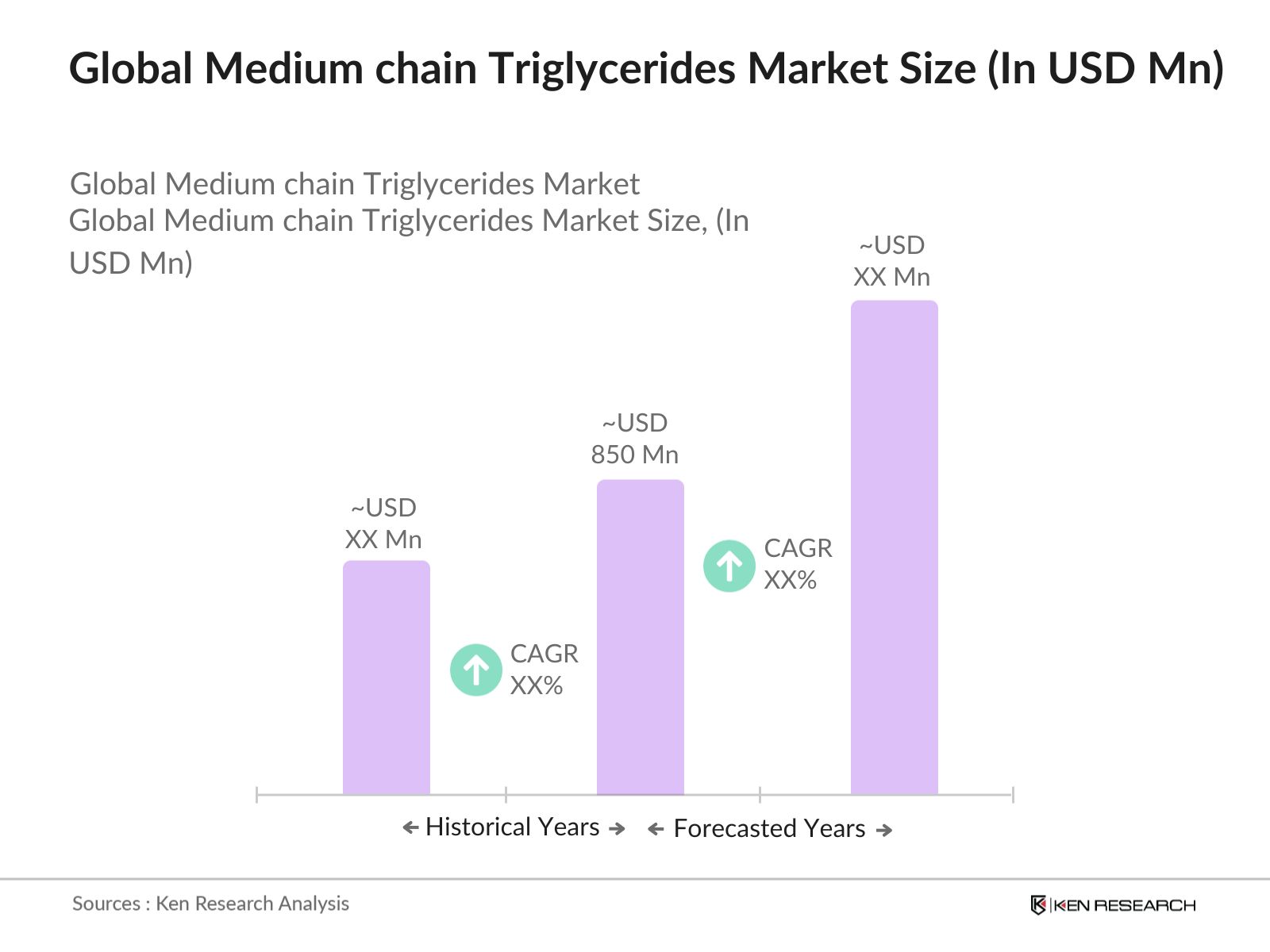
- The global Medium Chain Triglycerides (MCT) market is valued at USD 850 million, driven by the increasing demand for nutritional and functional food products. The growing consumer preference for healthier oils, specifically MCTs, is propelled by their unique characteristics such as fast metabolism and energy-boosting capabilities. This demand is reinforced by the rising awareness of the health benefits associated with MCTs, particularly in weight management and sports nutrition. Pharmaceutical and cosmetic industries are also contributing to the expansion, incorporating MCTs into various formulations, increasing market penetration.
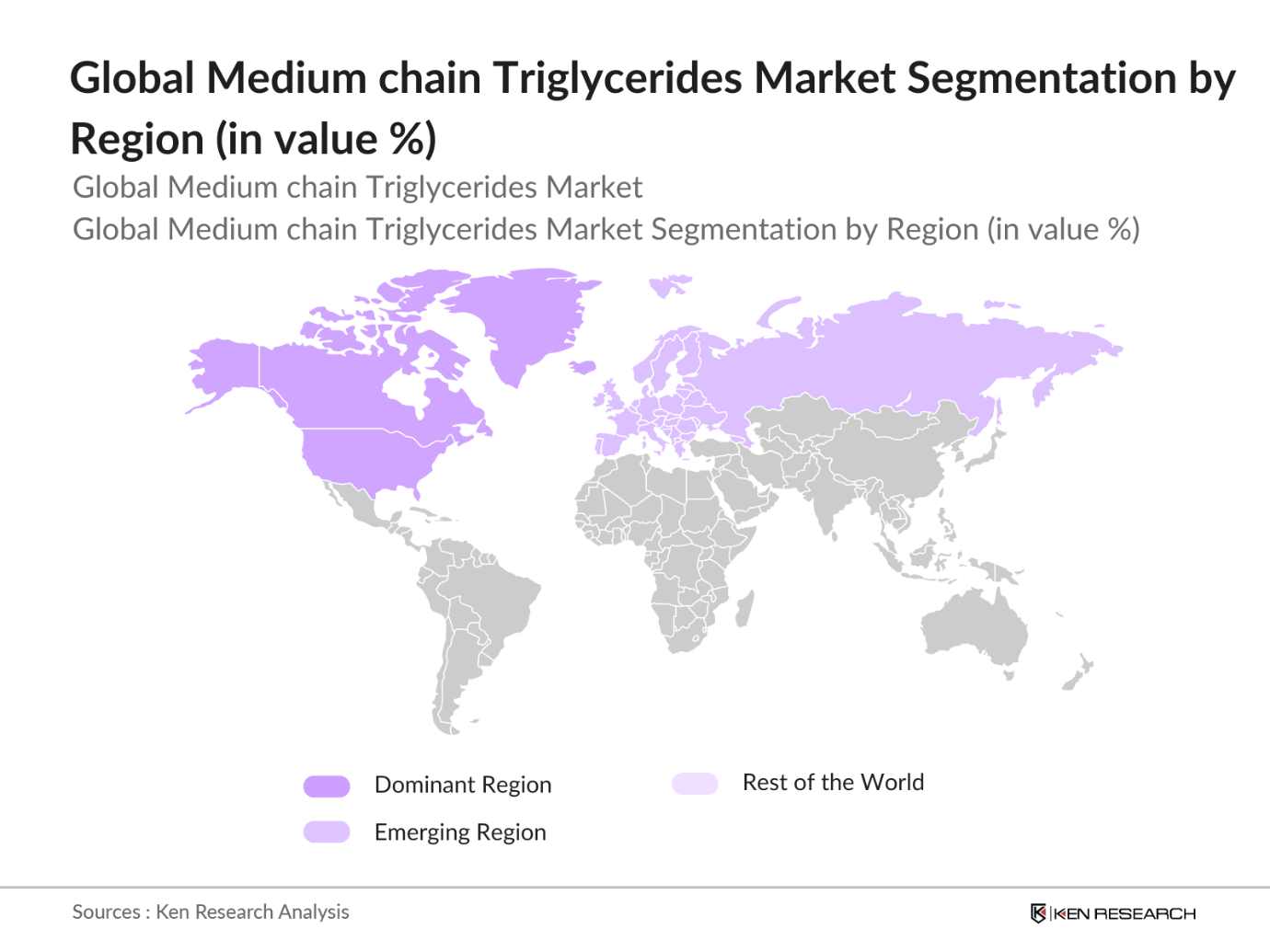
- North America dominates the global MCT market due to the significant consumption of dietary supplements and functional foods. The region is home to established health-conscious markets like the United States, where the keto and paleo diets have fueled MCT oil consumption. Europe, with its stringent regulations on natural and organic food ingredients, is also a key player. Meanwhile, the Asia-Pacific region, particularly countries like India and China, is emerging as a growing market for MCTs due to increasing health awareness and expansion of the pharmaceutical sector.
- In 2023, several governments implemented stricter food safety standards for MCT products. The European Food Safety Authority (EFSA) established new guidelines for MCT labeling, requiring more transparent sourcing information and safety protocols. Similarly, the U.S. Food and Drug Administration (FDA) issued new regulations to ensure that MCT products meet certain purity and safety standards before reaching consumers, highlighting the growing regulatory focus on product quality in the global MCT market.
Global Medium chain Triglycerides Market Segmentation
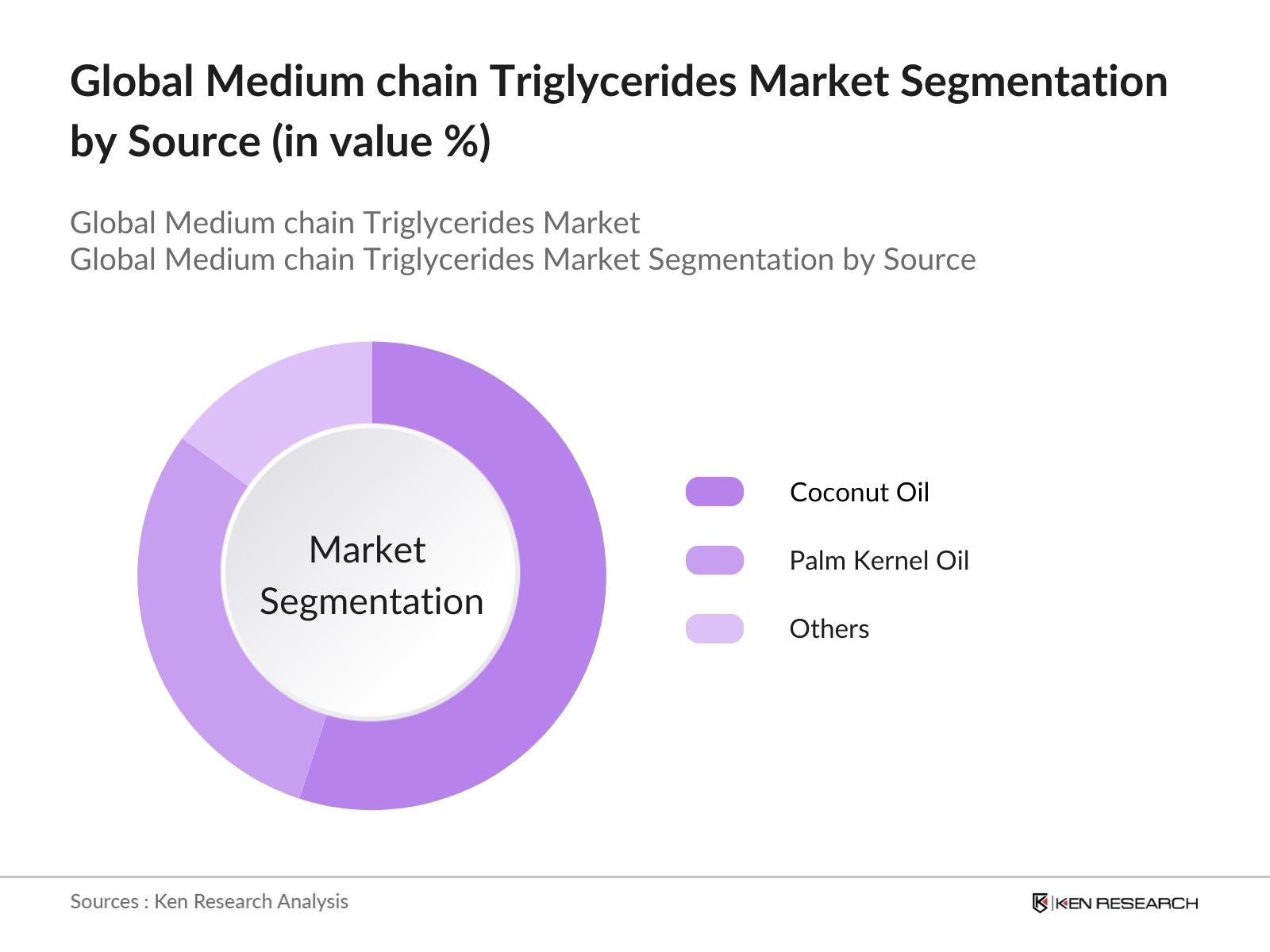
- By Source: The global MCT market is segmented by source into coconut oil, palm kernel oil, and others, including babassu oil. Among these, coconut oil dominates the market share due to its high concentration of MCTs and wide availability. Coconut oil has been widely accepted by consumers, especially in regions where organic and natural ingredients are preferred. Palm kernel oil, although cheaper, faces sustainability issues, which slightly hampers its adoption in the health-conscious segment.
- By Region: The market is segmented by region into North America, Europe, Asia Pacific, Latin America, and Middle East & Africa. North America leads the market, primarily due to the high consumption of MCT-based dietary supplements and functional foods. In Europe, the rising demand for organic and natural ingredients is driving the adoption of MCTs, particularly in food and cosmetic products. Asia-Pacific is the fastest-growing region due to increasing health awareness, expanding pharmaceutical industries, and the rising demand for natural oils.
- By Form: The market is segmented by form into liquid and powder. The liquid form holds a dominant market share, largely because of its versatility and ease of incorporation into products such as nutritional supplements and beverages. Liquid MCTs are favored by manufacturers for their solubility and compatibility in a wide range of applications, including energy drinks, dietary supplements, and pharmaceutical formulations. However, the powder form is gaining traction, especially in the convenience food industry, due to its ease of use in formulations like protein powders and ready-to-mix beverages.
Global Medium chain Triglycerides Market Competitive Landscape
The global MCT market is characterized by the presence of several key players that contribute significantly to the market's growth and innovation. These companies are involved in strategic partnerships, mergers, and product innovations to maintain a competitive edge in the industry. The market is dominated by companies with extensive R&D capabilities and a strong distribution network.
|
Company |
Establishment Year |
Headquarters |
Revenue (USD) |
Employees |
Production Plants |
Global Reach |
R&D Investments |
Sustainability Programs |
|
BASF SE |
1865 |
Ludwigshafen, Germany |
- |
- |
- |
- |
- |
- |
|
Stepan Company |
1932 |
Illinois, USA |
- |
- |
- |
- |
- |
- |
|
Wilmar International |
1991 |
Singapore |
- |
- |
- |
- |
- |
- |
|
Koninklijke DSM N.V. |
1902 |
Heerlen, Netherlands |
- |
- |
- |
- |
- |
- |
|
Croda International Plc |
1925 |
East Yorkshire, UK |
- |
- |
- |
- |
- |
- |
Global Medium chain Triglycerides Industry Analysis
Growth Drivers
- Rising Health Awareness: Rising global health awareness has increased consumer demand for healthier alternatives, including Medium Chain Triglycerides (MCTs). The number of individuals engaging in fitness activities has been steadily growing, with nearly 3.5 billion people globally now practicing some form of physical fitness or health-based lifestyle routines, as reported by the World Health Organization (WHO) in 2023. Health-conscious consumers are turning toward MCT-based products due to their benefits in quick energy provision and fat-burning properties, which align with these lifestyle shifts. These developments have stimulated greater adoption of MCTs in functional foods.
- Growth in the Dietary Supplement Industry: The dietary supplement industry is expanding rapidly, with global sales reaching USD 151 billion in 2022 according to the International Trade Administration. MCTs, due to their energy-boosting and metabolism-enhancing properties, have become a preferred ingredient in supplements. The rise in the use of MCTs is particularly notable in markets such as the United States and Europe, where the aging population, now surpassing 500 million in these regions alone, is increasingly relying on supplements for their nutritional needs.
- Increased Consumption in Weight Management Products: Global consumption of weight management products reached 1.2 billion units in 2023, driven by the demand for functional ingredients such as MCTs that aid in fat metabolism. According to data from the World Obesity Federation, over 1 billion people worldwide are classified as overweight or obese, a factor contributing to the growth of MCT-based products in this segment. As consumers continue to seek solutions to manage weight, MCT-enriched products, known for their role in improving metabolic health, are seeing widespread uptake.
Market Restraints
- Price Volatility of Raw Materials: The price volatility of raw materials such as coconut oil and palm kernel oil present a significant challenge. According to the International Monetary Fund (IMF), the average price of coconut oil fluctuated between USD 1,000 and USD 1,500 per metric ton in 2023, while palm kernel oil prices ranged from USD 900 to USD 1,200 per metric ton. These fluctuations, driven by geopolitical tensions and weather-related supply disruptions, contribute to the unpredictability of MCT pricing, affecting the overall cost structure for manufacturers.
- Regulatory Concerns on Sourcing: Regulatory concerns surrounding the sourcing of raw materials, particularly sustainable palm oil, remain a pressing issue. The Roundtable on Sustainable Palm Oil (RSPO) reported that only 19 million metric tons of palm oil produced in 2023 were certified as sustainable out of the total 77 million metric tons globally. Supply chain disruptions, exacerbated by environmental regulations and deforestation concerns, further hinder the reliable sourcing of palm oil for MCT production, creating obstacles for manufacturers seeking sustainability certifications.
Global Medium chain Triglycerides Market Future Outlook
Over the next five years, the global MCT market is expected to witness robust growth, driven by increased demand for healthier oil alternatives, expansion in the pharmaceutical and nutraceutical sectors, and the growing consumer preference for natural and organic ingredients. The market's potential for new applications, particularly in medical nutrition and personal care, will contribute to its continued expansion. Emerging markets, especially in the Asia-Pacific region, will see accelerated adoption due to growing health awareness and industrial development.
Market Opportunities
- Growth in Application in Personal Care and Cosmetics: The global personal care and cosmetics industry is projected to witness growth, with the use of MCTs expanding as a key ingredient. According to the International Cosmetic Ingredient Database, in 2023, more than 5,000 new products containing MCTs were launched in this sector. MCTs are favored for their moisturizing properties and stable shelf life, making them a popular ingredient in skincare and haircare products. The rise of organic and natural cosmetics, particularly in Europe and North America, has driven the inclusion of MCTs in product formulations.
- Innovation in Formulations (Powder MCTs, Liquid MCT Blends): Innovations in MCT formulations, including the development of powder MCTs and liquid MCT blends, present significant opportunities. In 2023, over 300 new MCT formulations were registered globally, according to the International Food Information Council (IFIC). Powdered MCTs are particularly gaining traction due to their ease of use in supplements and functional foods, while liquid blends are being adopted in health drinks and sports nutrition. These innovations enable manufacturers to cater to diverse consumer needs, creating new avenues for product development in the MCT market.
Scope of the Report
|
Segments |
Sub-segments |
|
Source |
Coconut Oil Palm Kernel Oil Others |
|
Form |
Liquid Powder |
|
Application |
Food & Beverages Pharmaceuticals Personal Care and Cosmetics Nutritional Supplements Others (Animal Feed, Industrial Use) |
|
Distribution Channel |
Direct Sales Retail/Online Stores Wholesalers |
|
Region |
North America Europe Asia Pacific Latin America Middle East & Africa |
Products
Key Target Audience
MCT Manufacturers
Functional Food Producers
Pharmaceutical Companies
Personal Care & Cosmetic Manufacturers
Nutraceutical Firms
Investor and Venture Capitalist Firms
Government and Regulatory Bodies (FDA, EFSA, FSSAI)
MCT Ingredient Distributors
Companies
Players Mentioned in the Report:
BASF SE
Stepan Company
Wilmar International
Koninklijke DSM N.V.
Croda International Plc
Lonza Group
KLK Oleo
Musim Mas Group
IOI Oleo GmbH
ABITEC Corporation
Sternchemie GmbH & Co. KG
Nutiva Inc.
Emery Oleochemicals
The Procter & Gamble Company
Archer Daniels Midland Company (ADM)
Table of Contents
1. Global Medium Chain Triglycerides Market Overview
1.1. Definition and Scope
1.2. Market Taxonomy
1.3. Market Growth Rate (CAGR, Growth in Demand for Nutritional Products, Functional Foods, Pharmaceuticals)
1.4. Market Segmentation Overview
2. Global Medium Chain Triglycerides Market Size (In USD Mn)
2.1. Historical Market Size
2.2. Year-On-Year Growth Analysis (Historical Trends, Shifts in Consumer Preferences for Healthier Oils, Growth in Demand for Supplementary Foods)
2.3. Key Market Developments and Milestones
3. Global Medium Chain Triglycerides Market Analysis
3.1. Growth Drivers
3.1.1. Rising Health Awareness
3.1.2. Growth in the Dietary Supplement Industry
3.1.3. Increased Consumption in Weight Management Products
3.1.4. Shift from Traditional Fats and Oils
3.2. Market Challenges
3.2.1. Price Volatility of Raw Materials (Coconut Oil, Palm Kernel Oil)
3.2.2. Regulatory Concerns on Sourcing (Sustainable Palm Oil, Supply Chain Disruptions)
3.2.3. Limited Awareness in Emerging Markets
3.3. Opportunities
3.3.1. Growth in Application in Personal Care and Cosmetics
3.3.2. Innovation in Formulations (Powder MCTs, Liquid MCT Blends)
3.3.3. Expanding Use in Pharmaceuticals and Medical Nutrition
3.4. Trends
3.4.1. Increasing Use in Keto and Paleo Diets
3.4.2. Organic and Sustainable Sourcing of MCTs
3.4.3. Innovations in Functional Food Products Containing MCTs
3.5. Government Regulation (Food Safety Standards, Import-Export Guidelines)
3.5.1. FSSAI Regulations (India)
3.5.2. FDA Regulations (USA)
3.5.3. EFSA Standards (Europe)
3.6. SWOT Analysis
3.7. Stakeholder Ecosystem (Raw Material Suppliers, MCT Processors, Manufacturers, Distribution Networks)
3.8. Porters Five Forces
3.9. Competitive Landscape (Market Structure, Strategic Alliances, Innovation Focus)
4. Global Medium Chain Triglycerides Market Segmentation
4.1. By Source (In Value %) 4.1.1. Coconut Oil
4.1.2. Palm Kernel Oil
4.1.3. Others (Babassu Oil, Cuphea Oil)
4.2. By Form (In Value %)
4.2.1. Liquid
4.2.2. Powder
4.3. By Application (In Value %)
4.3.1. Food & Beverages
4.3.2. Pharmaceuticals
4.3.3. Personal Care and Cosmetics
4.3.4. Nutritional Supplements
4.3.5. Others (Animal Feed, Industrial Use)
4.4. By Distribution Channel (In Value %)
4.4.1. Direct Sales
4.4.2. Retail/Online Stores
4.4.3. Wholesalers
4.5. By Region (In Value %)
4.5.1. North America
4.5.2. Europe
4.5.3. Asia Pacific
4.5.4. Latin America
4.5.5. Middle East & Africa
5. Global Medium Chain Triglycerides Market Competitive Analysis
5.1 Detailed Profiles of Major Companies
5.1.1. BASF SE
5.1.2. Stepan Company
5.1.3. Lonza Group
5.1.4. Croda International Plc
5.1.5. Wilmar International Limited
5.1.6. IOI Oleo GmbH
5.1.7. Koninklijke DSM N.V.
5.1.8. KLK Oleo
5.1.9. Musim Mas Group
5.1.10. ABITEC Corporation
5.1.11. Emery Oleochemicals
5.1.12. Sternchemie GmbH & Co. KG
5.1.13. Nutiva Inc.
5.1.14. Croda International Plc
5.1.15. The Procter & Gamble Company
5.2 Cross Comparison Parameters (Market Share, Revenue, Number of Manufacturing Plants, Geographic Presence, Product Innovation, Vertical Integration, Sourcing Strategy, Product Portfolio)
5.3 Market Share Analysis
5.4 Strategic Initiatives (Partnerships, Collaborations, Product Development)
5.5 Mergers And Acquisitions
5.6 Investment Analysis
5.7 Venture Capital Funding
5.8 Private Equity Investments
6. Global Medium Chain Triglycerides Market Regulatory Framework
6.1. Sustainability and Sourcing Regulations
6.2. Compliance Requirements (Palm Oil Sourcing, Certifications)
6.3. Certification Processes (ISO, GMP, FSSC)
7. Global Medium Chain Triglycerides Future Market Size (In USD Mn)
7.1. Future Market Size Projections
7.2. Key Factors Driving Future Market Growth (R&D Innovations, Consumer Health Trends, Global Shift Toward Healthy Oils)
8. Global Medium Chain Triglycerides Future Market Segmentation
8.1. By Source (In Value %)
8.2. By Form (In Value %)
8.3. By Application (In Value %)
8.4. By Distribution Channel (In Value %)
8.5. By Region (In Value %)
9. Global Medium Chain Triglycerides Market Analysts Recommendations
9.1. TAM/SAM/SOM Analysis
9.2. Customer Cohort Analysis
9.3. Marketing Initiatives
9.4. White Space Opportunity Analysis
Disclaimer
Contact Us
Research Methodology
Step 1: Identification of Key Variables
This phase involved mapping all major stakeholders in the global MCT market. Extensive desk research was conducted using a combination of secondary sources, industry reports, and proprietary databases. The primary goal was to define key variables impacting market dynamics, including production, consumption, and distribution factors.
Step 2: Market Analysis and Construction
In this stage, historical data was analyzed to assess the penetration of MCTs in different industries, including food and pharmaceuticals. This analysis included revenue generation from various sub-segments and a review of industry trends affecting the supply chain.
Step 3: Hypothesis Validation and Expert Consultation
To validate market hypotheses, consultations with industry experts were conducted through phone interviews. These discussions provided critical insights into market trends, technological advancements, and the impact of regulatory changes on the MCT market.
Step 4: Research Synthesis and Final Output
The final step included direct engagement with key MCT manufacturers to verify data on production volumes, sales performance, and emerging consumer trends. This data was synthesized to produce an accurate, comprehensive market report, combining top-down and bottom-up approaches.
Frequently Asked Questions
1. How big is the global Medium Chain Triglycerides market?
The global Medium Chain Triglycerides market is valued at USD 850 million, driven by growing demand in food, pharmaceuticals, and cosmetic applications.
2. What are the challenges in the global MCT market?
Challenges include price volatility in raw materials, particularly coconut and palm kernel oil, and regulatory scrutiny regarding sustainable sourcing, which affects production and distribution.
3. Who are the major players in the global MCT market?
Key players include BASF SE, Stepan Company, Wilmar International, and Koninklijke DSM N.V. These companies dominate due to their extensive product portfolios, global reach, and strategic partnerships.
4. What are the growth drivers for the global MCT market?
The market is driven by increased demand for nutritional supplements, functional foods, and natural cosmetic ingredients. The expanding application of MCTs in medical nutrition also contributes to market growth.
Why Buy From Us?

What makes us stand out is that our consultants follows Robust, Refine and Result (RRR) methodology. i.e. Robust for clear definitions, approaches and sanity checking, Refine for differentiating respondents facts and opinions and Result for presenting data with story

We have set a benchmark in the industry by offering our clients with syndicated and customized market research reports featuring coverage of entire market as well as meticulous research and analyst insights.

While we don't replace traditional research, we flip the method upside down. Our dual approach of Top Bottom & Bottom Top ensures quality deliverable by not just verifying company fundamentals but also looking at the sector and macroeconomic factors.

With one step in the future, our research team constantly tries to show you the bigger picture. We help with some of the tough questions you may encounter along the way: How is the industry positioned? Best marketing channel? KPI's of competitors? By aligning every element, we help maximize success.

Our report gives you instant access to the answers and sources that other companies might choose to hide. We elaborate each steps of research methodology we have used and showcase you the sample size to earn your trust.

If you need any support, we are here! We pride ourselves on universe strength, data quality, and quick, friendly, and professional service.