
Global Mineral Cosmetics Market Outlook to 2030
Region:Global
Author(s):Mukul
Product Code:KROD8334
October 2024
100
About the Report
Global Mineral Cosmetics Market Overview
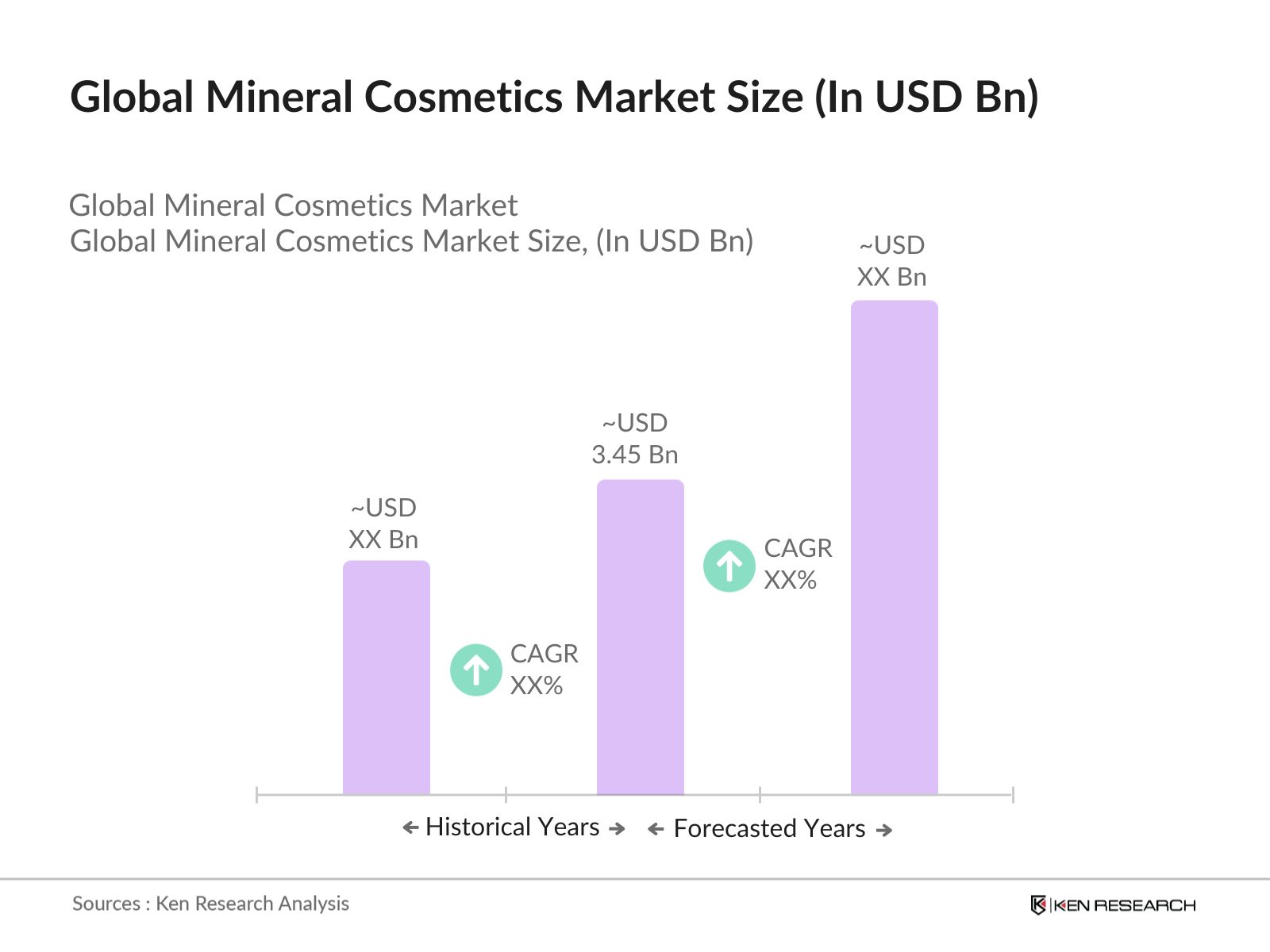
- The global mineral cosmetics market is valued at USD 3.45 billion, based on a five-year historical analysis. This market is driven by the increasing demand for organic and natural beauty products, fueled by rising consumer awareness about skin-friendly ingredients. Consumers are shifting towards cleaner beauty alternatives, rejecting synthetic chemicals due to potential skin irritations. Additionally, the rise of e-commerce has significantly expanded the market's reach, enabling wider product availability and easier access to consumers globally.
- Countries like the United States, Japan, and South Korea dominate the global mineral cosmetics market. The dominance of these countries stems from their established beauty industries, high consumer awareness about premium skincare products, and the presence of large beauty conglomerates that push innovations in the mineral-based beauty sector. Additionally, the robust retail infrastructure and strategic digital marketing campaigns have helped these regions maintain leadership in the mineral cosmetics space.
- The mineral cosmetics market is also impacted by international trade policies, particularly regarding tariffs and import/export regulations. According to World Bank data, the total value of cosmetics exports from the U.S. to the EU increased to $7.5 billion in 2023, reflecting the importance of trade agreements in facilitating market expansion. However, stringent import regulations, such as mandatory product testing and certification requirements, pose challenges for cosmetics companies looking to enter new markets. These regulations require companies to invest in compliance, which can delay product launches.
Global Mineral Cosmetics Market Segmentation
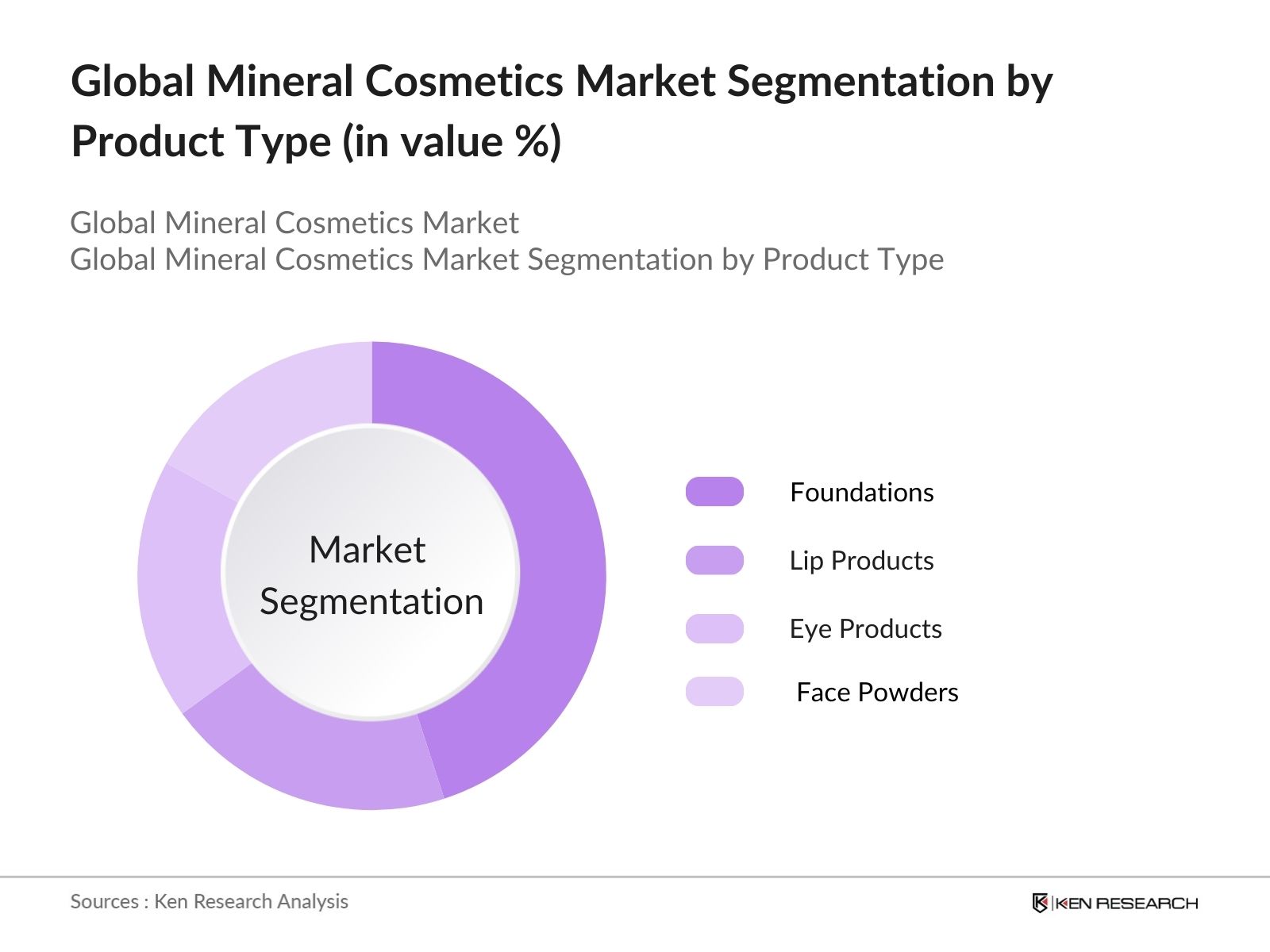
- By Product Type: The global mineral cosmetics market is segmented by product type into foundations, lip products, eye products, and face powders. Recently, foundations have taken a dominant market share in the product type segment due to the rising consumer preference for skin-safe formulations. Mineral foundations, with their lightweight texture and skin-soothing properties, have gained traction among individuals seeking hypoallergenic products. Brands like BareMinerals and Glo Skin Beauty continue to lead in this segment by leveraging consumer demand for minimalistic yet effective skincare in makeup.
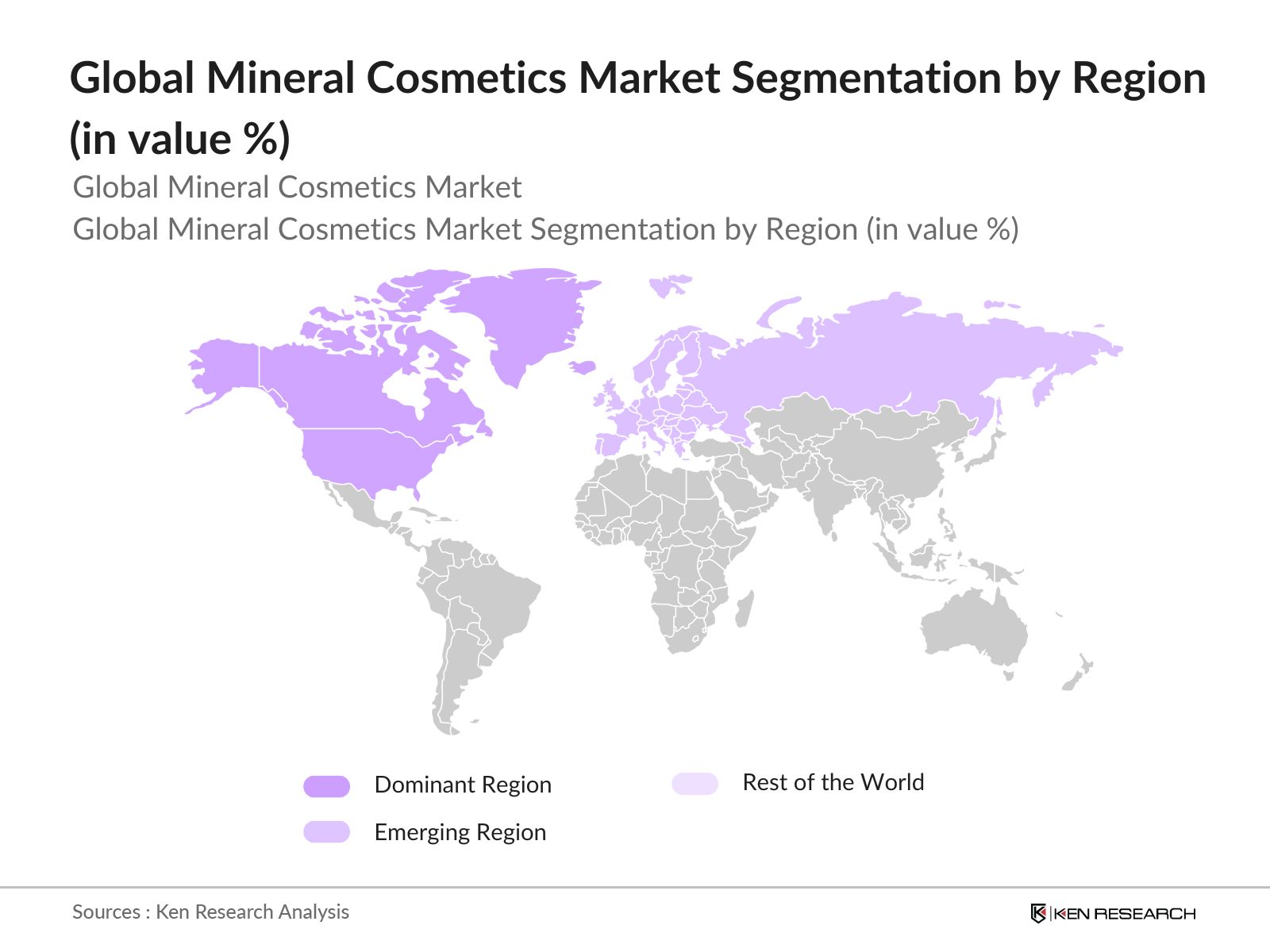
- By Region: The global mineral cosmetics market is segmented by region into North America, Europe, Asia-Pacific, Latin America, and Middle East & Africa. North America holds a dominant position due to the high consumer awareness regarding clean beauty and the extensive presence of leading mineral cosmetic brands. The U.S., in particular, remains a stronghold for mineral cosmetics because of its well-developed beauty industry, consumer trust in cruelty-free and vegan products, and strong online retail presence.
- By Distribution Channel: The market is segmented by distribution channel into online retail, supermarkets/hypermarkets, specialty stores, and direct sales. The online retail segment currently holds the highest market share due to the convenience and accessibility it offers to consumers. The COVID-19 pandemic accelerated the shift toward online purchasing, and this trend has persisted, especially as brands invest heavily in digital marketing and influencer collaborations to drive e-commerce sales.
Global Mineral Cosmetics Market Competitive Landscape
The global mineral cosmetics market is dominated by a few key players, with both established beauty conglomerates and niche natural beauty brands holding significant influence. These companies focus heavily on product innovation, eco-friendly packaging, and expanding their digital presence to capture a growing consumer base. The competition is marked by the introduction of premium, sustainable, and ethical beauty products to meet rising consumer expectations.
|
Company |
Establishment Year |
Headquarters |
Product Portfolio |
Certifications |
R&D Spending |
Sustainability Initiatives |
Market Penetration |
Brand Loyalty |
|
BareMinerals |
1995 |
New York, USA |
||||||
|
Glo Skin Beauty |
2002 |
Denver, USA |
||||||
|
La Bella Donna |
1994 |
Beverly Hills, USA |
||||||
|
Jane Iredale |
1994 |
Massachusetts, USA |
||||||
|
Inika Organic |
2006 |
Sydney, Australia |
Global Mineral Cosmetics Industry Analysis
Growth Drivers
- Rising Demand for Organic and Natural Products: The demand for organic and natural cosmetics is driven by a global shift towards environmentally sustainable and skin-friendly products. In 2024, mineral cosmetics, which are derived from natural ingredients, have seen increasing popularity due to growing consumer awareness. In regions such as North America and Europe, where environmental policies are more stringent, the demand for chemical-free cosmetics has risen significantly. The global organic personal care markets expansion supports this, as it reflects increased consumer spending on organic products, reaching over $22 billion in 2023,
- Increasing Consumer Awareness of Skin-Friendly Ingredients: Skin health has become a significant concern among consumers, particularly in developed markets like the U.S., where sales of mineral cosmetics have surged in 2023. According to the FDA, there has been an uptick in consumer complaints regarding synthetic and chemical-laden products, leading many to shift towards mineral-based alternatives. The U.S. Environmental Protection Agency has reported a 12% increase in the production of skin-friendly mineral-based products in 2023, showcasing a preference for non-toxic, hypoallergenic options.
- Expansion in Emerging Markets: In 2024, emerging markets, particularly in Asia-Pacific and Latin America, have shown significant demand for mineral cosmetics due to rising disposable incomes and heightened awareness of organic products. The World Bank's economic data indicates a surge in consumer expenditure on personal care products in these regions, with India's consumer spending on beauty products exceeding $16 billion in 2023. This increase, coupled with rising e-commerce penetration, has positioned emerging economies as key growth drivers for the mineral cosmetics sector.
Market Restraints
- Limited Shelf Life of Mineral-Based Products: Another significant challenge is the limited shelf life of mineral-based products, which often lack preservatives found in synthetic cosmetics. According to the U.S. FDA, many mineral cosmetics products have an average shelf life of 6 to 12 months, compared to 18 to 24 months for conventional cosmetics. This issue complicates distribution logistics, particularly in regions where infrastructure challenges persist, such as rural areas in Southeast Asia. The short shelf life increases inventory turnover, making it less appealing for retailers to stock these products.
- Regulatory Barriers for Ingredient Compliance: The mineral cosmetics market faces stringent regulatory challenges, especially concerning the use of organic ingredients. In 2024, regulatory bodies such as the FDA and the European Medicines Agency (EMA) have implemented strict guidelines for mineral cosmetics, requiring companies to comply with ingredient certifications such as COSMOS and ECOCERT. For instance, as of 2023, 75% of cosmetics exporters to the EU had to undergo additional testing to meet regulatory compliance. This has increased production costs and lengthened the product-to-market timeline for companies operating in this space.
Global Mineral Cosmetics Market Future Outlook
Over the next five years, the global mineral cosmetics market is expected to experience significant growth, driven by increasing consumer demand for organic, vegan, and cruelty-free products. Key factors contributing to this growth include rising awareness of the harmful effects of synthetic chemicals in conventional cosmetics, coupled with growing environmental consciousness among consumers. Additionally, the expansion of e-commerce and the introduction of sustainable packaging solutions will further propel the market forward.
Market Opportunities
- Innovations in Packaging and Sustainable Practices: One of the major opportunities in the mineral cosmetics market is the growing consumer preference for sustainable packaging. According to World Bank reports, global plastic waste reached over 300 million metric tons in 2023, prompting consumers and brands to adopt eco-friendly packaging alternatives. In response, mineral cosmetics companies are increasingly investing in biodegradable and refillable packaging. For instance, in 2023, several leading mineral cosmetics brands introduced 100% recyclable packaging options, aligning with consumer demands for sustainability.
- Increased Focus on Gender-Neutral Cosmetics: There has been an increasing focus on gender-neutral cosmetics, providing a significant growth opportunity for mineral cosmetics brands. The global push for gender inclusivity has expanded the market for gender-neutral products, which amounted to $6 billion in global sales in 2023, according to World Bank data. With more consumers looking for non-gendered skincare and makeup options, mineral cosmetics brands are introducing products that cater to this growing segment. This trend is especially strong in North America and Western Europe, where social movements emphasize inclusivity.
Scope of the Report
|
By Product Type |
Foundations |
|
Lip Products |
|
|
Eye Products |
|
|
Face Powders |
|
|
By Distribution Channel |
Online Retail |
|
Supermarkets/Hypermarkets |
|
|
Specialty Stores |
|
|
Direct Sales |
|
|
By Consumer Group |
Female |
|
Male |
|
|
Unisex |
|
|
By Ingredient Type |
Titanium Dioxide |
|
Zinc Oxide |
|
|
Iron Oxides |
|
|
Mica |
|
|
By Region |
North America |
|
Europe |
|
|
Asia-Pacific |
|
|
Latin America |
|
|
Middle East & Africa |
Products
Key Target Audience
Mineral Cosmetic Manufacturers
Natural and Organic Beauty Retailers
E-commerce Platforms Specializing in Cosmetics
Government and Regulatory Bodies (FDA, COSMOS)
Vegan and Cruelty-Free Certification Agencies
Sustainable Packaging Suppliers
Dermatologists and Skin Care Clinics
Investors and Venture Capitalist Firms
Companies
Players Mentioned in the Report:
BareMinerals
Glo Skin Beauty
La Bella Donna
Mineral Fusion
Jane Iredale
L'Oral (Garnier)
Youngblood Mineral Cosmetics
Colorescience
Inika Organic
ILIA Beauty
Physicians Formula
Alima Pure
The Body Shop (Natura & Co.)
RMS Beauty
Burts Bees (Clorox)
Table of Contents
1. Global Mineral Cosmetics Market Overview
1.1. Definition and Scope
1.2. Market Taxonomy
1.3. Market Growth Rate
1.4. Market Segmentation Overview
2. Global Mineral Cosmetics Market Size (In USD Bn)
2.1. Historical Market Size
2.2. Year-On-Year Growth Analysis
2.3. Key Market Developments and Milestones
3. Global Mineral Cosmetics Market Analysis
3.1. Growth Drivers
3.1.1. Rising Demand for Organic and Natural Products
3.1.2. Increasing Consumer Awareness of Skin-Friendly Ingredients
3.1.3. Expansion in Emerging Markets
3.1.4. Growing E-commerce Sales Channels
3.2. Market Challenges
3.2.1. High Price Sensitivity in Developing Markets
3.2.2. Limited Shelf Life of Mineral-Based Products
3.2.3. Regulatory Barriers for Ingredient Compliance
3.3. Opportunities
3.3.1. Innovations in Packaging and Sustainable Practices
3.3.2. Increased Focus on Gender-Neutral Cosmetics
3.3.3. Expansion of Premium Mineral-Based Skincare Products
3.4. Trends
3.4.1. Adoption of Vegan and Cruelty-Free Products
3.4.2. Rise of Clean Beauty and Minimalist Formulations
3.4.3. Influence of Social Media and Influencer Marketing
3.5. Government Regulation
3.5.1. International Cosmetic Regulation Standards
3.5.2. Certification for Organic Ingredients (FDA, COSMOS)
3.5.3. Import/Export Regulations and Trade Policies
4. Global Mineral Cosmetics Market Segmentation
4.1. By Product Type (In Value %)
4.1.1. Foundations
4.1.2. Lip Products
4.1.3. Eye Products
4.1.4. Face Powders
4.2. By Distribution Channel (In Value %)
4.2.1. Online Retail
4.2.2. Supermarkets/Hypermarkets
4.2.3. Specialty Stores
4.2.4. Direct Sales
4.3. By Consumer Group (In Value %)
4.3.1. Female
4.3.2. Male
4.3.3. Unisex
4.4. By Ingredient Type (In Value %)
4.4.1. Titanium Dioxide
4.4.2. Zinc Oxide
4.4.3. Iron Oxides
4.4.4. Mica
4.5. By Region (In Value %)
4.5.1. North America
4.5.2. Europe
4.5.3. Asia-Pacific
4.5.4. Latin America
4.5.5. Middle East & Africa
5. Global Mineral Cosmetics Market Competitive Analysis
5.1. Detailed Profiles of Major Companies
5.1.1. BareMinerals
5.1.2. Glo Skin Beauty
5.1.3. La Bella Donna
5.1.4. Mineral Fusion
5.1.5. Jane Iredale
5.1.6. L'Oral (Garnier)
5.1.7. Youngblood Mineral Cosmetics
5.1.8. Colorescience
5.1.9. Inika Organic
5.1.10. ILIA Beauty
5.1.11. Physicians Formula
5.1.12. Alima Pure
5.1.13. The Body Shop (Natura & Co.)
5.1.14. RMS Beauty
5.1.15. Burts Bees (Clorox)
5.2. Cross Comparison Parameters (Product Portfolio, Certifications, Sustainability Practices, R&D Spending, Market Penetration, Brand Loyalty, E-commerce Strength, Consumer Satisfaction)
5.3. Market Share Analysis
5.4. Strategic Initiatives
5.5. Mergers and Acquisitions
5.6. Investment Analysis
5.7. Venture Capital Funding
5.8. Government Grants
5.9. Private Equity Investments
6. Global Mineral Cosmetics Market Regulatory Framework
6.1. Ingredient Safety Regulations
6.2. Compliance with Clean Beauty Standards
6.3. Labeling and Packaging Regulations
6.4. Certification Processes
7. Global Mineral Cosmetics Future Market Size (In USD Bn)
7.1. Future Market Size Projections
7.2. Key Factors Driving Future Market Growth
8. Global Mineral Cosmetics Market Analysts' Recommendations
8.1. TAM/SAM/SOM Analysis
8.2. White Space Opportunity Analysis
8.3. Customer Cohort Analysis
8.4. Marketing Initiatives
Disclaimer
Contact Us
Research Methodology
Step 1: Identification of Key Variables
In the initial phase, an ecosystem map of the global mineral cosmetics market was created. Extensive desk research was performed to collect data from secondary and proprietary sources, identifying variables such as market demand drivers, consumer preferences, and distribution trends.
Step 2: Market Analysis and Construction
Historical data on the mineral cosmetics market was gathered, with a focus on market penetration and revenue generation across different regions. Analysis of product performance, consumer reviews, and industry trends provided a deeper understanding of key segments.
Step 3: Hypothesis Validation and Expert Consultation
Hypotheses based on desk research were validated through interviews with industry experts and stakeholders from leading mineral cosmetic companies. These consultations offered insights into operational and financial challenges within the market, refining the final data.
Step 4: Research Synthesis and Final Output
Data from top-down and bottom-up research approaches were synthesized to present an accurate and validated analysis of the market. Engagement with cosmetic manufacturers ensured detailed insights into product segmentation and consumer preferences.
Frequently Asked Questions
01. How big is the global mineral cosmetics market?
The global mineral cosmetics market was valued at USD 3.45 billion in 2023, driven by increasing consumer demand for organic and natural skincare products.
02. What are the challenges in the global mineral cosmetics market?
Challenges include the high cost of raw materials, limited shelf life of mineral products, and competition from synthetic beauty products. Regulatory hurdles for ingredient certification also pose difficulties for market entry.
03. Who are the major players in the global mineral cosmetics market?
Key players include BareMinerals, Glo Skin Beauty, Jane Iredale, Inika Organic, and Mineral Fusion, known for their innovative products and commitment to clean beauty.
04. What are the growth drivers of the global mineral cosmetics market?
The market is driven by increasing consumer awareness of skin-friendly ingredients, the rising popularity of clean beauty products, and the shift toward eco-friendly packaging solutions
Why Buy From Us?

What makes us stand out is that our consultants follows Robust, Refine and Result (RRR) methodology. i.e. Robust for clear definitions, approaches and sanity checking, Refine for differentiating respondents facts and opinions and Result for presenting data with story

We have set a benchmark in the industry by offering our clients with syndicated and customized market research reports featuring coverage of entire market as well as meticulous research and analyst insights.

While we don't replace traditional research, we flip the method upside down. Our dual approach of Top Bottom & Bottom Top ensures quality deliverable by not just verifying company fundamentals but also looking at the sector and macroeconomic factors.

With one step in the future, our research team constantly tries to show you the bigger picture. We help with some of the tough questions you may encounter along the way: How is the industry positioned? Best marketing channel? KPI's of competitors? By aligning every element, we help maximize success.

Our report gives you instant access to the answers and sources that other companies might choose to hide. We elaborate each steps of research methodology we have used and showcase you the sample size to earn your trust.

If you need any support, we are here! We pride ourselves on universe strength, data quality, and quick, friendly, and professional service.