
Global Nanobots Market Outlook to 2030
Region:Global
Author(s):Mukul
Product Code:KROD5381
December 2024
84
About the Report
Global Nanobots Market Overview
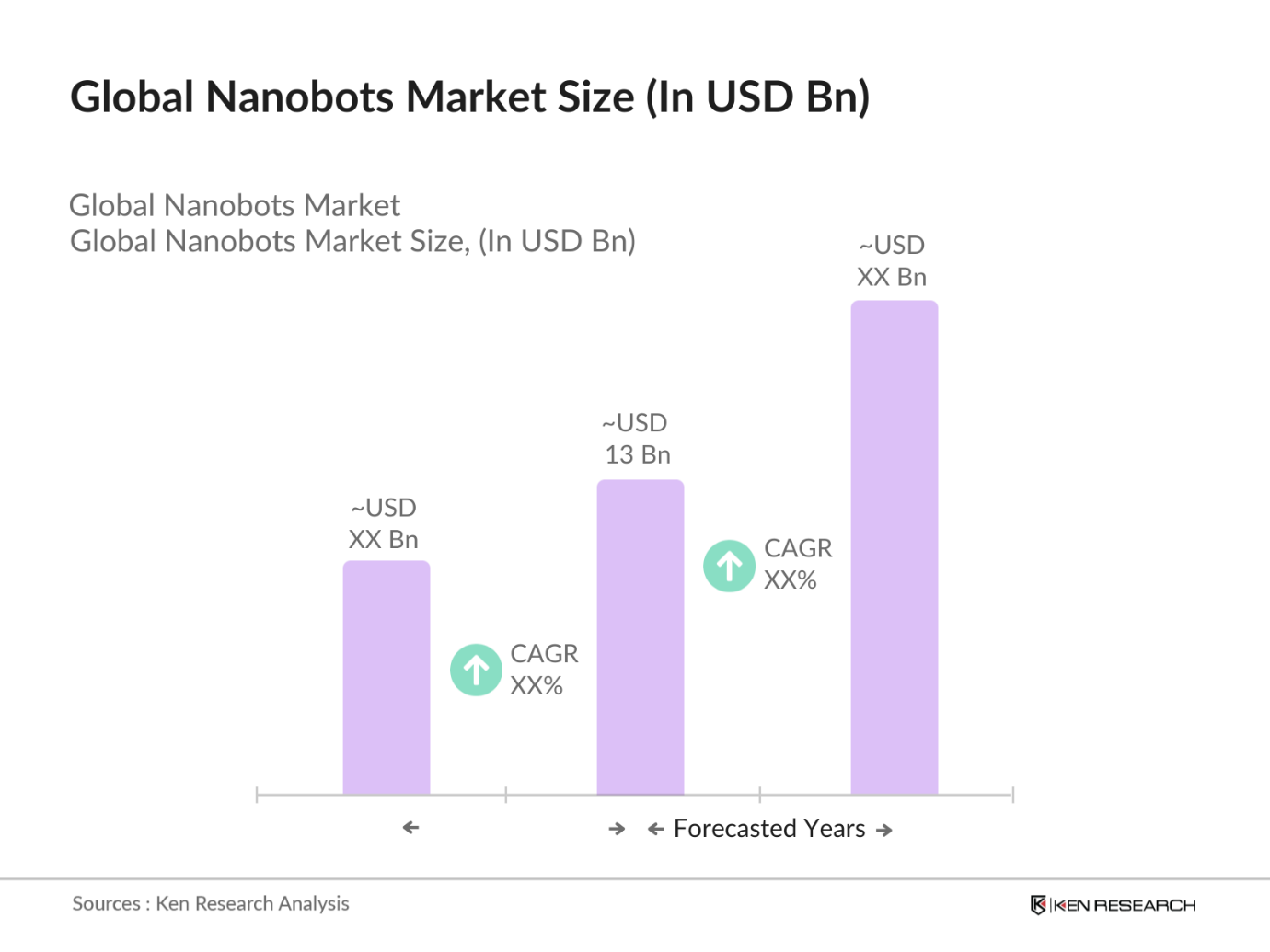
- The global nanobots market is valued at USD 13 billion, driven by increasing advancements in nanotechnology and its applications in the medical field, particularly in targeted drug delivery and non-invasive surgeries. The integration of artificial intelligence and robotics is rapidly accelerating the deployment of nanobots, making them a preferred solution in highly specialized treatments. The market growth is also fueled by increasing investment from governments and private sectors in research and development.
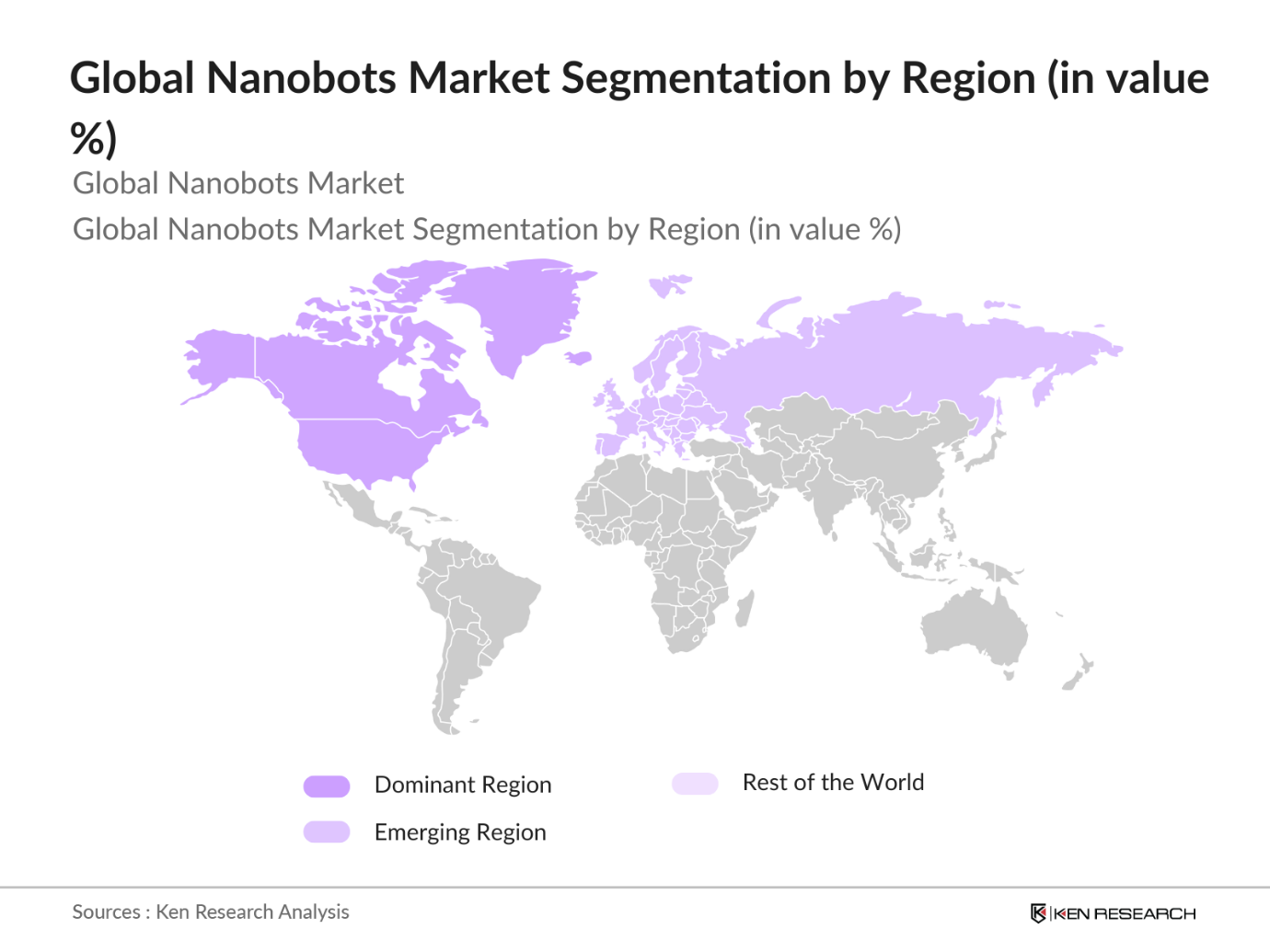
- In terms of geographic dominance, the market is led by the United States and Germany due to their well-established healthcare infrastructure, strong presence of key market players, and robust research capabilities in nanotechnology. These countries are at the forefront of medical innovations, offering extensive funding and resources for advanced research and application in healthcare, which propels their leadership in the nanobots market.
- Nanobots are increasingly being explored for genetic engineering applications, especially in gene therapy and CRISPR-based treatments. In 2023, there were over 2,500 clinical trials involving gene therapy using nanobots, with early success reported in treating genetic disorders like cystic fibrosis. Nanobots can deliver CRISPR components directly to target cells, enabling precise gene editing. This breakthrough has opened new possibilities in curing genetic diseases and enhancing human capabilities.
Global Nanobots Market Segmentation
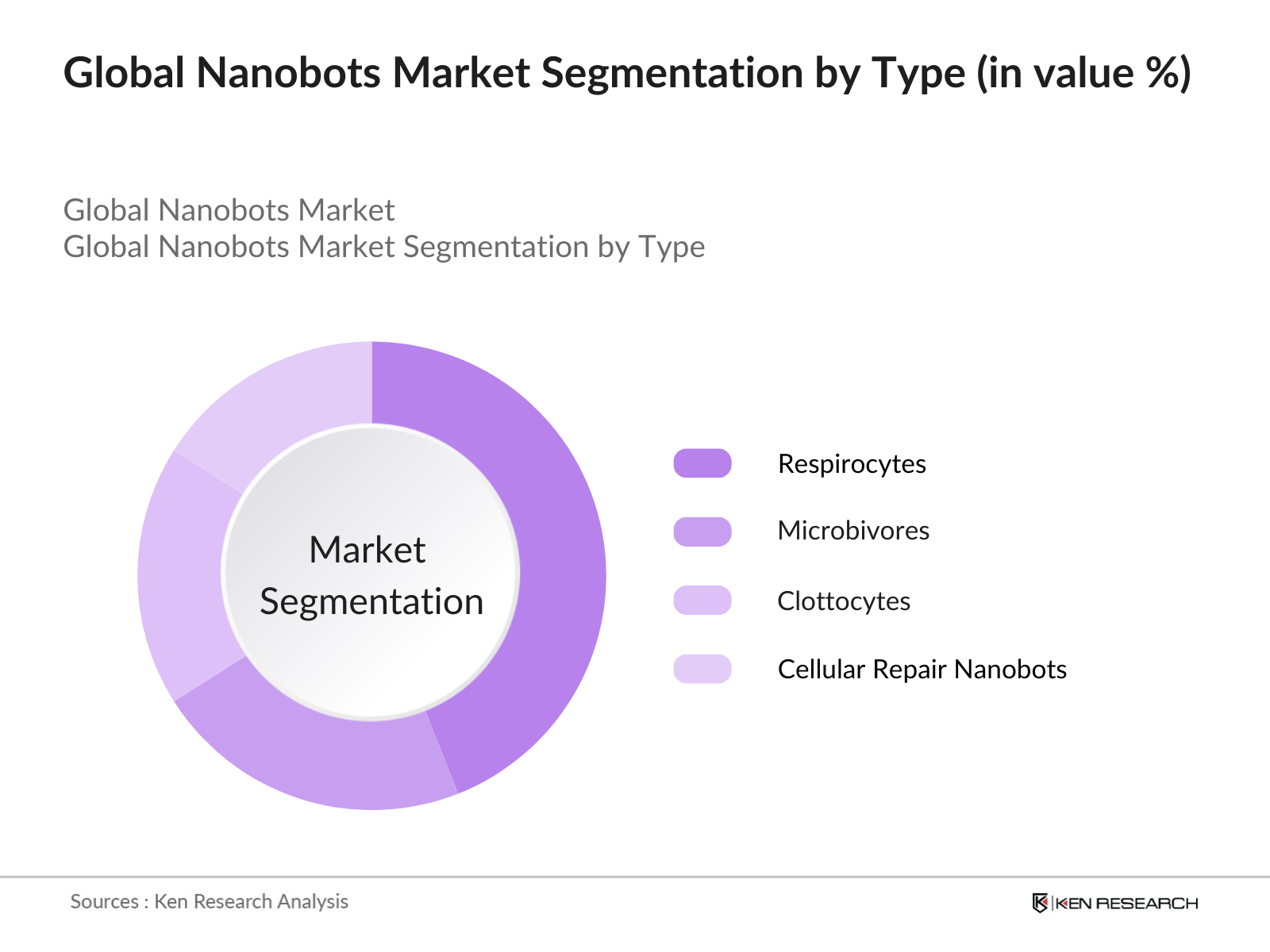
- By Type: The global nanobots market is segmented by type into respirocytes, microbivores, clottocytes, cellular repair nanobots, and surveillance nanobots. Respirocytes dominate this segment, largely due to their promising application in artificial oxygen delivery, which has attracted significant attention from healthcare professionals. The demand for respirocytes is rising as they offer the potential to treat respiratory diseases and manage oxygen deficiencies in critically ill patients.
- By Region: The market is segmented by region into North America, Europe, Asia-Pacific, Latin America, and Middle East & Africa. North America holds the largest share, at 42%, primarily due to the high concentration of nanotechnology firms, robust healthcare infrastructure, and significant government and private funding for R&D. The presence of key players in the United States and the growing adoption of nanotechnology in healthcare further contribute to its dominant position in the global market.
- By Application: The nanobots market is segmented by application into medical, environmental, industrial, and defense. The medical segment dominates, particularly in the area of targeted drug delivery, accounting for 48% of the total market share in 2023. This is driven by the rising prevalence of chronic diseases, such as cancer and cardiovascular conditions, which require highly precise and effective treatment methods. Nanobots have emerged as an ideal solution for delivering drugs at the cellular level, minimizing side effects and improving treatment outcomes.
Global Nanobots Market Competitive Landscape
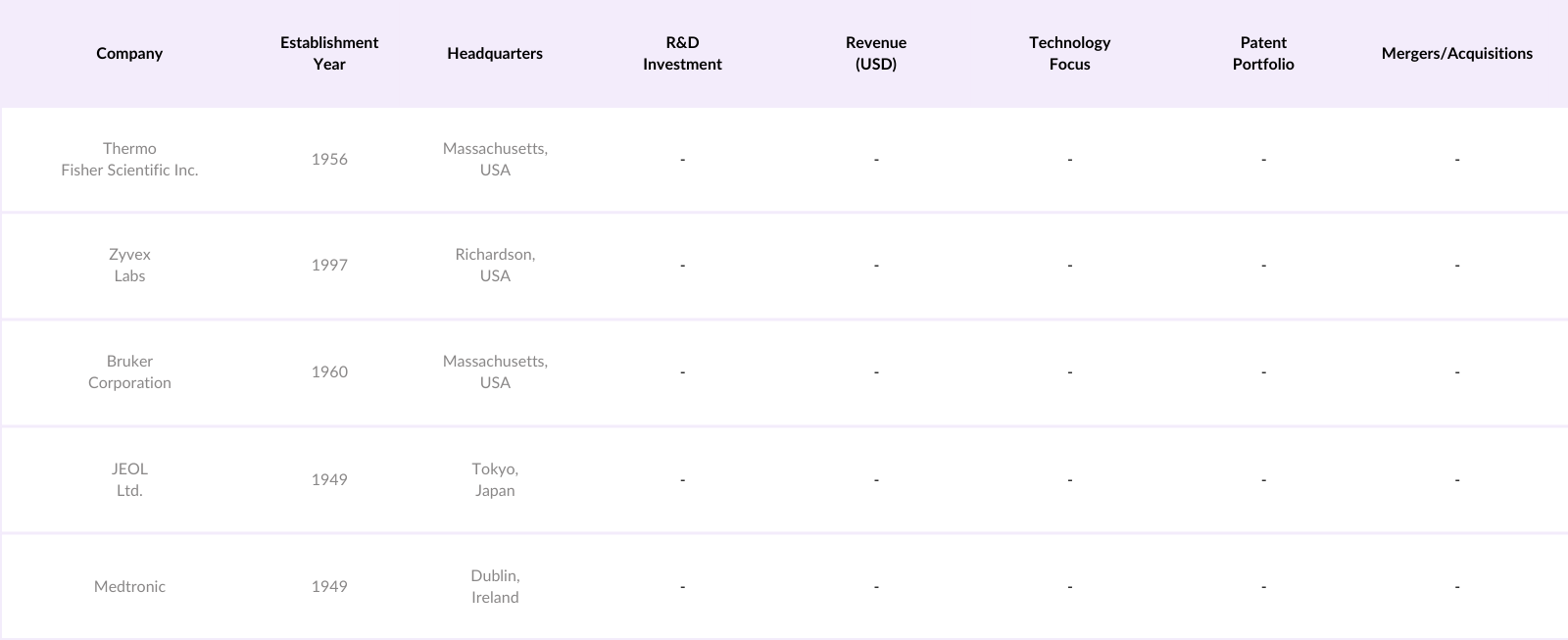
The global nanobots market is dominated by a few key players, who have established themselves through substantial R&D investments, innovative product developments, and strategic partnerships. Companies such as Thermo Fisher Scientific Inc. and Zyvex Labs lead the market with their advanced nanotechnology solutions and strong market presence. These firms are investing heavily in expanding their nanobots product portfolios, especially for medical applications like targeted drug delivery and diagnostics.
Global Nanobots Industry Analysis
Growth Drivers
- Technological Advancements: The integration of AI and robotics with nanobots has significantly accelerated their development, particularly in healthcare and biomedical applications. The use of AI in nanobot navigation, targeting, and real-time monitoring has transformed precision medicine, especially in cancer therapy. For instance, AI-guided nanobots can target cancerous cells with unprecedented accuracy. As per the World Bank, the global investment in AI-driven healthcare technologies reached $12 billion in 2023. The growing advancements in robotics, with industrial robot sales surpassing 580,000 units globally, also highlight the push towards nanobot-enhanced systems in various industries.
- Increasing Healthcare Applications: Nanobots are revolutionizing the field of targeted drug delivery and cancer treatment. Their ability to precisely deliver medications to specific cells minimizes side effects and enhances treatment efficiency. According to the National Institutes of Health, over 20,000 clinical trials globally in 2023 incorporated nanotechnology for cancer therapy. The U.S. government allocated $3.2 billion in 2022 towards nanomedicine research, reflecting the growing focus on utilizing nanobots in health applications. Additionally, over 12 million people are estimated to benefit from nanotechnology-driven cancer treatments annually.
- Government Support and Funding: Government support has been crucial in driving nanobot research and commercialization. In 2023, the U.S. government allocated $4.5 billion for nanotechnology research, with a significant portion dedicated to nanobots. The European Union also invested $2.1 billion in similar projects through Horizon Europe. Public-private partnerships have further enhanced innovation, with companies and research institutions collaborating to bring nanobots to market faster. Countries like Japan and South Korea are leading in nanotechnology patents, with over 5,000 filed in 2023 alone, highlighting strong government support in R&D.
Market Restraints
- High R&D Costs: Developing nanobots involves high research and development (R&D) expenses, which pose a significant challenge to market players. A single nanobot-related R&D project can cost up to $100 million due to the complexities of design, material sourcing, and testing. According to the National Science Foundation, global spending on nanotechnology research reached $19 billion in 2022, with the U.S. and China accounting for over 40% of this. The high financial barrier has limited entry for smaller companies and startups, making the field dominated by a few key players.
- Regulatory Hurdles (FDA and EMA Compliance): Nanobot development faces stringent regulatory requirements, particularly from the U.S. Food and Drug Administration (FDA) and the European Medicines Agency (EMA). Achieving compliance with these bodies can delay product approval by several years. The FDA approved only 5 nanomedicine products in 2023, emphasizing the rigorous scrutiny involved. Nanobots designed for medical use must adhere to ISO 13485 standards for quality management in medical devices, further complicating the approval process. These regulatory delays impact commercialization and increase development costs significantly.
Global Nanobots Market Future Outlook
Over the next five years, the global nanobots market is expected to witness significant growth driven by technological advancements, particularly in the medical field. The rising adoption of nanobots for precision medicine, the increasing prevalence of chronic diseases, and expanding applications in environmental and industrial sectors will contribute to this growth. Additionally, growing investments from governments and private firms in nanotechnology research and regulatory frameworks that favor innovations will accelerate the market's expansion.
Market Opportunities
- Expansion in Emerging Markets (Asia-Pacific, Middle East): Emerging markets such as Asia-Pacific and the Middle East are increasingly adopting nanotechnology solutions, including nanobots, driven by rising healthcare expenditure and government initiatives. In 2023, healthcare spending in the Asia-Pacific region exceeded $1.8 trillion, and countries like China and India are focusing on nanotechnology as a core part of their healthcare strategies. China filed over 3,000 nanotechnology patents in 2023 alone, signaling a strong push towards innovation. Additionally, the Middle East is investing in nanomedicine, with the UAE allocating $500 million in nanotech research funding.
- Integration with Wearable Devices (Health Monitoring, Smart Implants): Nanobots are increasingly being integrated with wearable devices and smart implants to monitor health conditions in real-time. In 2023, over 40 million wearable devices globally incorporated nanotechnology for health monitoring purposes. These nanobot-enhanced devices can track vital signs, detect diseases early, and deliver drugs as needed. For example, smart implants using nanobots to monitor glucose levels in diabetes patients are being tested in clinical trials, with the potential to improve treatment outcomes. The global wearable technology market reached $74 billion in 2023, showcasing opportunities for nanobot integration.
Scope of the Report
|
By Type |
Respirocytes Microbivores Clottocytes Cellular Repair Nanobots Surveillance Nanobots |
|
By Application |
Medical Environmental Industrial Defense |
|
By Technology |
Bio-Hybrid Nanobots Magnetic Nanobots Catalytic Nanobots Autonomous Navigation Nanobots |
|
By Material |
Carbon Nanotubes Graphene DNA Nanostructures Peptide-Based Nanomaterials |
|
By Region |
North America Europe Asia-Pacific Latin America Middle East & Africa |
Products
Key Target Audience
Pharmaceutical Manufacturers
Medical Device Companies
Biotechnology Firms
Nanotechnology Startups
Hospitals and Healthcare Providers
Government and Regulatory Bodies (FDA, EMA, WHO)
Investor and Venture Capitalist Firms
Defense Organizations
Companies
Players Mentioned in the Report:
Thermo Fisher Scientific Inc.
Zyvex Labs
Bruker Corporation
JEOL Ltd.
Medtronic
CytImmune Sciences
Advanced Nano Products Co. Ltd.
BioNTech SE
Plextek Services Ltd.
Kheiron Medical Technologies
Oxford Instruments Plc
Nanonics Imaging Ltd.
Xidex Corporation
Ginkgo Bioworks
Nanobotmedical Inc.
Table of Contents
1. Global Nanobots Market Overview
1.1. Definition and Scope
1.2. Market Taxonomy
1.3. Market Growth Rate (CAGR, Market Penetration, Adoption Rate)
1.4. Market Segmentation Overview (Technology, Application, End-User, Region, Material)
2. Global Nanobots Market Size (In USD Mn)
2.1. Historical Market Size
2.2. Year-on-Year Growth Analysis
2.3. Key Market Developments and Milestones (Technological Breakthroughs, Major Collaborations, Regulatory Approvals)
3. Global Nanobots Market Analysis
3.1. Growth Drivers
3.1.1. Technological Advancements (AI and Robotics Integration)
3.1.2. Increasing Healthcare Applications (Targeted Drug Delivery, Cancer Treatment)
3.1.3. Government Support and Funding (Research Grants, Public-Private Partnerships)
3.1.4. Rising Demand for Precision Medicine
3.2. Market Challenges
3.2.1. High R&D Costs
3.2.2. Regulatory Hurdles (FDA and EMA Compliance)
3.2.3. Ethical Concerns
3.2.4. Limited Scalability and Manufacturing
3.3. Opportunities
3.3.1. Expansion in Emerging Markets (Asia-Pacific, Middle East)
3.3.2. Integration with Wearable Devices (Health Monitoring, Smart Implants)
3.3.3. Growth in Non-Medical Applications (Environmental, Industrial Use)
3.3.4. Partnerships for Co-Development (Pharmaceuticals, Tech Companies)
3.4. Trends
3.4.1. Nanobots for Genetic Engineering
3.4.2. Self-Replicating Nanobots
3.4.3. Bio-Inspired Nanobots
3.4.4. Increasing Use of 3D Printing in Nanobot Development
3.5. Government Regulations
3.5.1. Regulatory Frameworks (FDA, EMA, ISO Standards)
3.5.2. Patent Laws and Intellectual Property
3.5.3. Ethical Guidelines and Standards
3.5.4. Environmental Impact Regulations
3.6. SWOT Analysis
3.7. Stakeholder Ecosystem (R&D Institutes, Universities, Hospitals, Manufacturers)
3.8. Porters Five Forces (Competitive Rivalry, Supplier Power, Buyer Power, Threat of Substitution, Threat of New Entrants)
3.9. Competitive Ecosystem (Market Share Distribution, Innovation Index, Strategic Alliances)
4. Global Nanobots Market Segmentation
4.1. By Type (In Value %)
4.1.1. Respirocytes
4.1.2. Microbivores
4.1.3. Clottocytes
4.1.4. Cellular Repair Nanobots
4.1.5. Surveillance Nanobots
4.2. By Application (In Value %)
4.2.1. Medical (Targeted Drug Delivery, Surgery, Diagnostics)
4.2.2. Environmental (Water Filtration, Waste Management)
4.2.3. Industrial (Precision Manufacturing, Electronics)
4.2.4. Defense (Surveillance, Explosives Detection)
4.3. By Technology (In Value %)
4.3.1. Bio-Hybrid Nanobots
4.3.2. Magnetic Nanobots
4.3.3. Catalytic Nanobots
4.3.4. Autonomous Navigation Nanobots
4.4. By Material (In Value %)
4.4.1. Carbon Nanotubes
4.4.2. Graphene
4.4.3. DNA Nanostructures
4.4.4. Peptide-Based Nanomaterials
4.5. By Region (In Value %)
4.5.1. North America
4.5.2. Europe
4.5.3. Asia-Pacific
4.5.4. Latin America
4.5.5. Middle East & Africa
5. Global Nanobots Market Competitive Analysis
5.1. Detailed Profiles of Major Companies
5.1.1. Zyvex Labs
5.1.2. Thermo Fisher Scientific Inc.
5.1.3. Kheiron Medical Technologies
5.1.4. Bruker Corporation
5.1.5. Xidex Corporation
5.1.6. Oxford Instruments Plc
5.1.7. JEOL Ltd.
5.1.8. Nanonics Imaging Ltd.
5.1.9. Ginkgo Bioworks
5.1.10. Nanobotmedical Inc.
5.1.11. Medtronic
5.1.12. CytImmune Sciences
5.1.13. Advanced Nano Products Co. Ltd.
5.1.14. BioNTech SE
5.1.15. Plextek Services Ltd.
5.2. Cross Comparison Parameters (Market Share, R&D Investments, Innovation Pipeline, Strategic Partnerships, Product Launches, Revenue, Geographic Presence, Technology Licensing)
5.3. Market Share Analysis
5.4. Strategic Initiatives
5.5. Mergers and Acquisitions
5.6. Investment Analysis
5.7. Venture Capital Funding
5.8. Government Grants and Subsidies
5.9. Private Equity Investments
6. Global Nanobots Market Regulatory Framework
6.1. Medical Device Regulations
6.2. Nanotechnology Guidelines
6.3. Environmental Safety Standards
6.4. Clinical Trial Requirements
7. Global Nanobots Future Market Size (In USD Mn)
7.1. Future Market Size Projections
7.2. Key Factors Driving Future Market Growth (Technological Innovation, Increasing Healthcare Investments, Expansion of Applications)
8. Global Nanobots Future Market Segmentation
8.1. By Type (In Value %)
8.2. By Application (In Value %)
8.3. By Technology (In Value %)
8.4. By Material (In Value %)
8.5. By Region (In Value %)
9. Global Nanobots Market Analyst Recommendations
9.1. TAM/SAM/SOM Analysis
9.2. Customer Cohort Analysis
9.3. Marketing Strategies
9.4. White Space Opportunity Analysis
Research Methodology
Step 1: Identification of Key Variables
The initial phase involved identifying the key stakeholders and major variables affecting the global nanobots market. Through extensive secondary research, including reports from trusted databases and industry papers, we constructed an ecosystem map. The primary goal was to establish a baseline of critical variables such as product innovation, regulatory frameworks, and R&D spending.
Step 2: Market Analysis and Construction
This phase involved gathering historical data on the nanobots market, analyzing penetration rates, and evaluating revenue generated from key application segments. We also examined the competitive landscape, identifying major players and their strategic moves, to better understand market dynamics.
Step 3: Hypothesis Validation and Expert Consultation
Hypotheses regarding market drivers, challenges, and future opportunities were developed and validated through interviews with industry experts. These consultations provided key insights into nanobot applications in different sectors, helping to refine market estimates and growth projections.
Step 4: Research Synthesis and Final Output
In the final phase, we synthesized data from various sources, including interviews with manufacturers and secondary databases, to ensure a comprehensive and validated analysis. This process ensured the accuracy and reliability of our findings on market size, growth drivers, and segmentation.
Frequently Asked Questions
01. How big is the global nanobots market?
The global nanobots market is valued at USD 13 billion, primarily driven by technological advancements in nanotechnology and its increasing applications in healthcare for drug delivery and diagnostics.
02. What are the challenges in the global nanobots market?
The key challenges include high research and development costs, regulatory hurdles, and ethical concerns regarding the use of nanotechnology, particularly in medical applications.
03. Who are the major players in the global nanobots market?
The major players include Thermo Fisher Scientific Inc., Zyvex Labs, Bruker Corporation, JEOL Ltd., and Medtronic. These companies are leading the market due to their innovations and strong research capabilities.
04. What are the growth drivers of the global nanobots market?
The market is driven by advancements in nanotechnology, rising healthcare applications, increasing demand for precision medicine, and growing investments in research and development from both government and private sectors.
Why Buy From Us?

What makes us stand out is that our consultants follows Robust, Refine and Result (RRR) methodology. i.e. Robust for clear definitions, approaches and sanity checking, Refine for differentiating respondents facts and opinions and Result for presenting data with story

We have set a benchmark in the industry by offering our clients with syndicated and customized market research reports featuring coverage of entire market as well as meticulous research and analyst insights.

While we don't replace traditional research, we flip the method upside down. Our dual approach of Top Bottom & Bottom Top ensures quality deliverable by not just verifying company fundamentals but also looking at the sector and macroeconomic factors.

With one step in the future, our research team constantly tries to show you the bigger picture. We help with some of the tough questions you may encounter along the way: How is the industry positioned? Best marketing channel? KPI's of competitors? By aligning every element, we help maximize success.

Our report gives you instant access to the answers and sources that other companies might choose to hide. We elaborate each steps of research methodology we have used and showcase you the sample size to earn your trust.

If you need any support, we are here! We pride ourselves on universe strength, data quality, and quick, friendly, and professional service.