Global Near Infrared Spectroscopy Market Outlook to 2030

Region:Global

Author(s):Naman Rohilla

Product Code:KROD10543

Published On

December 2024

Total pages

90

About the Report

Global Near-Infrared Spectroscopy Market Overview

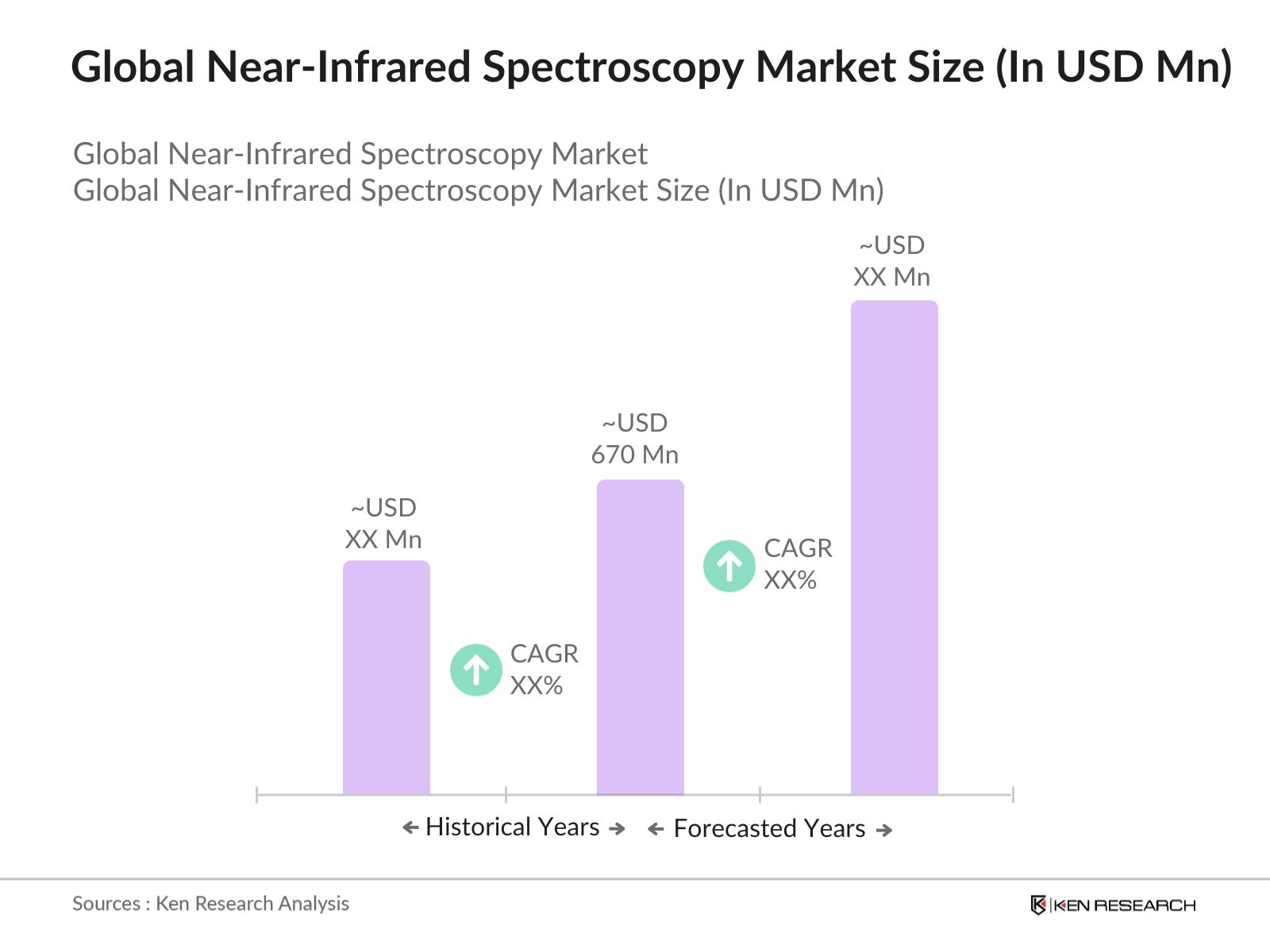
  • Based on a five-year historical analysis, the global near-infrared spectroscopy (NIRS) market is valued at USD 670 million. This growth is driven by the increasing adoption of NIRS in pharmaceuticals for quality control, the food and beverage industry for compositional analysis, and agriculture for crop monitoring. The non-destructive nature and rapid analysis capabilities of NIRS make it a preferred choice across these sectors.

market overviews

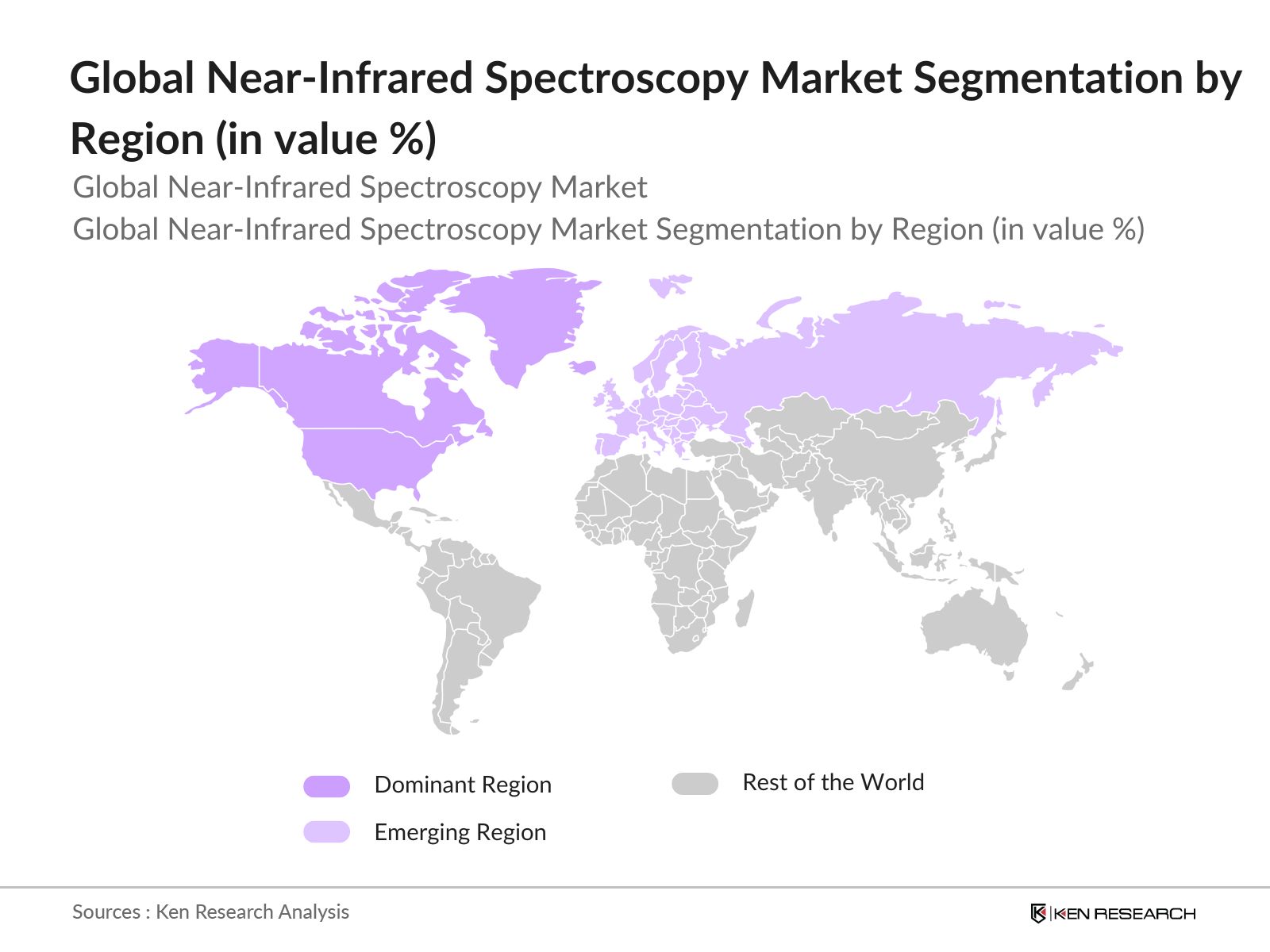
  • North America and Europe dominate the NIRS market due to their advanced healthcare infrastructure, investments in research and development, and stringent quality standards in pharmaceuticals and food safety. The presence of major market players and early adoption of advanced analytical technologies further contribute to their dominance.
  • The U.S. Food and Drug Administration (FDA) has established guidelines promoting the adoption of Process Analytical Technology (PAT) in pharmaceutical manufacturing. PAT is defined as a system for designing, analyzing, and controlling manufacturing through timely measurements of critical quality and performance attributes of raw and in-process materials and processes, with the goal of ensuring final product quality. The FDA's guidance document, "PATA Framework for Innovative Pharmaceutical Development, Manufacturing, and Quality Assurance," encourages the voluntary development and implementation of innovative pharmaceutical development, manufacturing, and quality assurance.

Global Near-Infrared Spectroscopy Market Segmentation

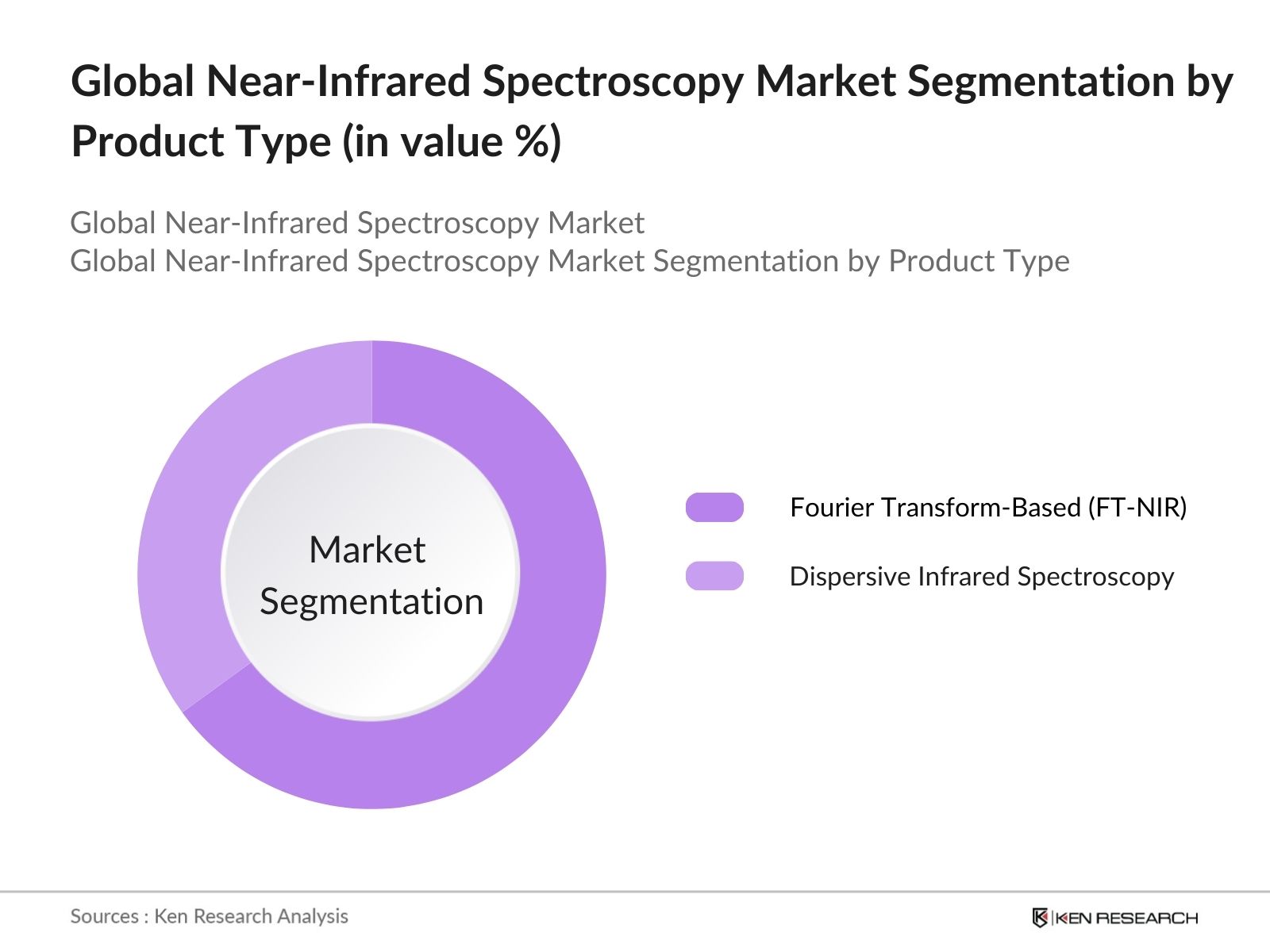
  • By Product Type: The NIRS market is segmented by product type into dispersive infrared spectroscopy and Fourier Transform-Based (FT-NIR) spectrometers. FT-NIR spectrometers hold a dominant market share due to their high accuracy, rapid data acquisition, and ability to analyze complex samples without extensive preparation. These advantages make FT-NIR spectrometers particularly valuable in pharmaceutical and chemical industries where precision is critical.

market overviews

  • By Device Type: The market is categorized by device type into benchtop and portable devices. Benchtop devices lead the market share, attributed to their robust analytical capabilities, higher sensitivity, and suitability for comprehensive laboratory analyses. Their extensive use in research institutions and industrial laboratories underscores their dominance in this segment.
  • By Region: Regionally, the market is divided into North America, Europe, Asia-Pacific, Latin America, and the Middle East & Africa. North America holds the largest market share, driven by substantial investments in healthcare and pharmaceuticals, a strong focus on research and development, and the presence of key industry players. The region's emphasis on technological advancements and stringent regulatory standards further bolsters its leading position.

market overviews

Global Near-Infrared Spectroscopy Market Competitive Landscape

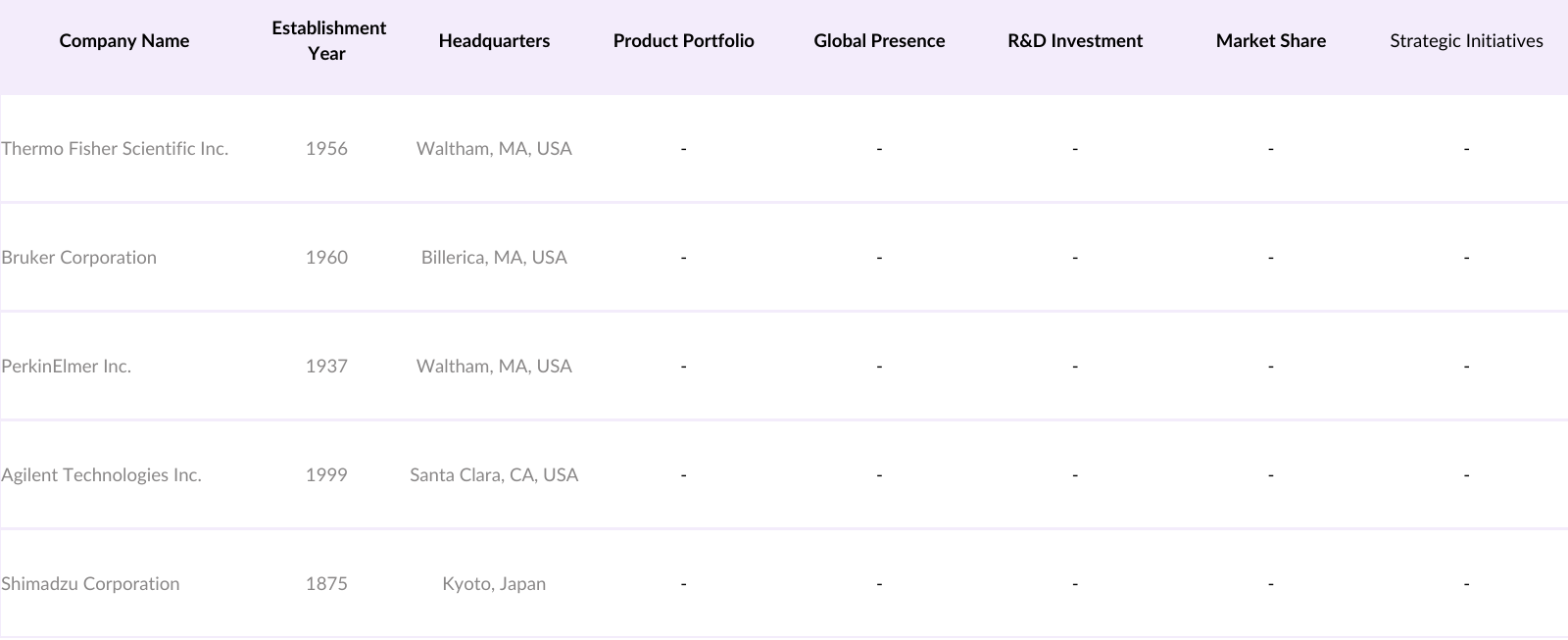
The global NIRS market is characterized by the presence of several key players who contribute significantly to market dynamics. These companies are engaged in continuous research and development to enhance their product offerings and maintain a competitive edge.
market overviews

Global Near-Infrared Spectroscopy Market Analysis

Market Growth Drivers

  • Rising Demand in Pharmaceutical Quality Control: The pharmaceutical industry increasingly relies on NIRS for quality control and assurance. NIRS enables rapid identification and quantification of pharmaceutical compounds, ensuring compliance with stringent regulatory standards. The U.S. Food and Drug Administration (FDA) endorses Process Analytical Technology (PAT) frameworks, encouraging the integration of NIRS for real-time quality monitoring during manufacturing processes. This adoption enhances product safety and efficacy, meeting the growing demand for high-quality pharmaceuticals.
  • Expansion in Food and Agriculture Applications: NIRS is extensively utilized in the food and agriculture sectors for quality assessment and control. In agriculture, NIRS analyzes soil composition, aiding in precision farming practices. In the food industry, it assesses parameters like moisture, fat, and protein content in products such as dairy, meat, and grains. This non-destructive testing ensures product consistency and safety, aligning with increasing consumer demand for quality assurance.
  • Adoption in Chemical and Material Science Industries: The chemical and material science industries are adopting NIRS for its ability to provide rapid, non-destructive analysis of chemical compositions and material properties. NIRS facilitates real-time monitoring of chemical reactions, ensuring process efficiency and product quality. In material science, it aids in characterizing polymers, composites, and nanomaterials, supporting research and development initiatives. This adoption enhances innovation and competitiveness within these industries.

Market Challenges

  • High Initial Investment Costs: The adoption of NIRS technology is often hindered by high initial investment costs. Advanced NIRS equipment and systems require substantial capital expenditure, which can be a barrier for small and medium-sized enterprises. Additionally, ongoing maintenance and calibration expenses add to the total cost of ownership. These financial considerations can deter potential users from implementing NIRS solutions.
  • Technical Limitations in Complex Sample Analysis: While NIRS is effective for many applications, it faces technical limitations when analyzing complex samples. Interference from overlapping absorption bands can complicate data interpretation, particularly in heterogeneous mixtures. This limitation necessitates the development of advanced algorithms and calibration models to improve accuracy, which can be resource-intensive.

Global Near-Infrared Spectroscopy Market Future Outlook

Over the next five years, the global NIRS market is expected to experience growth, driven by continuous technological advancements, expanding applications in various industries, and increasing demand for non-destructive and rapid analytical techniques. The integration of NIRS with emerging technologies such as artificial intelligence and machine learning is anticipated to enhance analytical capabilities and open new avenues for market expansion.

Market Opportunities

  • Technological Innovations in Portable Devices: Advancements in technology have led to the development of portable NIRS devices, expanding their application scope. These compact, user-friendly instruments enable on-site analysis in fields such as agriculture, environmental monitoring, and food inspection. The portability and ease of use of these devices present significant growth opportunities for the NIRS market.
  • Emerging Markets in Asia-Pacific and Latin America: Emerging markets in Asia-Pacific and Latin America present significant growth opportunities for the NIRS market. Rapid industrialization, expanding pharmaceutical manufacturing, and increasing focus on food safety in countries like China, India, and Brazil are driving demand for advanced analytical technologies. The adoption of NIRS in these regions is expected to rise, supported by government initiatives promoting quality standards and technological advancements.

Scope of the Report

Segment

Sub-Segments

Product Type

Dispersive Infrared Spectroscopy
Fourier Transform-Based (FT-NIR) Spectrometers

Device Type

Benchtop Devices
Portable Devices

Application

Medical Applications
Astronomical Spectroscopy
Remote Monitoring
Agriculture
Particle Measurement
Material Science
Industrial Use

End-User Industry

Pharmaceuticals
Food and Beverages
Chemicals
Oil and Gas
Research Laboratories

Region

North America
Europe
Asia-Pacific
Latin America
Middle East & Africa

Products

Key Target Audience

  • Pharmaceutical Manufacturers

  • Food and Beverage Companies

  • Agricultural Producers

  • Chemical Industry Firms

  • Research and Development Laboratories

  • Medical Device Manufacturers

  • Government and Regulatory Bodies (e.g., FDA, EMA)

  • Investors and Venture Capitalist Firms

Companies

Players Mentioned in the Report

  • Thermo Fisher Scientific Inc.

  • Bruker Corporation

  • PerkinElmer Inc.

  • Agilent Technologies Inc.

  • Shimadzu Corporation

  • ABB Ltd.

  • JASCO International Co., Ltd.

  • FOSS A/S

  • Metrohm AG

  • Lumex Instruments

Table of Contents

1. Global Near-Infrared Spectroscopy Market Overview

1.1 Definition and Scope

1.2 Market Taxonomy

1.3 Market Growth Rate

1.4 Market Segmentation Overview

2. Global Near-Infrared Spectroscopy Market Size (USD Billion)

2.1 Historical Market Size

2.2 Year-On-Year Growth Analysis

2.3 Key Market Developments and Milestones

3. Global Near-Infrared Spectroscopy Market Analysis

3.1 Growth Drivers

3.1.1 Advancements in Analytical Techniques

3.1.2 Rising Demand in Pharmaceutical Quality Control

3.1.3 Expansion in Food and Agriculture Applications

3.1.4 Adoption in Chemical and Material Science Industries

3.2 Market Challenges

3.2.1 High Initial Investment Costs

3.2.2 Technical Limitations in Complex Sample Analysis

3.2.3 Limited Skilled Workforce

3.3 Opportunities

3.3.1 Technological Innovations in Portable Devices

3.3.2 Emerging Markets in Asia-Pacific and Latin America

3.3.3 Integration with Process Analytical Technology (PAT)

3.4 Trends

3.4.1 Shift Towards Non-Destructive Testing Methods

3.4.2 Increased Use in Real-Time Monitoring

3.4.3 Development of Miniaturized Spectrometers

3.5 Regulatory Landscape

3.5.1 FDA Guidelines on Process Analytical Technology

3.5.2 European Medicines Agency (EMA) Standards

3.5.3 International Conference on Harmonisation (ICH) Guidelines

3.6 SWOT Analysis

3.7 Stakeholder Ecosystem

3.8 Porter's Five Forces Analysis

3.9 Competitive Landscape

4. Global Near-Infrared Spectroscopy Market Segmentation

4.1 By Product Type (Value %)

4.1.1 Dispersive Infrared Spectroscopy

4.1.2 Fourier Transform-Based (FT-NIR) Spectrometers

4.2 By Device Type (Value %)

4.2.1 Benchtop Devices

4.2.2 Portable Devices

4.3 By Application (Value %)

4.3.1 Medical Applications

4.3.2 Astronomical Spectroscopy

4.3.3 Remote Monitoring

4.3.4 Agriculture

4.3.5 Particle Measurement

4.3.6 Material Science

4.3.7 Industrial Use

4.4 By End-User Industry (Value %)

4.4.1 Pharmaceuticals

4.4.2 Food and Beverages

4.4.3 Chemicals

4.4.4 Oil and Gas

4.4.5 Research Laboratories

4.5 By Region (Value %)

4.5.1 North America

4.5.2 Europe

4.5.3 Asia-Pacific

4.5.4 Latin America

4.5.5 Middle East & Africa

5. Global Near-Infrared Spectroscopy Market Competitive Analysis

5.1 Detailed Profiles of Major Companies

5.1.1 Thermo Fisher Scientific Inc.

5.1.2 Bruker Corporation

5.1.3 PerkinElmer Inc.

5.1.4 Agilent Technologies Inc.

5.1.5 Shimadzu Corporation

5.1.6 ABB Ltd.

5.1.7 JASCO International Co., Ltd.

5.1.8 FOSS A/S

5.1.9 Metrohm AG

5.1.10 Lumex Instruments

5.1.11 Malvern Panalytical Ltd.

5.1.12 KPM Analytics

5.1.13 Yokogawa Electric Corporation

5.1.14 Sartorius AG

5.1.15 ZEISS Group

5.2 Cross Comparison Parameters

5.2.1 Number of Employees

5.2.2 Headquarters Location

5.2.3 Year of Establishment

5.2.4 Revenue

5.2.5 Product Portfolio

5.2.6 Market Share

5.2.7 R&D Investment

5.2.8 Global Presence

5.3 Market Share Analysis

5.4 Strategic Initiatives

5.5 Mergers and Acquisitions

5.6 Investment Analysis

5.6.1 Venture Capital Funding

5.6.2 Government Grants

5.6.3 Private Equity Investments

6. Global Near-Infrared Spectroscopy Market Regulatory Framework

6.1 International Standards and Certifications

6.2 Compliance Requirements

6.3 Certification Processes

7. Future Market Size (USD Billion)

7.1 Future Market Size Projections

7.2 Key Factors Driving Future Market Growth

8. Future Market Segmentation

8.1 By Product Type (Value %)

8.2 By Device Type (Value %)

8.3 By Application (Value %)

8.4 By End-User Industry (Value %)

8.5 By Region (Value %)

9. Global Near-Infrared Spectroscopy Market Analysts Recommendations

9.1 Total Addressable Market (TAM), Serviceable Available Market (SAM), and Serviceable Obtainable Market (SOM) Analysis

9.2 Customer Cohort Analysis

9.3 Marketing Initiatives

9.4 White Space Opportunity Analysis

Disclaimer Contact Us

Research Methodology

Step 1: Identification of Key Variables

The initial phase involves constructing an ecosystem map encompassing all major stakeholders within the global Near-Infrared Spectroscopy Market. This step is underpinned by extensive desk research, utilizing a combination of secondary and proprietary databases to gather comprehensive industry-level information. The primary objective is to identify and define the critical variables that influence market dynamics.

Step 2: Market Analysis and Construction

In this phase, we compile and analyze historical data pertaining to the Near-Infrared Spectroscopy Market. This includes assessing market penetration, the ratio of marketplaces to service providers, and the resultant revenue generation. Furthermore, an evaluation of service quality statistics is conducted to ensure the reliability and accuracy of the revenue estimates.

Step 3: Hypothesis Validation and Expert Consultation

Market hypotheses are developed and subsequently validated through computer-assisted telephone interviews (CATIs) with industry experts representing a diverse array of companies. These consultations provide valuable operational and financial insights directly from industry practitioners, which are instrumental in refining and corroborating the market data. The insights derived are critical in aligning the data with real-world industry trends and challenges.

Step 4: Research Synthesis and Final Output

The final phase involves direct engagement with multiple NIRS manufacturers to acquire detailed insights into product segments, sales performance, consumer preferences, and other pertinent factors. This interaction serves to verify and complement the statistics derived from the bottom-up approach, thereby ensuring a comprehensive, accurate, and validated analysis of the global Near-Infrared Spectroscopy market. The outcome is a robust report providing actionable insights and strategic recommendations for stakeholders.

Frequently Asked Questions

1. How big is the global Near-Infrared Spectroscopy market?

The global Near-Infrared Spectroscopy market is valued at USD 670 million, driven by its expanding applications across various industries such as pharmaceuticals, agriculture, and food processing.

2. What are the major growth drivers of the Near-Infrared Spectroscopy market?

Key drivers include the non-destructive analysis benefits, advancements in technology, and the growing demand for rapid and precise testing solutions in pharmaceuticals and food safety.

3. Which regions are leading in the Near-Infrared Spectroscopy market?

North America and Europe dominate the market due to their strong research infrastructure, significant R&D investments, and strict regulatory standards in pharmaceuticals and food safety.

4. What are the main challenges faced by the Near-Infrared Spectroscopy market?

Challenges include high initial costs of equipment, technical limitations in handling complex samples, and the need for skilled professionals to operate and interpret NIRS data effectively

Why Buy From Us?

RRR
Refine Robust Result (RRR) Framework

What makes us stand out is that our consultants follows Robust, Refine and Result (RRR) methodology. i.e. Robust for clear definitions, approaches and sanity checking, Refine for differentiating respondents facts and opinions and Result for presenting data with story

Our Reach Is Unmatched

We have set a benchmark in the industry by offering our clients with syndicated and customized market research reports featuring coverage of entire market as well as meticulous research and analyst insights.

Research
Shifting the Research Paradigm

While we don't replace traditional research, we flip the method upside down. Our dual approach of Top Bottom & Bottom Top ensures quality deliverable by not just verifying company fundamentals but also looking at the sector and macroeconomic factors.

Insite
More Insights-Better Decisions

With one step in the future, our research team constantly tries to show you the bigger picture. We help with some of the tough questions you may encounter along the way: How is the industry positioned? Best marketing channel? KPI's of competitors? By aligning every element, we help maximize success.

Trust
Transparency and Trust

Our report gives you instant access to the answers and sources that other companies might choose to hide. We elaborate each steps of research methodology we have used and showcase you the sample size to earn your trust.

support
Round the Clock Support

If you need any support, we are here! We pride ourselves on universe strength, data quality, and quick, friendly, and professional service.

Why Client Choose Us?

400000+ Reports in repository
150+ Consulting project a year
100+ Analysts
8000+ Client Queries in 2022