
Global Needles Market Outlook to 2030
Region:Global
Author(s):Abhinav kumar
Product Code:KROD8361
Region:Global
Author(s):Abhinav kumar
Product Code:KROD8361
November 2024
99
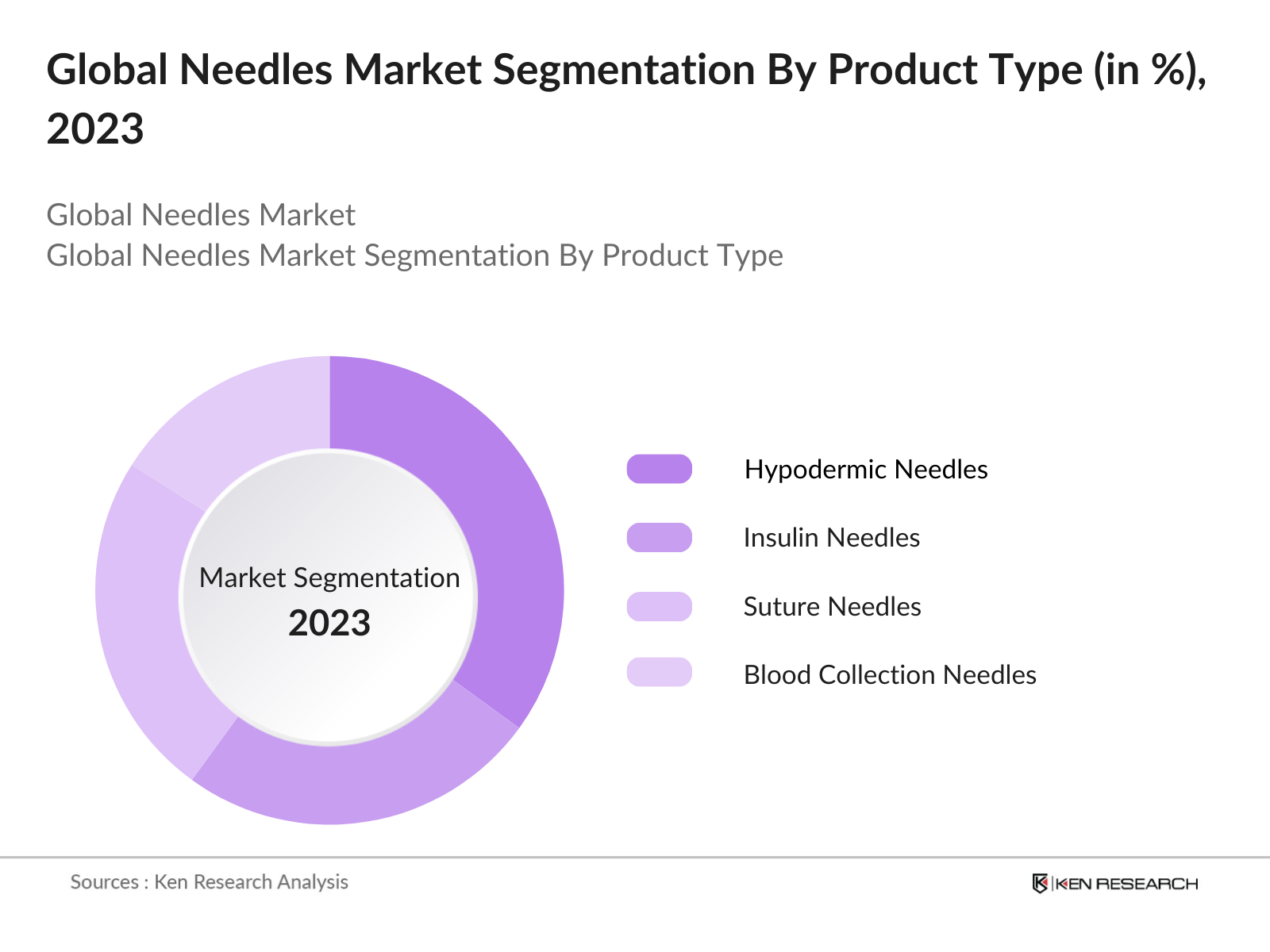
By Product Type: The Global Needles Market is segmented by product type into hypodermic needles, insulin needles, suture needles, blood collection needles, and spinal needles. Recently, hypodermic needles hold the dominant market share in the product type segmentation. This is attributed to their widespread usage in hospitals, clinics, and home healthcare settings for administering medications, vaccines, and drawing blood samples. The increasing focus on patient safety and demand for single-use, disposable needles due to concerns about infections and needle-stick injuries also contributes to this segment's dominance.
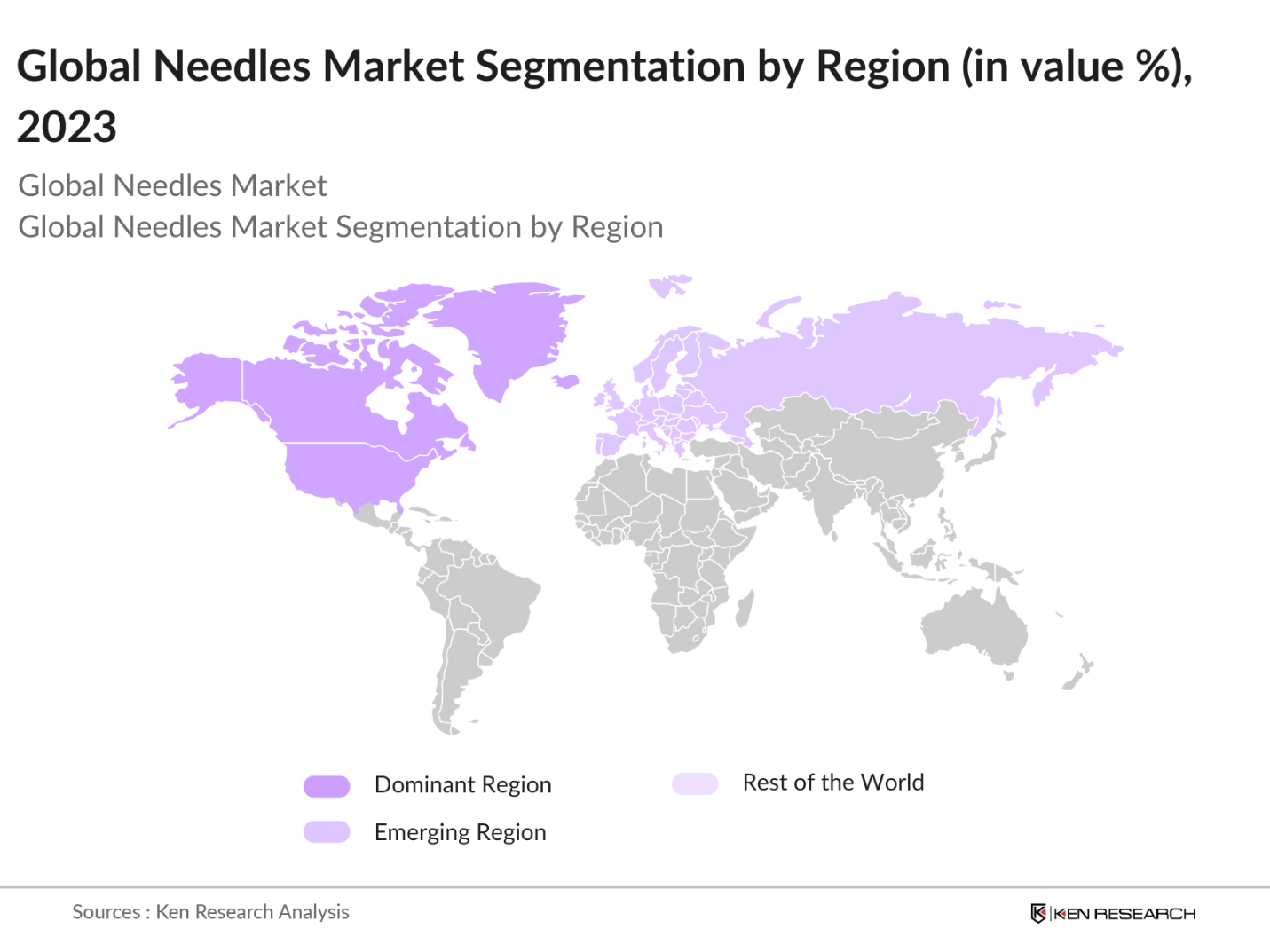
By Region: The Global Needles Market is segmented into North America, Europe, Asia Pacific, Latin America, and the Middle East and Africa. North America holds the largest market share, mainly driven by the United States. This region's dominance is due to the advanced healthcare systems, high demand for self-administration devices, and increasing prevalence of chronic diseases requiring regular injections. The government's stringent regulations on needle usage and disposal further push demand for safe and reliable needle products. Additionally, Europe follows closely due to similar healthcare advancements and safety regulations.
By End User: The market is also segmented by end users into hospitals, clinics, ambulatory surgical centers, and home care settings. Hospitals hold the largest market share within this segmentation due to their high patient footfall and demand for various types of needles across medical procedures. As the primary centers for surgical operations and critical care, hospitals are the largest consumers of medical needles, particularly for blood collection, medication delivery, and patient treatment. The increasing number of surgeries and the preference for disposable needles to minimize infection risks further strengthens this segments dominance.
The Global Needles Market is highly consolidated, with key players holding significant influence over the industry. The competitive landscape is characterized by intense competition, product innovation, and increasing emphasis on safety features. Major players such as Becton, Dickinson and Company (BD), B. Braun Melsungen AG, and Terumo Corporation are prominent in the market, due to their vast product portfolios, global distribution networks, and consistent investment in R&D. Additionally, the increasing focus on needle safety and prevention of needlestick injuries has led to product differentiation among competitors.
The Global Needles Market is expected to see substantial growth in the coming years, driven by a rising global aging population, increasing healthcare access in emerging markets, and technological advancements in medical devices. Additionally, the growing demand for minimally invasive surgeries and the rise in home healthcare solutions will further drive market growth. Government initiatives focused on improving healthcare infrastructure, combined with the development of innovative safety solutions, are likely to shape the future of the needle market.
|
By Product Type |
Hypodermic Needles Insulin Needles Suture Needles Blood Collection Needles |
|
Spinal Needles |
|
|
By End User |
Hospitals Clinics Ambulatory Surgical Centers Home Care Settings |
|
By Material |
Stainless Steel Plastic Glass |
|
By Usage |
Reusable Needles Disposable Needles |
|
By Region |
North America Europe Asia Pacific Latin America Middle East and Africa |
1.1. Definition and Scope
1.2. Market Taxonomy
1.3. Market Growth Rate
1.4. Market Segmentation Overview
2.1. Historical Market Size
2.2. Year-On-Year Growth Analysis
2.3. Key Market Developments and Milestones
3.1. Growth Drivers
3.1.1. Increasing Prevalence of Chronic Diseases (Diabetes, Cancer, etc.)
3.1.2. Growing Geriatric Population
3.1.3. Technological Advancements in Needle Design (Safety Needles, Micro Needles)
3.1.4. Rise in Surgical Procedures
3.2. Market Challenges
3.2.1. High Incidence of Needle Stick Injuries
3.2.2. Stringent Government Regulations on Needle Disposal
3.2.3. Availability of Alternatives such as Needle-free Devices
3.3. Opportunities
3.3.1. Growing Demand for Self-administration Devices
3.3.2. Increasing Healthcare Investments in Emerging Markets
3.3.3. Development of Eco-friendly Needle Materials
3.4. Trends
3.4.1. Adoption of Biodegradable Materials in Needle Manufacturing
3.4.2. Increasing Use of Pre-filled Syringes
3.4.3. Integration of Smart Needles for Enhanced Safety
3.5. Government Regulations
3.5.1. Needlestick Safety and Prevention Act
3.5.2. FDA Regulations for Medical Devices
3.5.3. WHO Guidelines on Injection Safety
3.6. SWOT Analysis
3.7. Stakeholder Ecosystem
3.8. Porters Five Forces Analysis
3.9. Competition Ecosystem
4.1. By Product Type (In Value %)
4.1.1. Hypodermic Needles
4.1.2. Insulin Needles
4.1.3. Suture Needles
4.1.4. Blood Collection Needles
4.1.5. Spinal Needles
4.2. By End User (In Value %)
4.2.1. Hospitals
4.2.2. Clinics
4.2.3. Ambulatory Surgical Centers
4.2.4. Home Care Settings
4.3. By Material (In Value %)
4.3.1. Stainless Steel
4.3.2. Plastic
4.3.3. Glass
4.4. By Usage (In Value %)
4.4.1. Reusable Needles
4.4.2. Disposable Needles
4.5. By Region (In Value %)
4.5.1. North America
4.5.2. Europe
4.5.3. Asia Pacific
4.5.4. Latin America
4.5.5. Middle East and Africa
5.1. Detailed Profiles of Major Companies
5.1.1. Becton, Dickinson and Company
5.1.2. B. Braun Melsungen AG
5.1.3. Terumo Corporation
5.1.4. Smiths Medical
5.1.5. Nipro Corporation
5.1.6. Novo Nordisk A/S
5.1.7. Ypsomed Holding AG
5.1.8. Artsana S.p.A.
5.1.9. Medtronic plc
5.1.10. Cardinal Health
5.1.11. Allison Medical Inc.
5.1.12. UltiMed, Inc.
5.1.13. Retractable Technologies, Inc.
5.1.14. Hi-Tech Medicare Devices
5.1.15. Hamilton Company
5.2. Cross Comparison Parameters (No. of Employees, Headquarters, Product Portfolio, Market Share, Revenue, R&D Investments, Sustainability Initiatives, Distribution Channels)
5.3. Market Share Analysis
5.4. Strategic Initiatives
5.5. Mergers and Acquisitions
5.6. Investment Analysis
5.7. Venture Capital Funding
5.8. Private Equity Investments
6.1. ISO Standards for Medical Devices
6.2. FDA Compliance for Sterility and Safety
6.3. CE Marking and EU Medical Device Regulations
6.4. Global Certification and Compliance Requirements
7.1. Future Market Size Projections
7.2. Key Factors Driving Future Market Growth
8.1. TAM/SAM/SOM Analysis
8.2. Emerging Markets Growth Strategies
8.3. White Space Opportunity Analysis
8.4. Product Differentiation Strategies
Disclaimer Contact UsWe begin by identifying critical variables that impact the Global Needles Market. This involves gathering data on market drivers such as healthcare trends, technological advancements, and regulatory frameworks through extensive desk research and proprietary databases.
Next, we analyze the market data collected, including historical trends, market penetration rates, and market revenue. We assess the performance of key players and compare them across different regions and product segments.
Market hypotheses are developed based on initial data. These are then validated through expert interviews conducted with key stakeholders, including manufacturers and healthcare providers, to refine the data and gain insights into market dynamics.
Finally, the data is synthesized into a comprehensive report, providing actionable insights and a detailed analysis of the Global Needles Market. This report includes segmented data by product type, end user, and region, validated through both top-down and bottom-up approaches.
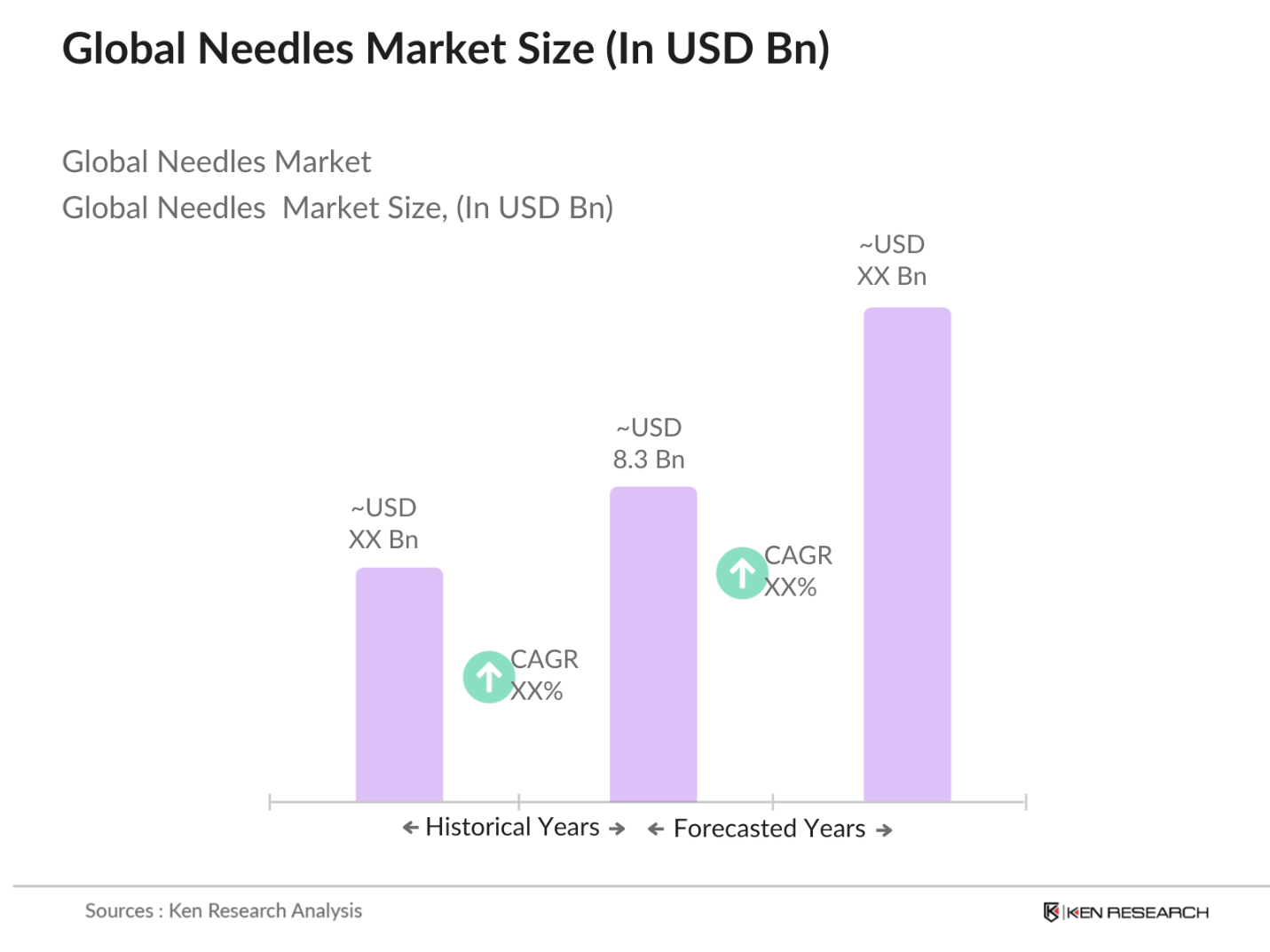
The Global Needles Market is valued at USD 8.3 billion, with increasing demand for safety needles and a rise in chronic diseases driving growth across major regions.
Key challenges include the high incidence of needlestick injuries, strict government regulations on needle disposal, and the availability of needle-free alternatives.
Leading players include Becton, Dickinson and Company (BD), B. Braun Melsungen AG, Terumo Corporation, Nipro Corporation, and Medtronic, each excelling in innovation and safety solutions.
Growth is driven by the rising global aging population, increasing prevalence of chronic diseases like diabetes, and the demand for advanced needle technologies in both hospitals and home care settings.

What makes us stand out is that our consultants follows Robust, Refine and Result (RRR) methodology. i.e. Robust for clear definitions, approaches and sanity checking, Refine for differentiating respondents facts and opinions and Result for presenting data with story

We have set a benchmark in the industry by offering our clients with syndicated and customized market research reports featuring coverage of entire market as well as meticulous research and analyst insights.

While we don't replace traditional research, we flip the method upside down. Our dual approach of Top Bottom & Bottom Top ensures quality deliverable by not just verifying company fundamentals but also looking at the sector and macroeconomic factors.

With one step in the future, our research team constantly tries to show you the bigger picture. We help with some of the tough questions you may encounter along the way: How is the industry positioned? Best marketing channel? KPI's of competitors? By aligning every element, we help maximize success.

Our report gives you instant access to the answers and sources that other companies might choose to hide. We elaborate each steps of research methodology we have used and showcase you the sample size to earn your trust.

If you need any support, we are here! We pride ourselves on universe strength, data quality, and quick, friendly, and professional service.