
Global Network Emulator Market Outlook to 2030
Region:Global
Author(s):Sanjna
Product Code:KROD10219
Region:Global
Author(s):Sanjna
Product Code:KROD10219
November 2024
87
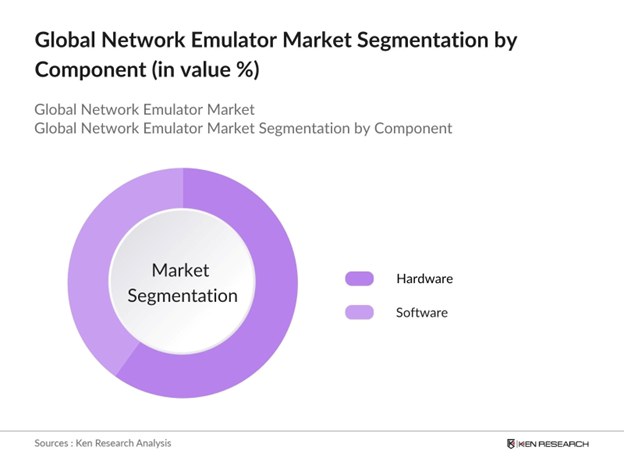
By Component: The market is segmented into hardware and software. Hardware emulators dominate due to their ability to handle extensive simulation processes, offering high-speed performance and reliability for large-scale network testing. Key industries, such as telecommunications and defense, rely heavily on these solutions to ensure operational efficiency.
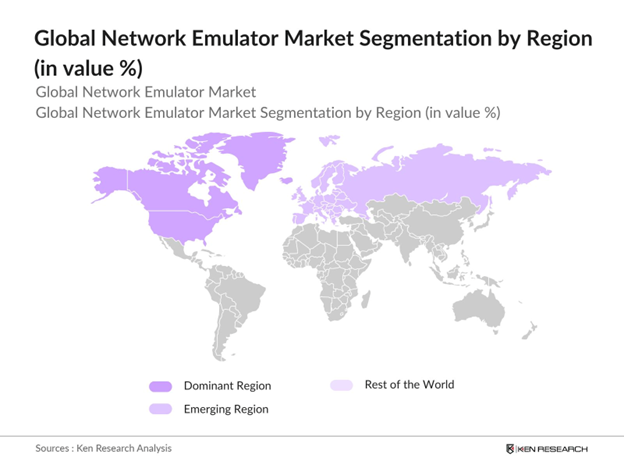
By Region: Regions include North America, Europe, Asia Pacific, Latin America, and the Middle East & Africa. North America holds the largest market share due to a strong presence of technology providers, investment in R&D, and widespread adoption of network virtualization technologies.
By Application: Applications are segmented into SD-WAN, cloud, IoT, and others. SD-WAN leads due to its critical role in providing secure and efficient connectivity for enterprises. Businesses are increasingly adopting SD-WAN to manage traffic, optimize network performance, and enhance data security, making it the dominant sub-segment.
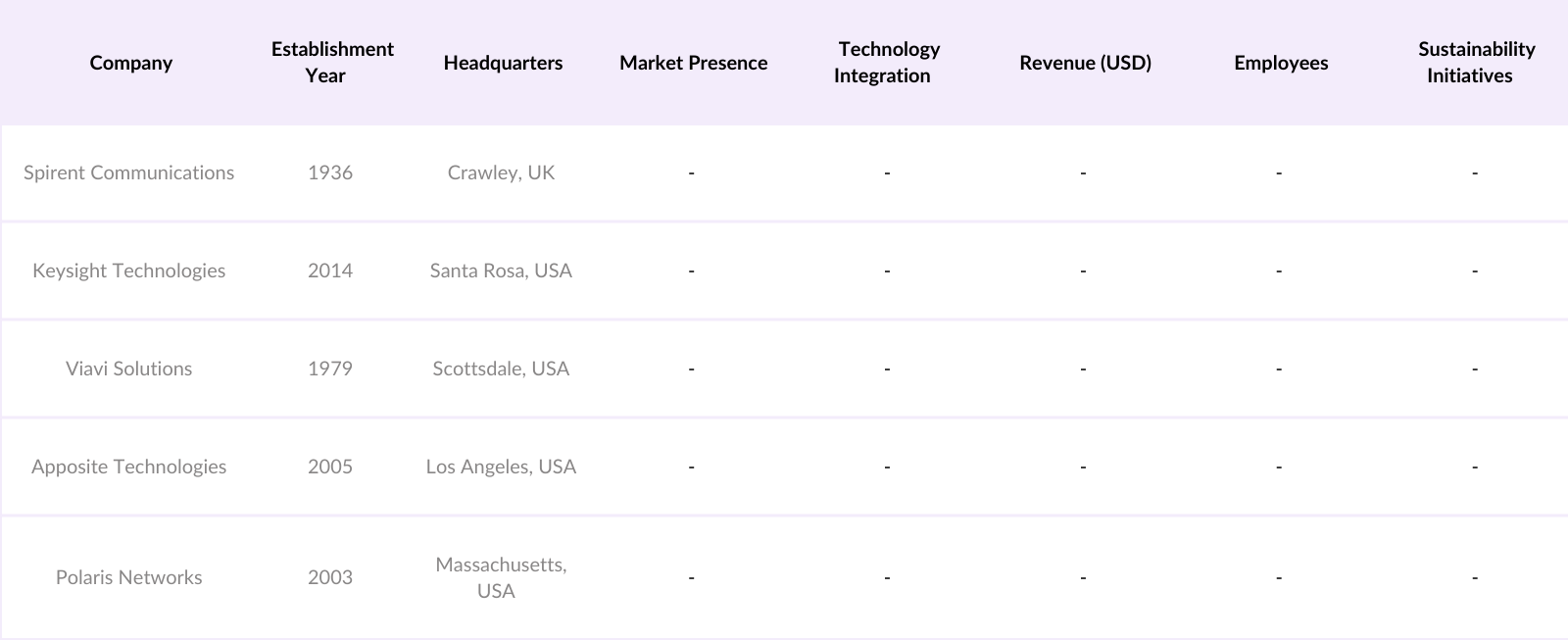
The Global Network Emulator Market is dominated by key players such as Spirent Communications and Keysight Technologies, which have significant expertise and market presence. This consolidation emphasizes the influence of these companies on technological advancements and market trends.
Over the next five years, the Global Network Emulator Market is expected to grow significantly, driven by advancements in 5G, edge computing, and the increasing complexity of modern networks. The focus on network performance, security, and scalability will further enhance the demand for advanced emulation technologies, with emerging regions contributing to market growth.
|
Segment |
Sub-Segments |
|
By Component |
- Hardware |
|
By Application |
- SD-WAN |
|
By Testing Type |
- Protocol Testing |
|
By Industry Vertical |
- Telecommunications |
|
By Region |
- North America |
1.1. Definition and Scope
1.2. Market Taxonomy
1.3. Market Growth Rate
1.4. Market Segmentation Overview
2.1. Historical Market Size
2.2. Year-On-Year Growth Analysis
2.3. Key Market Developments and Milestones
3.1. Growth Drivers
3.1.1. Increasing Adoption of IoT Devices
3.1.2. Migration to Cloud-Based Infrastructure
3.1.3. Rising Demand for SD-WAN Solutions
3.1.4. Proliferation of Data-Intensive Applications
3.2. Market Challenges
3.2.1. High Installation and Maintenance Costs
3.2.2. Lack of Skilled Workforce
3.2.3. Rapidly Changing Network Requirements
3.3. Opportunities
3.3.1. Technological Advancements in 5G and Edge Computing
3.3.2. Expansion into Emerging Markets
3.3.3. Integration with AI and Machine Learning
3.4. Trends
3.4.1. Adoption of Virtualization and Software-Defined Networking
3.4.2. Emphasis on Network Security and Performance Testing
3.4.3. Development of Multi-Protocol Support Emulators
3.5. Government Regulations
3.5.1. Compliance Standards for Network Testing
3.5.2. Data Privacy and Security Regulations
3.5.3. Impact of International Trade Policies
3.6. SWOT Analysis
3.7. Stakeholder Ecosystem
3.8. Porters Five Forces Analysis
3.9. Competitive Landscape
4.1. By Component (In Value %)
4.1.1. Hardware
4.1.2. Software
4.2. By Application (In Value %)
4.2.1. SD-WAN
4.2.2. Cloud
4.2.3. IoT
4.2.4. Others
4.3. By Testing Type (In Value %)
4.3.1. Protocol Testing
4.3.2. Signaling
4.3.3. Functional Testing
4.3.4. Others
4.4. By Industry Vertical (In Value %)
4.4.1. Telecommunications
4.4.2. Government & Defense
4.4.3. BFSI
4.4.4. Retail
4.4.5. Others
4.5. By Region (In Value %)
4.5.1. North America
4.5.2. Europe
4.5.3. Asia Pacific
4.5.4. Latin America
4.5.5. Middle East & Africa
5.1. Detailed Profiles of Major Companies
5.1.1. Spirent Communications plc
5.1.2. Keysight Technologies, Inc.
5.1.3. Viavi Solutions Inc.
5.1.4. Apposite Technologies LLC
5.1.5. iTrinegy by Calnex Solutions
5.1.6. Polaris Networks
5.1.7. PacketStorm Communications, Inc.
5.1.8. Aukua Systems, Inc.
5.1.9. InterWorking Labs, Inc.
5.1.10. GigaNet Systems Inc.
5.2. Cross Comparison Parameters (Number of Employees, Headquarters, Inception Year, Revenue, Product Portfolio, Market Share, R&D Investment, Key Clients)
5.3. Market Share Analysis
5.4. Strategic Initiatives
5.5. Mergers and Acquisitions
5.6. Investment Analysis
5.6.1. Venture Capital Funding
5.6.2. Government Grants
5.6.3. Private Equity Investments
6.1. Industry Standards and Certifications
6.2. Compliance Requirements
6.3. Impact of Data Protection Laws
7.1. Future Market Size Projections
7.2. Key Factors Driving Future Market Growth
8.1. By Component (In Value %)
8.2. By Application (In Value %)
8.3. By Testing Type (In Value %)
8.4. By Industry Vertical (In Value %)
8.5. By Region (In Value %)
9.1. Total Addressable Market (TAM), Serviceable Available Market (SAM), and Serviceable Obtainable Market (SOM) Analysis
9.2. Customer Cohort Analysis
9.3. Marketing Initiatives
9.4. White Space Opportunity Analysis
Disclaimer Contact Us
The first step involves mapping out the ecosystem of the Global Network Emulator Market, identifying critical stakeholders such as manufacturers, distributors, and end-users. Desk research is conducted using databases and secondary sources to pinpoint key variables influencing the market.
This phase focuses on evaluating historical data to determine market penetration and distribution metrics. It also includes analysis of service quality and performance data to validate revenue and market share estimates
Industry hypotheses are refined through direct interviews with key market players and industry experts. These consultations provide insights into technological trends, operational challenges, and market opportunities.
The final step synthesizes findings from desk and primary research, ensuring accuracy through triangulation methods. This output includes detailed segmentation, competitive analysis, and projections validated by bottom-up approaches.
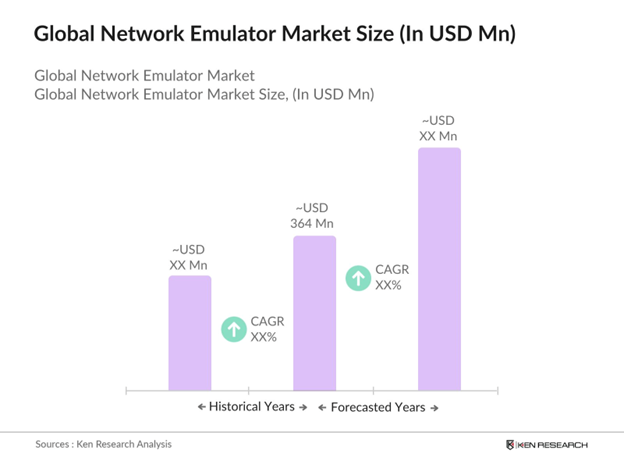
The Global Network Emulator Market is valued at USD 364 million, primarily driven by advancements in network testing technologies and increasing reliance on cloud and IoT solutions.
Challenges in Global Network Emulator Market include high setup costs, a shortage of skilled professionals, and rapidly evolving network requirements, which increase the complexity of testing solutions.
Key players in Global Network Emulator Market include Spirent Communications, Keysight Technologies, Viavi Solutions, Apposite Technologies, and Polaris Networks, known for their technological expertise and market reach.
Global Network Emulator Market is driven by the need for accurate simulation of real-world network conditions, essential for optimizing performance, ensuring security, and supporting the development of IoT and 5G networks.

What makes us stand out is that our consultants follows Robust, Refine and Result (RRR) methodology. i.e. Robust for clear definitions, approaches and sanity checking, Refine for differentiating respondents facts and opinions and Result for presenting data with story

We have set a benchmark in the industry by offering our clients with syndicated and customized market research reports featuring coverage of entire market as well as meticulous research and analyst insights.

While we don't replace traditional research, we flip the method upside down. Our dual approach of Top Bottom & Bottom Top ensures quality deliverable by not just verifying company fundamentals but also looking at the sector and macroeconomic factors.

With one step in the future, our research team constantly tries to show you the bigger picture. We help with some of the tough questions you may encounter along the way: How is the industry positioned? Best marketing channel? KPI's of competitors? By aligning every element, we help maximize success.

Our report gives you instant access to the answers and sources that other companies might choose to hide. We elaborate each steps of research methodology we have used and showcase you the sample size to earn your trust.

If you need any support, we are here! We pride ourselves on universe strength, data quality, and quick, friendly, and professional service.