Global Neuromarketing Market Outlook 2030

Region:Global

Author(s):Shivani Mehra

Product Code:KROD5383

Published On

December 2024

Total pages

99

About the Report

Global Neuromarketing Market Overview

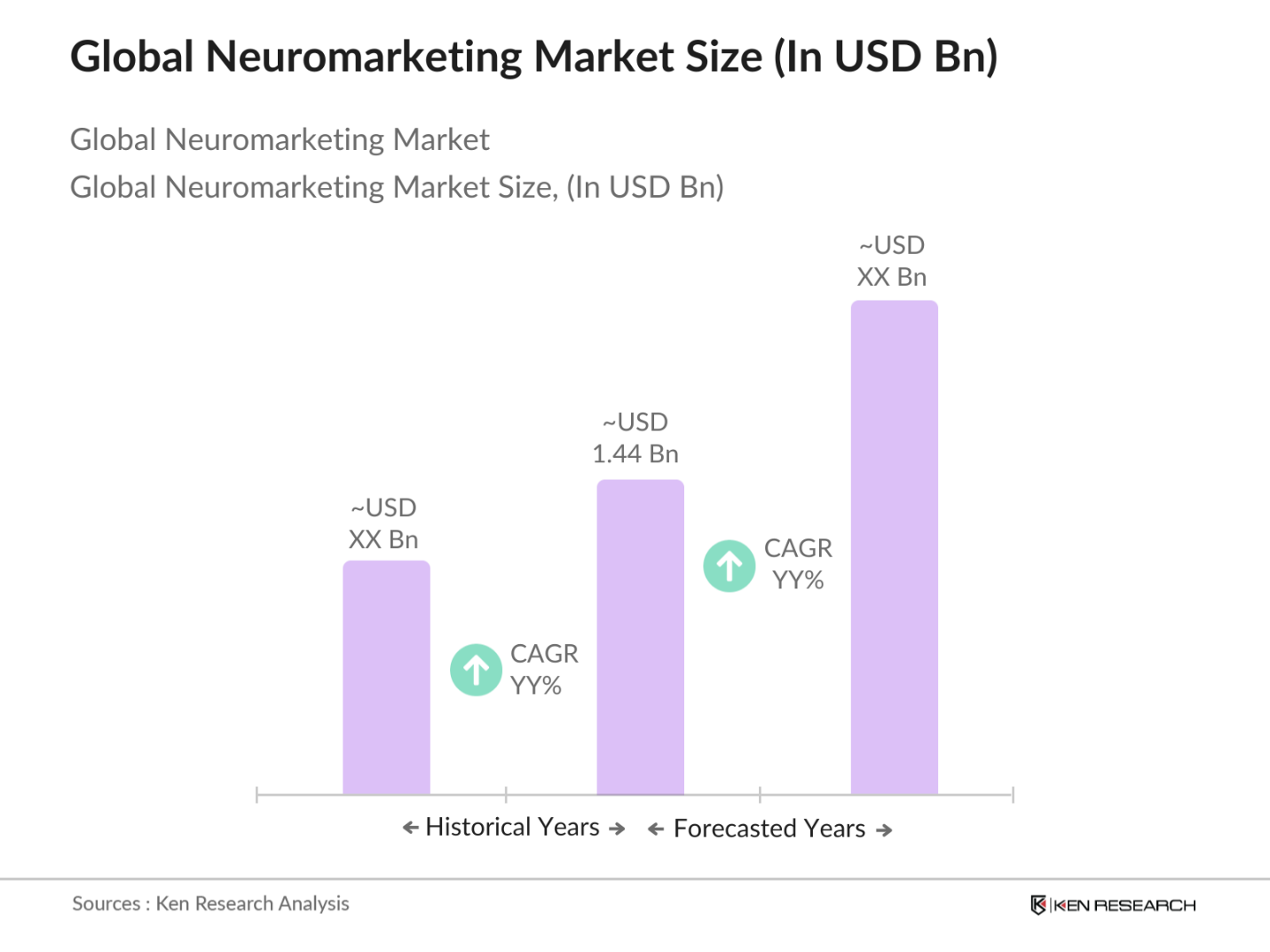
  • The global neuromarketing market is valued at USD 1.44 billion, driven by the increasing adoption of advanced neuroscience technologies in marketing strategies to better understand consumer behavior. This market has seen growth due to the integration of cognitive neuroscience with AI and machine learning, enabling companies to optimize advertising, product development, and pricing strategies by analyzing customer responses at a deeper level.

Global Neuromarketing Market Size

  • Countries like the United States and Japan dominate the neuromarketing market due to their robust research ecosystems and access to cutting-edge neuroscience technologies. The U.S. benefits from its well-established neuroscience research institutions and collaborations between academic and corporate sectors. Japan, on the other hand, excels in technological innovation, especially in AI and robotics, which are crucial in neuromarketing studies.
  • Countries are increasingly recognizing the need for ethical guidelines concerning the use of brainwave and neural data in neuromarketing. In 2023, the U.S. government, through the National Institutes of Health (NIH), allocated $250 million towards research on the ethical implications of brain-computer interfaces and neurodata collection. Similar initiatives have been launched in Europe, with the European Commission earmarking $100 million for studies on the ethical use of neuroscience in marketing, ensuring that companies abide by strict protocols when leveraging consumer brainwave data for marketing purposes.

Global Neuromarketing Market Segmentation

By Technology: The global neuromarketing market is segmented by technology into functional Magnetic Resonance Imaging (fMRI), Electroencephalography (EEG), Eye Tracking, Galvanic Skin Response (GSR), and others (including biometrics and face coding). Recently, fMRI has maintained a dominant market share due to its high accuracy in capturing brain activity, allowing detailed insights into consumer preferences and subconscious decision-making processes. Its application in advertising and product development has made it the preferred choice among leading neuromarketing firms.
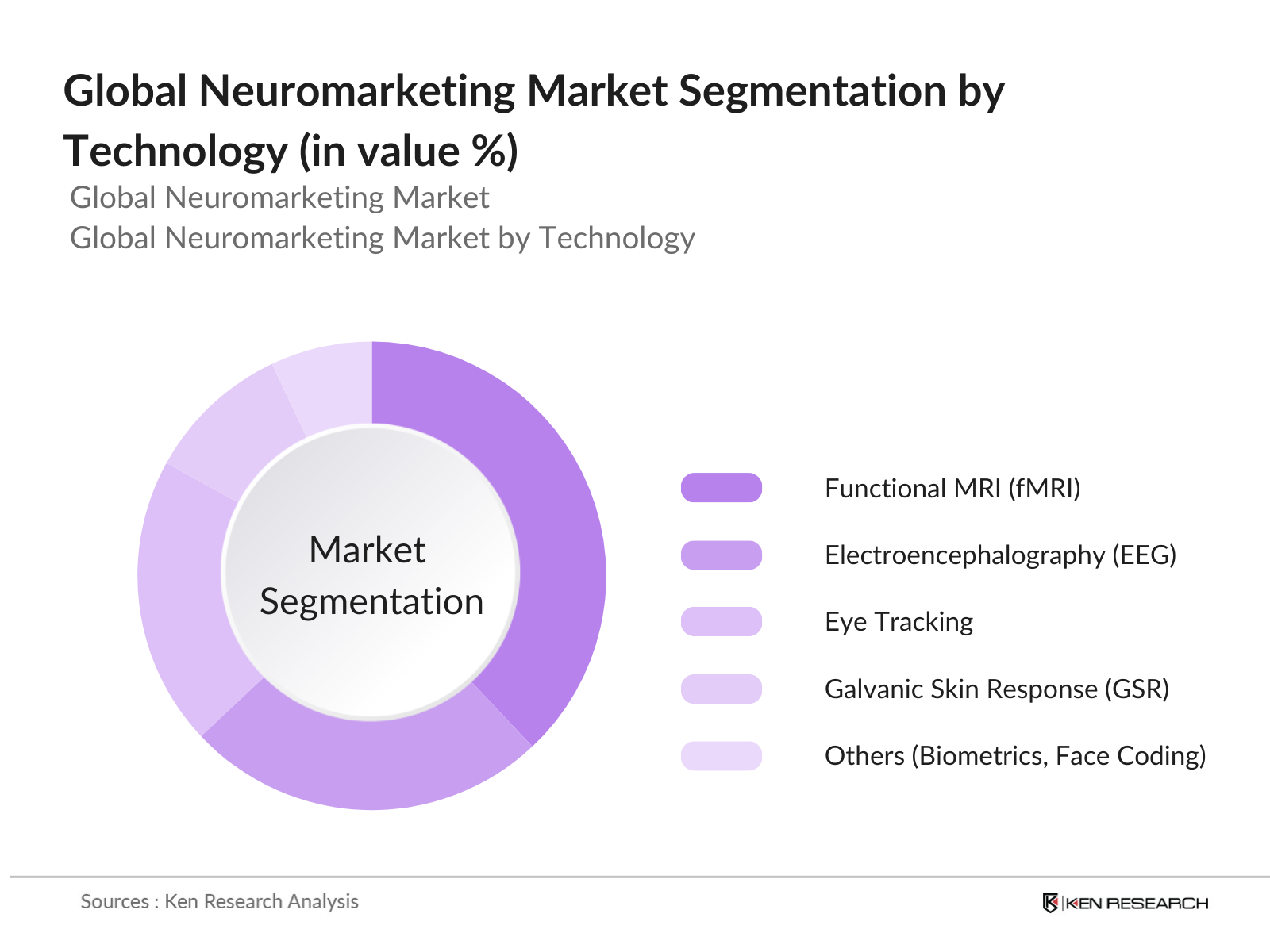
Global Neuromarketing Market Segmentation By Technology

By Region: The global neuromarketing market is segmented by region into North America, Europe, Asia-Pacific, Latin America, and the Middle East & Africa. North America holds a dominant market share due to the presence of major neuromarketing companies and advancements in brainwave monitoring technologies. Leading players like Nielsen and Neural Sense are driving adoption across sectors like retail and advertising, particularly in the U.S. Europe, propelled by increasing investments in cognitive research and ethical guidelines, follows as a key player.
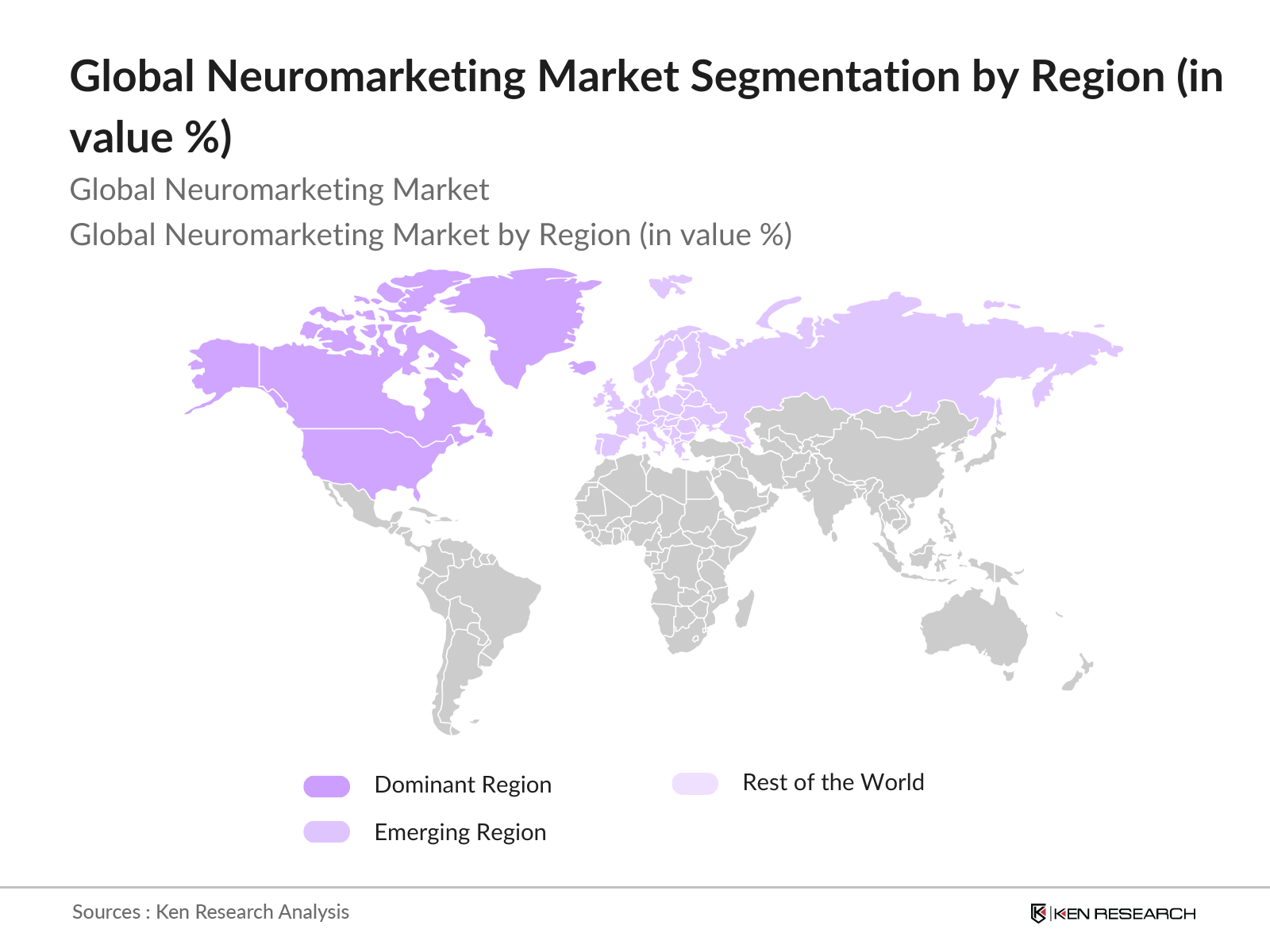
Global Neuromarketing Market Segmentation By Region

Global Neuromarketing Market Competitive Landscape

The global neuromarketing market is characterized by the presence of both established companies and innovative startups. Companies like Nielsen Holdings, Nviso SA, and Affectiva are recognized as pioneers in this field, thanks to their advanced research tools and strong partnerships with key industry players.

Company Name

Establishment Year

Headquarters

No. of Employees

Technology

Revenue

Product Portfolio

End-user Reach

Patents/Innovations

Collaborations

Nielsen Holdings Plc

1923

New York, USA

-

-

-

-

-

-

-

Nviso SA

2009

Lausanne, Switzerland

-

-

-

-

-

-

-

Affectiva

2009

Boston, USA

-

-

-

-

-

-

-

Tobii AB

2001

Stockholm, Sweden

-

-

-

-

-

-

-

iMotions

2005

Copenhagen, Denmark

-

-

-

-

-

-

-


Global Neuromarketing Market Analysis

Market Growth Drivers

  • Increasing Adoption of Consumer Behavior Analysis: In 2023, neuromarketing is being increasingly adopted to better understand consumer behavior, driven by a global shift towards data-driven decision-making in industries such as retail and advertising. According to a World Bank report, global consumer expenditure reached $54 trillion in 2023, with businesses investing in consumer insights to optimize their marketing strategies. The U.S., one of the key markets, accounted for over $16 trillion in consumer expenditure alone. This large consumer spending base creates a significant opportunity for neuromarketing to identify patterns in buyer preferences.
  • Technological Advancements in Neuroscience: The integration of advanced neuroscience technologies into marketing strategies has been gaining momentum. In 2023, global research and development expenditure related to neuroscience is projected to surpass $220 billion, driven by demand from healthcare and marketing industries, as reported by the International Monetary Fund (IMF). These advancements in brainwave monitoring tools like EEG (electroencephalogram) and eye-tracking technologies have enabled companies to gain deeper insights into the subconscious responses of consumers, influencing product placements and branding decisions.
  • Rising Focus on Emotional Engagement in Advertising: Emotional engagement has become a primary target in advertising campaigns worldwide, with neuromarketing tools playing a pivotal role in measuring emotional triggers in consumers. In 2023, more than $320 billion is expected to be spent globally on digital advertising, according to data from the World Bank, highlighting the growing focus on emotionally driven content that drives consumer interaction. Countries like China and India are leading the charge with their large consumer base and rapidly growing digital ecosystems.

Market Challenges:

  • Ethical and Privacy Concerns: As neuromarketing grows, privacy concerns are surfacing, particularly regarding the handling of sensitive brainwave and biometric data. In 2023, there are over 50 countries that have implemented stringent data protection laws, including the European Union's GDPR, which regulates how personal data, including brain data, is collected and used. Compliance with these regulations remains a challenge for companies deploying neuromarketing technologies, especially in markets like Europe, which accounts for over $500 billion in digital marketing investments.
  • High Costs of Neuromarketing Tools: The cost of implementing neuromarketing technologies remains prohibitive for many companies, particularly small and medium enterprises (SMEs). The average cost for a single EEG neuromarketing session ranges from $20,000 to $50,000, depending on the scope and market region, as highlighted in the 2023 World Bank report. These high operational costs create a barrier to entry for smaller firms, limiting widespread adoption. As of 2024, global R&D spending by large companies utilizing neuromarketing techniques accounts for over $1.8 trillion, showing that only major players can fully leverage these tools.

Global Neuromarketing Market Future Outlook

Over the next five years, the neuromarketing market is expected to show significant growth driven by the increasing integration of neuroscience technologies into marketing strategies. Growing investments in AI-driven consumer analytics, coupled with the expansion of neuromarketing applications into new sectors like healthcare and automotive, will propel the market forward. The continuous development of non-invasive neuroscience tools and advancements in brainwave mapping technologies will further enhance the markets growth trajectory.

Market Opportunities:

  • Growing Application in Retail and Advertising: Neuromarketing has vast potential in retail and advertising, sectors where consumer behavior is critical for driving sales. In 2023, global retail sales reached $27.7 trillion, according to IMF reports. Neuromarketing enables retailers to design layouts and promotional materials that directly resonate with consumer emotions, boosting engagement. The adoption of neuromarketing tools by top retailers in markets like the U.S. and Europe is expected to grow, where combined retail investments are projected to top $9 trillion in 2023, offering significant market opportunities for technology providers.
  • Expansion in Emerging Markets: Emerging markets like India, Brazil, and South Africa are expected to experience significant growth in the adoption of neuromarketing technologies. According to World Bank data, Indias retail sector is projected to grow to $1.3 trillion by 2024, driven by the rising middle-class population and increasing disposable incomes. With growing consumerism in these regions, neuromarketing presents a unique opportunity for companies to better understand local consumer behavior and tailor marketing strategies accordingly.

Scope of the Report


Products

Key Target Audience

  • Advertising and Marketing Agencies

  • Consumer Packaged Goods (CPG) Companies

  • Retail and E-commerce Firms

  • Healthcare and Medical Device Manufacturers

  • Automotive Companies

  • Investments and Venture Capitalist Firms

  • Government and Regulatory Bodies (U.S. FDA, European Medicines Agency)

  • Neuroscience Research Organizations

Companies

Major Players

  • Nielsen Holdings Plc

  • Nviso SA

  • Affectiva

  • Tobii AB

  • iMotions

  • Compumedics Limited

  • SR Labs

  • NeuroSky, Inc.

  • SensoMotoric Instruments

  • Cadwell Industries, Inc.

  • Emotiv Inc.

  • Bitbrain Technologies

  • Neural Sense

  • Mindlab International Ltd.

  • EyeTracking, Inc.

Table of Contents

Research Methodology

Step 1: Identification of Key Variables

The initial phase involves mapping all stakeholders within the global neuromarketing market. This is achieved through desk research, utilizing secondary databases to gather extensive industry-level information. The focus is to identify key variables influencing market growth, such as technology advancements and industry adoption rates.

Step 2: Market Analysis and Construction

This phase involves analyzing historical data on neuromarketing technology penetration, revenue generation by sector, and geographic distribution. The data will be compiled to create an accurate picture of market dynamics and trends, providing insight into past performance and future projections.

Step 3: Hypothesis Validation and Expert Consultation

Developed market hypotheses will be validated through consultations with industry experts. These consultations will provide practical insights into the adoption of neuromarketing technologies, operational challenges, and growth opportunities, enhancing the reliability of the research findings.

Step 4: Research Synthesis and Final Output

In this final phase, data synthesis will include collaboration with neuromarketing technology providers and end-users. This collaboration will validate market penetration and application data, ensuring a comprehensive and accurate final output that is ready for publication.

Frequently Asked Questions

01. How big is the global neuromarketing market?

The global neuromarketing market is valued at USD 1.44 billion, driven by advancements in neuroscience technology and its increasing application in consumer analytics.

02. What are the challenges in the global neuromarketing market?

The neuromarketing market faces challenges including high costs of advanced neuroscience tools, privacy concerns regarding consumer brainwave data, and the limited regulatory framework for data protection.

03. Who are the major players in the global neuromarketing market?

Key players in the market include Nielsen Holdings, Nviso SA, Affectiva, Tobii AB, and iMotions, who lead the market due to their technological innovations and strong partnerships with key industries.

04. What are the growth drivers of the global neuromarketing market?

The market is driven by the increasing integration of neuroscience in advertising, advancements in AI and machine learning, and the growing need for deeper consumer insights in competitive industries like retail and media.

Why Buy From Us?

RRR
Refine Robust Result (RRR) Framework

What makes us stand out is that our consultants follows Robust, Refine and Result (RRR) methodology. i.e. Robust for clear definitions, approaches and sanity checking, Refine for differentiating respondents facts and opinions and Result for presenting data with story

Our Reach Is Unmatched

We have set a benchmark in the industry by offering our clients with syndicated and customized market research reports featuring coverage of entire market as well as meticulous research and analyst insights.

Research
Shifting the Research Paradigm

While we don't replace traditional research, we flip the method upside down. Our dual approach of Top Bottom & Bottom Top ensures quality deliverable by not just verifying company fundamentals but also looking at the sector and macroeconomic factors.

Insite
More Insights-Better Decisions

With one step in the future, our research team constantly tries to show you the bigger picture. We help with some of the tough questions you may encounter along the way: How is the industry positioned? Best marketing channel? KPI's of competitors? By aligning every element, we help maximize success.

Trust
Transparency and Trust

Our report gives you instant access to the answers and sources that other companies might choose to hide. We elaborate each steps of research methodology we have used and showcase you the sample size to earn your trust.

support
Round the Clock Support

If you need any support, we are here! We pride ourselves on universe strength, data quality, and quick, friendly, and professional service.

Why Client Choose Us?

400000+ Reports in repository
150+ Consulting project a year
100+ Analysts
8000+ Client Queries in 2022