
Global Night Vision Device Market Outlook to 2030
Region:Global
Author(s):Shreya
Product Code:KROD1491
November 2024
92
About the Report
Global Night Vision Device Market Overview
The global night vision device market has been witnessing substantial growth due to the increasing adoption of night vision devices across military, defense, and law enforcement sectors. The market grew to USD 7.65 billion, driven by a rise in defense budgets worldwide, as well as a growing need for improved border security. Furthermore, the commercialization of night vision technologies for personal use, automotive sectors, and outdoor enthusiasts has also contributed to market expansion.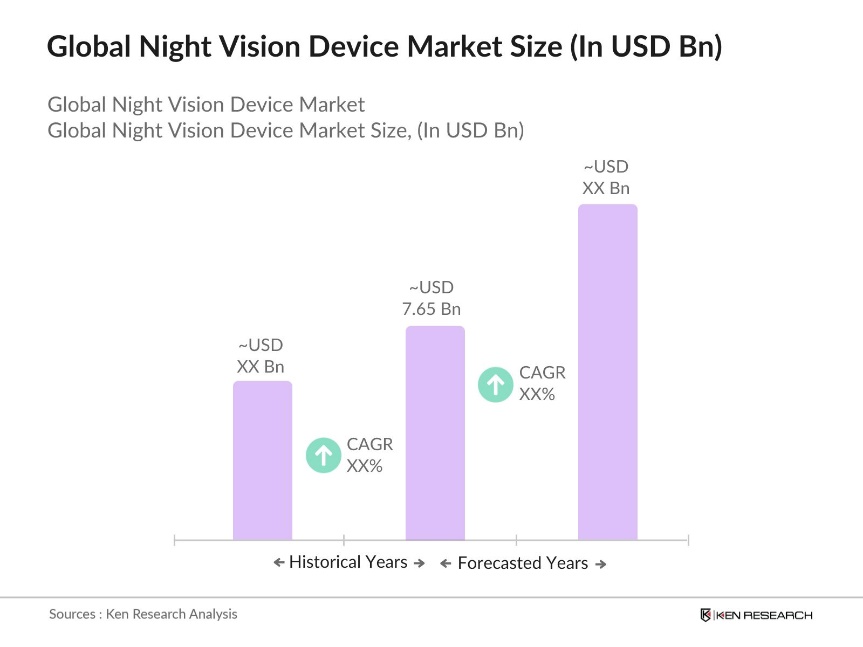
Some of the key players in the night vision device market include L3Harris Technologies, FLIR Systems, Elbit Systems, BAE Systems, and Thales Group. These companies play a critical role in technological advancements and dominate the global night vision market by providing high-performance devices used across defense, surveillance, and security industries.
In December 2021, Thales launched the XTRAIM, a cutting-edge weapon sight that provides day/night decamouflage capabilities, enhancing operational effectiveness for military applications. This device is part of a broader trend towards more integrated and advanced night vision technologies that improve situational awareness for soldiers . It has also been involved in the co-development of the ELFIE night vision devices in partnership with MKU Ltd, an Indian defense manufacturer.
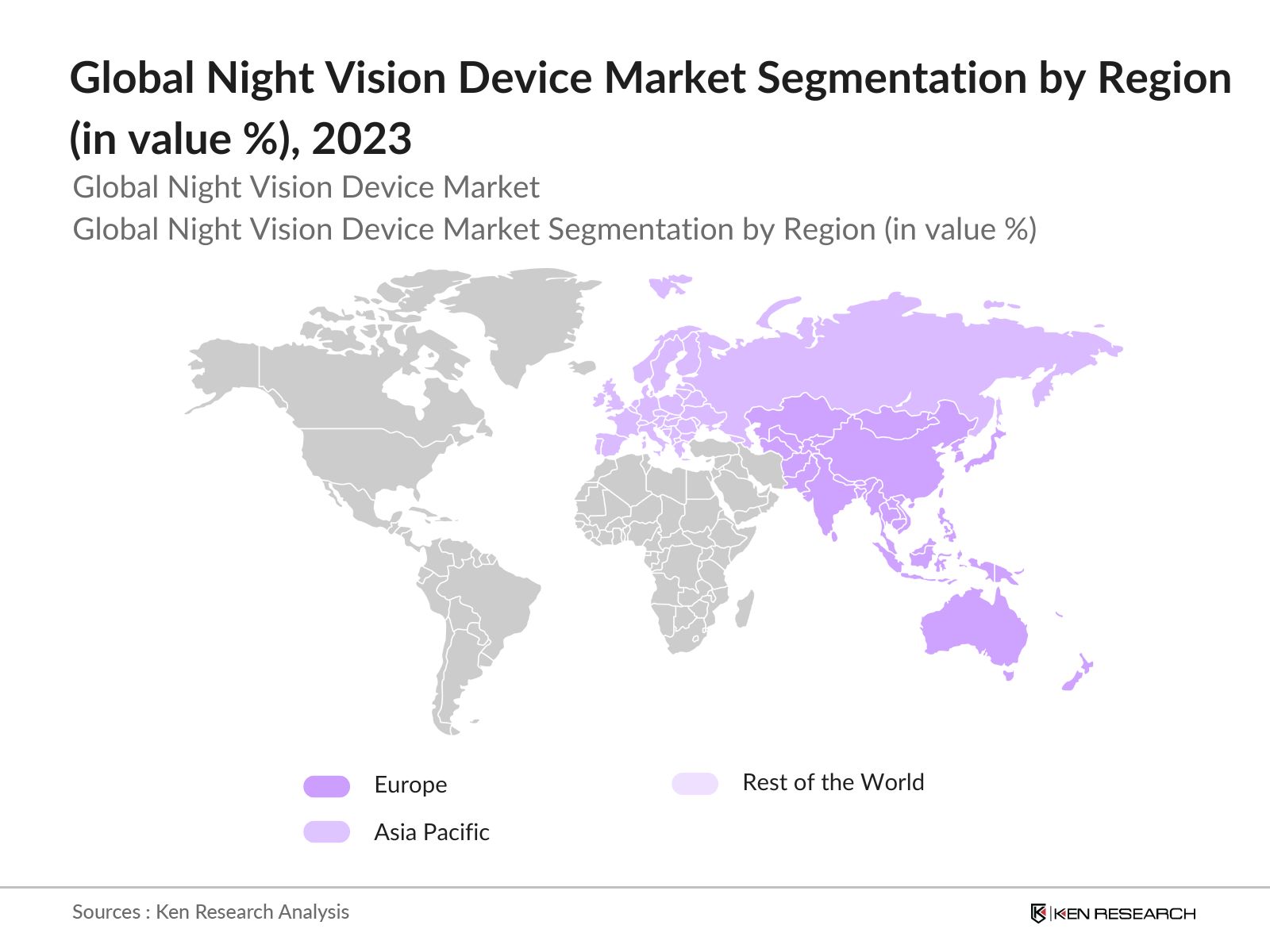
North America continues to dominate the market share in 2023. This is largely due to the substantial investments in defense and security by the U.S. government. The state of California plays a significant role in driving market growth due to its concentration of defense contractors and technology development firms. This region remains at the forefront of innovation and production of night vision technologies.
Global Night Vision Device Market Segmentation
The global night vision device market is segmented into various factors such as Product Type, Technology, region etc.
1. By Product Type: The market is segmented by product type into goggles, cameras, scopes, and binoculars. In 2023, night vision goggles held the dominant market share due to their extensive use by military forces worldwide. These devices are also increasingly being adopted by outdoor enthusiasts for activities like hunting and hiking. The integration of thermal and infrared imaging technologies in goggles has further contributed to their dominant position in the market.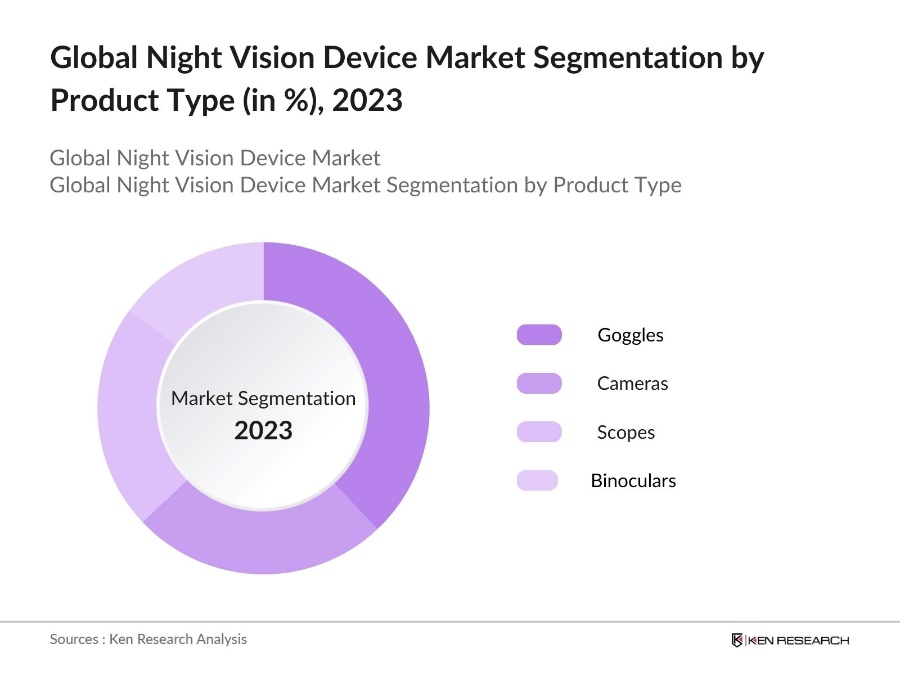
2. By Technology: The market is segmented by technology into image intensification, thermal imaging, and infrared illumination. In 2023, image intensification technology captured a dominant share due to its widespread application in military, defense, and commercial sectors. This technology amplifies available light, making it more suitable for surveillance and night-time operations. Furthermore, the cost-effectiveness of image intensification compared to other technologies makes it an attractive option for defense budgets.
3. By Region: The market is regionally segmented into North America, Europe, APAC, MEA and Latin America. The dominance of North America is due to the presence of key industry players and continuous government investments in defense technologies. The U.S. government, in particular, has been a major purchaser of night vision devices for its military and law enforcement agencies, driving the region's market share.
Global Night Vision Device Market Competitive Landscape
|
Company Name |
Establishment Year |
Headquarters |
|---|---|---|
|
L3Harris Technologies |
2019 |
Melbourne, Florida |
|
FLIR Systems |
1978 |
Wilsonville, Oregon |
|
Elbit Systems |
1967 |
Haifa, Israel |
|
BAE Systems |
1999 |
London, UK |
|
Thales Group |
2000 |
Paris, France |
- L3Harris Develops New Thermal Imaging Technology: In March 2024, L3Harris Technologies unveiled its new thermal imaging sensor, designed to be integrated into night vision devices used by the U.S. Navy. This new development is expected to improve detection accuracy by 30%, particularly in maritime environments, where thermal clarity is crucial for detecting targets in low-visibility conditions.
- BAE Systems Partners with NATO:BAE Systems is actively involved in various defense contracts and partnerships related to NATO. It has been recognized for its contributions to military capabilities and has received various contracts, such as a USD 754 million contract for the Armored Multi-Purpose Vehicle (AMPV) and other contracts for communication systems.
Global Night Vision Device Industry Analysis
Growth Drivers
- Increased Military Spending Globally: Global military spending reached USD 2.1 trillion in 2024, with investments in modern surveillance systems, including night vision devices. Countries such as the U.S., China, and India are enhancing their defense capabilities to combat emerging security threats. The U.S. Department of Defense alone allocated USD 20 billion in 2024 for advanced surveillance and reconnaissance technologies.
- Expansion of Border Surveillance Programs: In 2024, several nations increased their border security budgets, driven by heightened geopolitical tensions. For example, the European Union has allocated budget for advanced surveillance technologies, including night vision systems, to monitor its external borders. Additionally, the Indian Ministry of Home Affairs is investing heavily in 2024 to strengthen night-time border patrol and surveillance infrastructure, increasing the adoption of advanced night vision devices.
- Growth of the Automotive Night Vision Market: In 2024, the automotive industry is seeing substantial investments in night vision technology for high-end and autonomous vehicles. Luxury automotive manufacturers such as Audi, BMW, and Mercedes-Benz have integrated night vision systems into their latest vehicle models. Global spending on automotive night vision systems is expected to exceed USD 500 million by the end of 2024 as these systems become critical for driver assistance and pedestrian safety during nighttime driving.
Challenges
- Supply Chain Disruptions Due to Geopolitical Tensions: The global supply chain for electronic components, including those used in night vision devices, was significantly impacted by trade restrictions and geopolitical conflicts in 2024. Countries like the U.S. and China, major producers of night vision components, experienced delays in supply chains, increasing the lead time for the delivery of night vision devices by up to 6 months. This disrupted global production and slowed market growth.
- Limited Technological Accessibility in Developing Regions: Developing nations, particularly in Africa and parts of Southeast Asia, face challenges in accessing cutting-edge night vision technologies due to financial constraints. The allocation of limited capital by African defense ministries for surveillance technologies, making it difficult for these regions to adopt modern night vision devices. The reliance on outdated technologies continues to pose a barrier to market expansion.
Government Initiatives
- India's Border Security Modernization: The Indian government announced a USD 700 million program in 2024 to modernize its border security infrastructure, with a significant portion allocated to night vision devices for the Indian Border Security Force (BSF). This initiative is designed to enhance surveillance capabilities along India's northern borders, which have seen heightened tensions in recent years, driving the demand for cutting-edge night vision systems.
- China's People's Liberation Army: The PLA has been undergoing a comprehensive modernization program to transform itself into a "world-class force" by 2049, with key milestones in 2035 and 2027. This modernization aims to enhance the PLA's capabilities in emerging domains like space, cyberspace, electronic warfare, and intelligent zed warfare leveraging technologies like AI.
Global Night Vision Device Market Future Outlook
The global night vision device market is expected to grow exponentially, driven by continued demand from the defense sector and increasing applications in the automotive industry. Advancements in thermal imaging, fusion technologies, and the integration of AI-based surveillance will also bolster the future growth of the market.
Future Trends
- Integration of AI in Night Vision Systems: The night vision devices will increasingly incorporate artificial intelligence (AI) to enhance detection accuracy. AI algorithms will enable automatic target identification and threat detection in real-time. This trend will lead to the development of intelligent night vision devices capable of distinguishing between civilian and military targets, making combat operations more efficient.
- Adoption of Night Vision Systems in Civilian Surveillance: The civilian surveillance sector will see an uptick in the use of night vision systems by 2028, with cities investing in advanced surveillance technologies for monitoring public spaces and improving urban security. It is estimated that by 2028, many vision cameras will be installed in major cities across North America and Europe, aiding law enforcement agencies in their crime prevention efforts.
Scope of the Report
|
By Product Type |
Goggles Cameras Scopes Binoculars |
|
By Technology |
Image Intensification Thermal Imaging Infrared Illumination |
|
By Region |
North America Europe Apac Mea Latin America |
Products
Key Target Audience Organizations and Entities Who Can Benefit by Subscribing This Report:
Defense Ministries
Law Enforcement Agencies
Border Security Forces
Military Contractors
Aviation and Aerospace Companies
Automotive Manufacturers
Surveillance System Providers
Investors and VC Firms
Banks and Financial Institutions
Time Period Captured in the Report:
Historical Period: 2018-2023
Base Year: 2023
Forecast Period: 2023-2028
Step: 1 Identifying Key Variables:
Ecosystem creation for all the major entities and referring to multiple secondary and proprietary databases to perform desk research around market to collate industry level information.
Step: 2 Market Building:
Collating statistics on Global night vision device market over the years, penetration of marketplaces and service providers ratio to compute revenue generated for Global night vision device market. We will also review service quality statistics to understand revenue generated which can ensure accuracy behind the data points shared.
Step: 3 Validating and Finalizing:
Building market hypothesis and conducting CATIs with industry experts belonging to different companies to validate statistics and seek operational and financial information from company representatives.
Step: 4 Research Output:
Our team will approach multiple night vision device manufacturers and understand nature of product segments and sales, consumer preference and other parameters, which will support us validate statistics derived through bottom to top approach from night vision device companies.
Companies
Players Mentioned in the Report:
L3Harris Technologies
FLIR Systems
Elbit Systems
BAE Systems
Thales Group
Northrop Grumman
Raytheon Technologies
ASELSAN
Harris Corporation
Leonardo S.p.A
Opgal Optronic Industries
Intevac Inc.
Excelitas Technologies
American Technologies Network Corp.
Night Vision Depot
Table of Contents
1. Global Night Vision Device Market Overview
1.1. Definition and Scope
1.2. Market Taxonomy
1.3. Market Growth Rate
1.4. Market Segmentation Overview
2. Global Night Vision Device Market Size (in USD Bn), 2018-2023
2.1. Historical Market Size
2.2. Year-on-Year Growth Analysis
2.3. Key Market Developments and Milestones
3. Global Night Vision Device Market Analysis
3.1. Growth Drivers
3.1.1. Increased Military Spending
3.1.2. Expansion of Border Surveillance
3.1.3. Rising Demand from Law Enforcement Agencies
3.1.4. Growth in Automotive Night Vision Technologies
3.2. Restraints
3.2.1. High Production Costs
3.2.2. Geopolitical Supply Chain Disruptions
3.2.3. Regulatory Barriers
3.2.4. Limited Accessibility in Developing Regions
3.3. Opportunities
3.3.1. Advancements in Thermal Imaging
3.3.2. Rising Demand in Civilian Applications
3.3.3. Integration with AI and Automation
3.3.4. Expansion into Emerging Markets
3.4. Trends
3.4.1. AI Integration in Night Vision
3.4.2. Adoption in Smart City Projects
3.4.3. Lightweight and Wearable Night Vision Devices
3.4.4. Automotive Night Vision Systems
3.5. Government Regulations
3.5.1. U.S. Defense Production Act Initiatives
3.5.2. India's Border Security Modernization
3.5.3. EU Surveillance and Security Investments
3.5.4. Chinas Military Modernization
4. Global Night Vision Device Market Segmentation, 2023
4.1. By Product Type (in Value %)
4.1.1. Goggles
4.1.2. Cameras
4.1.3. Scopes
4.1.4. Binoculars
4.2. By Technology (in Value %)
4.2.1. Image Intensification
4.2.2. Thermal Imaging
4.2.3. Infrared Illumination
4.3. By Region (in Value %)
4.3.1. North America
4.3.2. Asia-Pacific
4.3.3. Europe
4.3.4. Middle East & Africa
4.3.5. Latin America
5. Global Night Vision Device Market Cross Comparison
5.1. Detailed Profiles of Major Companies
5.1.1. L3Harris Technologies
5.1.2. FLIR Systems
5.1.3. Elbit Systems
5.1.4. BAE Systems
5.1.5. Thales Group
5.2. Cross Comparison Parameters (No. of Employees, Headquarters, Inception Year, Revenue)
6. Global Night Vision Device Market Competitive Landscape
6.1. Market Share Analysis
6.2. Strategic Initiatives
6.3. Mergers and Acquisitions
6.4. Investment Analysis
6.4.1. Government Funding
6.4.2. Private Sector Investments
7. Global Night Vision Device Market Regulatory Framework
7.1. Export and Import Controls
7.2. Compliance Requirements
7.3. Certification Processes
8. Global Night Vision Device Future Market Size (in USD Bn), 2023-2028
8.1. Future Market Size Projections
8.2. Key Factors Driving Future Market Growth
9. Global Night Vision Device Future Market Segmentation, 2028
9.1. By Product Type (in Value %)
9.2. By Technology (in Value %)
9.3. By Region (in Value %)
10. Global Night Vision Device Market Analysts Recommendations
10.1. Market Penetration Strategies
10.2. Technological Advancements to Watch
10.3. Key Investment Opportunities
Frequently Asked Questions
How big is the Global Night Vision Device Market?
The Global Night Vision Device Market was valued at USD 7.65 billion in 2023, driven by the increasing demand from military, defense, and law enforcement sectors, as well as the expansion of night vision technology into automotive and surveillance applications.
What are the challenges in the Global Night Vision Device Market?
Challenges in the Global Night Vision Device market include the high production costs of advanced night vision devices, supply chain disruptions due to geopolitical tensions, limited accessibility of technologies in developing regions, and stringent regulatory barriers on the export and import of night vision devices.
Who are the major players in the Global Night Vision Device Market?
Key players in the Global Night Vision Device market include L3Harris Technologies, FLIR Systems, Elbit Systems, BAE Systems, and Thales Group. These companies dominate the market through their investments in research and development and supply contracts with defense and law enforcement agencies.
What are the growth drivers of the Global Night Vision Device Market?
The Global Night Vision Device market is driven by increased global military spending, expanding border surveillance programs, rising demand from law enforcement agencies, and the growth of night vision technologies in the automotive sector.
Why Buy From Us?

What makes us stand out is that our consultants follows Robust, Refine and Result (RRR) methodology. i.e. Robust for clear definitions, approaches and sanity checking, Refine for differentiating respondents facts and opinions and Result for presenting data with story

We have set a benchmark in the industry by offering our clients with syndicated and customized market research reports featuring coverage of entire market as well as meticulous research and analyst insights.

While we don't replace traditional research, we flip the method upside down. Our dual approach of Top Bottom & Bottom Top ensures quality deliverable by not just verifying company fundamentals but also looking at the sector and macroeconomic factors.

With one step in the future, our research team constantly tries to show you the bigger picture. We help with some of the tough questions you may encounter along the way: How is the industry positioned? Best marketing channel? KPI's of competitors? By aligning every element, we help maximize success.

Our report gives you instant access to the answers and sources that other companies might choose to hide. We elaborate each steps of research methodology we have used and showcase you the sample size to earn your trust.

If you need any support, we are here! We pride ourselves on universe strength, data quality, and quick, friendly, and professional service.