
Global Online Fitness Market Outlook to 2030
Region:Global
Author(s):Mukul
Product Code:KROD10145
November 2024
91
About the Report
Global Online Fitness Market Overview
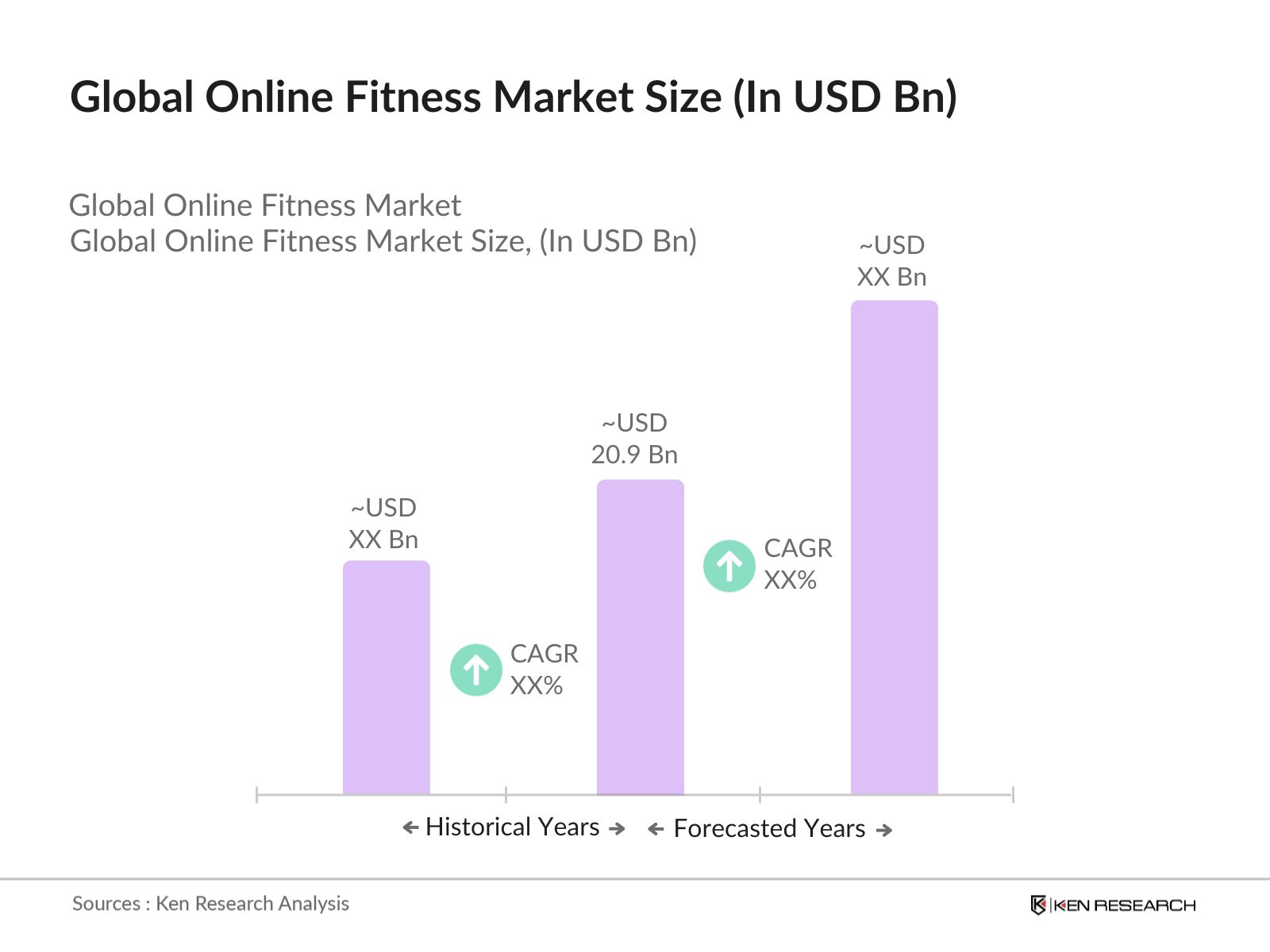
- The global online fitness market has grown significantly, with a valuation of USD 20.9 billion, driven primarily by the increasing consumer awareness about health and fitness, and the rapid growth of internet penetration across key markets. This expansion is supported by technological advancements that offer personalized fitness programs through streaming platforms and mobile apps. The rise of subscription-based models and on-demand fitness classes also fuels the growth of the market as consumers seek more flexible, convenient workout solutions.
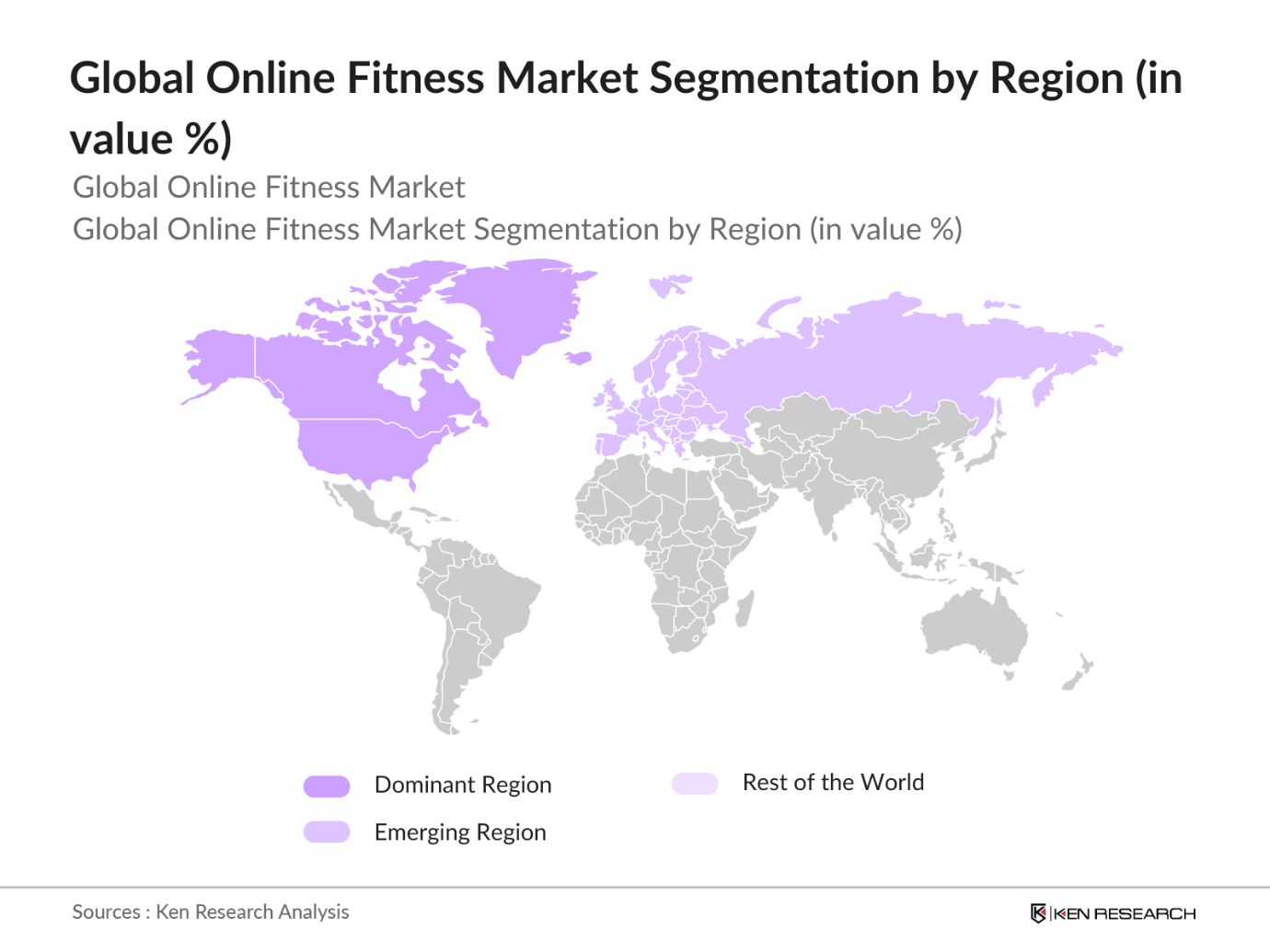
- North America and Europe are dominant regions in the global online fitness market due to their higher digital infrastructure and widespread adoption of fitness technologies. The United States, in particular, leads the market because of the increasing number of fitness startups and established brands offering online platforms. In contrast, Asia-Pacific is rapidly catching up, with countries like China and India experiencing a surge in mobile app usage and online fitness subscriptions due to growing awareness about health and fitness amidst urbanization and a young, tech-savvy population.
- Online fitness platforms must comply with global health standards set by organizations such as the World Health Organization (WHO) and national health authorities. These standards ensure that the fitness programs offered are safe, effective, and aligned with general health guidelines. As of 2023, over 100 countries required fitness platforms to meet these standards, covering areas such as workout safety, nutritional advice, and user data reporting. Compliance with these standards is essential for platforms looking to expand into international markets.
Global Online Fitness Market Segmentation
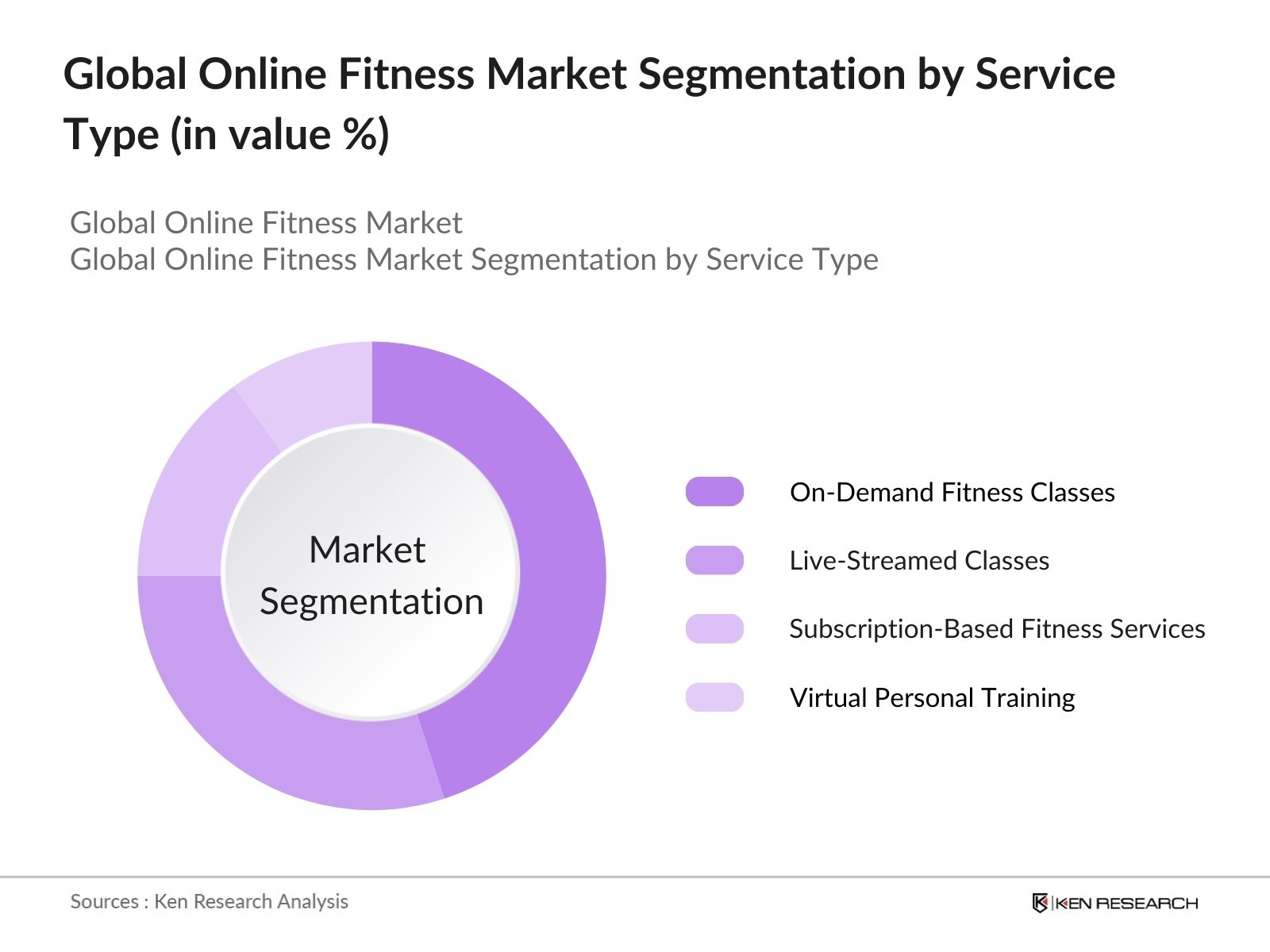
- By Service Type: The global online fitness market is segmented by service type into on-demand fitness classes, live-streamed classes, subscription-based fitness services, and virtual personal training. Among these, on-demand fitness classes hold a dominant share of the market, primarily due to their flexibility and convenience. With busy schedules, consumers increasingly prefer workout routines that can be accessed at their convenience rather than committing to live sessions. The vast variety of classes available in the on-demand format allows users to personalize their fitness journey, from high-intensity interval training (HIIT) to yoga and pilates.
- By Platform: The market is also segmented by platform into mobile applications, web platforms, and smart TVs with wearables integration. Mobile applications dominate this segment due to the high penetration of smartphones and their ease of use. Fitness apps like Peloton, MyFitnessPal, and Centr offer users a portable solution for tracking workouts, diet, and overall fitness goals. Additionally, integration with wearable devices like smartwatches and fitness bands has further boosted the dominance of mobile applications, allowing users to monitor their progress on-the-go.
- By Region: The global online fitness market is also segmented by region, with North America, Europe, Asia-Pacific, Latin America, and the Middle East & Africa as key regions. North America leads the market, with strong consumer demand for fitness apps and services, driven by increasing awareness of fitness and health trends. The U.S. is home to numerous leading companies offering advanced online fitness platforms, while Europe, with its focus on wellness and sustainable lifestyles, also contributes significantly to market growth.
Global Online Fitness Market Competitive Landscape
The global online fitness market is dominated by both established companies and new entrants, contributing to a highly competitive landscape. The market is led by players like Peloton, Zwift, Beachbody, and Nike, who have built strong customer loyalty through innovative platforms and strategic partnerships. Emerging fitness startups and tech companies are also carving out a niche by leveraging social media platforms and personalized fitness experiences.
|
Company |
Year Established |
Headquarters |
Subscription Model |
Key Partnerships |
Monthly Active Users |
Social Media Presence |
Wearable Device Integration |
Technology Stack |
Fitness Content Library |
|
Peloton |
2012 |
New York, USA |
- |
- |
- |
- |
- |
- |
- |
|
Zwift |
2014 |
California, USA |
- |
- |
- |
- |
- |
- |
- |
|
Beachbody |
1998 |
California, USA |
- |
- |
- |
- |
- |
- |
- |
|
Nike Training Club |
2006 |
Oregon, USA |
- |
- |
- |
- |
- |
- |
- |
|
MyFitnessPal (Under Armour) |
2005 |
Maryland, USA |
- |
- |
- |
- |
- |
- |
- |
Global Online Fitness Industry Analysis
Growth Drivers
- Increase in On-demand Fitness Platforms: The shift toward on-demand fitness platforms is driven by the increasing availability of broadband internet, with over 5 billion internet users globally as of 2023, according to the International Telecommunication Union (ITU). This digital expansion has enabled fitness providers to offer real-time, on-demand access to a variety of workouts, including yoga, cardio, and strength training. In 2022, around 40% of global internet users engaged with digital fitness content, a number projected to rise with enhanced internet connectivity. The convenience and flexibility of these platforms make them particularly attractive for time-constrained individuals.
- Rise in Subscription-Based Revenue Models: Subscription-based models have seen a significant rise, driven by consumer demand for personalized fitness experiences. In 2023, more than 70 million people worldwide were paying subscribers to online fitness platforms. These models provide consistent revenue streams for businesses and enhance customer retention through tailored content. A notable trend in 2024 is the growing adoption of tiered subscription plans, offering a mix of basic and premium services to suit varying user needs. This business models sustainability is reinforced by the rise of mobile payments, with over 3 billion mobile wallets in use globally.
- Integration of Fitness Wearables with Online Platforms: The integration of fitness wearables with online fitness platforms has enhanced user engagement by enabling real-time tracking of health metrics such as heart rate, calories burned, and sleep patterns. According to the World Bank, there were over 1.1 billion wearable devices in use globally in 2022. These wearables sync with online platforms to offer users personalized workout plans and progress tracking. As of 2024, this integration is a key driver of the online fitness market, with wearables becoming a standard feature in fitness routines across developed and emerging economies.
Market Restraints
- High Competition from Free Content: A major challenge for the global online fitness market is competition from free fitness content available on platforms such as YouTube and social media. In 2023, an estimated 500 million people globally accessed free fitness videos, which puts pressure on paid subscription models. This free content often lacks the personalized approach of paid services but remains attractive due to its zero-cost nature, especially in developing economies where disposable income is lower. The competition from free content is likely to continue affecting the profitability of paid platforms in the coming years.
- Difficulty in Retaining Long-term Subscribers: Retention of long-term subscribers remains a challenge due to the high attrition rates in the online fitness market. In 2022, the global average churn rate for subscription-based platforms was approximately 35%, according to a study by the World Bank on digital platforms. Many users discontinue their subscriptions after the initial few months, often due to lack of motivation, digital fatigue, or the availability of cheaper alternatives. This high churn rate forces platforms to continuously innovate and invest in customer engagement strategies to retain their user base.
Global Online Fitness Market Future Outlook
Over the next five years, the global online fitness market is expected to experience substantial growth, driven by technological advancements in fitness platforms, increased focus on health and wellness, and the growing adoption of smart fitness devices. As more consumers turn to virtual workout solutions, particularly in urban areas, the market will likely see increased personalization, including AI-driven workouts and deeper integration with wearables for real-time health tracking. The rise of hybrid models combining both online and in-person experiences is also anticipated to contribute to market expansion.
Market Opportunities
- Expansion in Emerging Economies: Emerging economies present significant growth opportunities for the online fitness market, driven by rising internet penetration and increased health awareness. In 2023, over 1 billion people in Asia and Africa gained internet access, according to ITU data. This expanding digital infrastructure, combined with a growing middle class, offers a fertile ground for fitness platforms. Online fitness subscriptions have surged in markets like India and Nigeria, where urban populations are increasingly seeking convenient and affordable fitness solutions. These markets are expected to continue driving the growth of the online fitness industry.
- Personalized Training Using Artificial Intelligence: The use of artificial intelligence (AI) in online fitness is creating opportunities for hyper-personalized workout plans. AI-driven platforms analyze users' performance metrics in real time, offering tailored recommendations for improvements. As of 2023, AI technologies were integrated into more than 30% of online fitness platforms globally, according to World Bank data. This capability enhances user engagement by providing dynamic, customized workouts that adapt to individual goals. Such personalized training experiences are particularly appealing to fitness enthusiasts looking for more targeted and efficient exercise routines.
Scope of the Report
|
Service Type |
- On-Demand Fitness Classes |
|
Platform |
- Mobile Applications |
|
Device Type |
- Smartphones |
|
End-User |
- Individual Users |
|
Region |
- North America |
Products
Key Target Audience
Online Fitness Platform Providers
Smart Device Manufacturers
Health and Wellness Companies
Investor and Venture Capitalist Firms
Government and Regulatory Bodies (e.g., FCC, FTC)
Fitness Trainers and Influencers
Healthcare Institutions and Hospitals
Corporate Wellness Program Providers
Companies
Players Mentioned in the Report:
Peloton Interactive, Inc.
Zwift Inc.
Beachbody, LLC
Nike, Inc.
MyFitnessPal, Inc.
Fitbit (Google LLC)
Daily Burn, Inc.
Fitness On Demand
FiiT Ltd.
Centr (Chris Hemsworth Fitness)
Adidas Runtastic
Asana Rebel
Aaptiv Inc.
Apple Fitness+
Les Mills International Ltd.
Table of Contents
1. Global Online Fitness Market Overview
1.1. Definition and Scope
1.2. Market Taxonomy
1.3. Market Growth Rate
1.4. Market Segmentation Overview
2. Global Online Fitness Market Size (In USD Bn)
2.1. Historical Market Size
2.2. Year-On-Year Growth Analysis
2.3. Key Market Developments and Milestones
3. Global Online Fitness Market Analysis
3.1. Growth Drivers (Technological Innovation, Consumer Awareness, Internet Penetration, Shift to Remote Work, Health and Wellness Trends)
3.1.1. Increase in On-demand Fitness Platforms
3.1.2. Rise in Subscription-Based Revenue Models
3.1.3. Integration of Fitness Wearables with Online Platforms
3.1.4. Increased Access to Broadband Internet
3.2. Market Challenges (Market Saturation, High Attrition Rates, Lack of Regulation, Digital Fatigue)
3.2.1. High Competition from Free Content
3.2.2. Difficulty in Retaining Long-term Subscribers
3.2.3. Content Piracy and Unauthorized Sharing
3.3. Opportunities (AI-Driven Workouts, VR Fitness, Corporate Wellness Programs, Expansion to Emerging Markets)
3.3.1. Expansion in Emerging Economies
3.3.2. Personalized Training Using Artificial Intelligence
3.3.3. Integration with Virtual Reality for Enhanced User Experience
3.4. Trends (Gamification, Hybrid Fitness Models, Social Fitness Communities, Integration with Streaming Services)
3.4.1. Gamified Fitness Applications
3.4.2. Rise in Hybrid (Online + Offline) Fitness Models
3.4.3. Growth of Online Social Fitness Communities
3.5. Government Regulations (Data Privacy, Health and Safety Standards, Digital Content Guidelines)
3.5.1. Data Protection Regulations for Online Platforms
3.5.2. Certification Requirements for Online Fitness Trainers
3.5.3. Compliance with Global Health Standards
3.6. SWOT Analysis
3.7. Stake Ecosystem (Key Stakeholders: Content Providers, Trainers, End-Users, Tech Providers, Fitness Equipment Manufacturers)
3.8. Porters Five Forces
3.9. Competition Ecosystem
4. Global Online Fitness Market Segmentation
4.1. By Service Type (In Value %)
4.1.1. On-Demand Fitness Classes
4.1.2. Live-Streamed Classes
4.1.3. Subscription-Based Fitness Services
4.1.4. Virtual Personal Training
4.2. By Platform (In Value %)
4.2.1. Mobile Applications
4.2.2. Web Platforms
4.2.3. Smart TVs and Wearables Integration
4.3. By Device Type (In Value %)
4.3.1. Smartphones
4.3.2. Tablets
4.3.3. Smart TVs
4.3.4. Wearable Devices (Fitness Trackers, Smartwatches)
4.4. By End-User (In Value %)
4.4.1. Individual Users
4.4.2. Corporates (Corporate Wellness Programs)
4.4.3. Fitness Centers and Gyms
4.4.4. Educational Institutions (Virtual Physical Education Programs)
4.5. By Region (In Value %)
4.5.1. North America
4.5.2. Europe
4.5.3. Asia-Pacific
4.5.4. Latin America
4.5.5. Middle East and Africa
5. Global Online Fitness Market Competitive Analysis
5.1. Detailed Profiles of Major Companies
5.1.1. Peloton Interactive, Inc.
5.1.2. Zwift Inc.
5.1.3. Beachbody, LLC
5.1.4. Les Mills International Ltd.
5.1.5. Nike, Inc.
5.1.6. Apple Fitness+
5.1.7. MyFitnessPal, Inc.
5.1.8. Fitbit (Google LLC)
5.1.9. Daily Burn, Inc.
5.1.10. Fitness On Demand
5.1.11. FiiT Ltd.
5.1.12. Centr (Chris Hemsworth Fitness)
5.1.13. Adidas Runtastic
5.1.14. Asana Rebel
5.1.15. Aaptiv Inc.
5.2. Cross Comparison Parameters (Market Reach, Subscription Models, Key Partnerships, Monthly Active Users, Trainer Network, Social Media Integration, Content Variety, Technological Integration)
5.3. Market Share Analysis
5.4. Strategic Initiatives
5.5. Mergers and Acquisitions
5.6. Investment Analysis
5.7. Venture Capital Funding
5.8. Government Grants
5.9. Private Equity Investments
6. Global Online Fitness Market Regulatory Framework
6.1. Digital Content Regulations (Health Information Disclosure, Copyright Laws, Trainer Certification)
6.2. Data Privacy Regulations (GDPR, HIPAA, CCPA Compliance)
6.3. Certification Processes for Online Trainers (Accredited Programs, Regulatory Bodies)
7. Global Online Fitness Future Market Size (In USD Bn)
7.1. Future Market Size Projections
7.2. Key Factors Driving Future Market Growth
8. Global Online Fitness Market Future Segmentation
8.1. By Service Type (In Value %)
8.2. By Platform (In Value %)
8.3. By Device Type (In Value %)
8.4. By End-User (In Value %)
8.5. By Region (In Value %)
9. Global Online Fitness Market Analysts Recommendations
9.1. TAM/SAM/SOM Analysis
9.2. Customer Cohort Analysis
9.3. Marketing Initiatives
9.4. White Space Opportunity Analysis
Research Methodology
Step 1: Identification of Key Variables
In the first phase, an ecosystem map is created to include all major stakeholders in the global online fitness market. This involves extensive desk research, leveraging secondary data and proprietary databases. The objective is to identify and define variables like platform usage, customer preferences, and technology integration.
Step 2: Market Analysis and Construction
This step includes compiling historical data related to online fitness services, their penetration across regions, and analyzing revenue trends. Key performance indicators are identified, such as customer retention and service quality statistics, to support reliable revenue estimates.
Step 3: Hypothesis Validation and Expert Consultation
Consultations with fitness industry experts through phone interviews (CATIs) help to validate the data and insights. This allows for better understanding of operational trends, subscription growth, and technology adoption from experienced professionals in the market.
Step 4: Research Synthesis and Final Output
In this phase, data from multiple sources, including fitness platforms and smart device manufacturers, are synthesized to finalize the report. The output is thoroughly reviewed and validated to provide accurate insights into the global online fitness market.
Frequently Asked Questions
01. How big is the Global Online Fitness Market?
The global online fitness market is valued at USD 20.9 billion, driven by the increasing adoption of mobile apps and on-demand fitness services, as well as advancements in streaming technology.
02. What are the challenges in the Global Online Fitness Market?
Challenges include market saturation, high attrition rates among users, and the lack of consistent regulation for online fitness trainers and platforms, especially in emerging markets.
03. Who are the major players in the Global Online Fitness Market?
Major players include Peloton Interactive, Nike Training Club, Zwift Inc., Beachbody, and MyFitnessPal. These companies dominate due to their strong platform offerings, innovative technology, and extensive content libraries.
04. What are the growth drivers of the Global Online Fitness Market?
Key growth drivers include increasing consumer awareness of health and wellness, the rapid penetration of high-speed internet, the integration of fitness wearables with online platforms, and the rise of personalized fitness programs.
Why Buy From Us?

What makes us stand out is that our consultants follows Robust, Refine and Result (RRR) methodology. i.e. Robust for clear definitions, approaches and sanity checking, Refine for differentiating respondents facts and opinions and Result for presenting data with story

We have set a benchmark in the industry by offering our clients with syndicated and customized market research reports featuring coverage of entire market as well as meticulous research and analyst insights.

While we don't replace traditional research, we flip the method upside down. Our dual approach of Top Bottom & Bottom Top ensures quality deliverable by not just verifying company fundamentals but also looking at the sector and macroeconomic factors.

With one step in the future, our research team constantly tries to show you the bigger picture. We help with some of the tough questions you may encounter along the way: How is the industry positioned? Best marketing channel? KPI's of competitors? By aligning every element, we help maximize success.

Our report gives you instant access to the answers and sources that other companies might choose to hide. We elaborate each steps of research methodology we have used and showcase you the sample size to earn your trust.

If you need any support, we are here! We pride ourselves on universe strength, data quality, and quick, friendly, and professional service.