
Global Online Music Streaming Market Outlook to 2030
Region:Global
Author(s):Sanjna
Product Code:KROD10594
Region:Global
Author(s):Sanjna
Product Code:KROD10594
November 2024
91
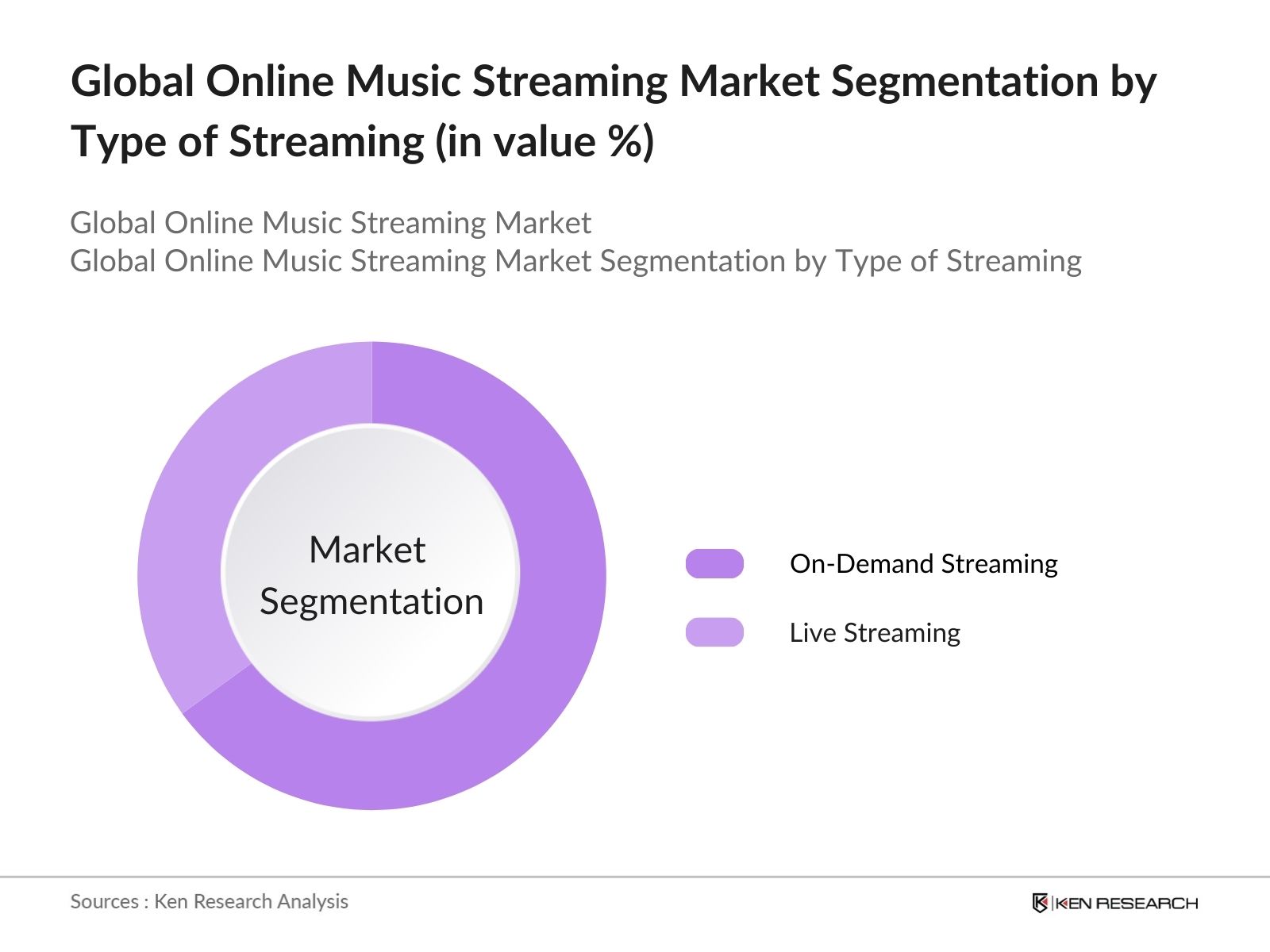
By Type of Streaming: The global online music streaming market is segmented by type into On-Demand Streaming and Live Streaming. On-demand streaming currently holds the dominant market share, with consumers gravitating toward curated playlists and personalized recommendations. On-demand streaming platforms, such as Spotify and Apple Music, offer vast music libraries with easy access to millions of songs, which appeals to the evolving preferences of users who seek flexibility and variety. Additionally, on-demand streaming is supported by advanced AI-driven algorithms, making it the preferred choice for many users.
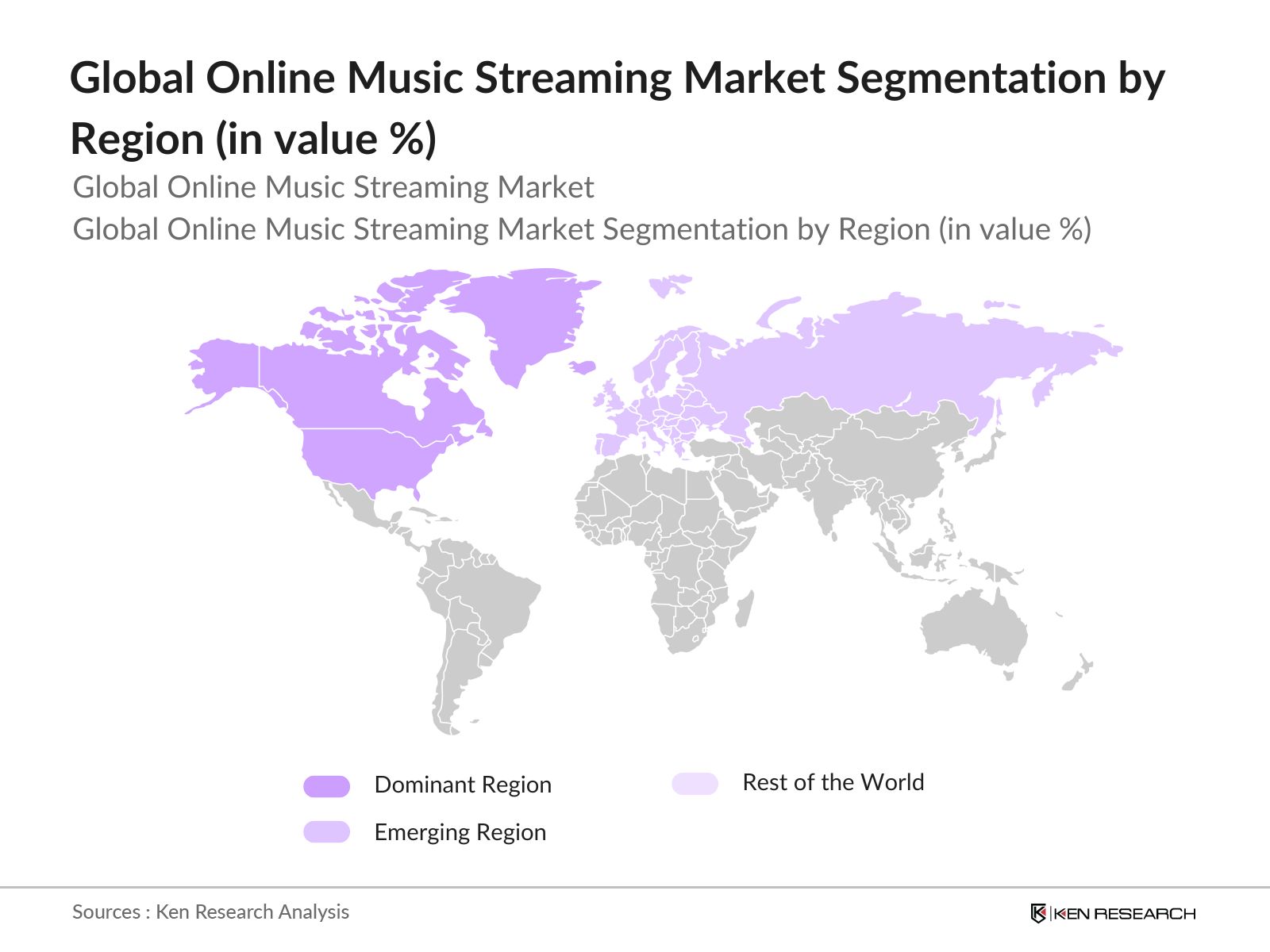
 By Region: The market is segmented by region into North America, Europe, Asia-Pacific, Latin America, and Middle East and Africa. North America holds the largest market share due to the strong presence of global music streaming giants and a tech-savvy population. The region benefits from widespread access to high-speed internet and the willingness of consumers to spend on digital entertainment. The U.S., in particular, has well-established digital infrastructure and partnerships between platforms and music labels, further boosting its dominance.
By Subscription Model: The online music streaming market is segmented by subscription model into Freemium Services and Premium Services. Freemium services dominate the market as they allow users to access vast music libraries at no cost, supported by advertisements. This model attracts users who are not willing to pay initially but later convert to premium subscriptions for an ad-free experience. Platforms like Spotify have perfected this model by offering high-quality music streaming for free while enticing users with exclusive features under the premium model.
The global online music streaming market is highly competitive, with major players continuously innovating and expanding their offerings to capture market share. The consolidation of platforms, along with strategic partnerships and acquisitions, has also shaped the competitive landscape. The market is dominated by well-established players such as Spotify, Apple Music, and Amazon Music, who command significant consumer trust and brand loyalty.
Growth Drivers
Challenges
Global Online Music Streaming Market is expected to see substantial growth driven by increasing mobile penetration, rising demand for personalized user experiences, and the continued evolution of audio streaming technologies. The integration of artificial intelligence (AI) and machine learning to enhance music recommendations and the growing popularity of podcasts and audiobooks are also expected to contribute to market expansion.
Market Opportunities
|
Segment |
Sub-segment |
|
By Type of Streaming |
On-Demand Streaming |
|
Live Streaming |
|
|
By Platform |
Mobile Platforms |
|
Desktop Platforms |
|
|
Smart Speakers and Home Devices |
|
|
By Subscription Model |
Freemium Services |
|
Premium Services |
|
|
By Content Type |
Music |
|
Podcasts |
|
|
Audiobooks |
|
|
By Region |
North America |
|
Europe |
|
|
Asia-Pacific |
|
|
Latin America |
|
|
Middle East and Africa |
1.1. Definition and Scope
1.2. Market Taxonomy
1.3. Market Growth Rate
1.4. Market Segmentation Overview
2.1. Historical Market Size
2.2. Year-on-Year Growth Analysis
2.3. Key Market Developments and Milestones
3.1. Growth Drivers (Subscriber Growth, Content Licensing, Mobile Penetration, Music Labels)
3.1.1. Increased Mobile Data Usage
3.1.2. Expansion of Digital Payment Platforms
3.1.3. Growth in Music Subscription Services
3.1.4. Partnerships with Telecom Providers
3.2. Market Challenges (Licensing Costs, Competition, Profit Margins, Content Regulations)
3.2.1. High Royalty Fees
3.2.2. Intense Competition Among Platforms
3.2.3. Challenges in Monetization
3.2.4. Regulatory Barriers in Certain Markets
3.3. Opportunities (Emerging Markets, New Technologies, Partnerships, Innovative Business Models)
3.3.1. Expansion in Emerging Markets
3.3.2. Integration of AI and Machine Learning
3.3.3. Growth in Social Media and Streaming Synergies
3.3.4. Podcast Monetization and Live Streaming
3.4. Trends (User Experience, AI-Powered Recommendations, Diversified Content, Personalization)
3.4.1. Rise of Personalized Playlists
3.4.2. AI-Driven Music Discovery
3.4.3. Integration with Voice Assistants
3.4.4. Growth of Non-Music Content (Podcasts, Audiobooks)
3.5. Government Regulation (Licensing Agreements, Copyright Laws, Content Distribution Policies, Localization Mandates)
3.5.1. Copyright Protection Measures
3.5.2. Regulatory Compliance in Different Regions
3.5.3. Local Content Requirements
3.5.4. Content Distribution and Royalty Structure
3.6. SWOT Analysis
3.7. Stakeholder Ecosystem
3.8. Porters Five Forces Analysis
3.9. Competition Ecosystem
4.1. By Type of Streaming (In Value %)
4.1.1. On-Demand Streaming
4.1.2. Live Streaming
4.2. By Platform (In Value %)
4.2.1. Mobile Platforms
4.2.2. Desktop Platforms
4.2.3. Smart Speakers and Home Devices
4.3. By Subscription Model (In Value %)
4.3.1. Freemium Services
4.3.2. Premium Services
4.4. By Content Type (In Value %)
4.4.1. Music
4.4.2. Podcasts
4.4.3. Audiobooks
4.5. By Region (In Value %)
4.5.1. North America
4.5.2. Europe
4.5.3. Asia-Pacific
4.5.4. Latin America
4.5.5. Middle East and Africa
5.1. Detailed Profiles of Major Companies
5.1.1. Spotify Technology S.A.
5.1.2. Apple Music
5.1.3. Amazon Music
5.1.4. YouTube Music
5.1.5. Tidal
5.1.6. Deezer
5.1.7. Pandora
5.1.8. SoundCloud
5.1.9. Tencent Music Entertainment Group
5.1.10. JioSaavn
5.2. Cross Comparison Parameters (No. of Subscribers, Revenue, Content Library, Licensing Deals, Geographic Reach, Growth Strategies, Key Partnerships, Monetization Models)
5.3. Market Share Analysis
5.4. Strategic Initiatives
5.5. Mergers and Acquisitions
5.6. Investment Analysis
5.7. Venture Capital Funding
5.8. Government Grants
5.9. Private Equity Investments
6.1. Licensing Agreements
6.2. Copyright Laws and Protection
6.3. Compliance Requirements Across Regions
6.4. Localization and Content Distribution Policies
7.1. Future Market Size Projections
7.2. Key Factors Driving Future Market Growth
8.1. By Type of Streaming (In Value %)
8.2. By Platform (In Value %)
8.3. By Subscription Model (In Value %)
8.4. By Content Type (In Value %)
8.5. By Region (In Value %)
9.1. TAM/SAM/SOM Analysis
9.2. Customer Cohort Analysis
9.3. Marketing Initiatives
9.4. White Space Opportunity Analysis
The research began with identifying the primary stakeholders within the global online music streaming market. Through extensive desk research and proprietary databases, we identified the critical factors affecting market dynamics, including technological integration, consumer behavior, and digital transformation.
We conducted a comprehensive analysis of historical data, evaluating trends such as the rise in mobile penetration, growth in subscription-based models, and the influence of technological advancements on user behavior. This phase focused on ensuring accurate revenue estimations and service quality statistics.
Hypotheses regarding market growth drivers and barriers were validated through consultations with industry experts from major streaming platforms. These insights were gathered using computer-assisted telephone interviews (CATIS) to refine our data.
Finally, we synthesized the data by engaging with music streaming platform executives to gather insights on segment performance, content licensing strategies, and user engagement. This allowed us to deliver a comprehensive and validated analysis of the market.
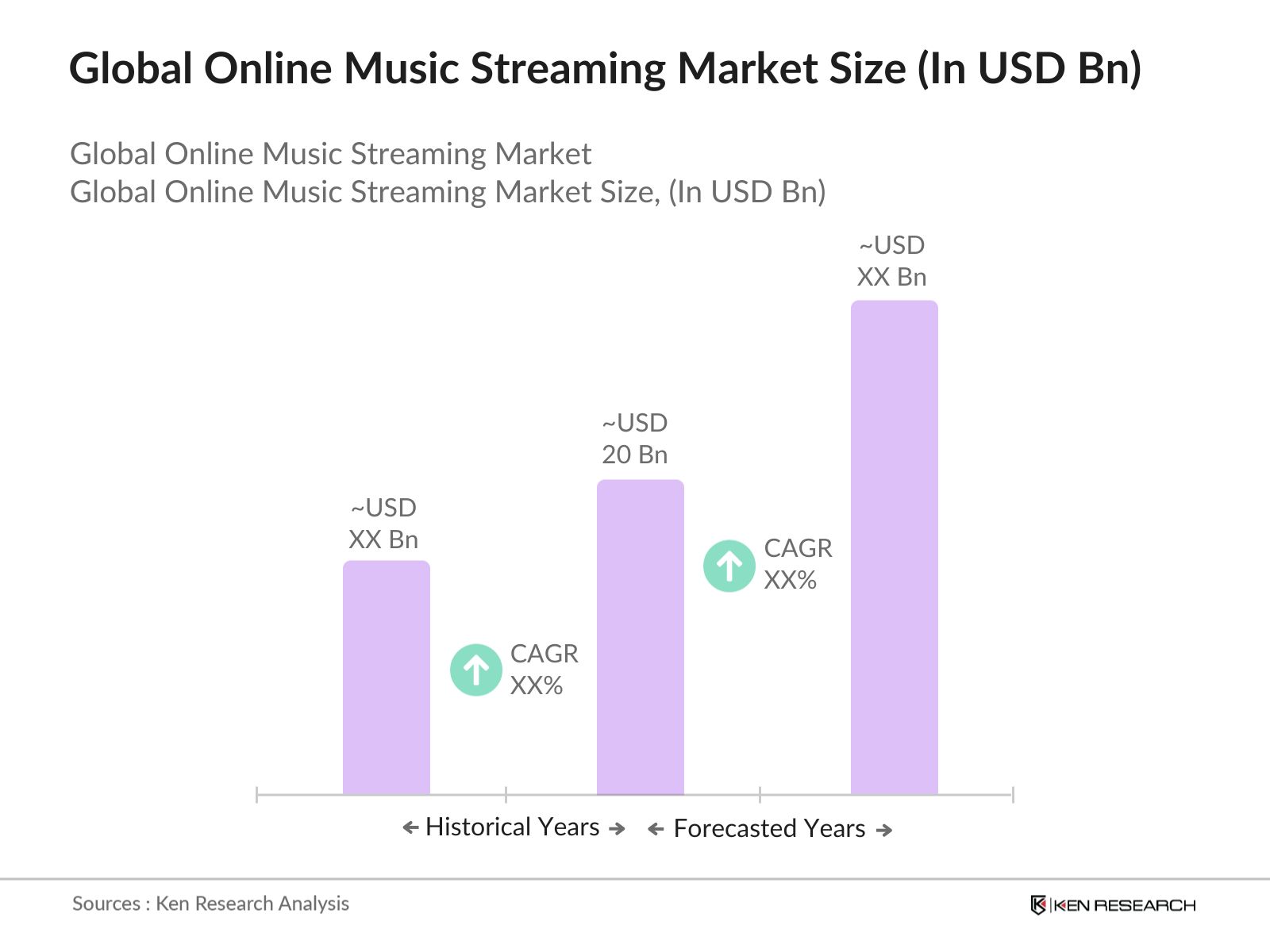
The global online music streaming market is valued at USD 20 billion, driven by the growing consumer demand for digital music, increased smartphone penetration, and the rise of subscription-based models.
Key challenges in global online music streaming market include high content licensing costs, intense competition among platforms, and monetization difficulties, especially in freemium models. Additionally, regulatory hurdles in certain regions add complexity to operations.
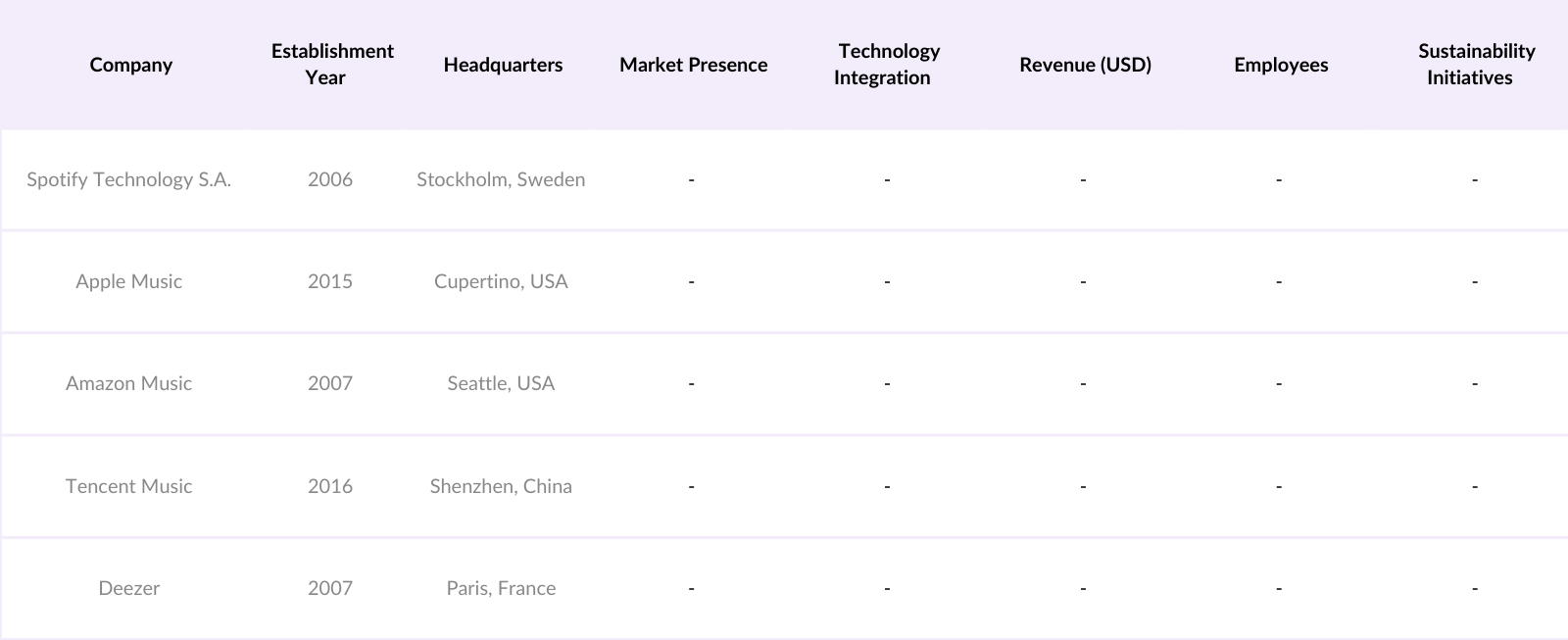
The major players in global online music streaming market include Spotify Technology S.A., Apple Music, Amazon Music, Tencent Music, and Deezer. These companies dominate due to their extensive music libraries, partnerships with music labels, and personalized user experiences.
The global online music streaming market is driven by increased mobile penetration, rising demand for personalized music recommendations, and advancements in AI and machine learning, which enhance user engagement and content discovery.

What makes us stand out is that our consultants follows Robust, Refine and Result (RRR) methodology. i.e. Robust for clear definitions, approaches and sanity checking, Refine for differentiating respondents facts and opinions and Result for presenting data with story

We have set a benchmark in the industry by offering our clients with syndicated and customized market research reports featuring coverage of entire market as well as meticulous research and analyst insights.

While we don't replace traditional research, we flip the method upside down. Our dual approach of Top Bottom & Bottom Top ensures quality deliverable by not just verifying company fundamentals but also looking at the sector and macroeconomic factors.

With one step in the future, our research team constantly tries to show you the bigger picture. We help with some of the tough questions you may encounter along the way: How is the industry positioned? Best marketing channel? KPI's of competitors? By aligning every element, we help maximize success.

Our report gives you instant access to the answers and sources that other companies might choose to hide. We elaborate each steps of research methodology we have used and showcase you the sample size to earn your trust.

If you need any support, we are here! We pride ourselves on universe strength, data quality, and quick, friendly, and professional service.