
Global Orally Disintegrating Tablets Market Outlook to 2030

Region:Global

Author(s):Shambhavi

Product Code:KROD6380

Published On

December 2024

Total pages

90

About the Report

Global Orally Disintegrating Tablets Market Overview

  • The Global Orally Disintegrating Tablets (ODT) Market, valued at USD 3 billion in 2023, is primarily driven by growing demand for fast-acting medication delivery systems among pediatric and geriatric populations. The market has expanded as ODTs cater to patients facing difficulties in swallowing conventional tablets. Increasing advancements in pharmaceutical technology have allowed manufacturers to enhance ODT formulations, ensuring faster drug absorption and increased patient compliance. These factors collectively propel the ODT market's value, building on the five-year historical growth period supported by leading pharmaceutical development initiatives.

market overviews

  • Regions such as North America and Europe dominate the ODT market due to robust healthcare infrastructure, high pharmaceutical R&D expenditure, and large geriatric populations. In North America, advanced healthcare awareness and early adoption of innovative formulations drive demand. Meanwhile, Europe benefits from the presence of top pharmaceutical manufacturers and favorable regulatory frameworks, making these regions significant contributors to the market's development.
  • The U.S. Food and Drug Administration (FDA) requires strict adherence to quality and safety standards for ODTs, which are governed by guidelines ensuring bioequivalence, stability, and appropriate disintegration times. Compliance with FDA standards is critical for ODT manufacturers seeking to enter the U.S. market, as failure to meet these standards can result in costly recalls and delayed approvals. Recent FDA data shows over 70% of drug recalls in the U.S. are due to non-compliance, highlighting the rigorous regulatory requirements in this market.

Global Orally Disintegrating Tablets Market Segmentation

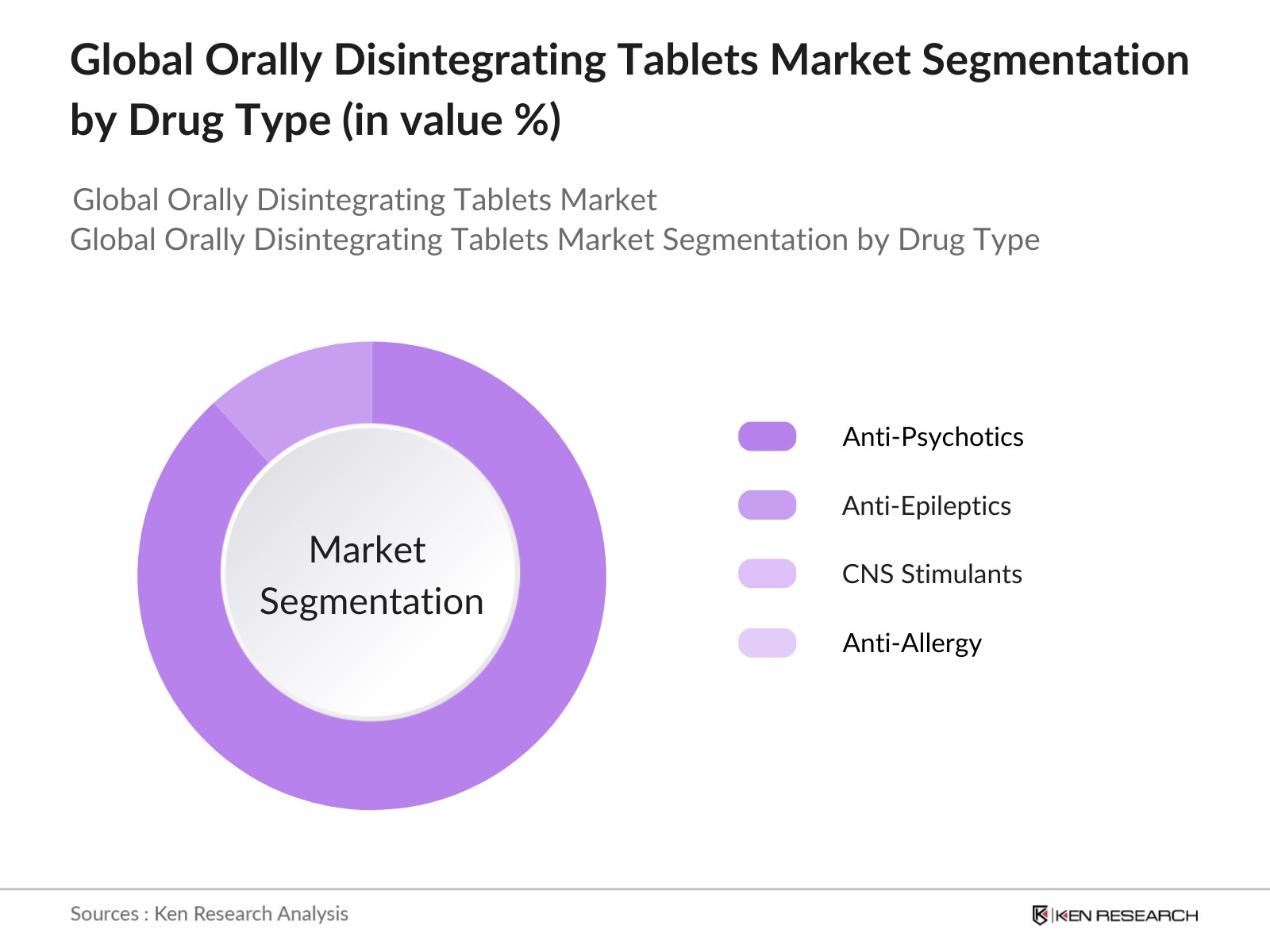
By Drug Type: The ODT market segments into anti-psychotics, anti-epileptics, CNS stimulants, and anti-allergy medications. Among these, anti-psychotics hold a dominant position due to increasing cases of psychiatric disorders. This segment benefits from ODTs' convenient, rapid-dissolution technology, providing swift relief and ease of administration, especially vital for patients with mental health conditions requiring consistent medication intake.
market overviews

By Dosage Form: The dosage forms for ODTs include tablets, sublingual tablets, and effervescent tablets. Regular tablets account for the highest share due to their broad therapeutic application and ease of manufacturing. These tablets are widely accepted across various treatment areas, giving them an edge over other formats.

market overviews

Global Orally Disintegrating Tablets Market Competitive Landscape

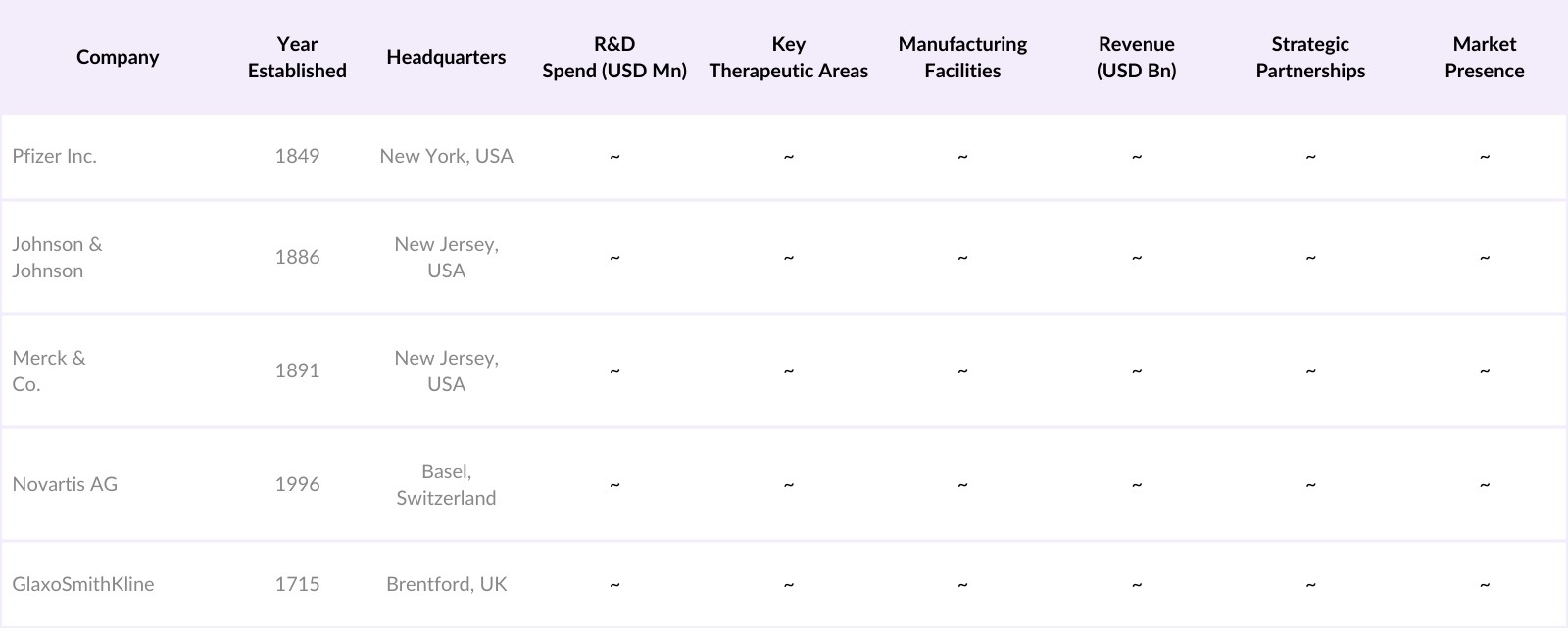
The ODT market is highly consolidated, with several global players holding substantial shares. Key competitors leverage extensive R&D capabilities and strategic partnerships to gain market influence. This concentration underscores the significant impact of these leading firms on market dynamics.
market overviews

Global Orally Disintegrating Tablets Market Analysis

Growth Drivers

  • Increasing Prevalence of Neurological Disorders: The prevalence of neurological disorders has risen significantly, with approximately 55 million people currently living with dementia worldwide, according to the World Health Organization (WHO). This surge in neurological cases, especially among aging populations, underscores a growing demand for easily administered medications like orally disintegrating tablets (ODTs), which offer convenience for patients with impaired motor functions or cognitive disabilities. In North America alone, the number of individuals diagnosed with neurological conditions such as Alzheimers and Parkinsons is steadily increasing, pushing manufacturers to develop formulations that ensure ease of use and adherence for these patients.
  • Growing Demand for Geriatric and Pediatric-Friendly Dosages; With the global population over age 65 projected to exceed 1.5 billion, demand for geriatric and pediatric-friendly medications is expanding significantly. Older adults often struggle with conventional tablet forms due to swallowing difficulties, leading to increased adoption of ODTs, which are convenient, easy to administer, and do not require water. For pediatric use, ODTs are especially useful for children unable to swallow tablets, offering a more palatable and compliant form of medication administration. This trend aligns with the growth of the global geriatric population, which rose by 8.5% since 2022, highlighting a crucial market driver.
  • Advancements in Pharmaceutical Technology: Technological advancements in the pharmaceutical sector have been instrumental in enhancing the bioavailability and efficacy of ODT formulations. Innovations like freeze-drying and direct compression have allowed manufacturers to create faster-dissolving tablets that retain drug stability. Advanced encapsulation techniques are now being used to ensure controlled release, improving the effectiveness of active ingredients. These advancements are supported by rising R&D budgets, with pharmaceutical companies collectively investing over USD 200 billion globally, reflecting the high priority placed on new drug delivery solutions and patient-centric formulations.

Market Challenges

  • Manufacturing Complexity: ODTs pose unique manufacturing challenges, such as ensuring rapid disintegration while maintaining mechanical strength. Production requires advanced freeze-drying or direct compression technology, which is more costly and complex than standard tablet manufacturing. According to recent industry reports, implementing these specialized methods can increase production costs by up to 30%, presenting a significant barrier for small-scale pharmaceutical companies. Additionally, the need to avoid moisture sensitivity during packaging raises manufacturing and operational costs further, impacting overall profitability.
  • Regulatory Hurdles: Pharmaceutical companies face stringent regulatory requirements to meet the FDAs and EMA's guidelines for ODTs, which demand strict bioequivalence, stability, and safety tests. The approval process for ODTs can take 610 months longer than conventional tablets due to these specific regulatory requirements. Compliance with different international standards also poses a challenge, as manufacturing facilities must be upgraded and quality assurance processes adjusted to meet multi-region standards. The time-intensive regulatory environment impacts the launch timelines for ODT products, reducing competitive advantage for manufacturers.

Global Orally Disintegrating Tablets Market Future Outlook

The ODT market is poised for continued growth, driven by increasing preference for patient-friendly medication, ongoing innovations in drug delivery technologies, and higher prevalence of chronic illnesses. The demand for rapid-dissolving drug formulations is expected to rise as healthcare providers seek improved solutions for populations requiring enhanced compliance, such as the elderly and children. Collaborations in R&D between major pharmaceutical companies and growing adoption of advanced manufacturing technologies are also anticipated to play significant roles.

Market Opportunities

  • Expanding Application Scope in Therapeutics: The versatility of ODTs extends beyond traditional therapeutic areas, with applications now emerging in fields such as pain management, respiratory conditions, and oncology. Increased R&D investment, estimated at over USD 100 billion annually by pharmaceutical companies globally, supports expanding the application of ODTs into these new therapeutic areas. These developments meet the evolving healthcare landscape's needs, offering an improved and patient-friendly alternative across a range of treatment areas, thereby widening ODT market prospects.
  • Strategic Collaborations for R&D: To tackle the complexities of ODT production, companies are increasingly forming partnerships to pool resources and expertise. Collaborations between large pharmaceutical firms and specialized research institutions are accelerating innovation and product development. For instance, industry collaborations contributed over USD 50 billion in R&D funding in 2023, reflecting the pharmaceutical sector's focus on advancing drug delivery systems. These partnerships enhance access to advanced research capabilities and market penetration strategies, strengthening the competitive position of firms involved.

Scope of the Report

Scope of Report

Segments

Sub-Segments

Drug Type

Anti-psychotics

Anti-Epileptics

CNS Stimulants

Anti-Allergy

Dosage Form

Tablets

Sublingual Tablets

Effervescent Tablets

Distribution Channel

Hospital Pharmacies

Retail Pharmacies

Online Pharmacies

Patient Type

Geriatric

Pediatric

Adults

Region

North America

Europe

Asia-Pacific

Latin America

Middle East & Afric

Products

Key Target Audience

  • Pharmaceutical Manufacturers

  • Drug Distributors

  • Healthcare Providers

  • Patient Advocacy Groups

  • Government and Regulatory Bodies (FDA, EMA)

  • Investors and Venture Capitalist Firms

  • Research and Development Institutes

  • Healthcare Insurance Providers

Companies

Players mentioned in the report

  • Pfizer Inc.

  • Johnson & Johnson

  • Merck & Co.

  • Novartis AG

  • GlaxoSmithKline

  • Bristol-Myers Squibb

  • Mylan N.V.

  • Sanofi S.A.

  • Teva Pharmaceuticals

  • Takeda Pharmaceutical

  • AstraZeneca

  • Eli Lilly

  • Bayer AG

  • Lupin Pharmaceuticals

  • Sun Pharmaceutical Industries

Table of Contents

1. Global Orally Disintegrating Tablets Market Overview

1.1 Definition and Scope

1.2 Market Taxonomy

1.3 Market Growth Rate Analysis

1.4 Market Segmentation Overview

2. Global Orally Disintegrating Tablets Market Size (In USD MN)

2.1 Historical Market Size

2.2 Year-on-Year Growth Analysis

2.3 Key Market Developments and Milestones

3. Global Orally Disintegrating Tablets Market Analysis

3.1 Growth Drivers

3.1.1 Increasing Prevalence of Neurological Disorders

3.1.2 Growing Demand for Geriatric and Pediatric-Friendly Dosages

3.1.3 Advancements in Pharmaceutical Technology

3.1.4 Enhanced Patient Compliance Needs

3.2 Market Challenges

3.2.1 Manufacturing Complexity (Specific Challenges)

3.2.2 Regulatory Hurdles

3.2.3 Cost Constraints

3.2.4 Limited Awareness in Emerging Markets

3.3 Opportunities

3.3.1 Expanding Application Scope in Therapeutics

3.3.2 Strategic Collaborations for R&D

3.3.3 Increasing Adoption in Chronic Disease Management

3.3.4 Entry into Untapped Geographical Markets

3.4 Trends

3.4.1 Development of Bioequivalent Generics

3.4.2 Use of Nanoformulations

3.4.3 Surge in OTC Oral Disintegrating Tablets

3.4.4 Implementation of Advanced Drug Delivery Mechanisms

3.5 Government Regulations

3.5.1 FDA Compliance for ODT Standards

3.5.2 EU Medicinal Directives

3.5.3 Drug Approval Process Streamlining

3.5.4 Quality Assurance and Labelling Norms

3.6 SWOT Analysis

3.7 Supply Chain & Stakeholder Ecosystem

3.8 Porters Five Forces Analysis

3.9 Competitive Landscape Analysis

4. Global Orally Disintegrating Tablets Market Segmentation

4.1 By Drug Type (In Value %)

4.1.1 Anti-Psychotics

4.1.2 Anti-Epileptics

4.1.3 CNS Stimulants

4.1.4 Anti-Allergy

4.2 By Dosage Form (In Value %)

4.2.1 Tablets

4.2.2 Sublingual Tablets

4.2.3 Effervescent Tablets

4.3 By Distribution Channel (In Value %)

4.3.1 Hospital Pharmacies

4.3.2 Retail Pharmacies

4.3.3 Online Pharmacies

4.4 By Patient Type (In Value %)

4.4.1 Geriatric

4.4.2 Pediatric

4.4.3 Adults

4.5 By Region (In Value %)

4.5.1 North America

4.5.2 Europe

4.5.3 Asia-Pacific

4.5.4 Latin America

4.5.5 Middle East & Africa

5. Global Orally Disintegrating Tablets Market Competitive Analysis

5.1 Detailed Profiles of Major Companies

5.1.1 Pfizer Inc.

5.1.2 Johnson & Johnson

5.1.3 Merck & Co.

5.1.4 GlaxoSmithKline

5.1.5 Novartis AG

5.1.6 Bristol-Myers Squibb

5.1.7 Mylan N.V.

5.1.8 Sanofi S.A.

5.1.9 Teva Pharmaceuticals

5.1.10 Takeda Pharmaceutical

5.1.11 AstraZeneca

5.1.12 Eli Lilly

5.1.13 Bayer AG

5.1.14 Lupin Pharmaceuticals

5.1.15 Sun Pharmaceutical Industries

5.2 Cross Comparison Parameters (No. of Employees, Headquarters, R&D Spend, Revenue, Market Share, Manufacturing Locations, Product Diversity, Key Therapeutic Segments)

5.3 Market Share Analysis

5.4 Strategic Initiatives

5.5 Mergers & Acquisitions

5.6 Investment Analysis

5.7 Venture Capital Funding

5.8 Government Grants

5.9 Private Equity Investments

6. Global Orally Disintegrating Tablets Market Regulatory Framework

6.1 FDA Drug Approval Protocols

6.2 EMA Compliance Norms

6.3 WHO GMP Standards

6.4 Clinical Trial Requirements

7. Future Market Size Projections for Orally Disintegrating Tablets Market (In USD MN)

8. Future Market Segmentation for Orally Disintegrating Tablets Market

8.1 By Drug Type

8.2 By Dosage Form

8.3 By Distribution Channel

8.4 By Patient Type

8.5 By Region

9. Market Analysts Recommendations

9.1 Target Addressable Market Analysis

9.2 Strategic Growth Initiatives

9.3 Emerging Product Development Strategies

9.4 Market White Space Analysis

Disclaimer Contact Us

Research Methodology

Step 1: Identification of Key Variables

The research begins with a comprehensive review of the Global Orally Disintegrating Tablets Market landscape. Extensive desk research identifies the primary stakeholders and major influencing variables, with insights drawn from credible databases and proprietary sources.

Step 2: Market Analysis and Construction

Historical data is analyzed to build a market construct, focusing on product penetration, demand trends, and therapeutic areas. Service quality data and revenue statistics are then incorporated to refine projections and inform revenue potential.

Step 3: Hypothesis Validation and Expert Consultation

In this phase, industry experts are consulted via computer-assisted telephone interviews (CATIs) to validate hypotheses and provide insights on operational, financial, and strategic aspects of the market.

Step 4: Research Synthesis and Final Output

The concluding step involves synthesizing primary and secondary research data. Collaborations with manufacturers provide nuanced insights on product lines and market positioning, ensuring accuracy and completeness in the final report.


Frequently Asked Questions

01. How big is the Global Orally Disintegrating Tablets Market?

The market is valued at USD 3 Billion, supported by an increase in patient populations requiring fast-acting medication delivery solutions, particularly among pediatric and elderly groups.

02. What are the challenges in the Global Orally Disintegrating Tablets Market?

Challenges include high production costs due to specialized manufacturing requirements and stringent regulatory standards, which can delay product approval and market entry.

03. Who are the major players in the Global Orally Disintegrating Tablets Market?

Key players include Pfizer Inc., Johnson & Johnson, Novartis AG, and Merck & Co., each leveraging their advanced R&D capabilities and extensive distribution networks to maintain a competitive edge.

04. What factors are driving growth in the Global Orally Disintegrating Tablets Market?

Growth is driven by the demand for efficient drug delivery systems, an increasing prevalence of chronic illnesses, and technological advancements in pharmaceutical formulation.

05. Which regions lead the Global Orally Disintegrating Tablets Market?

North America and Europe are leading regions, benefiting from robust healthcare systems, high R&D investment, and early adoption of innovative pharmaceutical solutions.


Why Buy From Us?

RRR
Refine Robust Result (RRR) Framework

What makes us stand out is that our consultants follows Robust, Refine and Result (RRR) methodology. i.e. Robust for clear definitions, approaches and sanity checking, Refine for differentiating respondents facts and opinions and Result for presenting data with story

Our Reach Is Unmatched

We have set a benchmark in the industry by offering our clients with syndicated and customized market research reports featuring coverage of entire market as well as meticulous research and analyst insights.

Research
Shifting the Research Paradigm

While we don't replace traditional research, we flip the method upside down. Our dual approach of Top Bottom & Bottom Top ensures quality deliverable by not just verifying company fundamentals but also looking at the sector and macroeconomic factors.

Insite
More Insights-Better Decisions

With one step in the future, our research team constantly tries to show you the bigger picture. We help with some of the tough questions you may encounter along the way: How is the industry positioned? Best marketing channel? KPI's of competitors? By aligning every element, we help maximize success.

Trust
Transparency and Trust

Our report gives you instant access to the answers and sources that other companies might choose to hide. We elaborate each steps of research methodology we have used and showcase you the sample size to earn your trust.

support
Round the Clock Support

If you need any support, we are here! We pride ourselves on universe strength, data quality, and quick, friendly, and professional service.

Why Client Choose Us?

400000+ Reports in repository
150+ Consulting project a year
100+ Analysts
8000+ Client Queries in 2022