
Global Patient Administration System Market Outlook to 2030
Region:Global
Author(s):Sanjna Verma
Product Code:KROD6390
Region:Global
Author(s):Sanjna Verma
Product Code:KROD6390
December 2024
93
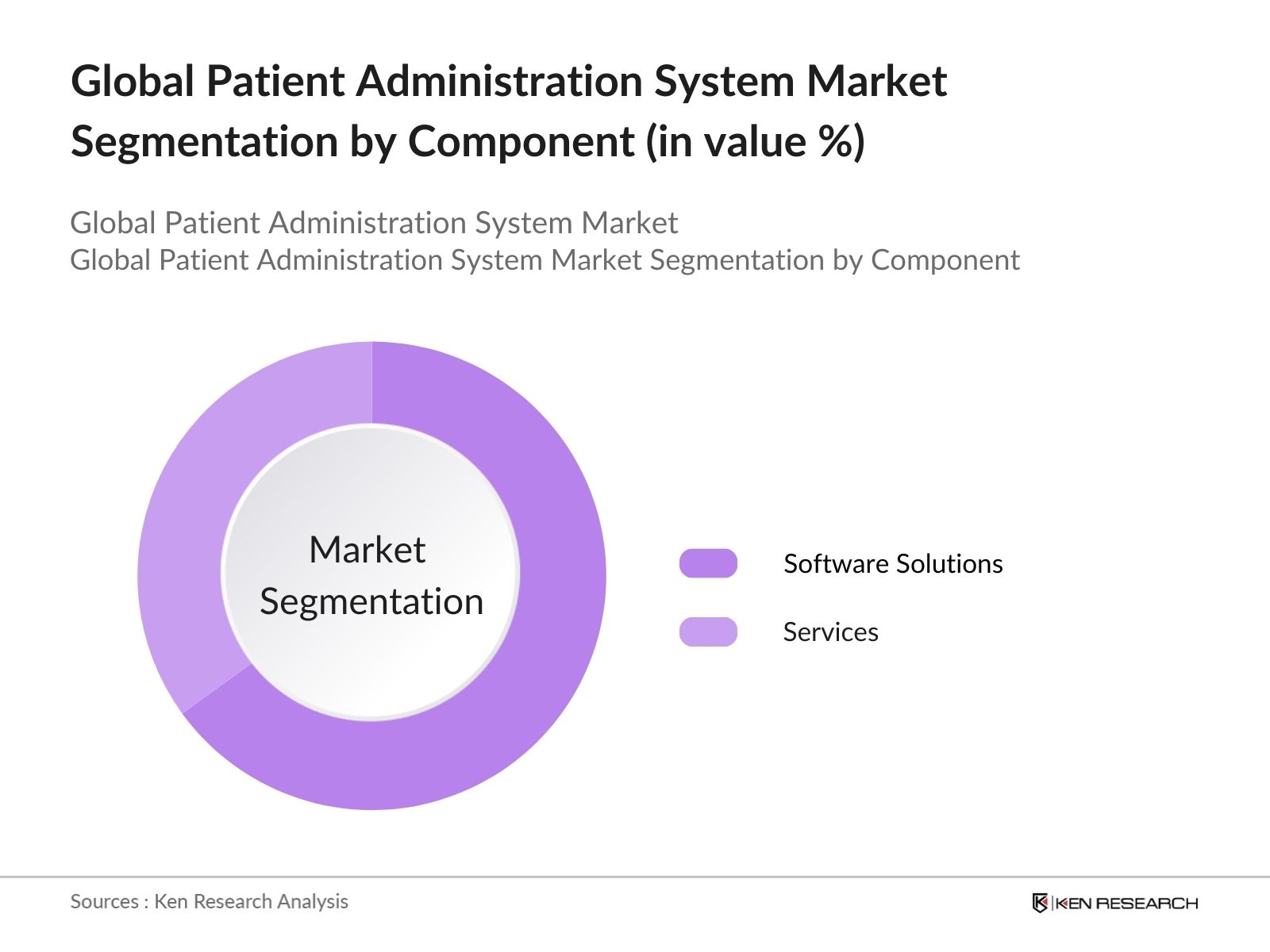
By Component: The Patient Administration System Market is segmented by component into software solutions and services. The software solutions segment holds the dominant market share due to its ability to streamline administrative functions such as patient registration, appointment scheduling, and billing. Software solutions are preferred by healthcare providers because they reduce manual errors and offer real-time updates, enhancing overall efficiency.
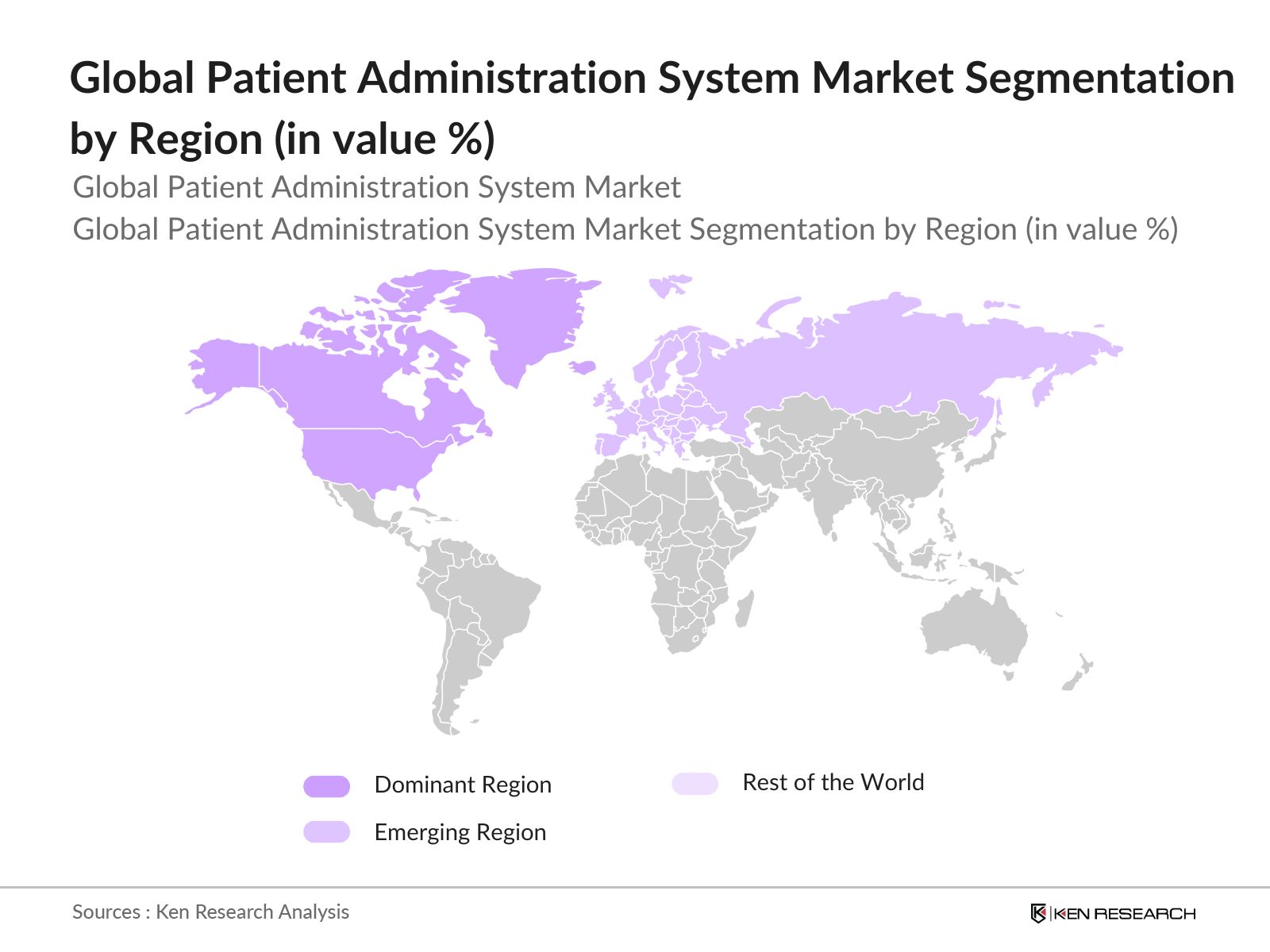
By Region: The market is also segmented by region into North America, Europe, Asia-Pacific, Middle East & Africa, and Latin America. North America holds the dominant market share due to its advanced healthcare infrastructure and significant government investment in healthcare IT. Additionally, Europe follows closely, driven by stringent data protection regulations like GDPR that require healthcare institutions to adopt sophisticated patient administration systems to ensure compliance.
By Deployment: The market is further segmented by deployment into cloud-based and on-premises solutions. Cloud-based solutions have seen substantial growth, capturing a dominant market share due to their scalability, ease of integration, and cost-effectiveness. The need for real-time data access and remote management in modern healthcare settings makes cloud-based systems a preferred choice among healthcare providers.
The Global Patient Administration System Market is dominated by a few key players that are constantly innovating to meet the growing demand for digitized healthcare management. Companies such as Cerner Corporation and Epic Systems lead the market due to their extensive product portfolios and strategic partnerships with healthcare providers. The competition is further intensified by mergers and acquisitions aimed at expanding technological capabilities.
|
Company Name |
Establishment Year |
Headquarters |
Employees |
Revenue (USD Bn) |
Market Reach |
R&D Investment (%) |
Key Partnerships |
Product Offerings |
|
Cerner Corporation |
1979 |
Kansas, U.S. |
- |
- |
- |
- |
- |
- |
|
Epic Systems Corporation |
1979 |
Wisconsin, U.S. |
- |
- |
- |
- |
- |
- |
|
Allscripts Healthcare |
1986 |
Chicago, U.S. |
- |
- |
- |
- |
- |
- |
|
GE Healthcare |
1994 |
Chicago, U.S. |
- |
- |
- |
- |
- |
- |
|
Siemens Healthineers |
2015 |
Erlangen, Germany |
- |
- |
- |
- |
- |
- |
Global Patient Administration System Market is expected to grow significantly, driven by increasing investments in healthcare infrastructure and digitalization efforts. With the continued focus on enhancing patient care and improving operational efficiency, healthcare providers are expected to adopt more advanced administration systems. The demand for cloud-based solutions, in particular, is likely to rise as more hospitals and clinics transition toward digital healthcare management systems. Furthermore, government regulations around data privacy and healthcare IT will continue to play a crucial role in shaping the markets future.
|
By Component |
Software Solutions Services |
|
By Deployment |
Cloud-Based On-Premises |
|
By End-User |
Hospitals Clinics Ambulatory Surgical Centers |
|
By Functionality |
Appointment Scheduling Patient Registration Billing and Invoicing |
|
By Region |
North America Europe Asia-Pacific Middle East & Africa Latin America |
1.1. Definition and Scope
1.2. Market Taxonomy
1.3. Market Growth Rate
1.4. Market Segmentation Overview
2.1. Historical Market Size
2.2. Year-On-Year Growth Analysis
2.3. Key Market Developments and Milestones
3.1. Growth Drivers (EHR Integration, Patient Data Analytics, Hospital IT Infrastructure)
3.1.1. Growing Demand for Electronic Health Records (EHR)
3.1.2. Increased Focus on Patient-Centered Care
3.1.3. Need for Effective Hospital Management
3.1.4. Healthcare Digitalization Initiatives
3.2. Market Challenges (Data Privacy, Integration, Implementation)
3.2.1. Data Security and Privacy Concerns
3.2.2. High Costs of Implementation
3.2.3. Lack of Skilled IT Personnel in Healthcare
3.2.4. Interoperability Challenges
3.3. Opportunities (Cloud-based Solutions, AI Integration, Telemedicine)
3.3.1. Expansion of Cloud-based Patient Administration Systems
3.3.2. AI and Automation Enhancements in Administration
3.3.3. Rising Adoption of Telehealth Solutions
3.3.4. Emerging Markets and Increased Healthcare Spending
3.4. Trends (Mobile Health Solutions, Digital Transformation)
3.4.1. Growing Adoption of Mobile Health (mHealth) Applications
3.4.2. Increasing Use of AI-Driven Administrative Tools
3.4.3. Emphasis on Digital Patient Engagement
3.4.4. Shift Toward Integrated Healthcare Platforms
3.5. Government Regulations (Healthcare IT, Data Standards, Compliance)
3.5.1. Health Information Technology for Economic and Clinical Health (HITECH) Act
3.5.2. GDPR and HIPAA Compliance in Healthcare IT Systems
3.5.3. Government Funding for Healthcare IT Modernization
3.5.4. Data Standardization Initiatives
3.6. SWOT Analysis
3.7. Stakeholder Ecosystem
3.8. Porters Five Forces Analysis
3.9. Competition Ecosystem
4.1. By Component (In Value %)
4.1.1. Software Solutions
4.1.2. Services
4.2. By Deployment (In Value %)
4.2.1. Cloud-Based
4.2.2. On-Premises
4.3. By End-User (In Value %)
4.3.1. Hospitals
4.3.2. Clinics
4.3.3. Ambulatory Surgical Centers
4.4. By Functionality (In Value %)
4.4.1. Appointment Scheduling
4.4.2. Patient Registration
4.4.3. Billing and Invoicing
4.5. By Region (In Value %)
4.5.1. North America
4.5.2. Europe
4.5.3. Asia-Pacific
4.5.4. Middle East & Africa
4.5.5. Latin America
5.1. Detailed Profiles of Major Companies
5.1.1. Cerner Corporation
5.1.2. Epic Systems Corporation
5.1.3. Allscripts Healthcare Solutions, Inc.
5.1.4. GE Healthcare
5.1.5. McKesson Corporation
5.1.6. Siemens Healthineers
5.1.7. NextGen Healthcare
5.1.8. IBM Watson Health
5.1.9. Philips Healthcare
5.1.10. eClinicalWorks
5.2. Cross Comparison Parameters (No. of Employees, Global Presence, Revenue, R&D Investments, Market Share, Partnerships, Technological Innovations, Customer Base)
5.3. Market Share Analysis
5.4. Strategic Initiatives (Collaborations, Partnerships, Product Launches)
5.5. Mergers And Acquisitions
5.6. Investment Analysis
5.7. Venture Capital Funding
5.8. Government Grants
6.1. International Data Privacy Standards
6.2. Healthcare Information Technology Standards
6.3. Certification Processes
7.1. Future Market Size Projections
7.2. Key Factors Driving Future Market Growth
8.1. By Component (In Value %)
8.2. By Deployment (In Value %)
8.3. By End-User (In Value %)
8.4. By Functionality (In Value %)
8.5. By Region (In Value %)
9.1. TAM/SAM/SOM Analysis
9.2. Customer Cohort Analysis
9.3. Marketing Initiatives
9.4. White Space Opportunity Analysis
The initial phase of research involves mapping the entire ecosystem of the Global Patient Administration System Market. This step is based on extensive desk research using secondary data from credible databases, aiming to define the key variables affecting market dynamics, such as healthcare IT adoption rates, patient data management trends, and government regulations.
In this phase, we compile historical data to assess market penetration, deployment ratios (cloud-based vs. on-premises), and the financial performance of key players. We analyze the impact of these factors on revenue generation and market growth, ensuring the estimates are reliable and accurate.
Hypotheses regarding market growth and trends are validated through consultations with industry experts from hospitals, healthcare IT firms, and regulatory bodies. These interviews are conducted via computer-assisted telephone interviews (CATIs), ensuring accurate representation of market insights.
The final step involves synthesizing all collected data to produce comprehensive insights, supported by primary data from key players. This ensures that the final report reflects a robust and validated analysis of the Global Patient Administration System Market.
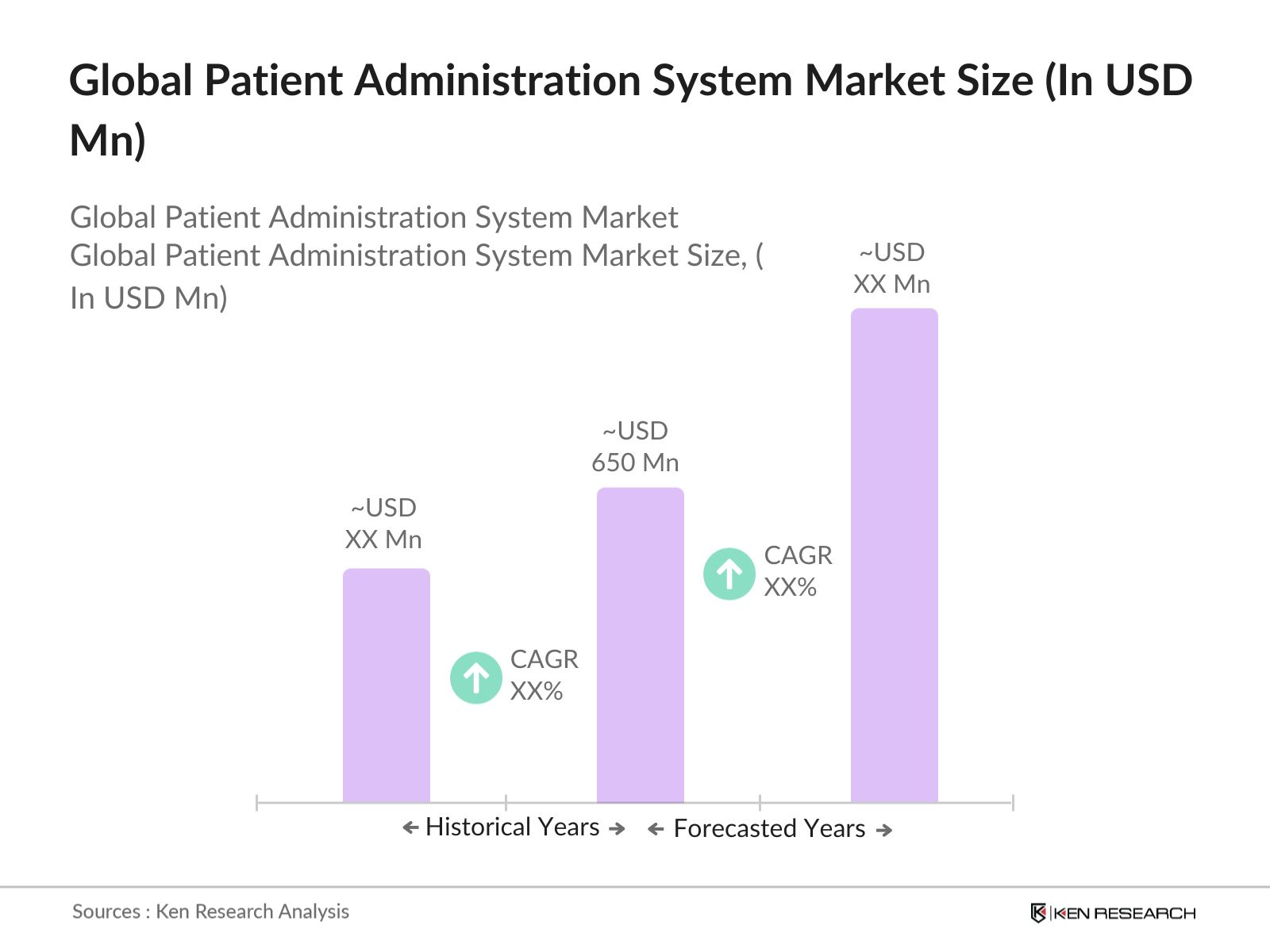
The Global Patient Administration System Market is valued at USD 650 million, driven by the rising adoption of electronic health records and growing digitalization in healthcare management.
Challenges of Global Patient Administration System Market include data security concerns, high implementation costs, and the complexity of integrating new systems with existing healthcare IT infrastructure.
Key players in Global Patient Administration System market include Cerner Corporation, Epic Systems Corporation, Allscripts Healthcare, GE Healthcare, and Siemens Healthineers, all of which have strong global footprints.
Key growth drivers in Global Patient Administration System Market include government regulations mandating healthcare IT adoption, the shift towards cloud-based solutions, and increasing demand for efficient patient data management systems.

What makes us stand out is that our consultants follows Robust, Refine and Result (RRR) methodology. i.e. Robust for clear definitions, approaches and sanity checking, Refine for differentiating respondents facts and opinions and Result for presenting data with story

We have set a benchmark in the industry by offering our clients with syndicated and customized market research reports featuring coverage of entire market as well as meticulous research and analyst insights.

While we don't replace traditional research, we flip the method upside down. Our dual approach of Top Bottom & Bottom Top ensures quality deliverable by not just verifying company fundamentals but also looking at the sector and macroeconomic factors.

With one step in the future, our research team constantly tries to show you the bigger picture. We help with some of the tough questions you may encounter along the way: How is the industry positioned? Best marketing channel? KPI's of competitors? By aligning every element, we help maximize success.

Our report gives you instant access to the answers and sources that other companies might choose to hide. We elaborate each steps of research methodology we have used and showcase you the sample size to earn your trust.

If you need any support, we are here! We pride ourselves on universe strength, data quality, and quick, friendly, and professional service.