
Global Power Grid Market Outlook to 2030
Region:Global
Author(s):Mukul Soni
Product Code:KROD10425
December 2024
98
About the Report
Global Power Grid Market Overview
- The Global Power Grid Market, valued at USD 282 billion, is primarily driven by rapid urbanization and rising energy demand across key regions such as North America, Europe, and Asia-Pacific. With the surge in electrification efforts and the integration of renewable energy sources like wind and solar power, the market has witnessed a steady expansion. Investments in infrastructure modernization and smart grid technologies are also key factors contributing to market growth.
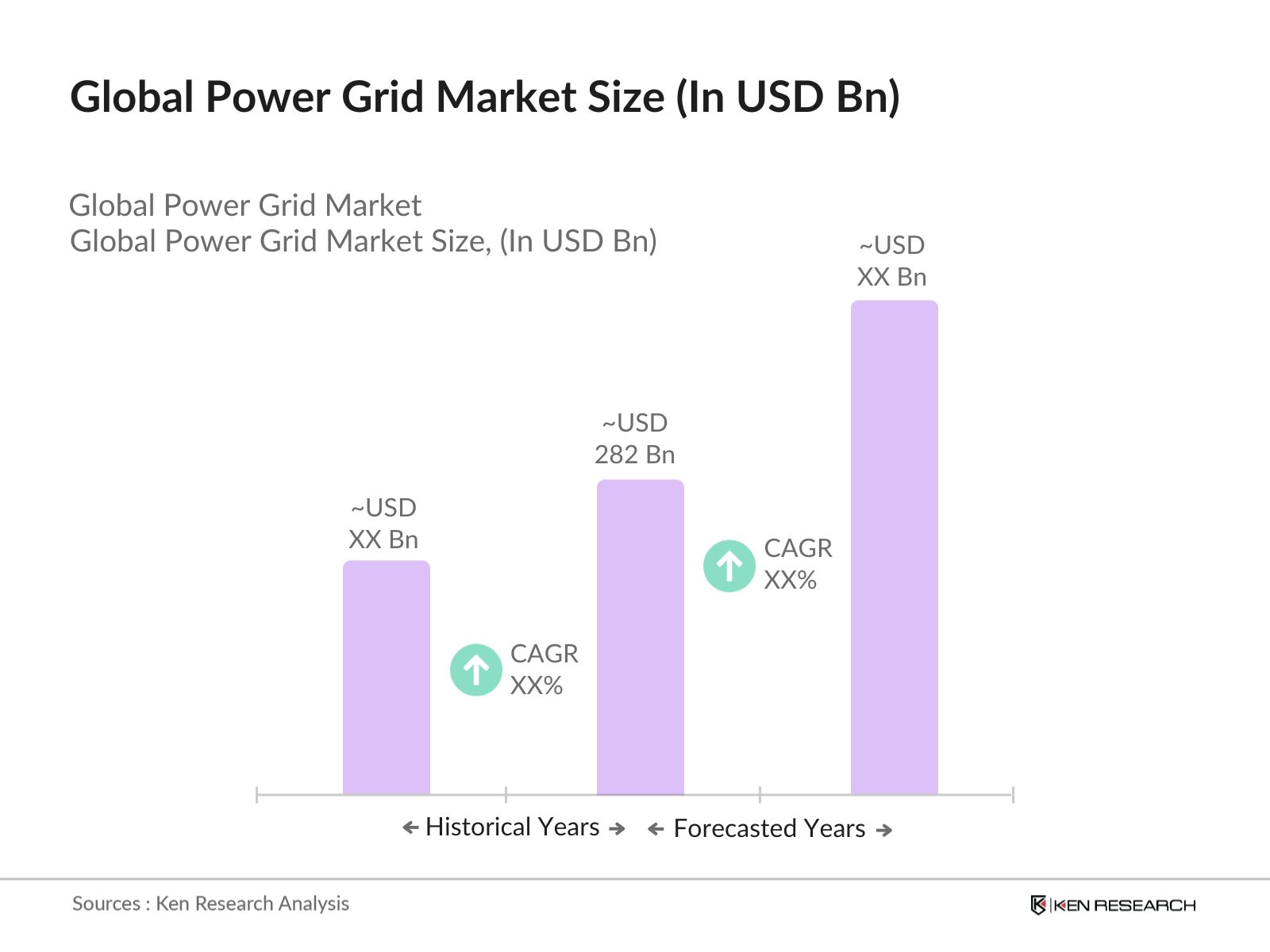
- North America and Europe dominate the market due to their advanced power infrastructure and government policies that prioritize grid modernization and sustainability. Countries like the United States, Germany, and China play a leading role, driven by their high investments in renewable energy integration and their strong focus on reducing carbon footprints. These regions also benefit from large-scale projects related to high-voltage transmission and smart grid networks.
- Countries worldwide are adopting national grid modernization policies to meet future energy needs. In 2023, the U.S. Department of Energy launched the Grid Resilience Innovation Partnership (GRIP) program, committing $13 billion to infrastructure upgrades. The European Union has similar initiatives aimed at decarbonizing the grid and increasing renewable integration. These national policies are crucial to ensuring that grid infrastructure can accommodate future energy demands and improve system reliability in the face of growing energy consumption.
Global Power Grid Market Segmentation
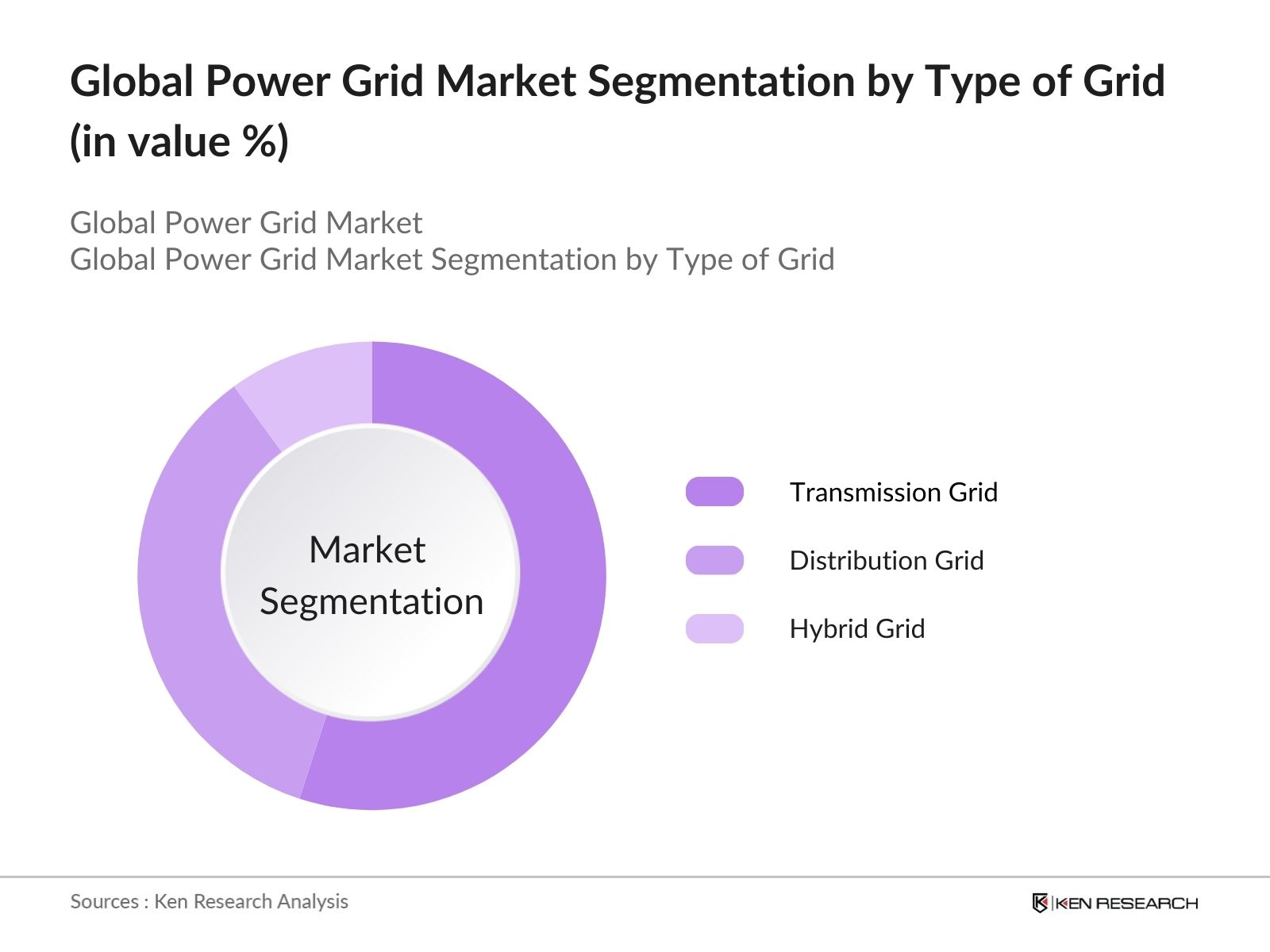
By Type of Grid: The Global Power Grid Market is segmented by grid type into transmission grids, distribution grids, and hybrid grids. Transmission grids dominate this segment due to their critical role in transferring electricity over long distances from power plants to substations. The robust infrastructure and extensive investment in grid resilience upgrades have solidified the dominance of this sub-segment. Distribution grids, although widespread, are more fragmented and less extensive compared to transmission systems, making them a secondary player in this segment.
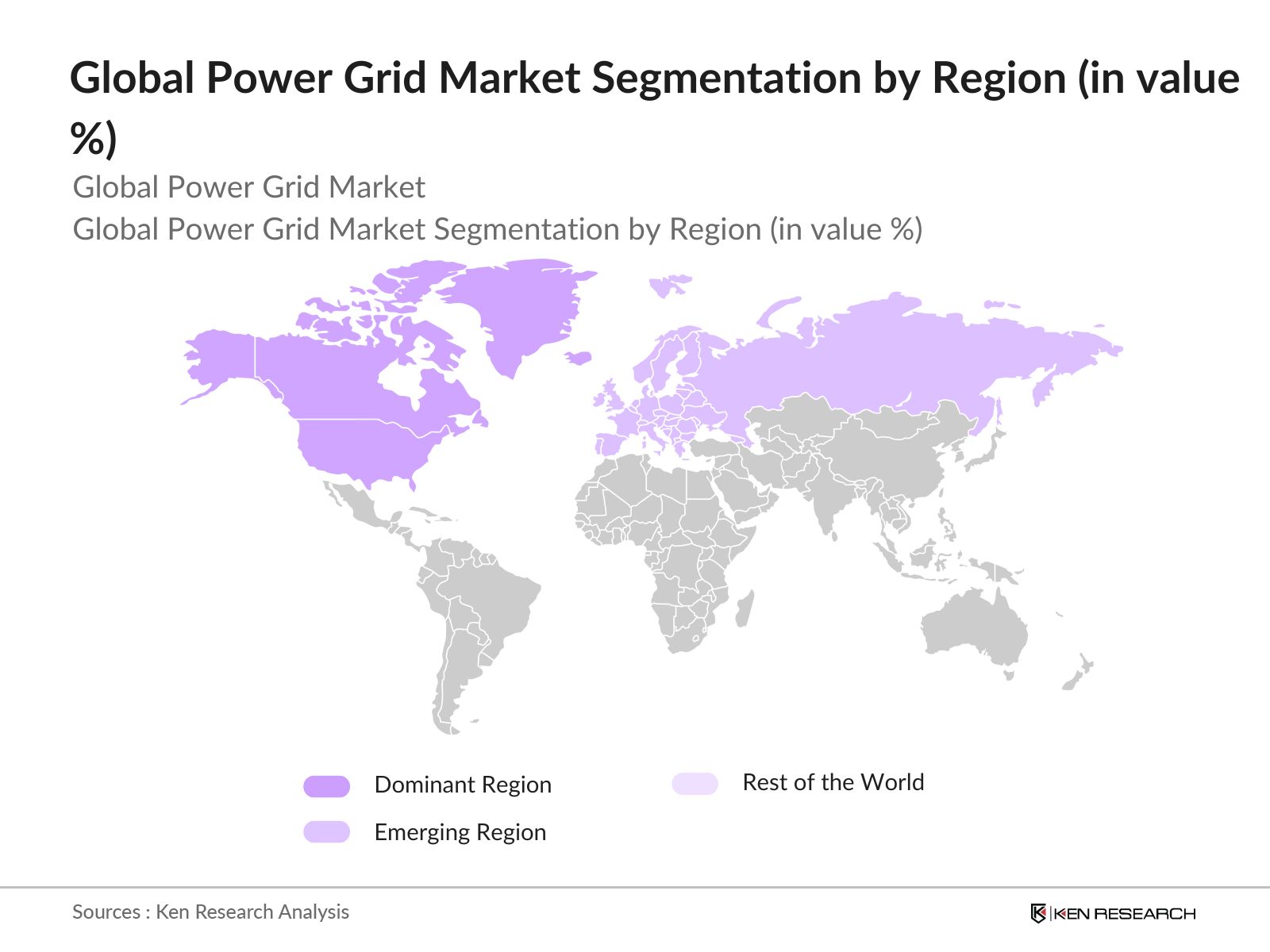
By Region: The Global Power Grid Market is segmented by region into North America, Europe, Asia Pacific, Middle East and Africa, and Latin America. North America leads the market due to significant investment in grid modernization, resilience projects, and the early adoption of renewable energy integration. The regions ability to maintain a stable and efficient grid system amid increasing energy consumption has solidified its dominance. Europe closely follows due to stringent government policies on energy transition and decarbonization.
By Technology: The market is segmented by technology into smart grid technologies, advanced metering infrastructure (AMI), and high-voltage direct current (HVDC). Smart grid technologies lead this segment due to their integration with IoT and AI for enhanced grid reliability and efficiency. The adoption of smart grids in developed regions such as Europe and North America has been driven by initiatives to improve energy efficiency and grid management, further promoting the growth of this technology segment.
Global Power Grid Market Competitive Landscape
The competitive landscape is further consolidated by mergers, acquisitions, and strategic partnerships that enhance the technological capability and geographical reach of these companies. The market competition is also shaped by companies focusing on smart grid development, energy storage solutions, and HVDC systems, which are essential to addressing future energy demands.
|
Company Name |
Year of Establishment |
Headquarters |
Revenue (USD) |
Employees |
Market Focus |
Technology Expertise |
Global Presence |
Recent Acquisitions |
Product Portfolio |
|
ABB Ltd. |
1988 |
Zurich, Switzerland |
- |
- |
- |
- |
- |
- |
- |
|
Siemens AG |
1847 |
Munich, Germany |
- |
- |
- |
- |
- |
- |
- |
|
Schneider Electric SE |
1836 |
Rueil-Malmaison, France |
- |
- |
- |
- |
- |
- |
- |
|
General Electric |
1892 |
Boston, USA |
- |
- |
- |
- |
- |
- |
- |
|
Mitsubishi Electric |
1921 |
Tokyo, Japan |
- |
- |
- |
- |
- |
- |
- |
Global Power Grid Industry Analysis
Growth Drivers
- Electrification and Urbanization (Impact on Grid Demand): As urbanization progresses globally, around 56.2% of the world's population now resides in urban areas, significantly increasing electricity demand. In 2024, developing countries, particularly in Asia and Africa, have seen a rise in electrification projects, with India alone electrifying over 26 million households between 2021 and 2023. The World Bank projects this trend to accelerate as emerging markets grow. The increased grid demand from rising urban populations puts pressure on the global power grid infrastructure, requiring major upgrades. This surge is particularly strong in regions like Sub-Saharan Africa, where electrification rates are catching up fast.
- Renewable Energy Integration (Grid Stability and Challenges): Global renewable energy capacity reached 3,372 GW by the end of 2022, driven by massive solar and wind power installations. The challenge lies in grid stability as these intermittent sources create fluctuations, making integration a critical issue. For instance, in Germany, 46% of the energy mix is renewable, leading to grid congestion during peak generation periods. To ensure grid stability, countries like the U.S. are investing in advanced grid balancing technologies. This increasing reliance on renewable energy sources continues to challenge grid operators globally, driving modernization efforts.
- Increasing Government Investment in Infrastructure (Policy and Funding): In 2023, global government investments in energy infrastructure surpassed $1.1 trillion, with over 60% allocated to power grid upgrades and expansion projects. Countries like China and the U.S. have increased funding for transmission and distribution network modernization, with China alone committing over $400 billion by 2024. Additionally, Indias Green Energy Corridor project focuses on upgrading infrastructure to support renewable energy integration. Such investments reflect the emphasis on ensuring grid resilience and adaptability to increasing energy demands.
Market Restraints
- Aging Infrastructure (Replacement and Upgrade Costs): The global power grid, particularly in developed nations, faces significant challenges due to aging infrastructure. The U.S. grid, for example, was built primarily in the mid-20th century, with 70% of transmission lines over 25 years old. In 2022 alone, an estimated $50 billion was required for upgrades and replacements of aging components. Europes power grid faces similar challenges, with ongoing investments in grid renovation. The cost implications of replacing outdated infrastructure remain a major burden for utility companies and governments.
- Cybersecurity Concerns (Data Privacy and Resilience): With the increasing digitalization of grid systems, cybersecurity threats are escalating. In 2023, the U.S. Department of Energy reported 290 cyber incidents targeting energy infrastructure globally. Hackers targeting smart grid networks pose significant risks to grid stability, data privacy, and operational resilience. Efforts to secure these systems are ramping up, with government bodies such as the European Union committing 1 billion to enhance cybersecurity measures in grid networks. Addressing these vulnerabilities is critical for ensuring uninterrupted power supplies.
Global Power Grid Market Future Outlook
Over the next five years, the Global Power Grid Market is expected to see continued growth driven by increasing government investments in grid modernization projects, technological advancements, and rising demand for renewable energy integration. The shift toward smart grids, combined with the growing focus on decarbonization and energy efficiency, will further fuel the market's expansion. Additionally, as countries aim to reduce their carbon footprint, the adoption of energy storage solutions and distributed energy systems is anticipated to accelerate.
Market Opportunities
- Grid Modernization Initiatives (Investment in Grid Resilience): Global efforts to modernize grid infrastructure present significant growth opportunities. As of 2024, countries like the U.S., China, and Germany have committed over $600 billion to grid resilience projects, aiming to create a more stable and responsive grid. Investments in smart transformers, automated substations, and other advanced technologies are increasingly prevalent, as these systems can handle the growing complexity of energy distribution. These modernization initiatives are critical to handling the future demands of renewable energy sources and fluctuating electricity consumption patterns
- Advanced Energy Storage Technologies (Battery Integration): Energy storage capacity is expanding rapidly to support power grid flexibility. In 2023, global battery energy storage installations reached over 46 GWh, primarily in the U.S., Europe, and China. Countries like Australia and Germany are leading the charge, with significant grid-scale battery projects aimed at storing surplus renewable energy. The integration of these technologies ensures grid stability during peak demand and enhances renewable energy utilization. These advancements are central to improving the efficiency of the global power grid.
Scope of the Report
|
Type of Grid |
Transmission Grid Distribution Grid Hybrid Grid |
|
Technology |
Smart Grid Technologies AMI HVDC |
|
Component |
Transformers Switchgear Energy Storage Devices |
|
Application |
Residential Commercial Industrial |
|
Region |
North America Europe Asia Pacific Middle East and Africa Latin America |
Products
Key Target Audience
Power Utilities and Grid Operators
Government and Regulatory Bodies (e.g., Federal Energy Regulatory Commission, European Energy Regulatory Council)
Energy Storage Solution Providers
Renewable Energy Companies
Technology Providers (e.g., IoT, AI, Energy Management Systems)
Industrial Power Consumers
Investors and Venture Capitalist Firms
Smart Grid Technology Developers
Companies
Players Mentioned in the Report:
ABB Ltd.
Siemens AG
Schneider Electric SE
General Electric
Mitsubishi Electric
Hitachi Energy
Toshiba Corporation
Eaton Corporation
Alstom Grid
Prysmian Group
Nexans S.A.
CG Power and Industrial Solutions Limited
Fuji Electric Co., Ltd.
Legrand
Asea Brown Boveri (ABB)
Table of Contents
1. Global Power Grid Market Overview
1.1. Definition and Scope
1.2. Market Taxonomy
1.3. Market Growth Rate
1.4. Market Segmentation Overview
2. Global Power Grid Market Size (In USD Bn)
2.1. Historical Market Size
2.2. Year-On-Year Growth Analysis
2.3. Key Market Developments and Milestones
3. Global Power Grid Market Analysis
3.1. Growth Drivers
3.1.1. Electrification and Urbanization (Impact on Grid Demand)
3.1.2. Renewable Energy Integration (Grid Stability and Challenges)
3.1.3. Increasing Government Investment in Infrastructure (Policy and Funding)
3.1.4. Digitalization of Grid Systems (Smart Grid Technologies)
3.2. Market Challenges
3.2.1. Aging Infrastructure (Replacement and Upgrade Costs)
3.2.2. Grid Cybersecurity Concerns (Data Privacy and Resilience)
3.2.3. Regulatory Hurdles (Compliance Costs)
3.3. Opportunities
3.3.1. Grid Modernization Initiatives (Investment in Grid Resilience)
3.3.2. Advanced Energy Storage Technologies (Battery Integration)
3.3.3. Microgrid Expansion (Decentralized Energy)
3.4. Trends
3.4.1. Integration of AI and IoT in Grid Operations
3.4.2. Growing Adoption of Demand Response Programs
3.4.3. Increasing Deployment of Smart Meters and Grid Automation
3.5. Regulatory Framework
3.5.1. National Grid Modernization Policies
3.5.2. Energy Transition Plans and Decarbonization Targets
3.5.3. Regional Grid Standards and Compliance
3.6. SWOT Analysis
3.7. Porters Five Forces Analysis (Supplier Power, Buyer Power, Threat of Substitution, Barriers to Entry, Industry Rivalry)
3.8. Stakeholder Ecosystem (Utilities, Governments, Technology Providers)
3.9. Competition Ecosystem
4. Global Power Grid Market Segmentation
4.1. By Type of Grid (In Value %)
4.1.1. Transmission Grid
4.1.2. Distribution Grid
4.1.3. Hybrid Grid
4.2. By Technology (In Value %)
4.2.1. Smart Grid Technologies
4.2.2. Advanced Metering Infrastructure (AMI)
4.2.3. High-Voltage Direct Current (HVDC)
4.3. By Component (In Value %)
4.3.1. Transformers
4.3.2. Switchgear
4.3.3. Energy Storage Devices
4.4. By Application (In Value %)
4.4.1. Residential
4.4.2. Commercial
4.4.3. Industrial
4.5. By Region (In Value %)
4.5.1. North America
4.5.2. Europe
4.5.3. Asia Pacific
4.5.4. Middle East and Africa
4.5.5. Latin America
5. Global Power Grid Market Competitive Analysis
5.1. Detailed Profiles of Major Companies
5.1.1. ABB Ltd.
5.1.2. Siemens AG
5.1.3. Schneider Electric SE
5.1.4. General Electric
5.1.5. Mitsubishi Electric Corporation
5.1.6. Eaton Corporation
5.1.7. Hitachi Energy
5.1.8. Toshiba Corporation
5.1.9. Alstom Grid
5.1.10. Nexans S.A.
5.1.11. Prysmian Group
5.1.12. CG Power and Industrial Solutions Limited
5.1.13. Fuji Electric Co., Ltd.
5.1.14. Legrand
5.1.15. Asea Brown Boveri (ABB)
5.2. Cross Comparison Parameters (Revenue, Employees, Market Share, Headquarters, Product Portfolio, Strategic Initiatives, Technology Investment)
5.3. Market Share Analysis
5.4. Strategic Initiatives (Joint Ventures, Partnerships, Acquisitions)
5.5. Investment Analysis
5.6. Government Funding Programs
5.7. Private Equity and Venture Capital Funding
6. Global Power Grid Market Regulatory Framework
6.1. Energy Policy and Grid Regulations
6.2. Environmental Standards for Power Generation
6.3. Grid Efficiency and Reliability Standards
7. Global Power Grid Market Future Market Size (In USD Bn)
7.1. Future Market Size Projections
7.2. Key Factors Driving Future Market Growth
8. Global Power Grid Market Future Market Segmentation
8.1. By Type of Grid (In Value %)
8.2. By Technology (In Value %)
8.3. By Component (In Value %)
8.4. By Application (In Value %)
8.5. By Region (In Value %)
9. Global Power Grid Market Analysts Recommendations
9.1. TAM/SAM/SOM Analysis
9.2. Strategic Recommendations for Market Entry
9.3. White Space Opportunity Analysis
9.4. Market Expansion Strategies
Disclaimer Contact UsResearch Methodology
Step 1: Identification of Key Variables
In the initial phase, we construct an ecosystem map encompassing major stakeholders within the Global Power Grid Market. Using both secondary and proprietary databases, we gather comprehensive information to identify and define the critical variables driving market dynamics.
Step 2: Market Analysis and Construction
This phase involves compiling and analyzing historical data for the market, assessing grid infrastructure growth, penetration of smart grid technologies, and the resultant revenue generation. Additionally, we evaluate market performance based on technology adoption trends and government policies.
Step 3: Hypothesis Validation and Expert Consultation
Market hypotheses are validated through interviews with key industry experts, who provide operational insights and help refine our findings. This consultation process ensures a credible and validated analysis of market conditions.
Step 4: Research Synthesis and Final Output
The final phase includes direct engagement with power grid operators and technology providers to acquire detailed insights into product segments, sales performance, and future technology developments. This information is cross-referenced with bottom-up market data to ensure a comprehensive output.
Frequently Asked Questions
01 How big is the Global Power Grid Market?
The Global Power Grid Market, valued at USD 282 billion, is driven by rising energy demand, investments in infrastructure modernization, and the increasing integration of renewable energy sources.
02 What are the challenges in the Global Power Grid Market?
The market faces several challenges, including the need for significant infrastructure upgrades, cybersecurity concerns due to digitalization, and regulatory hurdles related to energy transitions.
03 Who are the major players in the Global Power Grid Market?
Key players include ABB Ltd., Siemens AG, Schneider Electric, General Electric, and Mitsubishi Electric. These companies dominate due to their technological expertise, global presence, and investments in grid modernization.
04 What are the growth drivers of the Global Power Grid Market?
The market is propelled by factors such as increased urbanization, the rising demand for reliable power infrastructure, and government support for grid modernization initiatives. The integration of renewable energy sources is also a key driver.
Why Buy From Us?

What makes us stand out is that our consultants follows Robust, Refine and Result (RRR) methodology. i.e. Robust for clear definitions, approaches and sanity checking, Refine for differentiating respondents facts and opinions and Result for presenting data with story

We have set a benchmark in the industry by offering our clients with syndicated and customized market research reports featuring coverage of entire market as well as meticulous research and analyst insights.

While we don't replace traditional research, we flip the method upside down. Our dual approach of Top Bottom & Bottom Top ensures quality deliverable by not just verifying company fundamentals but also looking at the sector and macroeconomic factors.

With one step in the future, our research team constantly tries to show you the bigger picture. We help with some of the tough questions you may encounter along the way: How is the industry positioned? Best marketing channel? KPI's of competitors? By aligning every element, we help maximize success.

Our report gives you instant access to the answers and sources that other companies might choose to hide. We elaborate each steps of research methodology we have used and showcase you the sample size to earn your trust.

If you need any support, we are here! We pride ourselves on universe strength, data quality, and quick, friendly, and professional service.