
Global Pressure Vessel Market Outlook to 2030
Region:Global
Author(s):Sanjeev
Product Code:KROD1746
November 2024
97
About the Report
Global Pressure Vessel Market Overview
- In 2023, the Global Pressure Vessel Market was valued at USD 50.3 billion, driven by the increasing demand for energy across various industries, including oil & gas, chemicals, and power generation. The market's growth is supported by the rising adoption of advanced materials and technologies aimed at enhancing the efficiency and safety of pressure vessels.
- Key players in the Pressure Vessel market include Babcock & Wilcox Enterprises, Inc., Doosan Heavy Industries & Construction, General Electric, Mitsubishi Heavy Industries, Ltd., and Larsen & Toubro Limited. These companies lead the industry with innovative pressure vessel designs and manufacturing techniques, focusing on sustainability and operational efficiency.
- In North America, the United States is a prominent country in the Pressure Vessel market, attributed to its substantial energy sector and increasing investments in nuclear and thermal power plants. The country's energy infrastructure is characterized by strong government initiatives aimed at improving energy efficiency and reducing carbon emissions.
- In 2023, General Electric introduced a new line of pressure vessels designed for high-efficiency power generation applications, enhancing the operational lifespan and safety standards of power plants. This innovation underscores the ongoing technological advancements within the Pressure Vessel market.
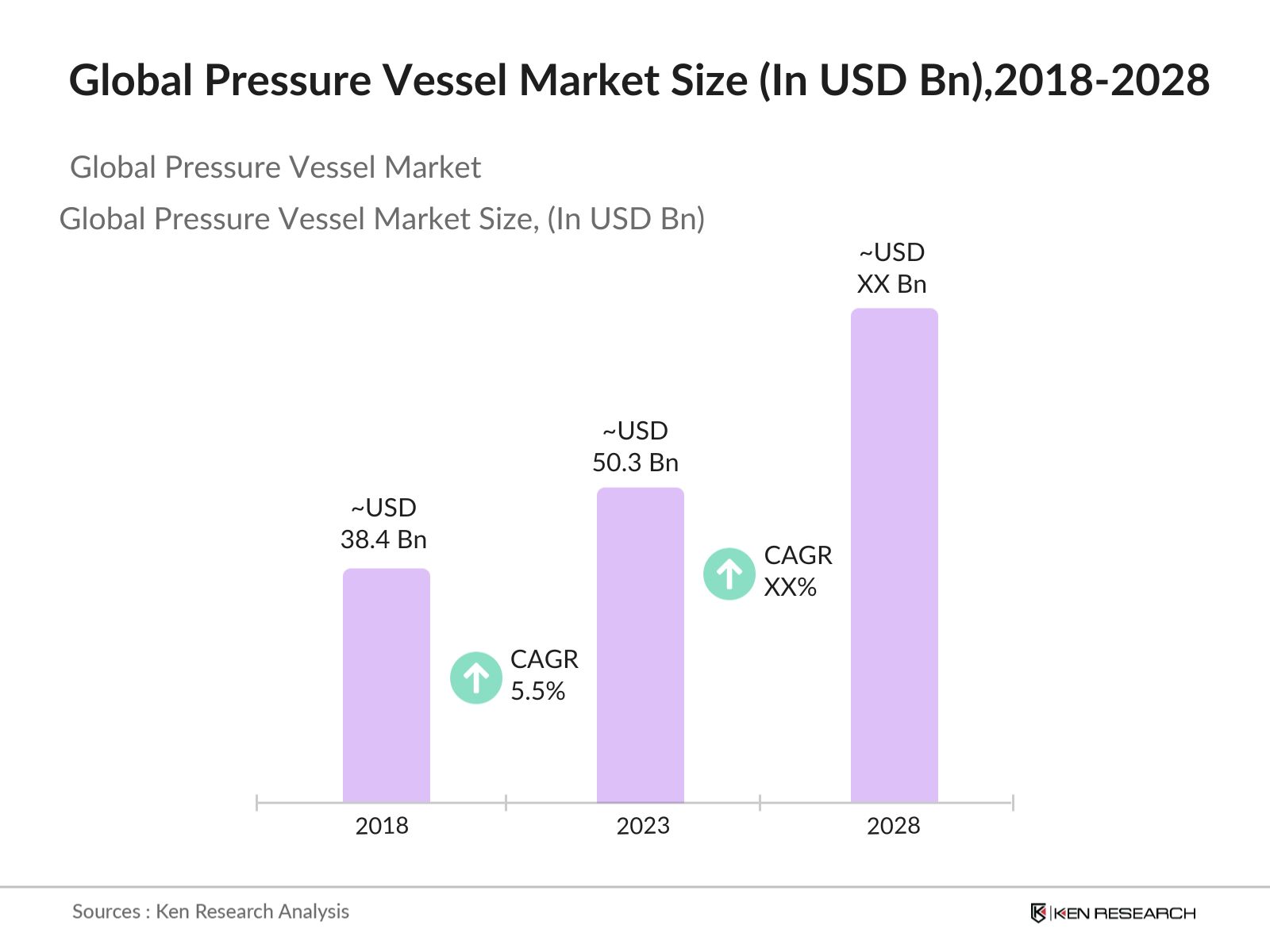
Global Pressure Vessel Market Segmentation
The Global Pressure Vessel Market can be segmented based on material, application, and region.
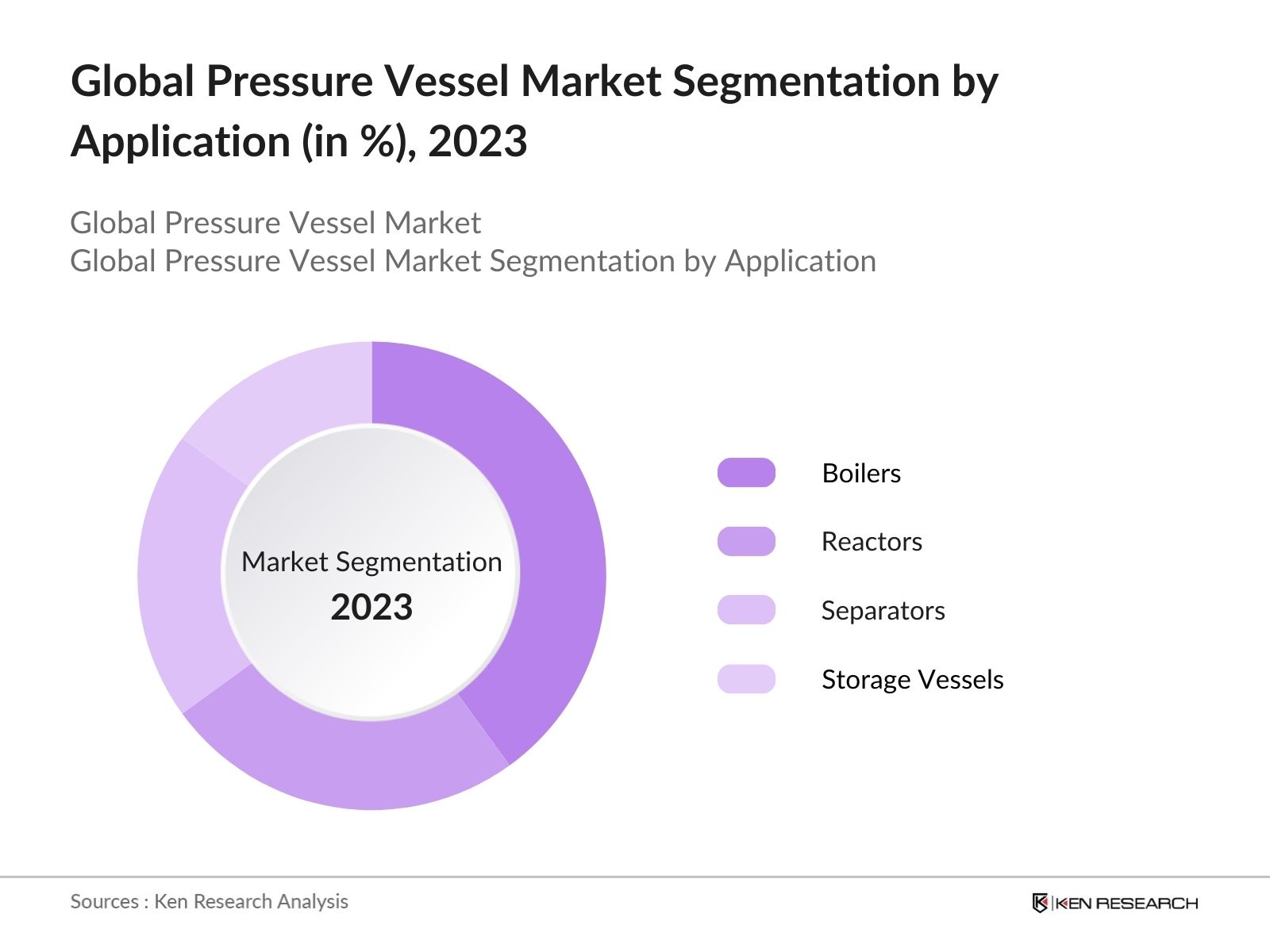
- By Application: The market is segmented into Boilers, Reactors, Separators and Storage Vessels. In 2023, Boilers led the market owing to the high demand in power generation and industrial heating applications.
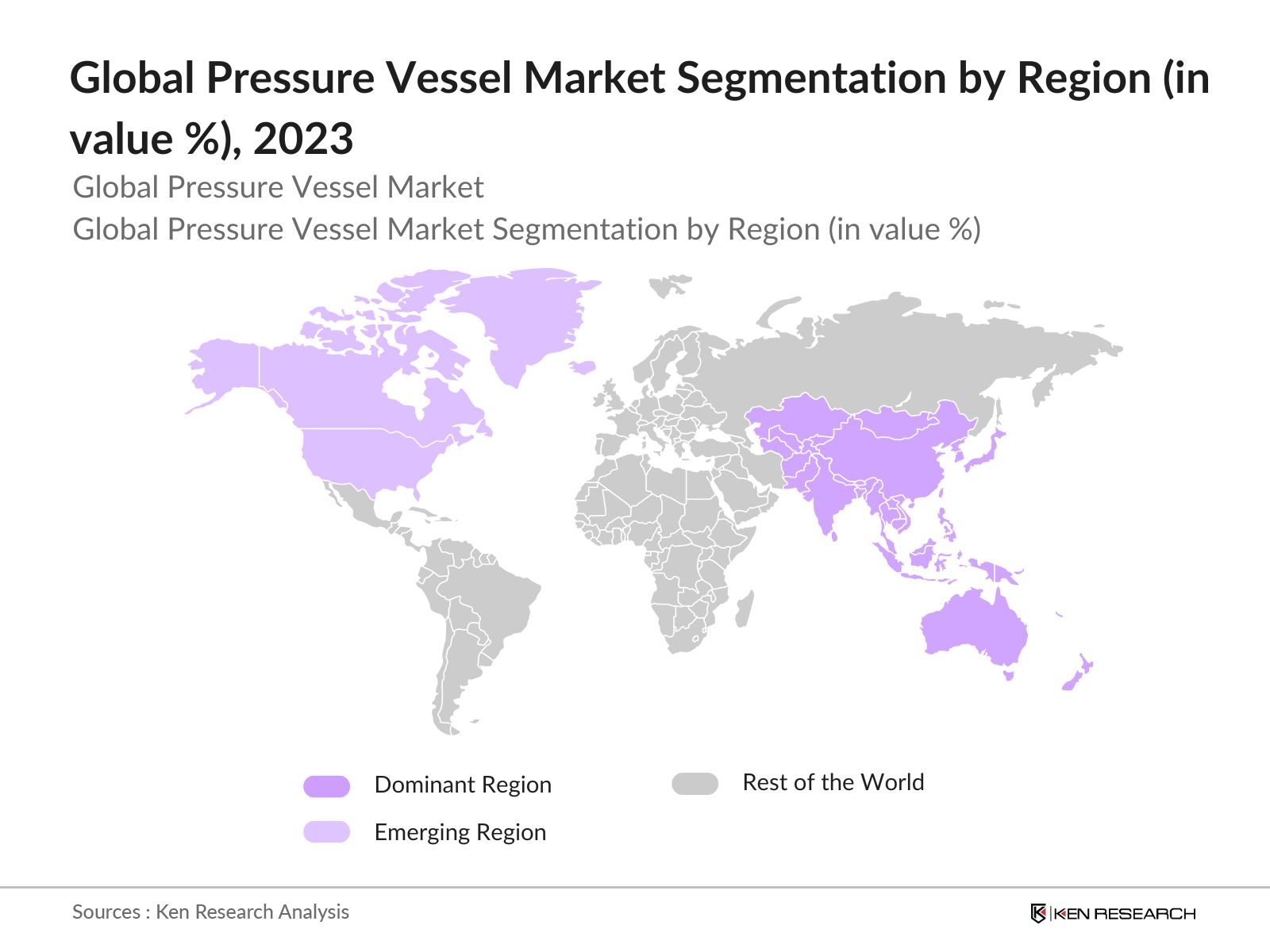
- By Region: The market is segmented into North America, Europe, Asia-Pacific, Latin America, and Middle East & Africa. Asia-Pacific led the global market in 2023, holding the largest share due to rapid industrialization and energy demand in the region.
- By Material: The market is segmented into Carbon Steel, Stainless Steel, Nickel Alloys, Titanium, Aluminum. In 2023, Steel Alloys dominated the market due to their extensive use in high-pressure applications across industries.
Global Pressure Vessel Market Competitive Landscape
|
Company |
Establishment Year |
Headquarters |
|
Babcock & Wilcox Enterprises, Inc. |
1867 |
Akron, USA |
|
Doosan Heavy Industries & Construction |
1962 |
Changwon, South Korea |
|
General Electric |
1892 |
Boston, USA |
|
Mitsubishi Heavy Industries, Ltd. |
1884 |
Tokyo, Japan |
|
Larsen & Toubro Limited |
1938 |
Mumbai, India |
- Babcock & Wilcox Enterprises, Inc.: In 2023, Babcock & Wilcox continued to lead the Pressure Vessel market by focusing on expanding its manufacturing capabilities and incorporating advanced materials into its designs. This commitment to innovation solidifies Babcock & Wilcoxs position as a key player in the market.
- Doosan: Doosan Enerbility has been involved in the supply of nuclear reactors, steam generators, and turbine generators, particularly for the Shin Hanul 3 and 4 reactors, which are part of the APR1400 series. This contract, valued at approximately KRW 2.9 trillion which is around $2.3 billion, underscores Doosan's commitment to advancing nuclear technology and enhancing safety and efficiency in nuclear power applications.
Global Pressure Vessel Market Analysis
Market Growth Drivers:
- Increasing Global Energy Demand: The global energy demand is projected to increase by 50% by 2050, driven primarily by growth in emerging markets such as India and China. These regions are experiencing rapid industrialization and urbanization, leading to higher energy consumption. Pressure vessels are critical in supporting this demand, particularly in the power generation, oil & gas, and chemical industries. For instance, the global power generation capacity is expected to reach 7,590 GW by 2030, up from 6,800 GW in 2023, which is boosting the demand for pressure vessels in power plants.
- Technological Advancements in Materials and Manufacturing: The pressure vessel market is witnessing significant advancements in materials, such as the development of advanced steel alloys with enhanced corrosion resistance and strength. These materials are crucial for high-pressure applications in harsh environments, such as offshore oil rigs and chemical processing plants. Additionally, the adoption of Industry 4.0 technologies, including automation and IoT, is expected to increase production efficiency by 20-30% over the next five years, leading to more cost-effective and safer pressure vessels.
- Industrialization and Urbanization: Asia-Pacific is leading the charge in industrialization and urbanization, with countries like China, India, and Indonesia investing heavily in infrastructure development. The region is expected to account for over 60% of global energy demand growth by 2035, necessitating the construction of new power plants, refineries, and industrial facilities. This surge in infrastructure development is directly correlated with increased demand for pressure vessels, as these components are essential for the safe operation of high-pressure systems in these industries.
Market Challenges:
- Stringent Safety and Environmental Regulations: Compliance with stringent safety and environmental regulations presents a significant challenge for pressure vessel manufacturers. These regulations often require substantial investments in advanced materials, testing, and certification processes, which can increase production costs and complexity.
- Volatility in Raw Material Prices: The prices of key raw materials, such as steel and specialized alloys, are subject to fluctuations due to factors like geopolitical tensions, supply chain disruptions, and changes in global demand. This volatility can lead to increased production costs and impact the profit margins of pressure vessel manufacturers.
Government Initiatives:
- Indias Production-Linked Incentive (PLI) Scheme for Manufacturing: The Indian government introduced the PLI Scheme to boost domestic manufacturing capabilities, particularly in heavy industries such as power and chemicals. The scheme has allocated INR 1.97 trillion which is USD 26 billion across various sectors, with a portion directed towards enhancing the production of pressure vessels and related equipment. This initiative aims to reduce Indias reliance on imports and strengthen its manufacturing base.
- U.S. Department of Energys Advanced Manufacturing Office (AMO): The AMO has committed over USD 100 million in funding to support the development of energy-efficient manufacturing technologies, including advanced pressure vessels. This initiative is part of the U.S. government's broader strategy to enhance the competitiveness of the domestic manufacturing sector while reducing energy consumption and greenhouse gas emissions. The funding is aimed at accelerating innovation in pressure vessel design and manufacturing processes.
Global Pressure Vessel Market Future Outlook
The Global Pressure Vessel Market is expected to continue its growth, driven by the increasing demand for energy and advancements in pressure vessel materials and manufacturing technologies.
Future Market Trends:
- Adoption of Advanced Materials: The industry is likely to witness increased adoption of advanced materials, such as composites, which offer superior strength-to-weight ratios and corrosion resistance. This trend will help manufacturers meet the growing demand for high-efficiency pressure vessels in specialized applications.
- Integration of Smart Technologies: The integration of sensors and IoT technologies into pressure vessels will enable real-time monitoring and predictive maintenance, reducing downtime and enhancing operational efficiency. This trend is expected to gain traction as industries move towards Industry 4.0.
Scope of the Report
|
By Region |
North America Europe Asia-Pacific Latin America Middle East & Africa |
|
By Material of Construction |
Carbon Steel Stainless Steel Nickel Alloys Titanium Aluminum |
|
By Application |
Boilers Reactors Separators Storage Vessels |
|
By Manufacturing Process |
Forged Pressure Vessels Welded Pressure Vessels Clad Pressure Vessels |
|
By End-User |
Oil & Gas Chemicals Power Generation Pharmaceuticals Food & Beverages Water & Wastewater Treatment Marine |
Products
Key Target Audience
Pressure Vessel Manufacturers
Energy Infrastructure Companies
Nuclear Power Plant Operators
Petrochemical Companies
Engineering, Procurement, and Construction (EPC) Firms
Industrial Gas Companies
Government and Regulations Bodies (DOE, OSHA, ASME, METI)
Marine and Offshore Industry Players
Utilities and Power Grid Operators
Pressure Vessel Design and Consultancy Firms
Safety and Compliance Auditors
Renewable Energy Companies
Pressure Vessel Component Suppliers
Mining and Metallurgy Companies
Boiler Manufacturers
Time Period Captured in the Report:
Historical Period: 2018-2023
Base Year: 2023
Forecast Period: 2023-2028
Companies
Players Mentioned in the Report:
Haldor Topsoe A/S
IHI Corporation
Samuel, Son & Co.
McDermott International, Ltd.
Robert Bosch GmbH
Sulzer Ltd.
Alloy Products Corp.
Trinity Industries, Inc.
Alfa Laval AB
Velan Inc.
KNM Group Berhad
SPX Corporation
Wood PLC
Tenaris S.A.
Pentair PLC
Table of Contents
1. Global Pressure Vessel Market Overview
1.1. Definition and Scope
1.2. Market Taxonomy
1.3. Market Growth Rate
1.4. Market Segmentation Overview
2. Global Pressure Vessel Market Size (in USD Bn), 2018-2023
2.1. Historical Market Size
2.2. Year-on-Year Growth Analysis
2.3. Key Market Developments and Milestones
3. Global Pressure Vessel Market Analysis
3.1. Growth Drivers
3.1.1. Increasing Global Energy Demand
3.1.2. Technological Advancements in Materials and Manufacturing
3.1.3. Industrialization and Urbanization
3.2. Restraints
3.2.1. Stringent Safety and Environmental Regulations
3.2.2. Volatility in Raw Material Prices
3.2.3. Competition from Alternative Technologies
3.3. Opportunities 3.3.1. Adoption of Advanced Materials
3.3.2. Expansion into Emerging Markets
3.3.3. Integration with Smart Technologies
3.4. Trends 3.4.1. Adoption of Industry
4.0 Technologies
3.4.2. Increase in Renewable Energy Projects
3.4.3. Growth in Offshore Oil & Gas Exploration
3.5. Government Regulation
3.5.1. Indias Production-Linked Incentive (PLI) Scheme for Manufacturing
3.5.2. U.S. Department of Energys Advanced Manufacturing Office (AMO)
3.5.3. European Unions Green Deal Industrial Plan
3.5.4. Chinas Energy Efficiency Improvement Plan
3.6. SWOT Analysis
3.7. Stake Ecosystem
3.8. Competition Ecosystem
4. Global Pressure Vessel Market Segmentation, 2023
4.1. By Material of Construction (in Value %)
4.1.1. Carbon Steel
4.1.2. Stainless Steel
4.1.3. Nickel Alloys
4.1.4. Titanium
4.1.5. Aluminum
4.2. By Application (in Value %)
4.2.1. Boilers
4.2.2. Reactors
4.2.3. Separators
4.2.4. Storage Vessels
4.3. By Manufacturing Process (in Value %)
4.3.1. Forged Pressure Vessels
4.3.2. Welded Pressure Vessels
4.3.3. Clad Pressure Vessels
4.4. By End-User Industry (in Value %)
4.4.1. Oil & Gas
4.4.2. Chemicals
4.4.3. Power Generation
4.4.4. Pharmaceuticals
4.4.5. Food & Beverages
4.4.6. Water & Wastewater Treatment
4.4.7. Marine
4.5. By Region (in Value %)
4.5.1. North America
4.5.2. Europe
4.5.3. Asia-Pacific
4.5.4. Latin America
4.5.5. Middle East & Africa
5. Global Pressure Vessel Market Cross Comparison
5.1 Detailed Profiles of Major Companies
5.1.1. Babcock & Wilcox Enterprises, Inc.
5.1.2. Doosan Heavy Industries & Construction
5.1.3. General Electric
5.1.4. Mitsubishi Heavy Industries, Ltd.
5.1.5. Larsen & Toubro Limited
5.1.6. Haldor Topsoe A/S
5.1.7. IHI Corporation
5.1.8. Samuel, Son & Co.
5.1.9. McDermott International, Ltd.
5.1.10. Robert Bosch GmbH
5.1.11. Sulzer Ltd.
5.1.12. Alloy Products Corp.
5.1.13. Trinity Industries, Inc.
5.1.14. Alfa Laval AB
5.1.15. Velan Inc.
5.2 Cross Comparison Parameters (No. of Employees, Headquarters, Inception Year, Revenue)
6. Global Pressure Vessel Market Competitive Landscape
6.1. Market Share Analysis
6.2. Strategic Initiatives
6.3. Mergers and Acquisitions
6.4. Investment Analysis
6.4.1. Venture Capital Funding
6.4.2. Government Grants
6.4.3. Private Equity Investments
7. Global Pressure Vessel Market Regulatory Framework
7.1. Environmental Standards
7.2. Compliance Requirements
7.3. Certification Processes
8. Global Pressure Vessel Market Future Market Size (in USD Bn), 2023-2028
8.1. Future Market Size Projections
8.2. Key Factors Driving Future Market Growth
9. Global Pressure Vessel Market Future Market Segmentation, 2028
9.1. By Material of Construction (in Value %)
9.2. By Application (in Value %)
9.3. By Manufacturing Process (in Value %)
9.4. By End-User Industry (in Value %)
9.5. By Region (in Value %)
10. Global Pressure Vessel Market Analysts Recommendations
10.1. TAM/SAM/SOM Analysis
10.2. Customer Cohort Analysis
10.3. Marketing Initiatives
10.4. White Space Opportunity Analysis
Disclaimer
Contact Us
Research Methodology
Step 1: Identifying Key Variables
Building an ecosystem of major entities in the Global Pressure Vessel Market and referencing multiple secondary and proprietary databases to conduct desk research. This includes gathering industry-level information on market drivers, challenges, key players, and technological advancements, as well as understanding regulatory impacts and market dynamics.
Step 2: Market Building
Collecting statistics on the global Pressure Vessel market over the years, including historical market size, growth rates, production technologies, and adoption of pressure vessels in various industries. We will analyze market share, revenue generated by major players, and emerging trends to ensure accuracy and reliability in the data presented.
Step 3: Validating and Finalizing
Formulating market hypotheses and conducting CATIs (Computer-Assisted Telephone Interviews) with industry experts from leading Pressure Vessel manufacturing and application companies. These interviews will help validate the collected statistics and provide insights into operational and financial aspects directly from company representatives.
Step 4: Research Output
Our team will engage with multiple Pressure Vessel manufacturers, end-users, and industry stakeholders to understand the dynamics of market segments, consumer preferences, and sales trends. This process will validate the derived statistics using a bottom-to-top approach, ensuring that the final data accurately reflects the actual market conditions.
Frequently Asked Questions
01. How big is the Global Pressure Vessel Market?
In 2023, the Global Pressure Vessel Market was valued at approximately USD 10.5 billion. The market is driven by the increasing demand for energy across industries such as oil & gas, chemicals, and power generation. This growth reflects the essential role of pressure vessels in ensuring safety and efficiency in high-pressure environments.
02. What are the challenges in the Global Pressure Vessel Market?
Challenges in the Global Pressure Vessel Market include stringent safety regulations, volatility in raw material prices, and high initial investment costs for production facilities. Additionally, the need for compliance with various international standards adds complexity to the manufacturing process.
03. Who are the major players in the Global Pressure Vessel Market?
Major players in the Global Pressure Vessel Market include Babcock & Wilcox Enterprises, Inc., Doosan Heavy Industries & Construction, General Electric, Mitsubishi Heavy Industries, Ltd., and Larsen & Toubro Limited. These companies are leaders in innovation and production, offering comprehensive solutions across various industries.
04. What are the growth drivers of the Global Pressure Vessel Market?
Key growth drivers in the Global Pressure Vessel Market include the rising demand for energy, particularly in emerging markets, advancements in materials and manufacturing technologies, and the increasing industrialization and urbanization in developing regions. These factors are boosting the demand for high-efficiency and durable pressure vessels.
Why Buy From Us?

What makes us stand out is that our consultants follows Robust, Refine and Result (RRR) methodology. i.e. Robust for clear definitions, approaches and sanity checking, Refine for differentiating respondents facts and opinions and Result for presenting data with story

We have set a benchmark in the industry by offering our clients with syndicated and customized market research reports featuring coverage of entire market as well as meticulous research and analyst insights.

While we don't replace traditional research, we flip the method upside down. Our dual approach of Top Bottom & Bottom Top ensures quality deliverable by not just verifying company fundamentals but also looking at the sector and macroeconomic factors.

With one step in the future, our research team constantly tries to show you the bigger picture. We help with some of the tough questions you may encounter along the way: How is the industry positioned? Best marketing channel? KPI's of competitors? By aligning every element, we help maximize success.

Our report gives you instant access to the answers and sources that other companies might choose to hide. We elaborate each steps of research methodology we have used and showcase you the sample size to earn your trust.

If you need any support, we are here! We pride ourselves on universe strength, data quality, and quick, friendly, and professional service.