
Global Pupillometer Market Outlook to 2030
Region:Global
Author(s):Shambhavi
Product Code:KROD9310
December 2024
83
About the Report
Global Pupillometer Market Overview
- The Global Pupillometer Market, valued at USD 800 million, is primarily driven by advancements in ophthalmic technology and rising demand for diagnostic precision in eye care. This demand is fueled by the prevalence of ocular conditions, including glaucoma and cataracts, which require precise diagnostic tools for effective treatment. High adoption rates in technologically advanced regions contribute significantly to market growth.
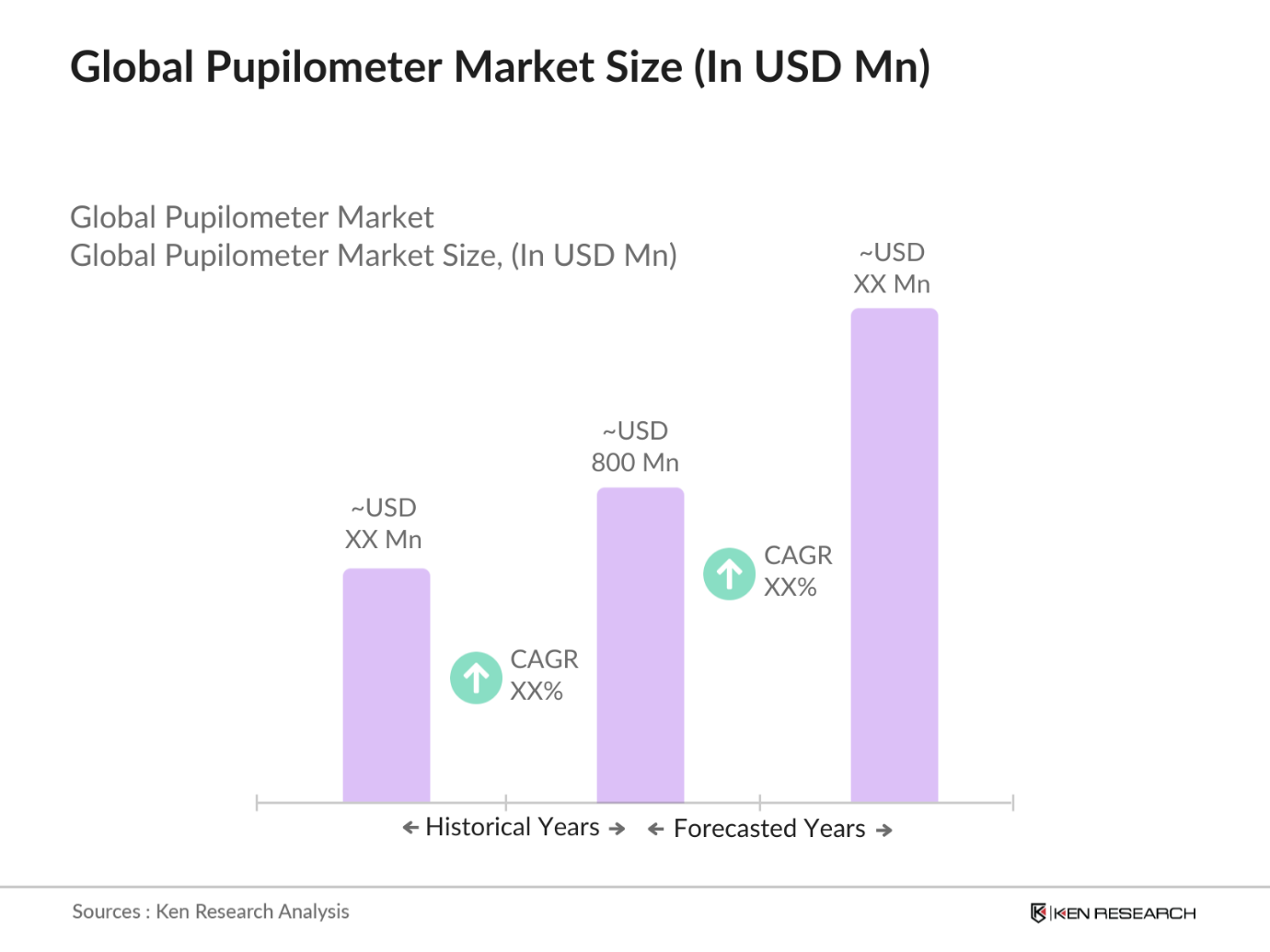
- Key regions driving the Global Pupillometer Market include North America and Europe. North America dominates due to a strong healthcare infrastructure, the high prevalence of ocular conditions, and substantial investment in medical technology. In Europe, the demand for pupillometers is reinforced by an aging population and increased healthcare expenditure in countries such as Germany and the UK, where advanced diagnostic technologies are prioritized in medical practices.
- Governments worldwide are increasing investments in healthcare infrastructure and research, creating opportunities for the adoption of advanced diagnostic tools. For instance, the U.S. government allocated $6.5 billion in 2022 for the National Institutes of Health (NIH) to support medical research and innovation. Such funding initiatives are expected to facilitate the procurement and implementation of advanced diagnostic devices, including pupillometers, in public healthcare facilities.
Global Pupillometer Market Segmentation
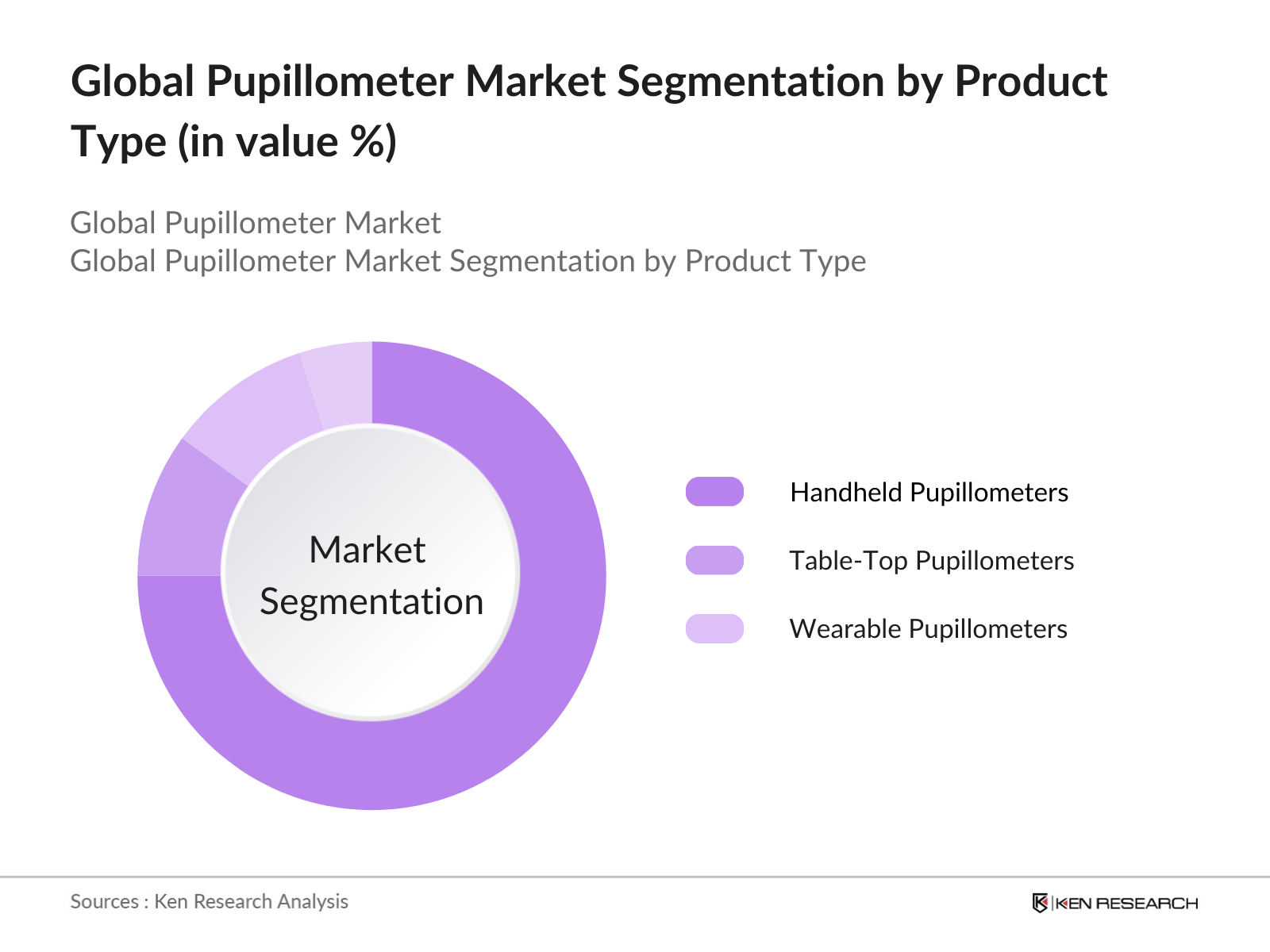
By Product Type: The Global Pupillometer Market is segmented by product type into handheld pupillometers, table-top pupillometers, and wearable pupillometers. Handheld pupillometers hold a dominant share in the market due to their portability and ease of use, which is ideal for on-the-go diagnostic needs. These devices are particularly popular among ophthalmologists and optometrists who value the flexibility to conduct diagnostics in various settings without compromising on precision.
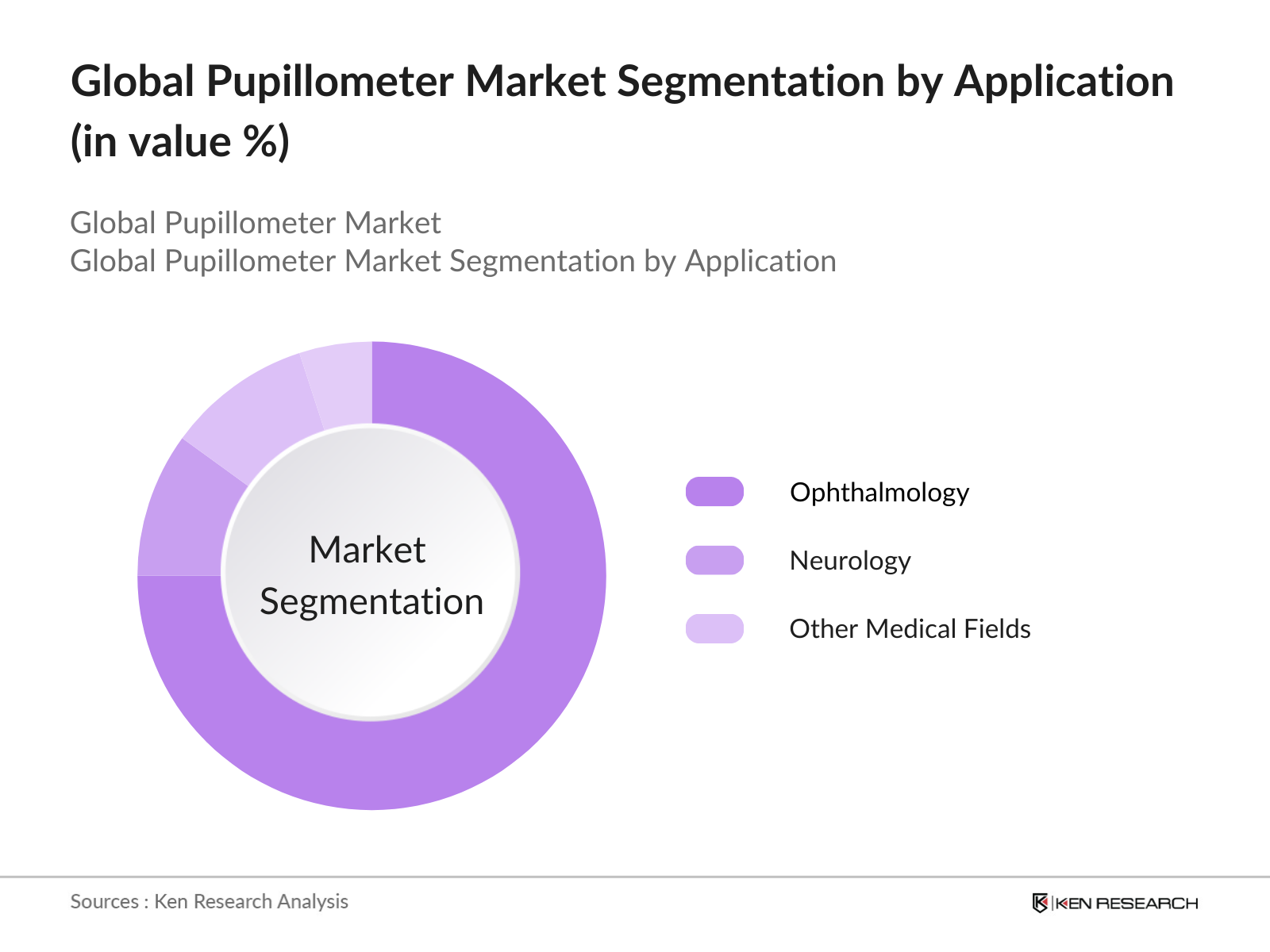
By Application: The Global Pupillometer Market is segmented by application into ophthalmology, neurology, and other medical fields. Ophthalmology applications dominate due to the direct relevance of pupillometers in diagnosing eye-related conditions. The increasing cases of refractive errors, glaucoma, and cataracts have made pupillometers essential tools in eye clinics. These devices assist in early detection, allowing for timely intervention and improved patient outcomes.
Global Pupillometer Market Competitive Landscape
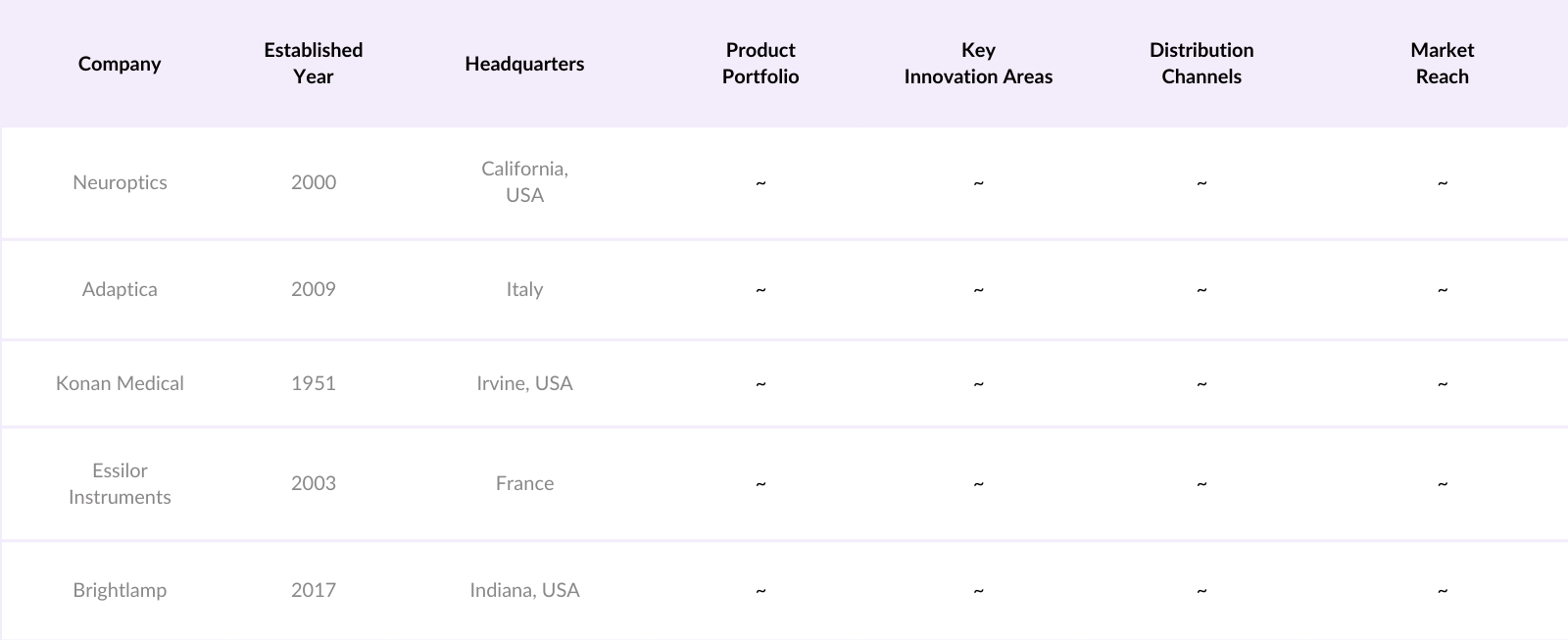
The Global Pupillometer Market is characterized by a few major players who dominate due to extensive product portfolios and established distribution channels. The market includes established companies and smaller innovators who are contributing to market dynamics through new technology and product development.
Global Pupillometer Market Analysis
Growth Drivers
- Rising Prevalence of Eye Disorders: The increase in eye disorders is a significant growth driver for the global pupillometer market. According to the World Health Organization, approximately 2.7 billion people suffer from various forms of visual impairment globally. This is particularly critical in developed regions where aging populations are at higher risk for conditions like glaucoma and diabetic retinopathy. The aging population in North America, projected to reach 77 million by 2025, further drives the need for advanced diagnostic tools such as pupillometers, enhancing demand across healthcare settings.
- Technological Advancements in Ophthalmic Devices: Technological innovations are revolutionizing the ophthalmic device market, facilitating more accurate and efficient diagnostics. The integration of AI and machine learning in pupillometers enhances their diagnostic capabilities, leading to improved patient outcomes. For instance, recent developments in real-time data analysis have increased diagnostic accuracy by over 30%, as reported by healthcare tech evaluations. The global ophthalmic devices market is projected to grow, driven by these advancements, thereby significantly influencing pupillometer adoption rates.
- Increasing Demand for Objective Measurement Tools: As healthcare transitions towards evidence-based practices, there is a heightened demand for objective measurement tools that provide reliable data. Pupillometers offer standardized measurement of pupil size and reactivity, crucial for diagnosing neurological conditions. Studies indicate that objective testing methods are preferred in 85% of clinical environments for their reliability and accuracy, further catalyzing market growth as hospitals and clinics adopt these technologies to enhance their diagnostic procedures.
Market Challenges
- High Cost of Advanced Pupillometers: The cost associated with advanced pupillometers can pose a significant barrier to adoption, especially in low-income regions. Premium devices can range between $5,000 to $20,000, making them less accessible for smaller clinics and practices. Additionally, budget constraints faced by healthcare facilities can limit the procurement of advanced diagnostic tools, impacting market penetration. This high upfront investment may deter many potential users, restricting the growth of the market.
- Lack of Awareness Among Healthcare Professionals: Despite the advantages of using pupillometers, there remains a lack of awareness regarding their benefits among healthcare professionals. Surveys indicate that approximately 60% of ophthalmologists in developing countries are unfamiliar with pupillometry as a diagnostic tool. This knowledge gap may lead to underutilization, impacting overall market growth. Comprehensive training programs and awareness campaigns are essential to address this challenge and drive adoption among practitioners.
Global Pupillometer Market Future Outlook
The Global Pupillometer Market is anticipated to experience steady growth over the next five years, driven by increasing adoption in medical diagnostics, advancements in AI-integrated pupillometers, and growing healthcare investments. The rising prevalence of eye diseases, particularly in aging populations, combined with technological innovations in ophthalmology, is expected to expand the market significantly.
Market Opportunities in the Global Pupillometer Market
- Expansion of Healthcare Facilities: The global healthcare infrastructure is experiencing significant growth, particularly in emerging economies. According to the World Bank, global health expenditure reached approximately $8.3 trillion in 2022, reflecting a 4.5% increase from the previous year. This expansion is driving the demand for advanced diagnostic tools, including pupillometers, to enhance patient care and diagnostic accuracy.
- Growth in Geriatric Population: The aging global population is contributing to an increased prevalence of age-related neurological and ophthalmic conditions. The United Nations reports that the number of people aged 60 years or older is projected to reach 2.1 billion by 2050, up from 1 billion in 2020. This demographic shift is expected to boost the demand for diagnostic devices like pupillometers, which are essential in monitoring age-related health issues.
Scope of the Report
|
Segmentation |
Sub-segments |
|
Product Type |
Handheld Pupillometers |
|
Desktop Pupillometers |
|
|
Application |
Ophthalmology Clinics |
|
Hospitals |
|
|
Research Institutions |
|
|
Technology |
Infrared Technology |
|
Video-based Technology |
|
|
End-User |
Healthcare Providers |
|
Academic Institutions |
|
|
Region |
North America |
|
Europe |
|
|
Asia Pacific |
|
|
Latin America |
|
|
Middle East & Africa |
Products
Key Target Audience
Ophthalmologists and Eye Clinics
Neurology and Vision Research Centers
Hospitals and Healthcare Facilities
Diagnostic Equipment Suppliers
Medical Technology Manufacturers
Government and Regulatory Bodies (e.g., FDA, EMA)
Investor and Venture Capitalist Firms
Insurance Providers and Healthcare Payers
Companies
Players mentioned in the report
Neuroptics
Adaptica
Konan Medical
Essilor Instruments
Brightlamp
Nidek
Reichert Technologies
Topcon Corporation
RightEye
Heidelberg Engineering
Oculus
Plusoptix
Alcon Vision LLC
New York Eye and Ear Infirmary
Luneau Technology Group
Table of Contents
1. Global Pupillometer Market Overview
1.1. Definition and Scope
1.2. Market Taxonomy
1.3. Market Dynamics (Market Drivers, Restraints, and Trends)
1.4. Market Segmentation Overview
2. Global Pupillometer Market Size (In USD Bn)
2.1. Historical Market Size
2.2. Year-On-Year Growth Analysis
2.3. Key Market Developments and Milestones
3. Global Pupillometer Market Analysis
3.1. Growth Drivers
3.1.1. Rising Prevalence of Eye Disorders
3.1.2. Technological Advancements in Ophthalmic Devices
3.1.3. Increasing Demand for Objective Measurement Tools
3.2. Market Challenges
3.2.1. High Cost of Advanced Pupillometers
3.2.2. Lack of Awareness Among Healthcare Professionals
3.2.3. Regulatory Compliance Issues
3.3. Opportunities
3.3.1. Expansion of Healthcare Facilities
3.3.2. Growth in Geriatric Population
3.3.3. Emerging Markets in Developing Regions
3.4. Trends
3.4.1. Shift Towards Telemedicine and Remote Monitoring
3.4.2. Integration of AI in Diagnostic Tools
3.4.3. Customization of Pupillometer Features
3.5. Government Regulation
3.5.1. FDA Regulations on Medical Devices
3.5.2. CE Marking for European Markets
3.5.3. ISO Standards for Optical Devices
3.6. SWOT Analysis
3.7. Stakeholder Ecosystem
3.8. Porters Five Forces
3.9. Competition Ecosystem
4. Global Pupillometer Market Segmentation
4.1. By Product Type (In Value %)
4.1.1. Handheld Pupillometers
4.1.2. Desktop Pupillometers
4.2. By Application (In Value %)
4.2.1. Ophthalmology Clinics
4.2.2. Hospitals
4.2.3. Research Institutions
4.3. By Technology (In Value %)
4.3.1. Infrared Technology
4.3.2. Video-based Technology
4.4. By End-User (In Value %)
4.4.1. Healthcare Providers
4.4.2. Academic Institutions
4.5. By Region (In Value %)
4.5.1. North America
4.5.2. Europe
4.5.3. Asia Pacific
4.5.4. Latin America
4.5.5. Middle East & Africa
5. Global Pupillometer Market Competitive Analysis
5.1. Detailed Profiles of Major Companies
5.1.1. NeurOptics, Inc.
5.1.2. PupilScreen
5.1.3. Aware, Inc.
5.1.4. Ocular Instruments, Inc.
5.1.5. AcuPupil
5.1.6. Eyetronics
5.1.7. Takagi Seiko Co., Ltd.
5.1.8. Visiomed Group
5.1.9. XpertEye
5.1.10. Wilmer Eye Institute
5.1.11. Hagg-Streit AG
5.1.12. iCare Finland Oy
5.1.13. Carl Zeiss AG
5.1.14. Heidelberg Engineering GmbH
5.1.15. Canon Inc.
5.2. Cross Comparison Parameters (Revenue, Geographic Presence, Product Portfolio, Innovation Index, Market Share, R&D Investment, Customer Base, Regulatory Compliance)
5.3. Market Share Analysis
5.4. Strategic Initiatives
5.5. Mergers and Acquisitions
5.6. Investment Analysis
5.7. Venture Capital Funding
5.8. Government Grants
5.9. Private Equity Investments
6. Global Pupillometer Market Regulatory Framework
6.1. FDA Regulations
6.2. CE Marking Requirements
6.3. ISO Compliance
7. Global Pupillometer Market Future Size (In USD Bn)
7.1. Future Market Size Projections
7.2. Key Factors Driving Future Market Growth
8. Global Pupillometer Market Future Segmentation
8.1. By Product Type (In Value %)
8.2. By Application (In Value %)
8.3. By Technology (In Value %)
8.4. By End-User (In Value %)
8.5. By Region (In Value %)
9. Global Pupillometer Market Analysts Recommendations
9.1. TAM/SAM/SOM Analysis
9.2. Customer Cohort Analysis
9.3. Marketing Initiatives
9.4. White Space Opportunity Analysis
Disclaimer Contact Us
Research Methodology
Step 1: Identification of Key Variables
The first step involved mapping out the stakeholders in the Global Pupillometer Market. This entailed a thorough desk review of secondary sources, examining market databases, healthcare reports, and company publications to establish the influential variables within the industry.
Step 2: Market Analysis and Construction
Historical data on market trends, including adoption rates and healthcare expenditure patterns, was aggregated and analyzed. Data points such as device penetration rates and diagnostic usage frequencies were examined to establish foundational market estimations.
Step 3: Hypothesis Validation and Expert Consultation
Market assumptions were validated through direct consultations with industry practitioners via telephone interviews, which helped in refining the research approach. Feedback from professionals in ophthalmology and medical technology provided insights into evolving trends and product demands.
Step 4: Research Synthesis and Final Output
The final research stage involved synthesizing data obtained from primary and secondary research, followed by data verification. This process ensured the accuracy and relevance of information, culminating in an exhaustive and reliable report on the Global Pupillometer Market.
Frequently Asked Questions
01. How big is the Global Pupillometer Market?
The Global Pupillometer Market is valued at USD 800 million, with growth propelled by the increased use of diagnostic devices for ocular care.
02. What are the challenges in the Global Pupillometer Market?
Key challenges include the high cost of advanced pupillometer devices, stringent regulatory requirements, and limited awareness in developing regions.
03. Who are the major players in the Global Pupillometer Market?
Leading companies include Neuroptics, Adaptica, Konan Medical, Essilor Instruments, and Brightlamp, dominating due to robust portfolios and technological advancements.
04. What drives growth in the Global Pupillometer Market?
Growth drivers include advancements in AI technology, rising cases of eye conditions, and increasing healthcare expenditure on diagnostic solutions.
Why Buy From Us?

What makes us stand out is that our consultants follows Robust, Refine and Result (RRR) methodology. i.e. Robust for clear definitions, approaches and sanity checking, Refine for differentiating respondents facts and opinions and Result for presenting data with story

We have set a benchmark in the industry by offering our clients with syndicated and customized market research reports featuring coverage of entire market as well as meticulous research and analyst insights.

While we don't replace traditional research, we flip the method upside down. Our dual approach of Top Bottom & Bottom Top ensures quality deliverable by not just verifying company fundamentals but also looking at the sector and macroeconomic factors.

With one step in the future, our research team constantly tries to show you the bigger picture. We help with some of the tough questions you may encounter along the way: How is the industry positioned? Best marketing channel? KPI's of competitors? By aligning every element, we help maximize success.

Our report gives you instant access to the answers and sources that other companies might choose to hide. We elaborate each steps of research methodology we have used and showcase you the sample size to earn your trust.

If you need any support, we are here! We pride ourselves on universe strength, data quality, and quick, friendly, and professional service.