
Global Satellite-Based Augmentation Systems Market Outlook to 2030
Region:Global
Author(s):Paribhasha Tiwari
Product Code:KROD10745
November 2024
86
About the Report
Global Satellite-Based Augmentation Systems (SBAS) Market Overview
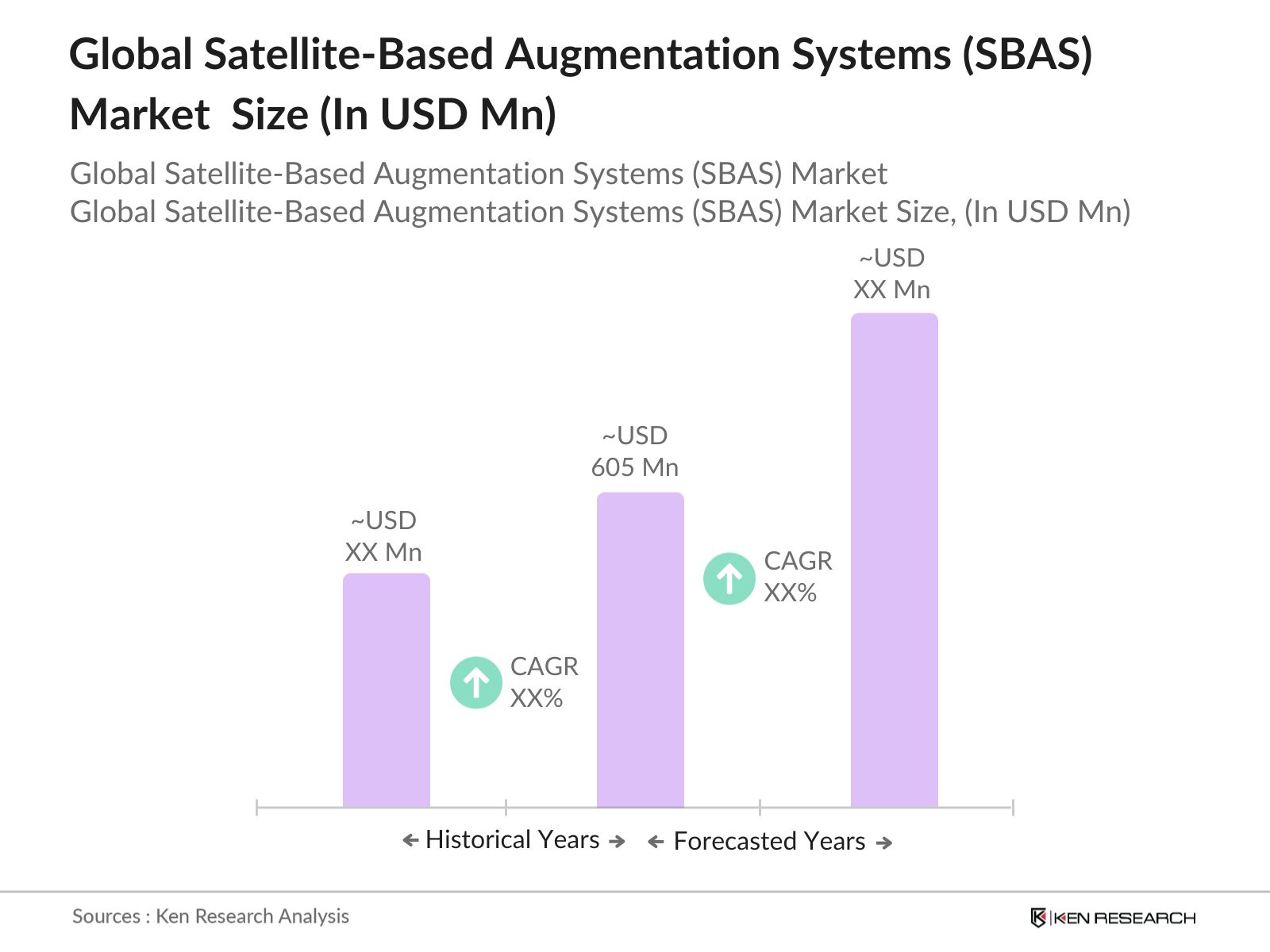
- The global Satellite-Based Augmentation Systems (SBAS) market, with a valuation of USD 605 million, is driven by the critical need for enhanced navigation accuracy, integrity, and coverage in aviation, maritime, and ground-based applications. Advanced SBAS technology, including GNSS signal augmentation, boosts location precision, enhancing safety and reliability across industries reliant on satellite navigation. The adoption of SBAS continues to rise with growing applications in UAV navigation and autonomous systems, particularly in regions prioritizing robust infrastructure for seamless air and land navigation.
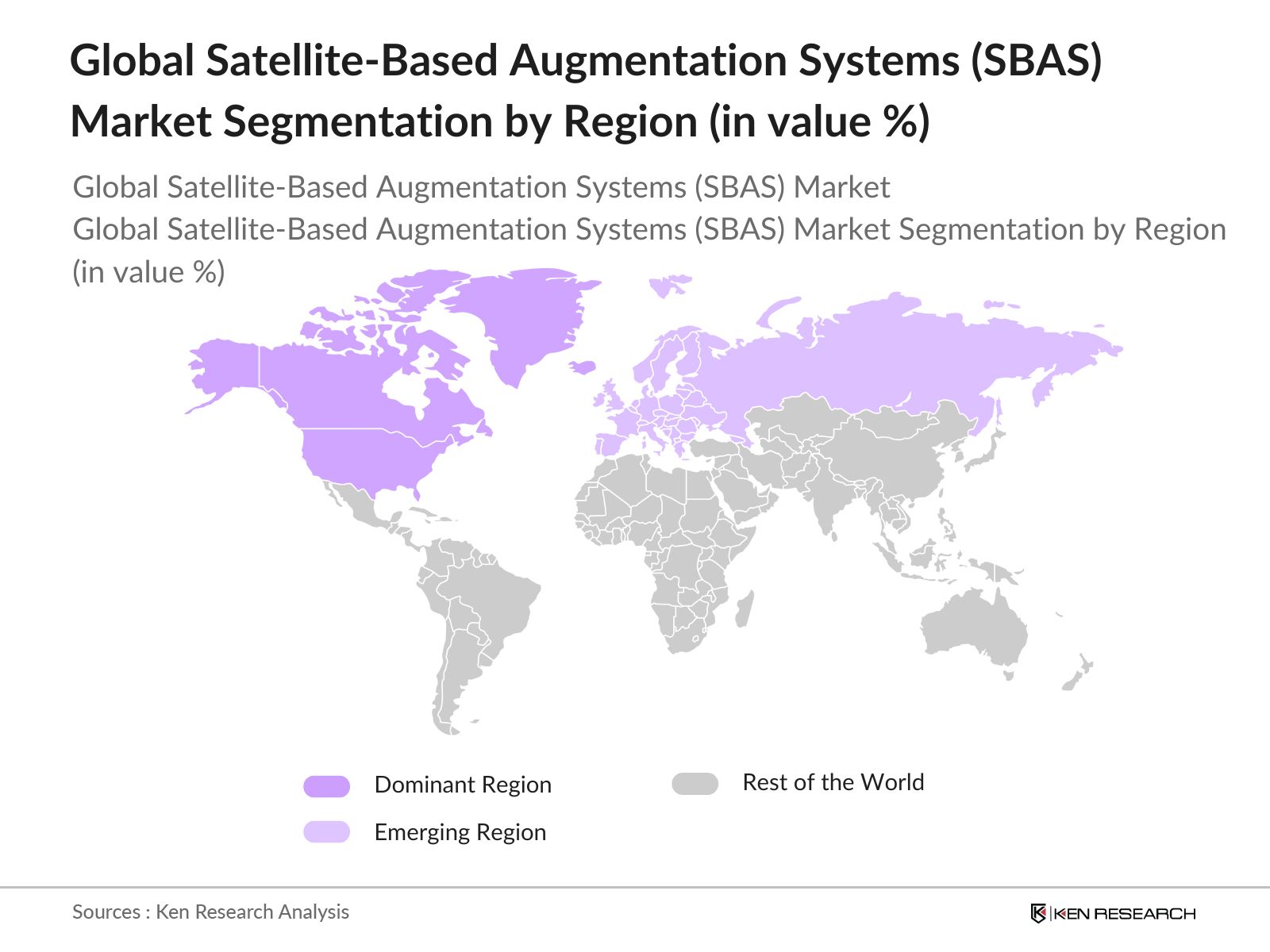
- Geographically, North America and Europe dominate the SBAS market due to extensive investments in satellite infrastructure and GNSS-based applications in aviation, maritime, and defense. The presence of key industry players and established GNSS ecosystems in these regions strengthens their dominance. The United States and European countries lead in regulatory support for satellite technology, promoting SBAS adoption to meet stringent safety standards in the transportation and logistics sectors, driving the markets strong positioning in these regions.
- Governments in North America and Europe are investing substantially in national SBAS initiatives like the FAAs WAAS and Europes EGNOS, with allocated funding exceeding $1 billion in 2024. This public funding highlights a commitment to improving navigation safety and reliability across civil aviation and maritime applications.
Global Satellite-Based Augmentation Systems (SBAS) Market Segmentation
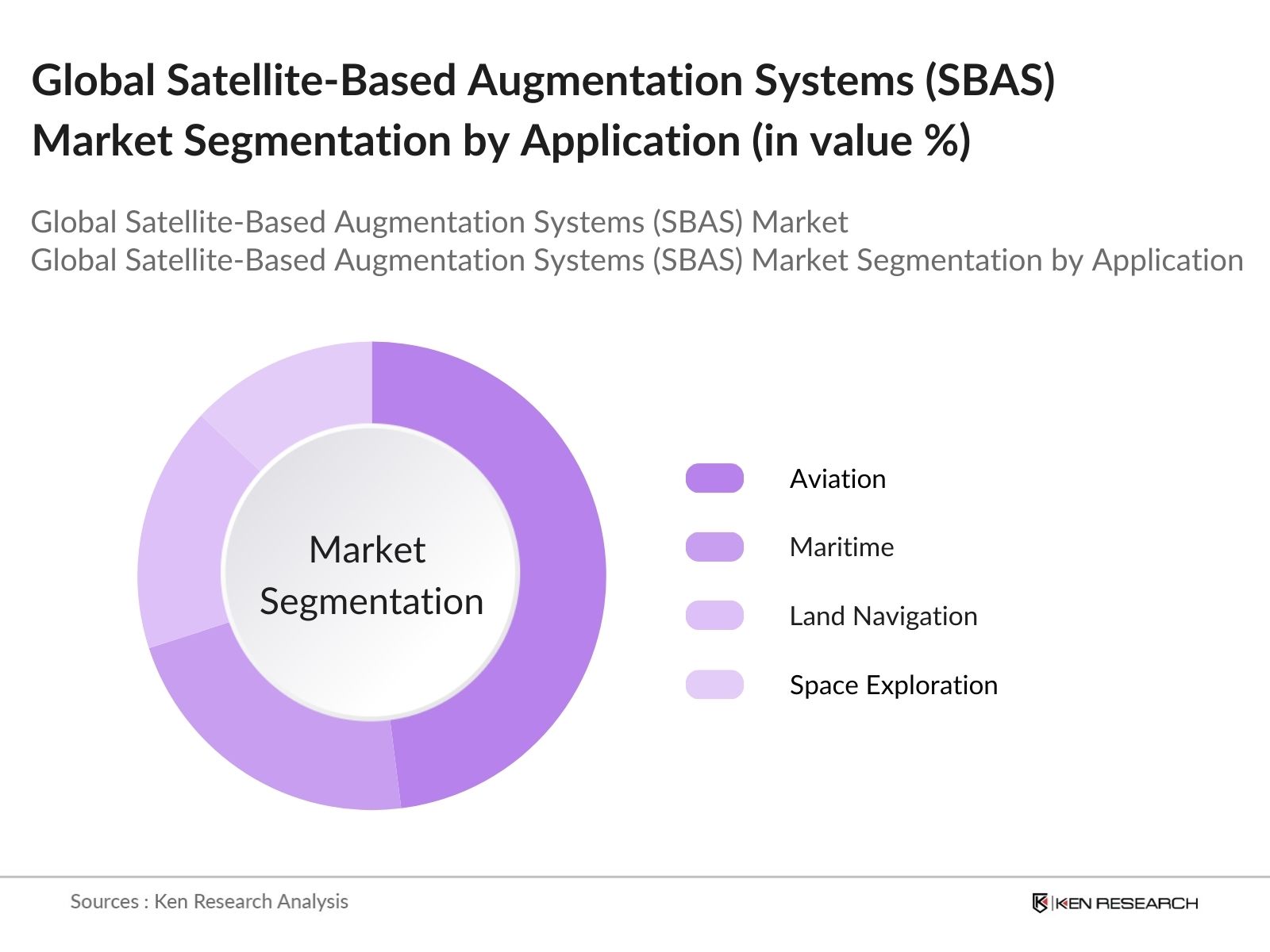
By Application: The SBAS market is segmented by application into aviation, maritime, land navigation, and space exploration. Aviation remains the dominant application due to the sectors emphasis on precision and safety, with major stakeholders relying on SBAS for accurate navigation during all flight phases. This segments growth is fueled by regulatory mandates for navigation systems that improve safety, particularly in regions with complex airspaces where accuracy is crucial.
By Region: The SBAS market is segmented regionally into North America, Europe, Asia-Pacific, and the Middle East & Africa. North America leads the market with the highest adoption rate of SBAS technology, driven by early government initiatives and investments in GNSS augmentation for aviation and defense. Europe follows closely, with its commitment to the EGNOS (European Geostationary Navigation Overlay Service) program for enhanced GNSS capabilities.
By System Type: SBAS systems are categorized into Ground-Based Augmentation Systems (GBAS) and Satellite-Based Augmentation Systems (SBAS). SBAS holds the largest share due to its capacity for providing wide-area augmentation, essential for aviation and maritime applications. This segments dominance is attributed to its broad coverage and reliability across regions, which is essential for uninterrupted GNSS support in high-traffic areas.
Global Satellite-Based Augmentation Systems (SBAS) Market Competitive Landscape
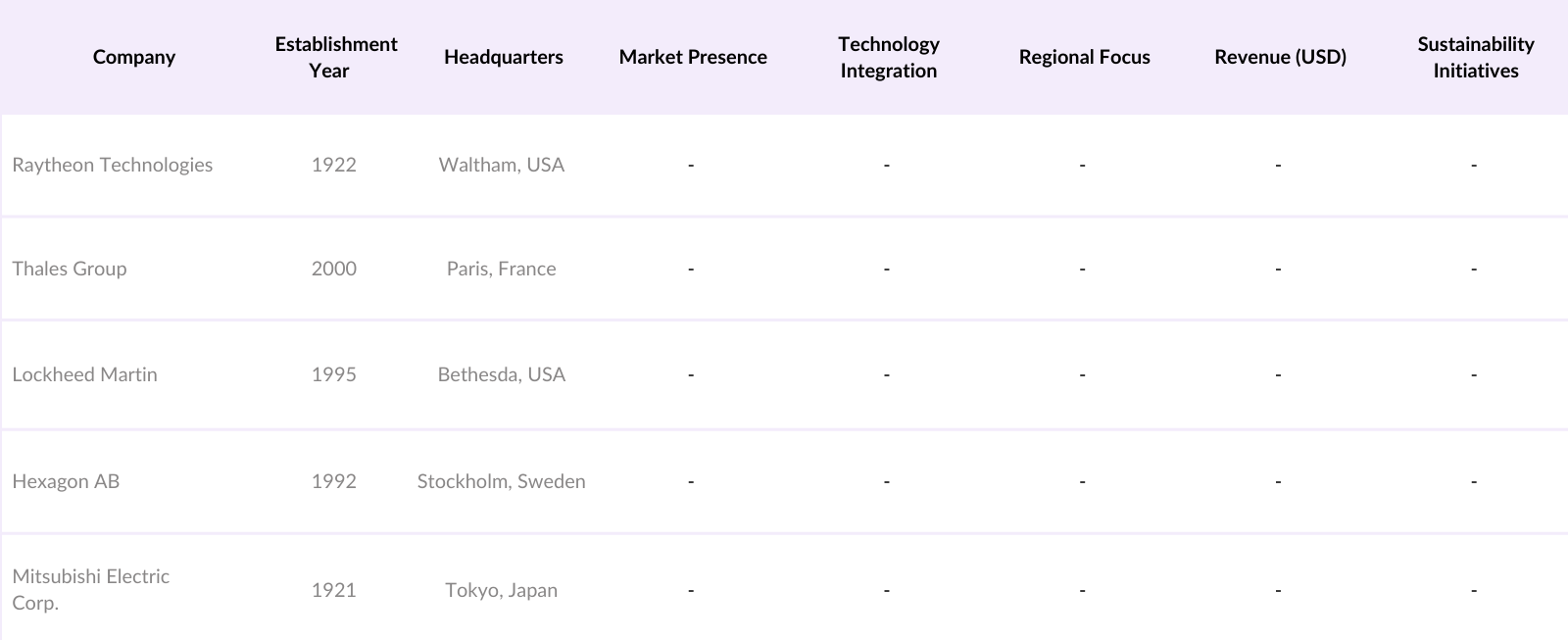
The global SBAS market is led by a few prominent players specializing in GNSS technology, satellite infrastructure, and navigation solutions. This market concentration allows key players to dictate advancements in SBAS standards and applications.
Global Satellite-Based Augmentation Systems Market Analysis
Growth Drivers
- Rising Need for Precise Navigation: In 2024, the global demand for navigation accuracy has surged, driven by applications in critical sectors like aviation and autonomous driving, which require position accuracy to within a few centimeters. In civil aviation alone, the demand for SBAS-enabled flights has grown by over 45,000 flights annually, showing the growing reliance on augmented satellite navigation systems for air traffic control and safe air navigation. Government data highlights that SBAS significantly enhances GPS precision and reliability, making it indispensable for sectors like commercial aviation and precision agriculture.
- Governmental Endorsements for Navigation Systems: In 2024, governments worldwide have strengthened initiatives supporting satellite-based navigation to enhance national security, transport efficiency, and safety. The European Union, for example, allocated 850 million for EGNOS (European Geostationary Navigation Overlay Service) upgrades, reinforcing the adoption of SBAS in civil aviation and maritime operations. Similarly, North American initiatives such as the FAAs WAAS (Wide Area Augmentation System) continue to receive substantial funding, underscoring governmental commitment to SBAS to improve operational efficiency in domestic transportation and defense sectors.
- Integration with Unmanned Aerial Vehicles (UAVs): The UAV sector increasingly demands SBAS for mission-critical operations requiring centimeter-level accuracy, such as in precision agriculture and surveillance. By 2024, the SBAS-enabled UAV market had grown by approximately 150,000 units, especially in North America, where federal policies regulate UAV navigation systems. The increasing use of SBAS in drones for applications like disaster management, surveying, and agricultural monitoring indicates a steady trend toward integrated navigation solutions across unmanned systems.
Market Challenges
- High Implementation Costs: Implementing SBAS across multiple sectors, such as aviation and maritime, incurs substantial costs, estimated at nearly $1 billion for system upgrades and maintenance alone. Government budgets and public sector investments may limit the broader adoption of SBAS due to high costs associated with advanced satellite and ground station infrastructure, operational software, and maintenance, especially in cost-sensitive markets.
- Regulatory Hurdles (Certification Requirements): SBAS implementation in civil aviation, for instance, mandates rigorous certification from aviation authorities like the FAA, which enforces compliance standards that can take years to fulfill. As of 2024, over 12,000 aircraft are awaiting SBAS certification globally, slowing the systems deployment across industries. These regulatory requirements hinder rapid adoption, creating significant delays in markets with strict aviation or maritime regulations.
Global Satellite-Based Augmentation Systems (SBAS) Market Future Outlook
Over the next five years, the global SBAS market is expected to grow substantially, supported by increased GNSS applications across diverse industries and expanding demand for accuracy in autonomous navigation. As autonomous and UAV technologies progress, the necessity for reliable satellite-based augmentation systems to ensure uninterrupted navigation and safety is projected to strengthen SBAS adoption across aviation, maritime, and land navigation sectors.
Market Opportunities
- Expansion into Emerging Markets: Emerging markets in Latin America and Asia are investing in SBAS infrastructure to improve their navigation systems for applications across transportation and defense. In Latin America alone, over $300 million has been allocated to SBAS programs, highlighting a significant market expansion opportunity for technology providers to cater to growing regional demands for accurate navigation in aviation, transport, and security applications.
- Adoption in Maritime and Land Applications: SBAS is increasingly adopted in maritime and terrestrial applications where precise positioning is critical for operations, such as ship docking and land surveying. In 2024, the maritime sector recorded approximately 200,000 vessels equipped with SBAS technology, especially in countries with stringent maritime regulations. This trend underlines the opportunity for expanding SBAS applications beyond aviation to improve logistics efficiency and safety on land and sea.
Scope of the Report
|
By Application |
Aviation Maritime Land Navigation Space Exploration |
|
By System Type |
Ground-Based Augmentation Systems Satellite-Based Augmentation Systems |
|
By Component |
Signal Generators Control Centers Reference Stations |
|
By Region |
North America Europe Asia-Pacific Middle East & Africa |
|
By End-User |
Government & Defense Commercial |
Products
Key Target Audience
Government and Regulatory Bodies (e.g., FAA, EASA)
Aerospace and Defense Companies
Maritime and Shipping Companies
Aviation Safety and Standards Organizations
Satellite Service Providers
Investors and Venture Capitalist Firms
UAV Manufacturers
Autonomous Vehicle Technology Providers
Companies
Players Mentioned in the Report:
Raytheon Technologies Corporation
Lockheed Martin Corporation
Thales Group
Honeywell International Inc.
Northrop Grumman Corporation
Garmin Ltd.
Airbus SE
Hexagon AB
Boeing
Indra Sistemas S.A.
Table of Contents
1. Global Satellite-Based Augmentation Systems Market Overview
1.1 Definition and Scope
1.2 Market Taxonomy
1.3 Market Growth Rate Analysis
1.4 Market Segmentation Overview
2. Global Satellite-Based Augmentation Systems Market Size (In USD Billion)
2.1 Historical Market Size (Performance in Value)
2.2 Year-On-Year Growth Analysis (Growth Trajectory)
2.3 Key Market Developments and Innovations (Technological Advancements)
3. Global Satellite-Based Augmentation Systems Market Analysis
3.1 Growth Drivers
3.1.1 Rising Need for Precise Navigation
3.1.2 Governmental Endorsements for Navigation Systems
3.1.3 Integration with Unmanned Aerial Vehicles (UAVs)
3.1.4 Expansion of Aviation Infrastructure
3.2 Market Challenges
3.2.1 High Implementation Costs
3.2.2 Regulatory Hurdles (Certification Requirements)
3.2.3 Technological Barriers in Underdeveloped Regions
3.3 Opportunities
3.3.1 Expansion into Emerging Markets
3.3.2 Adoption in Maritime and Land Applications
3.3.3 Growing Demand for Precise Location-Based Services
3.4 Trends
3.4.1 Advancements in GNSS Integration
3.4.2 Increased R&D for Enhanced Accuracy
3.4.3 Adoption of Real-Time Data in SBAS
3.5 Regulatory Overview
3.5.1 International Aviation Standards (ICAO)
3.5.2 Compliance with Maritime Regulations
3.5.3 Regional Standards in North America, Europe, APAC
3.6 SWOT Analysis
3.7 Stakeholder Ecosystem (Government Agencies, Private Players, Infrastructure Providers)
3.8 Porters Five Forces
3.9 Competitive Ecosystem
4. Global Satellite-Based Augmentation Systems Market Segmentation
4.1 By Application (In Value %)
4.1.1 Aviation
4.1.2 Maritime
4.1.3 Land Navigation
4.1.4 Space Exploration
4.2 By System Type (In Value %)
4.2.1 Ground-Based Augmentation Systems (GBAS)
4.2.2 Satellite-Based Augmentation Systems (SBAS)
4.3 By Component (In Value %)
4.3.1 Signal Generators
4.3.2 Control Centers
4.3.3 Reference Stations
4.4 By Region (In Value %)
4.4.1 North America
4.4.2 Europe
4.4.3 Asia-Pacific
4.4.4 Middle East & Africa
4.5 By End-User (In Value %)
4.5.1 Government & Defense
4.5.2 Commercial
5. Global Satellite-Based Augmentation Systems Market Competitive Analysis
5.1 Detailed Profiles of Major Competitors
5.1.1 Raytheon Technologies Corporation
5.1.2 Lockheed Martin Corporation
5.1.3 Thales Group
5.1.4 Honeywell International Inc.
5.1.5 Northrop Grumman Corporation
5.1.6 Garmin Ltd.
5.1.7 Airbus SE
5.1.8 Hexagon AB
5.1.9 Boeing
5.1.10 Indra Sistemas S.A.
5.1.11 SES S.A.
5.1.12 Qualcomm Incorporated
5.1.13 Collins Aerospace
5.1.14 NEC Corporation
5.1.15 Mitsubishi Electric Corporation
5.2 Cross Comparison Parameters (System Capabilities, Accuracy Levels, Regional Presence, Funding Sources, R&D Investment, Revenue Share in GNSS Market, Technological Alliances, Operational Networks)
5.3 Market Share Analysis
5.4 Strategic Initiatives
5.5 Mergers and Acquisitions
5.6 Investment Analysis
5.7 Venture Capital and Private Equity Insights
5.8 Government and Private Grants
5.9 Strategic Collaborations and Partnerships
6. Global Satellite-Based Augmentation Systems Market Regulatory Framework
6.1 Aviation and Maritime Safety Standards (ICAO, IMO)
6.2 Certification Processes (RTCA, Eurocontrol)
6.3 Regional Regulatory Compliance Requirements
7. Global Satellite-Based Augmentation Systems Future Market Size (In USD Billion)
7.1 Future Market Projections (Growth Indicators)
7.2 Key Growth Factors and Technological Drivers
8. Global Satellite-Based Augmentation Systems Future Market Segmentation
8.1 By Application (In Value %)
8.2 By System Type (In Value %)
8.3 By Component (In Value %)
8.4 By Region (In Value %)
8.5 By End-User (In Value %)
9. Global Satellite-Based Augmentation Systems Market Analysts Recommendations
9.1 TAM/SAM/SOM Analysis
9.2 Target Market Identification
9.3 Strategic Market Entry Suggestions
9.4 Untapped Market Opportunities Analysis
Disclaimer Contact UsResearch Methodology
Step 1: Identification of Key Variables
The initial phase focused on mapping the key stakeholders within the SBAS market ecosystem, from satellite manufacturers to end-users in aviation and maritime. Primary sources, including company reports and industry publications, were reviewed to capture market-defining variables.
Step 2: Market Analysis and Construction
Historical data was collected to analyze market penetration and SBAS adoption trends across sectors. This involved evaluating the ratio of public to private sector investments and the expansion of GNSS applications in transportation.
Step 3: Hypothesis Validation and Expert Consultation
Market assumptions were validated through interviews with industry professionals, including representatives from aerospace firms and GNSS technology providers, to gather practical insights on SBAS technology integration.
Step 4: Research Synthesis and Final Output
The final phase involved synthesizing data from satellite-based manufacturers and infrastructure providers, ensuring a holistic analysis of market segments and applications.
Frequently Asked Questions
1. How big is the Global Satellite-Based Augmentation Systems Market?
The global SBAS market was valued at USD 605 million, driven by its expanding applications in high-precision navigation across sectors like aviation and defense.
2. What are the challenges in the SBAS market?
Key challenges in the SBAS market include high implementation costs, complex regulatory approvals, and integration difficulties in regions lacking robust GNSS infrastructure.
3. Who are the major players in the SBAS market?
Prominent players in the SBAS market include Raytheon Technologies, Lockheed Martin, Thales Group, and Honeywell, leading through established GNSS solutions and market presence.
4. What factors are driving the SBAS market growth?
Growth in the SBAS market is propelled by the demand for high-accuracy navigation in aviation, defense, and autonomous systems, alongside significant government investments in GNSS infrastructure.
Why Buy From Us?

What makes us stand out is that our consultants follows Robust, Refine and Result (RRR) methodology. i.e. Robust for clear definitions, approaches and sanity checking, Refine for differentiating respondents facts and opinions and Result for presenting data with story

We have set a benchmark in the industry by offering our clients with syndicated and customized market research reports featuring coverage of entire market as well as meticulous research and analyst insights.

While we don't replace traditional research, we flip the method upside down. Our dual approach of Top Bottom & Bottom Top ensures quality deliverable by not just verifying company fundamentals but also looking at the sector and macroeconomic factors.

With one step in the future, our research team constantly tries to show you the bigger picture. We help with some of the tough questions you may encounter along the way: How is the industry positioned? Best marketing channel? KPI's of competitors? By aligning every element, we help maximize success.

Our report gives you instant access to the answers and sources that other companies might choose to hide. We elaborate each steps of research methodology we have used and showcase you the sample size to earn your trust.

If you need any support, we are here! We pride ourselves on universe strength, data quality, and quick, friendly, and professional service.