
Global Satellite Internet Market Outlook to 2030
Region:Global
Author(s):Abhinav kumar
Product Code:KROD1623
Region:Global
Author(s):Abhinav kumar
Product Code:KROD1623
December 2024
96
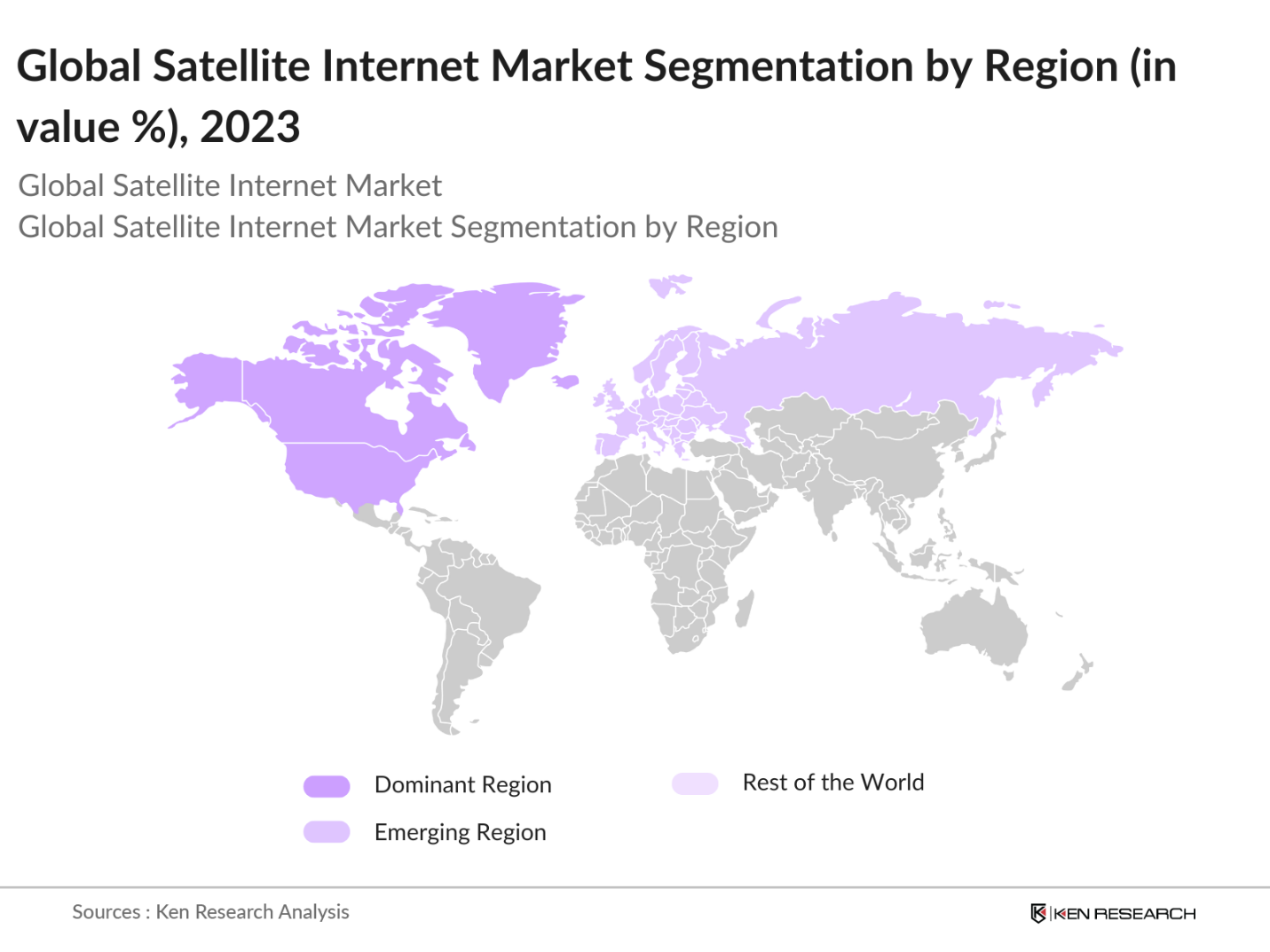
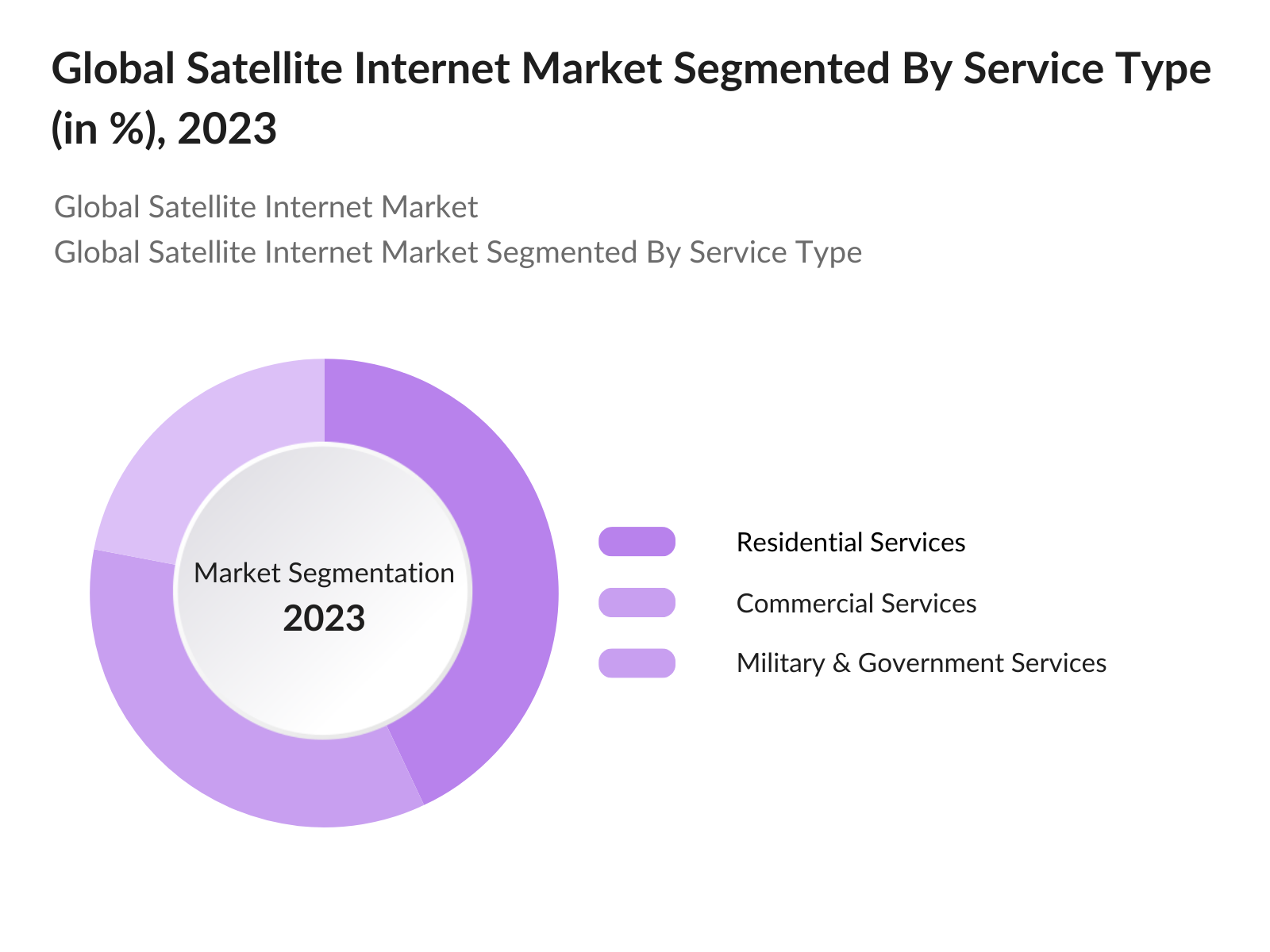
The global satellite internet market is segmented by region, service type, and frequency band.
By Region: The global satellite internet market is segmented into North America, Europe, Asia-Pacific (APAC), Latin America, and the Middle East & Africa (MEA). In 2023, North America dominated the market, supported by the regions advanced satellite infrastructure, significant government investment in rural broadband, and the presence of leading satellite internet companies like SpaceX and Viasat.
By Service Type: The market is segmented into Residential Services, Commercial Services, and Military & Government Services. In 2023, the Residential Services segment held the largest market share, primarily due to the increasing demand for satellite internet in rural and underserved areas where traditional broadband infrastructure is unavailable.
By Frequency Band: The market is divided into Ku-Band, Ka-Band, and C-Band. In 2023, the Ka-Band segment held the largest market share, as it offers faster internet speeds and lower latency compared to other bands. It is widely used in commercial applications, such as aviation and maritime industries, and has become the preferred choice for satellite internet providers.
|
Company Name |
Establishment Year |
Headquarters |
|
SpaceX |
2002 |
Hawthorne, CA, USA |
|
Hughes Network Systems |
1971 |
Germantown, MD, USA |
|
Viasat |
1986 |
Carlsbad, CA, USA |
|
OneWeb |
2012 |
London, UK |
|
Amazons Project Kuiper |
2019 |
Seattle, WA, USA |
The Global Satellite Internet Market is expected to grow substantially over the coming years, driven by the increasing deployment of LEO satellite constellations, rising demand for internet in remote areas, and government-led initiatives aimed at enhancing global connectivity.
|
By Service Type |
Residential Services Commercial Services Military Government Services |
|
By Frequency Band |
Ku-Band Ka-Band C-Band |
|
By End-Use Industry |
Agriculture Telecommunications Defense & Military Healthcare Maritime & Aviation |
|
By Satellite Orbit |
Low-Earth Orbit (LEO) Medium-Earth Orbit (MEO) Geostationary Orbit (GEO) |
|
By Region |
North America Europe Asia-Pacific (APAC) Middle East & Africa (MEA) Latin America |
1.1. Definition and Scope
1.2. Market Taxonomy
1.3. Market Growth Rate
1.4. Market Segmentation Overview
2.1. Historical Market Size
2.2. Year-on-Year Growth Analysis
2.3. Key Market Developments and Milestones
3.1. Growth Drivers
3.1.1. Rising Demand for Rural Connectivity
3.1.2. Expansion of IoT and Connected Devices
3.1.3. Government Support for Satellite Internet Infrastructure
3.2. Challenges
3.2.1. Regulatory and Licensing Issues
3.2.2. Limited Bandwidth and Latency Issues
3.2.3. High Initial Costs for Satellite Deployment
3.3. Opportunities
3.3.1. Direct-to-Device Connectivity Expansion
3.3.2. Integration with 5G Networks
3.3.3. Growing Investment in Low-Earth Orbit (LEO) Satellites
3.4. Trends
3.4.1. Integration of Satellite Internet with 5G Networks
3.4.2. Expansion of Direct-to-Device Connectivity
3.4.3. Increasing Use of Satellite Internet in Disaster Management
3.5. Government Initiatives
3.5.1. Rural Digital Opportunity Fund (RDOF) United States (2023)
3.5.2. National Broadband Mission India (2023)
3.5.3. Secure Connectivity Initiative European Union (2024)
3.6. SWOT Analysis
3.7. Stake Ecosystem
3.8. Competition Ecosystem
4.1. By Service Type (in Value %)
4.1.1. Residential Services
4.1.2. Commercial Services
4.1.3. Military & Government Services
4.2. By Frequency Band (in Value %)
4.2.1. Ku-Band
4.2.2. Ka-Band
4.2.3. C-Band
4.3. By End-Use Industry (in Value %)
4.3.1. Agriculture
4.3.2. Telecommunications
4.3.3. Defense & Military
4.3.4. Healthcare
4.3.5. Maritime & Aviation
4.4. By Satellite Orbit (in Value %)
4.4.1. Low-Earth Orbit (LEO)
4.4.2. Medium-Earth Orbit (MEO)
4.4.3. Geostationary Orbit (GEO)
4.5. By Region (in Value %)
4.5.1. North America
4.5.2. Europe
4.5.3. Asia-Pacific (APAC)
4.5.4. Latin America
4.5.5. Middle East & Africa (MEA)
5.1 Detailed Profiles of Major Companies
5.1.1. SpaceX (Starlink)
5.1.2. Hughes Network Systems
5.1.3. Viasat
5.1.4. OneWeb
5.1.5. Amazons Project Kuiper
5.1.6. Telesat
5.1.7. SES S.A.
5.1.8. Eutelsat Communications
5.1.9. Iridium Communications
5.1.10. AST SpaceMobile
5.1.11. Gilat Satellite Networks
5.1.12. Boeing
5.1.13. Lockheed Martin
5.1.14. Thales Alenia Space
5.1.15. Northrop Grumman
5.2 Cross Comparison Parameters (No. of Employees, Headquarters, Inception Year, Revenue)
6.1. Market Share Analysis
6.2. Strategic Initiatives
6.3. Mergers and Acquisitions
6.4. Investment Analysis
6.4.1. Venture Capital Funding
6.4.2. Government Grants
6.4.3. Private Equity Investments
7.1. Environmental Standards
7.2. Compliance Requirements
7.3. Certification Processes
8.1. Future Market Size Projections
8.2. Key Factors Driving Future Market Growth
9.1. By Service Type (in Value %)
9.2. By Frequency Band (in Value %)
9.3. By End-Use Industry (in Value %)
9.4. By Satellite Orbit (in Value %)
9.5. By Region (in Value %)
10.1. TAM/SAM/SOM Analysis
10.2. Customer Cohort Analysis
10.3. Marketing Initiatives
10.4. White Space Opportunity Analysis
Ecosystem creation for all the major entities and referring to multiple secondary and proprietary databases to perform desk research around the Market to collate Market-level information.
Collating statistics on the Global Satellite Internet Market over the years, and analyzing the penetration of Marketplaces as well as the ratio of service providers to compute the revenue generated for the market. We will also review service quality statistics to understand the revenue generated which can ensure accuracy behind the data points shared.
Building Market hypotheses and conducting CATIs with Market experts belonging to different companies to validate statistics and seek operational and financial information from company representatives.
Our team will approach multiple global satellite internet companies to understand the nature of service segments, consumer preferences, and other parameters. This supports validating statistics derived through a bottom-to-top approach from these global satellite internet companies, ensuring accuracy and reliability in the report.
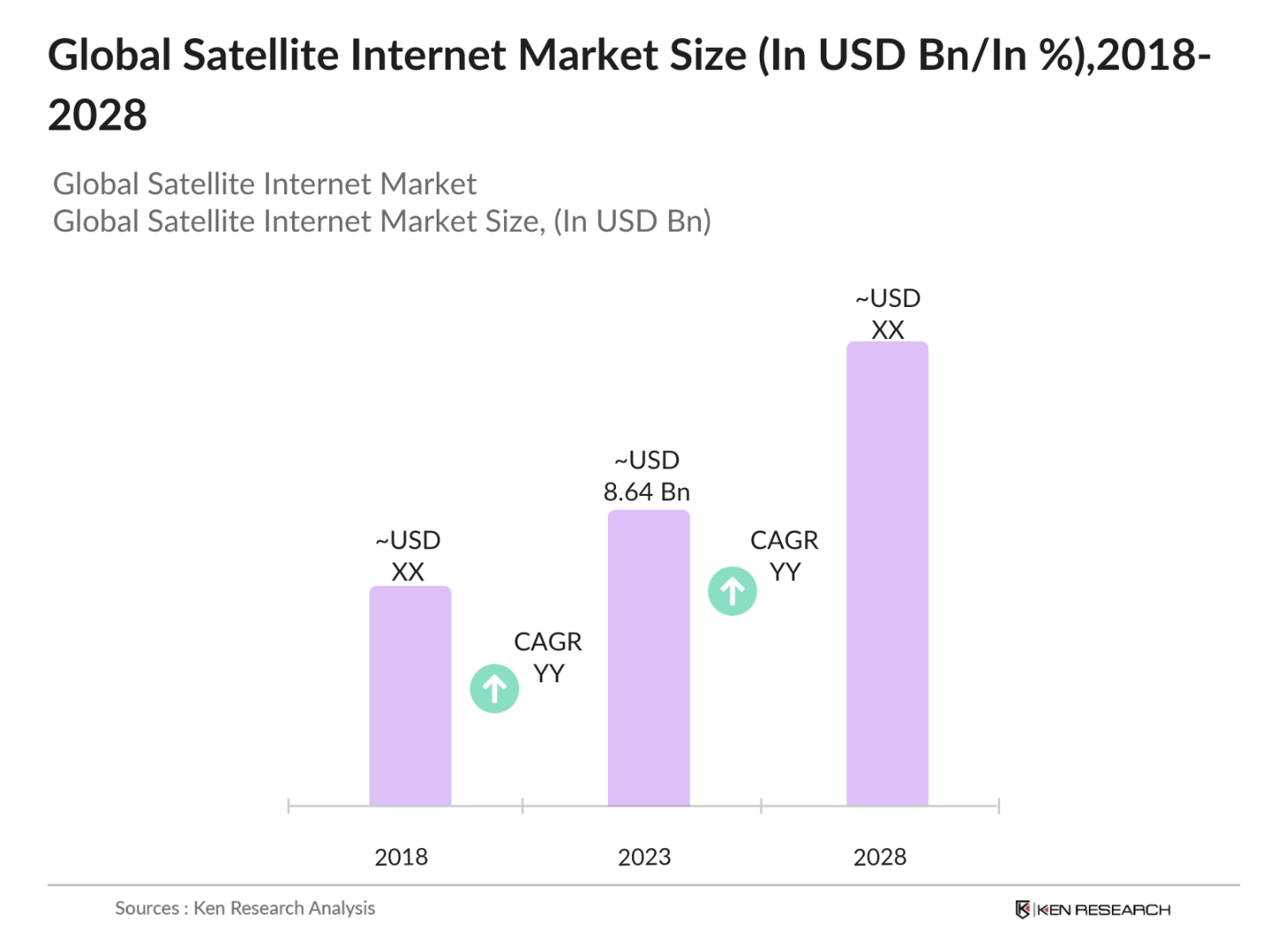
The global satellite internet market was valued at USD 8.64 billion in 2023, driven by the rising demand for internet connectivity in rural and remote areas, increasing use of IoT devices, and government initiatives to bridge the digital divide.
Challenges include high infrastructure deployment costs, limited bandwidth and latency issues, and regulatory hurdles that complicate satellite launches and service provisioning in different regions. These factors hinder faster growth and market expansion.
Key players in the market include SpaceX (Starlink), OneWeb, Viasat, Hughes Network Systems, and Amazons Project Kuiper. These companies lead the market through advanced satellite constellations and partnerships that expand their global reach.
Growth is driven by increasing demand for rural connectivity, the expansion of IoT and connected devices, and government investments in satellite internet infrastructure. These factors are enhancing global internet access, particularly in underserved regions.

What makes us stand out is that our consultants follows Robust, Refine and Result (RRR) methodology. i.e. Robust for clear definitions, approaches and sanity checking, Refine for differentiating respondents facts and opinions and Result for presenting data with story

We have set a benchmark in the industry by offering our clients with syndicated and customized market research reports featuring coverage of entire market as well as meticulous research and analyst insights.

While we don't replace traditional research, we flip the method upside down. Our dual approach of Top Bottom & Bottom Top ensures quality deliverable by not just verifying company fundamentals but also looking at the sector and macroeconomic factors.

With one step in the future, our research team constantly tries to show you the bigger picture. We help with some of the tough questions you may encounter along the way: How is the industry positioned? Best marketing channel? KPI's of competitors? By aligning every element, we help maximize success.

Our report gives you instant access to the answers and sources that other companies might choose to hide. We elaborate each steps of research methodology we have used and showcase you the sample size to earn your trust.

If you need any support, we are here! We pride ourselves on universe strength, data quality, and quick, friendly, and professional service.