
Global Smart Air Purifiers Market Outlook to 2030
Region:Global
Author(s):Lakshyata and Nishika
Product Code:KENGR035
Region:Global
Author(s):Lakshyata and Nishika
Product Code:KENGR035
October 2024
99
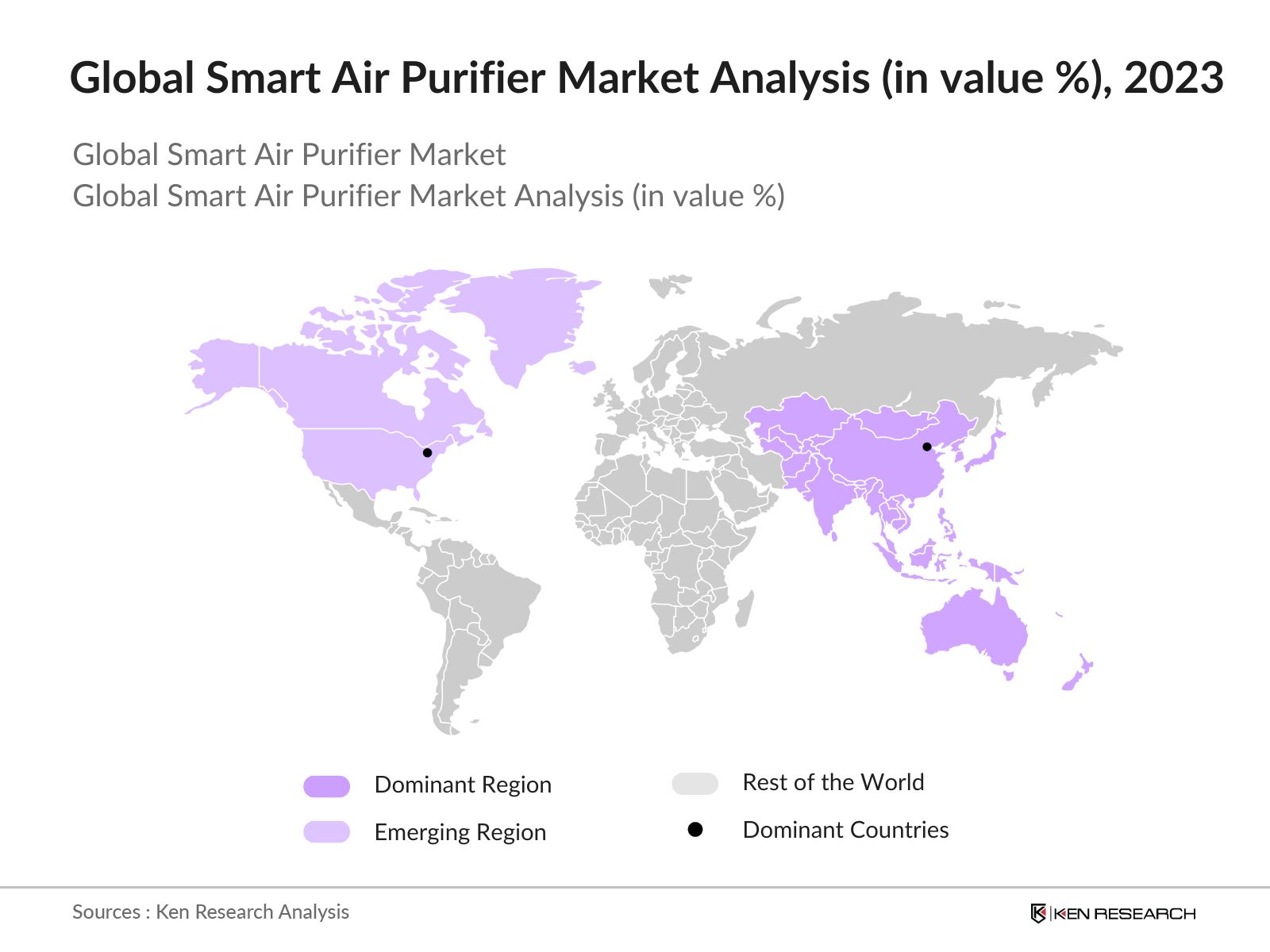
The Global Smart Air Purifier Market can be segmented based on several factors:
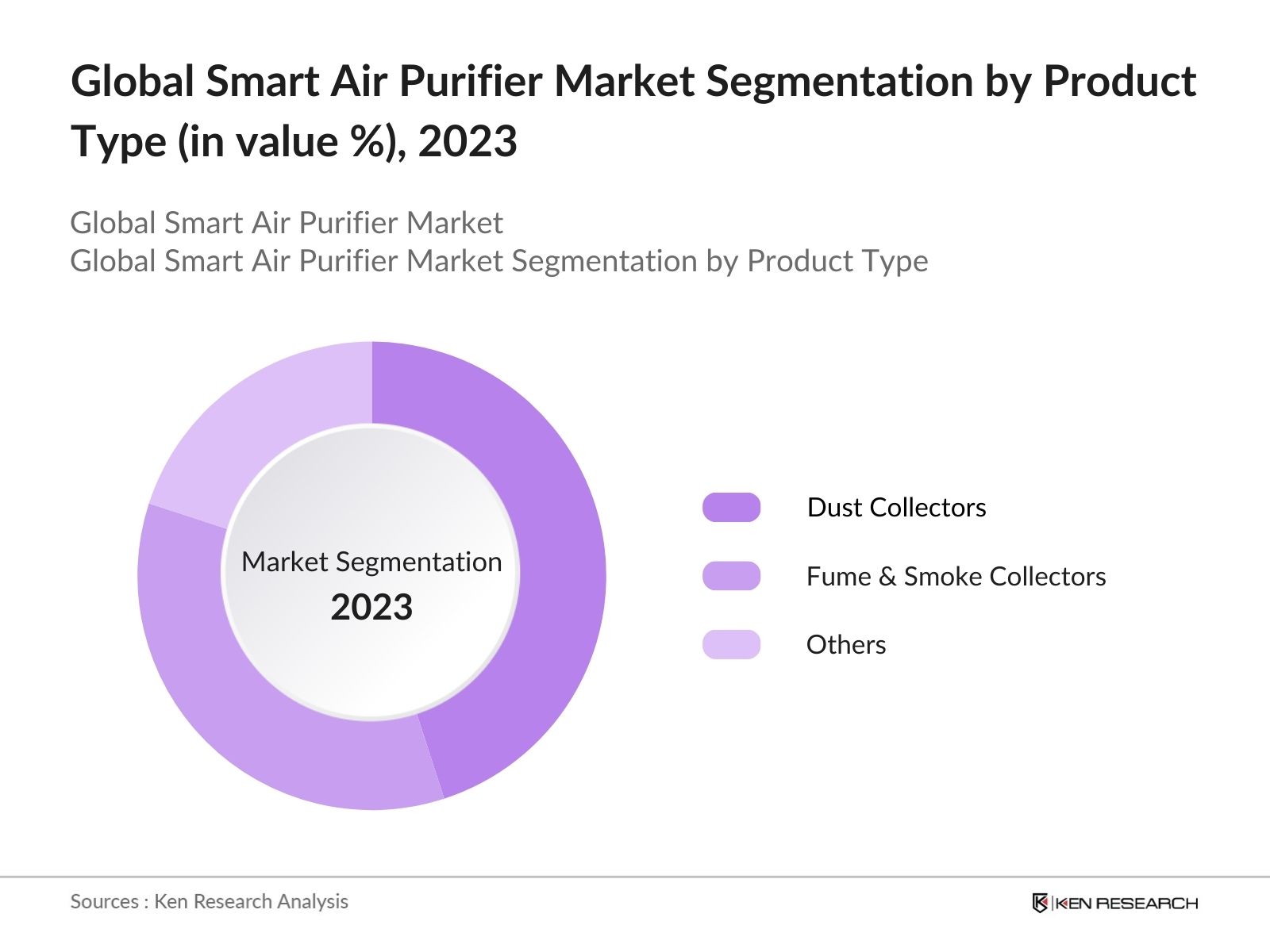
By Product Type: Global smart air purifier market segmentation by product type is divided into dust collectors, fume & smoke collectors and others. In 2023, dust collectors dominated the market. This dominance is driven by the rising prevalence of airborne dust, growing health awareness, and advancements in filtration technology. The high effectiveness of dust collectors in capturing fine particles and the expanding demand for efficient air purification solutions in urban and commercial settings further support their market prominence.
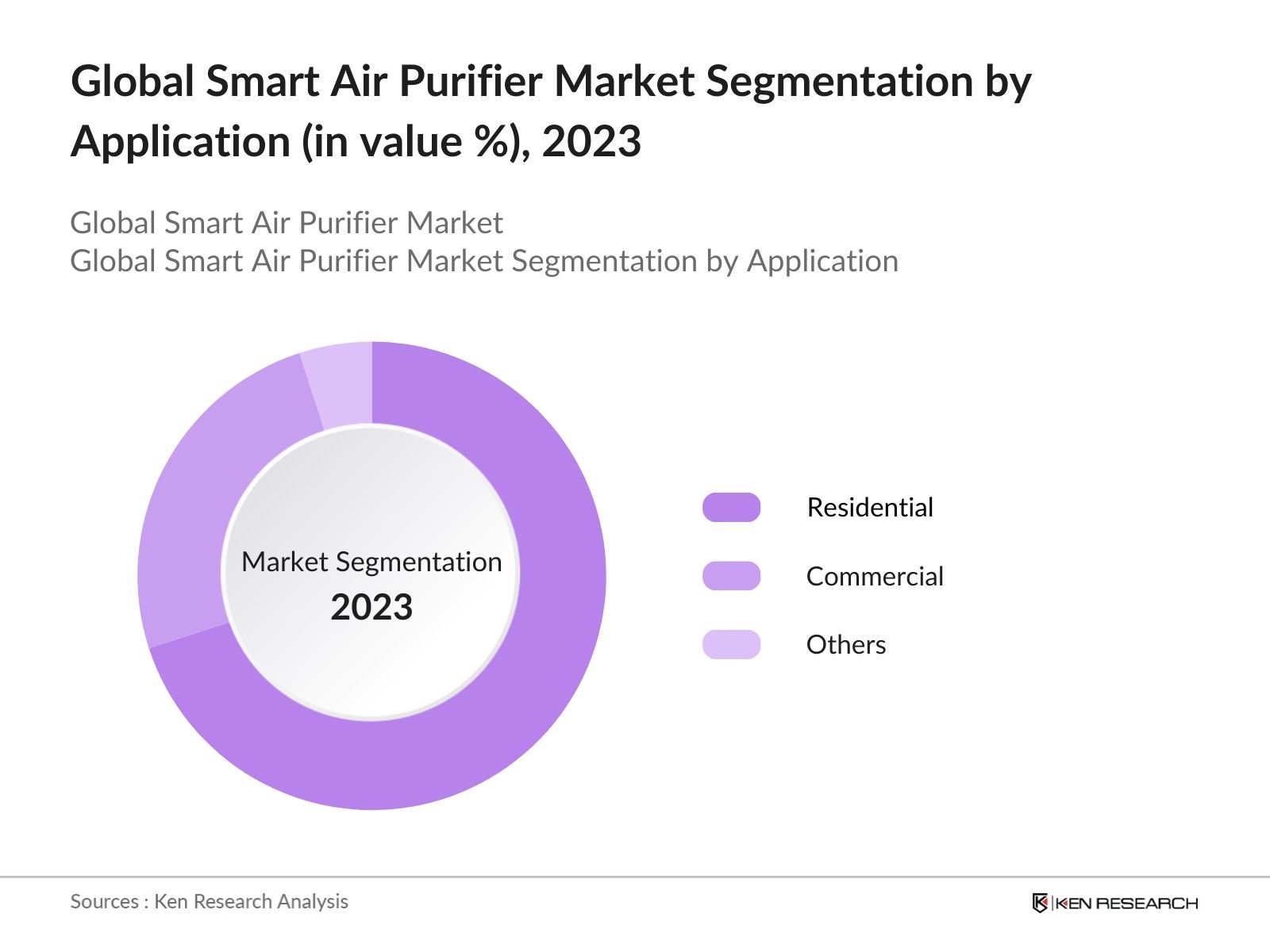
By Application: Global smart air purifier market segmentation by application is divided into residential, commercial and others. In 2023, the residential segment dominated the market. This dominance is driven by increasing consumer awareness of indoor air quality and health concerns related to pollutants and allergens. The rise in air pollution and the growing trend of home automation further boost demand for smart air purifiers in residential settings.
By Technology: Global smart air purifier market segmentation by technology is divided into high-efficiency particulate air, activated carbon filtration and others. In 2023, High-Efficiency Particulate Air (HEPA) filters lead the global smart air purifier market by value percentage. This is due to HEPA filters' exceptional ability to capture 99.97% of particles as small as 0.3 microns, addressing growing concerns about airborne pollutants and allergens. The high demand for HEPA-equipped purifiers is driven by their effectiveness, advancements in filter technology, and increasing consumer awareness of health benefits.
|
Name of Company |
Establishment Year |
Headquarter |
Presence in Countries |
|
Sharp Electronics Corporation |
1912 |
Skai, Osaka, Japan |
43 |
|
Dyson Technology Limited |
1978 |
Malmesbury, England |
65 |
|
Xiaomi Corporation |
2010 |
Haidian District, Beijing, China |
100 |
|
Honeywell International, Inc. |
1885 |
Charlotte, North Carolina. |
79 |
|
Hamilton Beach Brands, Inc. |
1910 |
Glen Allen, Virginia, USA |
100 |
|
Koninklijke Philips Electronics NV |
1891 |
Amsterdam, Netherlands |
75 |
Global Smart Air Purifier Market Growth Drivers:
Global Smart Air Purifier Market Challenges:
Global Smart Air Purifier Market Government Initiatives:
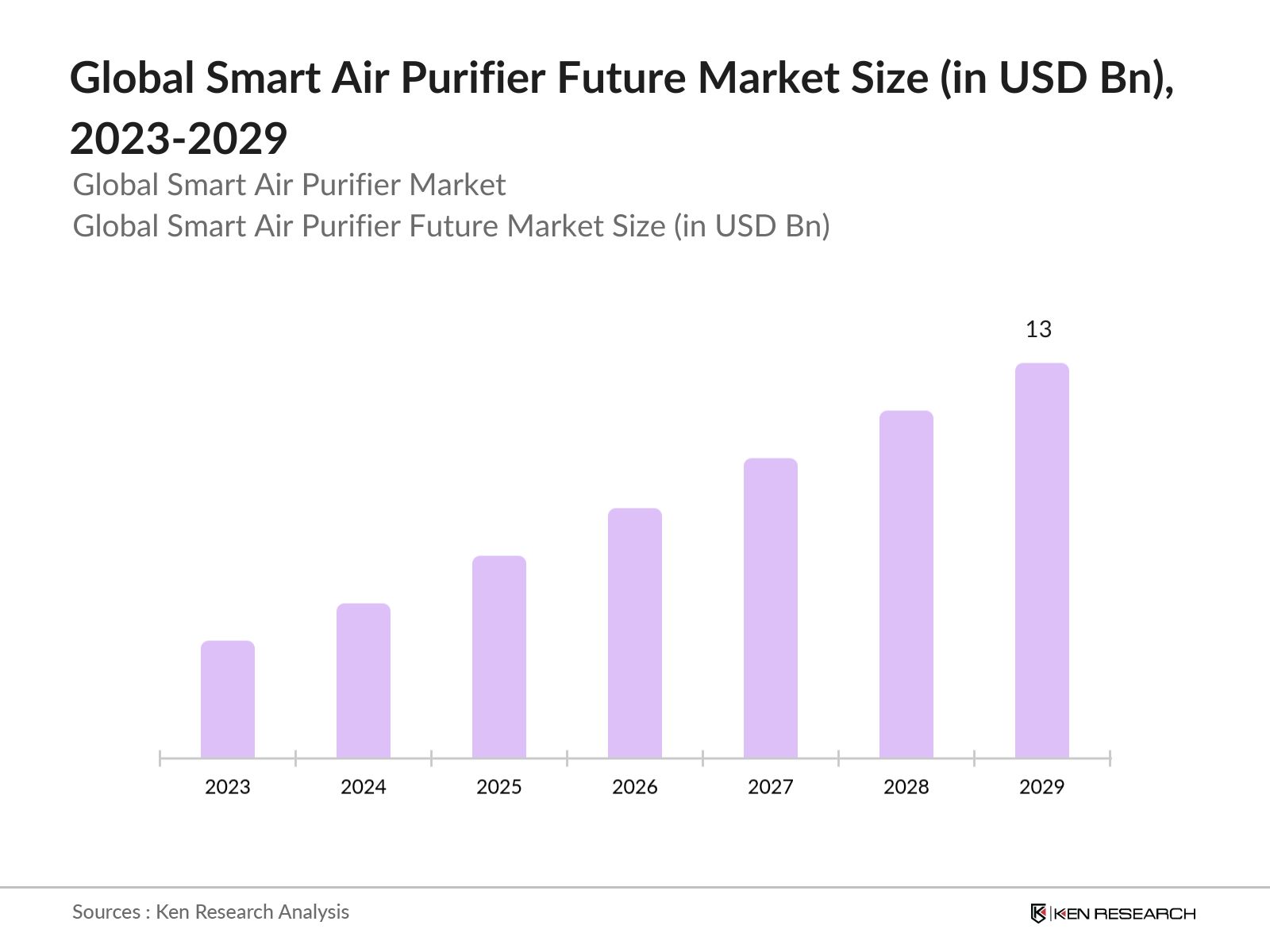
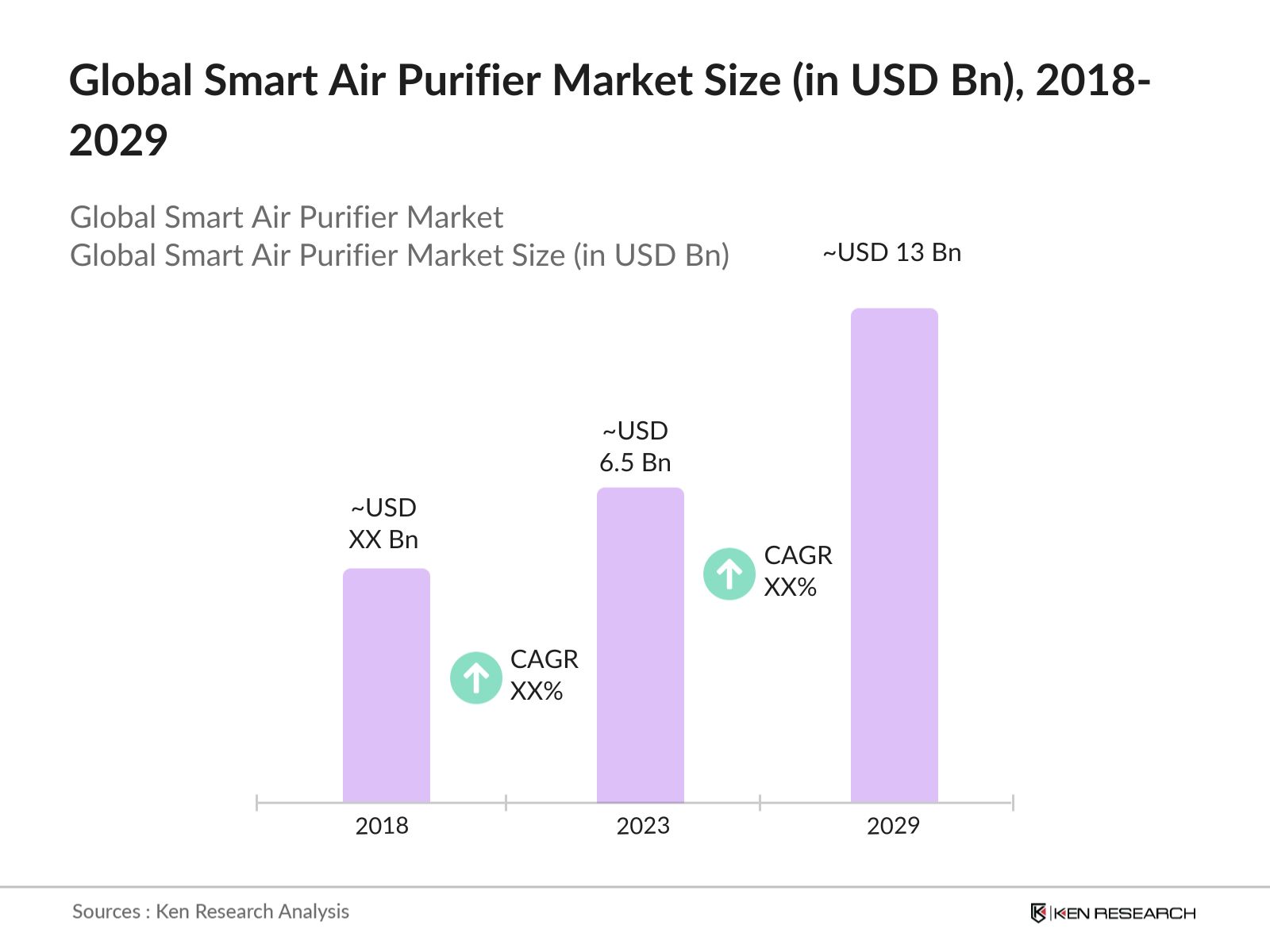
The Global Smart Air Purifier market is expected to reach USD 13 Bn by 2029 driven by increasing air pollution levels, rising health awareness, and technological advancements. Governments worldwide are implementing stringent regulations to curb air pollution, further boosting the demand for air purification solutions. The integration of smart technologies such as IoT and AI will continue to enhance the functionality and user experience of air purifiers, making them indispensable in modern households and commercial spaces.
Future Market Trends
Expansion of Smart Home Integration: Smart air purifiers are becoming more integrated into smart home ecosystems, allowing users to control them through voice assistants like Amazon Alexa and Google Assistant. Many of these purifiers are becoming compatible with home automation systems such as Samsung SmartThings, Apple HomeKit, and Google Home. This connectivity will let users manage their air purifiers remotely, checking air quality, adjusting settings, and receiving alerts from anywhere with internet access.
Technological Progress in Air Purifiers: Advancements in technology are enhancing smart air purifiers with improved filtration, sensors, and IoT features. These upgrades support real-time air quality monitoring, smartphone control, and integration with smart home systems. Equipped with sophisticated sensors, these purifiers can detect pollutants like PM2.5, pollen, pet dander, and volatile organic compounds (VOCs), adjusting their operation based on real-time data. Compatibility with major smart home platforms further allows users to control purifiers via voice commands and automate their functions.
|
By Region |
North America Europe APAC Latin America MEA |
|
By Product Type |
Dust Collectors Fume & Smoke Collectors Others |
|
By Application |
Residential Commercial Others |
|
By Technology |
High Efficiency Particulate Air (HEPA) Activated Carbon Filtration Others |
1.1 Global Home Appliances Market
1.2 Global Smart Air Purifier Market
2.1 Overview of Global Economics
2.2 Overview of Global Home Appliances Industry
2.3 Global Home Appliances (Major Appliances, Small Appliances and Smart Appliances) Revenue
2.4 Global Smart Air Purifier Infrastructure
3.1 Ecosystem
3.2 Value Chain
3.3 Case Study
5.1 By Region (North America, Europe, APAC, Latin America and MEA) in value %, 2018-2023
5.2 By Product Type (Dust Collectors, Fume & Smoke Collectors and Others) in value%, 2018-2023
5.3 By Application (Residential, Commercial and Others) in value %, 2018-2023
5.4 By Technology (High Efficiency Particulate Air (HEPA), Activated Carbon Filtration and Others) in value %, 2018-2023
6.1 Market Share Analysis
6.2 Market Heat Map Analysis
6.3 Market Cross Comparison
6.4 Comparison Matrix
6.5 Investment Landscape
7.1 Growth Drivers
7.2 Challenges
7.3 Trends
7.4 Case Studies
7.5 Strategic Initiatives
9.1 By Region (North America, Europe, APAC, Latin America and MEA) in value %, 2023-2029
9.2 By Product Type (Dust Collectors, Fume & Smoke Collectors and Others) in value%, 2023-2029
9.3 By Application (Residential, Commercial and Others) in value %, 2023-2029
9.4 By Technology (High Efficiency Particulate Air (HEPA), Activated Carbon Filtration and Others) in value %, 2023-2029
Conduct comprehensive secondary research to compile a list of key players in the smart air purifier industry. This includes analyzing industry articles, company reports, investor presentations, blogs, and other relevant sources to form hypotheses about the markets size and scope.
Perform Computer-Assisted Telephone Interviews (CATIs) with key management figures such as C-level executives, business development heads, operational managers, and quality managers. These interviews aim to understand their business models, revenue streams, technological capabilities, and key performance indicators, including segment performance and future strategies.
Utilize a bottom-up approach to capture revenue data across industry players, assessing overall revenue for the global smart air purifier market.
Conduct a sanity check to verify the accuracy of information obtained from industry experts. Evaluate the market size, future prospects, and competitive landscape to provide a reliable forecast.
The global smart air purifier market was valued at USD 6.5 Bn in 2023, is driven by growing air pollution levels and heightened consumer awareness of air quality and health. Additionally, technological advancements have enhanced these devices' efficiency and usability, incorporating features like Wi-Fi connectivity, air quality sensors, and integration with smart home systems.
Challenges in global smart air purifier market include high initial costs, limited awareness in developing regions, and the technical complexity of smart air purifiers. These factors can hinder widespread adoption and market growth.
Key players in global smart air purifier market include Dyson, Honeywell, Xiaomi, Sharp Corporation, and LG Electronics. These companies lead due to their innovative technologies, extensive product ranges, and strong market presence.
The global smart air purifier market is driven by increasing air pollution levels, rising health awareness, and technological advancements such as IoT and AI integration in air purifiers, which enhance their functionality and appeal.

What makes us stand out is that our consultants follows Robust, Refine and Result (RRR) methodology. i.e. Robust for clear definitions, approaches and sanity checking, Refine for differentiating respondents facts and opinions and Result for presenting data with story

We have set a benchmark in the industry by offering our clients with syndicated and customized market research reports featuring coverage of entire market as well as meticulous research and analyst insights.

While we don't replace traditional research, we flip the method upside down. Our dual approach of Top Bottom & Bottom Top ensures quality deliverable by not just verifying company fundamentals but also looking at the sector and macroeconomic factors.

With one step in the future, our research team constantly tries to show you the bigger picture. We help with some of the tough questions you may encounter along the way: How is the industry positioned? Best marketing channel? KPI's of competitors? By aligning every element, we help maximize success.

Our report gives you instant access to the answers and sources that other companies might choose to hide. We elaborate each steps of research methodology we have used and showcase you the sample size to earn your trust.

If you need any support, we are here! We pride ourselves on universe strength, data quality, and quick, friendly, and professional service.