
Global Stem Cell Therapy Market Outlook 2030
Region:Global
Author(s):Shivani Mehra
Product Code:KROD7636
Region:Global
Author(s):Shivani Mehra
Product Code:KROD7636
December 2024
97
Listen to the audio summary
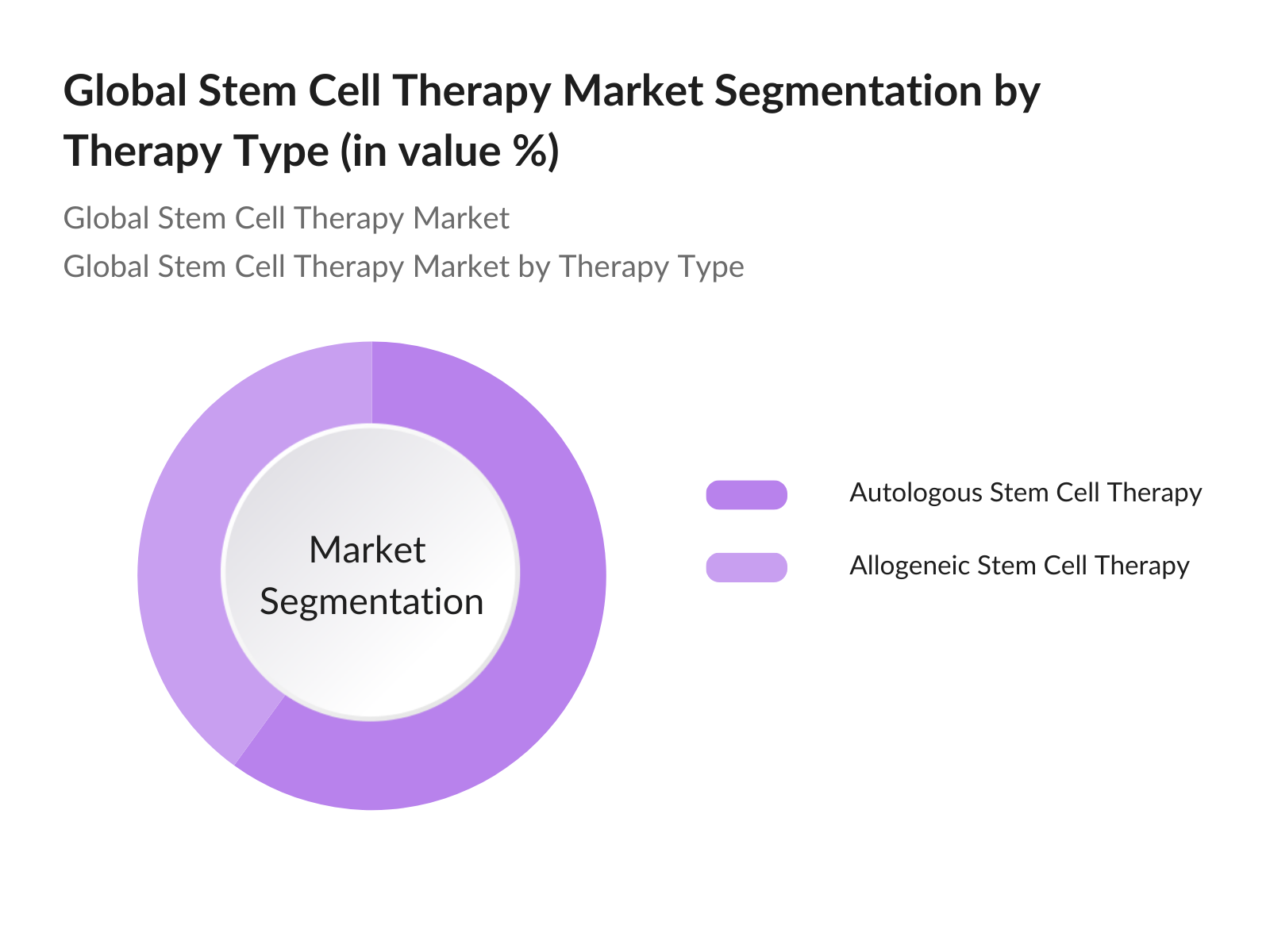
By Therapy Type: The global stem cell therapy market is segmented by therapy type into Autologous Stem Cell Therapy and Allogeneic Stem Cell Therapy. Autologous stem cell therapy holds a dominant market share due to its lower risk of immune rejection and fewer ethical concerns. This segment's popularity is driven by advancements in personalized treatments and its applications in treating various autoimmune and blood disorders. The growing trend of personalized healthcare, where cells from a patient's body are used for treatment, ensures the continued dominance of autologous therapies in the market.
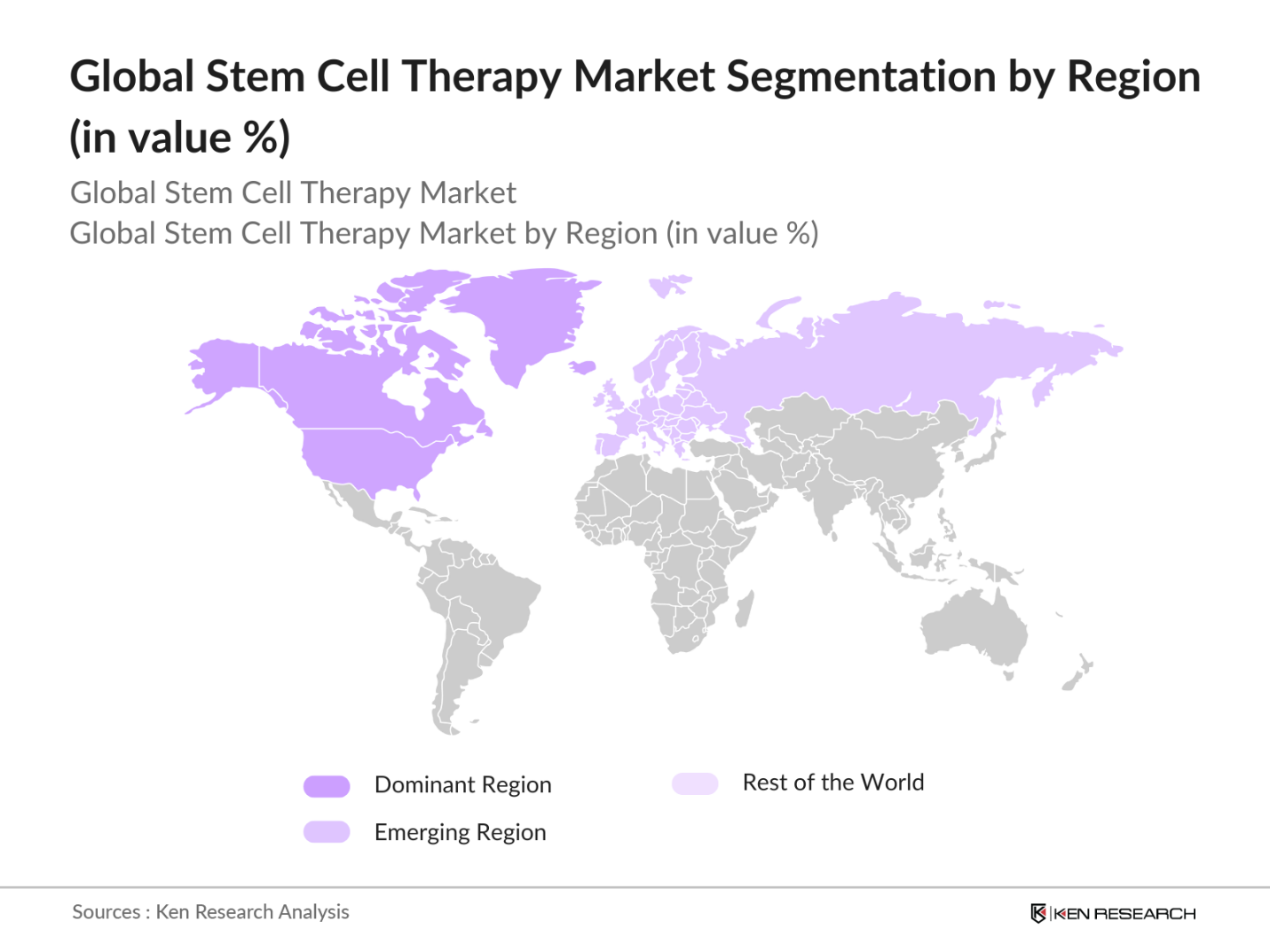
By Region: The global stem cell therapy market due to its advanced healthcare infrastructure and high investments in stem cell research. The Asia-Pacific region is emerging as a strong competitor, particularly due to increasing government support in countries like Japan and China, where regenerative medicine is gaining attention. Europe also has a significant share, driven by favorable regulatory environments and a growing number of clinical trials.
The global stem cell therapy market is dominated by several key players, including both established biotech companies and emerging firms specializing in regenerative medicine. These players are constantly innovating and expanding their product portfolios to remain competitive.
|
Company Name |
Establishment Year |
Headquarters |
R&D Investments |
Clinical Trial Pipeline |
Product Portfolio |
FDA Approvals |
Manufacturing Capabilities |
Strategic Alliances |
|
Mesoblast Ltd |
2004 |
Australia |
High |
|||||
|
Athersys, Inc. |
1995 |
USA |
Medium |
|||||
|
Pluristem Therapeutics |
2001 |
Israel |
High |
|||||
|
Lonza Group |
1897 |
Switzerland |
High |
|||||
|
Vericel Corporation |
1989 |
USA |
Medium |
Market Growth Drivers:
Market Challenges:
Over the next five years, the global stem cell therapy market is poised for significant growth, driven by continuous government support, advancements in cell therapy technologies, and increasing consumer demand for novel treatments. Innovations in personalized medicine, along with rising applications in chronic diseases like cancer, cardiovascular, and neurological disorders, will continue to fuel market expansion. Countries like Japan and China are expected to gain market share, while North America maintains its dominance through consistent research and development efforts.
Market Opportunities:
|
By Therapy Type |
Autologous Allogeneic |
|
By Application |
Oncology Neurology Cardiovascular Musculoskeletal Others |
|
By Source |
Embryonic Adult iPSCs Cord Blood |
|
By End-User |
Hospitals Research Institutes Biotech Companies |
|
By Region |
North America Europe Asia-Pacific Latin America Middle East & Africa |
1.1. Definition and Scope
1.2. Market Taxonomy
1.3. Market Growth Rate (Market Penetration, Adoption Rates)
1.4. Market Segmentation Overview
2.1. Historical Market Size
2.2. Year-On-Year Growth Analysis
2.3. Key Market Developments and Milestones (Clinical Trials, FDA Approvals)
3.1. Growth Drivers
3.1.1. Increasing Prevalence of Chronic Diseases (Therapeutic Applications)
3.1.2. Rising Government and Private Funding (Research & Development)
3.1.3. Technological Advancements in Cell Engineering (Product Innovation)
3.2. Market Challenges
3.2.1. Regulatory Barriers (Approval Processes)
3.2.2. High Cost of Treatment (Cost Analysis)
3.2.3. Ethical Concerns and Public Perception (Ethical Framework)
3.3. Opportunities
3.3.1. Emerging Markets (Geographical Penetration)
3.3.2. Expansion of Therapeutic Applications (Regenerative Medicine)
3.3.3. Collaborations between Pharma and Biotech Firms (Strategic Partnerships)
3.4. Trends
3.4.1. Development of Allogeneic Stem Cell Therapies (Product Diversification)
3.4.2. Increasing Focus on Personalized Medicine (Precision Medicine)
3.4.3. Growing Use of Stem Cells in Clinical Trials (Clinical Advancement)
3.5. Regulatory Environment
3.5.1. FDA Guidelines for Stem Cell Therapies (Regulatory Compliance)
3.5.2. EMA Directives (European Market Approvals)
3.5.3. Global Harmonization Initiatives (Standardization)
3.6. SWOT Analysis
3.7. Porters Five Forces Analysis
3.8. Stakeholder Ecosystem (Key Stakeholders, Research Institutes)
3.9. Competition Ecosystem
4.1. By Therapy Type (In Value %)
4.1.1. Autologous Stem Cell Therapy
4.1.2. Allogeneic Stem Cell Therapy
4.2. By Application (In Value %)
4.2.1. Oncology
4.2.2. Neurology
4.2.3. Cardiovascular Disorders
4.2.4. Musculoskeletal Disorders
4.2.5. Other Applications
4.3. By Source (In Value %)
4.3.1. Embryonic Stem Cells
4.3.2. Adult Stem Cells
4.3.3. Induced Pluripotent Stem Cells (iPSCs)
4.3.4. Cord Blood Stem Cells
4.4. By End User (In Value %)
4.4.1. Hospitals
4.4.2. Research Institutes
4.4.3. Biotech Companies
4.5. By Region (In Value %)
4.5.1. North America
4.5.2. Europe
4.5.3. Asia-Pacific
4.5.4. Latin America
4.5.5. Middle East & Africa
5.1. Detailed Profiles of Major Companies
5.1.1. Mesoblast Ltd
5.1.2. Athersys, Inc.
5.1.3. Pluristem Therapeutics
5.1.4. Thermo Fisher Scientific
5.1.5. Cytori Therapeutics
5.1.6. Lonza Group
5.1.7. Cellular Biomedicine Group
5.1.8. Vericel Corporation
5.1.9. Stemcell Technologies
5.1.10. BrainStorm Cell Therapeutics
5.1.11. Osiris Therapeutics
5.1.12. BioTime Inc.
5.1.13. Gamida Cell
5.1.14. TiGenix NV
5.1.15. MEDIPOST
5.2. Cross Comparison Parameters (Revenue, Product Portfolio, Clinical Trial Pipeline, R&D Investments, Strategic Alliances, Manufacturing Capabilities, Market Reach, FDA Approvals)
5.3. Market Share Analysis
5.4. Strategic Initiatives (Collaborations, Partnerships, Mergers)
5.5. Mergers and Acquisitions (Investment Focus)
5.6. Investment Analysis (Venture Capital, Private Equity)
5.7. Government Grants and Funding
5.8. Intellectual Property Landscape (Patents, Licensing)
6.1. Regulatory Landscape (FDA, EMA, Japans PMDA)
6.2. Compliance Requirements (Good Manufacturing Practices)
6.3. Certification Processes (Approval Pathways)
7.1. Future Market Size Projections
7.2. Key Factors Driving Future Market Growth (Technological Advancements, Adoption Rates)
8.1. By Therapy Type (In Value %)
8.2. By Application (In Value %)
8.3. By Source (In Value %)
8.4. By End User (In Value %)
8.5. By Region (In Value %)
9.1. TAM/SAM/SOM Analysis
9.2. White Space Opportunity Analysis
9.3. Product Positioning Strategy
9.4. Key Market Entry Barriers
Disclaimer Contact UsThe first step involved creating a comprehensive market map encompassing all the major stakeholders in the global stem cell therapy market. This step was carried out using secondary data sources, including industry reports, company publications, and public databases, to understand the critical variables influencing the market.
This phase focused on compiling historical data and analyzing trends within the stem cell therapy market, focusing on factors like market penetration, technological advancements, and clinical trial activity. The data gathered was used to generate accurate estimates for market size and growth potential.
Hypotheses related to market growth, technological developments, and demand dynamics were validated through consultations with industry experts. These experts were contacted via telephonic interviews, and their insights were critical in validating the research findings.
The final step involved synthesizing all collected data and insights to create a cohesive market report. This step also included data triangulation, combining primary and secondary data sources to ensure the accuracy and comprehensiveness of the findings.
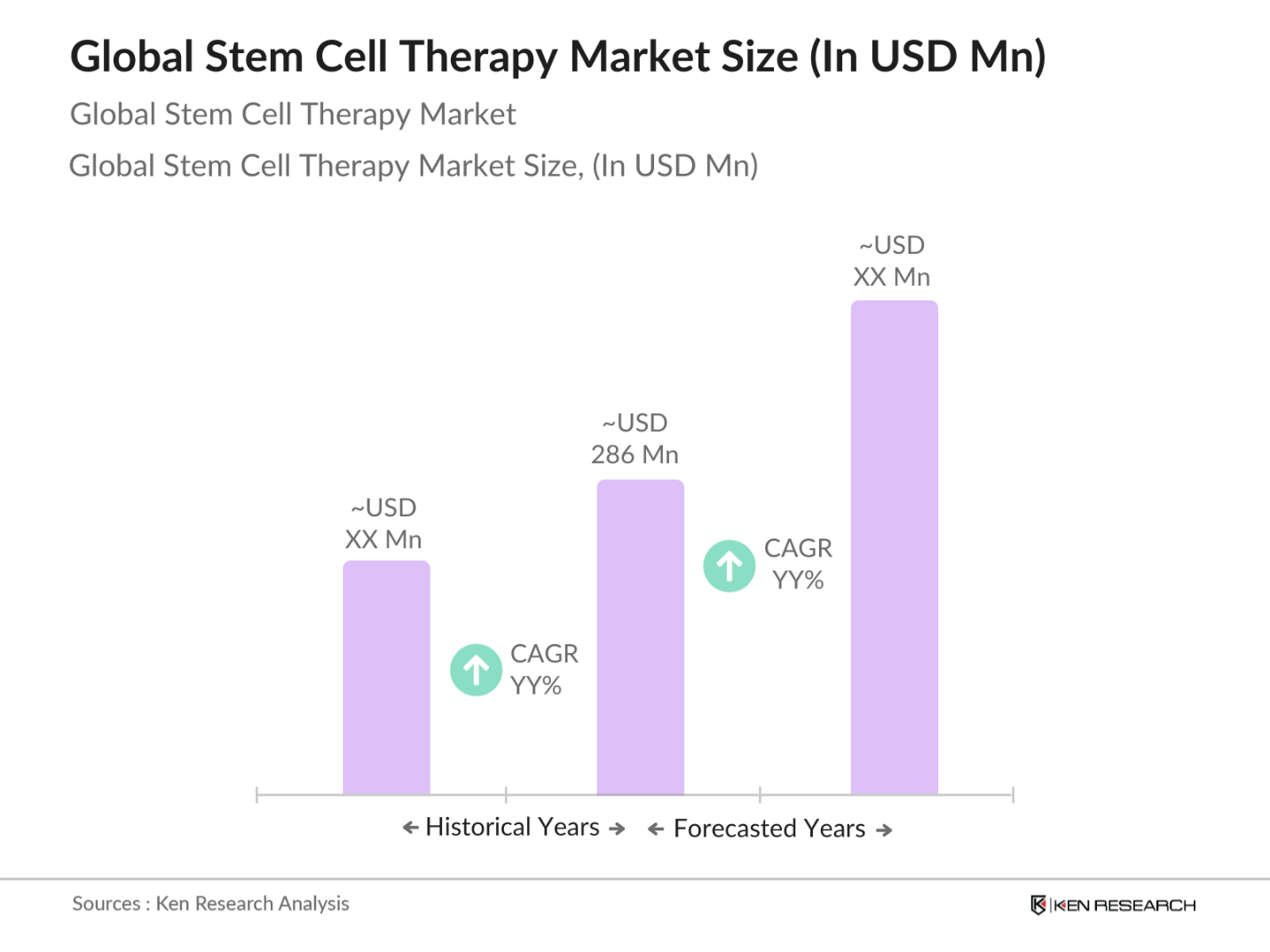
The global stem cell therapy market is valued at USD 286 million, driven by advancements in regenerative medicine and increasing investments in research and clinical trials.
Challenges include regulatory hurdles, high costs of treatment, and ethical concerns regarding the use of stem cells. Moreover, ensuring the safety and efficacy of stem cell therapies remains a significant concern.
Key players in the market include Mesoblast Ltd, Athersys, Inc., Lonza Group, Pluristem Therapeutics, and Vericel Corporation. These companies dominate due to their extensive R&D investments, strong product pipelines, and strategic partnerships.
Growth is driven by the increasing prevalence of chronic diseases, advancements in cell engineering technologies, and growing government support for regenerative medicine research.

What makes us stand out is that our consultants follows Robust, Refine and Result (RRR) methodology. i.e. Robust for clear definitions, approaches and sanity checking, Refine for differentiating respondents facts and opinions and Result for presenting data with story

We have set a benchmark in the industry by offering our clients with syndicated and customized market research reports featuring coverage of entire market as well as meticulous research and analyst insights.

While we don't replace traditional research, we flip the method upside down. Our dual approach of Top Bottom & Bottom Top ensures quality deliverable by not just verifying company fundamentals but also looking at the sector and macroeconomic factors.

With one step in the future, our research team constantly tries to show you the bigger picture. We help with some of the tough questions you may encounter along the way: How is the industry positioned? Best marketing channel? KPI's of competitors? By aligning every element, we help maximize success.

Our report gives you instant access to the answers and sources that other companies might choose to hide. We elaborate each steps of research methodology we have used and showcase you the sample size to earn your trust.

If you need any support, we are here! We pride ourselves on universe strength, data quality, and quick, friendly, and professional service.