
Global Yoga Mat Market Outlook 2030
Region:Global
Author(s):Shivani Mehra
Product Code:KROD9291
December 2024
96
About the Report
Global Yoga Mat Market Overview
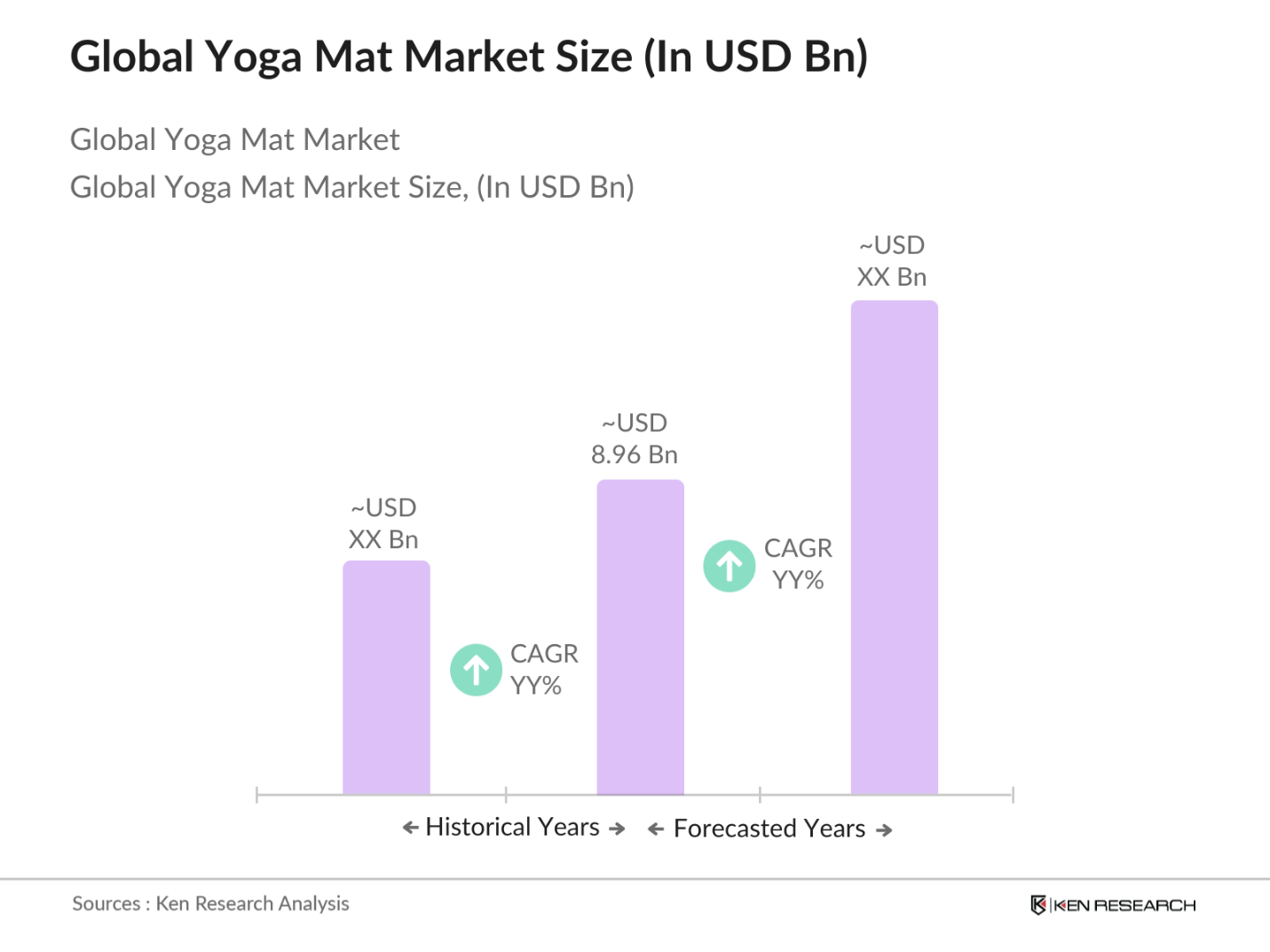
- The global yoga mat market is valued at approximately USD 8.96 billion, driven by increasing fitness and wellness awareness across the globe. The surge in demand is primarily due to heightened interest in physical and mental health, with yoga being one of the most accessible forms of exercise. Yogas widespread adoption, especially during the pandemic, significantly contributed to the surge in demand for premium and eco-friendly mats, as more consumers preferred home-based yoga practices.
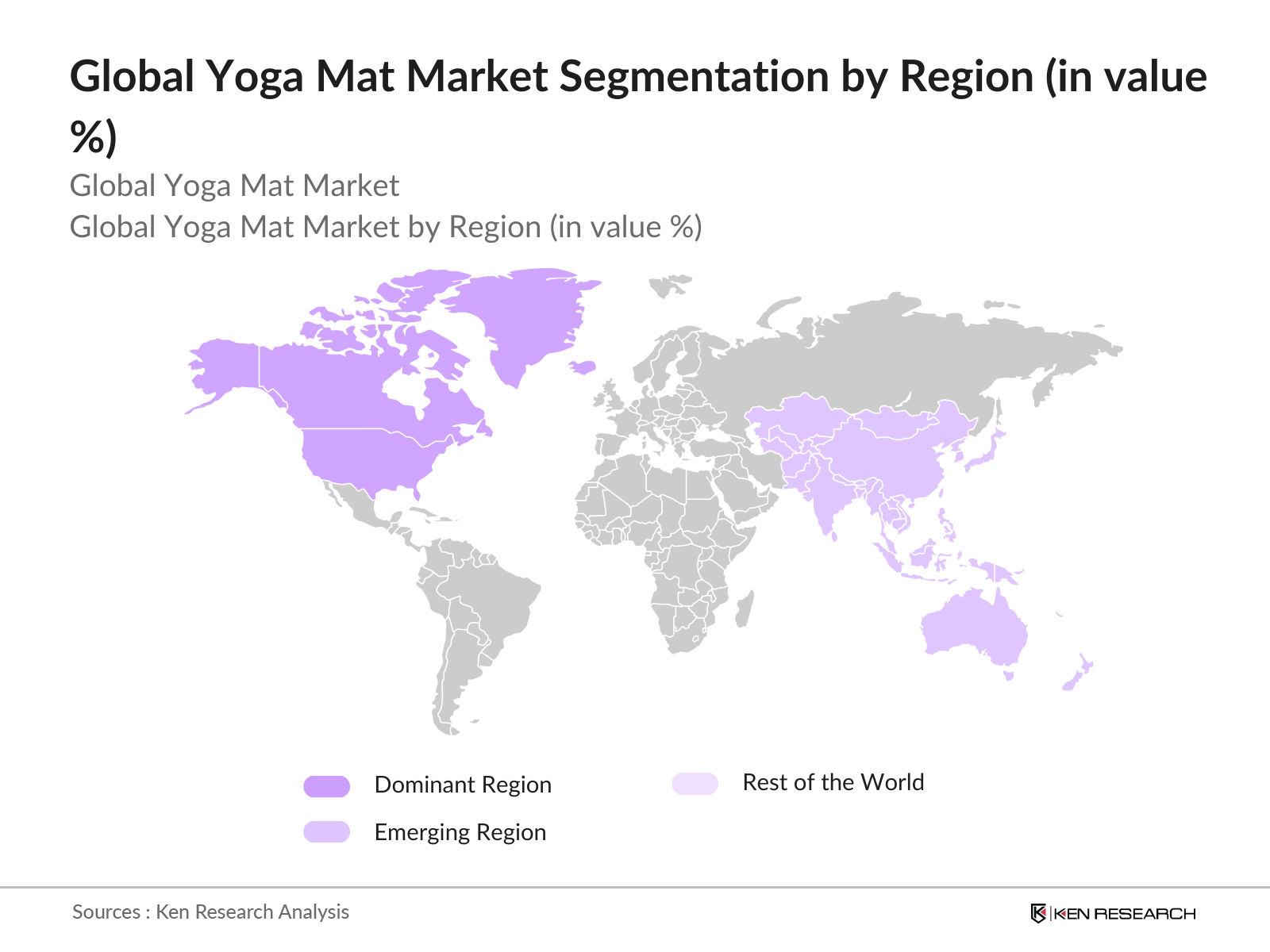
- In terms of geographic dominance, the North American and Asia-Pacific regions lead the market. North America, especially the United States, dominates due to a well-established fitness culture and growing participation in yoga classes. Asia-Pacific, led by India and China, sees increasing adoption driven by the traditional roots of yoga in India and the rising health consciousness in China.
- The Indian government, under its National Programme for Sustainable Development, has been promoting eco-friendly manufacturing processes, including the production of yoga mats made from natural materials like jute and cotton. These initiatives are aimed at reducing the environmental footprint of consumer goods by providing subsidies and tax incentives for manufacturers using biodegradable materials. As part of India's broader environmental policies, this program encourages local businesses to adopt greener production methods, thereby increasing the availability of sustainable yoga mats.
Global Yoga Mat Market Segmentation
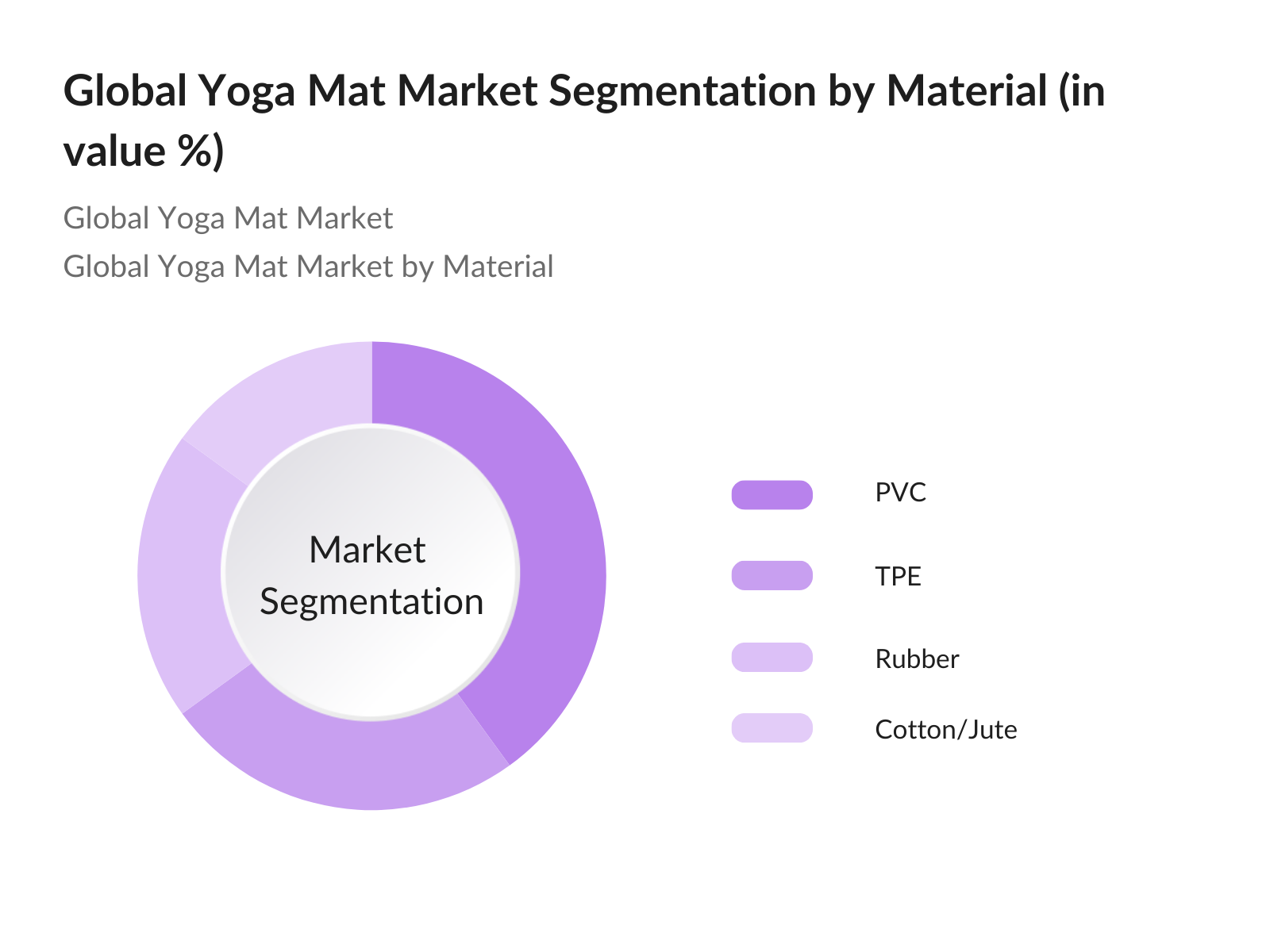
By Material: The global yoga mat market is segmented by material into PVC, TPE, rubber, and cotton/jute. PVC yoga mats continue to dominate due to their affordability and widespread availability. Despite concerns regarding their environmental impact, the flexibility and durability of PVC mats make them popular among fitness enthusiasts. However, rubber and cotton/jute mats are gaining traction, particularly among eco-conscious consumers, due to their sustainability and biodegradability.
By Region: The Middle East & Africa are significant contributors. North America leads due to the strong fitness industry and the growing trend toward holistic wellness. Asia-Pacific, particularly India and China, follows closely, as the region sees increasing yoga participation, especially with yoga's traditional roots and government-backed wellness initiatives.
Global Yoga Mat Market Competitive Landscape
The global yoga mat market is dominated by major players focusing on product innovation, sustainability, and premiumization. Companies like Lululemon, Manduka, and JadeYoga lead the market due to their established brands and sustainable product offerings. Smaller players, like YogiFi, leverage technology by introducing AI-driven mats, enhancing the overall user experience.
|
Company Name |
Established |
Headquarters |
Market Focus |
Product Innovation |
Sustainability Practices |
Customization Options |
Global Reach |
Technology Integration |
|
Lululemon Athletica |
1998 |
Vancouver, CA |
Premium Yoga Products |
- |
- |
- |
- |
- |
|
Manduka LLC |
1997 |
California, US |
Professional Yoga Mats |
- |
- |
- |
- |
- |
|
JadeYoga |
2000 |
Pennsylvania, US |
Eco-Friendly Mats |
- |
- |
- |
- |
- |
|
YogiFi |
2018 |
India |
Smart Yoga Mats |
- |
- |
- |
- |
- |
|
prAna Living, LLC |
1992 |
California, US |
Activewear & Yoga Gear |
- |
- |
- |
- |
- |
Global Yoga Mat Market Analysis
Market Growth Drivers
- Growing Fitness & Wellness Trends (e.g., mindfulness, home workouts): The global surge in health consciousness is evident, with over 200 million people globally participating in fitness and wellness activities by 2023, according to the WHO. Mindfulness practices, especially yoga, have seen increased participation, particularly in countries like the USA, India, and China. With more than 70 million yoga practitioners in the US alone, the demand for fitness equipment like yoga mats is growing. The pandemic-induced shift towards home workouts has led to a surge in online yoga tutorials, further driving the demand for mats tailored for at-home fitness routines.
- Increasing Yoga Participation Globally: Yoga participation continues to grow worldwide, driven by rising awareness of its physical and mental health benefits. North America, Europe, and Asia have seen significant growth in yoga practitioners, with more people incorporating it into their wellness routines. The increase in online yoga platforms, particularly during and after the pandemic, has further fueled participation. Yoga mats, especially those made from eco-friendly materials, are witnessing higher demand as people look for quality products to enhance their practice. This trend reflects a broader shift toward holistic health practices, with yoga at the forefront of global wellness activities.
- Adoption of Eco-Friendly Yoga Mats (e.g., rubber, jute, cotton materials): The shift toward sustainability has led to an increasing preference for eco-friendly yoga mats made from natural materials like jute, rubber, and cotton. Consumers are increasingly aware of the environmental impact of synthetic materials, prompting manufacturers to offer biodegradable and non-toxic alternatives. This trend is particularly strong in regions where environmental consciousness is high, driving demand for products that align with green living values. Yoga mat brands that prioritize eco-friendly materials and sustainable production methods are positioned to gain a competitive advantage in this evolving market.
Market Challenges:
- Increasing Preference for Outdoor Sports (Impact on indoor fitness demand): With the rise in global health initiatives, outdoor sports participation has grown significantly, as evidenced by the World Bank's report on sports engagement. By 2023, more than 800 million individuals globally were actively participating in outdoor sports, with hiking, cycling, and running seeing the most substantial growth. This trend has impacted indoor fitness markets like yoga, as consumers shift their focus to outdoor activities. The yoga mat market may face challenges as the global preference for outdoor sports competes with the demand for indoor fitness products.
- Cost Sensitivity Among Price-Conscious Consumers (Competition with low-cost products): The World Bank's 2023 global consumer spending analysis highlights that a significant portion of the world's population falls within the low- to middle-income bracket, resulting in cost-conscious purchasing behaviors. In the yoga mat market, this has intensified competition between premium eco-friendly mats and more affordable alternatives, especially in regions like Southeast Asia and Africa.
Global Yoga Mat Market Future Outlook
Over the next few years, the global yoga mat market is expected to witness robust growth driven by rising consumer interest in fitness and wellness activities. The increasing awareness of sustainable practices is likely to shift consumer preference towards eco-friendly mats, while technological advancements, such as AI-integrated mats, will further enhance the user experience.
Market Opportunities:
- Technological Advancements (Smart yoga mats, AI integration): The integration of AI and smart technology into yoga mats is reshaping the market, with innovations like built-in sensors for posture correction and real-time feedback. In 2023, over 5 million units of smart fitness equipment, including yoga mats, were sold globally, with the US and China leading the market. This trend is supported by the rising adoption of AI in the fitness industry, as noted by the International Telecommunication Union's (ITU) data on smart device usage.
- Sustainability Trends (Shift toward biodegradable and eco-friendly materials): The growing focus on sustainability is driving demand for eco-friendly yoga mats made from biodegradable and recycled materials. Consumers are increasingly seeking products that align with their environmental values, prompting manufacturers to adopt sustainable practices. Yoga mats made from natural materials like jute, rubber, and cork are gaining popularity, particularly in regions with strict environmental regulations. This trend is also being supported by governments encouraging the use of sustainable materials in consumer goods, creating.
Scope of the Report
|
By Material |
PVC TPE Rubber Cotton/Jute Others |
|
By End User |
Yoga & Fitness Clubs Household Others |
|
By Distribution Channel |
Online Offline (Specialty stores, Hypermarkets) |
|
By Thickness |
Thin (1-3 mm) Medium (4-5 mm) Thick (6-7 mm) |
|
By Region |
North America Europe Asia-Pacific Latin America Middle East & Africa |
Products
Key Target Audience
Yoga & Fitness Clubs
Yoga Product Manufacturers
E-commerce Platforms
Health & Wellness Companies
Investment & Venture Capitalist Firms
Yoga Associations & Organizations
Government & Regulatory Bodies (e.g., FDA for product safety)
Retail Chains & Specialty Stores
Companies
Players Mention in the Report
Lululemon Athletica Inc.
Manduka LLC
JadeYoga
Gaiam (Sequential Brands Group)
prAna Living, LLC
Hugger Mugger Company, Inc.
Ecoyoga Ltd
Aurorae, LLC
Yoga Design Lab
Barefoot Yoga Co.
Liforme
Airex AG
YogiFi
Bean Products, Inc.
Badra Co., Ltd.
Table of Contents
1. Global Yoga Mat Market Overview
1.1. Definition and Scope
1.2. Market Taxonomy
1.3. Market Growth Rate
1.4. Market Segmentation Overview
2. Global Yoga Mat Market Size (In USD Bn)
2.1. Historical Market Size
2.2. Year-On-Year Growth Analysis
2.3. Key Market Developments and Milestones
3. Global Yoga Mat Market Dynamics
3.1. Growth Drivers
- Growing Fitness & Wellness Trends (e.g., mindfulness, home workouts)
- Increasing Yoga Participation Globally
- Adoption of Eco-Friendly Yoga Mats (e.g., rubber, jute, cotton materials)
3.2. Market Challenges - Increasing Preference for Outdoor Sports (Impact on indoor fitness demand)
- Cost Sensitivity Among Price-Conscious Consumers (Competition with low-cost products)
3.3. Opportunities - Technological Advancements (Smart yoga mats, AI integration)
- Product Customization (Personalized mats for unique consumer preferences)
3.4. Trends - Premiumization of Yoga Accessories (High-quality mats with advanced features)
- Sustainability Trends (Shift toward biodegradable and eco-friendly materials)
3.5. SWOT Analysis
3.6. Porters Five Forces
3.7. Market Stake Ecosystem
3.8. Competition Ecosystem
4. Global Yoga Mat Market Segmentation
4.1. By Material (In Value %)
- Polyvinyl Chloride (PVC)
- Thermoplastic Elastomers (TPE)
- Rubber
- Cotton/Jute
- Others (e.g., cork)
4.2. By End User (In Value %) - Yoga & Fitness Clubs
- Household
- Others (e.g., corporate wellness programs)
4.3. By Distribution Channel (In Value %) - Online (e-commerce, specialized platforms)
- Offline (Specialty stores, hypermarkets, department stores)
4.4. By Thickness (In Value %) - Thin (1-3 mm)
- Medium (4-5 mm)
- Thick (6-7 mm)
4.5. By Region (In Value %) - North America
- Europe
- Asia-Pacific
- Latin America
- Middle East & Africa
5. Global Yoga Mat Market Competitive Landscape
5.1. Detailed Profiles of Major Companies
5.1.1. Lululemon Athletica Inc.
5.1.2. Manduka LLC
5.1.3. JadeYoga
5.1.4. Gaiam (Sequential Brands Group)
5.1.5. prAna Living, LLC
5.1.6. Hugger Mugger Company, Inc.
5.1.7. Ecoyoga Ltd
5.1.8. Aurorae, LLC
5.1.9. Yoga Design Lab
5.1.10. Barefoot Yoga Co.
5.1.11. Liforme
5.1.12. Airex AG
5.1.13. YogiFi
5.1.14. Bean Products, Inc.
5.1.15. Badra Co., Ltd.
5.2. Cross Comparison Parameters (Revenue, Product Portfolio, Material Types, Pricing Strategies, Sustainability Initiatives, Global Reach, Customization Options, Technological Integration)
5.3. Market Share Analysis
5.4. Strategic Initiatives
5.5. Mergers and Acquisitions
5.6. Investment Analysis
5.7. Venture Capital Funding
6. Global Yoga Mat Market Regulatory Framework
6.1. Environmental Standards (e.g., eco-certifications)
6.2. Compliance Requirements (e.g., product safety standards)
6.3. Certification Processes (e.g., non-toxic materials)
7. Global Yoga Mat Market Future Market Size (In USD Bn)
7.1. Future Market Size Projections
7.2. Key Factors Driving Future Market Growth
8. Global Yoga Mat Future Market Segmentation
8.1. By Material (In Value %)
8.2. By End User (In Value %)
8.3. By Distribution Channel (In Value %)
8.4. By Thickness (In Value %)
8.5. By Region (In Value %)
9. Global Yoga Mat Market Analysts Recommendations
9.1. Total Addressable Market (TAM) Analysis
9.2. Strategic Marketing Insights
9.3. White Space Opportunities
9.4. Product Innovation Recommendations
Research Methodology
Step 1: Identification of Key Variables
In this step, we identified critical variables driving the global yoga mat market. These include consumer behavior trends, material sustainability, and product pricing. Data were collected through secondary research, utilizing reports from trusted industry databases and regulatory filings.
Step 2: Market Analysis and Construction
We compiled and analyzed historical data on market penetration and consumer adoption. Key insights were derived by analyzing the ratio of offline to online sales and assessing the impact of technological integration in yoga mats.
Step 3: Hypothesis Validation and Expert Consultation
Market hypotheses were validated through interviews with industry experts, including manufacturers and distributors, providing operational insights that were crucial for refining the market outlook.
Step 4: Research Synthesis and Final Output
In this final phase, we engaged with major yoga mat manufacturers to verify data on product segments, pricing, and consumer preferences. The results were synthesized to present an accurate and comprehensive market report.
Frequently Asked Questions
01. How big is the global yoga mat market?
The global yoga mat market is valued at approximately USD 8.96 billion, driven by growing health and wellness trends, especially post-pandemic
02. What are the challenges in the global yoga mat market?
Challenges include competition from alternative fitness regimes like outdoor sports, the increasing cost of eco-friendly materials, and consumer price sensitivity.
03. Who are the major players in the global yoga mat market?
Key players include Lululemon Athletica, Manduka, JadeYoga, and YogiFi, all known for their premium offerings and sustainable practices
04. What are the growth drivers of the global yoga mat market?
The market is driven by rising consumer awareness of fitness, growing yoga participation, and the trend towards eco-friendly mats
Why Buy From Us?

What makes us stand out is that our consultants follows Robust, Refine and Result (RRR) methodology. i.e. Robust for clear definitions, approaches and sanity checking, Refine for differentiating respondents facts and opinions and Result for presenting data with story

We have set a benchmark in the industry by offering our clients with syndicated and customized market research reports featuring coverage of entire market as well as meticulous research and analyst insights.

While we don't replace traditional research, we flip the method upside down. Our dual approach of Top Bottom & Bottom Top ensures quality deliverable by not just verifying company fundamentals but also looking at the sector and macroeconomic factors.

With one step in the future, our research team constantly tries to show you the bigger picture. We help with some of the tough questions you may encounter along the way: How is the industry positioned? Best marketing channel? KPI's of competitors? By aligning every element, we help maximize success.

Our report gives you instant access to the answers and sources that other companies might choose to hide. We elaborate each steps of research methodology we have used and showcase you the sample size to earn your trust.

If you need any support, we are here! We pride ourselves on universe strength, data quality, and quick, friendly, and professional service.