
India Coin Operated Laundries Market Outlook to 2030
Region:Asia
Author(s):Sanjeev
Product Code:KROD9888
November 2024
81
About the Report
India Coin Operated Laundries Market Overview
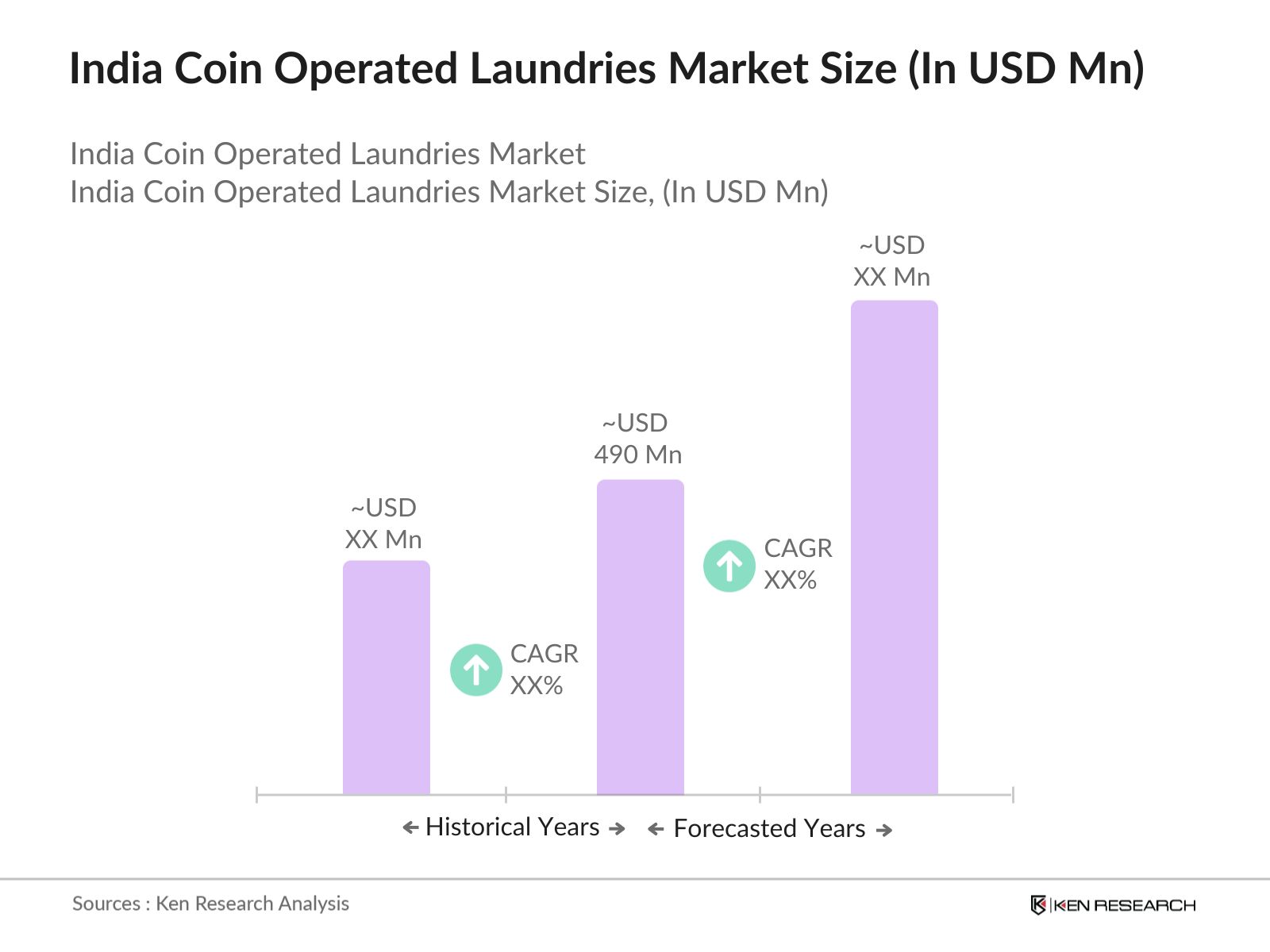
- The India coin-operated laundries market has seen consistent growth, valued at approximately USD 490 million in 2023, driven by factors such as rapid urbanization, a rising number of working individuals, and the increasing shift toward self-service laundry solutions. The market is experiencing demand due to the growth of apartment complexes and student housing facilities where residents prefer convenient laundry options. The rising disposable incomes in metropolitan cities are also contributing to the expansion of coin-operated laundries across India.
- The market is dominated by metropolitan cities such as Mumbai, Bengaluru, and Delhi. These cities lead the market due to high population density, increasing apartment living, and the growing demand for self-service convenience among busy urban populations. Additionally, cities like Hyderabad and Pune are emerging due to the rising student population and IT professionals who prefer automated laundry services. The convenience, affordability, and increasing adoption of cashless payment systems make these cities prime areas for market dominance.
- Government schemes aimed at improving urban infrastructure, such as the Smart Cities Mission, are critical in supporting the expansion of coin-operated laundries. The Smart Cities Mission has led to the development of urban areas with better connectivity, reliable utilities, and modern public amenities. By 2024, the government had allocated over INR 98,000 crore towards urban development projects, directly benefiting service-based industries like laundromats by creating conducive environments for business operations. Improved infrastructure and utility access enable laundromats to operate more efficiently, meeting growing consumer demand in urban areas.
India Coin Operated Laundries Market Segmentation
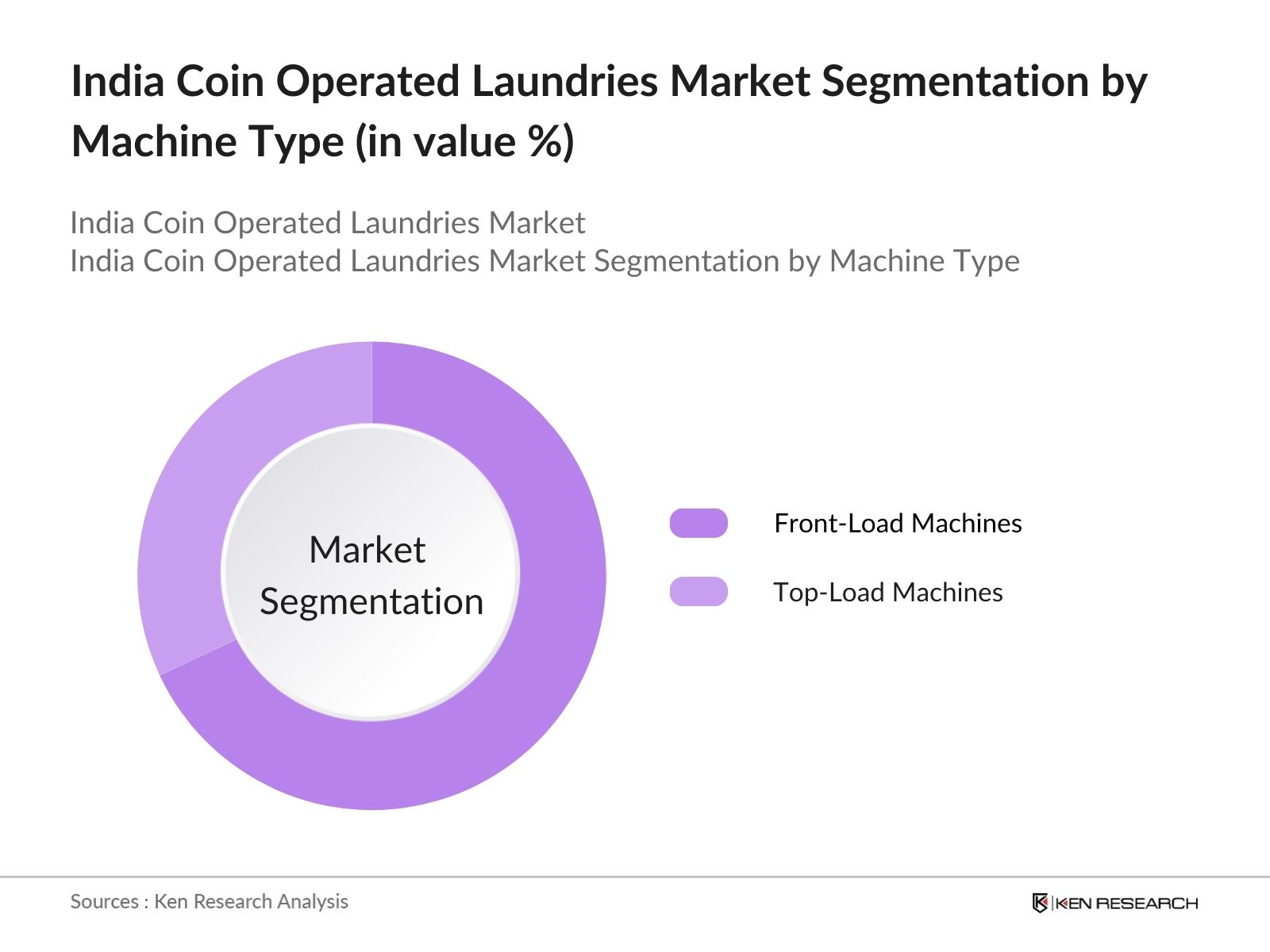
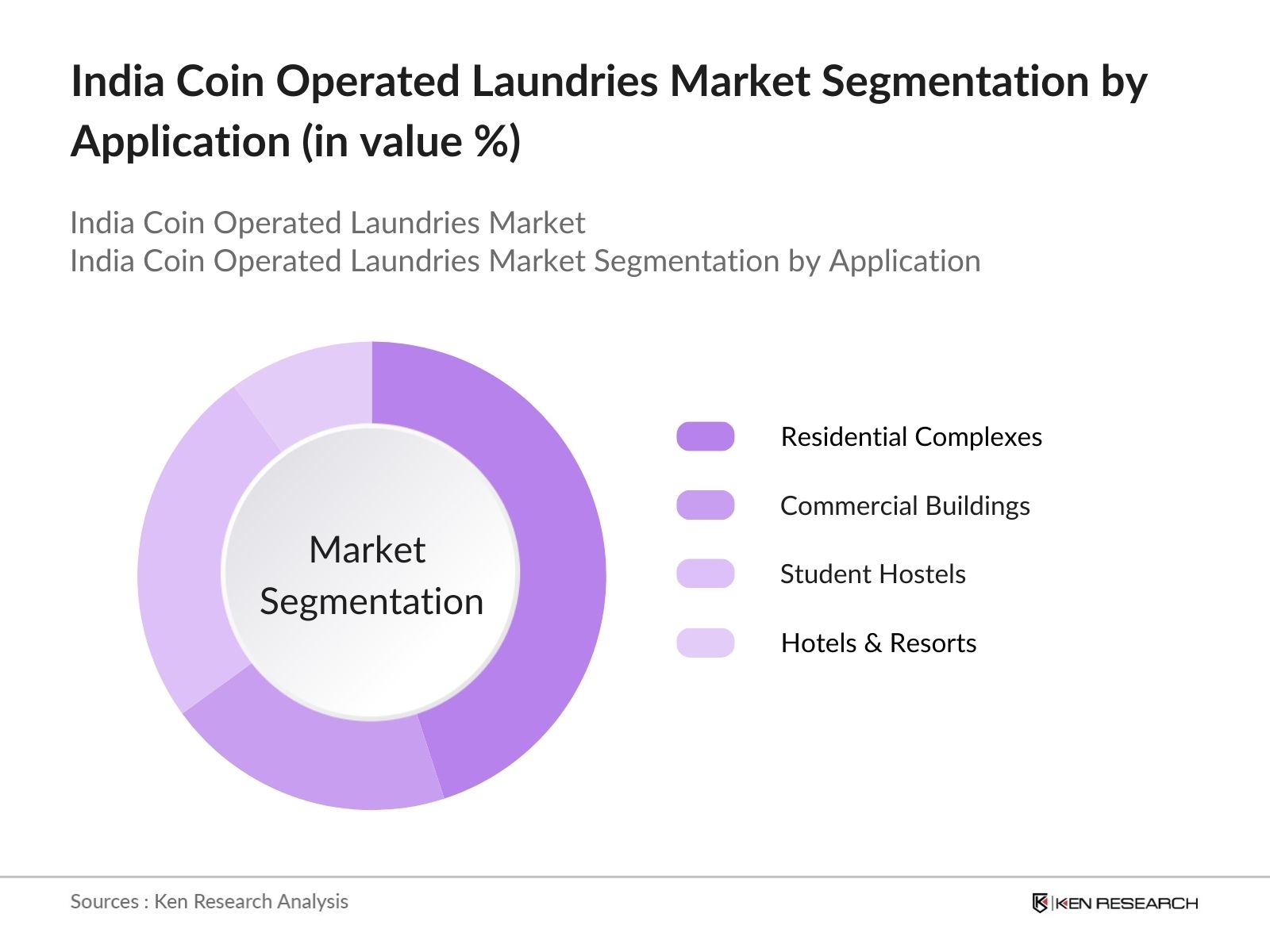
Indias coin-operated laundries market is segmented by machine type and by application.
- By Machine Type: Indias coin-operated laundries market is segmented by machine type into top-load machines and front-load machines. Front-load machines dominate the market due to their higher efficiency, lower water consumption, and better cleaning performance compared to top-load models. These machines have gained traction among eco-conscious consumers and laundromat owners who want to reduce operational costs. Their ability to handle larger laundry loads and better cleaning results has contributed to their leading position in the market.
- By Application: The India coin-operated laundries market is segmented by application into residential complexes, commercial buildings, student hostels, and hotels and resorts. Residential complexes account for the largest market share due to the growing number of gated communities and apartment complexes in urban areas. These complexes prefer coin-operated laundry services as they provide convenience for residents, particularly for working professionals and students who do not have access to in-unit washing machines.
India Coin Operated Laundries Market Competitive Landscape
The India coin-operated laundries market is moderately consolidated, with key players adopting various strategies such as expanding into Tier-II and Tier-III cities, offering franchise models, and integrating smart payment systems like UPI and digital wallets. The competition is primarily focused on service differentiation, machine efficiency, and customer experience.
|
Company |
Established Year |
Headquarters |
No. of Locations |
Revenue (2023) |
Payment Systems |
|
LaundroKart |
2015 |
Bengaluru |
|||
|
Quick Wash |
2012 |
Delhi |
|||
|
UClean |
2016 |
Gurugram |
|||
|
DhobiLite |
2014 |
Noida |
|||
|
WashApp |
2017 |
Mumbai |
India Coin Operated Laundries Industry Analysis
Growth Drivers
- Rise of Urbanization: Indias urban population continues to grow, with the total urban population expected to exceed 490 million by 2024, according to World Bank data. The urban population has seen an increase in migration to metropolitan cities, driven by job opportunities and improved infrastructure. This shift creates a strong demand for convenient laundry services, especially among the urban workforce, students, and single households. Coin-operated laundries cater to the growing need for cost-effective, quick, and self-service solutions in high-density urban areas where personal washing machines may be impractical due to space and time constraints.
- Increase in Disposable Income: India's per capita income has steadily risen, reaching INR 172,000 in 2023, according to Indias Ministry of Statistics. This increase in disposable income, particularly among young professionals and dual-income households, boosts consumer spending on convenience services such as coin-operated laundries. Consumers are increasingly willing to spend on services that save time and effort, aligning with the rise of laundry solutions that fit busy lifestyles. As disposable income increases, the demand for paid laundry services continues to grow, particularly in urban centers where convenience is highly valued.
- Growing Laundry Convenience: With the increasing pace of life in urban India, consumers are prioritizing convenience in their daily activities. The demand for laundry services that offer flexibility and speed is rising, with nearly 60% of households in metropolitan cities using laundry services as of 2023, according to the National Sample Survey Office (NSSO). Coin-operated laundries provide an essential service in urban environments, allowing consumers to complete laundry tasks at their own convenience, often within an hour. This trend is a direct reflection of the growing desire for quick and reliable services among urban dwellers.
Market Challenges
High Initial Capital Investment: The initial capital investment for setting up a coin-operated laundry is a significant challenge, with high-quality machines costing anywhere from INR 1.5 lakh to INR 3 lakh per unit, as per industry figures reported by the Government of India's MSME database. This high upfront cost, coupled with ongoing maintenance and operational expenses, makes it difficult for small entrepreneurs to enter the market without substantial financial backing. In addition, import tariffs on laundry equipment contribute to the overall cost, further impacting the entry barriers for new businesses in this segment.
Real Estate Costs: Property rental rates in urban India, especially in prime locations, have been on the rise, with commercial space rentals in cities like Mumbai and Delhi reaching upwards of INR 300 per square foot per month in 2024, according to the Ministry of Housing and Urban Affairs. High real estate costs pose a major challenge for coin-operated laundry operators, as securing a centrally located, accessible space is essential for success in this business model. The profitability of laundromats is heavily influenced by rent costs, making high real estate expenses a key barrier to expansion in major cities.
India Coin Operated Laundries Market Future Outlook
Over the next five years, the India coin-operated laundries market is expected to witness significant growth, driven by increasing urbanization, the rise of smart laundromats equipped with cashless payment options, and growing demand from students and working professionals. Additionally, the introduction of eco-friendly practices, such as water recycling and energy-efficient machines, is anticipated to attract environmentally-conscious consumers. Expansion into Tier-II and Tier-III cities will also open new growth avenues for market players.
Market Opportunities
- Technological Advancements: The integration of digital payment solutions such as UPI (Unified Payments Interface) and smart laundry technologies presents significant opportunities for growth. As of 2024, India has over 300 million active UPI users, and the adoption of cashless payment systems in laundry services aligns with the nations push towards a digital economy. Moreover, IoT-enabled laundry machines allow operators to remotely monitor machine performance and utility consumption, improving operational efficiency. The Government of Indias push for a cashless economy and smart city initiatives further supports the adoption of these advanced technologies.
- Untapped Markets in Tier-II and Tier-III Cities: While coin-operated laundries are well-established in metropolitan areas, significant growth opportunities exist in Indias tier-II and tier-III cities. According to the Reserve Bank of India, urbanization in these regions is increasing, with around 35% of the population in tier-II cities now residing in urban zones. As the demand for convenience services rises in these cities, driven by increasing disposable incomes and changing lifestyles, there is substantial potential for expansion. Entrepreneurs can benefit from lower property costs in these areas while tapping into a growing consumer base.
Scope of the Report
|
Top-Load Machines Front-Load Machines |
|
|
By Distribution Channel |
Coin-Based |
|
By Application |
Residential Complexes |
|
By Consumer Group |
Wash Only |
|
By Region |
North East West South |
Products
Key Target Audience
Coin-Operated Laundry Machine Manufacturers
Commercial Real Estate Developers (Residential Complexes)
Hotel Chains and Student Housing Providers
Venture Capital and Investment Firms
Government and Regulatory Bodies (Ministry of Urban Development, Central Pollution Control Board)
Franchise Owners and Entrepreneurs
Smart Payment Technology Providers
Utility Companies (Water and Electricity Suppliers)
Companies
Players Mention in the Report:
LaundroKart
UClean
Quick Wash
DhobiLite
WashApp
Sparkl Laundry
FabFresh
Simply Laundry
Laundryman
The Laundry Basket
Tumble Laundry Services
CleanBasket
Mr. Dhobi
Cleanly
Lavato Laundry Services
Table of Contents
1. India Coin Operated Laundries Market Overview
1.1. Definition and Scope
1.2. Market Taxonomy
1.3. Market Growth Rate
1.4. Market Segmentation Overview
2. India Coin Operated Laundries Market Size (In INR Bn)
2.1. Historical Market Size
2.2. Year-On-Year Growth Analysis
2.3. Key Market Developments and Milestones
3. India Coin Operated Laundries Market Analysis
3.1. Growth Drivers
3.1.1. Rise of Urbanization (urban population growth rate)
3.1.2. Increase in Disposable Income (consumer income levels)
3.1.3. Growing Laundry Convenience (consumer demand for convenience)
3.1.4. Proliferation of Self-Service Culture (shift towards automation and self-service preferences)
3.2. Market Challenges
3.2.1. High Initial Capital Investment (cost per coin-operated machine)
3.2.2. Real Estate Costs (property rental rates)
3.2.3. Water and Power Supply (cost of utilities)
3.3. Opportunities
3.3.1. Technological Advancements (digital payment integration, smart laundry solutions)
3.3.2. Untapped Markets in Tier-II and Tier-III Cities (regional market demand)
3.3.3. Eco-Friendly Laundry Solutions (sustainable practices)
3.4. Trends
3.4.1. Cashless Payment Systems (integration of UPI, cards, and mobile wallets)
3.4.2. Integration of Smart Technologies (IoT-based laundry machines)
3.4.3. Franchise and Chain Model Expansion (laundry chains and franchise networks)
3.5. Government Regulation
3.5.1. Urban Infrastructure Development Schemes (government urbanization policies)
3.5.2. Water Conservation Laws (regulations for water usage)
3.5.3. Power Consumption Standards (government energy regulations)
3.6. SWOT Analysis
3.7. Stakeholder Ecosystem
3.8. Porters Five Forces Analysis (bargaining power of suppliers, buyers, new entrants, substitutes, competitive rivalry)
3.9. Competitive Ecosystem Analysis
4. India Coin Operated Laundries Market Segmentation
4.1. By Machine Type (In Value %)
4.1.1. Top-Load Machines
4.1.2. Front-Load Machines
4.2. By Payment Mode (In Value %)
4.2.1. Coin-Based
4.2.2. Card-Based
4.2.3. Digital Wallets and UPI
4.3. By Application (In Value %)
4.3.1. Residential Complexes
4.3.2. Commercial Buildings
4.3.3. Student Hostels
4.3.4. Hotels and Resorts
4.4. By Service Type (In Value %)
4.4.1. Wash Only
4.4.2. Wash & Dry
4.4.3. Full-Service Laundromats (with attendants)
4.5. By Region (In Value %)
4.5.1. North India
4.5.2. South India
4.5.3. East India
4.5.4. West India
5. India Coin Operated Laundries Market Competitive Analysis
5.1. Detailed Profiles of Major Competitors
5.1.1. LaundroKart
5.1.2. Tumble Laundry Services
5.1.3. Quick Wash
5.1.4. UClean
5.1.5. Laundryman
5.1.6. Simply Laundry
5.1.7. The Laundry Basket
5.1.8. WashApp
5.1.9. DhobiLite
5.1.10. Sparkl Laundry
5.1.11. FabFresh
5.1.12. CleanBasket
5.1.13. Mr. Dhobi
5.1.14. Cleanly
5.1.15. Lavato Laundry Services
5.2. Cross Comparison Parameters (No. of Machines, Payment Systems, Laundromat Size, Franchise Model, Revenue, Customer Footfall, Service Range, Eco-Friendly Practices)
5.3. Market Share Analysis
5.4. Strategic Initiatives (expansion strategies, new service launches, partnerships)
5.5. Mergers and Acquisitions
5.6. Investment Analysis (venture capital funding, private equity investment, FDI)
5.7. Government Grants and Subsidies
5.8. Franchise Opportunities
6. India Coin Operated Laundries Market Regulatory Framework
6.1. Compliance with Water Conservation Regulations
6.2. Certification and Licensing Requirements
6.3. Energy Consumption Norms
7. India Coin Operated Laundries Future Market Size (In INR Bn)
7.1. Future Market Size Projections
7.2. Key Factors Driving Future Growth (expansion in residential complexes, rise in student hostels, smart technology integration)
8. India Coin Operated Laundries Future Market Segmentation
8.1. By Machine Type (In Value %)
8.2. By Payment Mode (In Value %)
8.3. By Application (In Value %)
8.4. By Service Type (In Value %)
8.5. By Region (In Value %)
9. India Coin Operated Laundries Market Analysts Recommendations
9.1. TAM/SAM/SOM Analysis
9.2. Key Market Entry Strategies
9.3. Customer Retention and Acquisition Strategies
9.4. White Space Opportunity Identification
Research Methodology
Step 1: Identification of Key Variables
The research began by mapping the India coin-operated laundries market ecosystem, identifying all key stakeholders such as laundromat owners, machine manufacturers, payment solution providers, and consumers. Through comprehensive secondary research, key market variables, including machine efficiency, consumer preferences, and urbanization rates, were outlined.
Step 2: Market Analysis and Construction
Historical data on the growth of coin-operated laundromats was analyzed, with a focus on the number of machines, service frequency, and revenue generation. This analysis helped in understanding market penetration and key drivers such as convenience, affordability, and automation.
Step 3: Hypothesis Validation and Expert Consultation
Market hypotheses were tested through interviews with industry experts, including laundromat owners, machine suppliers, and service aggregators. These interviews provided insights into operational challenges, future opportunities, and consumer behavior trends that align with market forecasts.
Step 4: Research Synthesis and Final Output
Data from multiple sources, including industry reports, expert consultations, and proprietary databases, was synthesized into a comprehensive analysis. The final report includes validated market estimates, segmentation analysis, and competitive landscape insights that provide a holistic view of the India coin-operated laundries market.
Frequently Asked Questions
01. How big is the India Coin Operated Laundries Market?
The India coin-operated laundries market was valued at USD 490 million in 2023, driven by urbanization, convenience, and the growing number of apartment complexes and student accommodations.
02. What are the challenges in the India Coin Operated Laundries Market?
Key challenges in India coin-operated laundries market include high capital investments for machines, rising real estate costs in urban areas, and utility costs (water and electricity), which affect laundromat profitability.
03. Who are the major players in the India Coin Operated Laundries Market?
Major players in India coin-operated laundries market include LaundroKart, UClean, Quick Wash, DhobiLite, and WashApp, dominating due to their strategic expansions, smart payment integrations, and franchise models.
04. What are the growth drivers of the India Coin Operated Laundries Market?
Growth drivers in India coin-operated laundries market include increasing urbanization, demand for convenient laundry services in residential complexes, and the integration of cashless payment systems, which have fueled consumer interest in coin-operated laundries.
05. Why are metropolitan cities dominating the India Coin Operated Laundries Market?
Metropolitan cities dominate due to high population density, large student populations, and a growing preference for self-service laundry services among working professionals and urban residents.
Why Buy From Us?

What makes us stand out is that our consultants follows Robust, Refine and Result (RRR) methodology. i.e. Robust for clear definitions, approaches and sanity checking, Refine for differentiating respondents facts and opinions and Result for presenting data with story

We have set a benchmark in the industry by offering our clients with syndicated and customized market research reports featuring coverage of entire market as well as meticulous research and analyst insights.

While we don't replace traditional research, we flip the method upside down. Our dual approach of Top Bottom & Bottom Top ensures quality deliverable by not just verifying company fundamentals but also looking at the sector and macroeconomic factors.

With one step in the future, our research team constantly tries to show you the bigger picture. We help with some of the tough questions you may encounter along the way: How is the industry positioned? Best marketing channel? KPI's of competitors? By aligning every element, we help maximize success.

Our report gives you instant access to the answers and sources that other companies might choose to hide. We elaborate each steps of research methodology we have used and showcase you the sample size to earn your trust.

If you need any support, we are here! We pride ourselves on universe strength, data quality, and quick, friendly, and professional service.