
India Electric Rice Cooker Market Outlook to 2030
Region:Asia
Author(s):Ananya Singh
Product Code:KROD8868
November 2024
86
About the Report
India Electric Rice Cooker Market Overview
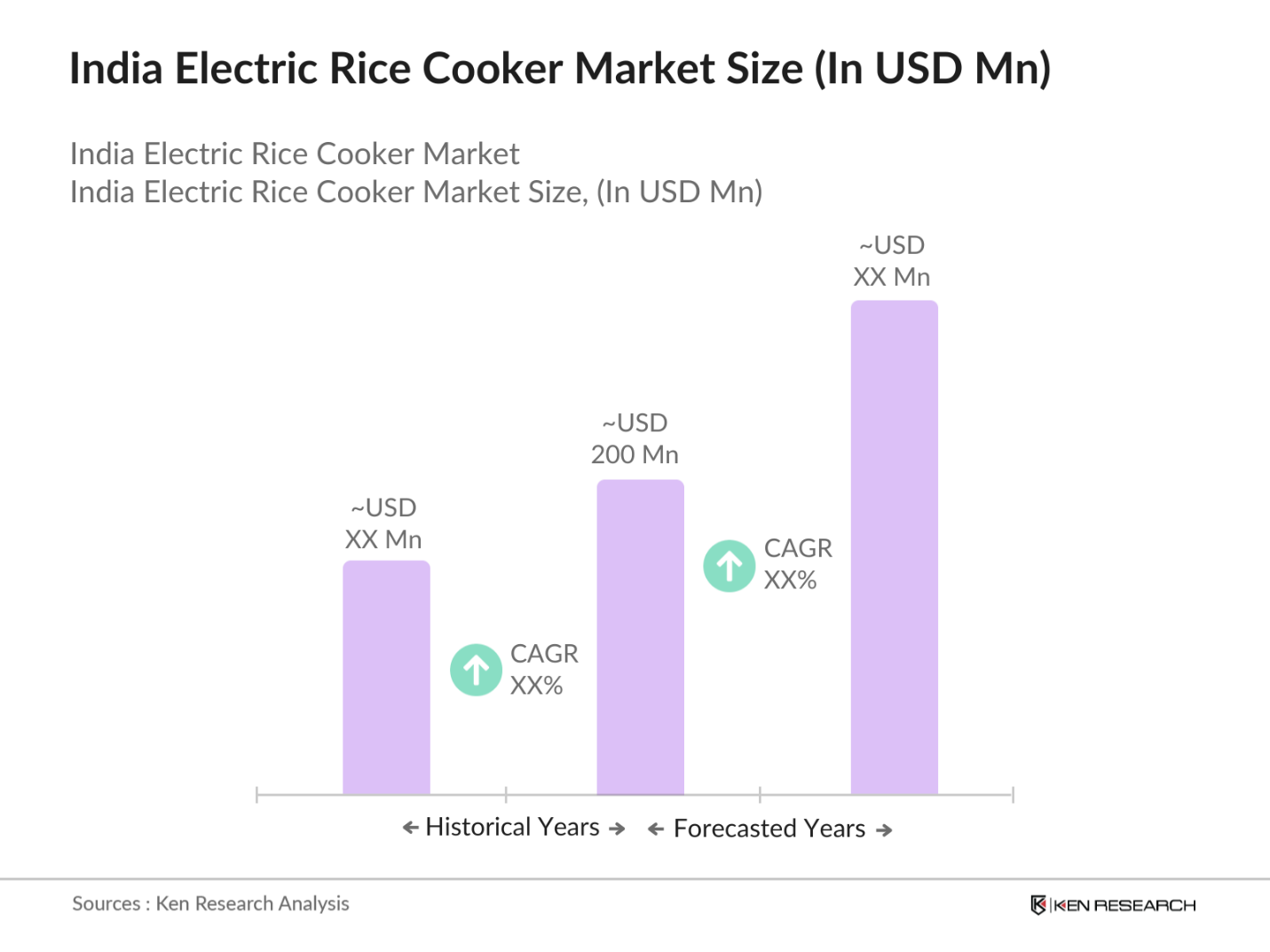
- The India Electric Rice Cooker market is valued at USD 200 million, based on a five-year historical analysis, with growth driven by increasing urbanization and changing lifestyles. As more Indian households prioritize convenience in cooking, electric rice cookers have seen an uptick in demand, particularly among dual-income families. The market also benefits from rising disposable incomes and the increased focus on energy-efficient kitchen appliances, providing a cost-effective alternative to traditional cooking methods.
- The market is dominated by metropolitan areas like Delhi, Mumbai, and Bangalore, where urbanization has led to a demand for time-saving kitchen appliances. These cities also have a higher adoption of technology in daily life, encouraging the use of electric cooking solutions. Furthermore, the presence of retail chains and e-commerce infrastructure in these regions enhances product availability and consumer accessibility, boosting the market's growth in these urban centers.
- The Indian governments UJALA (Unnat Jyoti by Affordable LEDs for All) scheme has successfully promoted the adoption of energy-efficient appliances. While originally focused on LEDs, the schemes principles have been expanded to include appliances like electric rice cookers, aiming to reduce household energy consumption. The Bureau of Energy Efficiency reports that subsidies for energy-saving appliances now cover kitchen appliances, enhancing affordability for electric rice cookers.
India Electric Rice Cooker Market Segmentation
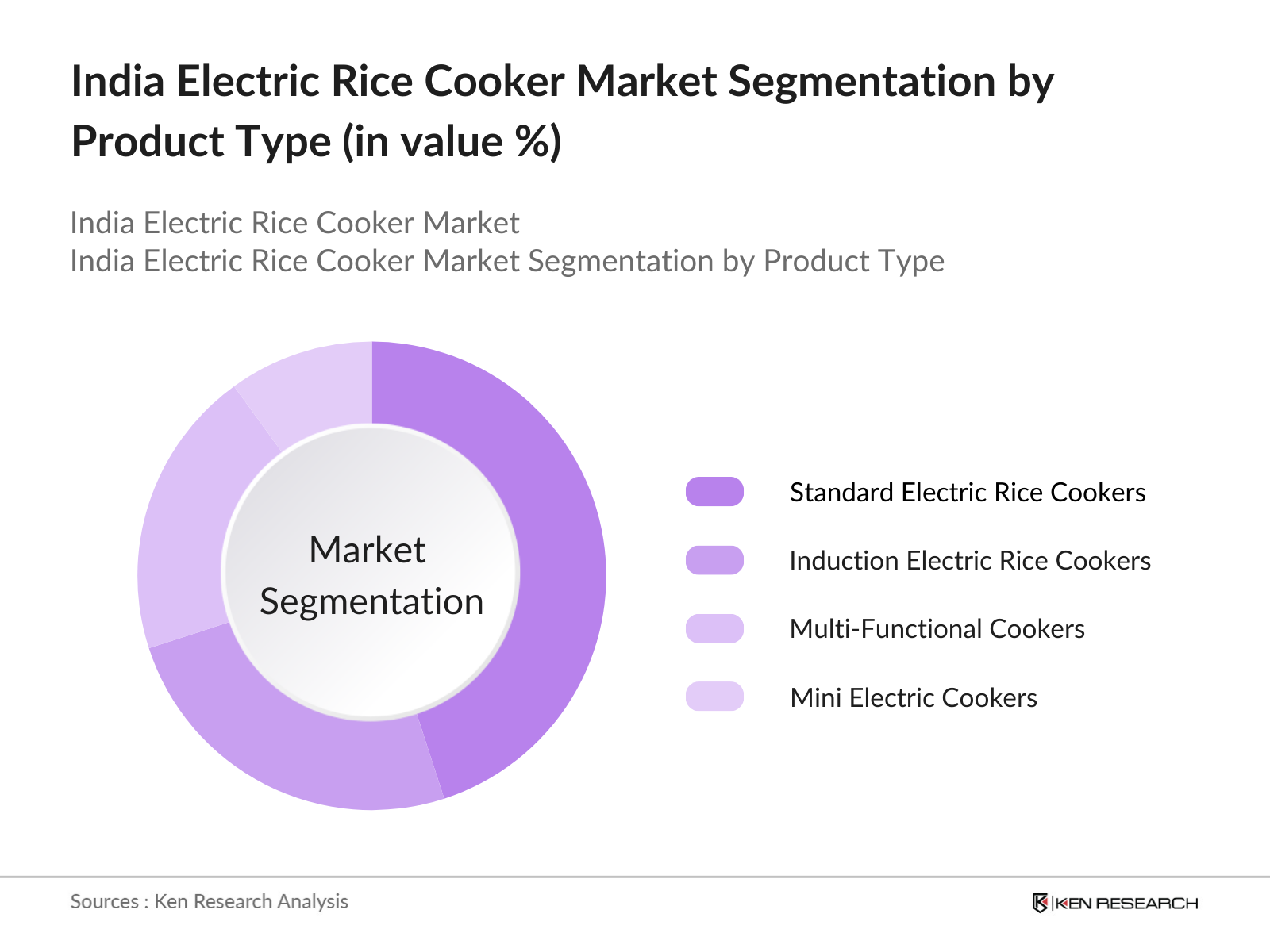
- By Product Type: The India Electric Rice Cooker market is segmented by product type into standard electric rice cookers, induction electric rice cookers, multi-functional cookers, and mini electric cookers. Recently, standard electric rice cookers have held a dominant market share under this segmentation. This dominance is attributed to their affordability and suitability for basic cooking requirements, which appeals to a broader audience. Additionally, standard electric rice cookers are often favored in the residential segment for their ease of use, especially in households that are new to adopting electric cooking solutions.
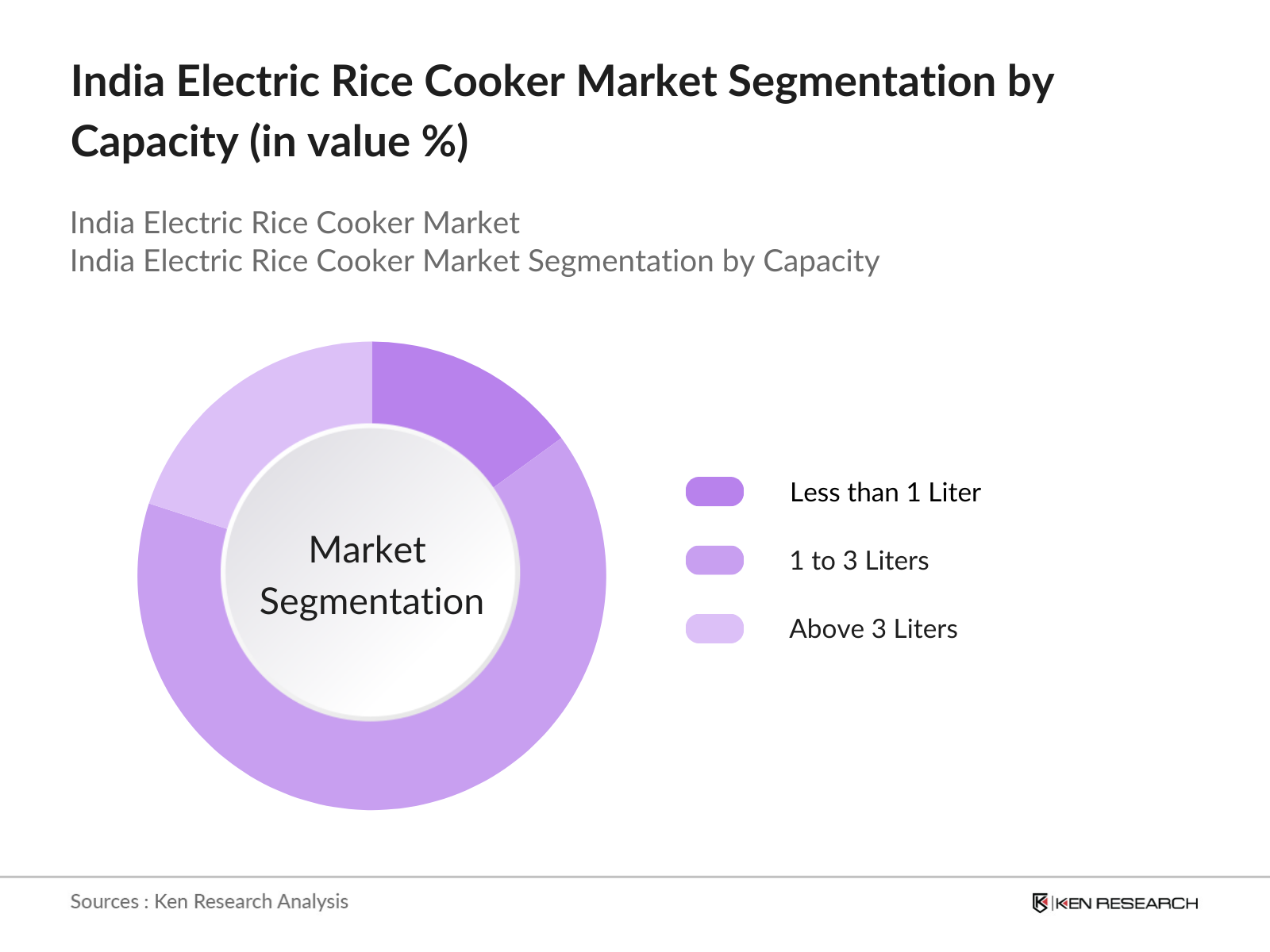
- By Capacity: The market is further segmented by capacity into less than 1 liter, 1 to 3 liters, and above 3 liters. The 1 to 3 liters segment currently leads in market share, largely due to its versatility in catering to small to medium-sized families. This capacity range provides an ideal balance between serving multiple portions while maintaining compactness, making it popular in urban households with limited kitchen space. The 1 to 3-liter cookers also offer energy efficiency, aligning with consumer preferences for sustainable and cost-effective solutions.
India Electric Rice Cooker Market Competitive Landscape
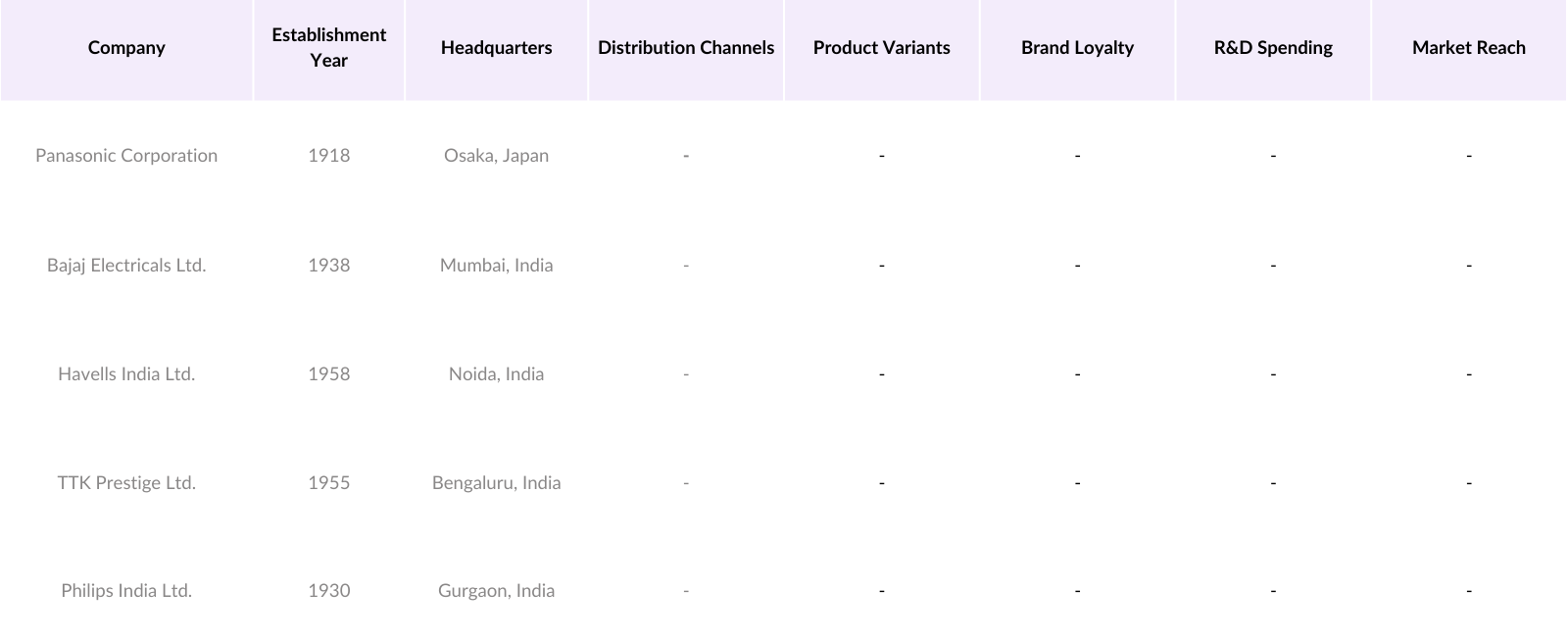
The India Electric Rice Cooker market is dominated by key players, including international and local brands. These companies hold significant influence in the market due to their extensive distribution networks, brand reputation, and continuous innovation in product design. The competitive landscape in the India Electric Rice Cooker market is consolidated, with prominent players like Panasonic Corporation, Bajaj Electricals Ltd., and Havells India Ltd. driving the market. These companies leverage strong brand loyalty, extensive distribution channels, and diversified product portfolios to maintain their market positions.
India Electric Rice Cooker Market Analysis
Growth Drivers
- Rising Demand for Convenient Cooking Solutions: With a significant shift toward time-saving kitchen solutions, India's urban population is increasingly adopting electric rice cookers. A survey by the National Sample Survey Office reported that over 200 million households in urban areas are looking for energy-efficient, easy-to-use appliances, contributing to the rising demand for electric rice cookers in India. This trend aligns with the broader household demand for appliances that save cooking time and reduce energy costs, making electric rice cookers a preferred choice in urban markets.
- Increasing Focus on Energy-Efficient Appliances: According to the Bureau of Energy Efficiency, the Indian government is actively promoting energy-efficient household appliances to reduce electricity consumption. Electric rice cookers, which consume less energy compared to traditional cooking methods, have become an attractive option for consumers. The Ministry of Power has introduced rebates for energy-efficient home appliances, creating further incentives for households to purchase electric rice cookers, especially in metro areas where power tariffs are higher.
- Growth in Middle-Income Households: The expansion of Indias middle-income population, projected to reach over 500 million by 2025 according to the World Bank, is leading to greater discretionary spending on modern kitchen appliances. Electric rice cookers are increasingly accessible to these households due to improved affordability and availability across both online and offline retail channels. This segment of the population is driving the demand for premium and multi-functional electric rice cookers, supporting sustained market growth.
Market Challenges
- Price Sensitivity Among Consumers: Many Indian households remain highly price-sensitive, and although electric rice cookers are cost-effective in the long term, their upfront cost may deter buyers. A report from the India Brand Equity Foundation indicates that Indian households prioritize affordability when making kitchen appliance purchases, impacting the adoption of higher-priced electric rice cookers, especially in rural and semi-urban markets.
- Competition from Traditional Cooking Methods: Indias deep-rooted tradition of using pressure cookers and open-flame cooking methods remains a barrier to electric rice cooker adoption. According to the Food Safety and Standards Authority of India, mostly households still rely on conventional cooking methods due to cultural preferences. This reliance on traditional cooking techniques can challenge the growth of electric rice cookers, particularly in rural regions.
India Electric Rice Cooker Market Future Outlook
The India Electric Rice Cooker market is expected to witness steady growth over the next five years. Key growth drivers include the increasing urban population, continuous innovations in electric cooking technology, and a growing preference for energy-efficient appliances. As urban households continue to seek convenient and cost-effective cooking solutions, the demand for electric rice cookers is likely to expand across both metropolitan and tier-2 cities, further supported by evolving consumer lifestyles and energy-conscious product features.
Market Opportunities
- Increased Adoption of Smart Rice Cookers: Over the next five years, smart electric rice cookers equipped with IoT technology will become more widespread in urban households. According to the Ministry of Electronics and Information Technology, it is projected that 15 million households in metro areas will adopt smart kitchen appliances, including electric rice cookers, as IoT technology becomes more affordable and user-friendly.
- Growth in Demand for Eco-Friendly and Energy-Saving Cookers: As environmental consciousness grows, electric rice cookers with energy-efficient and eco-friendly features are expected to see higher demand. The Ministry of Environment, Forest and Climate Change anticipates a surge in sales for appliances that meet energy efficiency standards, with projections indicating that 5 million units of energy-efficient rice cookers will be sold in the coming years.
Scope of the Report
|
By Product Type |
Standard Electric Rice Cookers Induction Electric Rice Cookers Multi-Functional Cookers Mini Electric Cookers |
|
By Capacity |
Less than 1 Liter 1 to 3 Liters Above 3 Liters |
|
By Distribution Channel |
Online Retail Offline Retail |
|
By Price Range |
Low Range Mid-Range Premium Range |
|
By End User |
Residential Commercial |
Products
Key Target Audience
Electric Appliance Manufacturers
Household Appliance Distributors and Retailers
Online Marketplaces and E-commerce Platforms
Hospitality Industry (Hotels, Restaurants, Caterers)
Residential Complex Builders and Developers
Utility and Energy Management Companies
Investors and Venture Capitalist Firms
Government and Regulatory Bodies (Ministry of Consumer Affairs, Bureau of Indian Standards)
Companies
Players Mentioned in the Report
Panasonic Corporation
Bajaj Electricals Ltd.
Havells India Ltd.
TTK Prestige Ltd.
Philips India Ltd.
Morphy Richards India
Orient Electric
Cello World
Hamilton Beach India
Kent RO Systems Ltd.
Table of Contents
1. India Electric Rice Cooker Market Overview
1.1. Definition and Scope
1.1.1. Market Definition
1.1.2. Segmentation
1.1.3. Scope
1.2. Market Taxonomy
1.2.1. Product Classifications
1.2.2. Regional Variants
1.2.3. Functionality
1.3. Market Growth Rate
1.3.1. Annual Growth Metrics
1.3.2. Market Expansion Rate
1.4. India Electric Rice Cooker Market Segmentation Overview
1.4.1. Segment-Wise Overview
2. India Electric Rice Cooker Market Size (In USD Mn)
2.1. Historical Market Size
2.1.1. Historic Market Trends
2.1.2. Base Year Data
2.2. Year-On-Year Growth Analysis
2.2.1. Annual Sales Volume
2.2.2. Growth Trends
2.3. Key Market Developments and Milestones
2.3.1. Product Innovations
2.3.2. Industry Milestones
3. India Electric Rice Cooker Market Analysis
3.1. Growth Drivers
3.1.1. Consumer Demand
3.1.2. Energy Efficiency
3.1.3. Technological Advancements
3.1.4. Lifestyle Shifts
3.2. Market Restraints
3.2.1. Competition from Traditional Cooking Methods
3.2.2. Pricing Pressure
3.2.3. Limited Awareness in Rural Areas
3.3. Opportunities
3.3.1. Expanding Urban Population
3.3.2. Smart Kitchen Integration
3.3.3. Eco-Friendly Innovations
3.4. Market Trends
3.4.1. Adoption of Smart Controls
3.4.2. Compact Design Preferences
3.4.3. Increased Demand for Multi-Functional Cookers
3.5. Government Regulations
3.5.1. Import Policies
3.5.2. Safety Standards
3.5.3. Energy Efficiency Norms
3.6. SWOT Analysis
3.6.1. Strengths
3.6.2. Weaknesses
3.6.3. Opportunities
3.6.4. Threats
3.7. Stakeholder Ecosystem
3.7.1. Manufacturers
3.7.2. Distributors
3.7.3. Retailers
3.7.4. Consumers
3.8. Porters Five Forces
3.8.1. Supplier Power
3.8.2. Buyer Power
3.8.3. Competitive Rivalry
3.8.4. Threat of Substitutes
3.8.5. Threat of New Entrants
3.9. Competition Ecosystem
3.9.1. Distribution Network
3.9.2. Brand Loyalty
3.9.3. Pricing Strategy
4. India Electric Rice Cooker Market Segmentation
4.1. By Product Type (In Value %)
4.1.1. Standard Electric Rice Cookers
4.1.2. Induction Electric Rice Cookers
4.1.3. Multi-Functional Cookers
4.1.4. Mini Electric Cookers
4.2. By Capacity (In Value %)
4.2.1. Less than 1 Liter
4.2.2. 1 to 3 Liters
4.2.3. Above 3 Liters
4.3. By Distribution Channel (In Value %)
4.3.1. Online Retail
4.3.2. Offline Retail
4.4. By Price Range (In Value %)
4.4.1. Low Range
4.4.2. Mid Range
4.4.3. Premium Range
4.5. By End User (In Value %)
4.5.1. Residential
4.5.2. Commercial
5. India Electric Rice Cooker Market Competitive Analysis
5.1. Detailed Profiles of Major Companies
5.1.1. Panasonic Corporation
5.1.2. Philips India Ltd.
5.1.3. Bajaj Electricals Ltd.
5.1.4. Havells India Ltd.
5.1.5. Prestige (TTK Prestige Ltd.)
5.1.6. Morphy Richards India
5.1.7. Orient Electric
5.1.8. Cello World
5.1.9. Hamilton Beach India
5.1.10. Kent RO Systems Ltd.
5.1.11. Usha International Ltd.
5.1.12. Inalsa Appliances
5.1.13. Maharaja Whiteline
5.1.14. Glen India Ltd.
5.1.15. Wonderchef Home Appliances Pvt. Ltd.
5.2. Cross Comparison Parameters
5.2.1. Product Range
5.2.2. Price Positioning
5.2.3. Warranty Period
5.2.4. Customer Ratings
5.2.5. Retail Presence
5.3. Market Share Analysis
5.3.1. Company-Wise Market Distribution
5.4. Strategic Initiatives
5.4.1. Expansion Strategies
5.4.2. New Product Launches
5.4.3. Marketing Campaigns
5.5. Mergers and Acquisitions
5.5.1. Recent Acquisitions
5.5.2. Brand Collaborations
5.6. Investors Analysis
5.6.1. Investment Breakdown
5.6.2. Key Stakeholders
5.7. Venture Capital Funding
5.7.1. Funding Rounds
5.7.2. Major Investors
5.8. Government Grants and Subsidies
5.8.1. Energy Efficiency Incentives
5.8.2. Manufacturing Support Programs
6. India Electric Rice Cooker Market Regulatory Framework
6.1. Compliance Standards
6.1.1. BIS Standards
6.1.2. Safety Certifications
6.1.3. ISI Mark Requirements
6.2. Import and Export Policies
6.2.1. Tariff Structures
6.2.2. Import Restrictions
6.3. Certification Processes
6.3.1. Quality Control
6.3.2. Mandatory Certifications
7. India Electric Rice Cooker Market Future Projections (In USD Mn)
7.1. Market Size Forecast
7.1.1. Projected Revenue
7.1.2. Segment-Wise Growth Forecast
7.2. Key Drivers of Future Growth
7.2.1. Smart Kitchen Integration
7.2.2. Technological Advancements
8. India Electric Rice Cooker Market Future Segmentation
8.1. By Product Type (In Value %)
8.2. By Capacity (In Value %)
8.3. By Distribution Channel (In Value %)
8.4. By Price Range (In Value %)
8.5. By End User (In Value %)
9. India Electric Rice Cooker Market Analysts Recommendations
9.1. TAM/SAM/SOM Analysis
9.1.1. Total Addressable Market
9.1.2. Serviceable Available Market
9.1.3. Serviceable Obtainable Market
9.2. Customer Cohort Analysis
9.2.1. Target Consumer Groups
9.2.2. Usage Behavior
9.3. Marketing Initiatives
9.3.1. Market Penetration Strategies
9.3.2. Brand Positioning
9.4. White Space Opportunity Analysis
9.4.1. Unmet Demand
9.4.2. Market Gaps
Research Methodology
Step 1: Identification of Key Variables
This initial step involved identifying the ecosystem surrounding the India Electric Rice Cooker Market, covering all stakeholders from manufacturers to end consumers. Desk research and secondary data from industry reports helped define the primary variables influencing market trends.
Step 2: Market Analysis and Construction
In this phase, we analyzed historical data, assessing market dynamics such as consumer adoption rates, distribution channels, and revenue trends. Service quality parameters and distribution networks were also evaluated to estimate market performance accurately.
Step 3: Hypothesis Validation and Expert Consultation
Hypotheses regarding market growth were validated through consultations with industry experts via computer-assisted interviews. These insights provided operational and financial context to market data, further refining our research findings.
Step 4: Research Synthesis and Final Output
This final phase involved comprehensive analysis and synthesis of data from all sources. Direct engagement with top manufacturers offered deeper insights into product innovation, customer preferences, and distribution strategies, ensuring a well-rounded and validated report.
Frequently Asked Questions
01. How big is the India Electric Rice Cooker Market?
The India Electric Rice Cooker market is valued at USD 200 million, driven by a rising preference for convenient cooking appliances and an increasing urban population seeking energy-efficient solutions.
02. What are the challenges in the India Electric Rice Cooker Market?
Challenges in India Electric Rice Cooker market include the competition from traditional cooking methods, limited adoption in rural regions, and price sensitivity among consumers, which can impact the market growth in certain segments.
03. Who are the major players in the India Electric Rice Cooker Market?
Key players in the India Electric Rice Cooker market include Panasonic Corporation, Bajaj Electricals Ltd., Havells India Ltd., TTK Prestige Ltd., and Philips India Ltd., known for their strong brand presence and extensive distribution networks.
04. What factors are driving the growth of the India Electric Rice Cooker Market?
Growth in India Electric Rice Cooker market is driven by urbanization, the increasing number of dual-income households, and the shift towards energy-efficient kitchen appliances. Innovations in product features and rising consumer awareness are also key contributors.
Why Buy From Us?

What makes us stand out is that our consultants follows Robust, Refine and Result (RRR) methodology. i.e. Robust for clear definitions, approaches and sanity checking, Refine for differentiating respondents facts and opinions and Result for presenting data with story

We have set a benchmark in the industry by offering our clients with syndicated and customized market research reports featuring coverage of entire market as well as meticulous research and analyst insights.

While we don't replace traditional research, we flip the method upside down. Our dual approach of Top Bottom & Bottom Top ensures quality deliverable by not just verifying company fundamentals but also looking at the sector and macroeconomic factors.

With one step in the future, our research team constantly tries to show you the bigger picture. We help with some of the tough questions you may encounter along the way: How is the industry positioned? Best marketing channel? KPI's of competitors? By aligning every element, we help maximize success.

Our report gives you instant access to the answers and sources that other companies might choose to hide. We elaborate each steps of research methodology we have used and showcase you the sample size to earn your trust.

If you need any support, we are here! We pride ourselves on universe strength, data quality, and quick, friendly, and professional service.