
India Gene Editing Market Outlook to 2030
Region:India
Author(s):Paribhasha Tiwari
Product Code:KROD3440
Region:India
Author(s):Paribhasha Tiwari
Product Code:KROD3440
November 2024
84
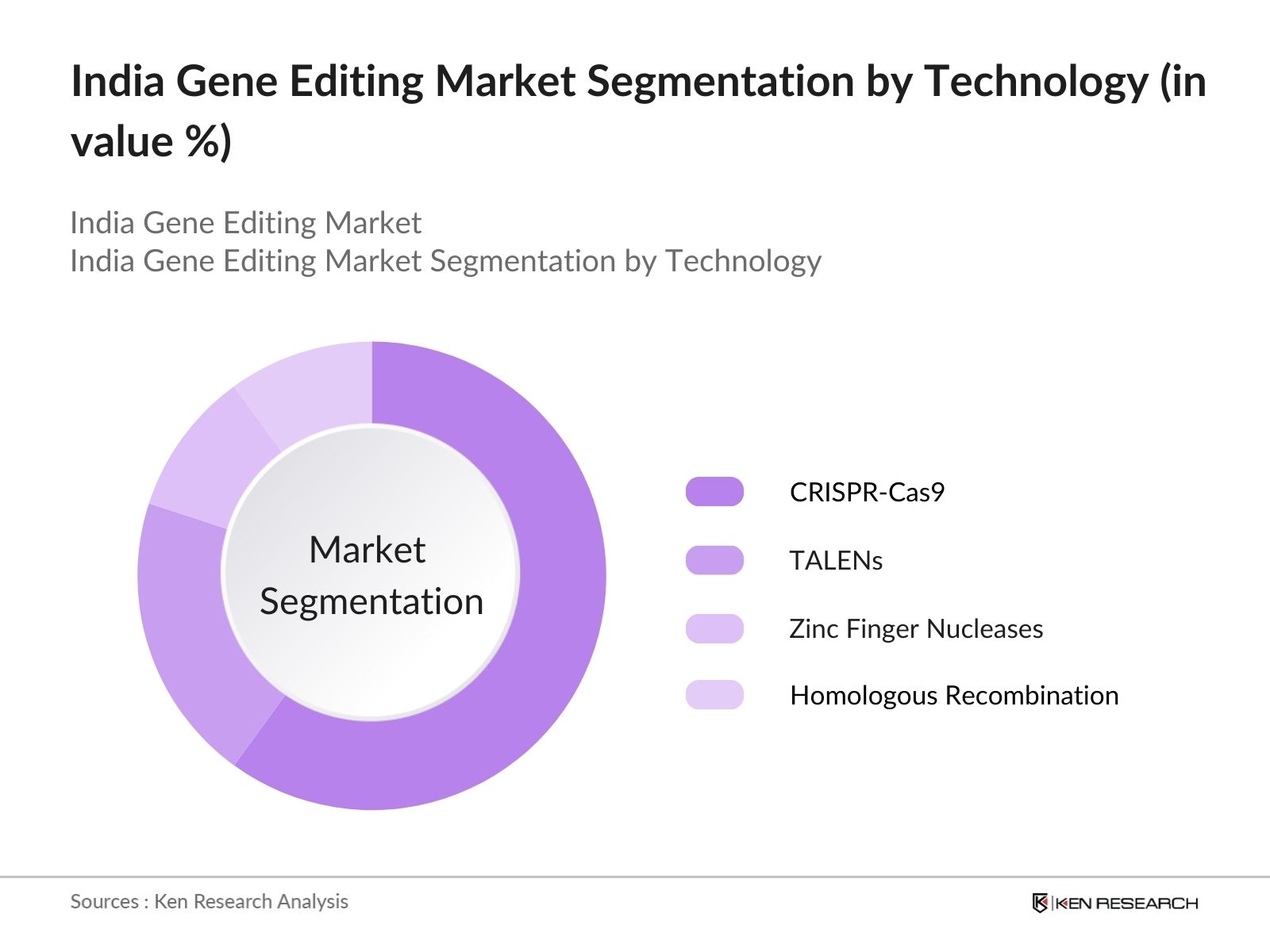
By Technology: Indias gene editing market is segmented by technology into CRISPR-Cas9, TALENs, Zinc Finger Nucleases (ZFNs), and Homologous Recombination. Recently, the CRISPR-Cas9 segment has dominated the market due to its precision, ease of use, and cost-effectiveness. The CRISPR-Cas9 technology allows scientists to alter DNA with high accuracy, making it the preferred method for applications in agriculture, human therapeutics, and basic research. Furthermore, the accessibility of CRISPR to researchers across India has increased its adoption, particularly in academic and biopharma settings, which has led to its growing market share.
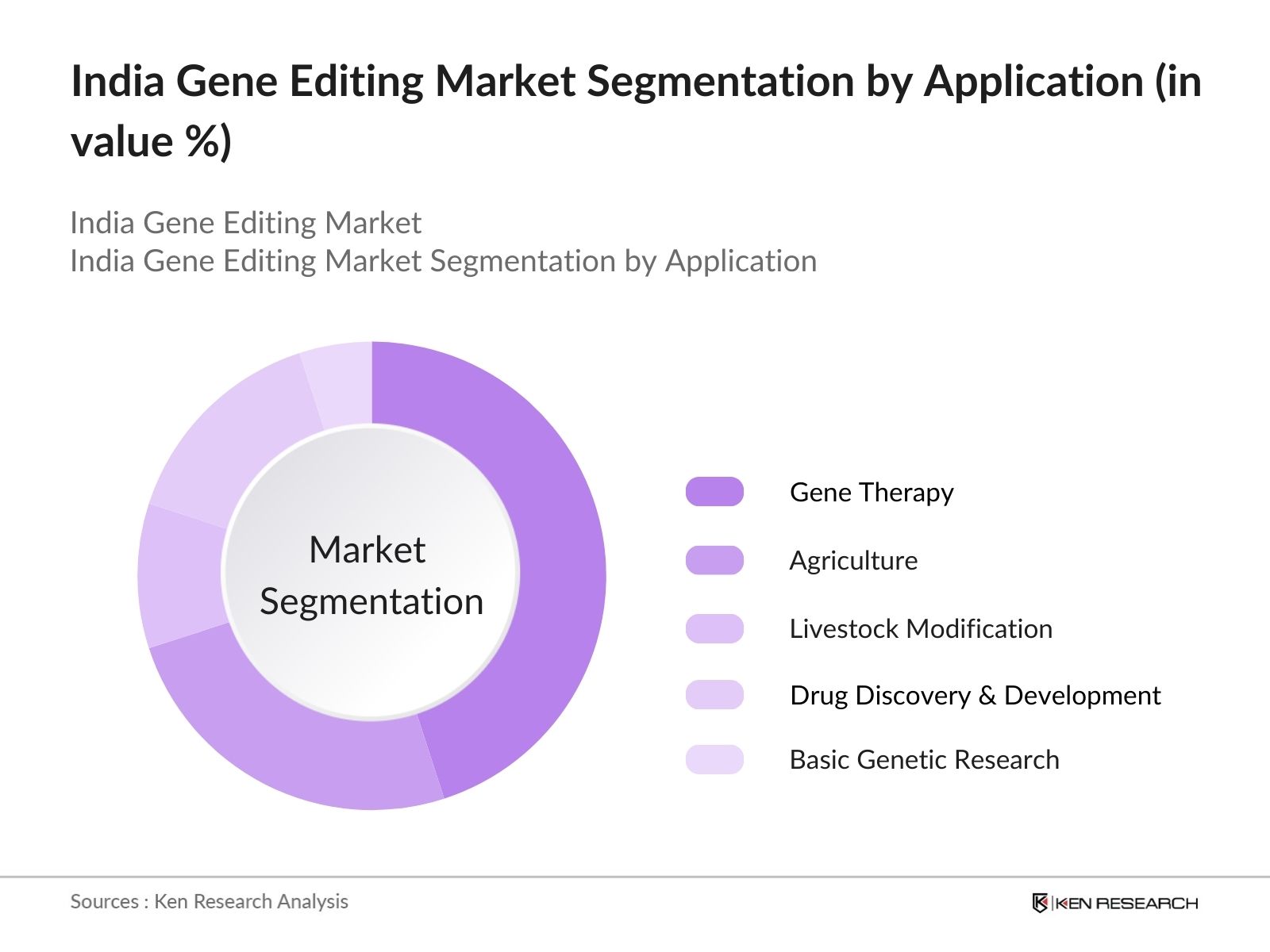
By Application: The India gene editing market is segmented by application into gene therapy, agriculture, livestock modification, drug discovery and development, and basic genetic research. Among these, gene therapy has emerged as the dominant application due to the rising prevalence of genetic disorders in India, such as thalassemia and sickle cell anemia, which have driven the need for targeted treatments. Additionally, the increasing awareness of personalized medicine, combined with the growing number of clinical trials in India, has further solidified gene therapy as the leading sub-segment in this market.
The India Gene Editing Market is characterized by a mix of large domestic players and international companies operating in the biotechnology and pharmaceutical sectors. The presence of Indian companies such as Bharat Biotech and Biocon, alongside international entities like Roche and Thermos Fisher, demonstrates the highly competitive nature of the market. These companies leverage their strong research capabilities and strategic collaborations with academic institutions to maintain their leadership positions in gene editing.
|
Company |
Establishment Year |
Headquarters |
Market Focus |
R&D Investment (USD) |
Number of Patents |
Collaborations |
Revenue from Gene Editing (USD Mn) |
Notable Products |
|
Bharat Biotech |
1996 |
Hyderabad, India |
- | - | - | - | - | - |
|
Biocon |
1978 |
Bengaluru, India |
- | - | - | - | - | - |
|
Reliance Life Sciences |
2001 |
Mumbai, India |
- | - | - | - | - | - |
|
MedGenome |
2013 |
Bengaluru, India |
- | - | - | - | - | - |
|
Serum Institute of India |
1966 |
Pune, India |
- | - | - | - | - | - |
Over the next five years, the India Gene Editing market is expected to witness significant growth driven by advancements in gene editing technologies such as CRISPR and TALEN, and the increasing adoption of gene therapies. The expansion of research facilities, rising government investment in biotech, and collaborations with international research organizations are likely to push the market forward. Furthermore, the agricultural applications of gene editing, particularly in improving crop resistance and productivity, are expected to see accelerated growth, contributing to the market's expansion.
|
By Technology |
CRISPR-Cas9 TALENs ZFNs Homologous Recombination |
|
By Application |
Gene Therapy Agriculture Livestock Drug Discovery Basic Research |
|
By End-User |
Pharma & Biotech Academic Institutes CROs Agri-Biotech Companies |
|
By Delivery Method |
Ex-vivo In-vivo In-vitro |
|
By Region |
North West South East |
1.1 Definition and Scope
1.2 Market Taxonomy
1.3 Market Growth Rate
1.4 Market Segmentation Overview
2.1 Historical Market Size
2.2 Year-On-Year Growth Analysis
2.3 Key Market Developments and Milestones
3.1 Growth Drivers
3.1.1 Growing Demand for Precision Medicine
3.1.2 Government Funding and Support for R&D
3.1.3 Increasing Applications in Agriculture and Livestock
3.1.4 Rising Incidence of Genetic Disorders
3.2 Market Challenges
3.2.1 Ethical Concerns Regarding Genetic Modifications
3.2.2 High Costs of Gene Editing Technologies
3.2.3 Regulatory Barriers
3.2.4 Lack of Awareness in Rural Regions
3.3 Opportunities
3.3.1 Emerging Gene Therapy Applications
3.3.2 Technological Advancements (CRISPR, TALEN, ZFNs)
3.3.3 Expansion in Agricultural Biotechnology
3.3.4 Collaborations with Global Research Institutions
3.4 Trends
3.4.1 Development of CRISPR-based Diagnostics
3.4.2 Increased Use of AI and Machine Learning in Gene Editing
3.4.3 Personalization of Gene Therapy
3.4.4 Strategic Alliances and Partnerships
3.5 Government Regulations
3.5.1 Regulatory Framework for Gene Editing in Agriculture
3.5.2 Guidelines for Human Gene Editing Research
3.5.3 Funding Programs for Biotech Startups
3.5.4 Compliance Requirements
3.6 SWOT Analysis
3.7 Stake Ecosystem
3.8 Porters Five Forces
3.9 Competition Ecosystem
4.1 By Technology (In Value %)
4.1.1 CRISPR-Cas9
4.1.2 TALENs
4.1.3 Zinc Finger Nucleases (ZFNs)
4.1.4 Homologous Recombination
4.2 By Application (In Value %)
4.2.1 Gene Therapy
4.2.2 Agriculture
4.2.3 Livestock Modification
4.2.4 Drug Discovery and Development
4.2.5 Basic Genetic Research
4.3 By End-User (In Value %)
4.3.1 Pharmaceutical and Biotech Companies
4.3.2 Academic & Research Institutes
4.3.3 Contract Research Organizations (CROs)
4.3.4 Agriculture Biotechnology Companies
4.4 By Delivery Method (In Value %)
4.4.1 Ex-vivo Delivery
4.4.2 In-vivo Delivery
4.4.3 In-vitro Delivery
4.5 By Region (In Value %)
4.5.1 North
4.5.2 West
4.5.3 South
4.5.4 East
5.1 Detailed Profiles of Major Companies
5.1.1 Bharat Biotech
5.1.2 Biocon
5.1.3 Reliance Life Sciences
5.1.4 Strand Life Sciences
5.1.5 MedGenome
5.1.6 Serum Institute of India
5.1.7 Intas Pharmaceuticals
5.1.8 Zydus Cadila
5.1.9 Aurobindo Pharma
5.1.10 Sun Pharmaceuticals
5.1.11 Lupin
5.1.12 Glenmark Pharmaceuticals
5.1.13 Dr. Reddy's Laboratories
5.1.14 Panacea Biotec
5.1.15 Jubilant Life Sciences
5.2 Cross Comparison Parameters (No. of Patents Filed, Research Focus, Revenue from Gene Editing, Collaborations)
5.3 Market Share Analysis
5.4 Strategic Initiatives
5.5 Mergers and Acquisitions
5.6 Investment Analysis
5.7 Venture Capital Funding
5.8 Government Grants
5.9 Private Equity Investments
6.1 Biosafety and Ethical Guidelines
6.2 Certification for Genetic Testing Labs
6.3 Regulations for CRISPR and Gene Editing Technologies
7.1 Future Market Size Projections
7.2 Key Factors Driving Future Market Growth
8.1 By Technology (In Value %)
8.2 By Application (In Value %)
8.3 By End-User (In Value %)
8.4 By Delivery Method (In Value %)
8.5 By Region (In Value %)
9.1 TAM/SAM/SOM Analysis
9.2 Customer Cohort Analysis
9.3 Marketing Initiatives
9.4 White Space Opportunity Analysis
The initial step involves creating a comprehensive map of the key stakeholders within the India Gene Editing Market. Extensive desk research is conducted utilizing proprietary databases and secondary sources to gather detailed industry-level insights. The goal is to identify the critical factors that influence the market's growth and development.
In this phase, we compile and evaluate historical data related to the India Gene Editing Market. This includes assessing the penetration of gene editing technologies, market demand across various applications, and the resulting revenue generation. Additionally, quality statistics are analyzed to ensure the accuracy of revenue and growth estimates.
Our market hypotheses are tested through in-depth interviews with industry experts from pharmaceutical companies, biotech firms, and academic institutions. These interviews provide vital operational and financial insights, helping to validate the gathered data and refine the market estimates.
The final step involves synthesizing data collected from primary and secondary sources, followed by direct consultations with key players in the gene editing industry. This process allows for a thorough validation of the market insights, ensuring the final report offers a comprehensive, accurate analysis of the India Gene Editing Market.
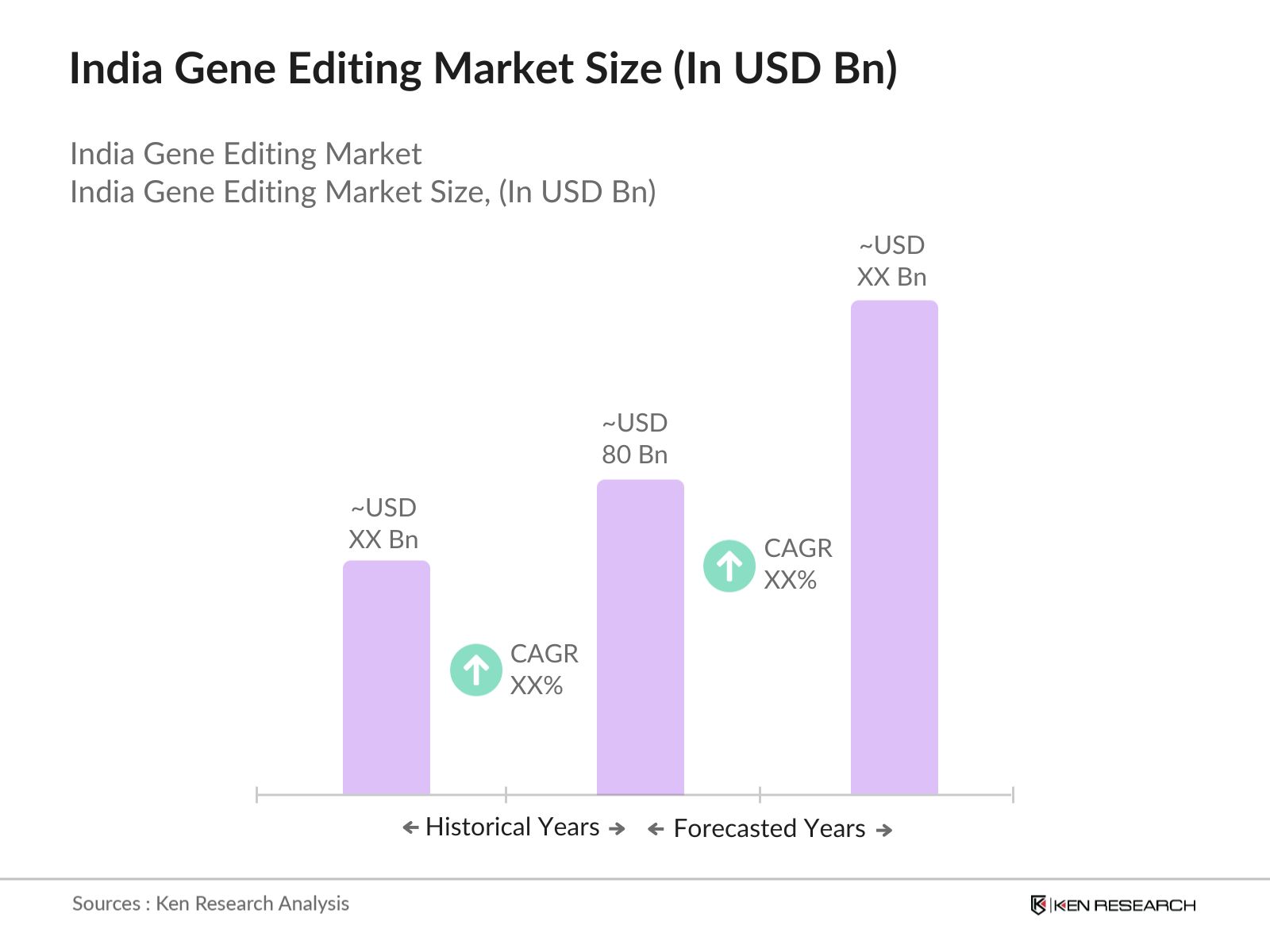
The India Gene Editing Market is valued at USD 80 billion, with its growth driven by advances in CRISPR technology, precision medicine, and gene therapy applications.
Key challenges include high costs of gene editing technologies, ethical concerns regarding genetic modification, and stringent regulatory frameworks that limit widespread adoption.
The major players include Bharat Biotech, Biocon, Reliance Life Sciences, MedGenome, and Serum Institute of India. These companies dominate due to their strong R&D capabilities, patents, and strategic collaborations.
The market is propelled by advancements in gene editing technologies like CRISPR, increasing R&D investment, and rising demand for personalized medicine and gene therapy applications.

What makes us stand out is that our consultants follows Robust, Refine and Result (RRR) methodology. i.e. Robust for clear definitions, approaches and sanity checking, Refine for differentiating respondents facts and opinions and Result for presenting data with story

We have set a benchmark in the industry by offering our clients with syndicated and customized market research reports featuring coverage of entire market as well as meticulous research and analyst insights.

While we don't replace traditional research, we flip the method upside down. Our dual approach of Top Bottom & Bottom Top ensures quality deliverable by not just verifying company fundamentals but also looking at the sector and macroeconomic factors.

With one step in the future, our research team constantly tries to show you the bigger picture. We help with some of the tough questions you may encounter along the way: How is the industry positioned? Best marketing channel? KPI's of competitors? By aligning every element, we help maximize success.

Our report gives you instant access to the answers and sources that other companies might choose to hide. We elaborate each steps of research methodology we have used and showcase you the sample size to earn your trust.

If you need any support, we are here! We pride ourselves on universe strength, data quality, and quick, friendly, and professional service.