
India Magnetic Cooling Market Outlook to 2030
Region:Asia
Author(s):Khushi Khatreja
Product Code:KROD1605
September 2024
89
About the Report
India Magnetic Cooling Market Overview
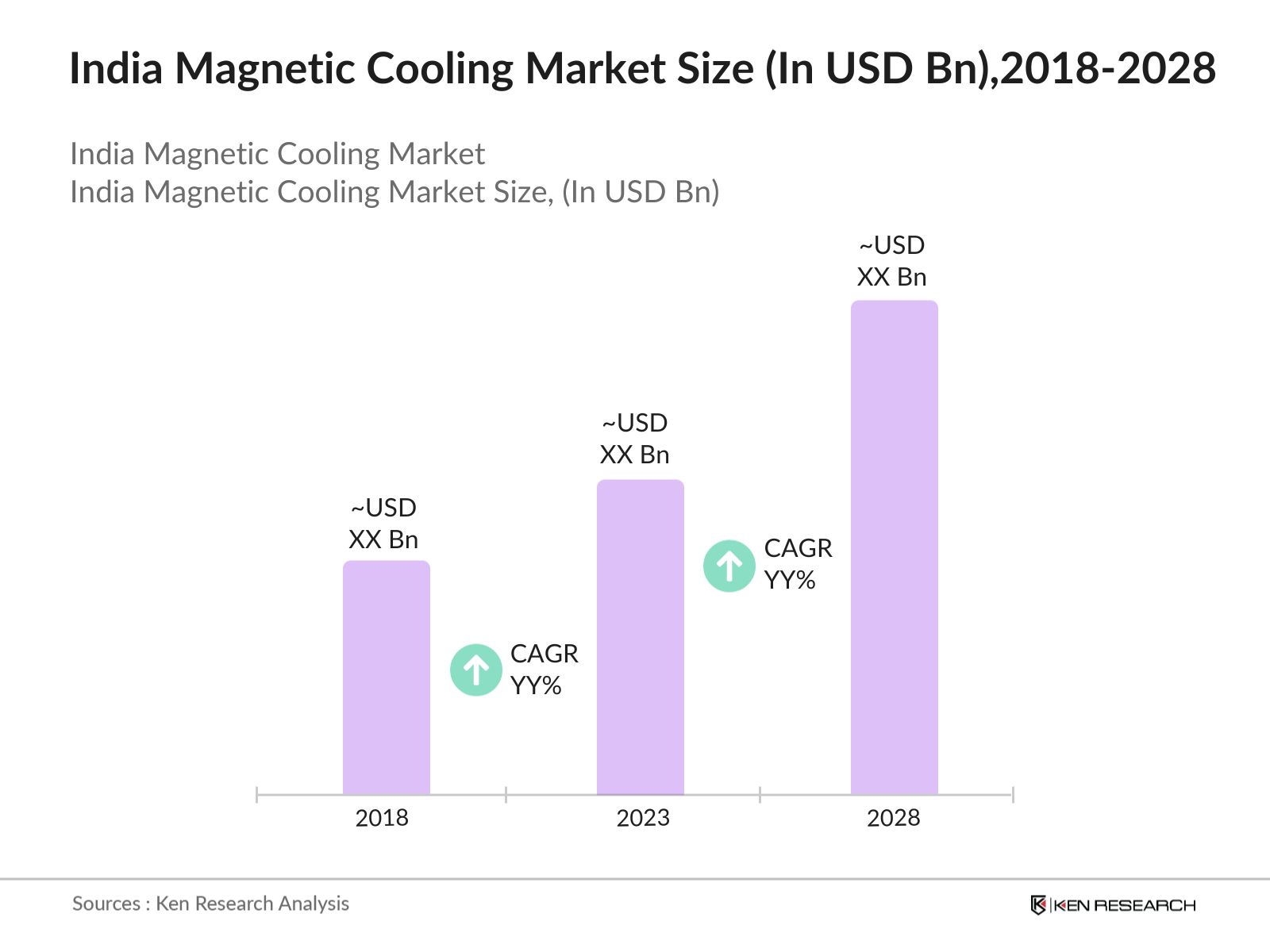
- The India Magnetic Cooling Market has experienced notable growth, this is reflected by Global Magnetic Cooling Market reaching a valuation of USD 20.5 billion in 2023. This growth is fueled by rising demand for rapid diagnostic solutions and increasing healthcare awareness.
- Key players in the India Magnetic Cooling Market include Whirlpool Corporation, LG Electronics, Cooltech Applications, Haier Electronics Group, and Samsung Electronics. These companies are at the forefront of innovation in magnetic cooling technologies, leveraging their extensive R&D capabilities to develop efficient and sustainable cooling solutions.
- In 2023, LG Electronics introduced India's first Energy Manager air conditioner, which is designed to optimize energy consumption and enhance efficiency. This launch is part of LG's strategy to cater to the growing demand for energy-efficient cooling solutions in India, aligning with the country's focus on sustainability and energy conservation.
- The dominant cities in the India Magnetic Cooling Market include Mumbai, Delhi, Bengaluru, Chennai, and Hyderabad. These cities are major industrial and commercial hubs with a high demand for advanced cooling solutions. Their dominance is attributed to the presence of large industrial bases, higher consumer awareness, and better access to advanced technologies.
India Magnetic Cooling Market Segmentation
India Magnetic Cooling Market is divided into following three segments:
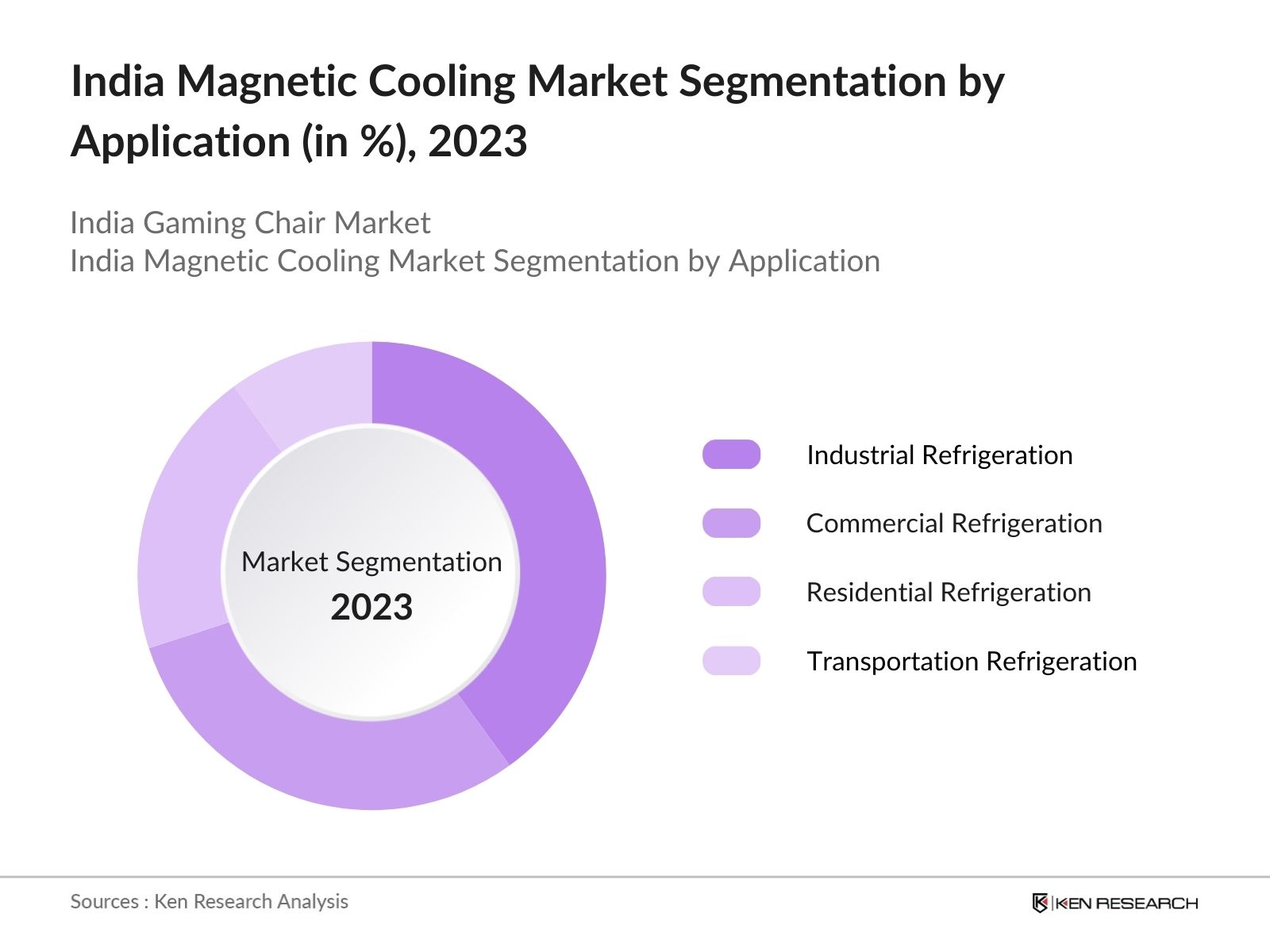
- By Application: The India Magnetic Cooling Market is segmented by application into industrial refrigeration, commercial refrigeration, residential refrigeration, and transportation refrigeration. In 2023, industrial refrigeration holds a dominant market share due to the significant energy savings and operational efficiency offered by magnetic cooling technology.
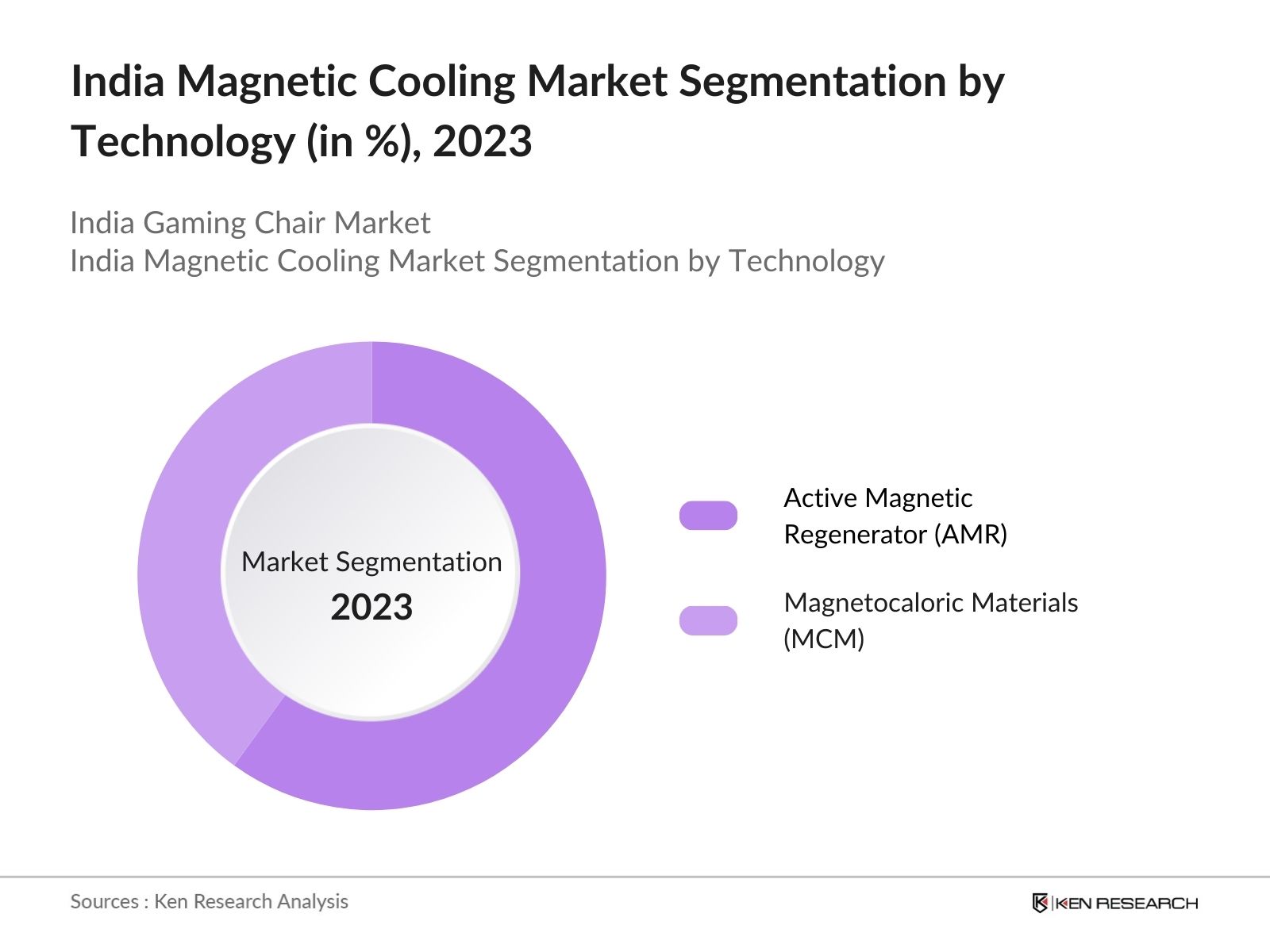
- By Technology: By technology, the market is segmented into active magnetic regenerator (AMR) and magnetocaloric materials (MCM). In 2023, active magnetic regenerator (AMR) technology dominates the market due to its higher efficiency and better performance in various cooling applications. The ongoing advancements in AMR technology and its increasing adoption across different sectors are driving its market dominance.
- By Region: The India Magnetic Cooling Market is segmented by region into North, South, East, and West. In 2023, the South region holds the dominant market share due to the high concentration of technology hubs and industries. The favorable climate for technological advancements and the presence of major players in this region contribute to its dominance.
India Magnetic Cooling Market Competitive Landscape
|
Company |
Establishment Year |
Headquarters |
|
Whirlpool Corporation |
1911 |
Benton Harbor, USA |
|
LG Electronics |
1958 |
Seoul, South Korea |
|
Cooltech Applications |
2013 |
Strasbourg, France |
|
Haier Electronics Group |
1984 |
Qingdao, China |
|
Samsung Electronics |
1969 |
Suwon, South Korea |
- Haier Electronics Group: At the Haier Partners Meet 2023, the company showcased its innovative products, including the introduction of India's first 3-door convertible side-by-side refrigerator and advancements in air conditioning technology. These products are designed to meet the growing demand for energy-efficient and smart home appliances in India.
- Whirlpool Corporation: Whirlpool is focusing on developing more sustainable refrigeration technologies, such as SlimTech™ insulation, which is set to launch in 2024. This technology uses vacuum insulation to improve energy efficiency and reduce the environmental impact of traditional polyurethane foam insulation.
India Magnetic Cooling Industry Analysis
India Magnetic Cooling Market Growth Drivers
- Mechanism of Operation: Magnetic cooling uses the magnetocaloric effect (MCE), where materials heat up when magnetized and cool down when demagnetized. This eliminates traditional refrigerants and compressors, leading to lower energy consumption. For instance, gadolinium can achieve a temperature change of 7.6 J/(kg·K) at 30 K with a 2 T magnetic field change.
- Longer Lifespan and Reduced Maintenance: Magnetic cooling systems have fewer moving parts than traditional refrigeration, resulting in a longer lifespan and reduced maintenance. This reliability lowers long-term costs for businesses by decreasing expenses on repairs and replacements, allowing for more efficient resource allocation and improved profitability.
- Expanding hospitality and supermarket infrastructure: India's rapid economic development is driving increased investment in hospitality and supermarket infrastructure, particularly through sustainable cooling technologies like magnetic refrigeration. Initiatives such as TechEmerge are facilitating this shift by partnering with major industry players, including the Indian Hotels Company Limited (IHCL) and Chalet Hotels.
India Magnetic Cooling Market Challenges
- Material Development: A primary challenge is the need for advanced materials that exhibit a high magnetocaloric effect (MCE). Current research is focused on finding materials capable of operating efficiently for millions of cycles without degradation. The ideal materials must also demonstrate high thermal conductivity and respond effectively to magnetic fields, which remains a technical hurdle for developers.
- Heat Transfer Methods: Effective heat transfer between the refrigerant and secondary heat transfer fluids is crucial for the performance of magnetic refrigeration systems. Developing reliable and efficient methods for this heat transfer is an ongoing area of research.
India Magnetic Cooling Market Government Initiatives
- India Cooling Action Plan (ICAP): The India Cooling Action Plan (ICAP), launched in March 2019 by the Ministry of Environment, Forest and Climate Change, aims to provide sustainable cooling solutions and thermal comfort while delivering environmental and socio-economic benefits. In 2023, ICAP continues to promote sustainable cooling and thermal comfort for all, focusing on reducing cooling demand and enhancing energy efficiency.
- Support for Green Technology: The Indian government is backing magnetic refrigeration to boost energy efficiency and eco-friendly cooling, including phasing out harmful refrigerants. In 2023, researchers developed Heusler alloys that show promise as effective magnetic refrigerants, helping cut emissions and meet efficiency goals.
India Magnetic Cooling Market Future Outlook
The Indian magnetic cooling market is set for exponential growth, driven by technological advancements, regulatory support, and increasing demand for sustainable cooling solutions across various industries. Magnetic cooling technology, known for its eco-friendliness and efficiency, will become increasingly popular across various industries, contributing to its robust market expansion.
Future Market Trends
- Increasing Industrial Adoption: By 2028, magnetic cooling will become the preferred choice for industrial refrigeration, driven by advancements in magnetocaloric materials and supportive government policies. The adoption of magnetic cooling technology in industrial applications will continue growing over the next five years.
- Expansion of Smart Cooling Solutions: By 2028, the adoption of IoT-enabled magnetic cooling systems will increase, making them a standard feature in both industrial and commercial applications. The integration of magnetic cooling systems with IoT and smart technologies will drive market growth. Companies will develop smart magnetic cooling solutions that can be remotely monitored and controlled, improving efficiency and performance.
Scope of the Report
|
By Application |
Industrial Refrigeration Commercial Refrigeration Residential Refrigeration Transportation Refrigeration |
|
By Technology |
Active Magnetic Regenerator (AMR) Magnetocaloric Materials (MCM) |
|
By Region |
North South East West |
Products
Key Target Audience:
• Manufacturers and Suppliers of Magnetic Cooling Systems
• Industrial, Commercial, and Residential Refrigeration Companies
• Transportation and Logistics Companies
• Government and Regulatory Bodies (BEE, CPCB)
• Investments and Venture Capitalist Firms
• Environmental Advocacy Groups
• Energy Efficiency Organizations
• Sustainability Consultants
• Research and Development Institutes
• Large-scale Retailers
Time Period Captured in the Report:
• Historical Period: 2018-2023
• Base Year: 2023
• Forecast Period: 2023-2028
Companies
Players Mentioned in the Report:
LG Electronics
Cooltech Applications
Haier Electronics Group
Samsung Electronics
Embraco
Camfridge Ltd.
Astronautics Corporation of America
V-Kool
Carnot Refrigeration
Magnetic Refrigeration Solutions
Ubiblue
BASF SE
General Electric
- Danfoss
Table of Contents
1. India Magnetic Cooling Market Overview
1.1. Definition and Scope
1.2. Market Taxonomy
1.3. Market Growth Rate
1.4. Market Segmentation Overview
2. India Magnetic Cooling Market Size (in USD Bn), 2018-2023
2.1. Historical Market Size
2.2. Year-on-Year Growth Analysis
2.3. Key Market Developments and Milestones
3. India Magnetic Cooling Market Analysis
3.1. Growth Drivers
3.1.1. Mechanism of Operation
3.1.2. Longer Lifespan and Reduced Maintenance
3.1.3. Expanding hospitality and supermarket infrastructure
3.1.4. Public Awareness
3.2. Restraints
3.2.1. Material Development
3.2.2. Heat Transfer Methods
3.2.3. Lack of Skilled Workforce
3.3. Opportunities
3.3.1. Technological Advancements
3.3.2. International Collaborations
3.3.3. Expansion into Rural Areas
3.4. Trends
3.4.1. Adoption of IoT
3.4.2. Integration with Smart City Projects
3.4.3. Increased Use of Mobile Monitoring Units
3.5. Government Regulation
3.5.1. India Cooling Action Plan (ICAP)
3.5.2. Support for Green Technology
3.5.3. Clean Air Initiative
3.5.4. Public-Private Partnerships
3.6. SWOT Analysis
3.7. Stake Ecosystem
3.8. Competition Ecosystem
4. India Magnetic Cooling Market Segmentation, 2023
4.1. By Application (in Value %)
4.1.1. Industrial Refrigeration
4.1.2. Commercial Refrigeration
4.1.3. Residential Refrigeration
4.1.4. Transportation Refrigeration
4.2. By Technology (in Value %)
4.2.1. Active Magnetic Regenerator (AMR)
4.2.2. Magnetocaloric Materials (MCM)
4.5. By Region (in Value %)
4.5.1. North
4.5.2. South
4.5.3. East
4.5.4. West
5. India Magnetic Cooling Market Cross Comparison
5.1 Detailed Profiles of Major Companies
5.1.1. LG Electronics
5.1.2. Cooltech Applications
5.1.3. Haier Electronics Group
5.1.4. Samsung Electronics
5.1.5. Embraco
5.1.6. Camfridge Ltd.
5.1.7. Astronautics Corporation of America
5.1.8. V-Kool
5.1.9. Carnot Refrigeration
5.1.10. Magnetic Refrigeration Solutions
5.1.11. Ubiblue
5.1.12. BASF SE
5.1.13. General Electric
5.1.14. Danfoss
5.2 Cross Comparison Parameters (No. of Employees, Headquarters, Inception Year, Revenue)
6. India Magnetic Cooling Market Competitive Landscape
6.1. Market Share Analysis
6.2. Strategic Initiatives
6.3. Mergers and Acquisitions
7. India Magnetic Cooling Market Regulatory Framework
7.1. IS Standards
7.2. Energy Performance Standards
7.3. F-Gas Regulation
8. India Magnetic Cooling Future Market Size (in USD Bn), 2023-2028
8.1. Future Market Size Projections
8.2. Key Factors Driving Future Market Growth
9. India Magnetic Cooling Future Market Segmentation, 2028
9.1. By Application (in Value %)
9.2. By Technology (in Value %)
9.3. By Region (in Value %)
10. India Magnetic Cooling Market Analysts’ Recommendations
10.1. TAM/SAM/SOM Analysis
10.2. Customer Cohort Analysis
10.3. Marketing Initiatives
10.4. White Space Opportunity Analysis
Disclaimer
Contact Us
Research Methodology
Step 1 Identifying Key Variables:
Ecosystem creation for all the major entities and referring to multiple secondary and proprietary databases to perform desk research around market to collate industry level information.
Step 2 Market Building:
Collating statistics on India Magnetic Cooling Market over the years, penetration of marketplaces and service providers ratio to compute revenue generated for India Magnetic Cooling industry. We will also review service quality statistics to understand revenue generated which can ensure accuracy behind the data points shared.
Step 3 Validating and Finalizing:
Building market hypothesis and conducting CATIs with industry experts belonging to different companies to validate statistics and seek operational and financial information from company representatives.
Step 4 Research Output:
Our team will approach multiple Magnetic Cooling Market industry companies and understand nature of product segments and sales, consumer preference and other parameters, which will support us validate statistics derived through bottom to top approach from such Magnetic Cooling industry companies.
Frequently Asked Questions
01 How big is India Magnetic Cooling Market?
The India Magnetic Cooling Market has seen significant growth, reflected in the global magnetic cooling market reaching a valuation of USD 20.5 billion in 2023. This expansion is driven by increasing demand for rapid diagnostic solutions and heightened healthcare awareness.
02 Who are the major players in the India Magnetic Cooling Market?
Key players in the India Magnetic Cooling Market include Whirlpool Corporation, LG Electronics, Cooltech Applications, Haier Electronics Group, and Samsung Electronics. These companies lead due to their strong R&D capabilities and innovative product offerings.
03 What are the growth drivers of India Magnetic Cooling Market?
Growth drivers for the India Magnetic Cooling Market include increasing industrial adoption of energy-efficient cooling solutions, government support for sustainable technologies, and rising environmental awareness among consumers and businesses.
04 What are the challenges in India Magnetic Cooling Market?
Challenges in the India Magnetic Cooling Market include high initial costs of magnetic cooling systems, technological limitations in extreme temperatures, and a lack of awareness and skilled workforce to operate and maintain these advanced systems.
Why Buy From Us?

What makes us stand out is that our consultants follows Robust, Refine and Result (RRR) methodology. i.e. Robust for clear definitions, approaches and sanity checking, Refine for differentiating respondents facts and opinions and Result for presenting data with story

We have set a benchmark in the industry by offering our clients with syndicated and customized market research reports featuring coverage of entire market as well as meticulous research and analyst insights.

While we don't replace traditional research, we flip the method upside down. Our dual approach of Top Bottom & Bottom Top ensures quality deliverable by not just verifying company fundamentals but also looking at the sector and macroeconomic factors.

With one step in the future, our research team constantly tries to show you the bigger picture. We help with some of the tough questions you may encounter along the way: How is the industry positioned? Best marketing channel? KPI's of competitors? By aligning every element, we help maximize success.

Our report gives you instant access to the answers and sources that other companies might choose to hide. We elaborate each steps of research methodology we have used and showcase you the sample size to earn your trust.

If you need any support, we are here! We pride ourselves on universe strength, data quality, and quick, friendly, and professional service.