India MLCC Market Outlook to 2030

Region:Asia

Author(s):Shubham Kashyap

Product Code:KROD5376

Published On

December 2024

Total pages

91

About the Report

India MLCC Market Overview

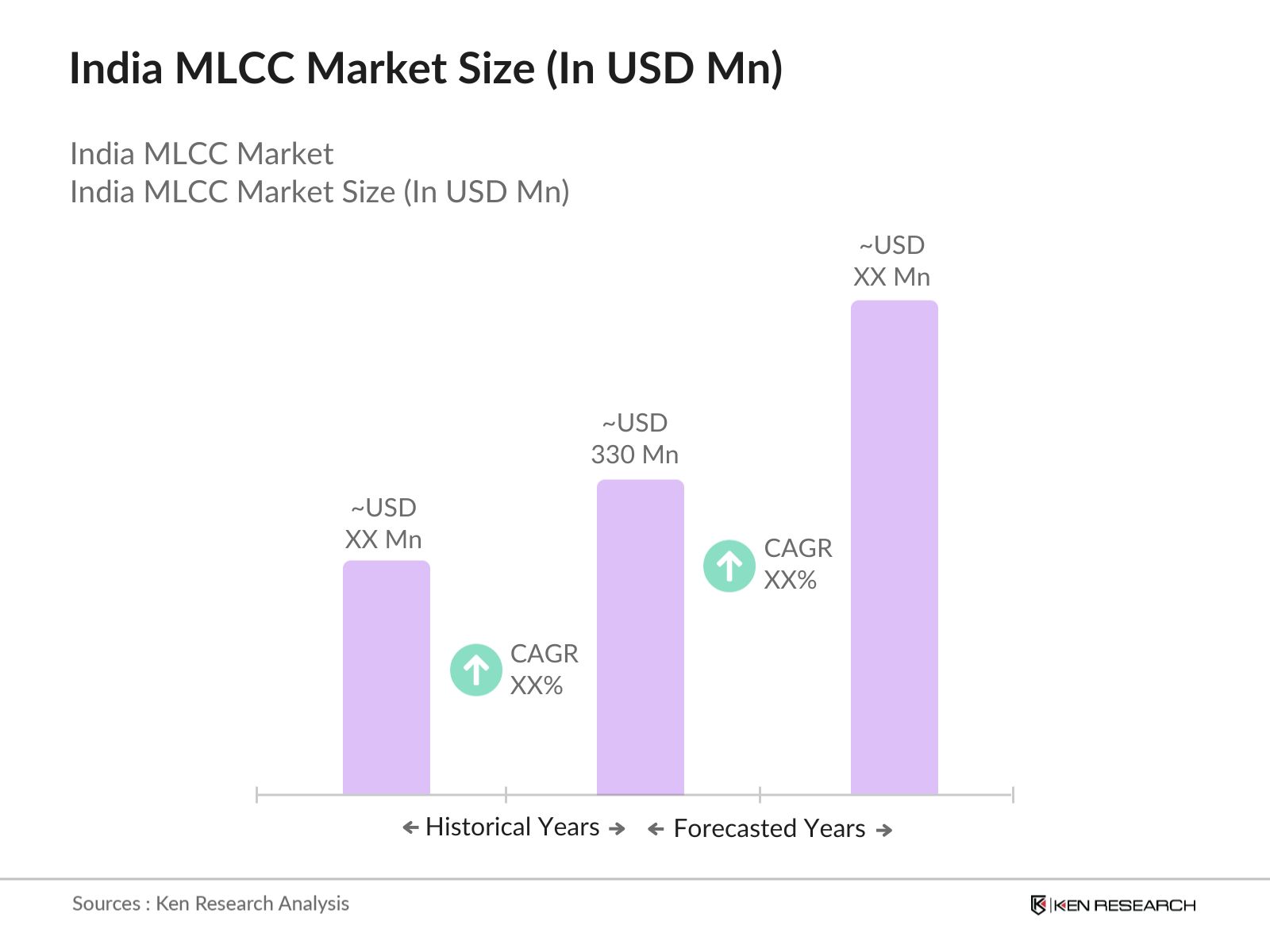
  • The India MLCC market is valued at USD 330 million, driven by the rapid growth of the automotive and consumer electronics sectors. The increasing adoption of advanced electronic devices, coupled with the surge in electric vehicle (EV) production, significantly contributes to the market expansion. Additionally, government initiatives promoting domestic manufacturing and the rise of smart technologies in various industries bolster the market size. India MLCC Market Size
  • Major demand centers for MLCCs in India include Bangalore, Pune, and Chennai. These cities dominate the market due to their robust electronics manufacturing ecosystems and the presence of leading multinational corporations. The advanced infrastructure, skilled workforce, and proximity to key suppliers and research institutions in these hubs foster innovation and efficiency in MLCC production. Furthermore, strategic investments and supportive government policies in these regions enhance their market leadership and attract substantial foreign investments.
  • Import tariffs and duties significantly impact the MLCC market in India by influencing the cost structure of imported components. As of 2024, the Indian government imposed a 10% import duty on ceramic capacitors, including MLCCs, to protect domestic manufacturers and promote local production. This tariff structure makes imported MLCCs more expensive, encouraging manufacturers to source materials and produce capacitors domestically. Additionally, the government offers exemptions on import duties for raw materials used in MLCC production, aiming to reduce production costs and enhance competitiveness.

India MLCC Market Segmentation

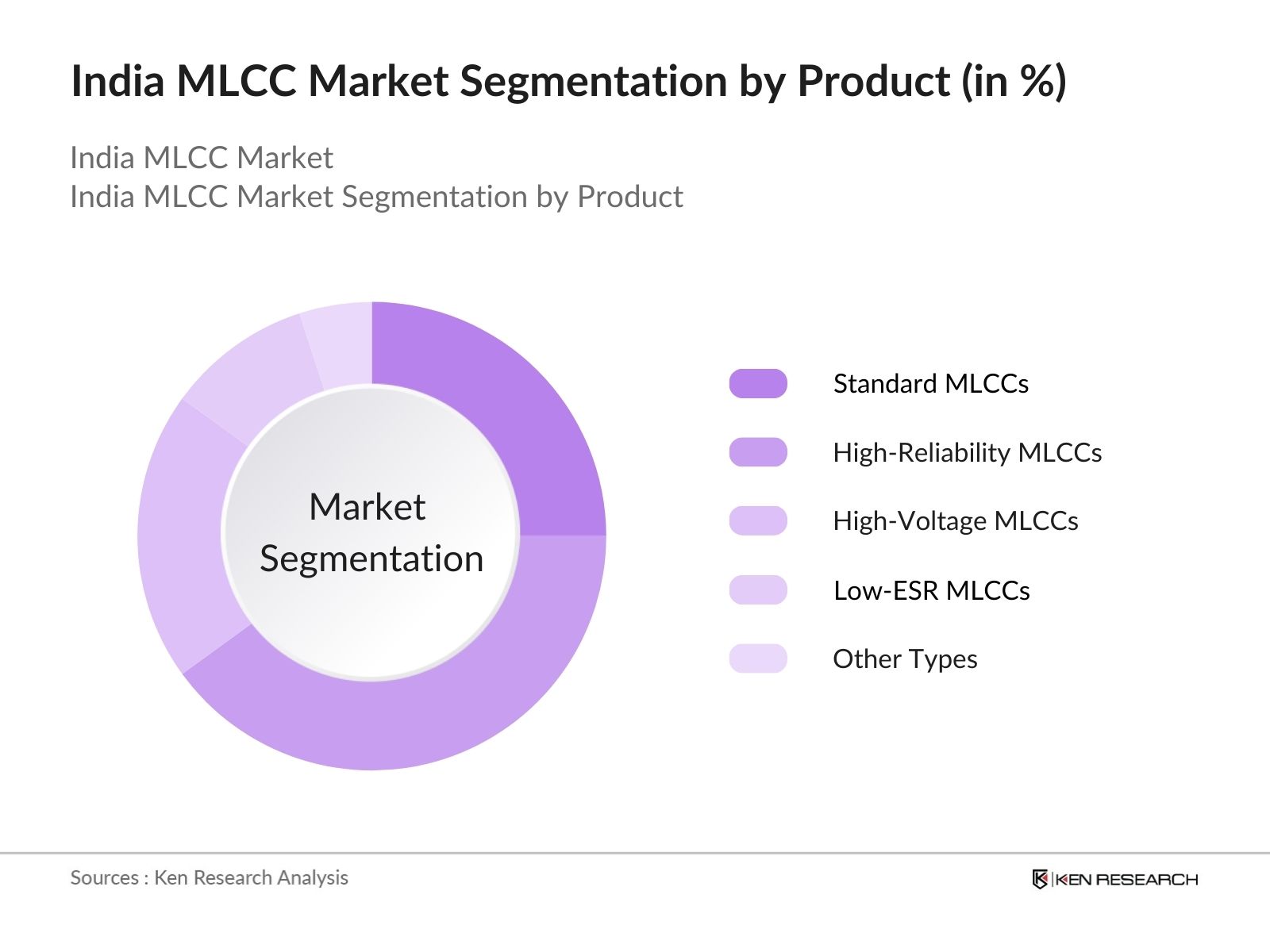
  • By Product Type: The market is segmented by product type into standard MLCCs, high-reliability MLCCs, high-voltage MLCCs, low-ESR MLCCs, and other types. High-reliability MLCCs hold a dominant market share of 40% in 2023. This dominance is attributed to their extensive use in critical applications such as automotive electronics, aerospace, and medical devices, where reliability and performance are paramount. Manufacturers are investing in advanced technologies to enhance the durability and efficiency of high-reliability MLCCs, meeting the stringent requirements of these high-stakes industries. The growing emphasis on safety and performance in electronic systems further drives the demand for high-reliability MLCCs, solidifying their leadership in the market. India MLCC Market Segmentation by product
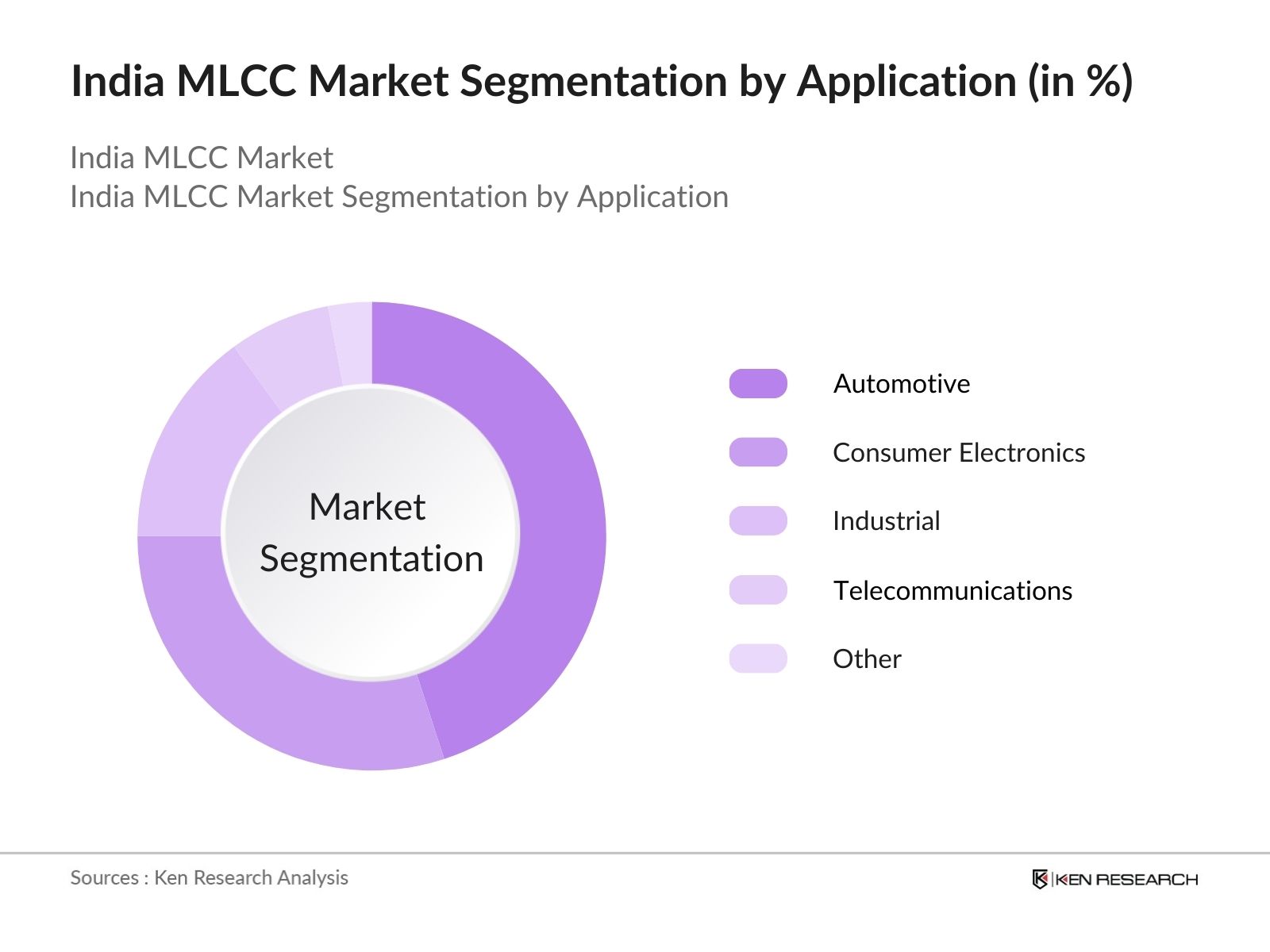
  • By Application: The market is segmented by application into automotive, consumer electronics, industrial, telecommunications, and others. The automotive segment dominates the market, driven by the increasing incorporation of electronic components in vehicles, including infotainment systems, advanced driver-assistance systems (ADAS), and electric vehicle (EV) technologies. The shift towards electric mobility and the growing emphasis on smart vehicles are fueling the demand for MLCCs in automotive applications, positioning this segment as a key contributor to market growth. Additionally, the rise in production of electric two-wheelers and three-wheelers further amplifies the demand for MLCCs in the automotive sector.

India MLCC Market Segmentation by application

India MLCC Market Competitive Landscape

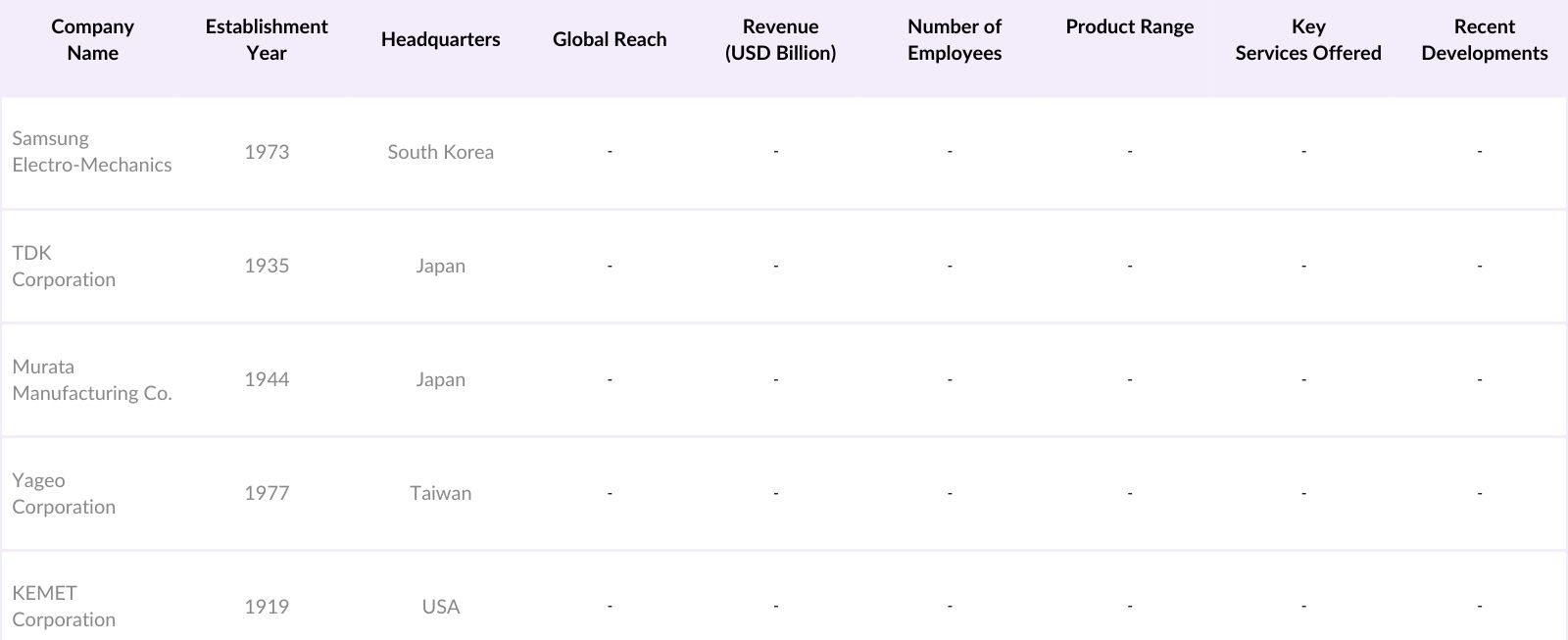
The India MLCC market is dominated by a few major players, including global giants such as Samsung Electro-Mechanics, TDK Corporation, Murata Manufacturing Co., Ltd., Yageo Corporation, and KEMET Corporation. These companies leverage their extensive research and development capabilities, robust supply chains, and strong brand presence to maintain their leadership positions. The competitive landscape is characterized by continuous innovation, strategic partnerships, and significant investments in expanding production capacities to meet the growing demand across various applications. Additionally, local manufacturers are emerging, enhancing competition and driving market advancements through tailored solutions and cost-effective production strategies.
India MLCC Market Competitive Landscape

India MLCC Market Analysis

Growth Drivers

  • Automotive Industry Expansion: The expansion of India's automotive industry significantly propels the MLCC market. In 2023, India produced approximately 34 million vehicles, marking a steady increase driven by rising domestic demand and exports. The government's push towards electric vehicles (EVs) has led to substantial investments in EV manufacturing, with over 1.5 million EV units produced in 2023 alone. This surge in vehicle production necessitates a higher demand for MLCCs, which are essential components in automotive electronics for managing power and signal processing. Additionally, India's automotive exports reached USD 45 billion in 2023, reflecting robust growth in international markets that further drive the need for advanced electronic components like MLCCs.
  • Consumer Electronics Demand: The consumer electronics sector in India is a major growth driver for the MLCC market. In 2023, the Indian consumer electronics market witnessed rapidly, with sales of smartphones exceeding 150 million units. The proliferation of smart devices, including smartphones, tablets, and wearable technology, has escalated the demand for MLCCs, which are critical for device functionality and performance. Furthermore, the increasing adoption of smart home devices and personal electronics has contributed to the sustained growth in MLCC usage. The government's Digital India initiative, which aims to enhance digital infrastructure and connectivity, has also spurred the demand for advanced electronic components, reinforcing the growth trajectory of the MLCC market.
  • 5G Technology Adoption: The rapid adoption of 5G technology in India is a key driver for the MLCC market. As of 2023, India has deployed over 4,00,000 5G base stations, significantly enhancing network coverage and capacity. The expansion of 5G infrastructure necessitates the use of MLCCs in a wide array of telecommunications equipment, including smartphones, routers, and network hardware. Additionally, the rollout of 5G services has accelerated the development of IoT devices and smart technologies, further increasing the demand for MLCCs.

Challenges

  • High Raw Material Costs: High raw material costs pose a significant challenge to the MLCC market in India. In 2023, the prices of key raw materials such as ceramic powders and copper increased substantially, driven by global supply shortages and increased. These price fluctuations impact the production costs of MLCCs, making it difficult for manufacturers to maintain profitability without passing costs onto consumers. Additionally, the reliance on imported raw materials exposes the MLCC market to exchange rate volatility, further complicating cost management.
  • Supply Chain Disruptions: Supply chain disruptions are a critical challenge for the MLCC market in India. In 2023, global supply chain interruptions caused delays in the procurement of essential components, leading to a notable increase in lead times for MLCC production. Factors such as geopolitical tensions, natural disasters, and transportation bottlenecks have exacerbated vulnerabilities in the supply chain. Additionally, the dependence on a limited number of suppliers for raw materials and key components increases the risk of shortages and production delays.

India MLCC Market Future Outlook

Over the next five years, the India MLCC market is expected to exhibit substantial growth driven by continuous advancements in MLCC technology, increasing adoption of electric vehicles, and expanding applications in consumer electronics and industrial automation. Government policies promoting domestic manufacturing and investment in infrastructure will further bolster market expansion. Additionally, the integration of IoT and smart technologies across various sectors will enhance the demand for high-performance MLCCs, positioning the market for robust growth and innovation. The emphasis on sustainability and energy efficiency in electronic devices will also play a crucial role in shaping the future dynamics of the India MLCC market.

Future Market Opportunities

  • Emerging Applications (New Application Areas): Emerging applications present substantial opportunities for the MLCC market in India. The growing sectors of electric vehicles, smart infrastructure, and wearable technology are expanding the use of MLCCs. In 2023, the deployment of smart city projects across India included over 500,000 smart devices, each utilizing MLCCs for efficient operation. Additionally, the rise of IoT devices in industrial automation and consumer electronics creates new avenues for MLCC integration, enhancing connectivity and functionality.
  • Strategic Partnerships (Collaboration Opportunities): Strategic partnerships offer significant growth potential for the MLCC market in India. Collaborations between MLCC manufacturers and key industry players in automotive, electronics, and telecommunications can lead to enhanced product offerings and expanded market reach. In 2023, several Indian MLCC producers entered into joint ventures with leading electronics firms to co-develop advanced capacitors tailored for specific applications. These partnerships facilitate access to new technologies, improve supply chain efficiencies, and enable shared investments in research and development.

Scope of the Report

By Product Type

Standard MLCCs

High-Reliability MLCCs

High-Voltage MLCCs

Low-ESR MLCCs

Other Types

By Application

Automotive

Consumer Electronics

Industrial

Telecommunications

Others

By Technology

Surface Mount Technology (SMT)

Embedded Technology

Other Technologies

By End-User

Automotive Electronics

Information Technology

Consumer Appliances

Industrial Machinery

Others

By Region

North

South

East

West

Products

Key Target Audience

  • Investors and Venture Capitalist Firms

  • Banks and Financial Institutions

  • Government and Regulatory Bodies (Ministry of Electronics and Information Technology, Department of Commerce)

  • Automotive Manufacturers

  • Consumer Electronics Companies

  • Industrial Machinery Manufacturers

  • Telecommunications Companies

  • Electric Vehicle Manufacturers


Companies

Players Mentioned in the Report

  • Samsung Electro-Mechanics

  • TDK Corporation

  • Murata Manufacturing Co., Ltd.

  • Yageo Corporation

  • Taiyo Yuden Co., Ltd.

  • KEMET Corporation

  • AVX Corporation

  • Vishay Intertechnology, Inc.

  • SK Mtron

  • TDK-EPCOS

  • FCI

  • Kyocera Corporation

  • Walsin Technology Corporation

  • Samsung Semiconductor

  • Taiyo Yuden

Table of Contents

India MLCC Market Overview

1.1. Definition and Scope

1.2. Market Taxonomy

1.3. Market Growth Rate

1.4. Market Segmentation Overview

India MLCC Market Size (In USD Bn)

2.1. Historical Market Size

2.2. Year-On-Year Growth Analysis

2.3. Key Market Developments and Milestones

India MLCC Market Analysis

3.1. Growth Drivers

3.1.1. Automotive Industry Expansion (Automotive Sector Growth Rate)

3.1.2. Consumer Electronics Demand (Consumer Electronics Growth Rate)

3.1.3. 5G Technology Adoption (5G Deployment Rate)

3.1.4. Industrial Automation (Industrial Automation Growth Rate)

3.1.5. Renewable Energy Projects (Renewable Energy Adoption Rate)

3.2. Market Challenges

3.2.1. High Raw Material Costs (Raw Material Price Fluctuations)

3.2.2. Supply Chain Disruptions (Supply Chain Vulnerabilities)

3.2.3. Intense Competition (Competitive Pressure)

3.2.4. Technological Obsolescence (Rate of Technological Change)

3.3. Opportunities

3.3.1. Emerging Applications (New Application Areas)

3.3.2. Strategic Partnerships (Collaboration Opportunities)

3.3.3. Export Expansion (Export Market Potential)

3.3.4. Innovation in Materials (Advanced Material Development)

3.4. Trends

3.4.1. Miniaturization of Components (Component Size Reduction)

3.4.2. Enhanced Reliability Standards (Reliability Improvement Trends)

3.4.3. Integration with IoT Devices (IoT Integration Trends)

3.5. Government Regulation

3.5.1. Import Tariffs and Duties (Tariff Structures)

3.5.2. Environmental Compliance (Environmental Standards)

3.5.3. Subsidies and Incentives (Government Incentive Programs)

3.5.4. Export Regulations (Export Compliance Requirements)

3.6. SWOT Analysis

3.7. Stakeholder Ecosystem

3.8. Porters Five Forces

3.9. Competitive Landscape

India MLCC Market Segmentation

4.1. By Product Type (In Value %)

4.1.1. Standard MLCCs

4.1.2. High-Reliability MLCCs

4.1.3. High-Voltage MLCCs

4.1.4. Low-ESR MLCCs

4.1.5. Other Types

4.2. By Application (In Value %)

4.2.1. Automotive

4.2.2. Consumer Electronics

4.2.3. Industrial

4.2.4. Telecommunications

4.2.5. Others

4.3. By Technology (In Value %)

4.3.1. Surface Mount Technology (SMT)

4.3.2. Embedded Technology

4.3.3. Other Technologies

4.4. By End-User Industry (In Value %)

4.4.1. Automotive Electronics

4.4.2. Information Technology

4.4.3. Consumer Appliances

4.4.4. Industrial Machinery

4.4.5. Others

4.5. By Region (In Value %)

4.5.1. North

4.5.2. South

4.5.3. East

4.5.4. West

India MLCC Market Competitive Analysis

5.1. Detailed Profiles of Major Companies

5.1.1. Samsung Electro-Mechanics

5.1.2. TDK Corporation

5.1.3. Murata Manufacturing Co., Ltd.

5.1.4. Yageo Corporation

5.1.5. Taiyo Yuden Co., Ltd.

5.1.6. KEMET Corporation

5.1.7. AVX Corporation

5.1.8. Vishay Intertechnology, Inc.

5.1.9. SK Mtron

5.1.10. TDK-EPCOS

5.1.11. FCI

5.1.12. Kyocera Corporation

5.1.13. Walsin Technology Corporation

5.1.14. Samsung Semiconductor

5.1.15. Taiyo Yuden

5.2. Cross Comparison Parameters

- Revenue

- Market Share

- Production Capacity

- R&D Investments

- Geographic Presence

- Product Portfolio

- Technological Advancements

- Supply Chain Efficiency

5.3. Market Share Analysis

5.4. Strategic Initiatives

5.5. Mergers and Acquisitions

5.6. Investment Analysis

5.7. Venture Capital Funding

5.8. Government Grants

5.9. Private Equity Investments

India MLCC Market Regulatory Framework

6.1. Quality Standards

6.2. Compliance Requirements

6.3. Certification Processes

India MLCC Market Future Market Size (In USD Bn)

7.1. Future Market Size Projections

7.2. Key Factors Driving Future Market Growth

India MLCC Market Future Market Segmentation

8.1. By Product Type (In Value %)

8.2. By Application (In Value %)

8.3. By Technology (In Value %)

8.4. By End-User Industry (In Value %)

8.5. By Region (In Value %)

India MLCC Market Analysts Recommendations

9.1. TAM/SAM/SOM Analysis

9.2. Customer Cohort Analysis

9.3. Marketing Initiatives

9.4. White Space Opportunity Analysis

Disclaimer Contact Us

Research Methodology


Step 1: Identification of Key Variables

The initial phase involves constructing an ecosystem map encompassing all major stakeholders within the India MLCC Market. This step is underpinned by extensive desk research, utilizing a combination of secondary and proprietary databases to gather comprehensive industry-level information. The primary objective is to identify and define the critical variables that influence market dynamics.

Step 2: Market Analysis and Construction

In this phase, we compile and analyze historical data pertaining to the India MLCC Market. This includes assessing market penetration, the ratio of marketplaces to service providers, and the resultant revenue generation. Furthermore, an evaluation of service quality statistics is conducted to ensure the reliability and accuracy of the revenue estimates.

Step 3: Hypothesis Validation and Expert Consultation

Market hypotheses are developed and subsequently validated through computer-assisted telephone interviews (CATI) with industry experts representing a diverse array of companies. These consultations provide valuable operational and financial insights directly from industry practitioners, which are instrumental in refining and corroborating the market data.

Step 4: Research Synthesis and Final Output

The final phase involves direct engagement with multiple MLCC manufacturers to acquire detailed insights into product segments, sales performance, consumer preferences, and other pertinent factors. This interaction serves to verify and complement the statistics derived from the bottom-up approach, thereby ensuring a comprehensive, accurate, and validated analysis of the India MLCC market.


Frequently Asked Questions


01. How big is the India MLCC Market?

The India MLCC market was valued at USD 330 million, driven by the rapid growth of the automotive and consumer electronics sectors. The increasing adoption of advanced electronic devices and the surge in electric vehicle (EV) production significantly contribute to the market's expansion.

02. What are the challenges in the India MLCC Market?

Challenges in the India MLCC market include high raw material costs, supply chain disruptions, and intense competition among key players. Additionally, the rapid pace of technological advancements requires continuous innovation, which can strain resources and impact profitability.

03. Who are the major players in the India MLCC Market?

Key players in the India MLCC market include Samsung Electro-Mechanics, TDK Corporation, Murata Manufacturing Co., Ltd., Yageo Corporation, and KEMET Corporation. These companies dominate the market due to their extensive R&D capabilities, robust supply chains, and strong brand presence.

04. What are the growth drivers of the India MLCC Market?

The India MLCC market is propelled by factors such as the expansion of the automotive industry, increasing demand for consumer electronics, the adoption of 5G technology, and the growth of industrial automation. Additionally, government initiatives to promote domestic manufacturing significantly boost market growth.

Why Buy From Us?

RRR
Refine Robust Result (RRR) Framework

What makes us stand out is that our consultants follows Robust, Refine and Result (RRR) methodology. i.e. Robust for clear definitions, approaches and sanity checking, Refine for differentiating respondents facts and opinions and Result for presenting data with story

Our Reach Is Unmatched

We have set a benchmark in the industry by offering our clients with syndicated and customized market research reports featuring coverage of entire market as well as meticulous research and analyst insights.

Research
Shifting the Research Paradigm

While we don't replace traditional research, we flip the method upside down. Our dual approach of Top Bottom & Bottom Top ensures quality deliverable by not just verifying company fundamentals but also looking at the sector and macroeconomic factors.

Insite
More Insights-Better Decisions

With one step in the future, our research team constantly tries to show you the bigger picture. We help with some of the tough questions you may encounter along the way: How is the industry positioned? Best marketing channel? KPI's of competitors? By aligning every element, we help maximize success.

Trust
Transparency and Trust

Our report gives you instant access to the answers and sources that other companies might choose to hide. We elaborate each steps of research methodology we have used and showcase you the sample size to earn your trust.

support
Round the Clock Support

If you need any support, we are here! We pride ourselves on universe strength, data quality, and quick, friendly, and professional service.

Why Client Choose Us?

400000+ Reports in repository
150+ Consulting project a year
100+ Analysts
8000+ Client Queries in 2022