
India Pepper Market Outlook 2030
Region:Global
Author(s):Shivani Mehra
Product Code:KROD8923
Region:Global
Author(s):Shivani Mehra
Product Code:KROD8923
December 2024
94
Listen to the audio summary
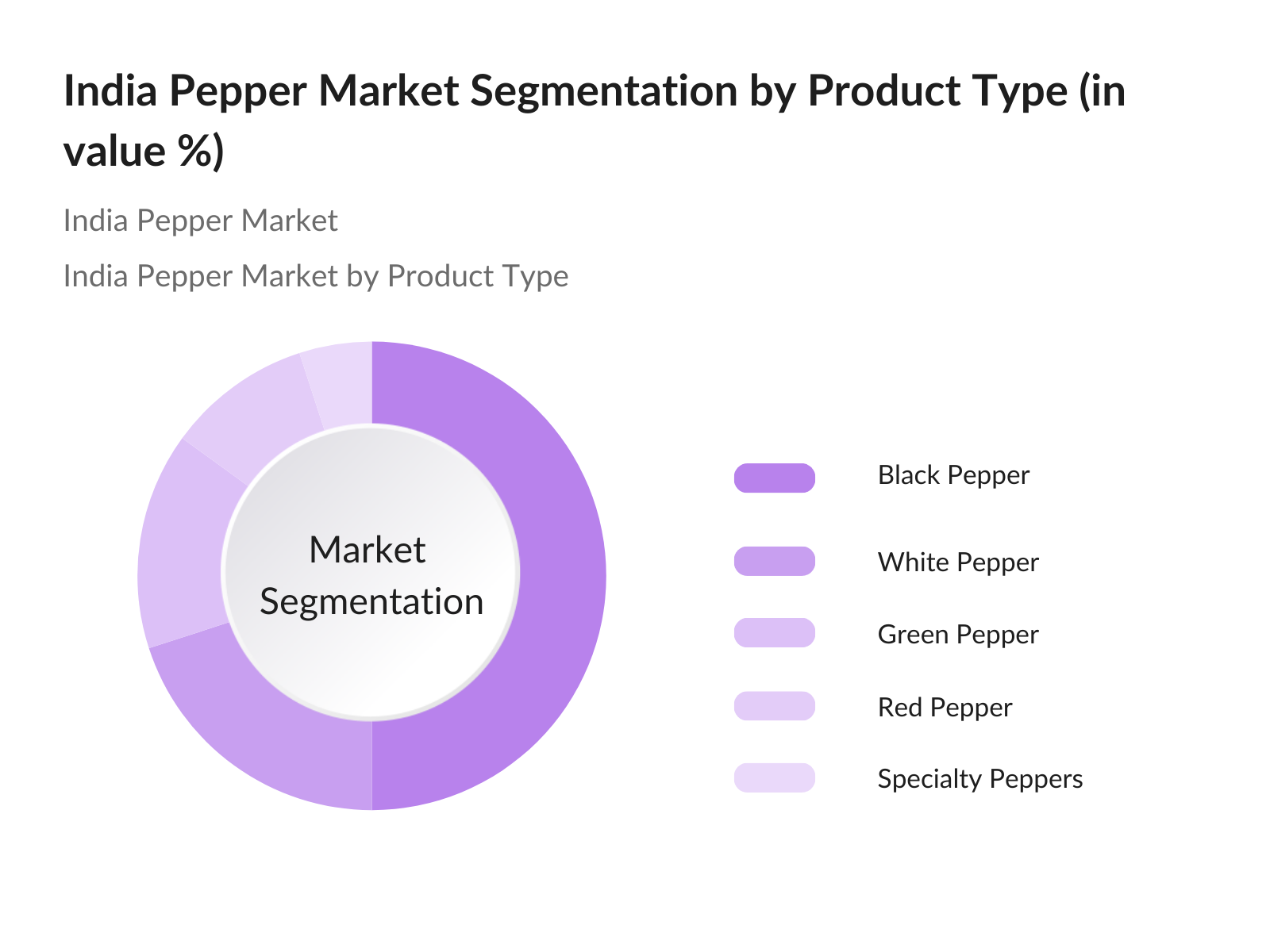
By Product Type: The Indias pepper market is segmented by product type into black pepper, white pepper, green pepper, red pepper, and specialty peppers like pink and long pepper. Black pepper holds a dominant market share due to its widespread use in both culinary and medicinal applications. The popularity of black pepper stems from its robust flavor, antioxidant properties, and its versatile use in food processing, snacks, and ready-to-eat meals. Its prominence is also driven by increasing consumer demand for premium, organic spices in domestic and export markets.
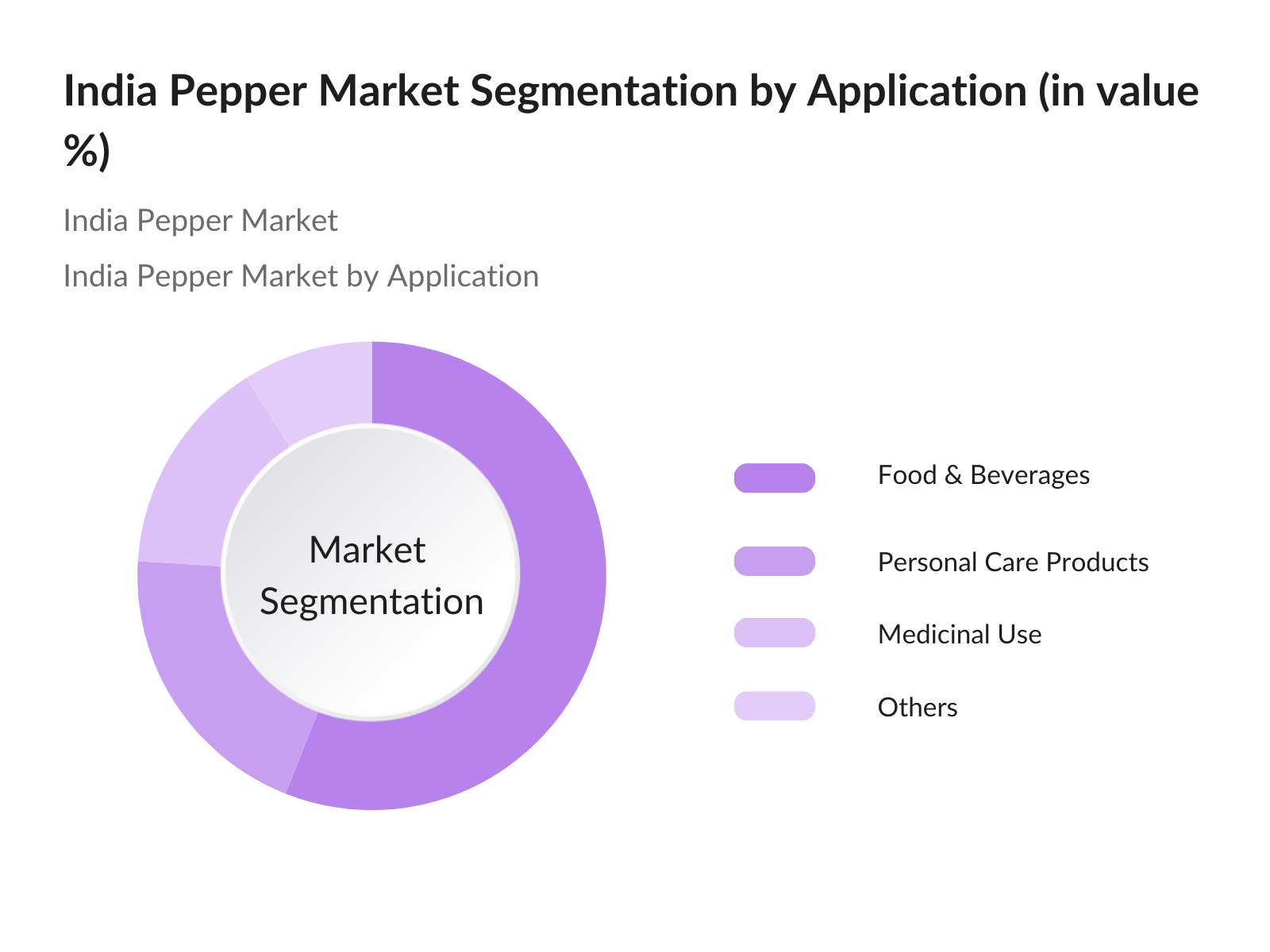
By Application: The pepper market is further segmented by application into food & beverages, personal care products, medicinal use, and others. The food & beverages segment dominates the market, This is attributed to the integral role of pepper in traditional Indian cooking, where it is used extensively for its pungent flavor and preservative qualities. Additionally, the growing trend towards organic and clean-label food products boosts demand for premium pepper in gourmet and health-focused food products.
The India pepper market is characterized by the dominance of a few major players that have built strong supply chains and expanded their operations globally. Local companies benefit from Indias long-standing expertise in spice cultivation, while international firms leverage advanced processing and marketing techniques to enhance their market position. The following table lists some of the major players in the market:
|
Company Name |
Established |
Headquarters |
No. of Employees |
Revenue |
Production Capacity |
Export Reach |
Sustainability Initiatives |
Certifications |
Research & Innovation |
|
Olam International |
1989 |
Singapore |
47,000 |
- |
- |
- |
- |
- |
- |
|
AVT Natural Products |
1925 |
Kochi, India |
5,000 |
- |
- |
- |
- |
- |
- |
|
The Indian Spice Company |
1970 |
Mumbai, India |
1,200 |
- |
- |
- |
- |
- |
- |
|
Everest Spices |
1981 |
Mumbai, India |
2,500 |
- |
- |
- |
- |
- |
- |
|
ITC Spices |
1910 |
Gurgaon, India |
36,000 |
- |
- |
- |
- |
- |
- |
Market Growth Drivers
Market Challenges:
Over the next five years, the India pepper market is projected to experience sustained growth, driven by increasing consumer demand for organic and sustainably sourced spices. The rise of gourmet cuisine and health-conscious eating habits is expected to boost the demand for premium pepper varieties. Additionally, advancements in pepper cultivation technology, such as precision agriculture, are likely to improve crop yields and quality, further strengthening Indias position as a leading pepper exporter.
Market Opportunities:
|
By Product Type |
Black Pepper White Pepper Green Pepper Red Pepper Specialty Peppers |
|
By Form |
Whole Pepper Powdered Pepper |
|
By Application |
Food & Beverages Personal Care Products Medical Use Industrial Applications |
|
By Nature |
Organic Conventional |
|
By Region |
North-East Midwest West Coast Southern States |
1.1 Definition and Scope
1.2 Market Taxonomy
1.3 Pepper Industry Value Chain
1.4 India Pepper Market Growth Rate and Key Developments
1.5 Regional and Global Market Overview
2.1 Historical Market Size and Revenue Analysis
2.2 Current Market Size (In Value and Volume)
2.3 Key Market Milestones and Year-on-Year Growth
3.1 Market Growth Drivers
3.1.1 Increasing Demand for Organic Spices
3.1.2 Growth in E-commerce and Export Opportunities
3.1.3 Rising Popularity of Indian Cuisine Globally
3.2 Market Restraints
3.2.1 Climate Change Impact on Crop Yield
3.2.2 Price Volatility and Supply Chain Fluctuations
3.3 Opportunities
3.3.1 Expansion into Premium and Organic Markets
3.3.2 Technological Advancements in Pepper Cultivation
3.4 Key Trends
3.4.1 Growing Focus on Sustainability and Ethical Sourcing
3.4.2 Rise in Demand for Processed and Packaged Pepper Products
3.5 Government Regulations (Market-specific compliance)
3.5.1 FSSAI Quality Standards for Spices
3.5.2 Export Regulations and Trade Barriers
4.1 By Product Type (In Value %)
4.1.1 Black Pepper
4.1.2 White Pepper
4.1.3 Green Pepper
4.1.4 Red Pepper
4.1.5 Specialty Peppers (Pink, Long, etc.)
4.2 By Form (In Value %)
4.2.1 Whole Pepper
4.2.2 Powdered Pepper
4.3 By Application (In Value %)
4.3.1 Food & Beverages
4.3.2 Personal Care Products
4.3.3 Medicinal Use
4.3.4 Industrial Applications
4.4 By Nature (In Value %)
4.4.1 Organic
4.4.2 Conventional
4.5 By Region (In Value %)
4.5.1 North India
4.5.2 South India (Key Pepper Cultivation Zones)
4.5.3 East India
4.5.4 West India
5.1 Detailed Profiles of Key Players
5.1.1 Olam International
5.1.2 AVT Natural Products
5.1.3 The Indian Spice Company
5.1.4 ITC Spices
5.1.5 Jayanti Group
5.1.6 Everest Spices
5.1.7 McCormick India
5.1.8 Vinkom Spices
5.1.9 Synthite Industries
5.1.10 Kancor Ingredients
5.1.11 DS Group
5.1.12 Pepper Delight
5.1.13 Bio Farms
5.1.14 Sakthi Masala
5.1.15 MTR Foods
5.2 Cross Comparison Parameters (Product Range, Export Capacity, Sustainable Practices, Market Share)
5.3 Market Share Analysis
5.4 Strategic Initiatives (Mergers, Acquisitions, Partnerships)
5.5 Investment Trends in the Pepper Sector
5.6 Government Incentives and Schemes for Pepper Cultivation
6.1 Export Destinations (Key Countries, Trade Volumes)
6.2 Import Sources and Statistics
6.3 Export-Import Growth Opportunities
7.1 Future Market Size Projections
7.2 Key Drivers of Future Market Growth (Shift to Organic, Expanding Applications)
8.1 TAM/SAM/SOM Analysis
8.2 White Space Opportunity Analysis
8.3 Entry Barriers and Success Factors for New Entrants
8.4 Marketing and Growth Strategies for Key Players
The research process begins by identifying the critical variables impacting the India Pepper Market, including production volumes, consumer trends, and export dynamics. This data is gathered through extensive desk research and the use of proprietary databases.
In this step, historical data is analyzed to create a detailed market model. Data on market volumes, demand fluctuations, and supply chains are evaluated to understand market trends and performance.
Market assumptions are validated through consultations with industry experts and stakeholders. Interviews and surveys are conducted to gather insights into operational challenges and emerging opportunities in the pepper market.
The final phase involves synthesizing all the collected data to create a comprehensive report. The output includes market forecasts, segmentation analysis, and strategic recommendations for stakeholders in the India pepper market.
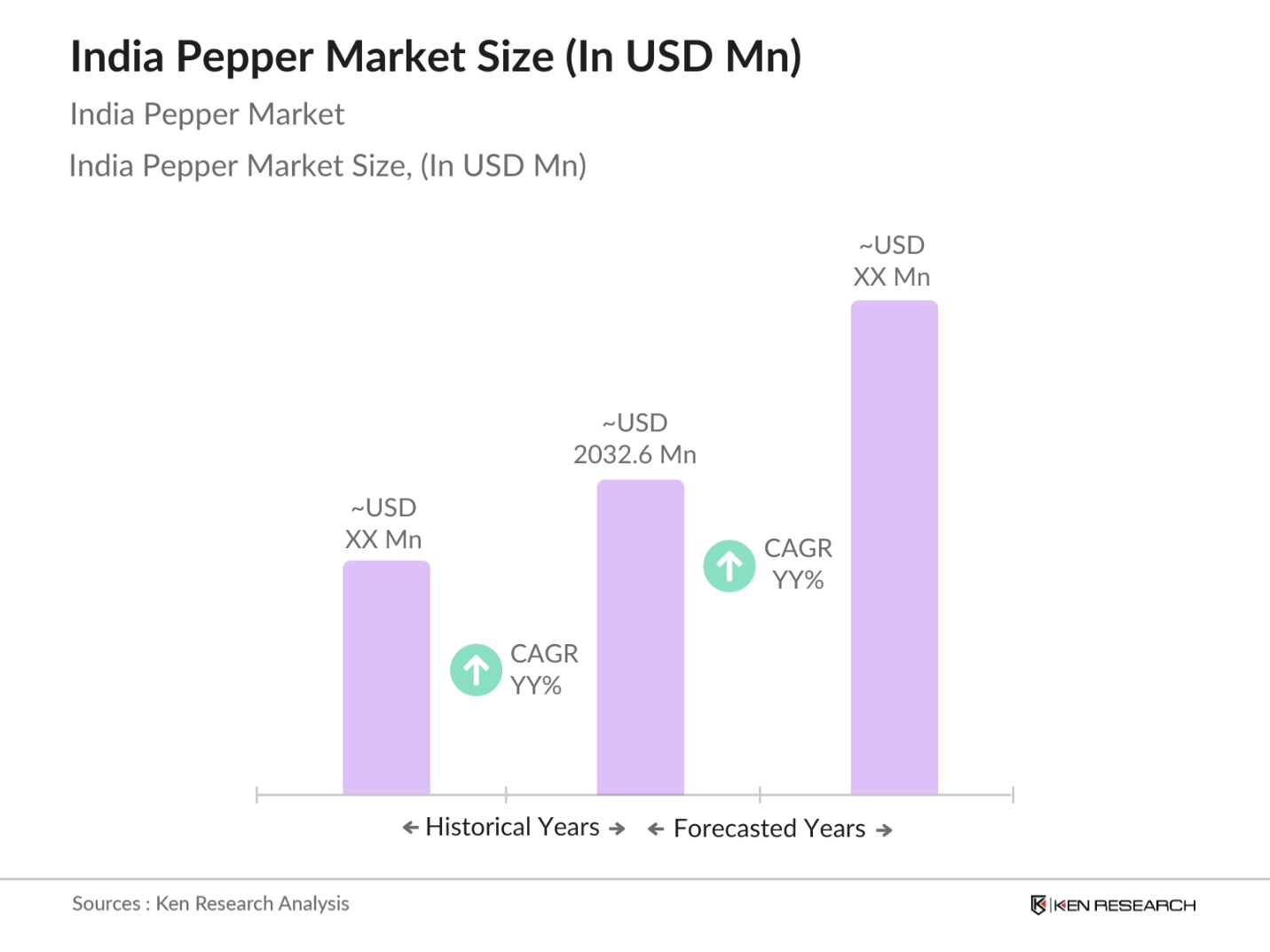
The India pepper market is valued at USD 2032.6 million, driven by the rising demand for organic and high-quality spices in both domestic and international markets.
Key challenges include climate variability affecting crop yields, price volatility, and competition from synthetic spices and flavor enhancers.
Major players in the India pepper market include Olam International, Everest Spices, AVT Natural Products, ITC Spices, and Synthite Industries.
The market is driven by the growing demand for organic spices, increased consumer awareness of health benefits, and the expansion of e-commerce platforms.

What makes us stand out is that our consultants follows Robust, Refine and Result (RRR) methodology. i.e. Robust for clear definitions, approaches and sanity checking, Refine for differentiating respondents facts and opinions and Result for presenting data with story

We have set a benchmark in the industry by offering our clients with syndicated and customized market research reports featuring coverage of entire market as well as meticulous research and analyst insights.

While we don't replace traditional research, we flip the method upside down. Our dual approach of Top Bottom & Bottom Top ensures quality deliverable by not just verifying company fundamentals but also looking at the sector and macroeconomic factors.

With one step in the future, our research team constantly tries to show you the bigger picture. We help with some of the tough questions you may encounter along the way: How is the industry positioned? Best marketing channel? KPI's of competitors? By aligning every element, we help maximize success.

Our report gives you instant access to the answers and sources that other companies might choose to hide. We elaborate each steps of research methodology we have used and showcase you the sample size to earn your trust.

If you need any support, we are here! We pride ourselves on universe strength, data quality, and quick, friendly, and professional service.