
India Power Management System Market Outlook to 2030
Region:India
Author(s):Samanyu
Product Code:KROD4934
Region:India
Author(s):Samanyu
Product Code:KROD4934
November 2024
84
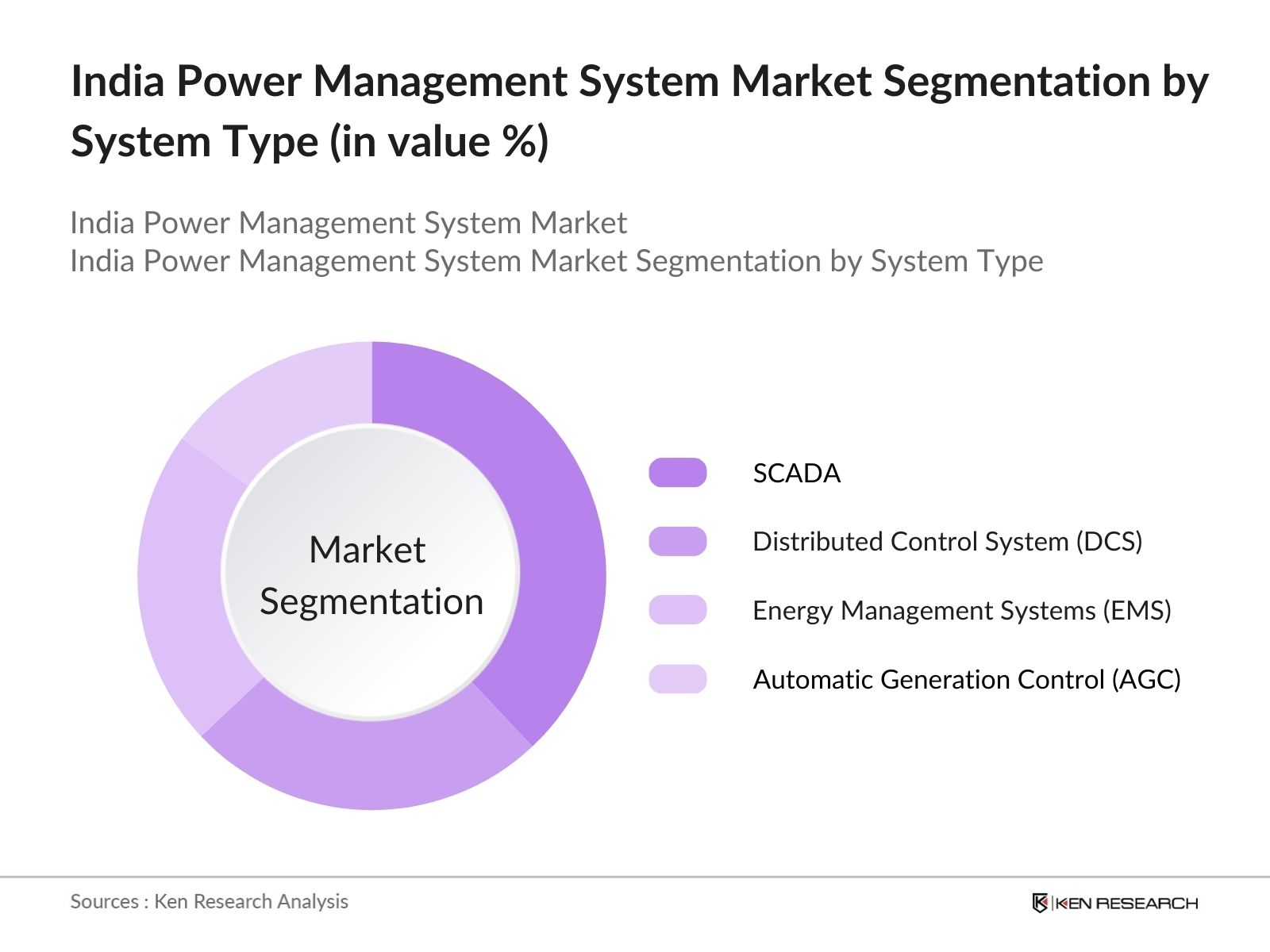
By System Type: The market is segmented by system type into Supervisory Control and Data Acquisition (SCADA), Distributed Control System (DCS), Energy Management Systems (EMS), and Automatic Generation Control (AGC). Among these, SCADA systems have a dominant market share due to their widespread adoption across industries for real-time monitoring and control of electrical grids. SCADA's ability to integrate with other power management solutions and its use in smart grids for ensuring energy efficiency contributes to its leadership in this segment.
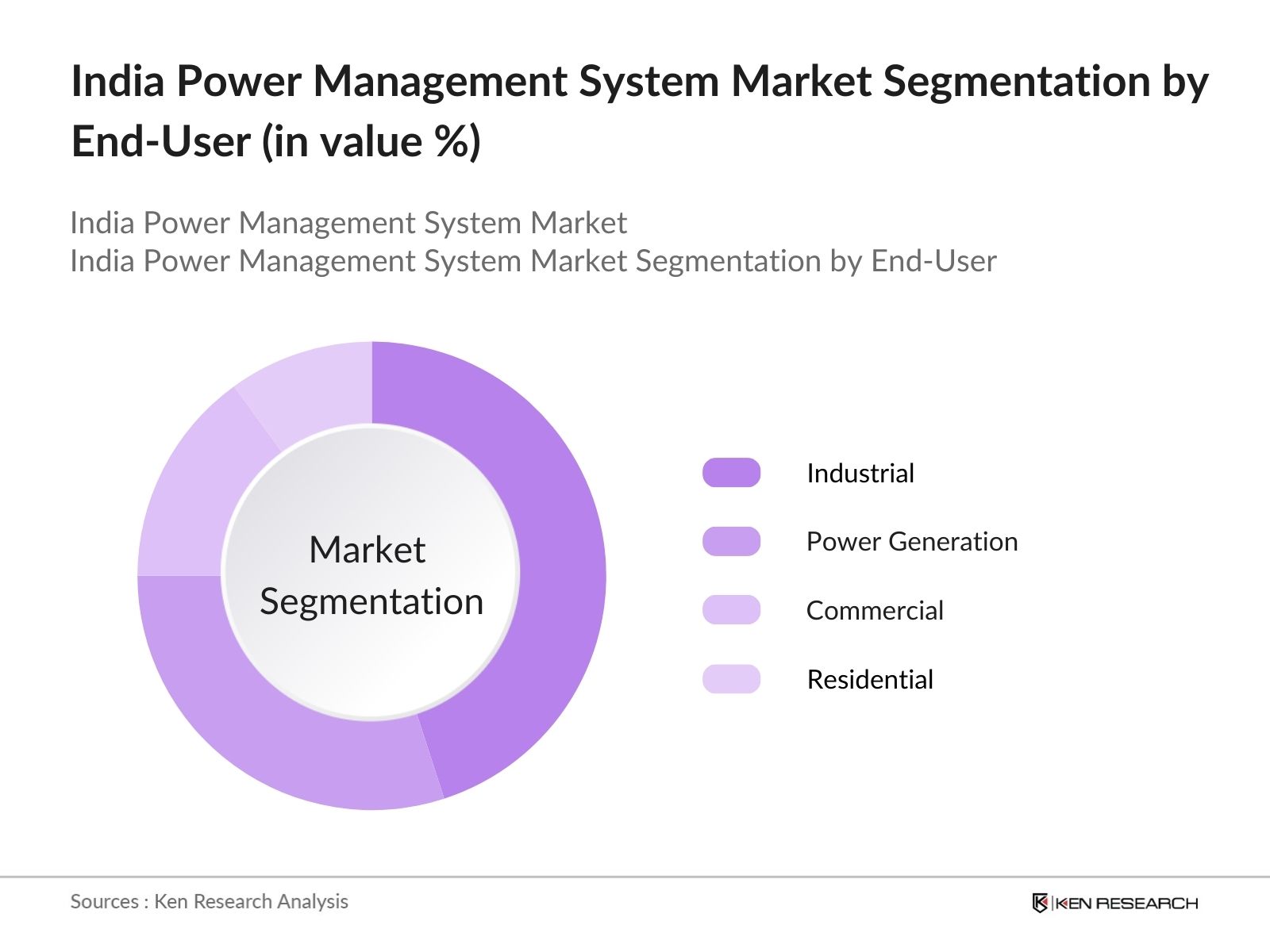
By End-User: The market is also segmented by end-user into power generation, industrial, commercial, and residential sectors. The industrial sector holds the largest market share due to its substantial energy consumption and the need for advanced power management solutions to optimize energy usage and reduce operational costs. Industries such as manufacturing, oil & gas, and mining heavily rely on power management systems to ensure uninterrupted energy supply and efficient power distribution.
The India Power Management System market is dominated by key players that offer advanced solutions for managing energy efficiency and ensuring grid stability. These companies leverage their expertise in automation, electrical systems, and software integration to provide comprehensive solutions across various industries.
|
Company Name |
Establishment Year |
Headquarters |
Revenue (2023) |
Employees |
Market Presence |
R&D Investment |
Solution Offering |
Global Presence |
|
Siemens Ltd |
1847 |
Germany |
||||||
|
ABB India Ltd |
1988 |
India |
||||||
|
Schneider Electric India Pvt. Ltd |
1836 |
France |
||||||
|
General Electric Company |
1892 |
USA |
||||||
|
Eaton Corporation |
1911 |
USA |
Over the next 5 years, the India Power Management System market is expected to witness substantial growth driven by continuous government support, the rise of renewable energy, and the increasing need for energy-efficient solutions in industrial and commercial sectors. Smart grid initiatives and the electrification of rural areas will further drive demand for advanced power management solutions.
The future market will likely see a higher adoption of decentralized power systems, smart meters, and energy storage solutions, alongside the development of cloud-based platforms for energy management. As India pushes towards meeting its renewable energy targets, there will be a growing need for intelligent systems that can balance load distribution and ensure efficient energy use.
|
By System Type |
SCADA DCS EMS AGC |
|
By End-User |
Power Generation Industrial Commercial Residential |
|
By Component |
Software Hardware Services |
|
By Application |
Voltage Control Load Balancing Power Quality Monitoring |
|
By Region |
North South East West |
1.1 Definition and Scope (Power Quality, Efficiency, Load Balancing)
1.2 Market Taxonomy (System Types, End-Users, Components)
1.3 Market Growth Rate (In Value, System Adoption Rate)
1.4 Market Segmentation Overview
2.1 Historical Market Size
2.2 Year-On-Year Growth Analysis
2.3 Key Market Developments and Milestones (Technology Upgrades, Government Initiatives, Grid Expansion)
3.1 Growth Drivers
3.1.1 Industrial Energy Demand
3.1.2 Smart Grid Adoption
3.1.3 Government Energy Efficiency Policies
3.1.4 Renewable Energy Integration
3.2 Restraints
3.2.1 High Initial Costs
3.2.2 Integration Challenges with Legacy Systems
3.2.3 Complex Regulatory Requirements
3.3 Opportunities
3.3.1 Growing Demand for Smart Meters
3.3.2 Energy-as-a-Service Model
3.3.3 Expansion in Tier-II and Tier-III Cities
3.4 Trends
3.4.1 Use of Artificial Intelligence for Load Management
3.4.2 Decentralized Power Systems
3.4.3 Cloud-Based Power Management Solutions
3.5 Government Regulations
3.5.1 Energy Efficiency
3.5.2 Renewable Energy Mandates
3.5.3 Electrification Projects
3.6 SWOT Analysis
3.7 Stake Ecosystem (Manufacturers, System Integrators, Utilities)
3.8 Porters Five Forces Competition Ecosystem
4.1 By System Type (In Value %)
4.1.1 Supervisory Control and Data Acquisition (SCADA)
4.1.2 Distributed Control System (DCS)
4.1.3 Energy Management Systems (EMS)
4.1.4 Automatic Generation Control (AGC)
4.2 By End-User (In Value %)
4.2.1 Power Generation
4.2.2 Industrial
4.2.3 Commercial
4.2.4 Residential
4.3 By Component (In Value %)
4.3.1 Software
4.3.2 Hardware
4.3.3 Services
4.4 By Application (In Value %)
4.4.1 Voltage Control
4.4.2 Load Balancing
4.4.3 Power Quality Monitoring
4.5 By Region (In Value %)
4.5.1 North
4.5.2 South
4.5.3 East
4.5.4 West
5.1 Detailed Profiles of Major Companies
5.1.1 Siemens Ltd
5.1.2 ABB India Ltd
5.1.3 Schneider Electric India Pvt. Ltd
5.1.4 General Electric Company
5.1.5 Emerson Process Management India Pvt. Ltd
5.1.6 Eaton Corporation
5.1.7 Mitsubishi Electric India Pvt. Ltd
5.1.8 Honeywell Automation India Ltd
5.1.9 Rockwell Automation India Pvt. Ltd
5.1.10 Larsen & Toubro (L&T) Electrical & Automation
5.1.11 Yokogawa India Ltd
5.1.12 Hitachi India Pvt. Ltd
5.1.13 Crompton Greaves Consumer Electricals Ltd
5.1.14 Fuji Electric India Pvt. Ltd
5.1..15 Bharat Heavy Electricals Limited (BHEL)
6.1 Market Share Analysis
6.2 Strategic Initiatives (Product Launches, Joint Ventures, Expansions)
6.3 Mergers and Acquisitions
6.4 Investment Analysis
6.5 Venture Capital Funding
6.6 Government Grants
6.7 Private Equity Investments
7.1 Compliance Requirements (BIS Standards, Electrical Safety)
7.2 Certification Processes (IEC, IS)
8.1 Future Market Size Projections
8.2 Key Factors Driving Future Market Growth (Electrification, Infrastructure Projects, Smart City Initiatives)
9.1 By System Type (In Value %)
9.2 By End-User (In Value %)
9.3 By Component (In Value %)
9.4 By Application (In Value %)
9.5 By Region (In Value %)
10.1 Total Addressable Market (TAM)/Serviceable Available Market (SAM) Analysis
10.2 Customer Segmentation Analysis
10.3 Marketing Initiatives
10.4 White Space Opportunity Analysis
Disclaimer Contact Us
In the initial phase, we identify critical variables influencing the India Power Management System market by mapping out the major stakeholders such as power generation companies, grid operators, and industrial consumers. Secondary research is conducted using proprietary databases and public records to gather relevant industry data.
In this phase, historical data on market performance is analyzed, including the adoption of power management systems across various sectors. Data from industry reports and government records is used to assess market penetration and sectoral revenue generation.
To validate our market hypotheses, we conduct interviews with industry experts from leading power management companies and regulatory bodies. These consultations help in refining our market estimates and provide operational insights into system adoption and usage trends.
In the final step, we engage with power management system manufacturers to gather detailed information on product performance, customer preferences, and market trends. This helps verify the data collected through secondary sources and ensures the accuracy of the market projections.
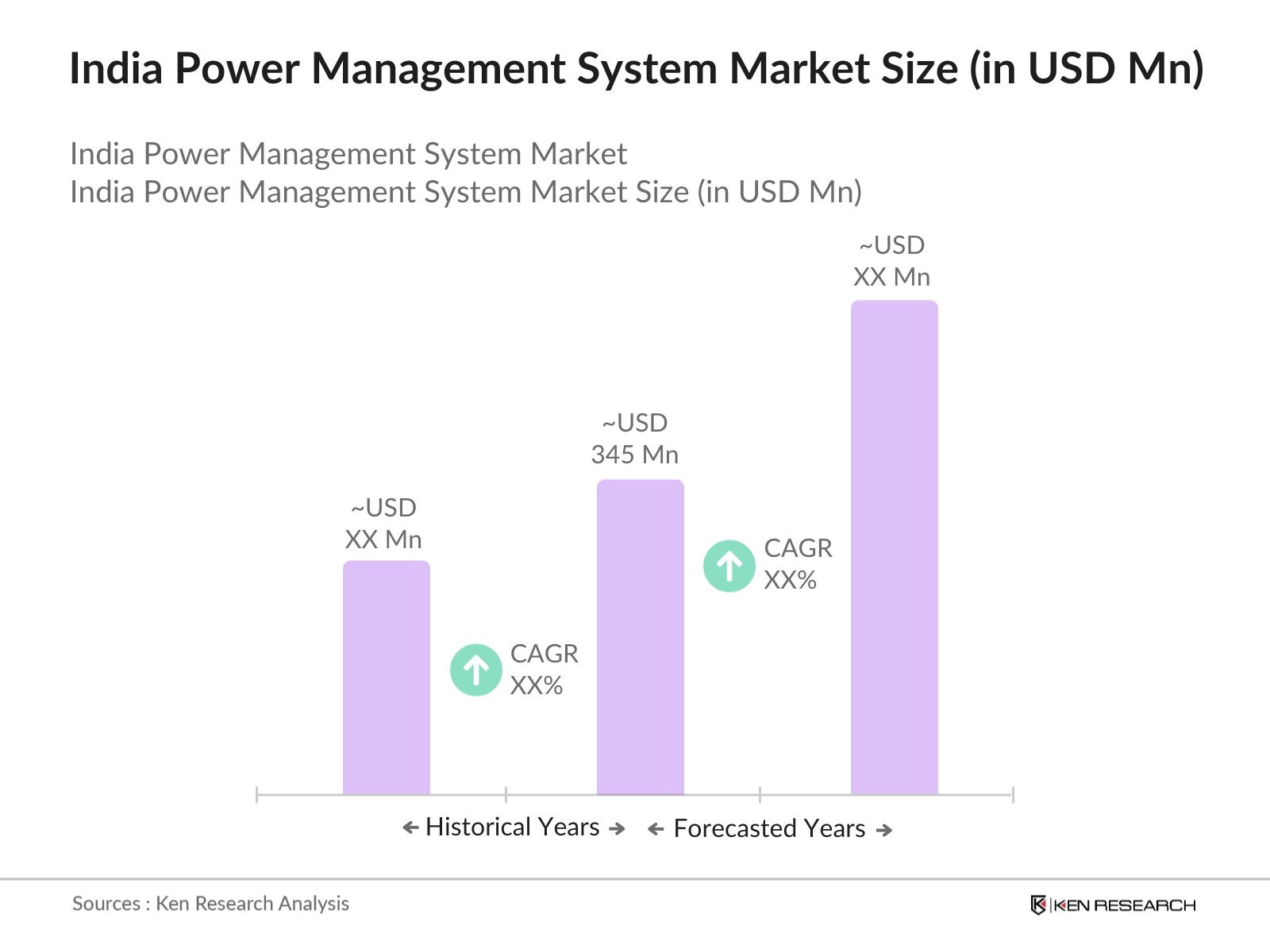
The India Power Management System market is valued at USD 345 Mn, driven by industrial expansion, increasing power consumption, and the adoption of renewable energy solutions.
Challenges in India Power Management System include high initial costs of deployment, integration issues with legacy systems, and the complexity of navigating regulatory requirements for power infrastructure.
Key players in India Power Management System include Siemens Ltd, ABB India Ltd, Schneider Electric India Pvt. Ltd, General Electric Company, and Eaton Corporation, who lead in providing comprehensive power management solutions.
The India Power Management System is driven by rising energy consumption in industrial sectors, government initiatives to improve energy efficiency, and the integration of smart grid technologies to manage energy supply and demand effectively.

What makes us stand out is that our consultants follows Robust, Refine and Result (RRR) methodology. i.e. Robust for clear definitions, approaches and sanity checking, Refine for differentiating respondents facts and opinions and Result for presenting data with story

We have set a benchmark in the industry by offering our clients with syndicated and customized market research reports featuring coverage of entire market as well as meticulous research and analyst insights.

While we don't replace traditional research, we flip the method upside down. Our dual approach of Top Bottom & Bottom Top ensures quality deliverable by not just verifying company fundamentals but also looking at the sector and macroeconomic factors.

With one step in the future, our research team constantly tries to show you the bigger picture. We help with some of the tough questions you may encounter along the way: How is the industry positioned? Best marketing channel? KPI's of competitors? By aligning every element, we help maximize success.

Our report gives you instant access to the answers and sources that other companies might choose to hide. We elaborate each steps of research methodology we have used and showcase you the sample size to earn your trust.

If you need any support, we are here! We pride ourselves on universe strength, data quality, and quick, friendly, and professional service.