
Indonesia Air Quality Monitoring System Market Outlook to 2030
Region:Asia
Author(s):Naman Rohilla
Product Code:KROD730
Region:Asia
Author(s):Naman Rohilla
Product Code:KROD730
October 2024
92
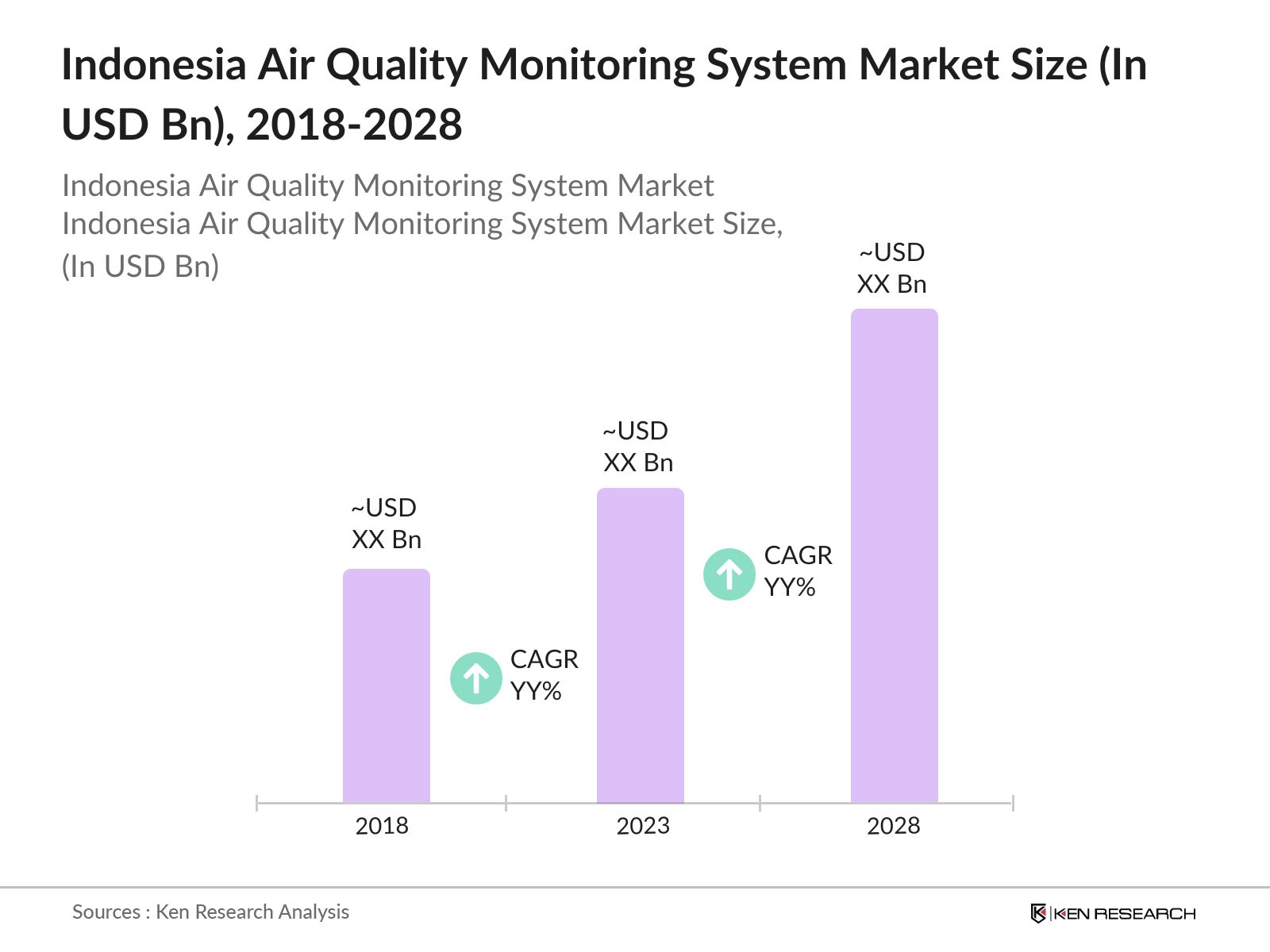
The Indonesia Air Quality Monitoring System Market has shown substantial growth which is reflected in the global air quality monitoring system market valued at USD 5 billion in 2023. This growth is driven by increasing awareness of air pollution's health impacts, government regulations, and the need for accurate air quality data.
The key players in the Indonesia Air Quality Monitoring System Market include Thermo Fisher Scientific, Horiba Ltd., Teledyne Technologies Inc., Siemens AG, and General Electric. These companies dominate the market due to their advanced technologies, extensive product portfolios, and strong distribution networks.
In 2023, Thermo Fisher Scientific partnered with the Indonesian government to deploy 100 new air quality monitoring stations in Jakarta. This project, valued at USD 10 million, aims to enhance the city’s air quality data infrastructure and provide real-time monitoring capabilities.
Jakarta and Surabaya are the dominant regions in the Indonesia Air Quality Monitoring System Market. Jakarta, being the capital city, has the highest concentration of monitoring stations and Surabaya is driven by its large industrial base and government initiatives to combat pollution.
Indonesia's Air Quality Monitoring System market is segmented into product type, end-user, and region.
By Product Type: The market is segmented by product type into Indoor Monitors, Outdoor Monitors, and Portable Monitors. In 2023, indoor monitors dominated the market due to the increasing adoption in commercial and residential buildings. The growing awareness of indoor air quality's impact on health and productivity drives this segment's dominance.

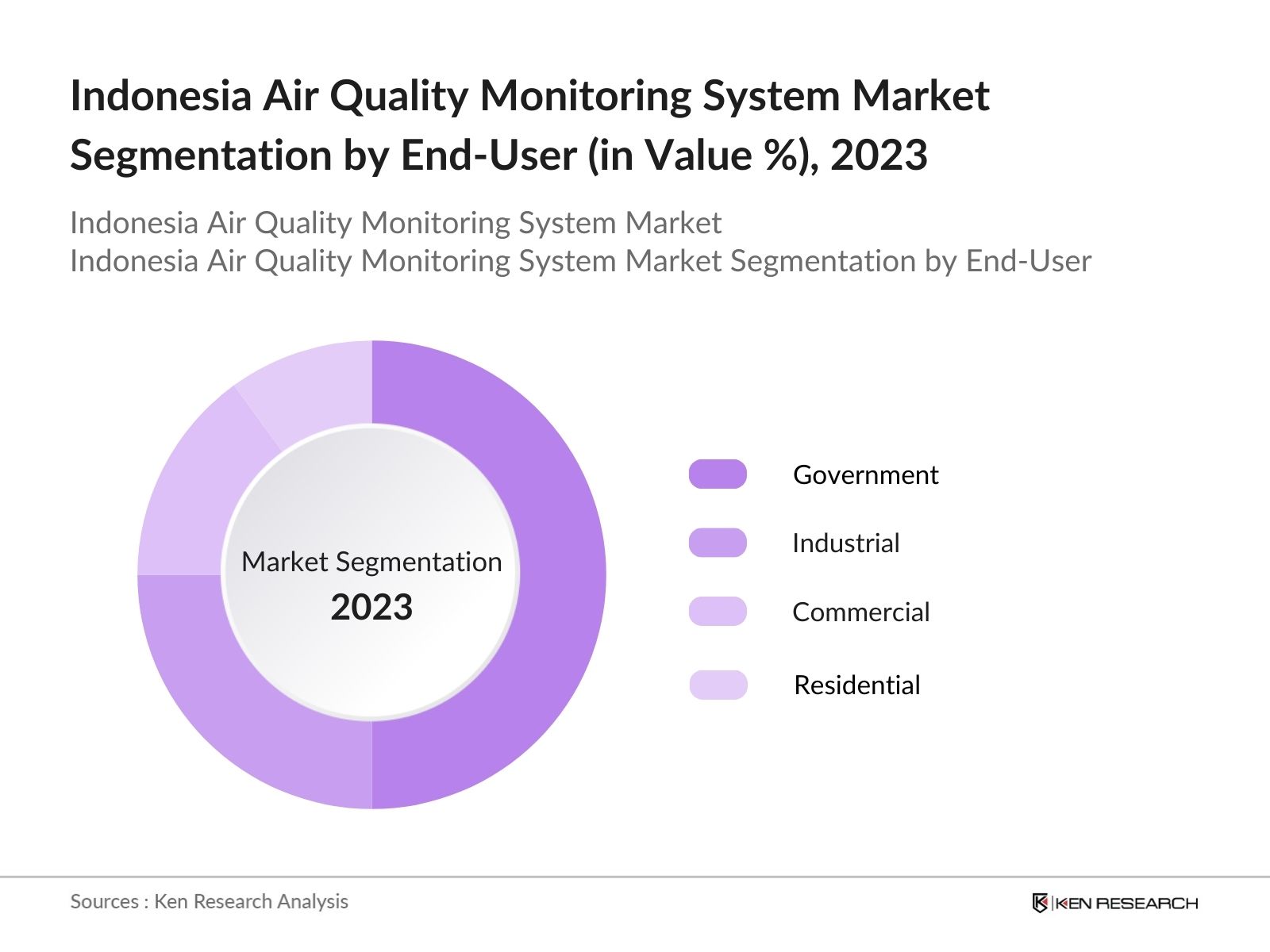
By End-User: The market is segmented by end-user into Government, Industrial, Commercial, and Residential sectors. In 2023, the government sector dominated the market, driven by large-scale projects to monitor and control air pollution. Government policies and funding play a crucial role in this segment's dominance.
By Region: The market is segmented by region into North, South, East, and West. In 2023, East Indonesia dominated the market due to government initiatives to monitor air quality in this region, particularly in Surabaya, driving the segment's growth.
|
Company Name |
Establishment Year |
Headquarters |
|
Thermo Fisher Scientific |
1956 |
Waltham, USA |
|
Horiba Ltd. |
1945 |
Kyoto, Japan |
|
Teledyne Technologies |
1960 |
Thousand Oaks, USA |
|
Siemens AG |
1847 |
Munich, Germany |
|
General Electric |
1892 |
Boston, USA |
Siemens AG: In 2023, Siemens AG launched a new air quality monitoring solution integrated with smart city infrastructure in Surabaya. This project, supported by a USD 5 million investment, aims to provide comprehensive air quality data and support urban air quality management initiatives.
Teledyne Technologies Inc.: In 2023, Teledyne Technologies Inc. expanded its presence in Indonesia by opening a new regional office in Jakarta. This expansion aims to better serve the growing market demand for air quality monitoring solutions and provide local support and services.
Industrial Expansion: According to the Indonesian Ministry of Industry, industrial output in 2023 reached IDR 3,500 trillion, leading to a surge in demand for advanced monitoring solutions to ensure compliance and reduce pollution levels. In 2023, Indonesia's industrial sector saw substantial growth with the establishment of 500 new manufacturing units. The increase in industrial activities has heightened the demand for air quality monitoring systems to comply with environmental regulations and monitor emissions.
Public Health Concerns: In 2023, the World Health Organization reported that respiratory diseases caused by poor air quality affected over 1.5 million people in Indonesia, resulting in healthcare costs and loss of productivity. This public health concern has driven both governmental and private sector investments in air quality monitoring to mitigate health risks.
International Funding and Support: In 2023, the Asian Development Bank (ADB) approved a USD 200 million loan to support Indonesia’s initiatives for improving air quality monitoring infrastructure. This funding is aimed at enhancing the country’s capacity to monitor and manage air pollution, thereby driving the growth of the air quality monitoring systems market.
High Costs of Advanced Systems: In 2023, the average cost of installing a comprehensive air quality monitoring system in Indonesia was around IDR 700 million. This high cost makes it difficult for small and medium-sized enterprises to adopt these systems, limiting market penetration.
Lack of Skilled Personnel: The operation and maintenance of sophisticated air quality monitoring systems require skilled personnel. It was reported by the Indonesian Ministry of Environment and Forestry in their 2023 annual report on environmental management and sustainability that Indonesia faced a shortage of around 2,000 trained professionals in this field. This skill gap poses a challenge to the effective deployment and utilization of air quality monitoring systems across the country.
National Air Quality Monitoring Program: In 2023, the Indonesian government launched the National Air Quality Monitoring Program, allocating IDR 2 trillion to install 500 new monitoring stations across the country. This initiative aims to provide comprehensive air quality data and support regulatory compliance and public awareness efforts.
Clean Air Initiative: In 2023, the Clean Air Initiative was introduced with a budget of IDR 1.5 trillion. This program focuses on urban areas with high pollution levels, aiming to reduce particulate matter and nitrogen dioxide levels by 15,000 tons annually through the deployment of advanced monitoring systems.
Indonesia's Air Quality Monitoring System market is expected to grow in the coming years. The market is also likely to shift towards more organized with established players and online platforms expanding their reach.
|
By Product Type |
Indoor Monitors Outdoor Monitors Portable Monitors |
|
By End-User |
Government Industrial Commercial Residential |
|
By Region |
North South East West |
Government and Regulatory Bodies
Banks and Financial Institutes
Investors and Venture Capitalists
Industrial Manufacturing Companies
Air Purifier Manufacturers
Thermo Fisher Scientific
Horiba Ltd.
Teledyne Technologies Inc.
Siemens AG
General Electric
Aeroqual Ltd.
Ecotech Pty Ltd.
3M Company
Honeywell International Inc.
Emerson Electric Co.
Agilent Technologies Inc.
Vaisala Oyj
TSI Incorporated
Airthings AS
Palas GmbH
1.1 Indonesia Air Quality Monitoring System Market Taxonomy
3.1 Indonesia Air Quality Monitoring System Market Growth Drivers
3.2 Indonesia Air Quality Monitoring System Market Challenges and Issues
3.3 Indonesia Air Quality Monitoring System Market Trends and Development
3.4 Indonesia Air Quality Monitoring System Market Government Regulation
3.5 Indonesia Air Quality Monitoring System Market SWOT Analysis
3.6 Indonesia Air Quality Monitoring System Market Stake Ecosystem
3.7 Indonesia Air Quality Monitoring System Market Competition Ecosystem
4.1 Indonesia Air Quality Monitoring System Market Segmentation by Product Type (in Value %), 2023
4.2 Indonesia Air Quality Monitoring System Market Segmentation by End-User (in Value %), 2023
4.3 Indonesia Air Quality Monitoring System Market Segmentation by Region (in Value %), 2023
5.1 Indonesia Air Quality Monitoring System Market Cross-Comparison (no. of employees, company overview, business strategy, USP, recent development, operational parameters, financial parameters and advanced analytics)
7.1 Indonesia Air Quality Monitoring System Market Segmentation by Product Type (in Value %), 2028
7.2 Indonesia Air Quality Monitoring System Market Segmentation by End-User (in Value %), 2028
7.3 Indonesia Air Quality Monitoring System Market Segmentation by Region (in Value %), 2028
8.1 Indonesia Air Quality Monitoring System Market TAM/SAM/SOM Analysis
8.2 Indonesia Air Quality Monitoring System Market Customer Cohort Analysis
8.3 Indonesia Air Quality Monitoring System Market Marketing Initiatives
8.4 Indonesia Air Quality Monitoring System Market White Space Opportunity Analysis
Ecosystem creation for all the major entities and referring to multiple secondary and proprietary databases to perform desk research around the market to collate industry-level information.?
Collating statistics on the Indonesia air quality monitoring system market over the years, and analyzing the penetration of marketplaces as well as the ratio of service providers to compute the revenue generated for the market. We will also review service quality statistics to understand the revenue generated which can ensure accuracy behind the data points shared. ?
Building market hypotheses and conducting CATIs with industry experts belonging to different companies to validate statistics and seek operational and financial information from company representatives.?
Our team will approach multiple software-developing companies and understand the nature of product segments and sales, consumer preference and other parameters, which will support us validate statistics derived through the bottom-to-top approach from the software-developing companies.
The Indonesia Air Quality Monitoring System Market has shown substantial growth which is reflected in the global air quality monitoring system market valued at USD 5 billion in 2023. This growth is driven by increasing awareness of air pollution's health impacts, government regulations, and the need for accurate air quality data.
The key players in the Indonesia Air Quality Monitoring System (NLG) Market include Thermo Fisher Scientific, Horiba Ltd., Teledyne Technologies Inc., Siemens AG, and General Electric. These companies dominate the market due to their advanced technologies, extensive product portfolios, and strong distribution networks.
The growth drivers of the Indonesia Air Quality Monitoring System Market include industrial expansion, stringent government regulations, increased public health concerns, and substantial international funding to enhance air quality monitoring infrastructure and reduce pollution levels.
The Indonesia Air Quality Monitoring System Market faces challenges such as high costs of advanced systems, a shortage of skilled personnel, data accuracy and reliability issues, and infrastructure limitations, which hinder comprehensive monitoring coverage and effective deployment.

What makes us stand out is that our consultants follows Robust, Refine and Result (RRR) methodology. i.e. Robust for clear definitions, approaches and sanity checking, Refine for differentiating respondents facts and opinions and Result for presenting data with story

We have set a benchmark in the industry by offering our clients with syndicated and customized market research reports featuring coverage of entire market as well as meticulous research and analyst insights.

While we don't replace traditional research, we flip the method upside down. Our dual approach of Top Bottom & Bottom Top ensures quality deliverable by not just verifying company fundamentals but also looking at the sector and macroeconomic factors.

With one step in the future, our research team constantly tries to show you the bigger picture. We help with some of the tough questions you may encounter along the way: How is the industry positioned? Best marketing channel? KPI's of competitors? By aligning every element, we help maximize success.

Our report gives you instant access to the answers and sources that other companies might choose to hide. We elaborate each steps of research methodology we have used and showcase you the sample size to earn your trust.

If you need any support, we are here! We pride ourselves on universe strength, data quality, and quick, friendly, and professional service.