
Indonesia Bamboos Market Outlook to 2030
Region:Asia
Author(s):Shubham Kashyap
Product Code:KROD7938
December 2024
99
About the Report
Indonesia Bamboos Market Overview
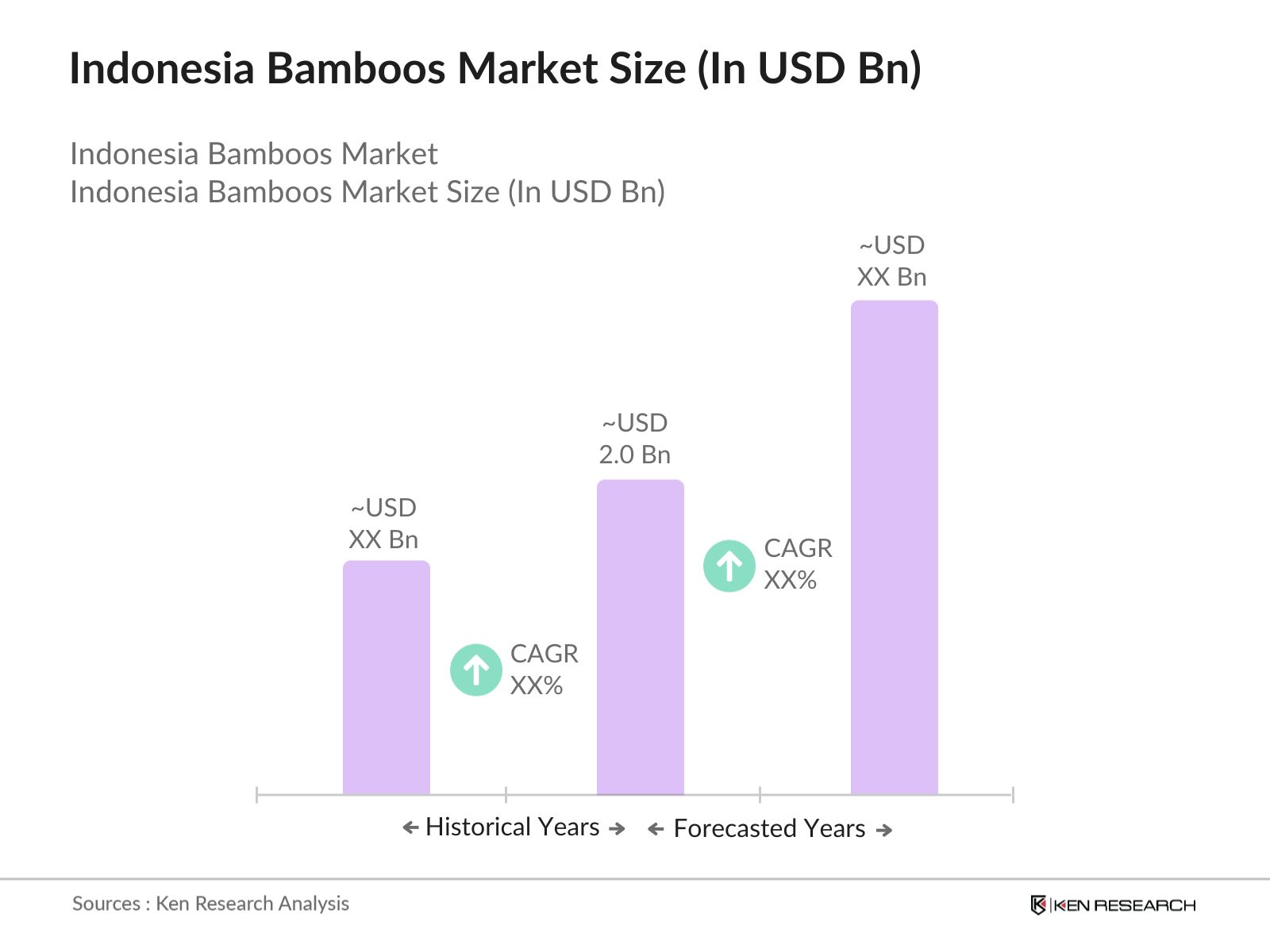
- The Indonesia Bamboos Market, valued at USD 2.0 billion, is experiencing substantial growth driven by the rising demand for sustainable materials and increased consumer awareness around eco-friendly products. Bamboos versatility allows it to be used across construction, furniture, and packaging industries, making it an ideal replacement for traditional wood and plastic. This growth is further supported by government incentives promoting bamboo cultivation and sustainable production practices, driving demand for products such as bamboo planks, fiber, and veneer.
- Dominance in the Indonesia Bamboos Market is most notable in regions such as Java, Sumatra, and Bali, which benefit from favorable climate conditions and an established infrastructure for bamboo processing and distribution. Java, in particular, leads in bamboo production due to its fertile soil, efficient processing facilities, and robust local demand for bamboo-based products in construction and home dcor. The presence of well-organized distribution networks in these regions ensures a steady supply, catering to both domestic and export markets.
- Indonesia has introduced stricter regulations on bamboo farming to ensure sustainable practices. The IMF reports that these regulations focus on conservation in areas of Java and Sumatra, where bamboo farming has environmental implications. These policies mandate responsible land use and restrict excessive harvesting, supporting biodiversity and soil health. This is part of a broader agenda to integrate sustainable agricultural practices across Indonesia.
Indonesia Bamboos Market Segmentation
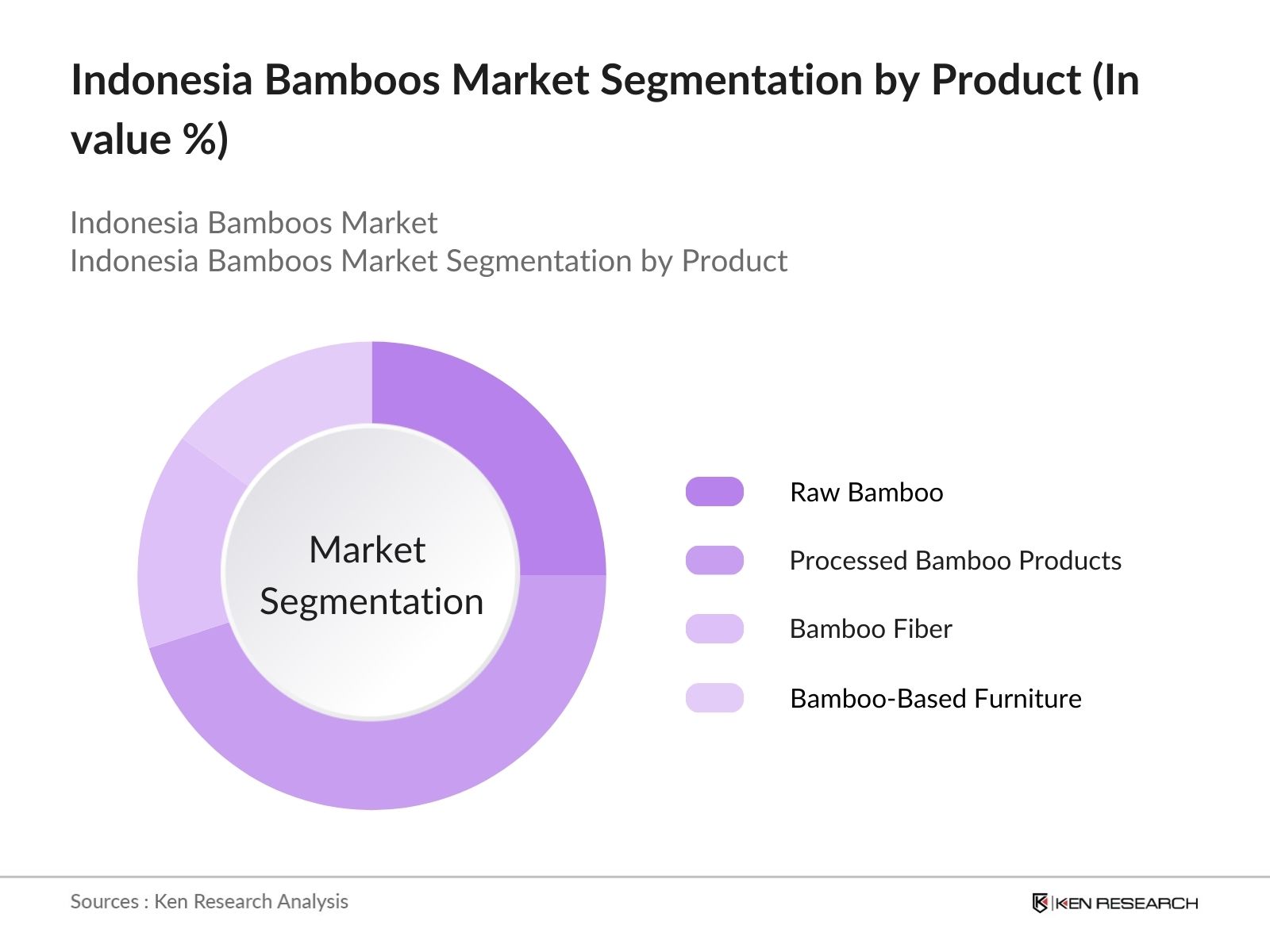
- By Product Type: The market is segmented by product type into raw bamboo, processed bamboo products, bamboo fiber, and bamboo-based furniture. Recently, processed bamboo products hold a dominant market share within the product type segmentation. This segments dominance is due to its broad applications in construction, furniture, and packaging. Processed bamboo products offer durability and aesthetic appeal, positioning them as preferred choices for urban developers and consumers focused on sustainability. With companies like Java Bamboo and Bali Bamboo Creations leading the market, processed bamboo continues to expand its presence in both local and export markets.
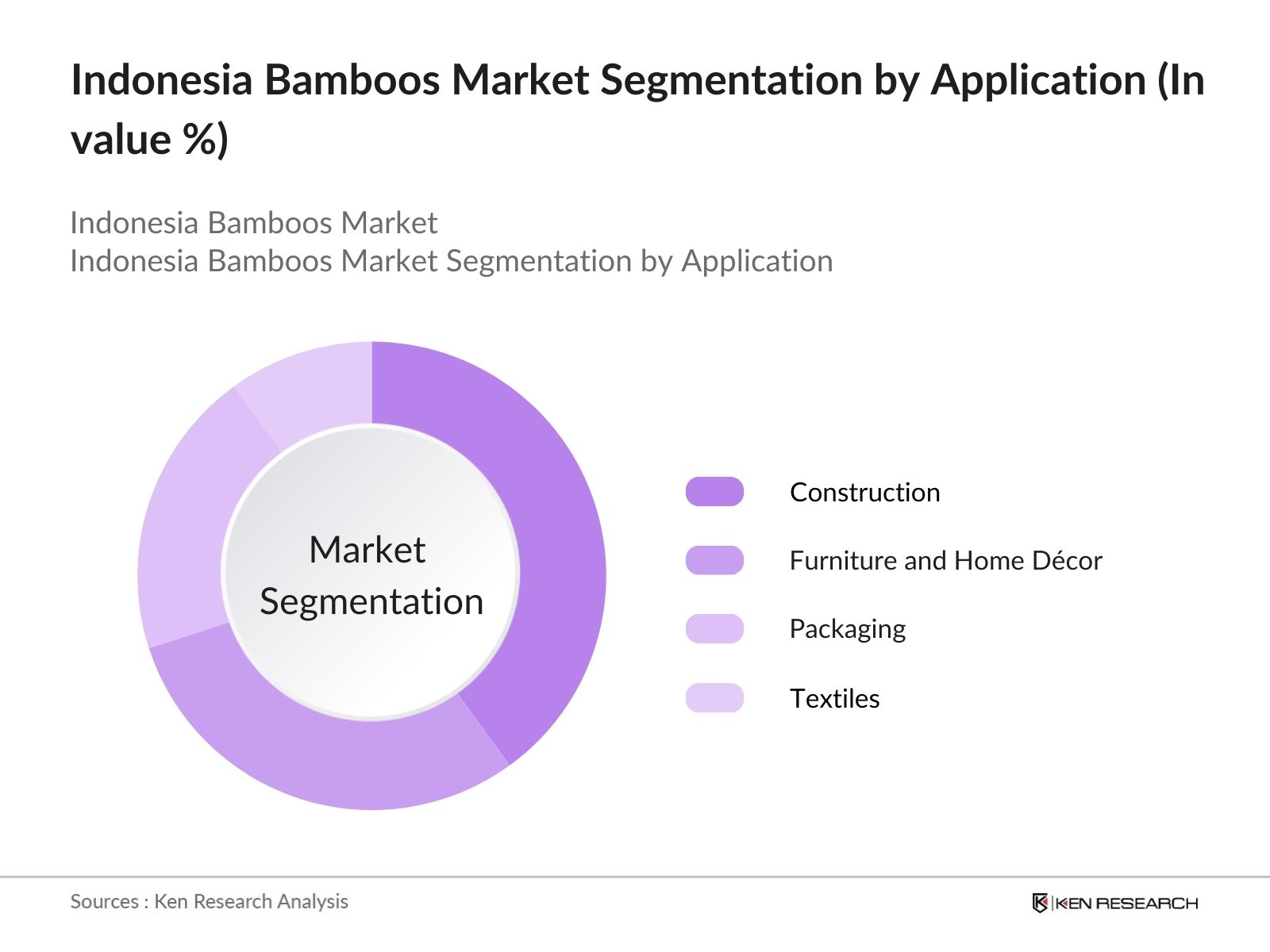
- By Application: The market is segmented by application into construction, furniture and home dcor, packaging, and textiles. Construction has emerged as a leading segment due to bamboos strength and cost-effectiveness, which make it a suitable material for housing and commercial projects. Bamboo is used widely in traditional and modern construction projects, meeting the demand for sustainable building materials. Companies like PT Bamboo House Indonesia and Green School Bamboo have capitalized on this trend, offering high-quality, durable bamboo products for construction that align with sustainable urban planning initiatives.
Indonesia Bamboos Market Competitive Landscape
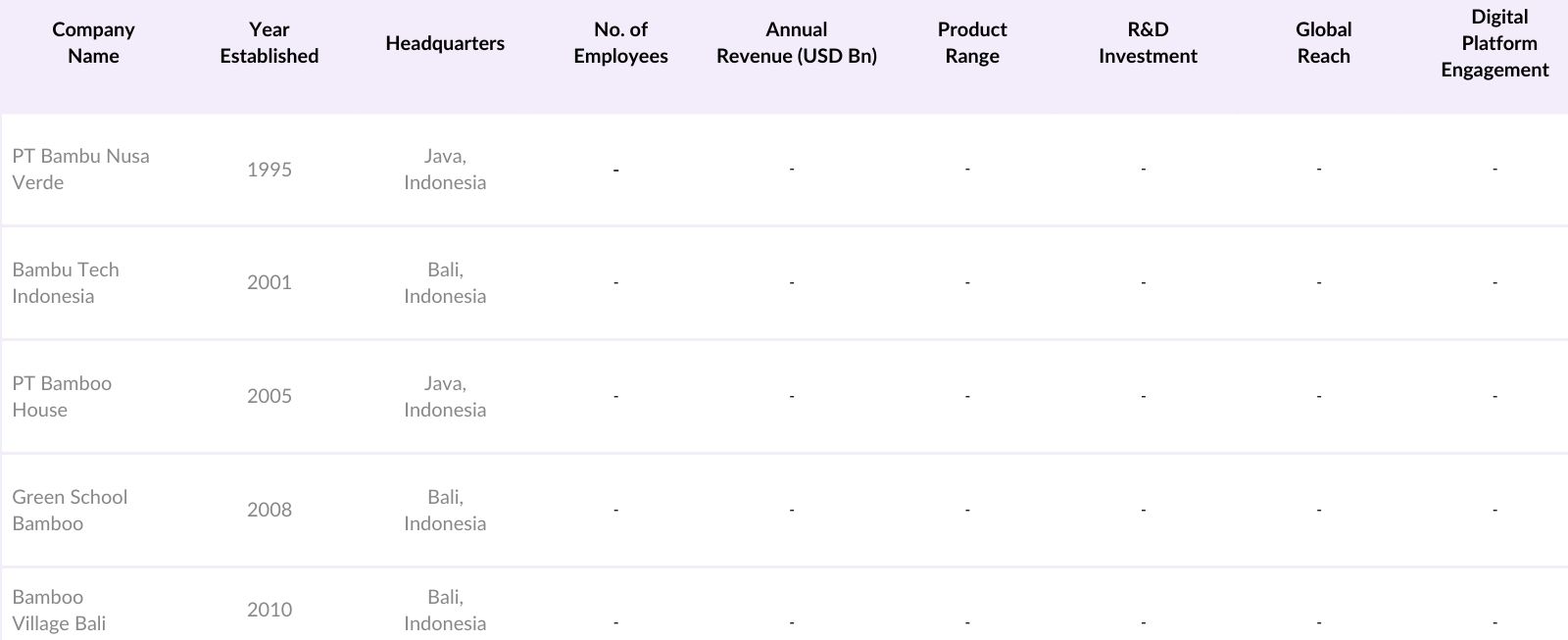
The Indonesia Bamboos Market is highly competitive, with a mix of local companies and new entrants focusing on sustainable practices to attract eco-conscious consumers. Leading companies such as PT Bambu Nusa Verde, Bambu Tech Indonesia, and PT Bamboo House Indonesia have strengthened their positions by adopting innovative production techniques, investing in branding, and expanding distribution channels. The competitive landscape highlights these companies' commitment to sustainability, making them preferred suppliers in the domestic and international markets.
Indonesia Bamboos Market Analysis
Growth Drivers
- Rising Demand for Sustainable Products: Increased awareness around sustainable practices and eco-friendly materials is driving consumer interest in bamboo-based products. According to the Indonesian Ministry of Environment, bamboos carbon footprint is substantially lower than that of conventional wood, making it a preferred material for environmentally conscious consumers. This shift in preference towards sustainable materials is primarily observed in urban areas like Jakarta and Surabaya, where the population exceeds 10 million, reflects broader ecological trends observed across Southeast Asia.
- Government Support for Bamboo Farming: The Indonesian government has introduced several initiatives to encourage bamboo farming, positioning it as an economically viable crop. These incentives include subsidies for bamboo plantation, access to technical resources, and investment support. Such policies ensure a steady supply of bamboo raw materials, benefiting local producers and stimulating market growth. Additionally, government-led workshops and training programs are helping farmers adopt best practices in bamboo cultivation.
- Expansion in Construction and Furniture Industries: Indonesia's construction sector, which reported a 5% increase in demand for green materials in 2024, now embraces bamboo for its sustainability and durability. Bamboo-based furniture exports surged substantially in 2023, with Jakarta and Surabaya emerging as key hubs. Local initiatives are also fostering community-led bamboo farming, providing resources and training for sustainable cultivation, further supporting eco-friendly construction practices.
Market Challenges
- Inconsistent Quality Standards: Bamboo quality varies significantly depending on cultivation techniques and regional differences, creating inconsistencies in the final product. This lack of uniform quality poses challenges for companies trying to maintain a steady supply of high-quality bamboo for manufacturing. Although industry associations are working towards establishing standardized practices, achieving consistent quality remains a challenge for both local producers and exporters.
- Competition from Substitute Materials: Bamboo faces competition from other sustainable alternatives, such as recycled wood and metal. While bamboo is valued for its eco-friendliness, materials like recycled wood offer similar environmental benefits and are often preferred for certain applications due to their durability. This competition limits bamboos growth potential, especially in regions where cost-effective substitutes are readily available.
Indonesia Bamboos Market Future Outlook
The Indonesia Bamboos Market is poised for growth in the coming years, with a forecasted increase in demand across multiple sectors, including construction, packaging, and textiles. Government support for bamboo farming and rising global interest in sustainable products will contribute to this growth. As consumer demand for eco-friendly alternatives continues to increase, companies are expected to explore innovative uses for bamboo, expanding its applications within Indonesia and international markets.
Future Market Opportunities
- Expansion of Bamboo Textiles: The demand for eco-friendly textiles is on the rise, and bamboo fibers offer a sustainable alternative to cotton and synthetic fibers. With support from the Indonesian Ministry of Industry, bamboo textile manufacturing is expected to grow, driven by consumer demand for breathable, sustainable fabrics. This expansion offers manufacturers an opportunity to cater to both domestic and international markets that are looking for sustainable textile options.
- Growing Export Potential to ASEAN Markets: Indonesias bamboo products, recognized for their quality, are gaining traction in neighboring ASEAN countries such as Malaysia and Thailand. The Indonesian Ministry of Trade has identified bamboo exports as a priority area, aiming to increase market access across ASEAN. This initiative is expected to boost exports, as more ASEAN countries adopt sustainable practices in line with environmental goals.
Scope of the Report
|
By Product Type |
Raw Bamboo Processed Bamboo Products Bamboo Fiber Bamboo Furniture |
|
By Application |
Construction Furniture and Home Dcor Textiles and Apparel Packaging and Paper Agriculture |
|
By End-User |
Residential Commercial Industrial |
|
By Distribution Channel |
Direct Sales Retail Chains E-Commerce Platforms |
|
By Region |
Java Sumatra Kalimantan Sulawesi Bali and Nusa Tenggara |
Products
Key Target Audience
Investors and Venture Capitalist Firms
Banks and Financial Institutions
Government and Regulatory Bodies (Indonesian Ministry of Agriculture, Indonesian Ministry of Trade)
Bamboo Product Manufacturers
Construction Firms
Furniture and Home Dcor Companies
Environmental NGOs and Sustainability Organizations
Export Agencies and Trade Associations
Companies
Players Mentioned in the Report
PT Bambu Nusa Verde
PT Indonesia Bamboo
Bambu Tech Indonesia
PT Bamboo House Indonesia
Green School Bamboo
CV Bamboo Sejahtera
Bambookraft
Java Bamboo
Bali Bamboo Creations
Bambooroots Indonesia
Bamboo Village Bali
PT Usaha Bambu
Bamboo Home And Decor
Eco Bali Recycling
Bamboo and Beyond
Table of Contents
01 Indonesia Bamboos Market Overview
1.1. Definition and Scope
1.2. Market Taxonomy
1.3. Market Growth Rate
1.4. Market Segmentation Overview
02 Indonesia Bamboos Market Size (In USD Mn)
2.1. Historical Market Size
2.2. Year-on-Year Growth Analysis
2.3. Key Market Developments and Milestones
03 Indonesia Bamboos Market Analysis
3.1. Growth Drivers
- Increasing Demand for Sustainable Materials
- Expansion in Construction and Furniture Industries
- Government Support for Bamboo Cultivation
3.2. Market Challenges
- High Cost of Bamboo Processing
- Supply Chain Disruptions
- Lack of Awareness and Expertise in Bamboo Utilization
3.3. Opportunities
- Rising Applications in Composite Materials
- Export Opportunities in International Markets
- Growing Adoption in Textiles and Apparel
3.4. Trends
- Eco-Friendly Packaging Alternatives
- Technological Advancements in Bamboo Processing
- Customization in Furniture and Dcor Applications
3.5. Government Regulations
- Bamboo Farming Regulations
- Import-Export Policies
- Subsidies for Bamboo-Based Industries
3.6. SWOT Analysis
3.7. Stakeholder Ecosystem
3.8. Porters Five Forces
3.9. Competition Ecosystem
04 Indonesia Bamboos Market Segmentation
4.1. By Product Type (In Value %)
- Raw Bamboo
- Processed Bamboo Products
- Bamboo Fiber
- Bamboo Furniture
4.2. By Application (In Value %)
- Construction
- Furniture and Home Dcor
- Textiles and Apparel
- Packaging and Paper
- Agriculture
4.3. By End-User (In Value %)
- Residential
- Commercial
- Industrial
4.4. By Distribution Channel (In Value %)
- Direct Sales
- Retail Chains
- E-Commerce Platforms
4.5. By Region (In Value %)
- Java
- Sumatra
- Kalimantan
- Sulawesi
- Bali and Nusa Tenggara
05 Indonesia Bamboos Market Competitive Analysis
5.1. Detailed Profiles of Major Companies
- PT Bambu Nusa Verde
- PT Indonesia Bamboo Andara
- Bambu Tech Indonesia
- PT Bamboo House Indonesia
- CV Bamboo Sejahtera
- Bambookraft
- Green School Bamboo
- Java Bamboo
- Bali Bamboo Creations
- Bambooroots Indonesia
- Bamboo Village Bali
- PT Usaha Bambu
- Bamboo Home And Decor
- Eco Bali Recycling
- Bamboo and Beyond
5.2. Cross Comparison Parameters (Market Presence, Product Range, Export Volume, Manufacturing Capacity, Innovation Index, Sustainable Practices, Customer Base, Profitability)
5.3. Market Share Analysis
5.4. Strategic Initiatives
5.5. Mergers and Acquisitions
5.6. Investment Analysis
5.7. Venture Capital Funding
5.8. Government Grants
5.9. Private Equity Investments
06 Indonesia Bamboos Market Regulatory Framework
6.1. Environmental Standards
6.2. Compliance Requirements
6.3. Certification Processes
07 Indonesia Bamboos Future Market Size (In USD Mn)
7.1. Future Market Size Projections
7.2. Key Factors Driving Future Market Growth
08 Indonesia Bamboos Future Market Segmentation
8.1. By Product Type (In Value %)
8.2. By Application (In Value %)
8.3. By End-User (In Value %)
8.4. By Distribution Channel (In Value %)
8.5. By Region (In Value %)
09 Indonesia Bamboos Market Analysts Recommendations
9.1. TAM/SAM/SOM Analysis
9.2. Customer Cohort Analysis
9.3. Marketing Initiatives
9.4. White Space Opportunity Analysis
Research Methodology
Step 1: Identification of Key Variables
In this phase, an ecosystem map of the Indonesia Bamboos Market was created, covering all significant stakeholders, including manufacturers, distributors, and regulatory bodies. Extensive desk research, supported by secondary and proprietary databases, was conducted to determine the critical variables that drive the market.
Step 2: Market Analysis and Construction
In the second phase, historical data was analyzed to assess bamboo production volumes, domestic versus export consumption, and price trends. Data from government databases and trade associations provided insights into market development patterns and revenue growth.
Step 3: Hypothesis Validation and Expert Consultation
To validate research hypotheses, consultations were conducted with bamboo industry experts through computer-assisted telephone interviews (CATIs). These interviews provided detailed insights into production practices, supply chain challenges, and market demand trends, refining the market analysis.
Step 4: Research Synthesis and Final Output
The final phase included direct engagement with major bamboo manufacturers to gather specific data on product categories, consumer preferences, and sales trends. This hands-on approach helped verify and complement the quantitative data, ensuring a comprehensive analysis of the Indonesia Bamboos Market.
Frequently Asked Questions
01. How big is the Indonesia Bamboos Market?
The Indonesia Bamboos Market is currently valued at USD 2.0 billion, driven by rising demand for sustainable and eco-friendly materials in various industries, including construction and furniture.
02. What are the challenges in the Indonesia Bamboos Market?
Challenges in the Indonesia Bamboos Market include the high cost of bamboo processing and a limited supply chain infrastructure, which impacts distribution and market reach.
03. Who are the major players in the Indonesia Bamboos Market?
Key players in the Indonesia Bamboos Market include PT Bambu Nusa Verde, PT Indonesia Bamboo, and Bambu Tech Indonesia. These companies hold strong positions due to their advanced manufacturing practices and established export networks.
04. What are the growth drivers of the Indonesia Bamboos Market?
The Indonesia Bamboos Market is propelled by factors such as increased demand for sustainable materials, government support for bamboo cultivation, and expanding applications in construction and home dcor.
Why Buy From Us?

What makes us stand out is that our consultants follows Robust, Refine and Result (RRR) methodology. i.e. Robust for clear definitions, approaches and sanity checking, Refine for differentiating respondents facts and opinions and Result for presenting data with story

We have set a benchmark in the industry by offering our clients with syndicated and customized market research reports featuring coverage of entire market as well as meticulous research and analyst insights.

While we don't replace traditional research, we flip the method upside down. Our dual approach of Top Bottom & Bottom Top ensures quality deliverable by not just verifying company fundamentals but also looking at the sector and macroeconomic factors.

With one step in the future, our research team constantly tries to show you the bigger picture. We help with some of the tough questions you may encounter along the way: How is the industry positioned? Best marketing channel? KPI's of competitors? By aligning every element, we help maximize success.

Our report gives you instant access to the answers and sources that other companies might choose to hide. We elaborate each steps of research methodology we have used and showcase you the sample size to earn your trust.

If you need any support, we are here! We pride ourselves on universe strength, data quality, and quick, friendly, and professional service.