
Indonesia Exercise Equipment Market Outlook to 2030
Region:Asia
Author(s):Yogita Sahu
Product Code:KROD8758
Region:Asia
Author(s):Yogita Sahu
Product Code:KROD8758
November 2024
82
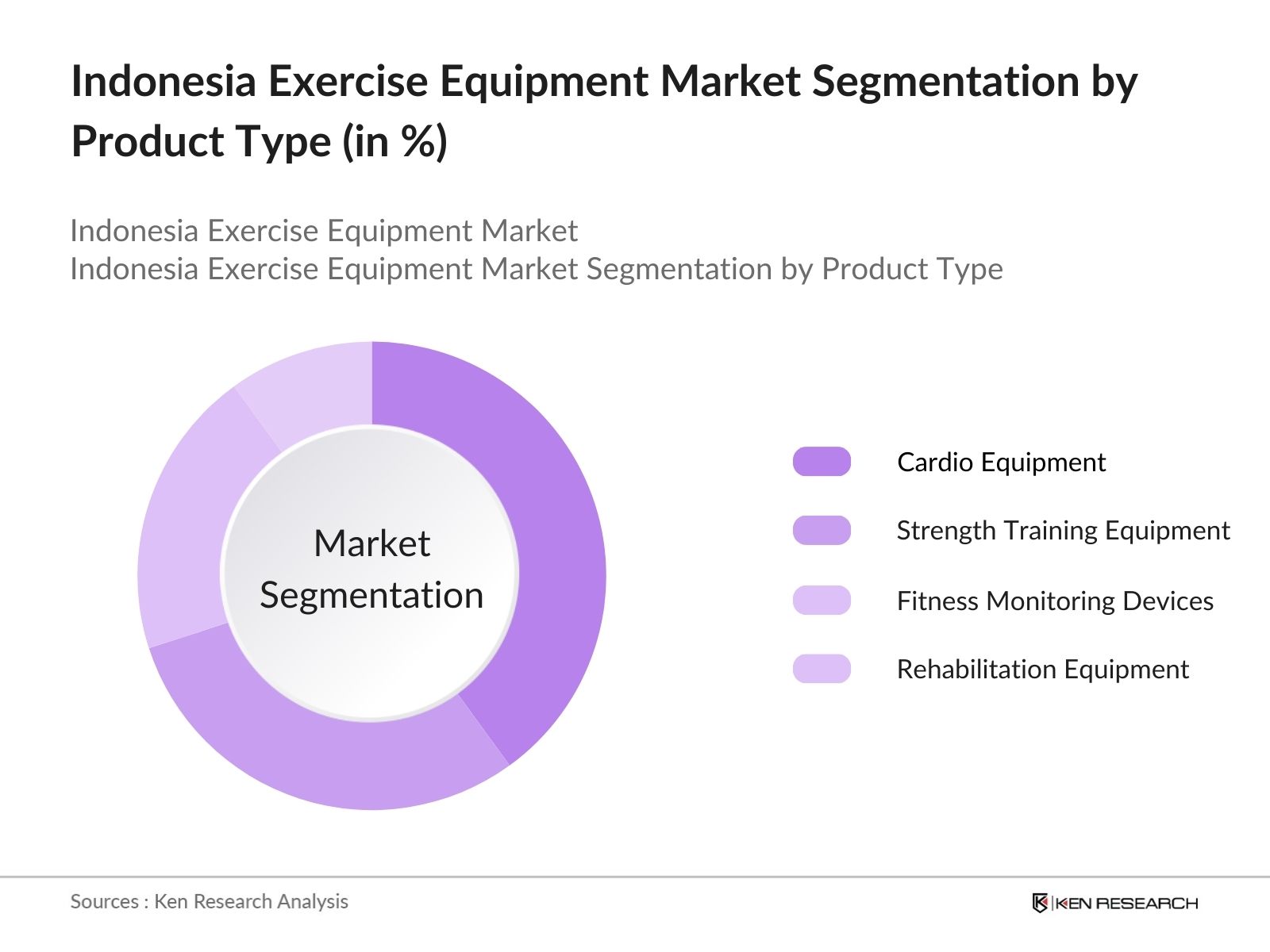
By Product Type: The market is segmented by product type into cardio equipment, strength training equipment, fitness monitoring devices, and rehabilitation equipment. Recently, cardio equipment has a dominant market share in Indonesia under this segmentation due to its wide appeal among users looking for both fitness and weight management solutions. Treadmills and ellipticals are particularly popular, as they are versatile for both home and gym environments, driving demand within this segment.
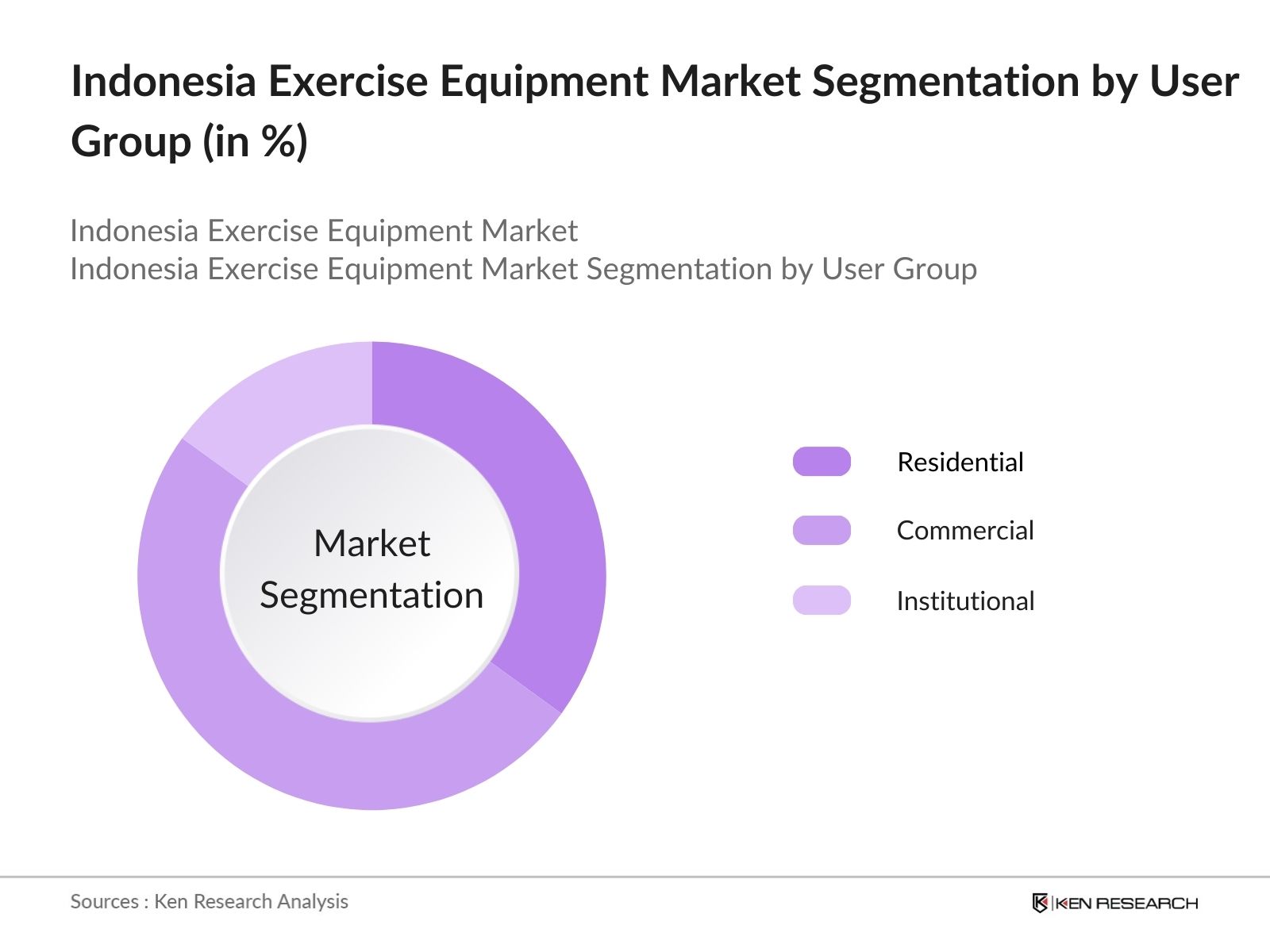
By User Group: The market is also segmented by user group, including residential, commercial, and institutional sectors. The commercial sector holds a leading position within this segmentation, attributed to the high demand for durable and advanced fitness machines in gyms and fitness centers across urban centers. The rapid expansion of fitness chains and wellness-focused businesses has driven a substantial investment in top-tier exercise equipment, securing the dominance of the commercial segment in this category.
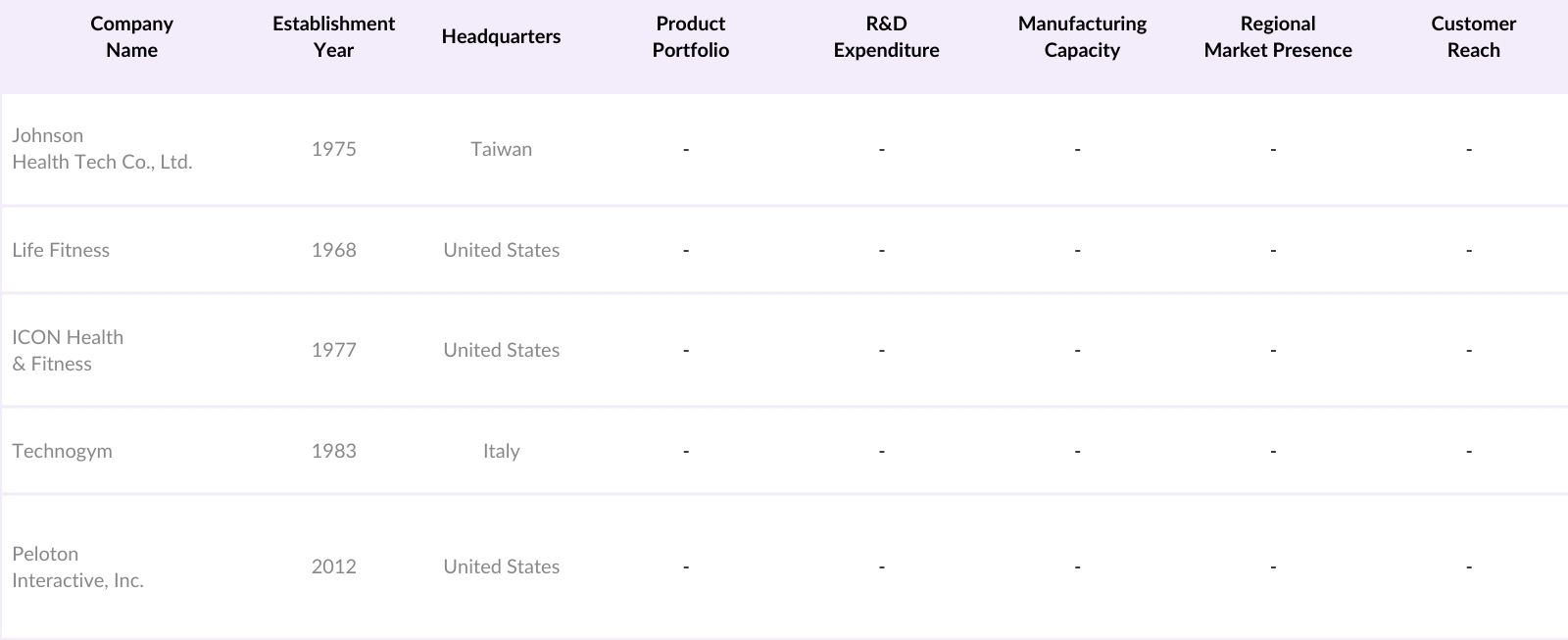
The market is dominated by a few key players, including both global brands and regional manufacturers that cater to specific consumer needs in the region. This concentration of key companies emphasizes the significant impact these players have on the market dynamics and overall competitive landscape.
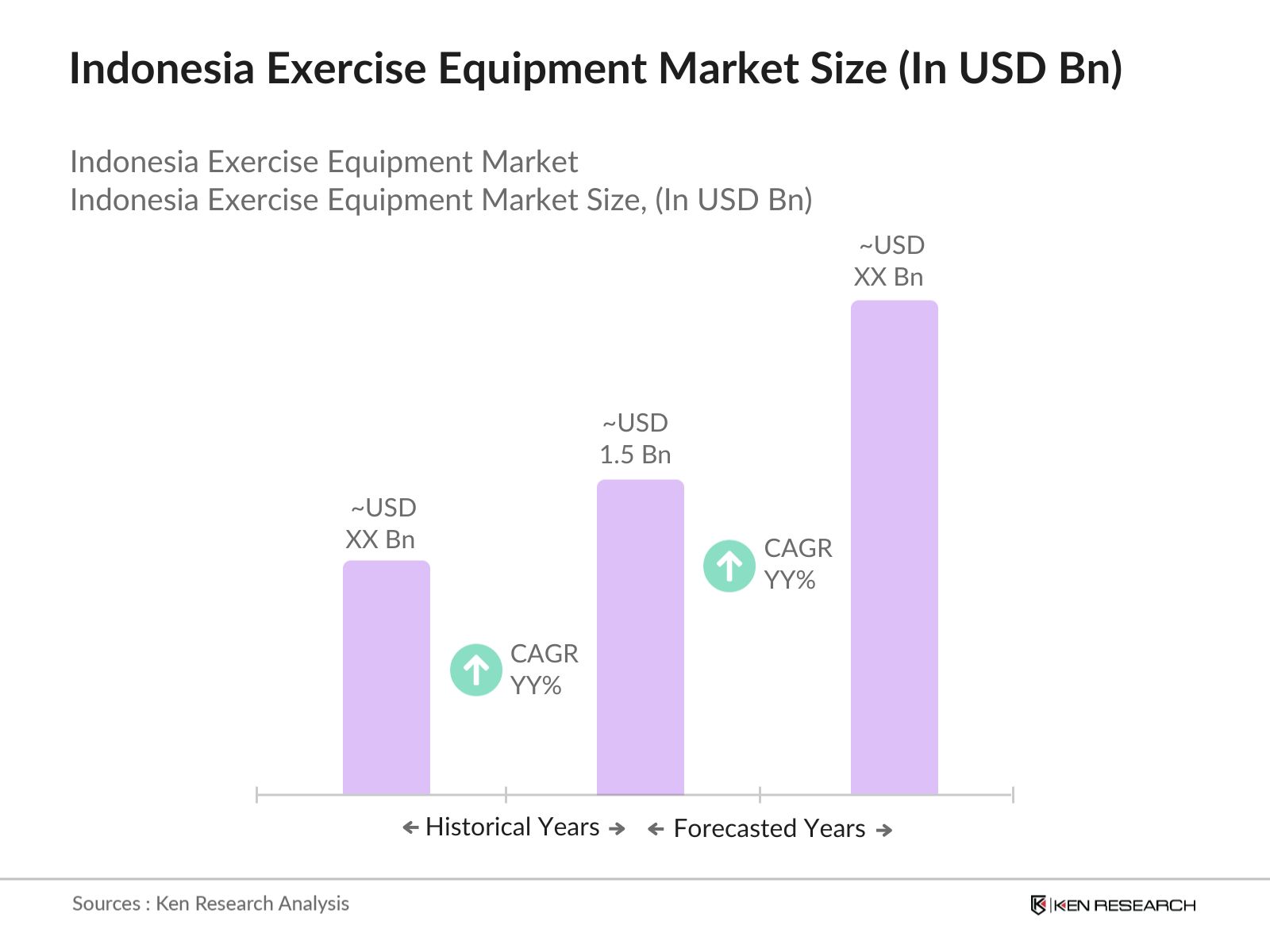
Over the next five years, the Indonesia Exercise Equipment industry is anticipated to experience robust growth, driven by rising health awareness, continuous urbanization, and the increasing inclination towards smart fitness solutions.
|
Product Type |
Cardio Equipment (Treadmills, Ellipticals, Rowing Machines) |
|
User Group |
Residential |
|
Distribution Channel |
Offline (Retail Stores, Specialty Stores) |
|
Technology |
Manual |
|
Region |
North East West South |
1.1. Definition and Scope
1.2. Market Taxonomy
1.3. Market Growth Rate
1.4. Market Segmentation Overview
2.1. Historical Market Size
2.2. Year-On-Year Growth Analysis
2.3. Key Market Developments and Milestones
3.1. Growth Drivers
3.1.1. Health and Fitness Awareness
3.1.2. Rising Urbanization
3.1.3. Increase in Disposable Income
3.1.4. Shift Towards Home Workouts
3.2. Market Challenges
3.2.1. High Cost of Equipment
3.2.2. Space Constraints for Home Equipment
3.2.3. Lack of Skilled Trainers
3.3. Opportunities
3.3.1. Technological Advancements in Equipment
3.3.2. Growing Popularity of Smart and Connected Equipment
3.3.3. Expansion into E-commerce
3.4. Trends
3.4.1. Growth in Digital and Virtual Fitness Solutions
3.4.2. Rise in Demand for Customizable Equipment
3.4.3. Emergence of Subscription-Based Fitness Models
3.5. Government Initiatives
3.5.1. Promotion of Health & Wellness Programs
3.5.2. Regulation of Quality Standards in Fitness Equipment
3.5.3. Public-Private Partnerships for Fitness Accessibility
3.6. SWOT Analysis
3.7. Stakeholder Ecosystem
3.8. Porters Five Forces Analysis
3.9. Competitive Landscape Analysis
4.1. By Product Type (In Value %)
4.1.1. Cardio Equipment (Treadmills, Ellipticals, Rowing Machines)
4.1.2. Strength Training Equipment (Weights, Resistance Bands, Machines)
4.1.3. Fitness Monitoring Devices (Wearables, Trackers)
4.1.4. Rehabilitation Equipment
4.2. By User Group (In Value %)
4.2.1. Residential
4.2.2. Commercial (Gyms, Fitness Centers, Studios)
4.2.3. Institutional (Hospitals, Corporate Wellness Programs)
4.3. By Distribution Channel (In Value %)
4.3.1. Offline (Retail Stores, Specialty Stores)
4.3.2. Online (E-commerce Platforms, Brand Websites)
4.4. By Technology (In Value %)
4.4.1. Manual
4.4.2. Automated
4.4.3. Smart and Connected Equipment
4.5. By Region (In Value %)
4.5.1. North
4.5.2. East
4.5.3. West
4.5.4. South
5.1. Detailed Profiles of Major Competitors
5.1.1. Johnson Health Tech Co., Ltd.
5.1.2. Life Fitness
5.1.3. ICON Health & Fitness
5.1.4. Technogym
5.1.5. Precor Inc.
5.1.6. Peloton Interactive, Inc.
5.1.7. Nautilus, Inc.
5.1.8. TRUE Fitness Technology, Inc.
5.1.9. Torque Fitness
5.1.10. Impulse Group Co., Ltd.
5.1.11. Body Solid, Inc.
5.1.12. Cybex International, Inc.
5.1.13. Matrix Fitness
5.1.14. SportsArt Fitness
5.1.15. Star Trac
5.2. Cross Comparison Parameters (Product Portfolio, Distribution Network, R&D Spending, Market Presence, Pricing Strategy, Brand Perception, Technological Innovations, Warranty and Service Support)
5.3. Market Share Analysis
5.4. Strategic Initiatives
5.5. Mergers and Acquisitions
5.6. Investment Analysis
5.7. Venture Capital Funding
5.8. Private Equity Investments
6.1. Certification and Compliance Standards
6.2. Health and Safety Regulations
6.3. Taxation and Import Duties
6.4. Regulations for Smart Equipment and Data Security
7.1. Future Market Size Projections
7.2. Key Factors Driving Future Market Growth
8.1. By Product Type (In Value %)
8.2. By User Group (In Value %)
8.3. By Distribution Channel (In Value %)
8.4. By Technology (In Value %)
8.5. By Region (In Value %)
9.1. TAM/SAM/SOM Analysis
9.2. Customer Segment Analysis
9.3. Marketing Strategy Recommendations
9.4. White Space Opportunity Identification
Disclaimer Contact UsThe initial phase involves creating a comprehensive market framework to encompass the main drivers, restraints, and trends influencing the Indonesia Exercise Equipment Market. This step includes in-depth desk research, utilizing multiple secondary sources and proprietary databases to map the sectors landscape accurately.
This stage focuses on gathering historical data to understand the market's progression over recent years. It includes an evaluation of the penetration rate of exercise equipment across different user groups and types, providing a solid foundation for revenue estimations and market size calculations.
Market hypotheses are refined through consultations with industry experts from both domestic and global exercise equipment manufacturers. These discussions provide actionable insights and help verify market assumptions, ensuring the credibility of our findings.
In this final stage, comprehensive insights from manufacturers and retailers are integrated with quantitative data from bottom-up research, culminating in an accurate, data-backed portrayal of the Indonesia Exercise Equipment Market.
The Indonesia Exercise Equipment Market is valued at USD 1.5 billion, supported by increased urbanization and a rising demand for personal and commercial fitness solutions.
Challenges in the Indonesia Exercise Equipment Market include high equipment costs, limited space in residential settings, and a lack of qualified trainers in certain regions, all of which can hinder widespread adoption.
Key players in the Indonesia Exercise Equipment Market include Johnson Health Tech, Life Fitness, ICON Health & Fitness, Technogym, and Peloton Interactive, Inc., known for their strong product portfolios and market presence.
Growth drivers in the Indonesia Exercise Equipment Market include increasing health consciousness, expanding urban centers, and innovations in smart and connected fitness equipment, which cater to evolving consumer preferences.

What makes us stand out is that our consultants follows Robust, Refine and Result (RRR) methodology. i.e. Robust for clear definitions, approaches and sanity checking, Refine for differentiating respondents facts and opinions and Result for presenting data with story

We have set a benchmark in the industry by offering our clients with syndicated and customized market research reports featuring coverage of entire market as well as meticulous research and analyst insights.

While we don't replace traditional research, we flip the method upside down. Our dual approach of Top Bottom & Bottom Top ensures quality deliverable by not just verifying company fundamentals but also looking at the sector and macroeconomic factors.

With one step in the future, our research team constantly tries to show you the bigger picture. We help with some of the tough questions you may encounter along the way: How is the industry positioned? Best marketing channel? KPI's of competitors? By aligning every element, we help maximize success.

Our report gives you instant access to the answers and sources that other companies might choose to hide. We elaborate each steps of research methodology we have used and showcase you the sample size to earn your trust.

If you need any support, we are here! We pride ourselves on universe strength, data quality, and quick, friendly, and professional service.