
Indonesia Hybrid Cloud Solutions Market Outlook to 2030
Region:Global
Author(s):Shivani Mehra
Product Code:KROD2291
Region:Global
Author(s):Shivani Mehra
Product Code:KROD2291
December 2024
99
Listen to the audio summary
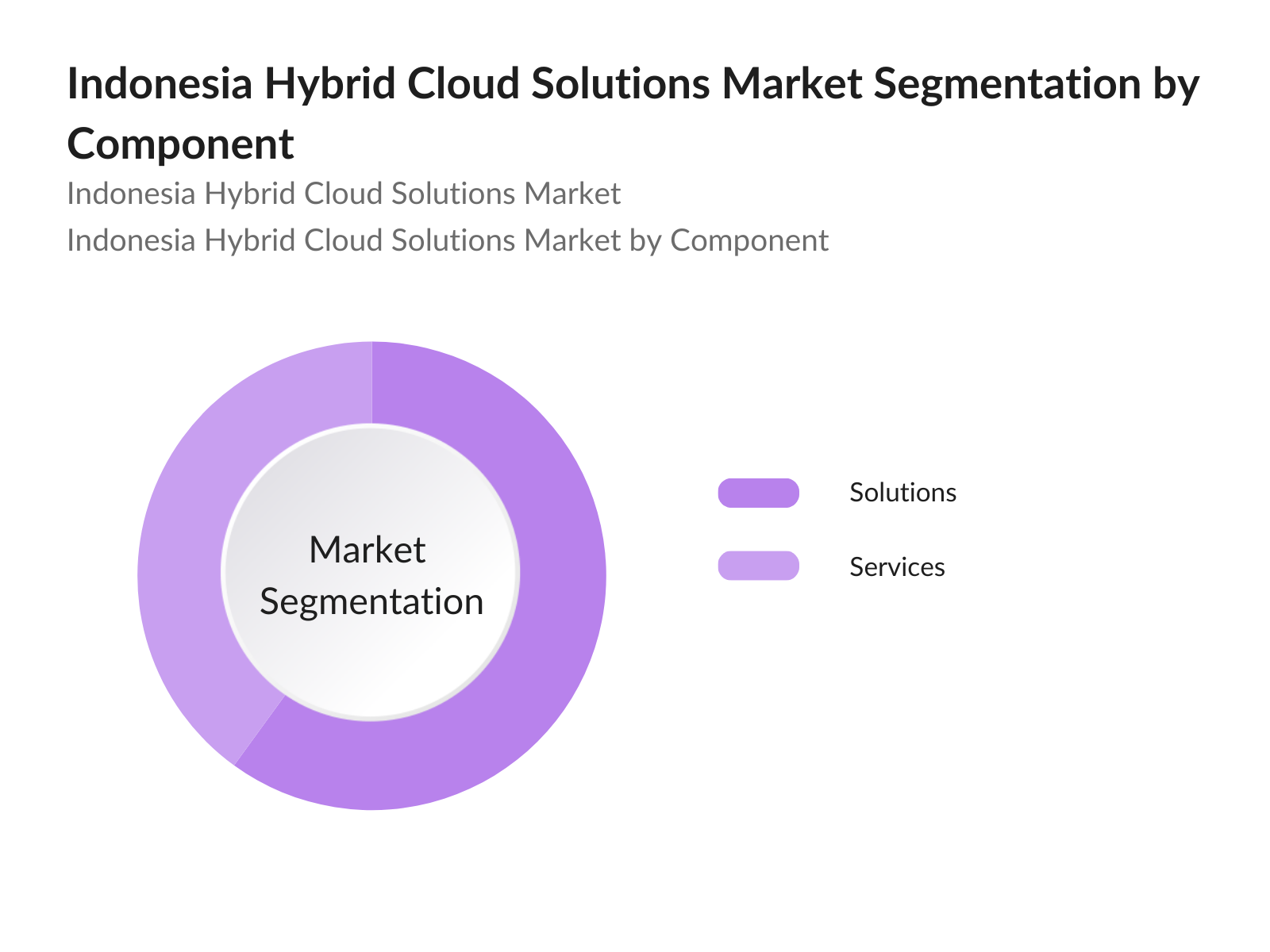
By Component: The market is segmented into Solutions and Services. Solutions hold the dominant share as businesses increasingly seek integrated cloud platforms that enable efficient data management, while services, including consulting and implementation, are gaining traction for providing customized deployment support.
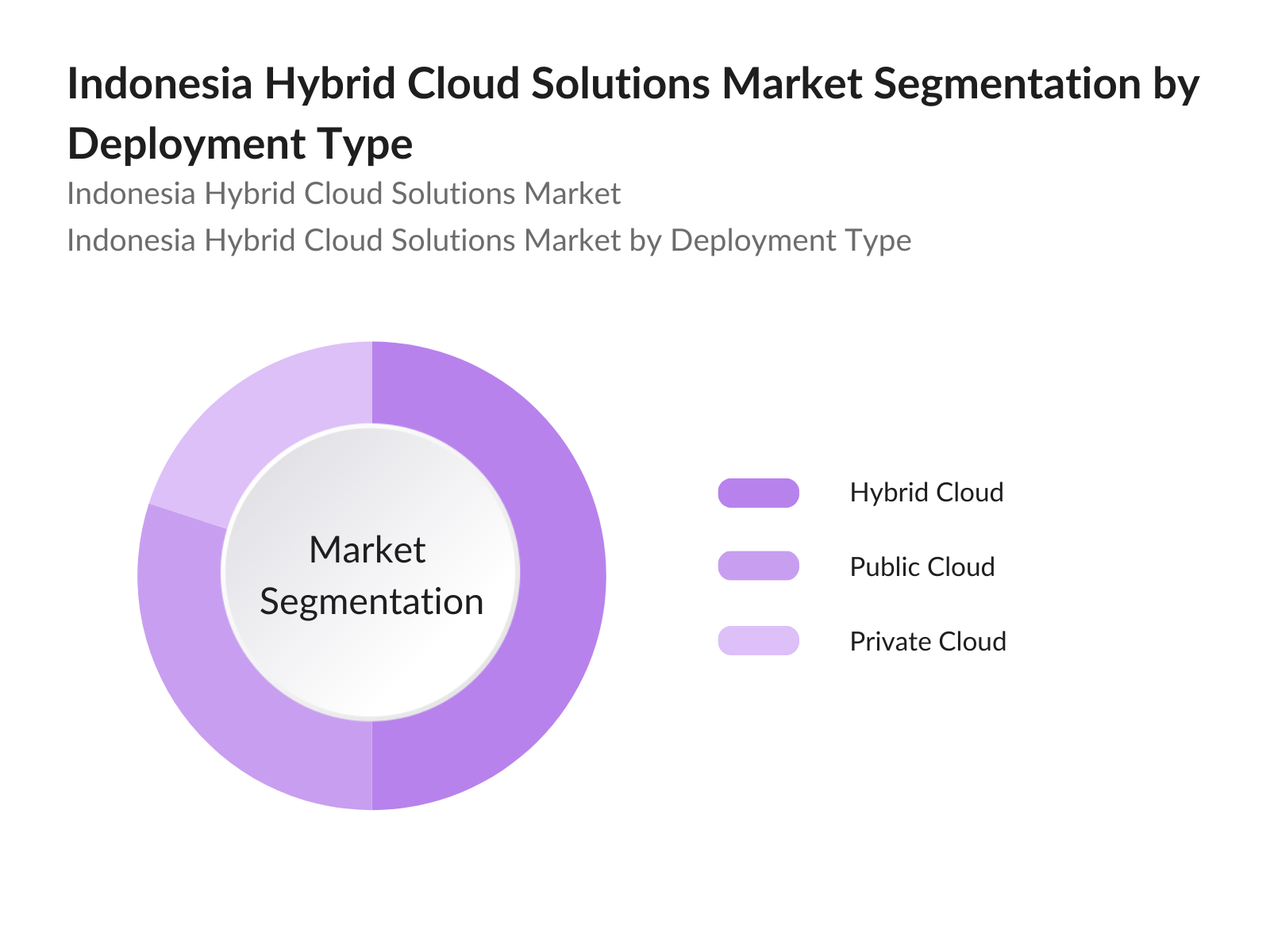
By Deployment Type: Segmentation by deployment type includes Public Cloud, Private Cloud, and Hybrid Cloud. Hybrid Cloud dominates as it balances data security with scalability, catering to the specific needs of Indonesian businesses and compliance requirements.
The Indonesia Hybrid Cloud Solutions Market is competitive, with global players like AWS, Microsoft Azure, and Google Cloud, along with regional providers such as Alibaba Cloud and Huawei, leveraging their data center presence and partnerships with local businesses.
|
Company |
Establishment Year |
Headquarters |
Revenue ($ Mn) |
Data Centers in Indonesia |
Global Reach |
Certifications |
Strategic Partnerships |
|
Amazon Web Services, Inc. |
2006 |
Seattle, WA |
|||||
|
Microsoft Corporation |
1975 |
Redmond, WA |
|||||
|
Google Cloud Platform |
2008 |
Mountain View, CA |
|||||
|
Alibaba Cloud |
2009 |
Hangzhou, China |
|||||
|
Huawei Technologies |
1987 |
Shenzhen, China |
Market Growth Drivers
Market Challenges:
The Indonesia Hybrid Cloud Solutions Market is expected to grow significantly over the next five years, driven by digitalization initiatives, the need for data sovereignty, and the expansion of edge computing. Sectors such as BFSI, healthcare, and telecom are expected to increase hybrid cloud adoption to ensure data security and compliance while benefiting from cloud scalability.
Market Opportunities:
|
By Component |
Solutions |
|
By Service Model |
Infrastructure as a Service (IaaS) |
|
By Organization Size |
Small and Medium Enterprises (SMEs) |
|
By Industry Vertical |
Banking, Financial Services, and Insurance (BFSI) |
|
By Region |
North-East Midwest West Coast Southern States |
1.1. Definition and Scope
1.2. Market Taxonomy
1.3. Market Growth Rate
1.4. Market Segmentation Overview
2.1. Historical Market Size
2.2. Year-On-Year Growth Analysis
2.3. Key Market Developments and Milestones
3.1. Growth Drivers
3.1.1. Increasing Digital Transformation Initiatives
3.1.2. Adoption of Cloud Services in SMEs
3.1.3. Government Regulations on Data Localization
3.1.4. Demand for Cost-Efficient Cloud Solutions
3.2. Market Challenges
3.2.1. High Implementation Costs
3.2.2. Data Security Concerns
3.2.3. Limited Infrastructure in Rural Areas
3.3. Opportunities
3.3.1. Expansion of IoT Ecosystem
3.3.2. Integration of AI with Hybrid Cloud
3.3.3. Growth of Managed Cloud Services
3.4. Trends
3.4.1. Shift Towards Multi-Cloud Strategies
3.4.2. Rise of Edge Computing
3.4.3. Hybrid Cloud in Financial Services
3.5. Government Regulation
3.5.1. Data Localization Requirements
3.5.2. Compliance Standards
3.5.3. Tax Incentives for IT Infrastructure Development
3.6. SWOT Analysis
3.7. Stakeholder Ecosystem
3.8. Porters Five Forces
3.9. Competition Ecosystem
4.1. By Component (In Value %)
4.1.1. Solutions
4.1.2. Services
4.2. By Service Model (In Value %)
4.2.1. Infrastructure as a Service (IaaS)
4.2.2. Platform as a Service (PaaS)
4.2.3. Software as a Service (SaaS)
4.3. By Organization Size (In Value %)
4.3.1. Small and Medium Enterprises (SMEs)
4.3.2. Large Enterprises
4.4. By Industry Vertical (In Value %)
4.4.1. Banking, Financial Services, and Insurance (BFSI)
4.4.2. Healthcare
4.4.3. Retail
4.4.4. IT and Telecom
4.4.5. Government
4.5. By Deployment Type (In Value %)
4.5.1. Public Cloud
4.5.2. Private Cloud
4.5.3. Hybrid Cloud
5.1. Detailed Profiles of Major Companies
5.1.1. Amazon Web Services, Inc.
5.1.2. Microsoft Corporation
5.1.3. Google Cloud Platform
5.1.4. IBM Corporation
5.1.5. Alibaba Cloud
5.1.6. Oracle Corporation
5.1.7. Dell Technologies
5.1.8. VMware, Inc.
5.1.9. Fujitsu Limited
5.1.10. Huawei Technologies
5.1.11. Cisco Systems, Inc.
5.1.12. Salesforce.com, Inc.
5.1.13. SAP SE
5.1.14. HCL Technologies
5.1.15. Accenture
5.2. Cross Comparison Parameters (Revenue, Headquarters, Inception Year, Data Security Certifications, Global Reach, Cloud Infrastructure Services, Customer Segments, Strategic Partnerships)
5.3. Market Share Analysis
5.4. Strategic Initiatives
5.5. Mergers and Acquisitions
5.6. Investment Analysis
5.7. Venture Capital Funding
5.8. Government Grants
5.9. Private Equity Investments
6.1. Data Privacy and Protection Laws
6.2. Compliance Requirements
6.3. Incentives for IT Infrastructure Investment
7.1. Future Market Size Projections
7.2. Key Factors Driving Future Growth
8.1. By Component (In Value %)
8.2. By Service Model (In Value %)
8.3. By Organization Size (In Value %)
8.4. By Industry Vertical (In Value %)
8.5. By Deployment Type (In Value %)
9.1. TAM/SAM/SOM Analysis
9.2. Strategic Positioning Recommendations
9.3. Investment and Partnership Recommendations
9.4. White Space Opportunity Analysis
Disclaimer Contact UsMapping key stakeholders, cloud infrastructure requirements, and identifying growth factors in the Indonesia Hybrid Cloud Solutions Market using secondary and proprietary databases.
Compiling historical data on hybrid cloud adoption, market penetration, and revenue, followed by data validation with industry sources.
Engaging industry experts to validate findings, gain insights into competitive strategies, and understand technology adoption challenges.
Synthesizing validated data and expert inputs to provide comprehensive analysis and projections for the Indonesia Hybrid Cloud Solutions Market.
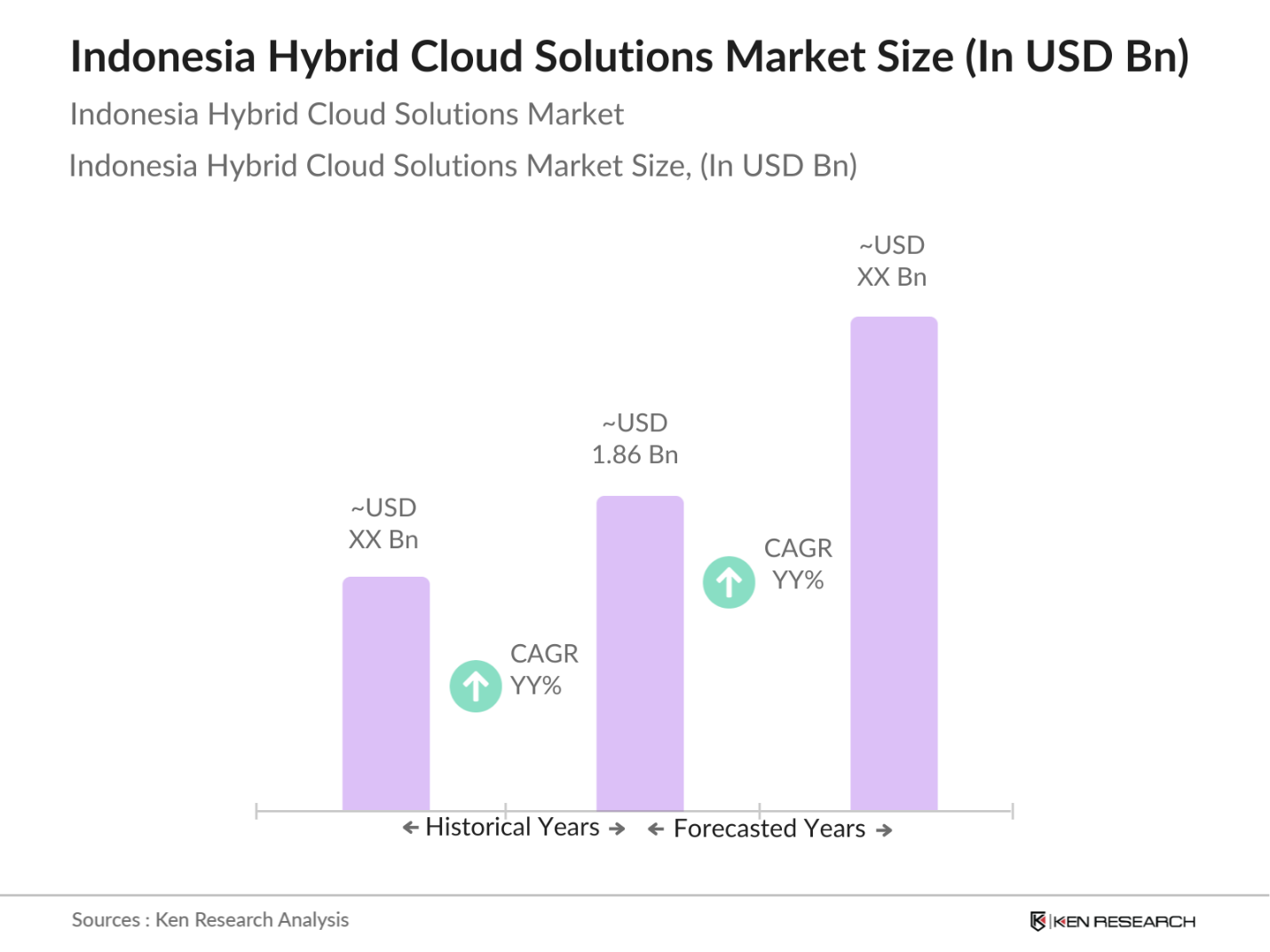
The Indonesia Hybrid Cloud Solutions Market is valued at USD 1.86 Billion, driven by digital transformation initiatives and government data regulations.
Challenges include high implementation costs, data security concerns, and the limited availability of IT infrastructure in rural regions.
Key players include Amazon Web Services, Microsoft Azure, Google Cloud, IBM, and Alibaba Cloud, leveraging their data centers and strategic partnerships in Indonesia.
Growth drivers include government support for digital infrastructure, increasing demand from SMEs, and the rise in multi-cloud strategies among enterprises.

What makes us stand out is that our consultants follows Robust, Refine and Result (RRR) methodology. i.e. Robust for clear definitions, approaches and sanity checking, Refine for differentiating respondents facts and opinions and Result for presenting data with story

We have set a benchmark in the industry by offering our clients with syndicated and customized market research reports featuring coverage of entire market as well as meticulous research and analyst insights.

While we don't replace traditional research, we flip the method upside down. Our dual approach of Top Bottom & Bottom Top ensures quality deliverable by not just verifying company fundamentals but also looking at the sector and macroeconomic factors.

With one step in the future, our research team constantly tries to show you the bigger picture. We help with some of the tough questions you may encounter along the way: How is the industry positioned? Best marketing channel? KPI's of competitors? By aligning every element, we help maximize success.

Our report gives you instant access to the answers and sources that other companies might choose to hide. We elaborate each steps of research methodology we have used and showcase you the sample size to earn your trust.

If you need any support, we are here! We pride ourselves on universe strength, data quality, and quick, friendly, and professional service.