
Indonesia Thermal Printer Market Outlook to 2030
Region:Asia
Author(s):Sanjeev
Product Code:KROD8931
December 2024
97
About the Report
Indonesia Thermal Printer Market Overview
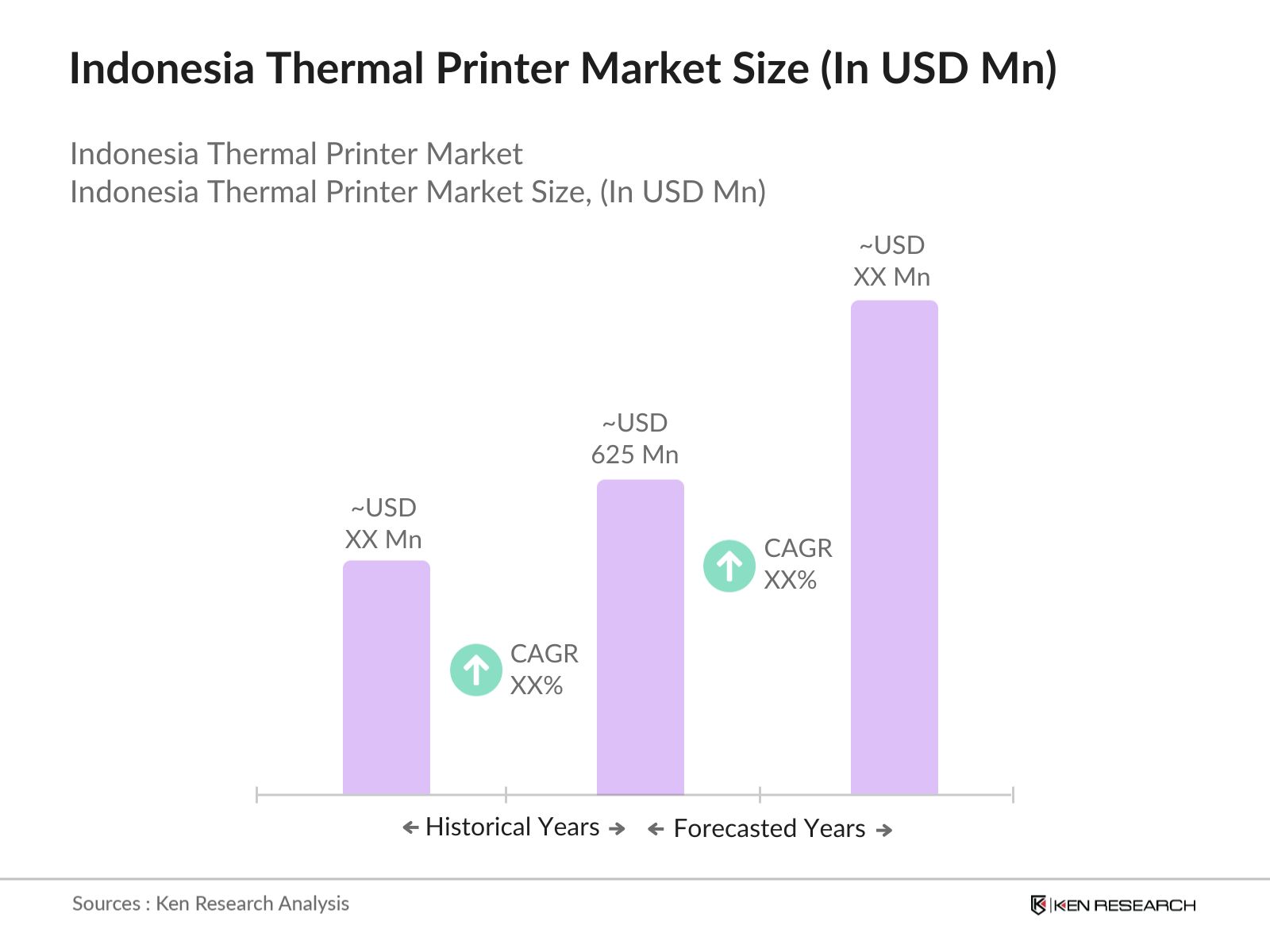
- The Indonesia Thermal Printer market reached a valuation of USD 625 million, driven by the rapid expansion in sectors such as retail, logistics, and healthcare, where these printers provide reliable and efficient printing solutions. Demand is also boosted by government digitalization initiatives that promote automation and electronic documentation. The rising trend of e-commerce and retail chain expansions contribute to market growth, solidifying thermal printers as a core component of the business infrastructure.
- Cities like Jakarta, Surabaya, and Bandung dominate the thermal printer market in Indonesia due to their high levels of industrial activity and concentration of retail businesses. Jakarta, as the countrys capital and economic hub, leads in adoption rates, with significant retail, hospitality, and healthcare sectors relying on thermal printers for transaction efficiency and document management. These urban centers are thus essential markets due to their expansive commercial sectors and high technological adoption.
- Indonesias import tariffs on electronic equipment, including thermal printers, impact market pricing and availability. The Ministry of Finance revised tariffs on tech products in 2023 to support local production, affecting the thermal printer market. Import regulations align with the governments policy to stimulate domestic production while balancing costs, posing both opportunities and limitations for the thermal printer market based on regulatory requirements.
Indonesia Thermal Printer Market Segmentation
The Indonesia Thermal Printer market is segmented by product type and by application.
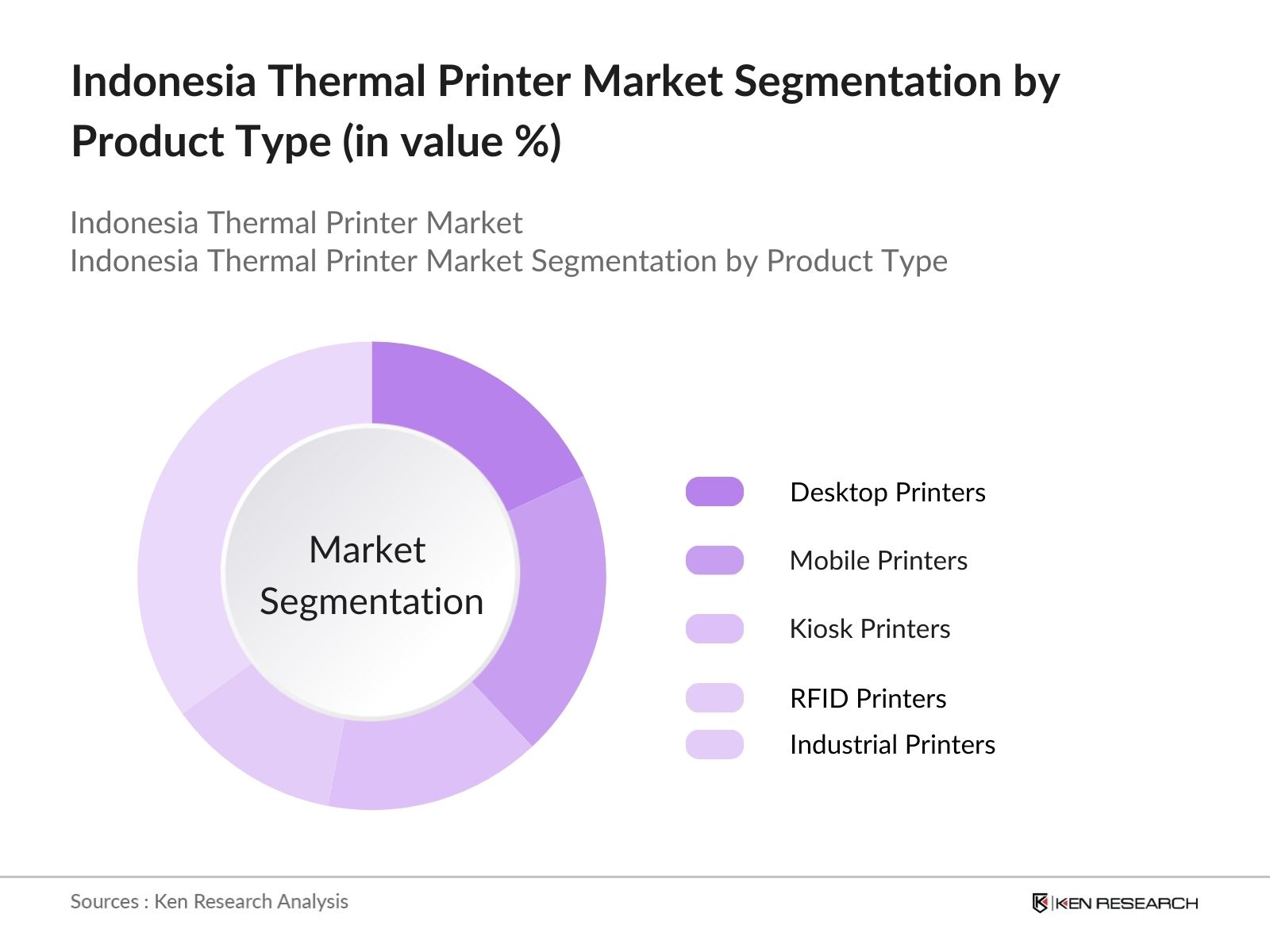
- By Product Type: The Indonesia Thermal Printer market is segmented by product type into Desktop Printers, Mobile Printers, Kiosk Printers, RFID Printers, and Industrial Printers. Industrial printers hold the dominant market share within this segment, largely due to their application in high-demand environments like manufacturing and logistics. These sectors require high durability, large-volume printing, and compatibility with warehouse automation systems, positioning industrial printers as indispensable.
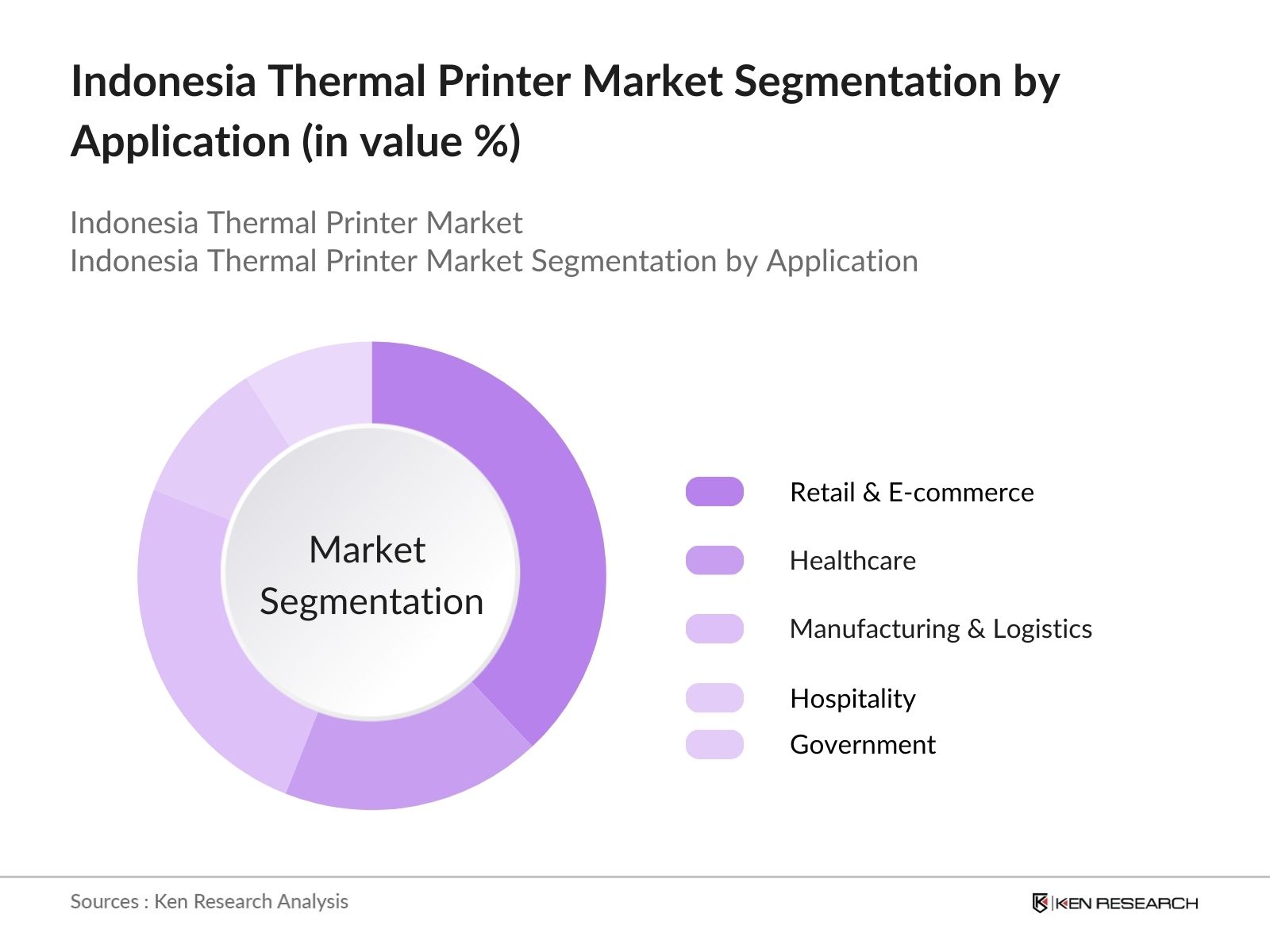
- By Application: The market is segmented by application into Retail & E-commerce, Healthcare, Manufacturing & Logistics, Hospitality, and Government. The Retail & E-commerce sector dominates due to the increasing prevalence of point-of-sale (POS) systems that rely on thermal printing. Retailers value thermal printers for their low maintenance and fast printing capabilities, especially during high-volume sales periods, making them the preferred choice in this segment.
Indonesia Thermal Printer Market Competitive Landscape
The Indonesia Thermal Printer market is dominated by both international and local players who leverage technological advancements, pricing strategies, and partnerships with local retailers and distributors. Key companies like Toshiba and Epson maintain strong market positions due to their innovative product ranges and after-sales support, while domestic players focus on cost-effective solutions to appeal to smaller businesses.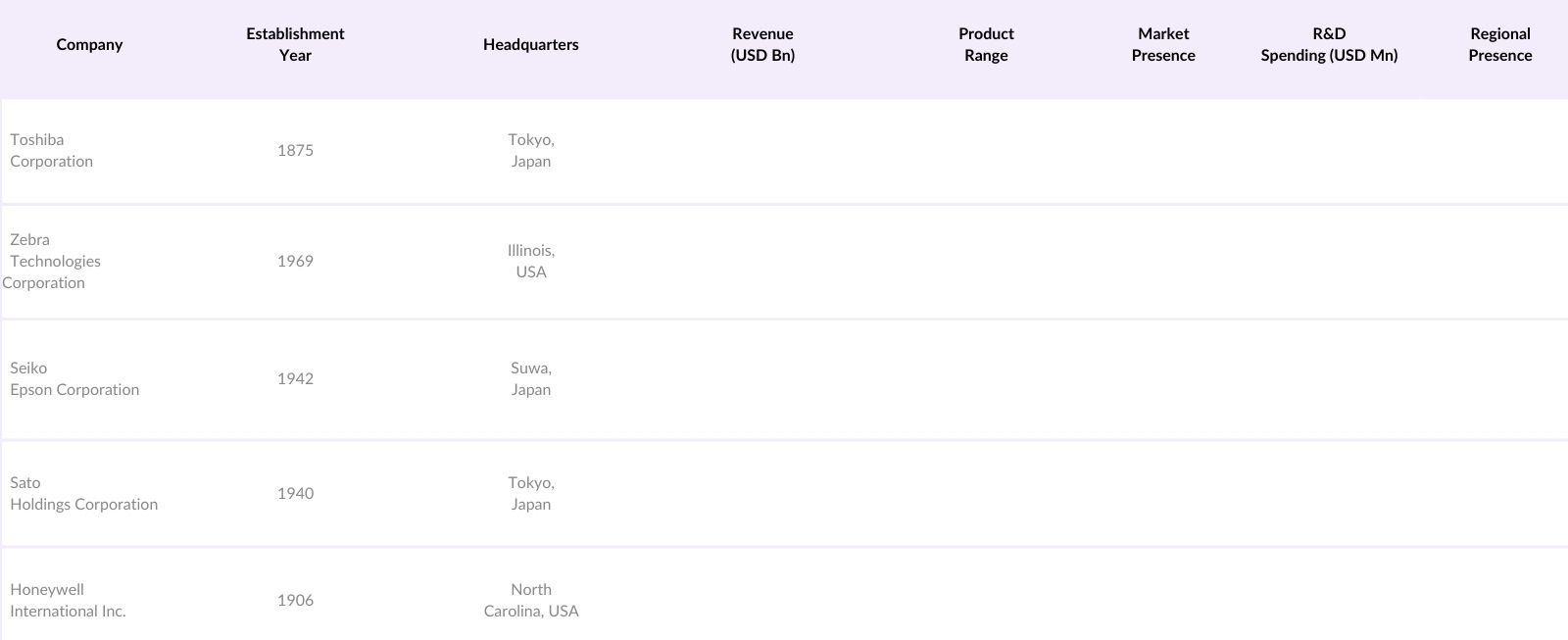
Indonesia Thermal Printer Market Analysis
Growth Drivers
- Increasing Retail & E-commerce Expansion (Retail Demand Growth): Indonesias retail and e-commerce sector has experienced significant growth, largely due to increased internet penetration and mobile usage, which reached over 200 million users in 2023, according to the Ministry of Communication and Information Technology. This expansion boosts the demand for thermal printers, vital for producing receipts, labels, and barcodes in high-demand retail and logistics operations. Indonesias digital economy reached USD 77 billion in 2022, driven by retail demand, indicating substantial adoption of technologies like thermal printers. This adoption reflects the need for efficient, reliable printing solutions to support retail growth.
- Industrial Automation Adoption (Process Optimization): Indonesia's manufacturing sector contributes significantly to its GDP, accounting for 20% of its economy in 2023, according to the World Bank. Automation in sectors like manufacturing and logistics is pushing demand for thermal printers to streamline operations and improve production efficiency. The increase in automated workflows and inventory management practices among industrial players enhances the need for label printing solutions, supporting the growth of the thermal printer market. Government data indicates that automation in manufacturing has reduced operational time by nearly 30%, underscoring the critical role of printing solutions in optimized workflows.
- Government Initiatives in Technology (Tech Advancement): The Indonesian government has committed to advancing the country's technological landscape through initiatives like Making Indonesia 4.0, targeting high-tech adoption across industries. This has led to an increase in demand for advanced thermal printing solutions to meet compliance and efficiency standards in various sectors. Indonesia's allocation of around USD 2.2 billion to tech infrastructure in 2023 further supports the integration of innovative printing technology. These initiatives encourage the adoption of thermal printers across logistics, retail, and government sectors as part of the larger digital transformation agenda.
Market Challenges
- High Initial Investment (Cost Barriers): Thermal printers, especially high-end industrial models, require substantial initial investments, which can be a barrier for small and medium-sized enterprises in Indonesia. Data from the Ministry of Finance shows that small businesses often allocate less than USD 10,000 to tech investments annually, posing challenges for adopting advanced thermal printing solutions. This high initial cost limits the penetration of these printers in the SME segment despite the long-term operational savings.
- Technical Limitations in Complex Environments (Technology Limitations): Thermal printers face limitations in complex, high-humidity environments typical of Indonesia's tropical climate, which affects print quality and durability. A report from the Indonesian Meteorology, Climatology, and Geophysics Agency in 2023 highlighted that average humidity levels can exceed 85%, impacting printer performance and leading to maintenance challenges. This environmental limitation poses a barrier to their adoption in areas such as outdoor logistics or warehousing.
Indonesia Thermal Printer Market Future Outlook
The Indonesia Thermal Printer market is anticipated to exhibit sustained growth, supported by rising digital transformation efforts across both private and public sectors. Increased penetration of e-commerce, retail expansions, and government-led digital initiatives further reinforce the demand for efficient, reliable printing solutions. Additionally, innovations in RFID and wireless printing technologies are expected to expand the scope of thermal printers across various industries.
Market Opportunities
- Integration with IoT Systems (Connected Devices): The rise in IoT-connected devices across Indonesia presents an opportunity for thermal printers to become part of integrated systems, improving efficiency in logistics and manufacturing. Data from Indonesias IoT Association indicates that over 1 million new IoT devices were deployed in 2023, facilitating seamless data exchange. This connectivity enables thermal printers to optimize printing operations by providing real-time data on operational status and inventory levels, an essential capability for industries focused on automation and smart workflows.
- Expansion in Healthcare Sector (Healthcare Automation): Indonesias healthcare sector is undergoing automation, with government expenditure on healthcare infrastructure reaching USD 15 billion in 2023, as per the Ministry of Health. This investment includes digitizing patient records, managing inventory, and improving diagnostic procedures, driving demand for thermal printers in printing prescriptions, labels, and patient details. The increasing demand for reliable healthcare automation tools underscores the role of thermal printing solutions, particularly as the government prioritizes quality and accuracy in healthcare.
Scope of the Report
|
Desktop Printers Mobile Printers Kiosk Printers RFID Printers Industrial Printers |
|
|
By Printing Technology |
Direct Thermal Thermal Transfer Dye Diffusion Thermal Transfer (D2T2) |
|
By Application |
Retail & E-commerce Healthcare Manufacturing & Logistics Hospitality Government |
|
By Component |
Printer Hardware Software Solutions Service & Maintenance |
|
By Region |
North East West South |
Products
Key Target Audience
Investors and Venture Capital Firms
Government and Regulatory Bodies (Indonesia Ministry of Industry, Indonesia Ministry of Communication and Information Technology)
Retail and E-commerce Companies
Healthcare Institutions
Hospitality and Service Industry Operators
Manufacturing and Logistics Companies
Banks and Financial Institutes
Thermal Printer Distributors and Resellers
Technology and IT Solution Providers
Companies
Players Mention in the Report:
Toshiba Corporation
Zebra Technologies Corporation
Seiko Epson Corporation
Sato Holdings Corporation
Honeywell International Inc.
Fujitsu Limited
HP Development Company, L.P.
Brother International Corporation
Star Micronics Co., Ltd.
Canon Inc.
Bixolon Co., Ltd.
Citizen Systems Japan Co., Ltd.
NCR Corporation
Printek, Inc.
Oki Electric Industry Co., Ltd.
Table of Contents
1. Indonesia Thermal Printer Market Overview
Definition and Scope
Market Taxonomy
Market Growth Rate
Market Segmentation Overview
2. Indonesia Thermal Printer Market Size (In USD Mn)
Historical Market Size
Year-on-Year Growth Analysis
Key Market Developments and Milestones
Indonesia Thermal Printer Market Analysis
Growth Drivers
Increasing Retail & E-commerce Expansion (Retail Demand Growth)
Industrial Automation Adoption (Process Optimization)
Government Initiatives in Technology (Tech Advancement)
Cost-effectiveness and Energy Efficiency (Operational Cost Reduction)
Market Challenges
High Initial Investment (Cost Barriers)
Technical Limitations in Complex Environments (Technology Limitations)
Need for Skilled Workforce (Talent Availability)
Opportunities
Integration with IoT Systems (Connected Devices)
Expansion in Healthcare Sector (Healthcare Automation)
Penetration into Emerging Markets (Geographical Expansion)
Trends
Shift to Cloud-based Printing Solutions (Cloud Integration)
Enhanced Durability and Performance (Product Development)
Customizable Printing Solutions (Customer-specific Adaptability)
Government Regulation
Import and Export Policies (Trade Regulations)
Digital Transformation Policies (National Digital Agenda)
Industry Compliance Standards (Product Certification)
SWOT Analysis
Stakeholder Ecosystem
Porters Five Forces Analysis
Competitive Ecosystem
4. Indonesia Thermal Printer Market Segmentation
4.1 By Product Type (In Value %)
4.1.1 Desktop Printers
4.1.2 Mobile Printers
4.1.3 Kiosk Printers
4.1.4 RFID Printers
4.1.5 Industrial Printers
4.2 By Printing Technology (In Value %)
4.2.1 Direct Thermal
4.2.2 Thermal Transfer
4.2.3 Dye Diffusion Thermal Transfer (D2T2)
4.3 By Application (In Value %)
4.3.1 Retail & E-commerce
4.3.2 Healthcare
4.3.3 Manufacturing & Logistics
4.3.4 Hospitality
4.3.5 Government
4.4 By Component (In Value %)
4.4.1 Printer Hardware
4.4.2 Software Solutions
4.4.3 Service & Maintenance
4.5 By Region (In Value %)
4.5.1 North
4.5.2 East
4.5.3 West
4.5.4 South
5. Indonesia Thermal Printer Market Competitive Analysis
Detailed Profiles of Major Companies
Toshiba Corporation
Zebra Technologies Corporation
Seiko Epson Corporation
Sato Holdings Corporation
Honeywell International Inc.
Fujitsu Limited
HP Development Company, L.P.
Brother International Corporation
Star Micronics Co., Ltd.
Canon Inc.
Bixolon Co., Ltd.
Citizen Systems Japan Co., Ltd.
NCR Corporation
Printek, Inc.
Oki Electric Industry Co., Ltd.
Cross Comparison Parameters
Headquarters Location
Inception Year
Employee Count
Revenue (USD Mn)
Product Range
R&D Spending (USD Mn)
Market Share (%)
Regional Presence (No. of Countries)
Market Share Analysis
Strategic Initiatives
Mergers and Acquisitions
Investment Analysis
Venture Capital Funding
Government Grants
Private Equity Investments
6. Indonesia Thermal Printer Market Regulatory Framework
Environmental Standards (Emission Controls)
Compliance Requirements (Safety Standards)
Certification Processes (Product Compliance Certification)
7. Indonesia Thermal Printer Future Market Size (In USD Mn)
Future Market Size Projections
Key Factors Driving Future Market Growth
8. Indonesia Thermal Printer Future Market Segmentation
By Product Type (In Value %)
By Printing Technology (In Value %)
By Application (In Value %)
By Component (In Value %)
By Distribution Channel (In Value %)
9. Indonesia Thermal Printer Market Analysts Recommendations
TAM/SAM/SOM Analysis
Customer Cohort Analysis
Marketing Initiatives
White Space Opportunity Analysis
Disclaimer Contact UsResearch Methodology
Step 1: Identification of Key Variables
This initial phase involved mapping key market dynamics and stakeholder influences within the Indonesia Thermal Printer Market. A thorough examination of databases and industry publications helped identify core variables impacting market trends.
Step 2: Market Analysis and Construction
The historical and current market data for Indonesias Thermal Printer Market was gathered and analyzed to assess adoption rates, market penetration, and regional demand. Industry-specific metrics provided a basis for reliable revenue projections.
Step 3: Hypothesis Validation and Expert Consultation
Validated hypotheses were refined through in-depth interviews with industry experts and leading company representatives. Insights from these discussions enhanced understanding of operational challenges and market dynamics.
Step 4: Research Synthesis and Final Output
The final phase focused on synthesizing the findings, involving direct engagements with thermal printer manufacturers to align statistical insights with practical industry trends, ensuring a comprehensive and validated report.
Frequently Asked Questions
01. How big is the Indonesia Thermal Printer Market?
The Indonesia Thermal Printer Market is valued at USD 625 Mn, driven by rapid growth in retail and logistics sectors that rely on efficient, high-speed printing technology.
02. What are the main challenges in the Indonesia Thermal Printer Market?
Challenges in Indonesia Thermal Printer Market include high initial costs and the need for skilled workforce. The technological complexity of thermal printers also creates barriers in certain rural areas where trained support is limited.
03. Who are the major players in the Indonesia Thermal Printer Market?
Prominent companies in this Indonesia Thermal Printer Market include Toshiba Corporation, Zebra Technologies, Seiko Epson, Sato Holdings, and Honeywell, each contributing to the market with specialized product offerings.
04. What drives the growth of the Indonesia Thermal Printer Market?
The Indonesia Thermal Printer Market growth is largely driven by expanding e-commerce, retail chain development, and government-supported digitalization initiatives, which increase the demand for efficient and reliable printing solutions.
05. What opportunities are present in the Indonesia Thermal Printer Market?
Indonesia Thermal Printer Market Opportunities exist in healthcare and government sectors, where integration with IoT and cloud-based solutions can further enhance operational efficiency, expanding the markets application scope.
Why Buy From Us?

What makes us stand out is that our consultants follows Robust, Refine and Result (RRR) methodology. i.e. Robust for clear definitions, approaches and sanity checking, Refine for differentiating respondents facts and opinions and Result for presenting data with story

We have set a benchmark in the industry by offering our clients with syndicated and customized market research reports featuring coverage of entire market as well as meticulous research and analyst insights.

While we don't replace traditional research, we flip the method upside down. Our dual approach of Top Bottom & Bottom Top ensures quality deliverable by not just verifying company fundamentals but also looking at the sector and macroeconomic factors.

With one step in the future, our research team constantly tries to show you the bigger picture. We help with some of the tough questions you may encounter along the way: How is the industry positioned? Best marketing channel? KPI's of competitors? By aligning every element, we help maximize success.

Our report gives you instant access to the answers and sources that other companies might choose to hide. We elaborate each steps of research methodology we have used and showcase you the sample size to earn your trust.

If you need any support, we are here! We pride ourselves on universe strength, data quality, and quick, friendly, and professional service.