
Indonesia Tomato Ketchup Market Outlook to2028
Region:Asia
Author(s):Yogita Sahu
Product Code:KROD5723
November 2024
86
About the Report
Indonesia Tomato Ketchup Market Overview
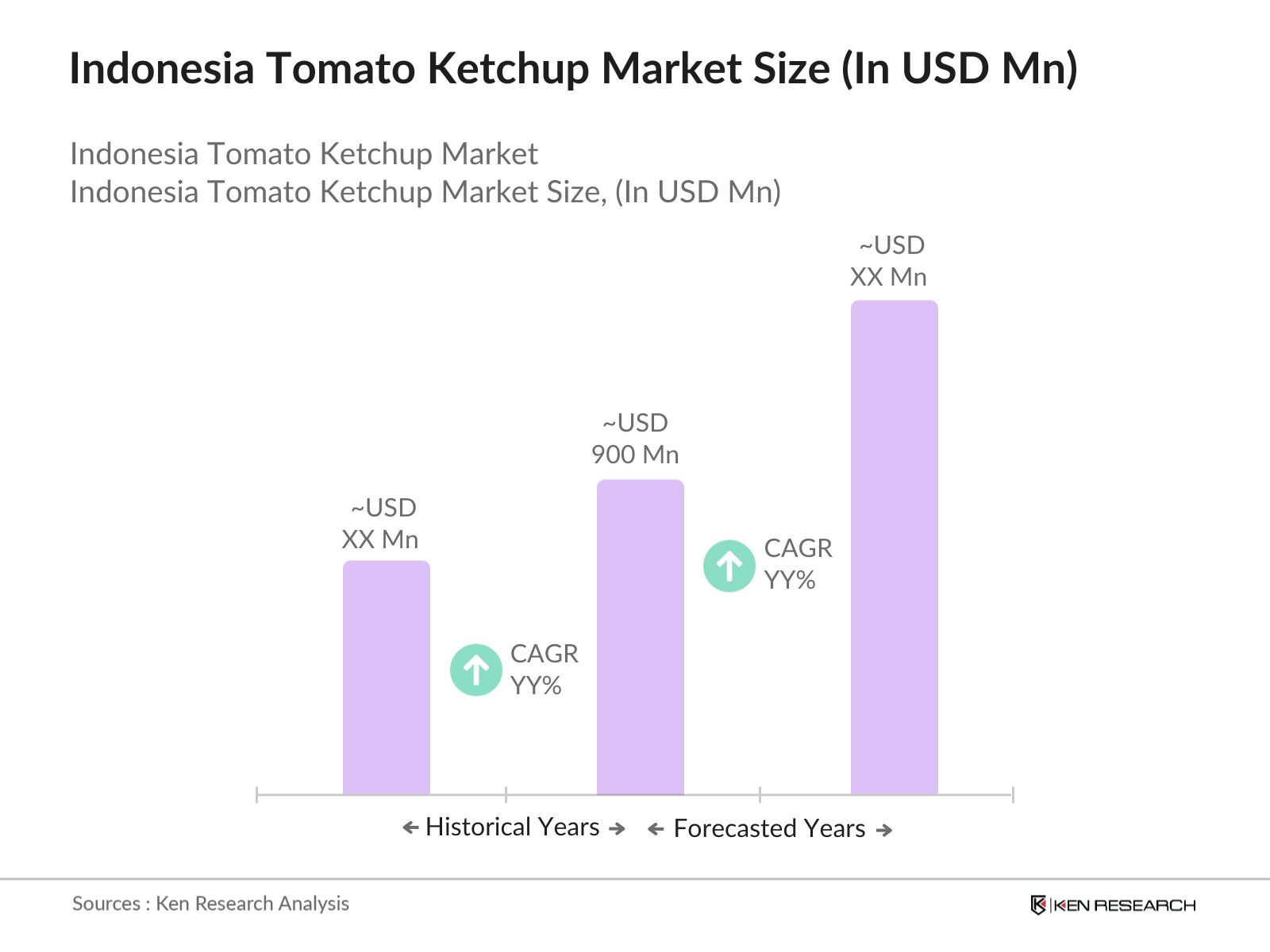
- The Indonesia Tomato Ketchup Market is valued at USD 900 million, based on a five-year historical analysis. This market is primarily driven by the increasing consumption of fast food and processed food in the country. As more Indonesians embrace Western dietary habits, the demand for condiments like ketchup continues to grow.
- Java and Sumatra dominate the market in Indonesia. Java, being the most populous and urbanized island, houses several metropolitan cities such as Jakarta and Surabaya. The growing middle-class population and a strong presence of food service chains on these islands lead to higher ketchup consumption.
- The Indonesian Ministry of Industry has launched initiatives to promote agro-processing industries, including ketchup production, by offering incentives such as tax cuts and infrastructure support. In 2024, the government earmarked IDR 50 trillion for the development of agro-processing facilities, with a focus on boosting tomato production.
Indonesia Tomato Ketchup Market Segmentation
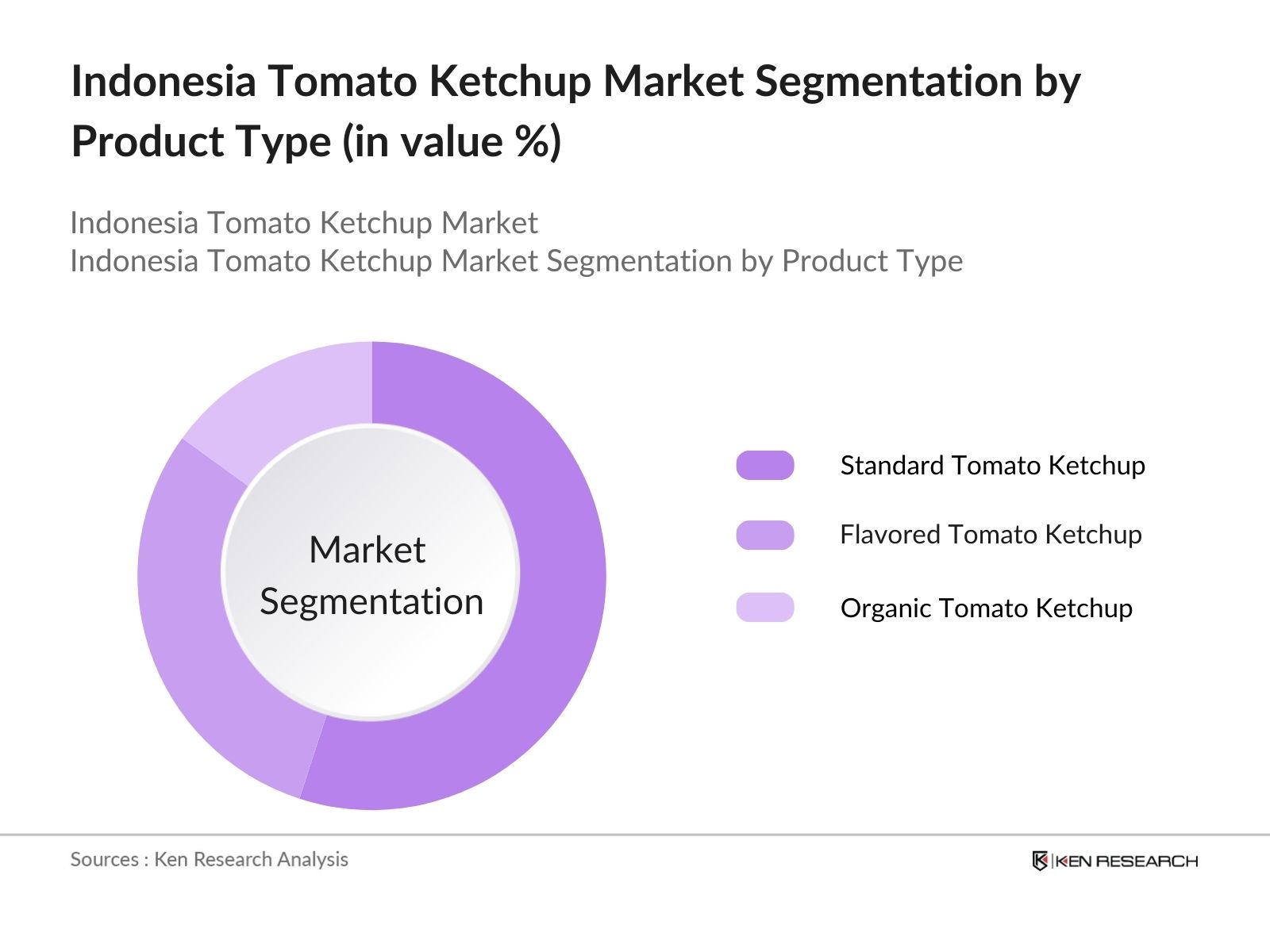
By Product Type: The market is segmented by product type into standard tomato ketchup, flavored tomato ketchup, and organic tomato ketchup. Standard tomato ketchup holds a dominant market share in this category. This is largely attributed to its versatility and widespread usage in households, foodservice industries, and restaurants.
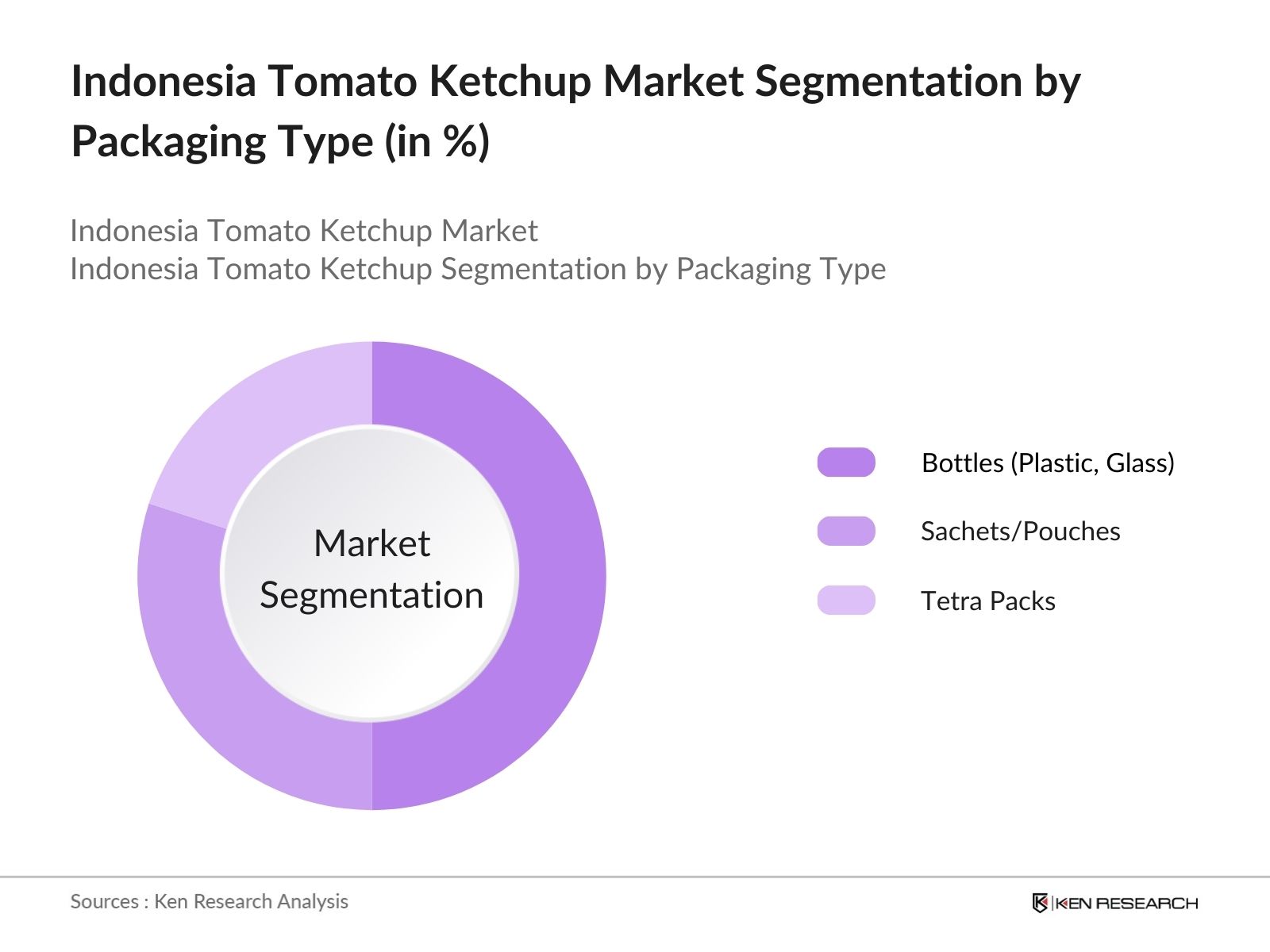
By Packaging Type: The market is also segmented by packaging type into bottles, sachets/pouches, and tetra packs. Bottles are the dominant packaging type in Indonesia, primarily because they are preferred for home use and provide a cost-effective option for consumers. The availability of ketchup in both glass and plastic bottles offers flexibility in terms of price points and brand positioning.
Indonesia Tomato Ketchup Market Competitive Landscape
The market is dominated by both local and international players. Major companies in the market have built strong distribution networks and leverage brand loyalty. The presence of large conglomerates, which produce multiple types of condiments and sauces alongside ketchup, intensifies competition.
|
Company Name |
Establishment Year |
Headquarters |
Revenue (USD Bn) |
Market Share (%) |
Number of Employees |
Product Offerings |
Distribution Network Strength |
R&D Investments |
Recent Developments |
|
PT Heinz ABC Indonesia |
1975 |
Jakarta |
|||||||
|
Indofood Sukses Makmur Tbk |
1990 |
Jakarta |
|||||||
|
Wings Group Indonesia |
1948 |
Jakarta |
|||||||
|
PT Sasa Inti |
1968 |
Medan |
|||||||
|
Del Monte Pacific Limited |
1886 |
Manila |
Indonesia Tomato Ketchup Market Analysis
Market Growth Drivers
- Increasing Demand for Processed Food: Indonesia has seen a notable shift toward processed and convenience foods due to changing dietary habits. According to the Ministry of Industry of Indonesia, the processed food industry, including condiments such as tomato ketchup, saw production volume grow by over 1.5 million tons in 2023. This shift has driven a parallel demand for tomato-based sauces, especially ketchup, as consumers look for easy-to-use condiments to complement their meals. This growth in processed food consumption is further supported by Indonesia's urban population.
- Growth in Modern Retail: The expansion of modern retail formats in Indonesia has significantly impacted ketchup sales. In 2023, Indonesia saw over 40,000 supermarkets, hypermarkets, and minimarkets spread across its urban and semi-urban regions. This distribution network is creating more shelf space for condiments such as tomato ketchup, making it more accessible to consumers. The Ministry of Trade has noted that 70% of packaged food products sold in these formats fall under the processed and ready-to-eat categories, which directly contributes to the growth of ketchup sales.
- Support for Small and Medium Enterprises (SMEs): The government has implemented policies to support SMEs in the food processing industry, including ketchup producers, by providing low-interest loans and training programs. In 2023, more than 20,000 SMEs in the food sector received financial aid and business development training. This initiative aims to boost the production capacity of smaller ketchup producers and enhance their competitiveness in the domestic market.
Market Challenges
- Import Dependency: Indonesia relies on imported tomatoes for a portion of its ketchup production, making the market susceptible to global supply chain disruptions. In 2023, Indonesia imported over 50,000 tons of tomatoes from countries like China and India. These imports are subject to trade regulations, currency fluctuations, and logistic challenges, creating a volatile supply chain for ketchup manufacturers who rely on these imports for steady production.
- Regulatory Restrictions: The Indonesian Food and Drug Authority (BPOM) has stringent regulations on the use of preservatives and artificial additives in food products. Ketchup manufacturers face high compliance costs, as they must meet these strict standards to sell their products in the domestic market. The BPOM reported in 2023 that over 100 food product recalls occurred due to non-compliance with these regulations, indicating the regulatory pressure faced by ketchup producers.
Indonesia Tomato Ketchup Market Future Outlook
Over the next five years, the Indonesia Tomato Ketchup Industry is expected to witness notable growth driven by evolving consumer preferences and increasing demand for ready-to-eat foods. The market's expansion will be propelled by the growth of the fast-food industry and a rising trend toward home-cooked meals that incorporate condiments like ketchup.
Future Market Opportunities
- Expansion of Export Opportunities: By 2028, Indonesia is expected to increase its exports of tomato ketchup to neighboring ASEAN countries, thanks to government trade policies that aim to reduce tariffs on food exports. The Ministry of Trade forecasts that ketchup exports will grow over the next five years, as regional demand for Indonesian-made ketchup products increases, particularly in Malaysia and the Philippines.
- Automation and Technological Innovation in Manufacturing: The ketchup manufacturing industry is set to undergo significant technological advancements over the next five years. By 2028, over 70% of ketchup production facilities in Indonesia are expected to be fully automated, reducing labor costs and increasing efficiency. The Ministry of Industry projects that investments in automation technology will exceed by 2028, leading to faster production times and lower overall costs for ketchup manufacturers.
Scope of the Report
|
By Product Type |
Standard Tomato Ketchup Flavored Tomato Ketchup (Chili, Garlic) Organic Tomato Ketchup |
|
By Packaging Type |
Bottles (Plastic, Glass) Sachets/Pouches Tetra Packs |
|
By End-Use |
Retail Consumers (Households) HoReCa (Hotels, Restaurants, Cafes) Food Processing Industry |
|
By Distribution Channel |
Supermarkets/Hypermarkets Convenience Stores E-commerce Platforms Traditional Grocery Stores |
|
By Region |
North East West South |
Products
Key Target Audience Organizations and Entities Who Can Benefit by Subscribing This Report:
Agro-Based Industries
Banks and Financial Institution
Packaged Food Manufacturers
Private Equity Firms
HoReCa (Hotels, Restaurants, Cafes)
Government and Regulatory Bodies (Indonesian Food and Drug Authority)
Investments and Venture Capitalist Firms
Companies
Players Mentioned in the Report:
PT Heinz ABC Indonesia
Indofood Sukses Makmur Tbk
PT Sasa Inti
Wings Group Indonesia
Del Monte Pacific Limited
The Kraft Heinz Company
PT Nestl Indonesia
PT Kalbe Farma Tbk
PT Garudafood Putra Putri Jaya Tbk
Orang Tua Group
PT Unilever Indonesia
PT Mayora Indah Tbk
ABC President Indonesia
Ajinomoto Co., Inc.
PT Sekar Laut Tbk
Table of Contents
Indonesia Tomato Ketchup Market Overview
Definition and Scope
Market Taxonomy
Market Growth Rate
Market Segmentation Overview
Indonesia Tomato Ketchup Market Size (In USD Mn)
Historical Market Size
Year-On-Year Growth Analysis
Key Market Developments and Milestones
Indonesia Tomato Ketchup Market Analysis
Growth Drivers
Increasing Tomato Production (Domestic Tomato Yield)
Growing Demand for Processed Foods (Consumer Preferences)
Export Growth Potential (Global Trade)
Expanding Retail Channels (Supermarkets, Hypermarkets)
Market Challenges
Fluctuating Raw Material Prices (Tomato Supply Volatility)
Competition from Local Brands (Price Sensitivity)
Health Concerns Over Preservatives (Consumer Health Awareness)
Logistics and Cold Chain Infrastructure (Distribution Challenges)
Opportunities
Organic and Natural Ingredient Ketchup (Health-Conscious Consumers)
Private Label Growth (Retailer Brand Expansion)
Innovative Packaging Solutions (Sustainability Focus)
Penetration into Untapped Regions (Rural and Tier 2 Markets)
Trends
Increasing Popularity of Flavored Ketchup (Spicy, Herb Varieties)
Introduction of Low-Sugar and Low-Sodium Ketchup (Health-Conscious Products)
Rise of Online Retail Sales (E-Commerce Penetration)
Government Regulations
Food Safety Standards (Indonesian Food and Drug Authority Regulations)
Import Tariffs and Export Incentives (Trade Policies)
Labeling Requirements (Nutritional and Ingredient Disclosure)
Support for Agro-Processing Industries (Government Incentives)
SWOT Analysis
Stakeholder Ecosystem (Manufacturers, Distributors, Retailers)
Porters Five Forces (Competitive Rivalry, Supplier Power, Buyer Power, Threat of New Entrants, Threat of Substitutes)
Competition Ecosystem
Indonesia Tomato Ketchup Market Segmentation
By Product Type (In Value %)
Standard Tomato Ketchup
Flavored Tomato Ketchup (Chili, Garlic, Herb)
Organic Tomato Ketchup
By Packaging Type (In Value %)
Bottles (Plastic, Glass)
Sachets/Pouches
Tetra Packs
By End-Use (In Value %)
Retail Consumers (Households)
HoReCa (Hotels, Restaurants, Cafes)
Food Processing Industry (Sauces, Ready-to-Eat Products)
By Distribution Channel (In Value %)
Supermarkets/Hypermarkets
Convenience Stores
E-commerce Platforms
Traditional Grocery Stores
By Region (In Value %)
North
East
West
South
Indonesia Tomato Ketchup Market Competitive Analysis
Detailed Profiles of Major Companies
PT Heinz ABC Indonesia
Indofood Sukses Makmur Tbk
PT Sasa Inti
Wings Group Indonesia
PT Nestl Indonesia
PT Unilever Indonesia
Orang Tua Group
PT Garudafood Putra Putri Jaya Tbk
ABC President Indonesia
PT Mayora Indah Tbk
The Kraft Heinz Company
Del Monte Pacific Limited
PT Sekar Laut Tbk
PT Kalbe Farma Tbk
Ajinomoto Co., Inc.
Cross Comparison Parameters (Revenue, Market Share, Production Capacity, Distribution Network, Product Innovation, Pricing Strategy, Marketing and Branding Efforts, Customer Base)
Market Share Analysis
Strategic Initiatives
Mergers And Acquisitions
Investment Analysis
Venture Capital Funding
Government Grants
Private Equity Investments
Indonesia Tomato Ketchup Market Regulatory Framework
Food Safety Standards
Compliance Requirements
Certification Processes
Indonesia Tomato Ketchup Future Market Size (In USD Mn)
Future Market Size Projections
Key Factors Driving Future Market Growth
Indonesia Tomato Ketchup Future Market Segmentation
By Product Type (In Value %)
By Packaging Type (In Value %)
By End-Use (In Value %)
By Distribution Channel (In Value %)
By Region (In Value %)
Indonesia Tomato Ketchup Market Analysts Recommendations
TAM/SAM/SOM Analysis
Consumer Cohort Analysis
Marketing Initiatives
White Space Opportunity Analysis
Disclaimer Contact UsResearch Methodology
Step 1: Identification of Key Variables
The research process began by identifying critical factors that impact the Indonesia Tomato Ketchup Market. These include market dynamics, consumer preferences, and the competitive landscape. Extensive desk research was conducted using proprietary databases, government reports, and industry publications to define key variables.
Step 2: Market Analysis and Construction
Historical market data was compiled to analyze the evolution of the tomato ketchup market. Key metrics such as production volumes, import/export statistics, and revenue streams were assessed. The data was cross-referenced to ensure accuracy, focusing on market penetration and the role of regional distribution networks.
Step 3: Hypothesis Validation and Expert Consultation
Hypotheses regarding market trends and growth drivers were validated through interviews with industry experts. These experts were selected from across the value chain, including ketchup manufacturers, suppliers, and distributors. Their insights added depth to the understanding of market growth trajectories.
Step 4: Research Synthesis and Final Output
The research findings were synthesized into the final report, providing an in-depth analysis of product segments, competitive dynamics, and market forecasts. Market insights were corroborated with data from primary and secondary sources, ensuring a well-rounded perspective.
Frequently Asked Questions
01. How big is the Indonesia Tomato Ketchup Market?
The Indonesia Tomato Ketchup Market is valued at USD 900 million, driven by the growing fast food industry and increasing consumer preference for Western condiments.
02. What are the challenges in the Indonesia Tomato Ketchup Market?
The Indonesia Tomato Ketchup Market faces challenges such as fluctuating raw material prices, competition from local brands, and logistical inefficiencies in cold chain distribution, which hinder its expansion.
03. Who are the major players in the Indonesia Tomato Ketchup Market?
Key players in the Indonesia Tomato Ketchup Market include PT Heinz ABC Indonesia, Indofood Sukses Makmur Tbk, PT Sasa Inti, Wings Group Indonesia, and Del Monte Pacific Limited, known for their strong market presence and extensive distribution networks.
04. What are the growth drivers of the Indonesia Tomato Ketchup Market?
Growth in the Indonesia Tomato Ketchup Market is propelled by increasing consumer demand for processed and fast foods, along with the expansion of retail and foodservice sectors across urban and rural regions.
05. What packaging type dominates the Indonesia Tomato Ketchup Market?
Bottles, especially in plastic and glass formats, dominate the ketchup packaging landscape due to their widespread acceptance in both households and the HoReCa sector.
Why Buy From Us?

What makes us stand out is that our consultants follows Robust, Refine and Result (RRR) methodology. i.e. Robust for clear definitions, approaches and sanity checking, Refine for differentiating respondents facts and opinions and Result for presenting data with story

We have set a benchmark in the industry by offering our clients with syndicated and customized market research reports featuring coverage of entire market as well as meticulous research and analyst insights.

While we don't replace traditional research, we flip the method upside down. Our dual approach of Top Bottom & Bottom Top ensures quality deliverable by not just verifying company fundamentals but also looking at the sector and macroeconomic factors.

With one step in the future, our research team constantly tries to show you the bigger picture. We help with some of the tough questions you may encounter along the way: How is the industry positioned? Best marketing channel? KPI's of competitors? By aligning every element, we help maximize success.

Our report gives you instant access to the answers and sources that other companies might choose to hide. We elaborate each steps of research methodology we have used and showcase you the sample size to earn your trust.

If you need any support, we are here! We pride ourselves on universe strength, data quality, and quick, friendly, and professional service.